Highflier Lands Running on Pastures New

Somehow they had got it into their heads that it might be nice to buy “a small, gentleman's farm”, just 10 acres or so, as an eventual retirement project. Jana Barbe's daughters, emulating her own childhood passion, had always enjoyed riding and some of the show horses were kept here in Kentucky. Such a beautiful part of the world, they hired a local broker and did some idle prospecting. Then came the 2008 crash.

“And this business, being built on disposable income, suffered terribly,” Barbe recalls. “Suddenly it felt like every farm was on the market. And our broker called with this place on Newtown Pike near Georgetown. Just a little bigger than we wanted.”

Like, eight times bigger. But they came out and had a look anyway. A little Eden on the Elkhorn Creek. There and then, Barbe's husband announced that their search was over.

They returned to their Chicago home, situated on a 25×125-foot lot, and Barbe summoned all the hard-headed sense that had for six years made her the only woman on the global board of law giant Dentons.

“Roy,” she said, “you're out of your mind. We can't possibly do this. I work like a dog, seven days a week. I'm on the road all the time. Not to mention the fact that we know nothing about farming. You grew up on the northwest side of Chicago. I've never taken care of my own horses. We don't even have a yard. This is a working farm. It comes with a tractor!”

“No,” he said, immovable. “We're going to do this.”

Be in no doubt, there are still days when she lies there at night, watching the monitors from the foaling stalls, asking how did this happen.

“I can never sleep when we're waiting,” she says. “Even though we have someone on duty.”

This week she has been fretting over the overdue delivery–aptly enough, of a More Than Ready foal share–by an 11-year-old daughter of Tiznow, one of eight Thoroughbred mares now residing at Henley Farms. Letchworth's fourth foal is imminent even as her first prepares for the GIII Peter Pan S., at Belmont on Saturday, with prospects of breaking into the elite of his crop. We the People (Constitution) disappointed when fast-tracked to the GI Arkansas Derby, after two sensational scores, but that attempt to shoehorn him into the first Saturday in May was perhaps too much too soon. Either way, as its first graduate, We the People has already sealed the accidental emergence of this boutique Thoroughbred nursery.

Jana Barbe | Courtesy Henley Farms

But it's a fair question she asks: how did this happen? Raised near Miami, without the affluence for horses of her own, Barbe always found a way to get across a saddle: summer camp, stable work, college riding club. On graduating from law school, when her peers were leasing apartments, she devoted her first paychecks to leasing a jumper. She stabled him in downtown Chicago, on Schiller and Orleans, alongside the carriage horses.

By the time the Barbes bought Henley Farms, however, horses had long been marginal to her stellar career and the raising of a family. The first thing they did, then, was track down all the show horses that had maintained an equine connection over those years. “They looked after you and the girls all that time,” said Roy. “Now it's our turn to look after them.”

That's why you'll find a 31-year-old Welsh Pony next to the dam of We the People. But the Bluegrass soon began its cultural osmosis. Their first farm manager's dad was the late Marvin Little, Jr., breeder of Hansel (Woodman), who invited them to take a piece in a broodmare.

“And that's how it starts, right?” says Barbe. “You dip a toe in, then a whole leg. And one day you wake up and say, 'You know, we could do this. We have all this land, we have paddocks, stalls, everything we'd need.' So that's how it began. But those first years, it should have been a reality TV show. Every stupid horse mistake you could make, we made. Amateur with a capital 'A'.”

But every trial, every error, became a lesson learned. Four years on, they confidently perform their own foaling. And the two sides of Barbe's life not only dovetail but nourish each other. Long before Covid, she was adapting to remote working.

“It soon became apparent that clients were more focused on whether the work got done, and its quality, as opposed to where it might have been done,” she says. “Lexington has airports. I can travel wherever. I'm on a public company board [Invitation Homes, Inc.], a private company board [The Boler Company], I'm a senior advisor for Blackstone. And they all get it.

Courtesy Henley Farms

“Mine is a life of extremes. Yesterday one of the warmbloods had a gas colic. It wasn't severe, but he loves attention so I groomed him for an hour and a half, because it kept him standing. And when I came in and looked in the mirror, I mean, I was wearing his winter coat. I was disgusting. And I did think that if I had to get on a Zoom call now, and explain this! But they've all accepted that people have passions in life, that can run the gamut, and it's OK.”

And then what a treat to break off: nice clean office, fancy hotels, not to mention intellectual stimulation.

“The business world gives you at least an illusion of control,” Barbe reflects. “I'm a control freak by nature, and it gives you that feeling: 'OK, I'm in charge, we're going to make a decision, we're going to weigh in on this. I have authority, a degree of autonomy.' Then you come here, and some colt is dragging me down the road, and there's no control. None. You can be derailed by the weather. And these horses, they all have minds of their own. Like Letchworth's Audible [yearling]. From a very young age, he found it necessary to jump out of the paddock. Doesn't go anywhere, doesn't actually want to leave his herd. But he can clear a four-foot fence, uphill, without a scratch. So very athletic, right? But I have no control.”

Obviously they try to be as proactive as possible in sales prep.

“But so much of farming is about reacting,” Barbe accepts. “And being tuned in. And accepting that what will be, will be. So yes, it keeps everything fresh. During Covid, it was the horses that kept me sane: the bonds, the empathy, were amazing. When I go away for business, I get to be a different person. But then I come back here, and I prize it: I'm in heaven on earth.”

With that inquiring mind, Barbe has relished learning pedigrees. Indeed, while stressing her gratitude to advisors at Taylor Made, it was she who found Letchworth at the 2019 January Sale: unraced, but out of Grade I winner Harmony Lodge (Hennessy).

“The inner nerd takes over, reads every page of every book,” she says with a laugh. “It was one of our first sales, she was pregnant to Constitution, who at that point was an unproven 'bubble' horse. We knew that bloodlines plus black type would be out of our range, so we had to choose–and we went with bloodlines. So I dragged Roy to see her, and she's big and beautiful. At first Taylor Made said, 'Hmm, don't know, what are you going to do with the baby?' And we said we weren't buying for the baby, so they went and looked at the mare and said actually she's really nice.”

And, in the event, the baby turned out to be an unexpected bonus. Constitution's first juveniles flew, and this colt–from his third crop–proved formidable in every way. Barbe shares footage of him bucking and careering round a paddock when barely a week old.
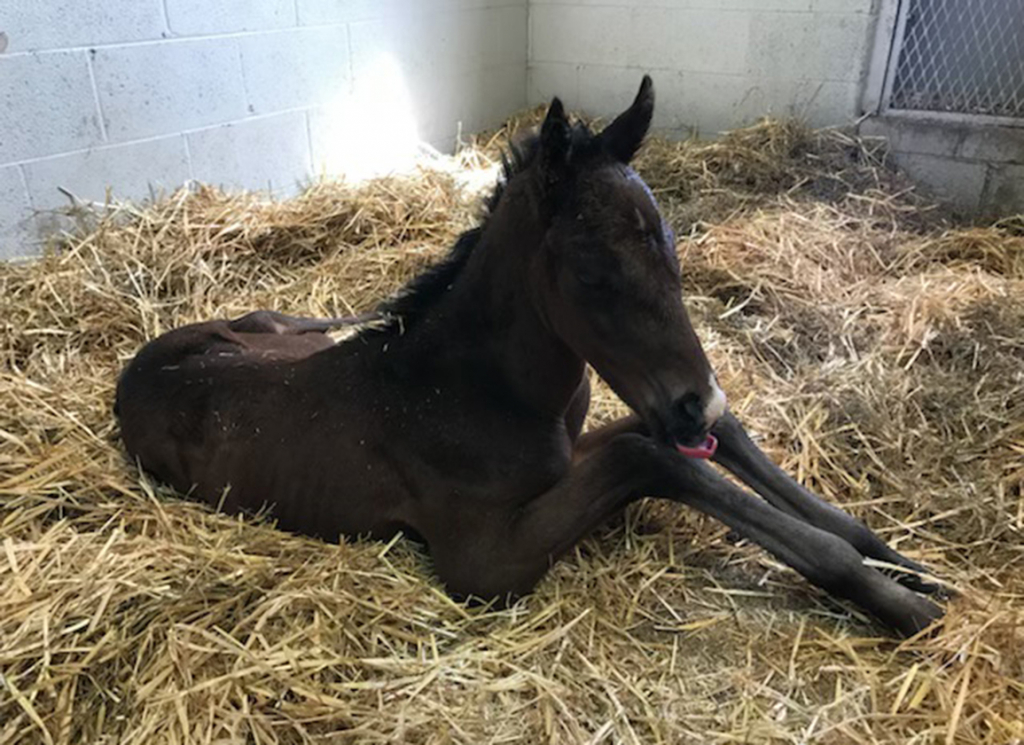
We the People as a foal | Courtesy Henley Farms

“He was strong-willed and aggressive,” she recalls. “Like, if you turned your back, he playfully bit you. He literally came out bucking. He'd cow kick. He was high-spirited, independent, fearless. The mare's Audible colt, he's massive too, but you can walk into the box and pet him. You couldn't have done that with We the People.”

Slipstreaming the momentum of his sire, the feisty weanling immediately recouped the $40,000 paid for his mother when making $110,000 at Keeneland November from Machmer Hall. (He exactly doubled his value in the same ring the following September, albeit a second pinhook cycle only inched him up.) And he may yet perform further services to the page, plainly having far more ability than he showed in his first big test.

“He's so fast, his times were insane,” Barbe says. “But he'd never been in a crowd before, he got stuck in there and didn't like it one bit. The trainer [Rodolphe Brisset] in his interview said that he's not an easy horse, and he wasn't from birth. The personality comes through pretty quickly. My hope would be that he learned, that he can digest and process the experience and bring that speed to bear.”

With his upgrade, We the People's half-brother by Always Dreaming advanced his $65,000 yearling cost (lower than Barbe expected, evidently due to a corrected OCD) to $220,000 from SBM Training & Sales at OBS April. (“The same athleticism,” says Barbe. “Only in a more manageable brain and package.”) But whatever happens next, We the People has already taken the couple who raised him somewhere they hadn't really anticipated in starting their Thoroughbred adventure.

“I was a little ambivalent about the racing,” Barbe admits. “I love animals, and in many ways racing is problematic in how it treats horses. It's an industry in transition, and appropriately so. It does need to clean up its own house. But I do now understand what I didn't fully appreciate before: the way that these Thoroughbreds are born to run. Our babies in the back field, they gallop up the hill, they gallop down the hill, nobody's forcing them. And then We the People happened. Watching this horse we bred, I was screaming like a lunatic at the television. It was like, 'OK, now I get this. This was a baby I played with here. This is quite different.'”
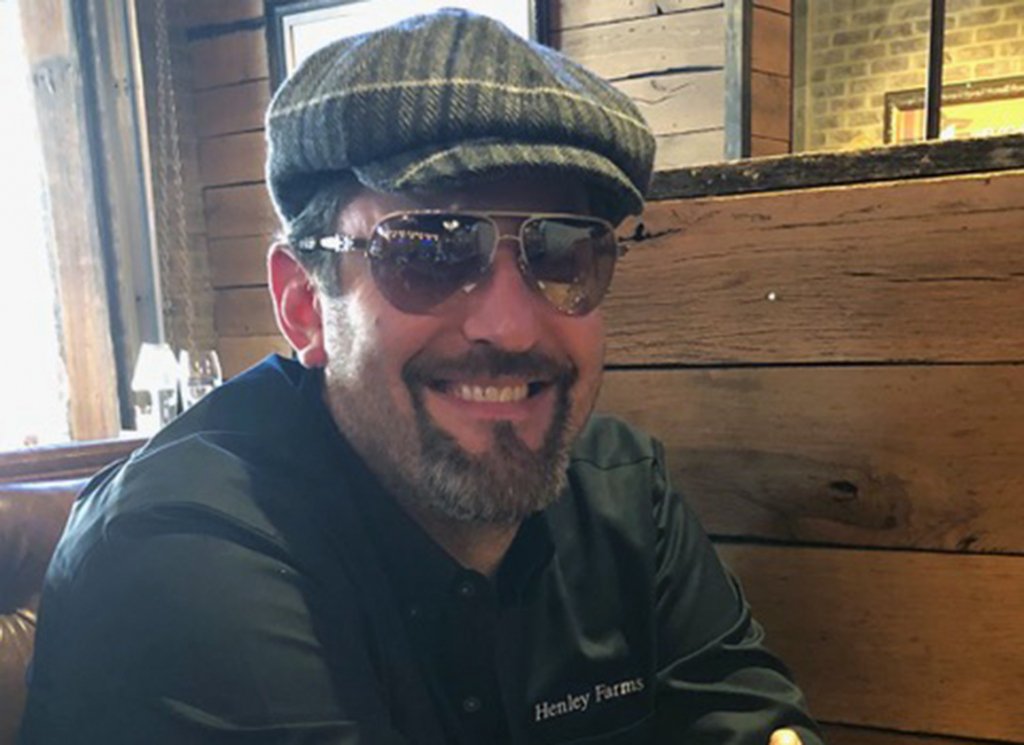
Roy Barbe | Courtesy Henley Farms

In the meantime, she had been heartened that her new community not only embraced these city novices but shared their values; that so many walk the walk on welfare. But something else also happened, the day Letchworth's bronco baby made his debut. All her competitive spirit was suddenly in play. And, as Barbe acknowledges, you don't carve out a career like hers without being extremely competitive.

“It's never easy when you're the only woman in the room,” she says. “But in life I generally find it helpful to give people the benefit of the doubt, to ascribe good motives. Life's too short to go into the room expecting trouble or rejection or condescension. And anyway I'm not easily dissuaded. It's like riding: you fall, you pick yourself up, you get back on.”

She works hard to be not just a model for aspiring young women, but also an advocate and mentor. “Choose your battles, with an eye on the prize,” she urges those who seek her counsel. “Not every pass is a touchdown. You can get a first down by three relatively short running plays. Tortoise, not the hare. Don't be derailed by every obstacle, every potential argument. Don't allow your sense of security and self-worth and identity to be shaken by others. External validation is great, when you get it, but it in the end it's artificial. What has to drive you is internal.”

Easier said than done, she grants. “There'll be lots of days with lots of tears,” she says. “You know that 'glass ceiling' people talk about? I used to come home from work and my husband would be picking shards out of my head. When I graduated from law school, in 1987, the percentage of women equity partners at big law firms was between 15% and 18%, and the goal was 20%. And the goal today? Still 20%.

“But the more deliberate and strategic I became, the more I understood my power, and married that power to my authenticity, the more effective and accepted I became. But you shouldn't have to wait until you've turned 50 to wake up one morning and say, 'OK, so maybe if I hold my breath a little here, am a bit more measured there…' We're demanding a level of grit and resilience that is unfair. Because the work is hard enough.”
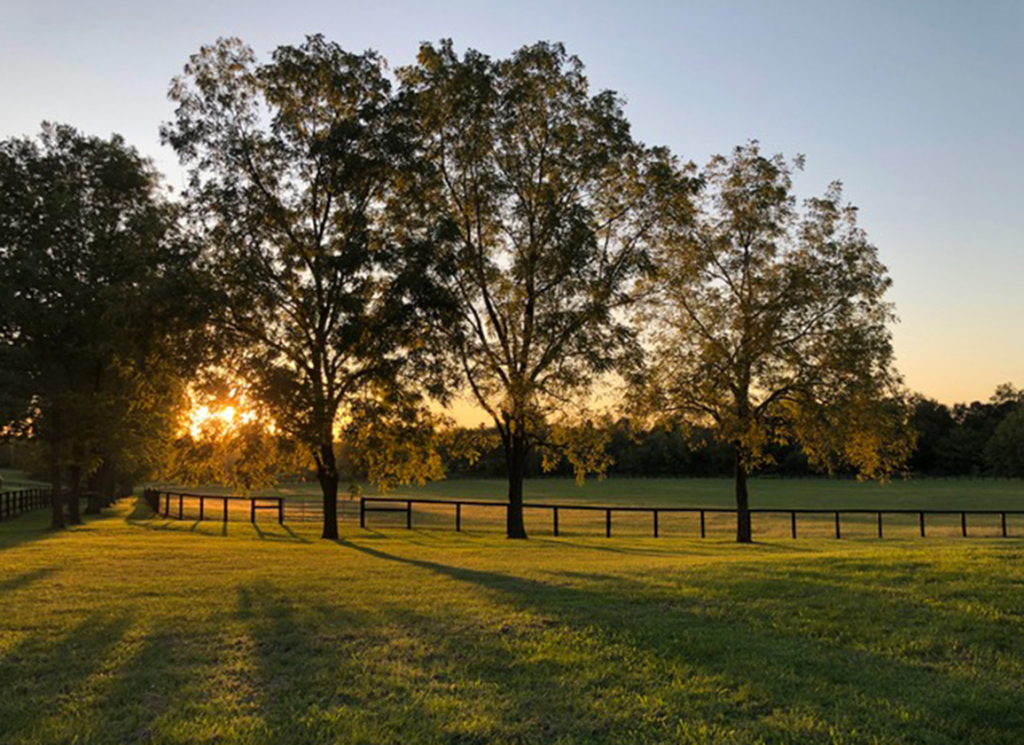
Courtesy Henley Farms

So how has she found the Turf, still so dominated by males?

“It is a very conservative environment, and needs a lot more diversity of all kinds for sure,” she accepts. “But the only way we're going to achieve that is one person at a time, one foot in front of the other, and being really smart in how we go about it. We will get there. Because we have to. In the end the sport will become integrated because it can't not.”

That's also why she believes other, systemic issues will also be tackled: because continued obstruction of reform will simply kill the industry. “In the end, everybody engaged in the sport will have a choice to make,” she says. “Change is hard, I get it. But the sport will have to evolve, or it won't survive. If people think that's not coming, they haven't been paying attention.”

Not that the Barbes intend turning the game on its head. Certainly their program is conforming to established market prejudices, using new sires and fashionable crosses. But they have shown imagination, too, for instance in acquiring (with Taylor Made's help) a 2-year-old Ghostzapper filly for just $10,000. She wasn't going to stand training but conformation and pedigree nonetheless made her eligible to breed.

“So we put her in the field and she was raised by two old hunter geldings,” she says. “And her first baby is to die for. So we've tried to be super strategic in our shopping, and super nimble.”

Barbe and her husband are heartened by their reception from a community that might normally profile them only as patrons, not as rivals or colleagues.

“Lots of people have told us it's great to have new blood in the sport,” she says. “And I do feel like we do have a place here; that our voice as a new entry matters, and can join others to advance the sport.”

Recently they hosted an organisation of young corporate highfliers at Henley Farms, eager to learn more about opportunities in Kentucky and the horse world. More than one took them aside with the same awed message. “Look what you've done here,” they said. “You've made your life the way you want it. How many people would take on that risk?”

“I married a man who knew nothing about horses, and he embraced the dream,” Barbe says. “I got really lucky there. And I feel like we're so privileged to be here, to have the chance to pursue dreams. I mean, my dream wasn't horseracing. It was living with my horses. But to have found a life that revolves around them, to have been able to make that happen? It's like everything else, really. One foot in front of another, and chase the dream.”

The post Highflier Lands Running on Pastures New appeared first on TDN | Thoroughbred Daily News | Horse Racing News, Results and Video | Thoroughbred Breeding and Auctions.

Source of original post

Notable US-Bred and -Sired Runners in Japan: May 15, 2022

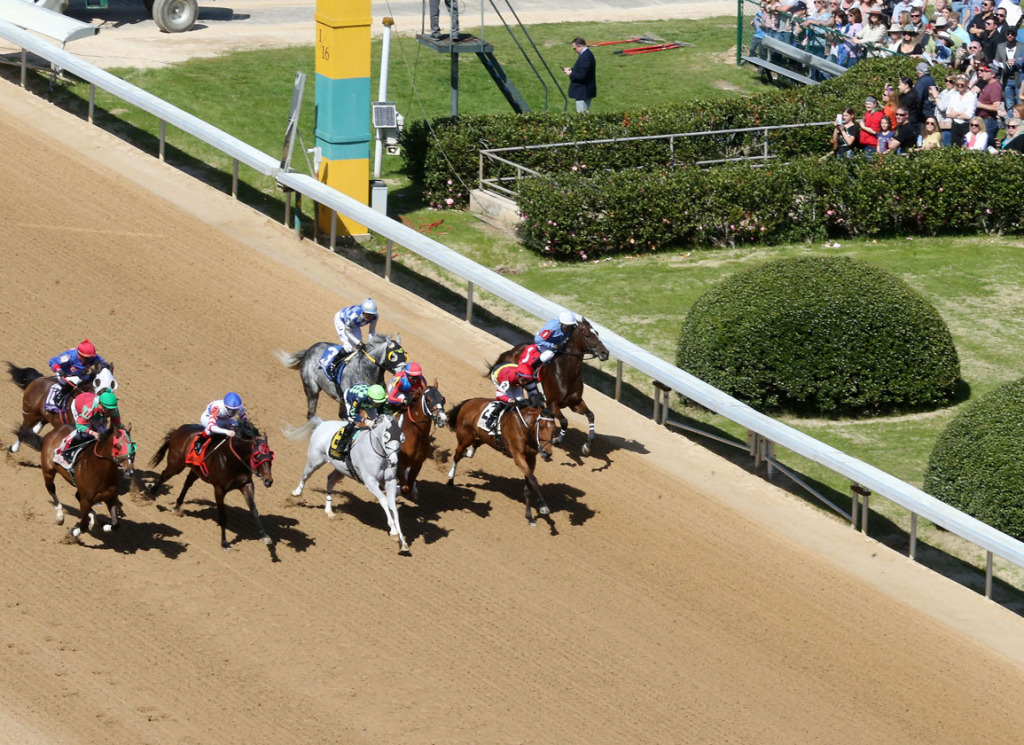
In this continuing series, we take a look ahead at US-bred and/or conceived runners entered for the upcoming weekend at the tracks on the Japan Racing Association circuit, with a focus on pedigree and/or performance in the sales ring. Here are the horses of interest for this Sunday running at Chukyo and Tokyo Racecourses. Featured on the 12-race program at headquarters is an intriguing renewal of the G1 Victoria Mile for female turfers, which has drawn the likes of fan-favorite Sodashi (Jpn) (Kurofune), G3 1351 Turf Sprint heroine Songline (Jpn) (Kizuna {Jpn}) and Daring Tact (Jpn) (Epiphaneia {Jpn}), winner of the G1 Japanese 1000 Guineas and G1 Japanese Oaks in 2020:

Sunday, May 15, 2022
2nd-TOK, ¥9,900,000 ($77k), Maiden, 3yo, 1600m
NATURE THERAPY (JPN) (c, 3, Union Rags–My Happy Face, by Tiz Wonderful) is the first Japanese-bred produce for her dam, winner of the GIII Tempted S. and second in the GI Frizette S. in 2012 and placed in the GI CCA Oaks and GI Test S. the following season. Katsumi Yoshida acquired My Happy Face for $425K with this colt in utero at Keeneland November in 2018 and the Mar. 25 foal debuts in the colors of Yoshida's wife Kazumi, with top jockey Takeshi Yokoyama in the irons. B-Northern Farm

6th-CKO, ¥14,250,000 ($111k), Allowance, 3yo, 1200m
CLOS DE MESNIL (f, 3, Practical Joke–Valiant Emilia {Per}, by Pegasus Wind), the $750K topper at the 2021 OBS March sale, opened her account at first asking last November (see below, SC 7) and gets back onto what appears to be her preferred footing after finishing down the field in a six-furlong turf allowance when last seen Jan. 10. A daughter of Peru's champion older mare of 2014, Clos de Mesnil was bought back on a bid of $65K at KEENOV in 2019 and was a $120K KEESEP grad before lighting up the tote in Ocala. The filly's third dam produced GSW & G1SP Thundering Emilia (Thunder Gulch), the dam of 2021 GII Tampa Bay Derby hero Helium (Distorted Humor). B-Teneri Farm (KY)


The post Notable US-Bred and -Sired Runners in Japan: May 15, 2022 appeared first on TDN | Thoroughbred Daily News | Horse Racing News, Results and Video | Thoroughbred Breeding and Auctions.
Source of original post

Q&A with HISA’s Lisa Lazarus: Part Two

Last week, an important piece of the Horseracing Integrity and Safety Act (HISA) puzzle was slotted into place when the Horseracing Integrity and Safety Authority's board of directors announced that Drug Free Sport International (DFSI) had been selected as the enforcement agency for the Anti-Doping and Medication Control (ADMC) arm of the program.

In part one of this two-part Q&A, HISA CEO Lisa Lazarus discussed the reasons behind DFSI's selection, details about the newly announced Horseracing Integrity and Welfare Unit (HIWU) and broad updates on the Anti-Doping and Medication Control (ADMC) program in general.

In part two, Lazarus discusses the working relationship between DFSI and the Authority–the non-profit umbrella established by HISA to oversee the broad program–as well as practical concerns about implementation of the safety program on July 1.

The following has been edited for brevity and for clarity.

TDN: What will the working relationship between the Authority and DFSI–what is essentially a service agency–look like? Will they be working primarily at the behest of the Authority or will they be an entirely separate, autonomous agency?

Lazarus: Entirely separate. Once we sign off and give them the contract, we don't have any influence.

Our only authority, so to speak, is over the rule-making process and over, of course, selecting the agency. So, if we feel the agency is not doing their job, we have the right to make changes. But ultimately, running the day-to-day business of the unit is going to be their responsibility and the responsibility of the advisory council.

TDN: At the recent Association of Racing Commissioners International (ARCI) conference, journalist Tim Livingston made remarks about lax drug-testing protocols in sports like the NFL and the NBA. He said, “I think you guys have to be careful because a lot of these guys who architect these doping programs are doing so with the leagues,” and then he made the comment that they're not particularly thorough and aren't designed to catch cheats.

DFSI has worked with both the NFL and the NBA. Do these comments concern you?

Lazarus: They don't at all. I think they're completely untrue and actually quite shocking.

I worked at the NFL for 10 years, so I know very well how the NFL runs its drug program. To say that it's not intended to catch [cheats] while people are caught all the time, I don't really understand that perspective. I mean, I would disagree wholeheartedly.

I know people involved in every sports league in the U.S. I think the one difference is that the drug programs are collectively bargained between the leagues and the unions. So, there's obviously a representative of the athletes that has the chance to make sure that there's due process. There are protections–that's expected. That's what makes a program good. I mean, the program has to have integrity and fairness. But DFSI for me has the highest level of integrity. They also do work for USADA [U.S. Anti-Doping Agency] from time to time. So, they really have a stellar reputation.

I think the comments that were made are really unfounded and I don't know where they come from. My understanding was that his talk and experience wasn't in anti-doping, it was [to do with] a referee scandal.

Sarah Andrew

TDN: But in terms of transparency of results, transparency of who's getting tested, the sharing of results, this is a different ball game to what DFSI has had to largely handle with some of those other human leagues, right? This is a different beast for DFSI, no?

Lazarus: Yes, it is an entirely different beast. And that's why we've created this Horseracing Integrity and Welfare Unit.

The way that I look at it is, DFSI is sort of the anchor tenant, because testing is the most work-intensive component of the unit. But ultimately, what they're doing is working with the advisory council to oversee experts that we're going to hire in all of these different pillars. So yes, it is an entirely different beast than what they're used to, but that's why the structure reflects that difference.

TDN: Stepping back, July 1 is looming large, and so far only three states–California, Kentucky and Minnesota–have agreed to shoulder the costs of the track safety component of HISA. What if all or nearly all of the other states decide not…

Lazarus: And Colorado. But I don't know if that's public.

TDN: But what if all, or nearly all, of the other states decide not to join them? In that worst-case scenario…

Lazarus: It's not a worst-case scenario. It's not a question of whether or not the costs get paid, it's a question of who's responsible.

The constitution doesn't allow us to force the state to do anything, so, if the states choose not to pay, what happens is that cost gets transferred to the racetracks on a per-start, strength-of-purse basis. The race tracks then take on that responsibility and they have to come up with a formula to spread that cost amongst the covered persons and to determine who pays how much.

If it's not paid, obviously we're going to work with the tracks to make it as easy as we can for them, but ultimately, the stick that we have in the Act is that they can lose their signal for pari-mutuel wagering.

Horsephotos

TDN: There's an important personnel component to this as well, right? Let's take regulatory vets. There's already a real shortage of qualified veterinarians available to do the regulatory work. If a substantial number of states opt to leave that part of the equation to HISA come July 1, do you have a contingency plan to make sure there is a nationwide team of vets who can do the pre-race examinations, all that necessary work?

Lazarus: You're mixing up two concepts here. There are two components with every state. One is the money assessment. The other is the voluntary agreement. While only a few states have agreed to opt into the money [assessment], we have about 80% of the states agreeing to enter into a voluntary agreement.

For a very high level of success with voluntary agreements, I'm hoping it's going to be about 90%. But we're at about 80% now. And what that means is that we're agreeing with the states…to use their state stewards to enforce the HISA rules. Otherwise, what's going to happen is that HISA is going to have to come in and hire a steward to sit alongside the state steward.

We do have plans in place for those states where we have to do that. But a few racetracks have [also] come to us and said, 'Even though our state doesn't want to enter the agreement, can we work out a deal with you, because we have these staff, we want to be able to use them?' And we've been able to work with them.

We're in the process of getting together a stewarding panel that we can ship out to different racetracks if we need to, as well as regulatory vets, which you are right, there's definitely a shortage of. We're looking at ways that we can essentially plug those shortages if we have to. But we're really hopeful and optimistic that most states are going to reach that voluntary agreement with us.

TDN: As many as 80% to 90% of states have already signed the voluntary agreement?

Lazarus: No, I'm sorry, I should have said that about 80% have said that, because we still have a few more weeks. So, the deadline for opting in [about the] money was about May 1. The deadline for the voluntary agreement is toward the end of May. We've reached agreements with a number of them, but very close to reaching agreement with the majority.

To be fair, what I'm basing that number on are the ones that we're speaking to, working through logistics, coming to an arrangement. It's my belief and understanding that with those states, it obviously shows they want to make it work. We just have a couple more weeks to kind of wrap it all up.

TDN: You do have a contingency plan to make sure that the necessary personnel will be in place for those 10%, 15%, 20% of jurisdictions that don't sign that voluntary agreement?

Lazarus: Correct.

Coady

TDN: There is a considerable amount of concern–both from people stridently against HISA and those who are wholly supportive of it–that come July 1, we won't be ready for launch. What does the industry need to do to make sure this plane lands smoothly?

Lazarus: A couple things. One is everyone needs to go on to hisaus.org and register. We will soon be launching a campaign to remind everyone that they need to do that by July 1.

The second is racetracks need to get more involved and engage with us more–and most are–but especially in those jurisdictions where the racing commissions are not working with us, particularly the states that are suing us or are less likely to work with us. In those states, that's where the racetracks need to get involved because the burden is going to fall on them, not to pay for everything, but to be the sort of [fee] collector or the place where the information is going to be disseminated.

And [lastly], do what you can to kind of help get the message out to those that maybe are less likely to be on their laptops reading about developments. The industry belongs to all of us and this is a heavy lift. Congress gave us very aggressive timelines and we're going to be ready on July 1, but you're right, we're definitely going to need help and support to make this work.

TDN: There's a lot of really busy people in this sport who just don't have the time to go onto a website and try to find information that may not always be easily accessible. Do you think your outreach could be better?

Lazarus: Yeah, for sure. And we're working on that now and there'll be a lot more outreach between now and July 1.

I cannot tell you how many groups I've spoken to and how many appearances I've made on board calls, on Zoom calls, etcetera. I do that day and night. So, I hope I've reached a lot of people that way. And I think I have.

We've created materials for jockeys that are kind of a cheat sheet guide for them, what they need to do. We've disseminated those. We have one for the trainers that's coming up very soon and we also have a social media campaign that's about to launch. So, I'm hoping that's going to do as good a job as we can expect. We still have a couple months to get the word out, and I think we're going to get there. It's moving quickly, but we're going to get there.

The post Q&A with HISA’s Lisa Lazarus: Part Two appeared first on TDN | Thoroughbred Daily News | Horse Racing News, Results and Video | Thoroughbred Breeding and Auctions.

Source of original post

Rich Strike’s Sister ‘A Gift’ for New Breeder Scott Miller

Scott Miller has only been involved in breeding for a few years, but he's more than happy to stick around for a while longer now that he owns a half-sister to a Kentucky Derby winner.

Miller's mare Lode Lady (Posse) is the first foal out of the Smart Strike mare Gold Strike, the dam of newly-acclaimed Derby hero Rich Strike (Keen Ice). Foaled in 2008, Lode Lady made three trips to the winner's circle at Woodbine and earned over $150,000 during her racing career before ending up with Miller eight years later.

With only two starters but no winners on her produce record so far, Lode Lady foaled an Honest Mischief filly this year at Waldorf Farm in New York. While the mare was slated to visit a regional stallion this spring, she is now bound for Kentucky to be bred to Vino Rosso, Spendthrift Farm's champion son of Curlin.

“She had her Honest Mischief foal and the next thing you know, [Waldorf Farm manager Kenny Toye] calls me and says, 'Hey, this mare's half-brother named Rich Strike is running in the Derby,'” Miller said. “I told him that at 80-1 it wasn't going to do anything, but Kenny had looked at the pedigree. He said the horse could go the distance and that he thought Rich Strike could win. Sure enough, he did. This is a dream that you would never believe could happen.”

Hailing from Hammonton, New Jersey, Miller has been involved in the equestrian world for many years, but only recently got involved in the racing industry.

“I started getting into Thoroughbreds right before COVID started,” Miller explained. “I decided I was too old for hack riding. A friend of mine called me and said she had a few Thoroughbred yearlings available. I ended up taking them from her and racing them. I really enjoyed it even though I never made a dime with them.”

It wasn't long before Miller was looking to add a few broodmares to his stable. He got in touch with breeder Jon Marshall. The Texas-based horseman was selling two mares along with their foals for a combined $40,000.

Miller decided to take only the mares, Stormy Tak (Stormy Atlantic) and Lode Lady, and let Marshall sell the foals. Stormy Tak's foal, a son of Gun Runner, went on to bring $270,000 as a yearling. Lode Lady's yearling brought only $25,000.

Lode Lady and her Honest Mischief filly with Waldorf Farm's Jerry Bilinski and Kenny Toye | photo courtesy Waldorf Farm

Miller could never have predicted that today, Lode Lady might have the more valuable pedigree of the pair, but he is grateful to Marshall for helping him get his start as a breeder.

“The day Rich Strike won the Kentucky Derby, Jon and his wife called to congratulate me,” Marshall said. “I told him that he should be sick because he gave me the mare, but he said he was happy for me. I am relatively new at this, so he has been kind of a mentor for me.”

While Miller has big plans for Lode Lady, he has no immediate intentions of putting her through a sales ring.

“It's hard to sell something when someone gives you a gift,” he explained. “I really have no money invested into this horse. Jon basically gave her to me and the only thing I have invested is the stud fees, so why would I get rid of her?”

As for the mare's Honest Mischief filly, who was foaled in February, Miller is still not sure where she could end up.

“I almost always sell the foals, but I just don't know with her,” he admitted. “I've thought about keeping her and running her myself, but we may test the waters and put her in a sale. This foal is special in my eye. She's beautiful with good size and bone.”

Dr. Jerry Bilinski, who oversees Miller's broodmare band at Waldorf Farm, can remember one similar experience with a sudden, favorable pedigree update when his stallion Cormorant was represented by 1994 GI Kentucky Derby winner Go for Gin.

“I was busy on the farm when I got a call that night that Go for Gin had won the Derby,” he recalled. “I didn't even watch the race because I was working away.”

“It's always interesting because you have the horse that wins the Derby, but then you have all these peripheral horses that suddenly become more valuable,” Bilinski said. “In this case, this mare was supposed to be bred in New York but then 48 hours later, she's on her way to Kentucky. It just shows you that lightning in one bottle can strike and when it does, it oftentimes strikes in other bottles around the horse community.”

While Miller does not typically bet, his wife did place a win bet on Rich Strike.

“Right after the race she said she wanted to go buy a handbag,” Miller recounted with a laugh.

“I'm lucky that I got these mares and got connected with the right people,” he said. “There are a lot of good people in this industry that you don't ever hear about. For Jon to give me these mares and then for this to happen, I still can't believe it.”

The post Rich Strike’s Sister ‘A Gift’ for New Breeder Scott Miller appeared first on TDN | Thoroughbred Daily News | Horse Racing News, Results and Video | Thoroughbred Breeding and Auctions.

Source of original post

Verified by MonsterInsights