When The Jockey Club announced last week that the estimated North American foal crop for 2024 was 18,000, a 2.7% decline from the projected 2023 foal crop, the news was hardly a surprise. By the time the final numbers are in for 2024,the foal crop will have declined in 18 of the last 19 years and this will be the smallest foal crop since 1964. Since 2005, when there were 38,365 foals, the crop has declined by more than half.
How big of a problem is this. Why is it happening? What can be done to reverse the trend? The TDN posed those questions to some of the foremost experts in the breeding industry.
Ned Toffey (Spendthrift Farm): It is certainly concerning and it's certainly more than a minor blip. When it got to 20,000, that was essentially half of what it was when I first went to work on a Thoroughbred farm. We have to do a better job as an industry of marketing both the sport and the breeding industry. We have to do a better job of attracting new people. We are up against it.
As a society, we've become more removed from agriculture and horses in particular. It's a venture that requires a lot of wealth and a lot of patience. As an industry, we have not done a good job putting this out there. Spendthrift is among the many farms that has embraced the tourism aspect and even that is a long play that you hope down the road yields fruit. By opening up farms, people can get more familiar with what we do here and it won't be such a strange thing for them. Then again, that's not going to change the foal crop any time soon. It was nice to see a handful of new people coming in and buying yearlings during this last sales season. We sure needed that because so many others have gotten out.
I don't know how it is that purses keep getting bigger but the foal crop keeps declining. You are seeing fewer and fewer of these breed-to-race operations. It's become almost strictly commercial. That doesn't necessarily mean that there should be fewer foals. In Australia, a year or two ago they passed us with their foal crop and a much higher percentage of their foals go through the sales ring than ours. They are more commercial than we are and are in a position where they are thriving.
As Australia has shown, where they are primarily commercial, we can still have larger foal crops. The horse is still a bigger part of their culture than it is in ours. It's more of a cultural shift than anything else and that's not an easy thing to reverse. We have to find the right people to figure out the best way to market this industry to people.
We need to get our house in order, clean up, change the perception our industry has. We need to do a better job policing ourselves. There are some things going in the right direction and we need to get out there and change the perception of the industry the public has.

Carrie Brogden, | Keeneland
Carrie Brogden (Machmer Hall): Everything is so expensive now. If you look at the stud fees, the costs of the labor, the board, the hay, the feed. All it takes is for a horse to have a couple problems and you've gone from having a horse worth $300,000 to $3,000. We sold two with two weak scopes in the September sale. One brought $4,000 and the other $3,000. Both would have been $75,000 horses if they had what the market deemed were normal scopes. There are so many factors. What it comes down to is it's a lot easier to buy a great horse than to breed one.
What can be done to fix it? The sport would need to come back to being in demand. People ask how come the sales are so strong even through the sport is obviously under tremendous pressure. The answer is that the supply is not keeping up with the demand. It's going to continue to contract. I went to the sale with an Indiana-bred filly by Upstart that I really, really liked. People told me they're not interested in Indiana-breds. They're only interested in Kentucky and New York-breds because of the purses. The state-breds are getting hammered way more than they used to be because the purses are so good in so many other states. Going forward, I'll be very wary of buying state-breds to pinhook because of the feedback I have gotten.
I can only see it continuing to contract because the target is so small. Everyone wants an above-average horse. Everyone is always going to have a bell curve when it comes to their foals. You hope the top foals pay for the rest of them. It's not easy when you have 10 foals and you are hoping the two best ones will pay for the rest of them.
Until we get our sport straightened out and unless HISA can turn out to be the positive thing so many of us hope it will be, I don't think the trends are going to turn around. At least until we turn around the popularity of our sport.
Craig Bandoroff (Denali Stud): The reason this is happening is because, as breeders, its very hard to make money. Like everything in this business, the percentages of being economically successful are low. The reason it is happening is because there are fewer people who are in it for the love of the game and the pursuit of the challenge. You have more and more people who are doing this because they are looking for an economic return. That's my opinion and has been my experience. In the past, the breeders developed families and did it as a pursuit. We have very few of those sorts of breeders anymore.
Racing is the engine that pulls the train. Everything is interconnected. More and more there will be fewer horses for racing and that means racetracks will have to run fewer days, have fewer races and have smaller fields. How do we reverse the trend? I'd like to think we're going to hit a number where it levels out and the economics get better. Don't ask me where I came up with this number, but in my mind I've always felt that 14,000, 15,000 is where you might level out. That's what my gut tells me. But when I see it declining every year, that doesn't surprise me at all.
We have to make the economics better. Why is this happening when purses are going up? That's a good question. What percentages of the horses win a race or even make it to the races? Those numbers aren't good. That's how I explain our business. We drill oil wells and we get a lot of dry wells and hope we get a couple of other ones that will pay for the failures. That's the economics in every part of this game, whether you're breeding, racing, standing stallions. Purses are going up but not because people are betting on horses. I hope we don't lull ourselves into a false sense of security because we all know what the government giveth the government can take away.
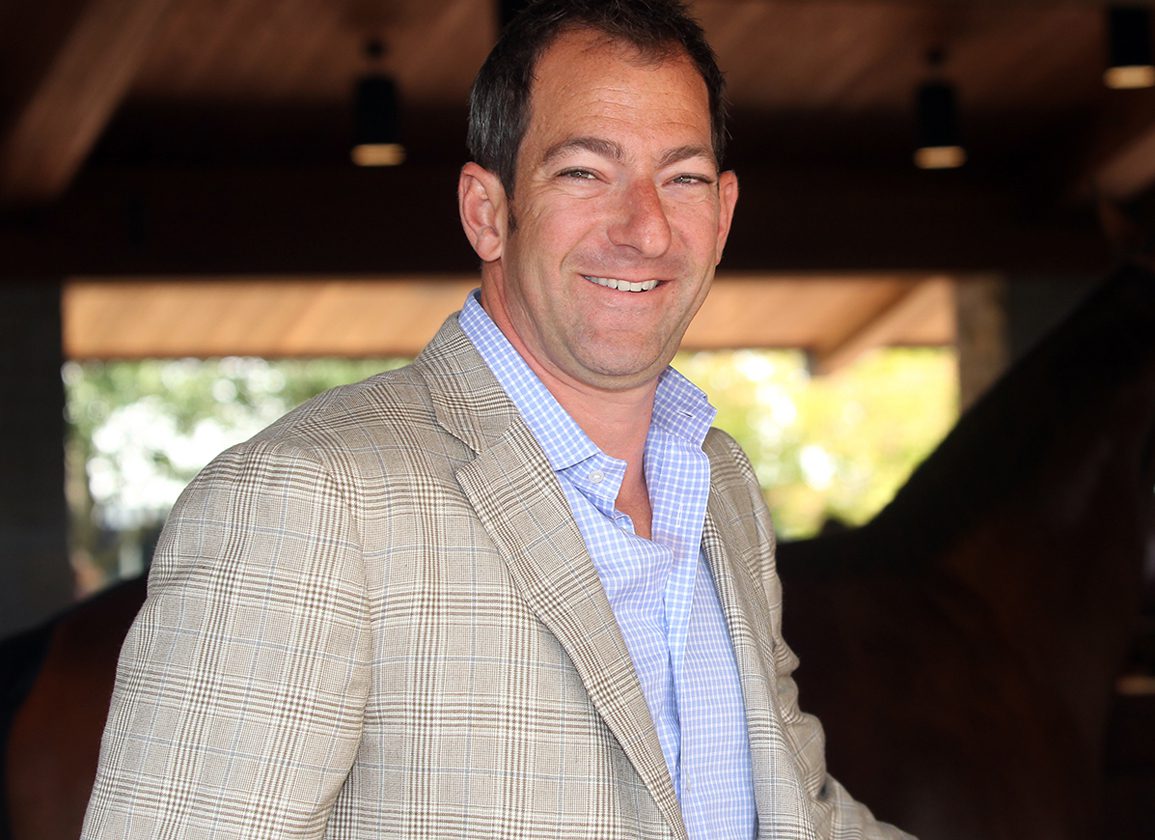
Craig Bernick | Keeneland
Craig Bernick (Glen Hill Farm): It's a commercial market now. The foal crop has been going down for a long time but the amount of horses being sold as yearlings hasn't gone down by nearly the same percentage. The syndicates are fantastic because it gives people a chance to compete at a top level. A lot of these owners were putting up $500,000 or so a year buying three or four horses they would send to their local trainer. Now they're using the same amount of money to take 10% of 15 horses. That's got everyone focusing on the top of the market, the best horses.
Racetracks are closing and the foal crop is going down and there are more $500,000 and up horses sold every year. Everybody is focusing on the top and ignoring all the other horses.
We should have had a mare cap but we don't. That would have helped diversify the stallions that people breed to and everything else that goes along with it. The big stallion farms want more, more, more all the time. We have a foal crop going down yet we have stallions being bred to more mares than ever before. That can't be good for business long term.
I don't know what can be done to reverse the trend. We have the Breeders' Cup, the Triple Crown and four or five big Saturdays spread across the rest of the year and those are the only races anyone wants to run in anymore. We've made Grade II and Grade III races not run on those days insignificant from an owners' perspective. The only thing that really matters any more is if you win on Whitney Day, Travers Day, Breeders' Cup, Triple Crown, Pegasus. Those are the days that matter. We've lost a lot when people don't care anymore about winning a Grade III race somewhere on a Saturday. Everybody's aiming for the same top of the pyramid and as a result, there will be fewer and fewer horses born. Until there is a demand from people who want to have nice horses, are happy to win nice races and enjoy being an owner, we're going to be in trouble. All everybody wants anymore is to have Derby and Breeders' Cup horses.
Fred Hertrich (Watercress Farm): The market is not accepting less-expensive horses. The day of the $1,000 stallion breeding to the $1,000 mare is a thing of the past. The cost of raising that horse, the cost of breaking that horses, the cost of training that horse is the same whether it is the highest-priced yearling in the world or the least expensive. Like with everything else in the economy, the costs are great so the price of the asset has to be greater. We used to have thoroughbred buyers who would buy 10 yearlings at $5,000 apiece. They'd hope to hit the lottery with one of them and they might give away the rest. But that was when expenses were manageable. Now with the price of feed, help, blacksmiths, on and on, the game has changed. People can't afford to do that any more. You have to believe that when you start with that product you're going to have something that will have value and has an opportunity to be a top racehorse.
I'm not sure anything can be done about this because I don't see the costs of raising an animal going down. Look at labor. What we used to have to pay for labor on a farm or in a training barn has gone up 30 to 40% in the last 24 months. It won't be reversed, in my opinion.
If the foal crop were to get down to 13,000 or 14,000, the caliber of everything would be better. Racing will be better, the product will be better. No one will be breeding an ill-conformed stallion to an ill-conformed mare. The dynamic will change but it will be an improved product for the public to wager on. There are going to be tracks where if the purses are too low they won't continue to race because people will not be able to afford to race for those purses. Some of the jurisdictions that have no way to generate serious purse money may not be able to stay competitive. I hate to say it, but like with anything, the bottom of the food chain is not going to do well. Horse racing and horse breeding is no different than any other entity in the country.

The post Another Year, Another Declining Foal Crop; Experts Chime In appeared first on TDN | Thoroughbred Daily News | Horse Racing News, Results and Video | Thoroughbred Breeding and Auctions.
Source of original post
