Taking Stock: Notes on Medina Spirit and Breeders Hertrich lll and Fielding

As I sat down to write this column Monday, I got a text from a bloodstock agent that said, “Heard Medina Spirit broke down at Santa Anita a little while ago. Gonna be a shit storm.” I checked Twitter right away, but there was nothing yet about Medina Spirit (Protonico). I didn't have to wait long. Some minutes later, the “I heard Medina Spirit…” tweets started trickling out, and then the dam burst. Everyone had something to say, and most of it was derogatory or innuendo about his trainer, Bob Baffert, who's been a lightning rod for controversy, including for a post-race betamethasone positive on Medina Spirit after the colt had surprised many with a gutty win in the Gl Kentucky Derby this spring.

The negative response was expected, because Baffert went through a tough period some years back when a number of his trainees died of apparent “sudden-death” heart attacks, which was the immediate speculation about Medina Spirit. Although Baffert was mostly cleared of wrongdoing and never sanctioned in the prior deaths, they left a black mark that's never been erased. His recent medication violations have only infuriated his detractors and heightened tensions, creating the climate that was a tinderbox for the “shit storm” that hit after the news broke Monday morning.

Ironically, Medina Spirit had been in the news Friday evening, when Baffert's attorney had triumphantly released a statement that said that a lab had determined the betamethasone in the Derby positive had been from an ointment and not an injection.

It's always a gut punch for anyone in this business when a horse dies, especially the connections. I sent condolences via texts to both Baffert and Amr Zedan, the owner, and both responded, Zedan with the praying symbol and Baffert with one word, “Devastated.” When the Derby winner and a high-profile horse like Medina Spirit dies, emotions are understandably amplified, but because it was a Baffert horse, the angst and anger surrounding the death was at another decibel level altogether on social media, where he's positively toxic. Unfortunately, lost in all this were Medina Spirit's accomplishments, some of which were minimized by folks while he was alive because of the betamethasone positive and because he was trained by Baffert. That's too bad, because he was a Classic winner and also a rare type of horse.

Bred by Gail Rice in Florida in a “backyard” breeding program, Medina Spirit exceeded all expectations and was an inspiration to small breeders everywhere. A $1,000 yearling, he was purchased for $30,000 as a 2-year-old in training by Zedan Racing Stable but steadily climbed the ladder in Baffert's elite barn, stepping over high-priced yearlings one at a time to become the third-best 3-year-old for Baffert behind Life Is Good (Into Mischief) and Concert Tour (Street Sense), two Gary and Mary West-bred colts. But when those two failed to make the Churchill Classic, Medina Spirit stepped up to the plate off the bench and delivered the ultimate pinch hit, succeeding at 12-1. His win appeared to surprise even his trainer.

Medina Spirit's road to Louisville had included some tough races, notably two against the stable star, the handsome and brilliantly fast Life Is Good. In the Glll Sham S., Medina Spirit immediately caught the eye for closing the distance when Life Is Good had looked like was going to blow open the race. At the finish, less than a length separated the two horses, but it was Medina Spirit's “try” that caught the eye–he simply wouldn't give up, despite the excuses that were made for his stablemate's lack of focus in the race. That try is the characteristic that most defined Medina Spirit, and it was evident in all 10 of his starts, five of which he won. He placed in the other five races, and it's notable that he never let the popular Godolphin runner and Gl Belmont S. and Travers S. winner Essential Quality (Tapit), the champion 2-year-old colt last year who's touted as the favorite to win the Eclipse as champion 3-year-old colt, finish ahead of him in two meetings.

Medina Spirit wasn't particularly attractive, he wasn't a big horse, and he didn't appear to be a physically athletic standout unlike most in Baffert's barn, but that will to win and the will to never give up that he repeatedly exhibited is the rarest and most sought-after characteristic in racehorses.

Aidan O'Brien once told me that his G1 2000 Guineas winner Saxon Warrior (Jpn) (Deep Impact {Jpn}) “would absolutely kill himself stone dead for you,” meaning he'd generously empty the tank and run on fumes if he had to.

That's exactly how I'll remember Medina Spirit. He was that type of warrior, and one of the few horses in recent years that I've admired for his try. He left it all on the track.

Americanrevolution

You've already read in TDN about the notable accomplishment of breeders Ashview Farm and Colts Neck Stables being represented by the juvenile duo of Mo Donegal (Uncle Mo) and Nest (Curlin), two Todd Pletcher trainees who won the Gll Remsen and Gll Demoiselle, respectively, at Aqueduct Saturday. They can dream about the Derby and the Gl Kentucky Oaks over the winter.

Pletcher also won the Gl Cigar Mile Saturday with CHC Inc. and WinStar's ascendant 3-year-old colt Americanrevolution (Constitution), who was bred by in New York by Fred W. Hertrich lll and John D. Fielding, who've been having a dream of a year. Alone or in partnership, Hertrich, at the least, should be considered for an Eclipse Award as breeder of the year, because he's had a hand in breeding five Grade l winners in 2021–quite an accomplishment, especially for a fairly small breeding entity that's based at Watercress Farm in Lexington.

Aside from Americanrevolution, a winner of five of seven starts, the other Grade l winners are Beyond Brilliant (Twirling Candy), Juju's Map (Liam's Map), Pinehurst (Twirling Candy), and Maxim Rate (Exchange Rate).

Hertrich and Fielding, along with Robert L. Tribbett, bred Beyond Brilliant, who won the Gl Hollywood Derby for trainer John Shirreffs on Nov. 27.

Hertich alone bred Juju's Map, winner of the Gl Darley Alcibiades at Keeneland on Oct. 8 for trainer Brad Cox.

Hertrich and Fielding bred Pinehurst, who won the Gl Runhappy Del Mar Futurity on Sept. 6 for Baffert.

Hertrich and Fielding bred Maxim Rate, who won the Gl Gamely at Santa Anita on May 31 for Simon Callaghan.

Hertrich and Fielding are commercial breeders who sell with Taylor Made, and these are the prices they got for these five future Grade l winners: Maxim Rate was a $130,000 weanling; Pinehurst sold for $180,000 as a weanling; Juju's Map was a $190,000 short yearling; Beyond Brilliant sold for $50,000 as a fall yearling; and Americanrevolution was a $275,000 summer yearling.

If I were shopping for young horses, I'd be looking carefully in the Taylor Made consignments for horses bred by Hertrich and Fielding.

Sid Fernando is president and CEO of Werk Thoroughbred Consultants, Inc., originator of the Werk Nick Rating and eNicks.

The post Taking Stock: Notes on Medina Spirit and Breeders Hertrich lll and Fielding appeared first on TDN | Thoroughbred Daily News | Horse Racing News, Results and Video | Thoroughbred Breeding and Auctions.
Source of original post

Value Sires, Part II: First Foals in ’22

Even last year, when doing so much to fortify breeders through the uncertainties of the pandemic, stallion farms appeared to price their rookies to squeeze the usual juice from the commercial market's greatest addiction.

That was fair enough. Nowadays farm accountants can bank only on the most fleeting of vogues in drawing up a business plan for stallion acquisitions. And nor can we sensibly expect any slack now, pending the arrival of first foals and then a debut at the weanling sales next fall. A stallion has to be in pretty obvious trouble to have his fee significantly trimmed for his second season, as a candid devaluation will be received as a blatant kick by those who were prepared to assist in getting him going.

In principle, then, not a great deal can have changed since we first sieved this group last winter. Certainly I can't imagine anyone pays the remotest attention to “covering sire” averages, which are so transparently incidental to the inherent value of such mares as randomly happen to be offered. The one new ingredient in play, then, tends to be the size of debut books.

For the vast majority, in numerical terms, the only way from here is down. As such, the covering stats do not augur terribly well for some of those we thought best value. And maddeningly, because these cycles are so self-fulfilling, it's hard to turn things round if you do struggle for early traction. A disappointing first book places a tough burden on its graduates to get you over the hump of the intervening couple of crops, which will tend to be smaller yet. So our faith in one or two, while undiminished, may not obviously yield “value” in the shorter term. If fairly priced now, at least measured by your odds of getting a runner, they are probably going to become better value yet during the next year or two.

At the other end of the spectrum, though the most expensive of the intake, Horse of the Year Authentic covered as many as 229 mares–only one fewer than the busiest stallion in the land, Goldencents. (Both, of course, are sons of Into Mischief standing alongside their champion sire at Spendthrift.) A number of other start-ups also welcomed enormous books: Vekoma 222, McKinzie 214, Instagrand 190, Thousand Words 184, Volatile 181, and Global Campaign and Improbable 177 apiece. One way or another, then, some highly eligible prospects are going to have their work cut out to match the kind of freshman headlines some of these rivals are bound to seize through sheer weight of numbers.

So between these high-water marks, and those struggling near the storm drain, where can we still seek a rising tide? Here are one or two thoughts–as subjective as ever, and with due apology to the many promising types overlooked in our more concise new format.

Bubbling under: Hard to know whether a commercial market so childishly nervous of grass influences will do adequate justice to a great opportunity in War of Will (War Front). But it's hugely encouraging that this Grade I winner on both dirt and turf, by a son of one breed-shaper out of the daughter of another, was overrun with 143 partners at $25,000: by the laudably conservative standards of his farm, an outright stampede. War of Will merits close consideration by European breeders, too, with every right to become a valuable international influence.

Vekoma (Candy Ride {Arg}) has been given a trademark Spendthrift launch with a monster book at $20,000. All farms that operate this kind of system obviously offer yearling sellers a double-edged sword, but Vekoma, from the family of Street Sense and Danehill Dancer (Ire) among others, represents a promising sire of sires and can certainly recycle a ton of speed and class. Of those who corralled such big numbers, this guy looks value to make them count–even before a friendly trim to $17,500.

One of the most controversial races in Derby history, in contrast, is struggling for commercial credibility. But you can't have it both ways: if some people have decided to punish the hapless Maximum Security (who gets a fee cut) for allegations against his trainer, then at least they should give Country House (Lookin At Lucky) due respect. As it is, he was unlucky to be denied the opportunity of authenticating his breakthrough; and nor did he then get quite the numbers he deserved when sent to Darby Dan at just $7,500. Someday, perhaps, he will finally get some overdue credit by proxy, and sire a colt to pass the Derby post first. Inbred to the Sam-Son matriarch No Class, that's something he is absolutely entitled to do and, like his sire, he remains excellent value for those of sufficiently independent outlook.

Global Campaign | Sarah Andrew

Bronze: GLOBAL CAMPAIGN (Curlin–Globe Trot, by A.P. Indy)
$12,500 WinStar

I suspect that this guy is going to prove a brisker influence in his new career than might be anticipated. Yes, he was unraced at two (albeit only by a matter of days, scoring on debut Jan. 5); and nor did he try Grade I company until his last two starts at four, when winning the Woodward and outrunning his odds for third in the Breeders' Cup Classic. But if people won't be expecting too much, too soon, from a son of Curlin whose first two dams are by A.P. Indy and Lord At War (Arg)–both, incidentally, stellar distaff influences–this is a family that can inject surprising doses of speed.

That second dam, herself a three-time graded stakes winner, is a half-sister to the dam of Zensational (Unbridled's Song), whose three Grade I sprints qualify him as the fastest son of his sire. The next dam was a half-sister to the dams of one sprinter that broke the five-furlong track record at Churchill, and of another that did the same over six furlongs (turf) at Woodbine. And of course Global Campaign's half-brother Bolt d'Oro was hardly a standard issue Medaglia d'Oro (not that there's any such thing, really) in featuring a 103 Beyer in his champion juvenile campaign. Sure enough, Global Campaign outpaced a smart sprinter in Yorkton (Speightstown) over seven furlongs at Gulfstream on his 4-year-old comeback, and I have a hunch that he didn't quite last home at the Breeders' Cup. Having controlled the tempo when winning over nine furlongs, I wonder how he might have fared given more of a chance at a mile.

Regardless, a debut book of 177 is a major leg-up, and due reward for realistic pricing. I'm not saying that Global Campaign will necessarily have loads of precocious juveniles, but expect him to achieve a viable base and then to consolidate. Factor in his fee, and he rather sets himself apart from those with even bigger books: most are more expensive, and others don't obviously match his eligibility to sire the type of horses we should all be looking for.

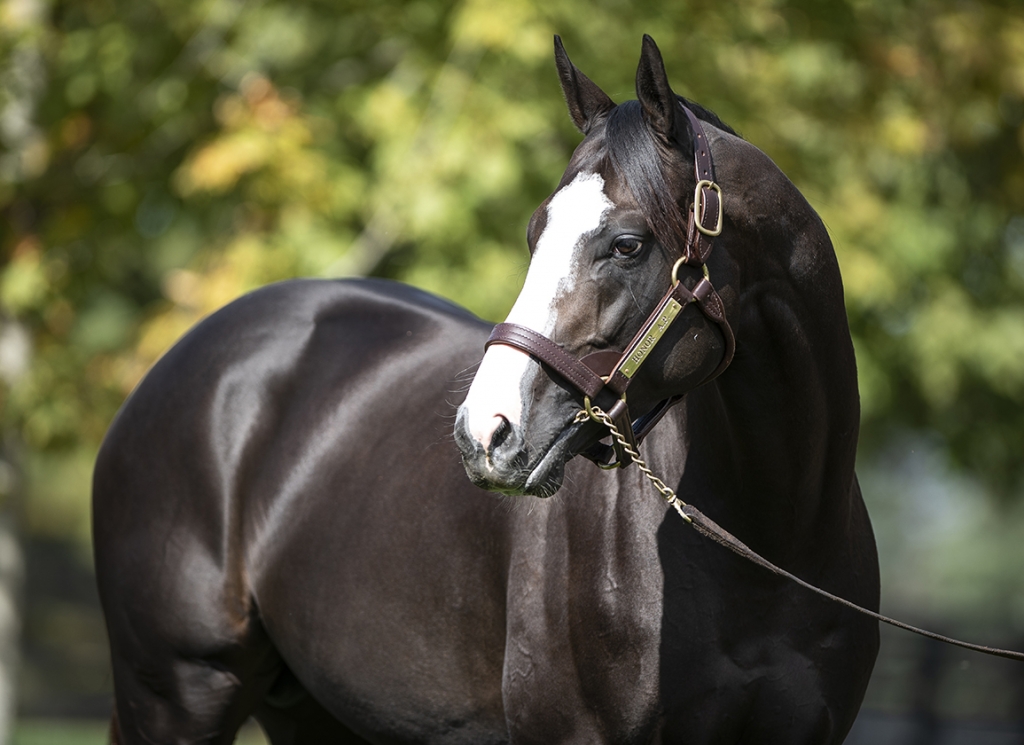
Honor A. P. | Amy Lanigan

Silver: HONOR A. P. (Honor Code–Hollywood Story, by Wild Rush)
$15,000 Lane's End

Still fantastic value, still a whole lot of racehorse for this money. And I cling stubbornly to the belief that he was as talented as any of his generation, beating the Horse of the Year on merit the only time they met properly toe-to-toe (undercooked for their first encounter; undone by a shocking trip in their third).

The only reason he doesn't retain the top step is that a book of 110, which should be ample in a sane world, may contain some that emulate their sire in only really announcing themselves round a second turn, and maybe with a little maturity too (bearing in mind that imposing physique). The book of 190 assembled by the precocious Instagrand, for instance, is presumably more likely to produce maiden winners at Keeneland's spring meet. It's possible, then, that the notoriously myopic commercial market might not grant Honor A. P. due attention until the playing field starts to level out.

Once through that crossroads, however, those who do hang in there will definitely have the last laugh. And remember that a horse this beautiful, in the meantime, almost guarantees a home run or two at the sales. Honor A. P. must have been close to the most prodigious physical of the crop, as measured by his $850,000 yearling tag; while his dam won Grade Is at two and five, a comfort in view of the way his own light career restricted wider appreciation of his talent. She has also contributed three other black-type operators to a branch of the Myrtlewood dynasty (Global Campaign, incidentally, represents another) that has been seeded pretty seamlessly by venerable Classic influences.

Honor A. P. absolutely merits fidelity, and will someday make this fee look like a gift.

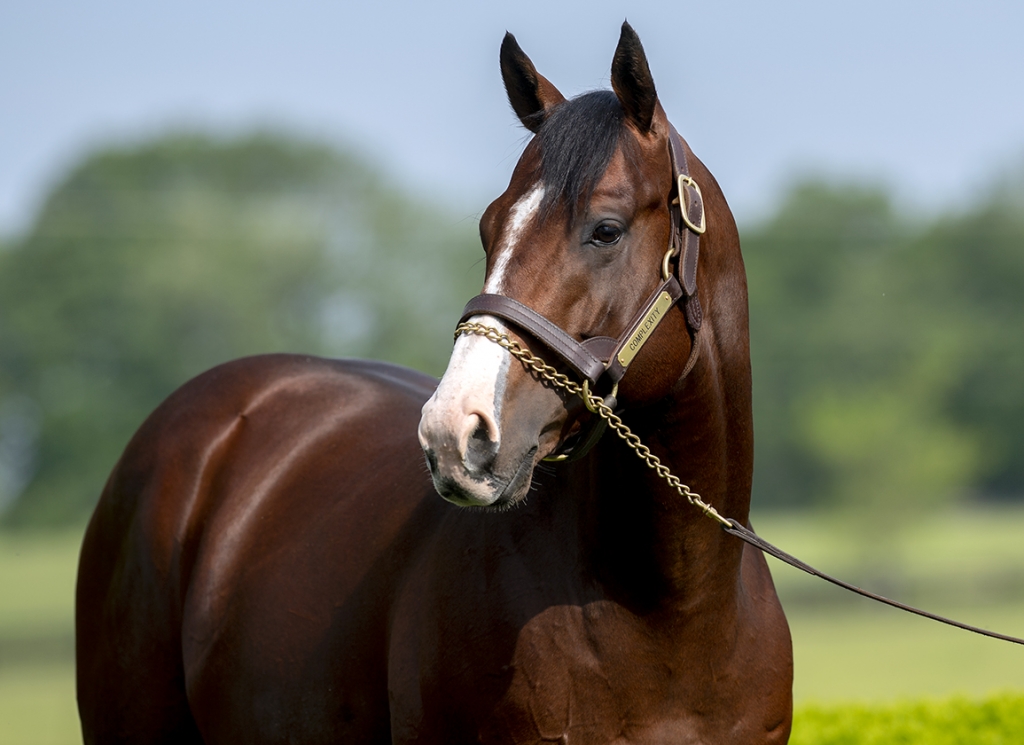
Complexity | Sarah Andrew

Gold: COMPLEXITY (Maclean's Music–Goldfield, by Yes It's True)
$12,500 Airdrie

How does Complexity elbow his way right through to the top of the podium? Not too complex, really. For one thing, his farewell performance in the GI Breeders' Cup Dirt Mile has obtained a fresh luster: trying to lie up with Knicks Go (Paynter) from a wide draw, through opening splits of 22.15 and 22.39 (producing a faster six furlongs than in the Sprint on the same card), has turned out to be a still tougher ask than it seemed at the time–especially round a second turn, which was probably not Complexity's true metier. This time last year, moreover, Maclean's Music was still available at $25,000. A breakout Grade I exacta this summer has doubled his fee, requiring smaller breeders to ponder his potential as a sire of sires instead. Above all, however, Complexity received no fewer than 158 mares in his debut book: as close to oversubscription as this model farm will allow.

That puts him right in the center of the conversation for the freshmen's championship. Remember he made all for his emphatic GI Champagne S. success, as indeed he had when thrashing future Grade II and stakes winners on debut in Saratoga. Complexity regrouped after a troubled sophomore campaign to be just nailed in the GI Forego S., after again sharing a wild tempo out wide, and all you need to know about his build is that Mike Ryan gave $375,000 to make him the most expensive yearling in his sire's third crop.

You can anticipate voracious pinhooking interest in his yearlings and, while the left-field sires of his first three dams get credit primarily for variegation, they do represent august lines (Bold Ruler, Bold Ruler, Never Bend). As with American Pharoah, for instance, the important thing is that the genetic cocktail is plainly functioning potently. And don't forget that Complexity's dam has also produced a GI Breeders' Cup Juvenile Fillies runner-up, and she's out of an 11-time winner who ran second at Grade II level.

This horse couldn't be in better hands and, having gained a good deal while others have more or less had to stand and wait, everything is in place to elevate the value of any investments made in him now.

The post Value Sires, Part II: First Foals in ’22 appeared first on TDN | Thoroughbred Daily News | Horse Racing News, Results and Video | Thoroughbred Breeding and Auctions.
Source of original post

Can Oaklawn Maintain ‘Boutique’ Status Over a 5-Month Meet?

The Week in Review by T.D. Thornton

It was a little odd to see Oaklawn Park in the mix of tracks running on the first weekend of December. It was even stranger to see the Arkansas track carding races for 2-year-olds, which has not happened since Mar. 27, 1975.

The winds of change are blowing through the pre-winter mists of Hot Springs. The biggest challenge facing Oaklawn as it embarks upon a Dec. 3-May 8 season for the first time is whether or not the popular track can retain the “boutique meet” flavor and feel it has cultivated over the past several decades even though the racing schedule will now extend over five months.

Oaklawn began nudging out the boundary of the spring portion of the season in 2019, when it scheduled a May 4 closure instead of the traditional mid-April wrap-up. Now the winter start has been rolled back to better dovetail with the end of the Churchill Downs meet in late November, attracting some outfits that raced in Kentucky while at the same time providing new competition to two other tracks controlled by Churchill Downs, Inc., Fair Grounds and Turfway Park.

When Oaklawn announced its intention to expand for 2021-22 back in July, it touted the ability to offer six-figure allowance races over a 66-day meet as a major draw to horse owners and trainers.

Although it's too early to get a definitive snapshot of exactly how the prospect of big bucks will translate to the Thoroughbred population, here's a comparative look at field sizes for all three venues based on the Friday, Dec. 3, and Saturday, Dec. 4, programs:

Oaklawn on Friday carded nine races featuring 75 starters. Saturday's 10 races drew 85 starters. The average field size combining both days was 8.4.

Fair Grounds on Friday ran nine races with 71 starters. Saturday had nine races with 64 starters. The two-day average field size was 7.5.

Turfway's Friday card had eight races with 77 starters. Saturday's eight races lured 83 starters. The two-day average was 10 starters per race.

Adverse weather was not an issue at any of the venues over those two dates. And clearly, there are some nuances that make direct comparisons dicey.

Oaklawn has the clear purse money advantage. Fair Grounds has the draw of a turf course, which should theoretically be helping its field-size numbers. And you can argue that comparing Turfway to either of those two tracks is not relevant, because Kentucky racing in winter is decidedly more blue-collar than the product at either Hot Springs or New Orleans.

The smart money says the matchup to watch over the course of the season is Oaklawn versus Fair Grounds. They're closer together geographically and draw from similar horse populations.

But Mother Nature could be an equalizing force. When ice and snow descend upon Arkansas, it tends to have a paralyzing effect. Oaklawn lost eight days of racing last February, and a desire to avoid the prospect of bad weather was among the factors cited when Oaklawn moved its second-weekend-of-January start date back to the fourth weekend of the month in 2019.

Remsen Recap

It's been a long time since the path to Louisville ran through New York on the first Saturday in December. Only three horses in the last 58 years–Thunder Gulch, Go for Gin and Pleasant Colony–have parlayed wins in the GII Remsen S. into a blanket of roses in the GI Kentucky Derby.

Winning the final graded stakes of the season in New York at nine furlongs looks promising in past performances, but that shine hasn't really carried over to subsequent 3-year-old form in recent seasons (with the notable exception of Catholic Boy, who won the 2017 Remsen, missed the 2018 Triple Crown, then won the GI Travers S.).

This year could be different. Mo Donegal (Uncle Mo) and Zandon (Upstart) put on a rousing stretch fight from the eighth pole home on Saturday at Aqueduct. Both were stepping up off of maiden wins and trying two turns for the first time, and they were 9 3/4 lengths ahead of the remaining six also-rans.

Mo Donegal had a ground-saving go under Irad Ortiz Jr. for most of the trip behind a dawdling pace (first four quarters in :25.18, :26.29, :24.87 and :24.94), then skimmed across the heels of the four frontrunners to escape traffic at the top of the lane.

Zandon, by contrast, stalked three deep and jockey John Velazquez had him cleanly positioned to get second run at two tiring longshots coming off the final bend. He split horses with authority, then braced for the mid-stretch confrontation with the onrushing Mo Donegal.

They crested the eighth pole in lockstep, then the outside-running Mo Donegal tightened the lateral gap between them under right-handed stick work. But being put into tighter quarters seemed to embolden Zandon, even though it initially seemed Mo Donegal had the better late-race momentum through their final eighth in :12.33.

The Equibase chart caller minced no words in describing how Irad Ortiz Jr. then threw “repeated exaggerated crosses with the left-hand rein near the face of the runner-up” in an “attempt to intimidate” Zandon. The two bumped and brushed approaching the wire.

Mo Donegal won it by a nose, but Zandon got his head down in front just after the finish, galloping out slightly stronger and longer than the winner. Both earned an 89 Beyer Speed Figure.

Laurel still a no-go

There were no timed workouts at Laurel Park through Sunday, even though earlier in the week track executives had stated that Saturday was the likely date for preliminary repairs to the dirt's cushion and base to be completed. It's now been a full week since horses have been allowed over the track at full speed.

As reported last week, seven Laurel Park horses have died since Nov. 6, and eight total have perished this autumn after sustaining fractures while racing or training over the newly installed main dirt track there.

Laurel had ceased racing back Apr. 11 to begin an emergency, multi-million-dollar overhaul of the main track, which reopened with no safety issues Sept. 9. But the onset of colder weather has brought problems that are believed to involve the improper settlement of the base, particularly in the homestretch.

Although executives from The Stronach Group, which owns Laurel, chose their words carefully when discussing the situation via press release last week, they are likely to face substantial grilling from the Maryland Racing Commission when the board meets Tuesday. A discussion of the safety of the surface had already been on the commission's agenda even before the track was forced to call off Dec. 3-5 racing.

The post Can Oaklawn Maintain ‘Boutique’ Status Over a 5-Month Meet? appeared first on TDN | Thoroughbred Daily News | Horse Racing News, Results and Video | Thoroughbred Breeding and Auctions.

Source of original post

Breeders Ashview Farm, Santulli Hit Remsen-Demoiselle Double

It was 32 minutes that breeders Richard Santulli and the Lyster family will not soon forget. That was all the time it took for the partnership, which owns a limited number of mares, to have bred the winners of two graded stakes races on the same day at the same racetrack.

The feat occurred Saturday at Aqueduct where the Lysters' Ashview Farm and Santulli's Colts Neck Stables bred the winners of the GII Demoiselle S. and the GII Remsen S., contested as the eighth and ninth races on the Big A card. It began in the Remsen with Mo Donegal (Uncle Mo) and continued with Nest (Curlin) in the Demoiselle.

“My family has been around long enough to know this was a really special accomplishment because it's so hard to breed a graded stakes winner,” said Gray Lyster, who runs Ashview, located in Versailles, Kentucky, with his father Wayne, his mother Muffy and his brother Bryan. “To breed two and to win two-late season 2-year-old races in New York that everyone is watching back to back on the same day is a perfect storm. That doesn't happen very often, so we are enjoying it.”

Santulli and Wayne Lyster are friends who have known each other for about 40 years and have been long-time partners. Wayne Lyster and Santulli's Jayeff “B” Stables were the breeders of Eclipse Award and GI Breeders' Cup Juvenile winner Johannesburg and they also teamed up to breed Sweet Loretta (Tapit), the winner of the 2016 GI Spinaway S.

They're always on the lookout for good mares. They bought Marion Ravenwood (A.P. Indy), the dam of Nest, who was in foal to Pioneerof the Nile, for $400,000 ast the 2017 Keeneland November sale. Callingmissbrown (Pulpit), the dam of Mo Donegal, was bought privately. From there, it's a pretty simple formula–breed to the best stallions out there. (Marion Ravenwood will be bred to Curlin in 2022, and the partnership hasn't finalized plans for Callingmissbrown.)

“We really try to stay in our lane when it comes to breeding,” Lyster said. “We like to breed to really good, top, proven stallions. If not that, we will play the first-year market. Uncle Mo and Curlin are no-brainers for us. They are obviously good stallions and everybody should be using them.”

Mo Donegal was purchased for $250,000 at Keeneland September and races for Donegal Stable. Trained by Todd Pletcher, he broke his maiden in his second career start before stretching out to the mile-and-an-eighth in the Remsen. With Irad Ortiz Jr. aboard, he won by a nose and had to survive a stewards' inquiry.

Nest races for the partnership of Repole Stable, Eclipse Thoroughbred Partners and Michael House and cost $350,000 at the same Keeneland September sale. Also trained by Pletcher and ridden by Ortiz, the Demoiselle was her third career start and came after a third-place finish in the Tempted S. She was also a narrow winner, scoring by a neck.

“That was something else,” Santulli said. “What a fun afternoon.”

It was the second straight year that Pletcher won the Demoiselle with a daughter of Curlin after winning the race last year with likely 3-year-old filly champion Malathaat (Curlin).

At this year's Keeneland September sale, Ashview and Colts Neck sold an Into Mischief filly who is a half-sister to Mo Donegal for $500,000. They also sold a colt by Violence who is a half-brother to Nest for $275,000.

The two yearlings give the Santulli-Lyster partnership something to look forward to in 2022, and so do Nest and Mo Donegal. They've both won graded stakes races around two turns, which bodes well for the GI Kentucky Oaks and the GI Kentucky Derby.

“That's what we're dreaming of, the Oaks and the Derby,” Lyster said. “How can you not? I don't want to say it is surreal, but we kind of had to pinch ourselves Saturday. We're really excited. Even if we don't make it to the Derby or Oaks, what we did Saturday was already a huge accomplishment.”

The post Breeders Ashview Farm, Santulli Hit Remsen-Demoiselle Double appeared first on TDN | Thoroughbred Daily News | Horse Racing News, Results and Video | Thoroughbred Breeding and Auctions.

Source of original post

Verified by MonsterInsights