How Brookdale Farm’s Fred Seitz Made a Name For Himself

It felt like everything was up in the air; but actually everything was falling into place. Even as a kid, from nowhere obvious, Fred Seitz had discovered an affinity for horses. And the young man stepping onto the tarmac at Lexington airport had meanwhile learned resilience and adaptability with the Marine Corps. Sure enough, all the perplexity Seitz felt about his future was about to evaporate.

“I was wondering what I was going to do when I grew up!” Seitz recalls in his gentle, humorous tones. (He was, by this stage, a Vietnam veteran and closer to 30 than 20.) “So seeing how I had loved the horses when I was younger, I took a trip out here. I'd never been to Kentucky before. They didn't have jetways back then, so as I went down those steps from the plane, it was a very odd sensation. I just said to myself, 'This is it. This is where I'm going to live for the rest of my life.' And I was right. I went down, I stopped, and I knew.”

And here he is, very nearly half a century later, reflecting in his office at Brookdale Farm on a career best measured not just by the scale or diversity of his achievements (raised and sold a Derby winner; pinhooked an Oaks winner; stood a champion stallion; raised a champion stallion) but by the respect of a whole community. In an industry often dominated by dynastic operations, he has literally made his name—to the point that the next generation, in sharing and enhancing its prestige, are themselves evolving into one of those Bluegrass clans whose nurture is a guarantee of trust. Seitz the outsider has become Seitz the patriarch.

“People use the term 'self-made man',” he remarks. “I don't believe in that. When I think of all the people that have helped me along the way—people who taught me, helped me understand, gave me a push, gave me knowledge, encouragement… That's not self-made. That's made by a lot of kind people. So I've been very fortunate.”

One way or another, it has been quite a journey to Versailles from his native Bronx. But he always had the right stuff in his own pedigree: his father had also been a Marine, serving on Iwo Jima; likewise an uncle, lost in a B-25. And when Seitz was five, he was blessed by a transformative change of environment—the family of six having previously squeezed into a one-bedroom apartment in the city—after his father joined the maintenance crew on a New Jersey farm belonging to the social reformer Geraldine Morgan Thompson. It was called Brookdale and, though since swamped by suburban development (for Brookdale University and a county park), Seitz would eventually preserve the name in tribute to the life-changing opportunity he found there. Because the farm, crucially, was divided between agriculture and a training track.

“All of a sudden, we'd left the streets of New York for this little hamlet in the country,” he recalls. “A wonderful place to grow up. And I became fascinated by those horses. There were all these different trainers in there, renting stalls, and the place had a great history going back. Regret had trained there—a Whitney farm was right across the road—and Colin was another that came off the place in the old days. And I was walking hots by the time I was 10. Of course, they gave me the easy horses, but I couldn't believe they were paying me: I thought it should be the other way round. A dollar per horse! It was a wonderful opportunity to learn, and I was so lucky to be able to find out, so early in life, what I wanted to do with all my ensuing years.”

Through high school, Seitz worked vacations as a groom and exercise rider at Monmouth Park. To this day he treasures a photograph of a filly named Triple Brook, in the winner's circle at Atlantic City in 1964. He's holding the halter, 17 years old, and couldn't conceive that life might contain any greater satisfaction: he'd helped to break the filly at her owner's farm.

The trainer is not in the picture. Seitz says that was pretty common at the time, to cede the limelight to the owner, though on this occasion Ralph McIlvain might just have been busy at the windows.

“Mr. McIlvain was a gambler,” Seitz recalls. “And he'd tried to hide this filly in the mornings. He knew she was really nice, and he didn't even run her in a maiden special weight, but in a claimer. She won by six. Obviously the word had gotten out, she only paid $2.70. He'd wanted to make a real killing. I didn't know anything that was going on, I was just a kid. But the owner found out that he was gambling with her, and that he could have lost her for $5,000, so he sent her to New York to Ridgely White. After that, she won the Vagrancy, she ran second in the Beldame, third in the Regret—all graded races today. Obviously she was a very good filly.”

Whether in the Brookdale barns or at the track, Seitz was acquiring a diploma in old school horsemanship: not just from veteran Irish trainers like Tom Harraway and Mike Fogarty, but also from other grooms. Seitz was avid to learn, and his vocation seemed plain. But then came two intrusions: college in Western Pennsylvania and then, with his country at war, aviation with the Marine Corps. In Vietnam, they were shooting down pilots as fast as they could be trained. With corresponding urgency, two days out of Officer Candidate School, Seitz married his sweetheart Peppe who had attended a sister school to his own.

Leaving Peppe with her family, Seitz became a bus driver in the sky, flying 50 men at a time in giant H53 Sea Stallion helicopters, first from Okinawa and then off the Vietnam coast with the fleet they called Yankee Station.

“I spent my last two months flying in, flying out,” he says. “I have to be honest, I was very fortunate. I did see some of the results, and I transported some unfortunates, but I never spent a night 'in country', as they called it. I never had those situations to deal with, that were so hard on many people.”

On his return, he became an instructor at the Navy Flight School. It was a traumatic time for the nation, and no less so for a young serviceman who had seen friends maimed or killed. There was much hurt and confusion over the hostility of so many compatriots when his peers had shown such courage and sacrifice.

“It was difficult,” Seitz says. “The country was fed up, and rightfully so by '73, '74. But it was difficult to understand the reaction of some people, it felt like they were shooting the messengers. I grew my hair long as quickly as I could. Aviators have those leather jackets, just like you see in the movies, with the squadron patches and identification. Nowadays I realize how beautiful those are, really it's your history. But I took them off, gave away my uniforms to my children. So I was actually disrespectful myself, because it all just felt so wrong—the way we were treated. Eventually you get over something like that, but I do still remember it very keenly.”

But if Vietnam had proved a white-hot furnace, then immersion in the cooling waters of the Marine ethos had forged a character that would serve Seitz no less well in his civilian career. He never lost his sense of pride, fidelity and resolute humility. “You find out who you are,” he says. “It's a separate culture that very few Marines don't honor. Once a Marine, always a Marine. So many aspects are valuable: fortitude, discipline, camaraderie, excellence. They have a saying: adapt, improvise and overcome. Simple, but very true.”

All the same Seitz was decidedly at a crossroads, back in 1973, when he took that fateful flight to Kentucky. But while he had just one door to knock, that was enough. Peppe's father had encountered a Standardbred man, Francis McKinsey who had managed Walnut Hall and Almahurst, and asked him to look out for a chance for a hardworking ex-Marine.

“He was a very kind, generous man and along with Joe Taylor, who had a Standardbred background also, helped me find this job on a small farm belonging to Tom Collins,” Seitz recalls. “On The Rocks Farm, it was called. Doesn't exist anymore. I was very early to be a farm manager. To put it bluntly, I wasn't qualified. My experience had been with horses in training. But if I didn't know something, which was often, I'd call Francis in the evening and he'd tell me what to do. So if I was often learning by my mistakes, he helped me to learn quickly.”

After a couple of years Seitz extended his education to the rapidly evolving sales scene. First came a stint under Ted Bates at a new subsidiary to the New York firm of Fasig-Tipton, testing out Keeneland's local monopoly. (Today, of course, Seitz's daughter Anna is bringing things full circle as Fasig-Tipton's much esteemed Client Development and Public Relations Manager.)

“It was just Ted, and a secretary, and I was his assistant,” Seitz says. “I did everything from putting on the hip numbers to setting out the chairs, whatever it took. Ted was not just a wonderful horseman but a wonderful man, very open with his experience. The [1976] Derby winner Bold Forbes and Preakness winner Elocutionist had both just come out of their tent sale, for about $15,000 each. Soon after came Genuine Risk, Seattle Slew, and, bang bang bang, they just kept coming.”

Then came a turning point, Seitz stepping into the slipstream of agency pioneer Lee Eaton.

“In my opinion, Lee invented that business,” he says. “He was very good at it, he was selling lots of horses and back then you got five percent for everything, whether you sold or not, so that was very lucrative. I did a few sales for Lee, and then he gave me some of his overflow. And it was amazing, the quality even of his overflow.”

With the help of his former patron Collins, who introduced him to his banker and the concept of debt, Seitz leased a plot and experimented with half a dozen weanlings in a nascent pinhook market.

“I wanted to play the game, more than just board horses,” he remembers. “The weanling trade was fairly new. There was Stanley Petter, there was Lee, a few others. So the timing was very fortunate. We spent about $60,000 total on those six and they sold for almost double, November to July, which was outrageous good fortune. Two became New York stakes winners, in races that would now be graded; and a third was stakes-placed in California. So we couldn't have been any luckier, starting out.”

Steadily Seitz expanded his portfolio, while acquiring parcels of land piecemeal: just 10 acres, at first; then another 10, 32, 165. Today Brookdale encompasses over 400 acres on different tracts.

“Which I could never have imagined in a million years,” he says. “When I got off that plane, I'd thought to myself, 'If I work hard here, in a couple of years I might be able to manage a small farm.' But fortune has been amazing for me, especially with my help. Victor Espinoza has been here 35 years. People like him have just been a godsend.”

Another market that then remained usefully immature was the one for stallions. “There wasn't the competition then,” Seitz says. “So I took a shot on a horse called Greinton. Beautiful, beautiful horse. Correct. Mile speed. Good pedigree.” He pauses wryly. “And he was an abject failure, just a dud. But I was in the business.”

In 1988, therefore, his friends Ric Waldman and John Perotta, who managed Deputy Minister, approached Seitz to stand the horse when Windfields closed its Maryland division.

“I believe he had 3-year-olds coming,” Seitz recalls. “And the rest of the story everyone knows. He took off, immediately he came here, and the arrangement worked extremely well. He was a big strong horse, very virile. He was a handful, a strong personality. In fact, one of the first times Victor went in the stall with him, the horse grabbed him by the pectoral muscles, lifted him in the air and threw him down. From that day on, we treated him differently. But he became leading sire in North America twice. He was here until he died [aged 25, in 2004], and is buried up in our cemetery. So, another big strike of fortune.”

Seitz has presided over many changes in the business. He remembers Paul Mellon, as a shareholder in Greinton, ringing to caution against the reckless expansion of his book to 60-odd mares. But he has always moved with the times, always adapted like a good Marine.

By the early 2000s, when stallion recruitment had become prohibitive, Brookdale streamlined back to sales prep and boarding only. Sons Freddy Jr. and Joe, also Marines, were meanwhile progressively given responsibility, in management of the farm and sales divisions respectively. The one constant, throughout, has been results.

Brookdale graduates remarkably include not just I'll Have Another (Flower Alley), the result of a mating recommended by Freddy Jr. to long-time client Harvey Clarke, but also the horse he beat in the Derby, Bodemeister (Empire Maker). Tapit was foaled and raised here before being presented for sale as a $625,000 yearling; Serengeti Empress (Alternation) was pinhooked as a weanling; while the latest champion through this nursery is Vequist (Nyquist), raised for breeders Tom and Sue McGrath of Swilcan Stable.

Yet for all these moments of fulfilment, Seitz admits that nothing has ever gratified him, day to day, more than his six or seven years with a trainer's licence.

“By that stage I had this place running smoothly, with the right people, and my background as a teenager had primarily been with horses in training,” he explains. “I had five stakes winners, never from more than eight to a dozen horses. Keeping horses in training truly is a sport of kings but I loved every minute of it. If the fairy came up with a magic wand, that would be very easy for me. Other than a healthy family, the thing I'd most want is a really good horse.”

One way or another, at 75, Seitz has left very few stones unturned with Thoroughbreds. But his own versatility is matched by the object of his obsession: he sees no golden seam to separate the best from the rest.

“They come in all shapes and sizes,” he says with a shrug. “I like correct individuals, with size and some quality. But I used to go to the spit box at Keeneland to look at the winners cooling out, trying to figure out what makes a good one. And I never accomplished much that way at all!”

Seitz credits David Lambert as a mentor who gets closer than any to finding that elusive formula, and Sally Lockhart among many others for their contributions over the years. Above all, of course, there is the immense satisfaction of having three of his children follow him into the world of Thoroughbreds.

When he first came here, the Bluegrass establishment could still resent perceived interlopers. Seitz feels this to be no longer the case; that commercial breeding has made for a wholesome meritocracy. In the meantime, of course, he has himself created a family brand. Typically, this observation elicits a modest chuckle.

“That's right,” he says drily. “And I think about that. There's an old saying, 'shirtsleeves to shirtsleeves in three generations'! I could worry about that, but it's too far down the road. I have 16 grandchildren, no doubt some will stay in the business.

“I've done this so many years now. I'm still here just about every day, but I'm learning to slow down. I try to stay in my own lane. I'm having trouble figuring out where I belong. But I'll get there, because I still love it just like that 10-year-old kid.”

The post How Brookdale Farm’s Fred Seitz Made a Name For Himself appeared first on TDN | Thoroughbred Daily News | Horse Racing News, Results and Video | Thoroughbred Breeding and Auctions.

Source of original post

Where Are They Now: Zenyatta’s Sons, Cozmic One and Ziconic

In this new TDN column, Christie DeBernardis will tell the stories of popular and/or accomplished former racehorses who are now enjoying second careers as show horses, track ponies, etc.

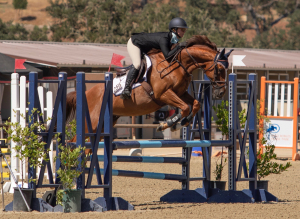
The first two foals out of the mighty Zenyatta, Cozmic One (Bernardini) and Ziconic (Tapit), never reached the winner's circle during their brief careers on the racetrack, but they are both thriving in their second careers as jumpers and ambassadors for off-track Thoroughbreds.

The elder brother, Cozmic One's second career has been well documented in these pages (Cozmic One: Shining New Light on OTTBs and Checking in on Cozmic One) in the past, but we checked in with Hidden Brook Farm's Sergio de Sousa and his daughter Isabela for the latest update.

When Cozmic One first came to the de Sousas, he was Isabela's charge. An accomplished equestrian, Isabela was consistently in the blue ribbons with her OTTBs at the annual Thoroughbred Makeover, which was her first goal with “Coz” back in 2018.

When Isabela started traveling to pursue her career as a professional equestrian, Sergio took over the reins on Cozmic One. The two have been competing in jumper shows, focusing on the Take2 program, which partners with United States Equestrian Federation-rated horse shows that offer C-rated Thoroughbred hunter and jumper divisions, which are restricted to Thoroughbreds registered with The Jockey Club. They will also be competing in the Real Rider Cup for the second time this year in their new Kentucky-based event July 9.

“Isabela is around this summer, so if she wants to jump him she can, but he is basically my fun horse now,” Sergio said. “I just want to continue having fun with him and doing things like the Real Rider Cup. We did the .85 [meter jumpers] last week at the [Kentucky] Horse Park. I hope to qualify for the Take2 finals with him at the Horse Park in September.”

Cozmic One is now 10, which is considered old for a racehorse, but is the prime age for show horses.

“He has really matured,” Sergio said. “He is a much stronger horse now and I have improved my riding. We are just having fun and enjoying each other.”

“Coz is doing great and him and my dad are developing a lovely partnership,” Isabela added. “They both are learning from one another and are enjoying themselves while doing it.”

Ziconic & Sarah Pollock | Told By Film

While Cozmic One is enjoying the lush Kentucky bluegrass, his year-younger half-brother Ziconic remained on the West Coast when he left trainer John Shirreffs's barn three years ago. He was placed under the care of Linda Moss and her husband George Bedar, who already had a former Shirreffs trainee campaigned by Zenyatta's owners, Jerome and Ann Holbrook Moss, in her barn in Milyone (Maria's Mon).

Linda Moss became friends with Ann Holbrook Moss and Dottie Ingordo-Shirreffs back in 2011 when she honored Zenyatta at a local conference for women in business.

“I am a board advisor to the Professional Business Women of California and we have a conference every year,” Moss explained. “The theme for our conference in 2011 was connect, explore, inspire and I was responsible for producing the inspire section. I wanted a special woman to represent the inspired section and I chose Zenyatta to do that.”

The next thing Moss did was head to Hollywood Park to meet the queen herself.

“Shortly after the conference, I went down to the track and met Zenyatta,” said Moss, who had owned Arabs in the past, but always loved Thoroughbreds. “My older Thoroughbred Milyone was there, about three stalls down from Zenyatta. He just kept calling out to me as I was walking down the barn aisle. When I went up to his stall, he just put his head in my neck. John said, 'He has never done that with anyone before.' I jokingly said, 'Well if he ever needs a home, he has one.' A year and a half later, Dottie called me and said, 'Do you still want Milyone?'”

Of course, Moss said yes. Then, in June of 2019, she received another call from Ingordo-Shirreffs.

“When Ziconic was ready to be retired, Dottie called me and said John and I feel he should go to you,” Moss said. “We talked about it and that is how we got him exactly three years ago.”

According to Moss, Ziconic is well aware of his royal heritage and enjoys the attention that comes along with it.

“Ziconic is the type of horse who knows who he is and likes to be treated special,” she said. “He is extremely proud. He is probably the smartest horse I have ever been around. He is also very playful and loves an audience.”

Moss said Ziconic has taken to off-track life very well. He started his retraining as a jumper with trainer Sarah Pollock and the pair even won their first show together back in 2020. Unfortunately, Ziconic's show schedule was interrupted by the COVID-19 pandemic and an EHV outbreak in the state of California.

   “He is really enjoying his off-track life,” Moss said. “We give him a lot of diversity. He is kind of the king of the farm he is at right now, Eclipse Equine Sports Therapy Center in the Santa Ynez Valley. He was originally at a sporthorse farm, training with an amazing trainer, Sarah Pollock. She did an amazing job transitioning him.”

She continued, “He really loves to jump and be in the arena, getting all the cheers and being photographed. It has been a very inconsistent show career for him because of COVID and the EHV outbreak. We gave him the winter off. He is back in a jumping program now with the goal of showing in the fall jumping circuit. We will probably start him back at the .80 or .85 [meter], but he was jumping a meter previously.”

Under the care of Moss and the de Sousas, both of Zenyatta's boys have found their callings. They have taken the athletic ability and winning attitude they inherited from their superstar dam to new venues, shining a brighter spotlight on off-track Thoroughbreds everywhere in the process.

The post Where Are They Now: Zenyatta’s Sons, Cozmic One and Ziconic appeared first on TDN | Thoroughbred Daily News | Horse Racing News, Results and Video | Thoroughbred Breeding and Auctions.

Source of original post

Summit for Welfare and Safety of the Racehorse Held at Keeneland

Lexington, KY–The 2022 Welfare and Safety of the Racehorse Summit was held Wednesday, June 22 in the Keeneland sales pavilion. The event was presented by The Jockey Club and the Grayson-Jockey Club Research Foundation.

“This was the tenth edition of the Welfare and Safety of the Racehorse Summit,” said Grayson-Jockey Club Research Foundation's President Jamie Haydon following the event. “It's really astounding to think that we couldn't measure how many horses had died on the racetrack when we started this, and now not only are we presenting risk factors nationally, but we heard veterinarians also giving local risk factors. Since the first summit until now, the safety and welfare of our human and equine athletes is the guiding principal and stays the guiding principle. To see over a 30% decrease in fatality rate tells me that we've come together and we've done a lot of work.”

The full video of the Welfare and Safety of the Racehorse Summit will be available to watch on the Grayson-Jockey Club Research Foundation's website on Thursday, June 23.

Equine Injury Database Update, 2-Year-Old Fatality Spike in 2020

Dr. Tim Parkin, the Head of Bristol Veterinary School and a member of the Equine Injury Database Scientific Advisory Committee, provided the most recent findings from the Equine Injury Database.

Parkin reported that since the database was launched over a decade ago, annual fatality figures on all racing surfaces have reduced by 30.5% from a high of 2.1 per thousand starts in 2009 to less than 1.5 in 2021. In addition, fatality risk has reduced by 35.6% since 2009 for dirt racing specifically.

Parkin also presented findings on data collected in 2020, when there was a 43% increase in fatal injuries in 2-year-old compared to 2019. With the increase in fatalities, there was a decrease in the overall number of workouts by 2-year-olds due to the impacts of COVID and an altered racing schedule.

“It is interesting to see that while we saw a similar, less pronounced training disruption in older-aged horses, we didn't see an impact on their risk of fatal injuries,” Parkin noted.

Along with the conjecture that the disruption in training may help explain the increase in fatal injuries, Parkin said they found that later in the year as racing resumed to a more normal schedule, 2-year-olds workouts suddenly increased–presumably in an attempt to compensate for a lack of training earlier in the year. He noted that this could have been another contributing factor leading toward the spike in fatalities.

Parkin also discussed recent findings on sudden deaths in racehorses. Since 2009, the database has recorded a 30.6% drop in the risk of musculoskeletal fatal injury, but only an 18% drop in risk of sudden death in the same period.

“A decrease in breakdowns suggests that risk factors have been identified and people are starting to develop interventions for musculoskeletal injuries, but those same risk factors haven't had the same impact on sudden death,” he explained.

While the percentage of overall fatalities due to sudden death was between 5 and 6% in 2009, in several recent years, sudden death has accounted for over 10% of overall fatalities.

“Probably the reason why people are talking more about sudden death, apart from potential high-profile cases, is that because of the reduction in the overall contribution of musculoskeletal injuries to the total number of fatal injuries, the proportion of horses that are dying due to sudden death is rising,” Parkin said.

One potential risk factor for sudden death, according to Parkin, could be the use of Lasix. Their data has shown that use of race-day Lasix increases the risk of fatality by 62%, with a 0.08% incident of sudden death per thousand starts with horses raced without Lasix and a 0.13% incident per thousand starts with horses treated with Lasix.

“The reason why this has not been identified before is purely due to statistical power,” he said. “When you have more than 95% of starts being made on Lasix, it is very difficult to identify a difference between those racing on Lasix and the very few that are not. We now have a sufficient number of years of data related to sudden deaths in the database to enable us to draw these conclusions.”

Dr. Bramlage Examines Advantage of 2-Year-Old Racing

Internationally-recognized equine surgeon Dr. Larry Bramlage of Rood and Riddle Equine Hospital spoke on recent findings relating to the racing and training 2-year-olds. Bramlage is a strong advocate of training horses as juveniles.

“2-year-olds are right at the end of their growth period,” Bramlage explained. “During their growth period, their skeleton is replete with the blood supply and cell population to build bone. It doesn't make any sense to let that totally atrophy until this horse is a 4-year-old, because then you have to build it all back. You want to pick up that support system and convert it from growth to adaptation to training.”

Bramlage evaluated findings examining the most effective methods for building up bone in racehorses. He said that one important aspect of equine physiology is that while bone trains to the level of work, the cardiovascular system trains to the amount of work. He used the example of interval training. While the high-intensity exercise benefits humans, whose limiting factor is the cardiovascular system, he said the same form of training is not as effective for horses.

“Horses can't take that amount of training,” he said. “Their heart and lungs are so good that they just pass the skeleton. The limiting system is always the skeleton in the horse. The best training episode will have a furlong in it that's a little faster than the other furlongs. That shows the horse where they're going to go next week when they breeze.”

Bramlage connected this idea to what may have caused the increased 2-year-olds fatality rate in 2020. During the first half of the year, with few race dates on the horizon, most trainers were only galloping their 2-year-olds. Bramlage said that once racing started up again, trainers may have squeezed breezes together in a tighter time period with a higher intensity.

“What that does is we've now wound up the engine at a much higher level than we've wound up the undercarriage,” he said. “Since the heart, muscle and lungs train to the amount of training, not to the level, if you're just galloping at the same speed, the bone is not making much adaptation. When you ask it to adapt in a short period of time, you compound the problem of the faster breezing schedule with the fact that the heart, lungs and muscle are more mature than the skeleton is. The horses could go faster, but the skeleton wasn't as prepared.”

Regulatory Veterinarians' Perspectives and Looking Toward Racing's Future

In a session focused on equine safety and welfare from a California perspective, Dr. Dionne Benson, the Chief Veterinary Officer of 1/ST Racing, and Equine Medical Center surgeon Dr. Ryan Carpenter discussed the many changes California racing has made since the publicized series of breakdowns at Santa Anita in the spring of 2019.

Medication reform, private veterinary exams, additional race day monitoring and risk assessments prior to races and works were among the major implementation that Benson said has bettered their program and improved the safety and welfare of their horses. Since September of 2019 at Santa Anita, 7,400 unique horses have been examined and over 21,000 pre-work exams have been conducted.

“We just finished a six-month meet at Santa Anita and had three fatalities in racing,” Benson said. “I think it's working. It's certainly a team effort. It's not just the veterinarians. It's the trainers, the owners and the private veterinarians. The one thing that impresses me the most is that we really have changed to a culture of safety out there. Very few people will take that one last shot and enter that horse to get one last race whereas at other tracks, we tend to see that more aggressive attitude. I think there is a conscious effort to put the horse first there.”

Later in the day, a regulatory veterinarian panel was moderated by Dr. Mary Scollay-Ward, the Executive Director and COO of the Racing Medication and Testing Consortium. Participants included Prairie Meadows' Dr. Jaclyn Bradley, Churchill Downs Equine Medical Director Dr. Will Farmer, and the Minnesota Racing Commission's Chief Commission Veterinarian Dr. Lynn Hovda.

Scollay asked the three veterinarians a series of prompts centered around how their jobs have evolved since they first started out in the industry.

“One of the unique aspects of my role is that I deal with multiple racing jurisdictions,” Farmer said when asked of the most challenging aspect of his position. “For me to really be in the weeds in each of those jurisdictions, that's why I see the usefulness of HISA to be able to bring some of that together. I have four racing jurisdictions and every one of them is different. As regulatory veterinarians, our biggest challenge is communication.”

Later in the day, KEEP Foundation's Equine Education Coordinator and Amplify Horse Racing President Annise Montplaisir, who served as MC for the summit, moderated a panel on the importance of welfare and safety to youth entering the Thoroughbred industry. Participants discussed why the younger generation places a greater emphasis safety and welfare and shared their thoughts on practical tactics individuals in the industry can use to promote racing to young people.

Also during the summit, a panel was held on the latest updates with equine wearable technology. TDN's Dan Ross recaps the segment here. Other topics throughout the day included jockey wellbeing and fitness, positron emission tomography, an update on racing surfaces testing, and Keeneland and The Thoroughbred Training Center's use of InCompass Solutions.

Biographies of participants, agendas and additional material from the summit can be found here.

The post Summit for Welfare and Safety of the Racehorse Held at Keeneland appeared first on TDN | Thoroughbred Daily News | Horse Racing News, Results and Video | Thoroughbred Breeding and Auctions.

Source of original post

Bolt d’Oro Firster Tops Loaded Churchill Maiden

Sponsored by Alex Nichols Agency

5th-CD, $120K, Msw, 2yo, 5f, post time: 6:56 p.m. ET
ARMAN (Bolt d'Oro) has drawn widest in what appears a very salty field of 12 as he looks to become a seventh first-crop winner for his Spendthrift-based stallion. Bought back on a bid of $52K at the 2021 OBS October sale, the Jan. 25 foal one of just four horses to breeze a furlong in :9 4/5 at this year's OBS March sale and was hammered down to Kaleem Shah for $600K, one of seven of the 49 Bolt d'Oro juveniles reported as sold to fetch $500K or more this year. The Florida-bred is out Beautissimo (Uncle Mo), an unraced half-sister to the stakes-winning and multiple graded-placed dirt router Two Thirty Five (Stay Thirsty). Other first-timers with significant pedigree appeal include Tulsan (Into Mischief), a full-brother to debut romper and fellow Spendthrift sire Maximus Mischief; the Valentine's Day-foaled How Did He Do That (Good Magic), whose stakes-placed dam Stormin Maggy (Storm Cat) is a half-sister to dual Classic winner Afleet Alex (Northern Afleet) and his SW/MGSP full-brother Unforgettable Max; and Sivako (More Than Ready), a half-brother to dual Grade II-winning dirt marathoner Lone Rock (Majestic Warrior) and to last year's Tempted S. winner and GI Frizette S. runner-up Gerrymander (Into Mischief). TJCIS PPs


The post Bolt d’Oro Firster Tops Loaded Churchill Maiden appeared first on TDN | Thoroughbred Daily News | Horse Racing News, Results and Video | Thoroughbred Breeding and Auctions.

Source of original post

Verified by MonsterInsights