This Side Up: Missing The Point

They used to say that all roads lead to Rome. Now they all seem to lead to Louisville, whether you're starting from the desert or up the road in Florence, Kentucky. Some of us, even so, still miss the forgotten turnpike long favored by horsemen of the old school. In fact, there are times when I fear that we might actually have found ourselves on the road that is notoriously paved with good intentions.

Saturday opens the third cycle of rehearsals offering starting points for the GI Kentucky Derby. The first offered some marginal reward for precocity, with no more than 20 points (10 to the winner) for the vast majority of juvenile and what might be termed “short juvenile” (Jerome/Sham-style) qualifiers. Conspicuously, even these preclude sprint speed. The next phase, offering between 40 and 100 points, virtually guarantees the bigger scorers a start on the first Saturday in May; and now we enter this closing series of trials, three of which immediately give even placed horses every prospect of prying open a gate with their share of a whopping 200 points.

Not everyone will agree that all three merit quite that kind of help, and cynics will doubtless perceive some political considerations at play. The Jeff Ruby is only a Grade III race, run on synthetics, but it is staged at a track owned by Churchill Downs. And then there's the UAE Derby, a Group 2 staged halfway round the world.

(Click below to listen to this story as a podcast.)


It's not hard to see why a flying carpet should be provided direct from Meydan to Louisville, when the most lavish benefactor in the sport's history was for a long time so animated by the idea of winning the Kentucky Derby from his own homeland. For one reason or another, however, his stable lately seems to be leaving this particular path pretty clear.

Last year both the first two, respectively trained in Japan and locally, took their chips to the counter for a trip to Kentucky and actually had a decisive impact on the day, tearing off at such reckless speed that they set up something that has become extremely rare since the sprinters were banished from the Derby: a success from way off the pace.

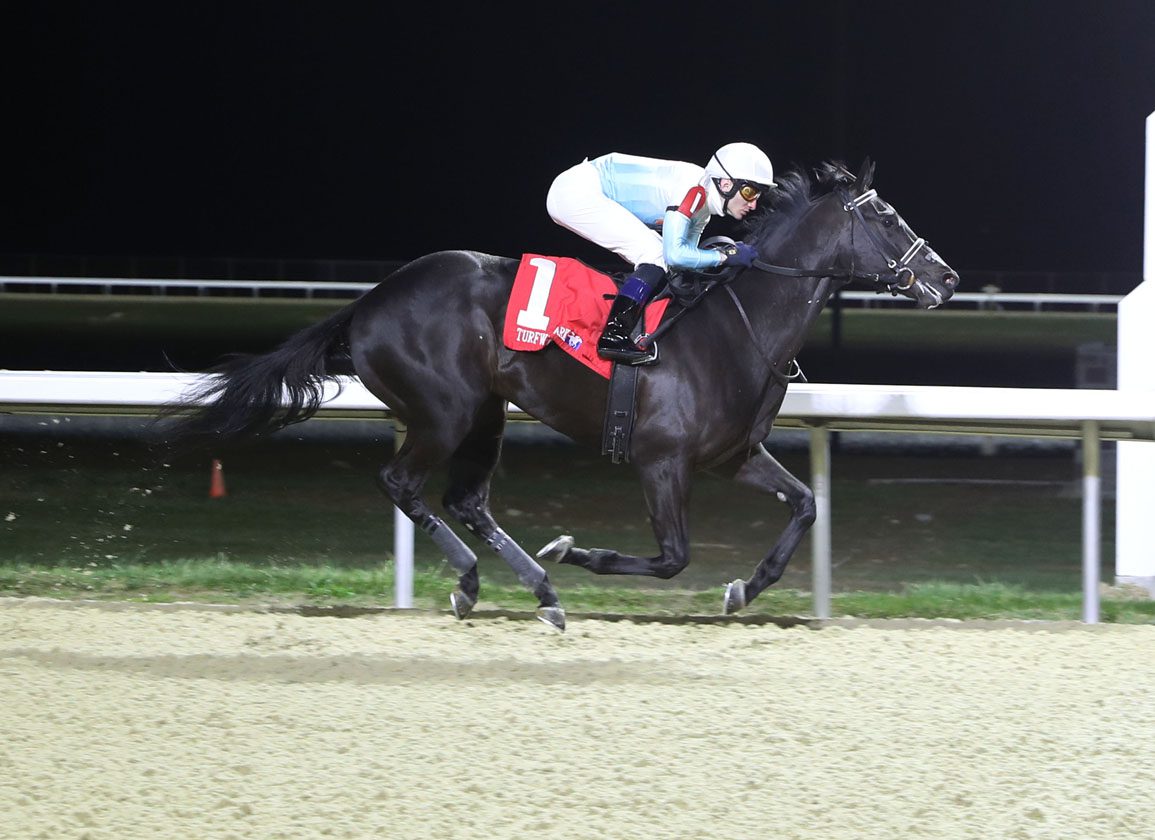
Rich Strike (Keen Ice) himself, of course, had only made the bench because of 20 points banked when third in the Jeff Ruby, though what ultimately got him into the race was the solitary point he had previously earned for running fourth in the John Battaglia. That's another race on the synthetic at Turfway, by the way, and one this year upgraded to 40 points (from 17).

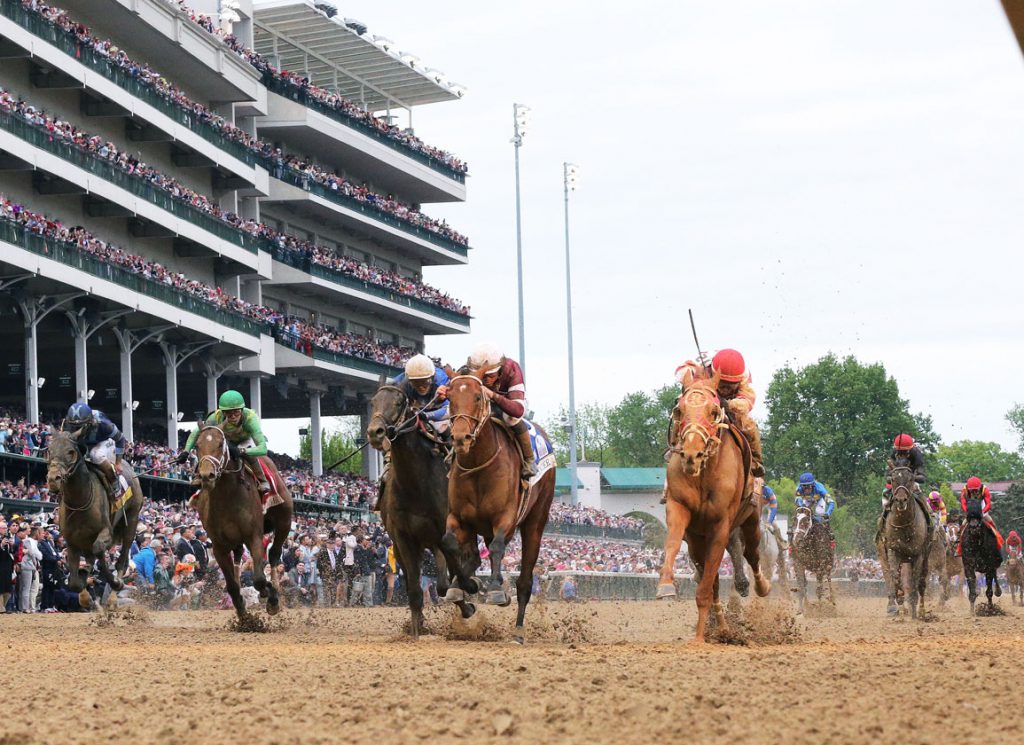
Rich Strike wins the 148th Kentucky Derby | Coady Photography

Yet I think it's only fair to acknowledge an inherent and evolving legitimacy to the kind of competition stimulated both by the UAE Derby, and the “back road” to Churchill along Interstate 71.

Rich Strike at least made it necessary to be open-minded about what sometimes happens when a horse transitions out of the synthetic trials-something to remember when it comes to the revelatory performance of Raise Cain (Violence) in the GIII Gotham S. That said, I still cling fiercely to the conviction that fewer horses than we tend to assume have that kind of emphatic specialism. Indeed, switching the race we now know as the Jeff Ruby to a synthetic surface very soon produced a couple of poster boys, in that respect, in Hard Spun and Animal Kingdom.

The Meydan race, meanwhile, has over the last decade been won by several elite talents. One was later beaten a nose in the GI Breeders' Cup Classic; another won two G1 Dubai World Cups; another ran second in the GI Travers that summer; while 2021 winner Rebel's Romance (Ire) (Dubawi {Ire}) returns to this card for the GI Longines Dubai Sheema Classic as a Breeders' Cup champion.

The international landscape continues to shift under our feet, so that even Dubai must now adapt to the intrusion of an even richer program in Riyadh-albeit hardly facing the kind of identity crisis its own emergence created for storied races like the GI Santa Anita Handicap. But one particular trend just continues to consolidate, with the Japanese in Riyadh having continued to hammer their flag into the top of the global pyramid.

They have got here, at least in part, by embracing aspects of the Thoroughbred that the American and European industries have disparaged as uncommercial. The Japanese have prized stamina and soundness, and they have resisted narrow, prescriptive thinking about what kind of blood works on what kind of surface.

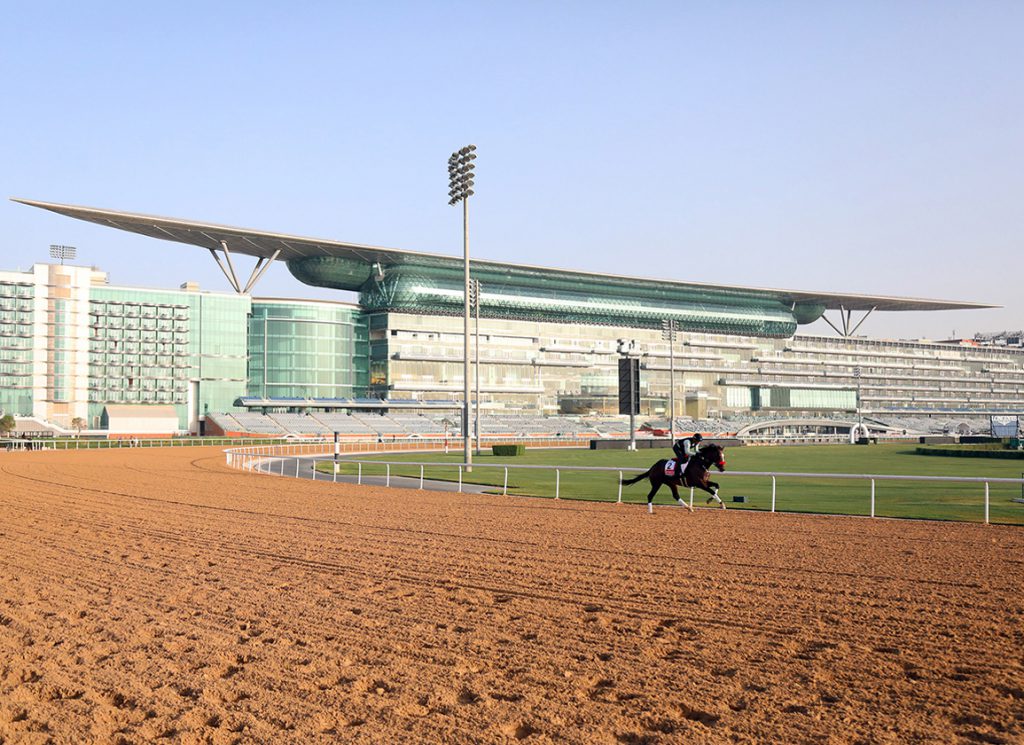
Meydan Racecourse, Dubai | Horsephotos

Apart from anything else, that should discourage any resentment of the way the synthetic route to the Derby is being promoted at Turfway. Far more profoundly, however, the Japanese example should prompt Americans and Europeans alike to retrieve the faith their predecessors showed in the transferability of genetic prowess, when they sent likes of Nasrullah (Ire) and various sons of Northern Dancer on reverse journeys over the ocean.

As I've said before, the final straw came in 2021 when no European or American farm was prepared to match Japan's interest in Poetic Flare (Ire) (Dawn Approach {Ire}) after he contested Classics in three different countries in 22 days (won the first, and was beaten a short head on heavy ground in the third having run in France six days earlier) before taking his form to a new level in the G1 St. James's Palace S. the following month.

In stupefying contrast, the most accomplished horse in the GI Twinspires.com Louisiana Derby has been given two months to soak up his success in the GIII Lecomte S. So, while this race, historically, would seem a far more congenial environment for the distribution of 200 starting points than Meydan or Turfway, arguably the points system is facilitating a deplorable contrast to the way Jim Bolger promoted the genetic wares of Poetic Flare.

I can't presume to say whether it's the trainers themselves, or the breeders who provide their raw materials, that bear most responsibility for the idea that a Derby colt should be deliberately confined to one start in January and another in March. (To be clear, this is a general complaint-we're not singling out this particular horse's trainer here. The juvenile champion has been handled in very similar fashion.) At least the Fair Grounds trials have all been extended in distance, giving these horses a little more conditioning on the rare occasions we get to see them, with striking recent dividends. But having often lamented how the exclusion of sprinters has diluted the Kentucky Derby, as the ultimate showcase for the ability to carry speed, I now fear that it is watering down the breed in other respects, too.

If they're going to stick with the points system-and clearly they are-then maybe it's time to consider some kind of weighting in favor of those who make the road to the Derby a more diverse and interesting place; and the Derby itself a more instructive test. Bonus points or tiebreak advantage, perhaps, to the horse that shows merit over a spectrum of distances and/or surfaces, or even just for each start made.

Crazy ideas, no doubt, in a world where people are more interested in making a fast buck than breeding a fast horse. So crazy, in fact, that they might even be quite sensible.

The post This Side Up: Missing The Point appeared first on TDN | Thoroughbred Daily News | Horse Racing News, Results and Video | Thoroughbred Breeding and Auctions.

Source of original post

Earning Their Stripes: Jordan Blair

Last year, we conducted a popular Q and A series called 'Smaller But Still Super,' where we featured veteran trainers who have built a competitive racing stable with relatively small numbers (click here to view the archive). This year, we will highlight trainers who have already cut their teeth as novice trainers, but now have a few years of experience under their belt and are looking to make a name for themselves as they grow their stable. We'll talk about the challenges that come with hanging out your single, advice for trainers setting out on their own, how the incoming class of young trainers differs from previous generations and more.

A native of Lexington, Kentucky, Jordan Blair grew up immersed in the Thoroughbred industry of the Bluegrass, but he didn't find his way onto the racetrack until later on his career. He spent his high school and college days working for various farms and sales consignments, from Pin Oak Stud and Dromoland Farm to Taylor Made. After graduating from the University of Kentucky, he went on to earn a Master's Degree in Agribusiness Management. Soon after, he found his true passion on the racetrack and served as an assistant for eight years, learning from the likes of Kenny McPeek and Mike Maker, before taking out his trainer's license in 2013.

Based in Louisville, Blair has steadily built his operation since and now stables around 20 horses. Last year he reached 100 career wins and celebrated his best year yet in earnings.

Blair normally heads south for the winter, but decided to race out of Turfway this year. It proved to be a lucrative decision, as his stable already has six wins on the year and is winning at a 22% clip.

What was the biggest challenge in those first few years as you were getting started?

A big part of it is financial, just paying the bills and making sure your owners are paying the bills. It's about making sure you have good-quality horses and owners in your barn. I've found that a lot of people will try to take advantage of you early on, wanting to do deals. We went through those people very quickly because I learned those lessons the hard way.

When I was first starting I didn't care if a horse was bred in Kalamazoo, I was just trying to fill stalls. Honestly, we were running horses in spots that they didn't belong in because I didn't want to lose them. Now if I have a horse in the wrong spot, I can promise you that it's not my idea. Now we just want to win and I'm not worried if we lose a horse in the claim box.

Debut winner Midnight Rising runs in Saturday's Rushaway S. At Turfway Park | Coady

What do you think makes your stable or your training style unique?

Training is not rocket science. It's paying attention to details and focusing on the little things. When I was younger, I had to learn about work ethic. One of my old bosses from Pin Oak Stud Clifford Barry told me, as he was kicking my tail end every day, focus on the little things and the big things will take care of themselves. I've kind of lived by that as a trainer as I've grown my business.

As I've evolved as a trainer and rules have changed and the veterinary inspections have gotten more rigorous, I've made a focus on the soundness of the horse. Not that I didn't pay attention to that before, but it's more important now than it has ever been. We're constantly going over the horse and I'm hyper-focused on the details and the health of the horse.

This is your first winter at Turfway. What went into that decision to stay in Kentucky?

Tampa Bay Downs was the first place I went and I went there every winter. I knew it was a good surface, a great turf course and a circuit where I knew I could win races down there. Most owners are just looking at numbers, so I wanted to keep our numbers decent. But then I had a family and leaving them every year was awful.

I really hadn't had the opportunity to stay until this year. The first year that Turfway started to get better and purses went up a bit, my owners were not on board yet. Last year I really wanted to stay but I didn't get any stalls at Turfway. This year the facility we stay at all year, Trackside, stayed open. So it was an easy decision.

It has gone really well. We've won our share of races, purses are significantly better, and I've been able to see my kids every day. We had a relatively mild winter with only a few days of jogging in the shedrow, but overall it's been a delight and we've saved a ton of money not having to ship a stable south.

Is a trainer's success defined more by the quality of the horses they receive or their abilities as a trainer?

If you're a college basketball coach, you can be Rick Pitino and be one of the best coaches in history, but you can't win a national championship at Iona. If you're talking about the top of the game, you need the right type of quality of horses to get you there. You can't make a horse faster than their potential unless you're doing something illegal. You can't get to the top without the right horse.

Who is your favorite horse that you've trained?

I have one in the barn now that could be something for Surfside Stables. Midnight Rising (Mendelssohn) broke his maiden at Turfway impressively. He runs in a stake at Turfway this weekend. His last breeze was just amazing. He acts like he's very special.

One of my first horses was a Donegal horse named Oatfield (Candy Ride {Arg}). I thought he was awesome, but he bowed a tenon at the beginning of his 4-year-old year. At the time he was the best horse I had ever had.

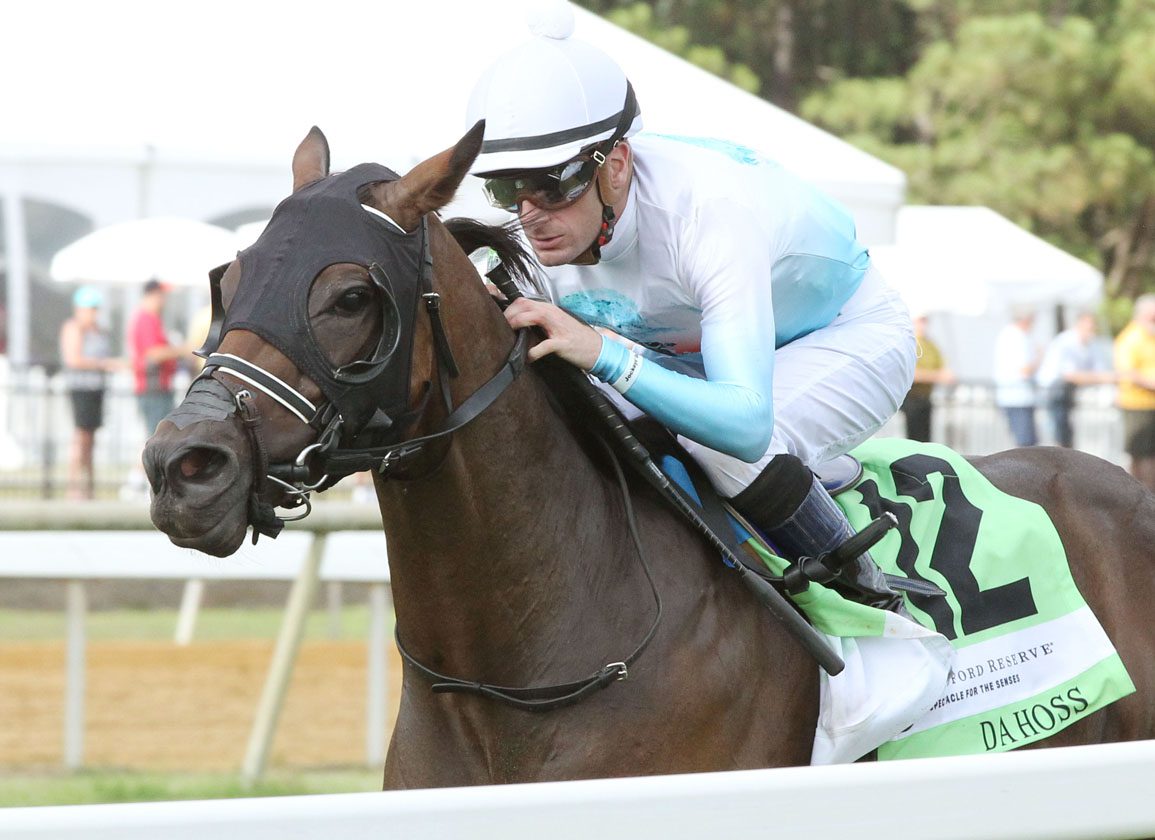
Oceanic gets his first stakes win in the 2022 Woodford Reserve Da Hoss S. | Coady

Do you have a horse that you had to overcome obstacles with that you are most proud of getting to the starting gate?

Oceanic (Constitution) is my first and only stakes winner and he is pretty special. He has been in our care since he was two, but he didn't win a stake until he was five. He had immense potential early on, but he was a thumper. Thumping is an electrolyte imbalance that causes a flutter in their diaphragm when they run. It's almost like a hiccup, so it makes running as fast as you can impossible. Figuring that out was a long process and it was frustrating, but his owners and I were patient and kept on with it. He's that horse that overcame obstacles and we had the patience and wherewithal to figure it out with the help of a lot of people along the way.

If one change was made to racing that would make your life as a trainer easier, what would it be?

I'm not a big fan of HISA, and it's not because it's a governing body. I don't think what they're doing is improving the game because it's putting unnecessary pressure on people who follow the rules. If they really wanted to clean it up, all this money should be put into investigations like those that were done with the Navarro and Servis case. That's what's going to clean up the game. It's not catching guys with a small overage on bute or something like that, it's getting rid of this off-market clenbuterol and all this other crap that people are using to cheat and win. We know who they are now and we knew who they were before they proved it with Servis and Navarro. If I was a governing body of horseracing, I would put my resources into these investigations.

I thought HISA was supposed to make uniform rules across the board, but it does not. Tracks or states can make their own rules as long as they are more stringent than HISA. I thought HISA would make all that the same and it hasn't, which is really frustrating.

If you could spend one afternoon at the track enjoying the day (i.e. not working), which track would you be at and where would we find you hanging out?

It's gotta be Keeneland. It's close between Keeneland and Saratoga. Back in college, we were in row 20 tailgating. They didn't have tailgating on the Hill back then. We would be there at nine in the morning and tailgate until the second or third race. Now I don't think I have a spot because I don't really go unless I'm running.

If you aren't at the racetrack, what can you be found doing?

I would be either with my family or working out. My kids are into sports, gymnastics and horseback riding. My hobby is exercise, so I'd be at the gym or the gym in my garage.

The post Earning Their Stripes: Jordan Blair appeared first on TDN | Thoroughbred Daily News | Horse Racing News, Results and Video | Thoroughbred Breeding and Auctions.

Source of original post

Sadler Staying On Flight Path

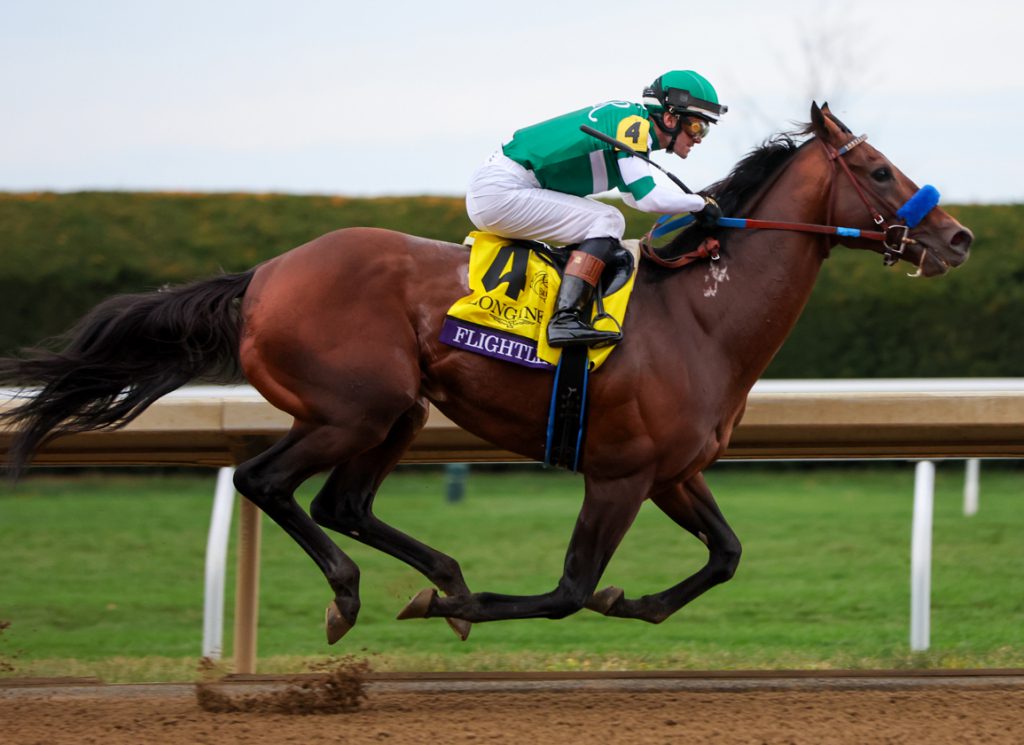
As noted by colleague Bill Finley earlier in the week, we've just passed the 50th anniversary of Secretariat's sophomore debut. Yet even two years ago hardly anyone had heard of an unraced son of Tapit, meanwhile acclaimed by many as the best American Thoroughbred since.

Okay, so he had been a seven-figure yearling; and everyone who had participated in his education knew that he was something special. In fact, John Sadler was so aware of the impending responsibility that he was saying nothing. For one thing, if people had any inkling of the talent he was about to detonate, the races wouldn't have filled. But also because this, like all secrets, was a burden as well as a privilege.

Looking back, Sadler accepts that doing justice to Flightline felt like so intense a duty that it could not come without some personal cost.

“I kind of devoted my time to him to a point where I probably shut some people out,” he admits. “The odd dinner at night, that kind of thing. I really drilled down, I said to myself, 'I'm going to walk this walk with this horse.' I wanted to be right alongside him, every step, because I knew it was going to be so special. So here I am today, light mood, happy as heck, because I always said my time to celebrate would be when it was over. Very early on, I said to myself: 'I'd like to pitch a perfect game.' That's a career goal. And we did.”

But so much of life is about the pursuit, rather than the actual moment of fulfilment. Sadler, tall and bronzed, looks in great shape at 66. But now that he has consummated a generational dream, can he still maintain the same motivation?

“We've been pondering that a lot,” he acknowledges. “But like B. Wayne Hughes of Spendthrift Farm used to say, 'My health insurance is that group of yearlings over there.'”

So, while he knows that he can hardly expect another Flightline, Sadler also feels that the true horseman's appetite, happily enough, can never be finally sated.

“I'm pretty confident I'll have a lot of good horses come my way, because I still want to do it,” he says. “If there's a time to not do it, I'll know when that is. Somebody said I'd retire right after Flightline. But rushing into a decision like that, with horses, is always rash. Time will see where we're at. I've got some really good young people in my operation. They've invigorated me the last several years and really make me excited about the future. My assistant Juan Leyva is just going to be a phenom, and I've a couple of other guys like that. So I'm really not feeling a lot of pressure.”

And, actually, that's just why it's appropriate to catch up with Sadler now, when the dust has settled and Flightline is embarking on a new career at Lane's End. Because the horse himself was such a meteor, burning with almost agonizing brightness as it became clear how fleeting his passage was likely to be, that he almost became a communal possession. As such, we rather lost sight of his more intimate context: of the decades of groundwork that prepared Sadler for the task that would define his career.

That long accretion of experience didn't just make him eligible, but also duly appreciative. Yes, he could feel vindicated–not least after the notorious torments he endured, for much of his career, at the Breeders' Cup–but the true gratification was personal, not public. Because for the great horsemen, it's about the process, the daily and seasonal cycles of engagement. If that ultimately produces a champion, then it all makes sense. And, that being so, then of course you continue with the immersion.

“Totally, a lifestyle,” he replies, when asked how he views his vocation now. “It's the journey that I've always loved: horses coming in, and seeing where they go. You don't want to be like a claiming trainer, slashing around here and there, but to develop horses. I think that's where my strong suit is. And for this to hit at this time, in the latter part of my career, is so special. When I started out, I wanted to be known as a good professional. I know I achieved that. But then to get these great horses is gravy on my career.”

Because don't forget that Sadler started out right at the other end of the scale. With no background in the game, he learned under tough, old-school horsemen, and laid the foundations of his own career with tough, fast Cal-breds.

“I've had to battle stereotypes my whole career,” he muses. “When you're a young trainer, you get locally-bred horses and those happen to be sprinters. And we did well with them. So, as I started getting better horses over the years, and won important races over a distance of ground, that's fun. But every year they'd write how Sadler can't win at the Breeders' Cup. And you'd be beaten a head. Or find yourself running against Miesque. I think I did that three years, and I ran against Goldikova a couple of times, too. And when you do that, it doesn't matter if you have the best turf horse in California.”

Flightline | Breeders' Cup Eclipse Sportswire

But if Sadler had a long wait for the best materials, in one respect he could not have been more blessed.

“Oh, absolutely!” he exclaims. “I came under a brilliant class of horsemen. They may not have all been perfect human beings. In that era, they might have smoked or drank too much. But they were self-made guys and really knew what they were doing.”

He absorbed priceless insights assisting racetrack vet Dr. Jack Robbins, observing the day-to-day methods of clients like Ron McAnally and Gary Jones.

“It was great practice,” he says. “I loved that we were going in all these different barns: you could take something from every one of them and then build your own program. And Dr. Robbins himself was so smart. A tremendous veterinarian, obviously, but also a successful horse owner, one of the charter members of the Oak Tree Racing Association. Tough guy, opinionated guy, smoker, drinker, but just a great man.”

Robbins could see that his protégé was unusually attentive. Sadler might say, “Oh, Doctor, I went over to such-and-such a barn and suggested a vitamin shot for that horse.” And Robbins would reply, “Oh John, no, that was a terrible idea!” And then he'd wink.

Sadler also learned a great deal as assistant to Dave Hofmans, though his big break came in 1979 when Eddie Gregson had taken on a big client and was looking for someone, he could trust to take four or five to Golden Gate Fields. There were things going on–a pari-mutuel strike, people shipping out–and Sadler quickly learned not to turn down horses. By the end of spring, he was up to 30 or 40.

Gregson's heartbreaking end, by his own hand, still grieves all who knew him. “He was really a bright guy, very sensitive, he knew food and wine and was very cultured,” Sadler recalls. “It caught everybody off guard, nobody saw that coming. But you never know what goes on with people. A great guy and a great trainer also.”

Besides these mentors, Sadler cherishes no less affection for the horses who also assisted his education. He'll never forget the $100,000 match, at Santa Anita in 1991, where his Cal-bred speedball Valiant Pete (The Irish Lord) beat Quarter Horse champion Griswold in a world record dash. And then there was the $50,000 claim Olympic Prospect (Northern Jove).

“He didn't run very well the day we claimed him,” Sadler recalls. “But he became really an important horse for me, early on. You couldn't train him very hard, but he ended up winning every sprint stake in the state. One day Patrick Valenzuela got on him, I can't remember what happened to the usual jock, in a race called the Potrero Grande [now the GIII Kona Gold S.]. He just let him roll, and they went that first half-mile in 42-and-change. And won! I mean, he was tiring at the end. But I've never seen that, before or since.”

With that kind of background, it meant a great deal to Sadler gradually to disclose a mastery with two-turn horses. Whatever pinnacle it might also represent in the story of the breed, let's not forget that Flightline last summer–by a bewildering 19¼ lengths–was his barn's fourth different GI Pacific Classic winner in five years, all owned (part-owned, in this case) by Sadler's cherished patrons at Hronis Racing.

That streak was started by the slow-burning Accelerate (Lookin At Lucky), whose campaign at five would have made him a lock for Horse of the Year but for landing in the same ballot as an unbeaten Triple Crown winner. He remains Sadler's richest runner at $6.7 million. “I just love him to death,” Sadler says. “His foals are going to be like him, they'll be later types, but I've two or three [of his first crop] that I really like and I'm expecting a lot of them to come forward as the year goes on.”

But Flightline was a freak from the outset. “He never hid his talent,” Sadler says. “April Mayberry called me from the farm and said, 'John, this horse gives me goosebumps.' She's been doing it a long time, and the only other to give her that feeling had been Zenyatta. So, we were expecting a lot when he came in. And even after the first, short piece of work, we were all just going, 'Wow.'
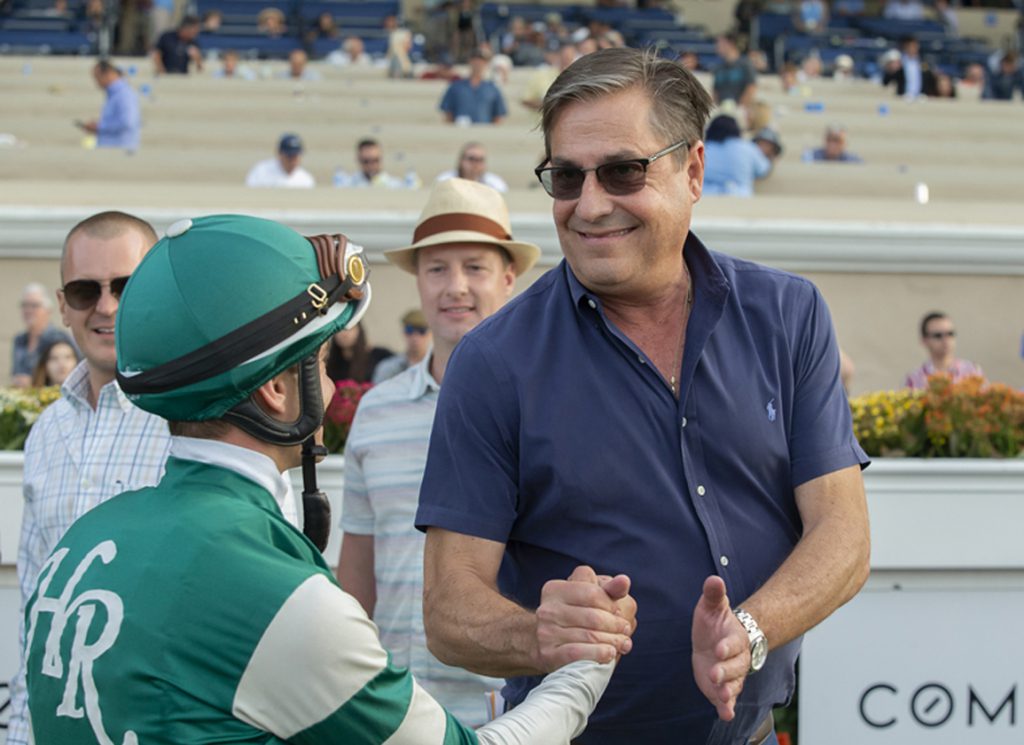
John Sadler with Flavien Prat | Benoit

“I mean, usually, I have to train them up. This horse, it was just a straight line. He's already there. He was so willing, from day one he just wanted to do it. Most of the early training was about getting him to relax and carry his speed. Even when he broke a little slow, he was very keen to charge out there between horses and push them aside. So, it was just about calming him down a little.”

While it was bittersweet only to race Flightline six times, Sadler absolutely understood his retirement. It would have been virtually impossible to find domestic opposition, unless or until a sophomore champion proved willing to take him on, while the insurance of fresh challenges overseas would have been eye-watering.

Whatever life after Flightline may comprise, it's been an incredible odyssey for the stockbroker's son who gazed across a paddock fence one summer vacation and fell in love with the horses grazing there. It should plainly end in the Hall of Fame, for which Sadler has a belated nomination this year. In some ways, perhaps he doesn't stand out from the production line of his profession merely in terms of his craggy six feet and four inches. And he does admit that there have been times when he has sensed a little resistance, notably in East Coast perceptions.

“You get that a little bit,” Sadler concedes with a shrug. “But you know what, when you've been training a long time, I don't really let those things bother me. I love training a stable of horses. I like where I train. I'm very comfortable doing what I'm doing. And, when you've been doing it a long time, you tend to end up with clients that are people you really like. So, I feel I'm in a good place. Like I said, I've hit most of the marks I want to. You can't worry about that kind of stuff. I mean, anything can happen with horses–and that's what's fun.”

That willingness to fight your corner, feisty and independent, was something he always loved about the California circuit.

“I was always trying to model after the guys that might not have had the best horses, but were always very hard to beat,” he remembers. “Even back then, they went out and won everywhere. I loved Tommy Doyle going over to win the Belmont [in 1975, with Avatar]. When California ships out, the results have always been amazing–and continue to be, to this day.

“We don't have gaming or casinos but we have the most beautiful tracks in the world and we always hold our own. Yes, when there's 15 protestors, versus 40,000 on opening day, and I'm signing autographs with Flavien Prat for an hour and a half, it's the 15 protestors that get all the noise. But California's led the way in all sorts of reforms. It's an adjustment, but you either embrace it or get stuck in the past.”

Sure enough, California has now given us one of the all-time greats soon after producing the only Triple Crown winners of modern times; not to mention a mare that arguably reached a wider public than any of them. Zenyatta's trainer, incidentally, is also deservedly nominated for the Hall of Fame–and would certainly join Sadler in stressing their shared debt to David Ingordo, now purchaser of three GI Breeders' Cup Classic winners.

“I was a friend of David's father so I've known him since he was in short pants,” Sadler says with a chuckle. “Actually, I do have a picture of him in short pants! He calls me Uncle John sometimes. So, it's been fun for me, and a source of great pride, to see how his business has developed. He's a tremendous, tireless worker, and obviously brilliant at it.”

Whether on behalf of his closest circle, then, or the entire Turf community, Sadler says he's profoundly grateful for the benediction he shared over the past couple of years.

“Many of the horses Flightline beat were really never the same afterwards,” he remarks. “He was a very dominant colt. At the Breeders' Cup one morning, Juan was coming off the track just as Epicenter was going up and Juan said he could feel Flightline rise up under him, literally making himself bigger like a rooster, as that horse came by.”

And something else happened that week. One morning Sadler's phone rang and there was Ron McAnally, 90 years old and still rooting for that lofty young man who used to follow Dr. Robbins round the barn.

“John,” McAnally said. “Don't let those photographers bother Flightline. I had that once with a horse, they were pestering him every five minutes, and he didn't run any good.”   Sadler hardly needed telling, but was still blown away. “Okay, Ronnie, I really appreciate that.”
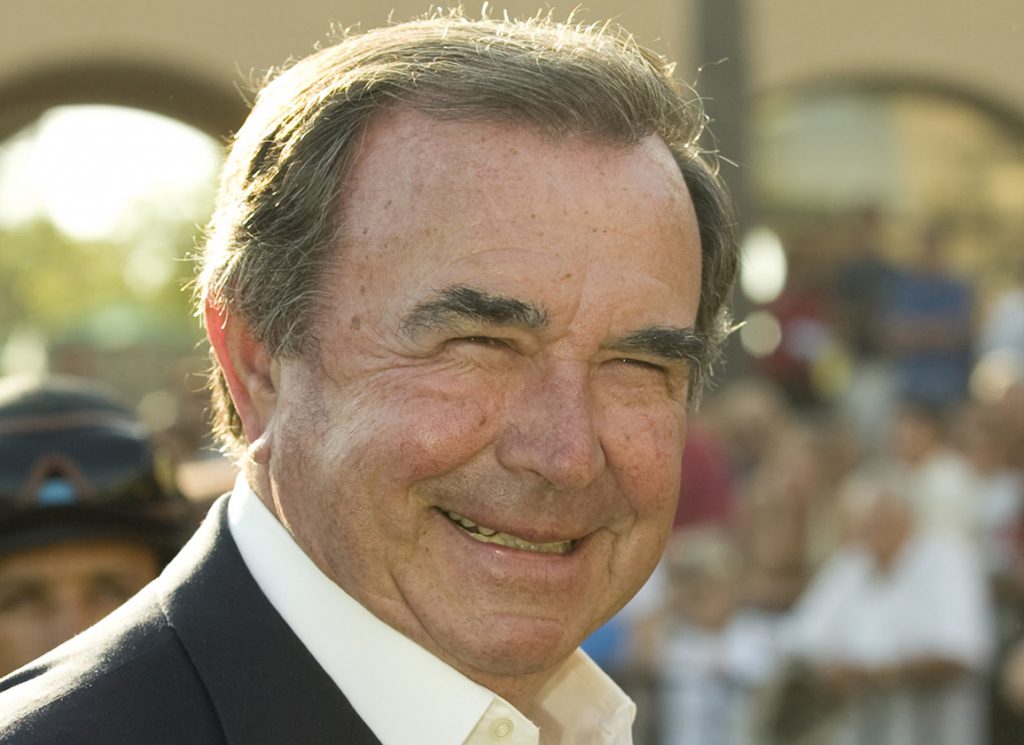
Ron McAnally | Benoit

McAnally, of course, had bred Rock Your World (Candy Ride {Arg}), who won the GI Santa Anita Derby for Sadler a couple of years ago. That connection had given him an extra buzz, and now it was adding something memorable to the Flightline adventure, too.

“That was a special call for me,” Sadler says. “He's one of the good guys and it was great that he wanted to pass that on to me, that he was still thinking of me. Like I said, as a young trainer I relied on the older guys a lot. I had great mentors. You'd sit around in the cafeteria, and these guys were so colorful, some of them in that era were doubtless politically incorrect–but they knew their stuff.”

By the same token, nothing pleases Sadler more today than when a young trainer seeks his counsel. Evidently that doesn't happen as often as a generation ago.

“That's a shame because horsemen are really very generous with their knowledge,” Sadler says. “I think to be a good horseman is intuition based on experience. And I do have the background: I walked hots, I groomed, I came up from the bottom of the stable. I didn't come in at the management level. So, I put in the years. And it's been a great journey. None of this happened overnight. It's like the guy that did 50 movies before he won the Academy Award. It's a lifetime of work.”

The post Sadler Staying On Flight Path appeared first on TDN | Thoroughbred Daily News | Horse Racing News, Results and Video | Thoroughbred Breeding and Auctions.

Source of original post
TDN Q & A: Godolphin Japan’s Harry Sweeney

DUBAI, UNITED ARAB EMIRATES — Answer: The G1 Dubai Golden Shaheen.

Question: What is the only race in the history of the Dubai World Cup that has never been won by the host?

That statement feels like an enormous anomaly, given all the success down the years at old Nad Al Sheba Racecourse and here at Meydan Racecourse, but true it is all the same. It is a record that Harry Sweeney, the president of the Japanese arm of Sheikh Mohammed's global operation, hopes will change this weekend when American-bred and -sourced Lemon Pop (Lemon Drop Kid) takes on five U.S.-based sprinters and significant Japanese-bred challenge in the 1200-meter race.

Moments after the clean chestnut, bred in the names of former Darley executive Olly Tait and his wife, completed some light work under the early-morning lights at Meydan Wednesday, Sweeney graciously took a few minutes out of his busy schedule to talk about the acquisition of Lemon Pop, his rise to Group 1 winner and what the future may hold.

Alan Carasso: First of all, how has Lemon Pop come out of his victory in the G1 February S.?

Harry Sweeney: Yeah, he's come out well. It's a five-week gap, which we thought was reasonable, between the February S. and this race. He's a 5-year-old, but he's still very lightly raced. He's only raced 11 times. But I watched him warm up down there [in the 1600-meter chute] this morning. He's not at times the most fluent of movers, but he's moving well now. So I'm very pleased with that. The trainer seemed happy with him. He traveled reasonably well, a little bit off his food for the first few days, but he's back to grubbing. He's a big strong horse and he moved well this morning, so I'd say he's good.

AC: When did Lemon Pop arrive here into Dubai?

HS: He got in here last Tuesday, I believe. Tuesday of last week.

AC: Under the Paca Paca Farm banner, you guys selected him as a weanling at Keeneland ($70,000 in November 2018), and I know you guys tend to do that, pick them up as foals. What's the philosophy of buying them at that young age?

HS: Well, the reason is it's a model of logistics really, because, I mean, I'm buying these for Japan and of course if we buy in the yearling market, then it's pretty congested already with Godolphin people. We have the UK Godolphin team buying and also Shadwell buying when they were buying a lot of horses.

So we're the 'small boy' in the organization. So there was a lot of congestion in that area and it was just easier to buy them as foals, really, and to avoid that.

AC: And where do these types of purchases go after you buy them?

HS: He came to Japan, Lemon Pop was bought in November and he came straight to Japan, and so he spent his yearling year in Japan, on the farm.

AC: What was it about him that attracted you at Keeneland?


HS: Well, if I'm perfectly honest, I mean, I probably short-listed him on the basis that I thought he might run on turf. Lemon Drop Kid can get a few decent turf runners and the mare being by Giant's Causeway, I thought there's a chance this horse might run on turf. So I'd say that's the reason that I looked at him in the first place.

But when I did look at him, I mean, physically he's a very, very well-balanced, well-proportioned horse. I mean, I really, really like that about him. He was an average mover, but I thought he was just a very, very well-balanced horse. And that's the reason I bought him.

AC: Like you pointed out, he's only made the 11 starts but for eight wins and over $2.2 million in earnings. He's a 5-year-old now. Were there any serious issues, or just little niggling issues that kept him from stringing starts together?

HS: Yeah. Well, after he won–I think–his second start, I mean, he showed enormous talent initially. Even at the second start, we were already clear that this horse had the ability and we already had kind of marked him down as a Group 1 horse, maybe not a Group 1 winner, but a Group 1 horse. And we were considering and coming even to we kind of planning, really hoping, to come to the [G2] UAE Derby [in 2021]. But then fate intervened, hit a small issue. We took numerous X-rays and we had four different veterinary opinions, all different, the most expensive veterinary opinions in the world. He had what looked like a little bit of fracture line there. We were just a bit worried in the end and we opted to be conservative and so we gave him time off, which was probably the right decision. Because listen, we were aware of that ability and we didn't want to compromise that. We were happy to wait.

AC: Coming here, you had a choice between whether to stay at the mile [for the G2 Godolphin Mile] or cut back in trip for the Dubai Golden Shaheen. What ultimately led to the decision to keep him short?

HS: Firstly, the trainer always believes this horse is a sprinter. And even when we ran in the February S. over a mile, the trainer really wasn't that enthusiastic about him, to be honest. We had to kind of lean on him to even run in the February S., but I mean these decisions are made for us. There are only two Group1 races on dirt on the JRA [circuit]. So, where do you go if you have a horse of this caliber? You have little option, you must go there. And to be honest, we're thinking of his next career when he finishes as a stallion. I mean, he's already secured his place. It was important to win a Group 1 in Japan. And so that's why we went there. Okay. Now the reverse is true. That's why we're here as well. Where else would he go in Japan? The next Group 1 in the JRA on dirt is [the1800-meter G1 Champions Cup in December} and the trainer also wants to sprint. In fact, it was the trainer's preference initially to come here and avoid the February S., not even to run there.

So we'll see how he goes. It's a bit of an ask because he he's never run over six furlongs [Ed's Note: Lemon Pop broke his maiden at first asking going 1300 meters or 6 1/2 furlongs]. So that's a first for him. Equally, running on this type of dirt surface with the kickback, we're not sure about that. We have a young jockey aboard. The trainer is traveling his first horse abroad. We're all rookies here. It's a bit of an ask, but we feel there's little to be lost. To be honest, I vacillated between going for this or the Mile. We did it give it real consideration. I think when [champion and GI Breeders' Cup Sprint hero] Elite Power came out of the sprint and when we had a feeling that he wasn't going to come, that changed us. When he was in, we were going to go for the other race. So they were part of the reasons and the trainer's belief as well. He's a sprinter. Let's see how he goes.

AC: My next question sort of dovettails off of that. If he's not going to stretch out to nine furlongs, if he is not a horse for the Champion's Cup, what is there for him left at home? Any thoughts of sending him to the States?

HS: The February S. is a 'Win and You're In' race for the Breeders' Cup, the Classic, and I think we might be able to use it for a different race. I'd say we're not ruling out. These decisions might be much easier to make on Sunday, but we're not ruling it out. But he'll go back to Japan, we're going to give him a spell. He'll go to the farm straight away after the race one way or the other. There is a race called the JBC Sprint in Japan [Nov. 3], which is a local Japan Group 1 race. But even though it doesn't have international graded status, it's a big race in Japan and it's an extremely competitive race. And that's a six-furlong sprint. I wouldn't rule out a run in the Champions Cup either. We're ambitious in Japan. We have little to be restricted about it.

AC: And finally, How does it feel to have one of yours run here in front of the boss?

HS: Oh, that's very important. And listen, we hope he runs well and if he runs well, we'd be pleased. The boss is a true internationalist. And it's fashionable, so it would be nice to have. And this is the only race that Godolphin have never won, so it would be nice to tick that box.

The post TDN Q & A: Godolphin Japan’s Harry Sweeney appeared first on TDN | Thoroughbred Daily News | Horse Racing News, Results and Video | Thoroughbred Breeding and Auctions.

Source of original post
Verified by MonsterInsights