The final race on Tuesday's card at Presque Isle Downs in Erie, Pa., was cancelled after a series of events that led to jockeys opting not to ride.
Todd Mostoller, executive director of the Pennsylvania Horsemen's Benevolent and Protective Association, said he was told one of the pony people was informed by a Pennsylvania State Horse Racing Commission employee before the final race that he was not properly licensed and could not escort horses to the post for that race.
In an apparent show of support the other pony people said they wouldn't work the race, either, leading jockeys to decide whether to ride without being ponied to the gate or sit the last race out. They opted not to ride.
“He ponied the first seven races,” Mostoller said of the pony person. “I don't understand how it was OK for him to work the first seven races but not the last one. They couldn't have had him come in after the last race and tell him to renew his license?”
Mostoller said the HBPA will ask Presque Isle Downs director of racing Matt Enniss to divide the $14,000 purse nine ways, so that each owner receives about $1,500.
The race was a $7,500 maiden claiming event, with three of the nine starters shipping in from out of state.
“I don't understand it,” said Mostoller. “It was an extremely poor decision and we've asked for this corrective action to be taken. We're doing the best we can to make the best of a bad situation. It's pretty unbelievable to me a decision like that was made.”
Efforts to reach the Pennsylvania State Horse Racing Commission were unsuccessful at time of writing.
Winchell Thoroughbreds' MGSW and GI Kentucky Derby and GI Preakness S. runner-up Epicenter (Not This Time) drew post six in a field of eight and was installed as a significant 7-5 favorite in Saturday's 153rd renewal of the $1.25 million GI Runhappy Travers S. The Steve Asmussen pupil, last seen producing a dazzling late-to-first kick to capture the local GII Jim Dandy S. July 30, will be ridden by regular jockey Joel Rosario, who missed most of the past week of racing at Saratoga with an illness.
Given the second-choice nod at 7-2 is Gold Square's rail-drawn multiple Grade I winner Cyberknife (Gun Runner). Scoring in the GI Arkansas Derby earlier this year, Cyberknife has bounced back from a disappointing run in the Kentucky Derby with back-to-back successes in the GIII Matt Winn S. and GI Haskell Invitational S. The chestnut will look to give trainer Brad Cox consecutive Travers triumphs after his champion Essential Quality (Tapit) won the 1 1/4-mile test in 2021.
Kentucky Derby upsetter Rich Strike (Keen Ice) drew post two as a 10-1 chance. After his unforgettable closing flourish to shock the Run for the Roses at 80-1, the Eric Reed trainee famously passed on a try at the Preakness only to run sixth in the GI Belmont S. Journeyman Sonny Leon keeps the mount.
Leading trainer Chad Brown will have three starters in the Travers: Preakness hero Early Voting (Gun Runner, 8-1, post seven), Grade I winner and Derby third Zandon (Upstart, 5-1, post eight) and Artorius (Arrogate, 9-2, post five), an impressive winner of the Curlin S. July 29 at the Spa. Brown, who made news last week after he was arrested in Saratoga Springs, is looking for his first Travers victory.
Rounding out the field are Iowa Derby winner Ain't Life Grand (Not This Time, 20-1) from post three and Curlin runner-up Gilded Age (Medaglia d'Oro, 30-1) from post four.
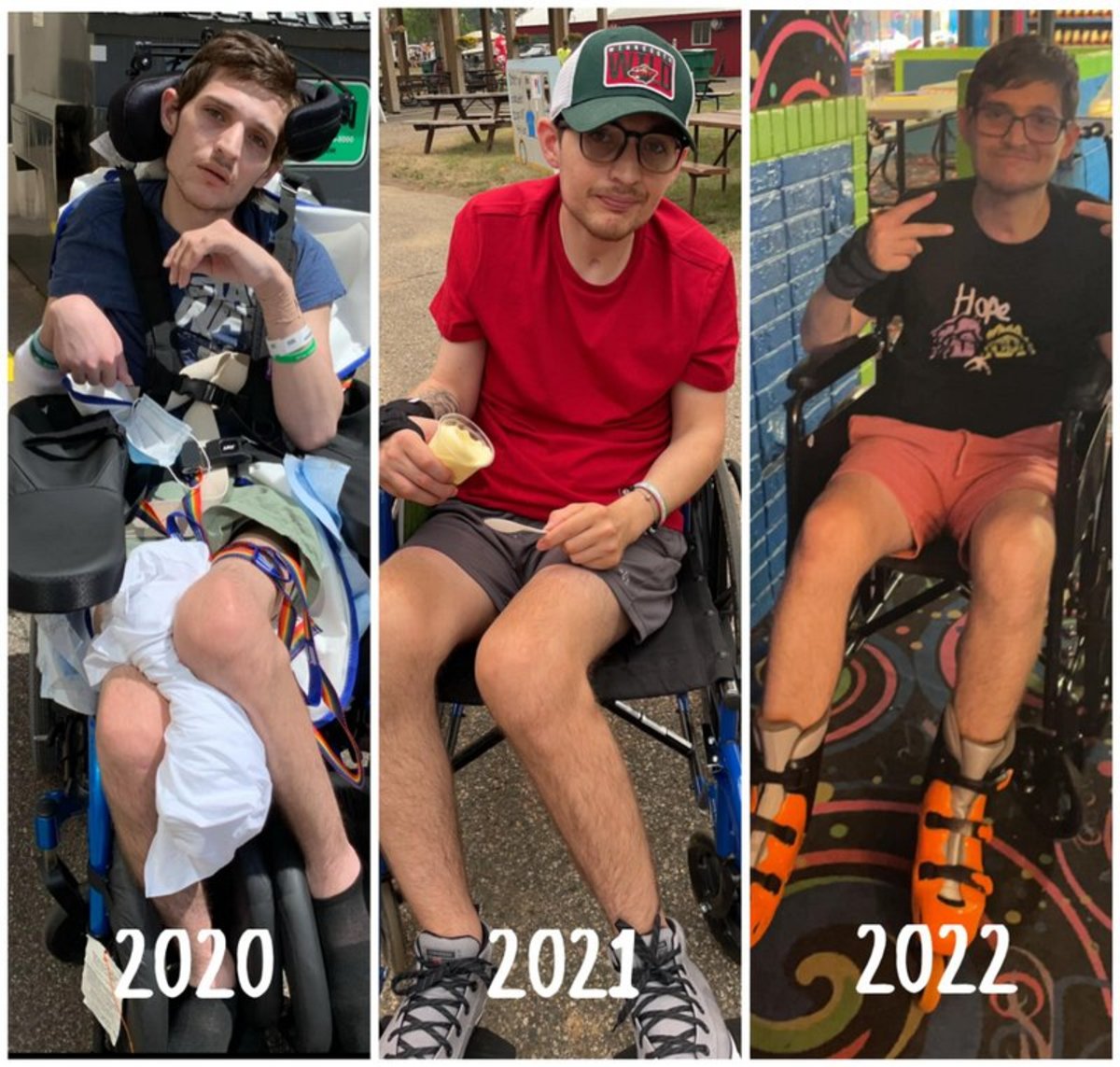
It wouldn't have been possible a year ago. Maybe not even six months ago. But on Aug. 9, 2022, jockey Patrick Canchari returned to the saddle for the first time in 2 1/2 years. It's an incredible accomplishment; Canchari was struck by another car while driving to Turf Paradise for the races on March 17, 2020, and suffered a severe traumatic brain injury which has changed his life forever.
“It was pretty overwhelming to see him back on the horse again,” said his older sister, Ashley Canchari. “He is still lacking coordination and ability when he's on the ground walking, but when he got up on the horse, he seemed to remember things like it was yesterday.”
Ashley, now Patrick's legal guardian, has been caring for her brother full time since he left the hospital. Older by 14 months, she coordinates all of Patrick's therapy appointments, daily care and routines, and maintains an active Facebook page and email account to help keep Patrick connected to the outside world.
“He would try to do the same for me if the roles were reversed,” Ashley said.
The four Canchari children grew up in the shadow of Canterbury Park in Shakopee, Minn., thanks to their late father Luis's love of racing. Both Patrick and his two-year younger brother, Alex, became professional jockeys like their father.
Patrick rode 146 winners from 2011 through the first few months of 2020, and was in New Mexico for the winter circuit when the accident occurred.
On the scene, Patrick began seizing badly and was immediately rushed to the HonorHealth Deer Valley Medical Center in Phoenix. He had a GCS (Glasgow Coma Scale) score of just three, the lowest possible score. Patients with a GCS score of 7 or less are considered comatose, and patients with a score of 8 or less are considered to have suffered a severe head injury.
Doctors diagnosed Patrick with a fractured C-4 vertebrae and a diffuse axonal brain injury, defined by the shearing of the brain's long connecting nerve fibers that happens when the brain shifts and rotates inside the skull. It causes injury to many different parts of the brain, and though Patrick was in surgery just 20 minutes after the accident occurred, doctors believed there was a high chance he would remain in a vegetative state for the rest of his life.
Ashley and the rest of her family immediately flew down to Phoenix from Minnesota, but they were unable to see Patrick in the hospital; it had just been closed due to the COVID-19 pandemic.
“We had to communicate and do everything with the nurses and doctors via Facetime,” Ashley explained. “It was very difficult for us as a family, not to be able to be there with him and help with his recovery while he was in the hospital.”
Despite Patrick's diagnosis and prognosis, Ashley refused to believe that her brother couldn't recover.
“I was always at a point where I felt like everybody needed to be positive and optimistic, despite what the doctors were saying,” she said. “I always hold out hope that he'll make a full recovery some day… Now, doctors are calling his current progress miraculous.”
Patrick has had to relearn everything, from swallowing and eating to talking and walking. It took months before he could speak at all, and a few more months before he could be readily understood. Today, Patrick still needs some assistance while walking, but his cognitive progression has been quite significant.
“It's amazing that he continues to progress, to heal, 2 1/2 years after the accident,” said Ashley. “He remembers a lot of things that happened years and years ago, in our childhood, and he remembers horses he rode years ago, and where all the racetracks are. The racing stuff really stuck with him more than the personal stuff, but it's all a work in progress.”
Patrick Canchari has continued to progress following the traumatic brain injury that forever changed his life.
Ashley, who finished her doctorate in education administration just two months before Patrick's accident, has coordinated a schedule of both traditional and non-traditional therapies to aid in Patrick's recovery. Recently, one of the more successful therapies has been Masgutova Neurosensorimotor Reflex Integration (MNRI), which targets underlying neurosensorimotor pathways to improve or even restore function.
“We really try to look at all areas of his overall health and well-being, and I consult with multiple doctors and specialists and functional medicine people to figure out what will work best for him,” Ashley said. “Advocacy is really important when it comes to his recovery, and it's definitely more than a full-time job. A lot of his therapy is also not covered by insurance, so I'm constantly doing fundraisers, but people have continued to support him and want to be invested in his recovery.
“We're hoping he can continue to heal and make progress, and that more and more comes back to him.”
Several racetracks at Canterbury had asked about getting Patrick into an equine therapy program, but every program Ashely could find has been full. Instead, former jockey Scott Stevens coordinated a visit with jockey Kelsi Harr and trainer Robert Kline, organizing the opportunity for Patrick to ride the lead pony around the backstretch.
There is one video of that day that's especially touching. Patrick spends several long moments just petting the horse's neck while a quiet peace shines through his eyes.
“Milestones like this make every hard day and fight for his recovery, worth it,” Ashley wrote on Facebook. “A very special thanks to Kelsi Harr, Robert Cline, Lacey, Scott Stevens, Jerry Livingston, Jake Barton, and Jeff Mayday for helping coordinate and turn this into a reality! This is such a special day for him. We are beyond thankful.”
Alan Foreman, moderator of the Horseracing Integrity and Safety Authority panel at the recent Racing and Gaming Conference in Saratoga Springs, N.Y., got it just right when he said, “Rob Williams is not ubiquitous.”
Mr. Williams is the executive director of the New York State Gaming Commission. Rob does not hide, but he rarely seeks the spotlight. Rob Williams does not make public pronouncements often, but when he does, it behooves the racing world to listen.
It is understandable that the headlines coming out of the panel would be about horsemen's frustration with the rollout of the new federal regulatory regime and HISA CEO Lisa Lazarus' pledge to be more inclusive and transparent. But that focus misses the most important message coming from the panel: the “Williams Doctrine.”
HISA requests (some argue demands) that state regulators collect the fees from the industry that will fund the Authority and, more importantly, allow the state regulatory workforce to be deputized into service for HISA. In his soft-spoken but frank statement, Williams issued a stunning rebuke to Congress and to the Authority. In the heart of Saratoga, where some of the best horse racing in the world happens every summer, the man in charge of New York's horse racing regulatory scheme said, “No. No, New York will not yield its sovereignty and authority and be conscripted by a private, quasi-governmental at best, authority created by Congress. ”
Mr. Williams' logic is as simple as it is unassailable. He pointed out, quite correctly, “I work for the taxpayers of New York; my authority to regulate comes from the people of New York as expressed through their elected state representatives. As much as Congress and the Authority may want it, I will not allow my workforce to be deputized by some other entity; they work for the people of New York.”
If that were all there is to the Williams Doctrine, it would hardly be worthy of the name. Rob Williams is not a political grandstander pontificating about states' rights; nor is he a petulant child like his counterparts in Texas and elsewhere.
There is a second part to the doctrine that is just as important as the first. Williams recognizes that he is charged with regulating and serving the horsemen and all parts of the racing industry in New York. He knows he cannot do that by getting into a political food fight with the Authority. So, the second part of the doctrine, as articulated by Williams, states that while New York cannot allow its unionized workforce to be deputized into federal service, it will make New York's regulatory talent and expertise available where appropriate. Although Lisa Lazarus would clearly like to have New York simply sign up, she praised Williams for his cooperation.
Rob Williams is protecting the horse racing industry by helping the feds get it right all while refusing to yield the sovereignty of the state. That is why he has served with or for six governors. Good on him.
– Patrick Brown, Albany, N.Y. Organizer of the Racing and Gaming Conference at Saratoga and a New York horseman.