The Week in Review: Could Breakage be Used to Pay for Horseracing Integrity and Safety Act?

As the Horseracing Integrity and Safety Act resurfaced last week as part of an omnibus spending bill passed by the House and Senate, the same questions were being asked all over again. What will the new way of doing things cost and who is going to pay for it?

All anyone really knows at this point is that the states will be expected to foot the bill and their share will depend on how much racing there is in each state. Kentucky, with year-round racing, will have to pay more than Arkansas, where Oaklawn is the only track and it is open for only about four months. A state like Pennsylvania, where there are three Thoroughbred tracks, two of which run year-round, and three harness tracks, will get hit the hardest.

It appears that each state will be left to its own devices when it comes to figuring out how to come up with an amount that will likely be in the millions for the major racing states. If that turns out to be the case, it raises the possibility that the money will come from an increase in takeout, which is the very last thing this sport needs.

While not offering any specifics, the bill suggests that the money could come from foal registration fees, sales contributions, starter fees and track fees. But taking money out of the pocket of owners, in the form of purse cuts or fees to start a horse, is another bad idea. Owners and bettors are the two most important participants in the sport and neither group can afford to have any more money come out of their pockets

Which is why the sport needs to come together and find clever and alternative ways to raise the money. Here’s my idea: use the money that accrues each year from breakage.

In most states, payoffs are rounded down to the nearest 20-cent increment on a $2 bet. That means if the exact payoff on a horse to show should be $2.79, the actual payoff will be just $2.60. While a few pennies here or there may not seem like a lot, breakage can add up fast. The Thoroughbred Idea Foundation estimates that breakage adds up to about $50 million a year. During the 2018 Triple Crown alone, breakage on win bets on Justify (Scat Daddy) totaled more than $1 million for the three races.

In a perfect world, all bets would be broken down to the penny and the horse that should pay $4.18 would pay $4.18 and not $4. Horseplayers may deserve that money, but it’s highly unlikely that they will ever see it. That’s what makes this different from a hike in the takeout rate. Diverting breakage to pay for the Horseracing Integrity and Safety Act will not mean that the gamblers will be asked to pay any more than they are now.

Of course, that estimated $50 million has to come from somewhere. The money from breakage is used to fund such things as purses and breed development funds. In some states, the tracks are allowed to keep some or all of the money. The breakage money is retained by the bet-taker, which means more and more of that $50 million is now going to the ADW companies, which can afford to take a small hit. The money would be missed, but it is currently spread among so many entities that the hit will be minimal. And it can also be argued that this is money the tracks, breeding funds and purse accounts shouldn’t be getting in the first place.

Another source of revenue could be uncashed tickets. According to the 2019 Maryland Racing Commission annual report, there were $981,618 in uncashed tickets in the state in 2019. Multiply that by the 30 or so states that have pari-mutuel wagering and you will likely come up with $10 million or so.

The breakage plus uncashed tickets, is that enough? Until The Jockey Club, the Horseracing Integrity and Safety Authority or, perhaps, the United States Anti-Doping Agency or whomever, release a budget or an estimated budget, it’s impossible to tell. But even if the breakage money pays for just a fraction of the program, it is a good place to start.

The passage of the Horseracing Integrity and Safety Act, which appears to be inevitable despite President’s Trump’s reluctance to sign the omnibus spending bill that includes the Act, promises to be a tremendously positive, much-needed development for the sport.  It will come at a cost, but that shouldn’t be too much of a cost. This is not something that horseplayers should have to pay for. The same goes for the owners. Whether it’s with the breakage money or something else, when it comes to paying for the Horseracing Integrity and Safety Act, the sport needs to get this one right.

Charlatan Sensational In His Return

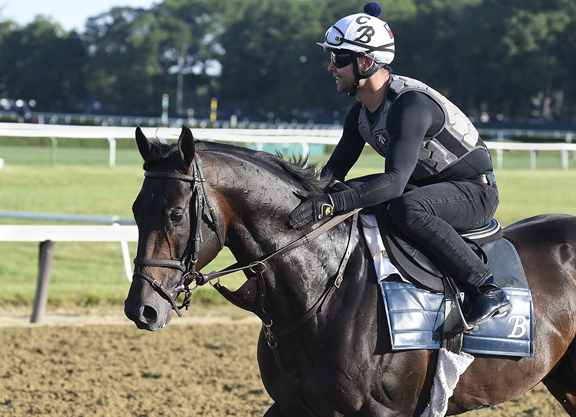
Bob Baffert said that he thought Charlatan (Speightstown) was going to need the race in the GI Runhappy Malibu S. Saturday at Santa Anita. He could not have been more wrong.

Before being sidelined in June due to a filling in his ankle, Charlatan looked like he might be the most promising horse in racing. He demolished the competition in all three of his races, including the GI Arkansans Derby, where a medication violation cost him the official win.

What appeared to be a match race on paper, didn’t really develop because the highly regarded Nashville (Speightstown) didn’t run to expectations. But, nonetheless, the Malibu was loaded with talent and Charlatan thrashed his opponents, winning by 4 1/2 lengths. He got a 107 Beyer figure.

On Sunday, Baffert said he wasn’t sure what was next for Charlatan. It will be interesting to see if his team shoots for the big money in races like the G1 Dubai World Cup or the Saudi Cup or gets more conservative and keeps him home. But wherever he goes, he will be the headliner. Until proven otherwise, he’s the most exciting horse in the sport.

The other story out of Santa Anita Saturday was the handle. The $23,003,159 wagered was a record for an opening day at “The Great Race Place.” It sure looks like the bettors are not turning away from Southern California racing over the new, strict whipping rules.

Los Alamitos Deserved Better

The California Horse Racing Board (CHRB) should be demanding that every track in the state do its very best when it comes to safety. But the CHRB was being unreasonable when it voted to only give Los Alamitos a six-month license to run in 2021. They did so because there had been a reported 29 fatalities at the track during 2020. The commissioners said they would let Los Alamitos run during the second half of the year if they were convinced that the track had been making positive steps when it came to safety.

It’s one thing to give Los Alamitos such an ultimatum. It’s another thing to do so two weeks before the beginning of the year. That’s especially a problem for a Quarter Horse track because most of the money for major races in the sport comes from sustaining payments. Track owner Dr. Ed Allred correctly noted that it was hard to ask Quarter Horse trainers and owners to keep making the payments when they would have no idea if any of the races scheduled later than June 30 would actually be run.

When California was desperate for a track to step up and fill the void after Hollywood Park closed down, Allred went above and beyond, converting his track so that it could hold Thoroughbred racing. Since then, it seems like he never gets a break from the CHRB. The guess is that Allred will back down, but his threat to shut the track down rather than agree to the six-month license is something that can’t be taken lightly. Because of its racing dates and the fact it provides stabling for hundreds of Thoroughbreds, Los Alamitos has became a part of California racing that would be greatly missed of it were ever to go away.

The right thing to do would have been to grant Los Alamitos a one-year license while letting the track know that this would be its last chance and that there would be a stiff price to pay going forward if it didn’t improve on its safety record.

The post The Week in Review: Could Breakage be Used to Pay for Horseracing Integrity and Safety Act? appeared first on TDN | Thoroughbred Daily News | Horse Racing News, Results and Video | Thoroughbred Breeding and Auctions.
Source of original post

Kentucky Sires for 2021, First Yearlings: Part II

Thursday, Chris McGrath covered the first half of the Kentucky stallions with first yearlings. Click here to read about Justify, City of Light, West Coast, Mendelssohn, Good Magic, Bolt d’Oro, and Always Dreaming. The second part appears below.

ACCELERATE (Lookin At Lucky–Issues, by Awesome Again) has also been trimmed to $17,500, at Lane’s End, having already been our “gold” value pick of the intake at an opening $20,000. Whatever made him attractive then has scarcely diminished in the meantime, given that he was never going to appeal to those fast-buck cynics who breed for the ring rather than the track. As it was, he actually made an auspicious start with his weanlings: the 13 sold (of 21) averaged $68,307, better than a couple already examined at higher fees and duly a more fertile yield.

A fee that so generously acknowledged the possibility of commercial wariness–this, after all, was a horse that only reached his true prime at five–certainly paid dividends in books of 167 and 137 to get Accelerate started. These breeders will get a ton of horse for the money: his Breeders’ Cup Classic success was his fifth at Grade I level in a year when his solitary reverse was by a neck to the brilliant City of Light over nine furlongs. His GI Pacific Classic romp, by a record 12 1/2 lengths, was underwritten by a 115 Beyer and it took an unbeaten Triple Crown winner to deny him Horse of the Year.

There’s an old-school grandeur to his page: his first two dams are granddaughters of Deputy Minister and Damascus; the second is also a half-sister to a GI Jockey Club Gold Cup winner; and he’s inbred to a Broodmare of the Year in fifth dam Smartaire, whose son Smarten is damsire of Lookin At Lucky’s father Smart Strike. But remember also that his stakes-placed mother has produced a Grade I-placed juvenile, and that even as a son of such a scandalously underrated sire he realized $380,000 from a terrific judge as a yearling. So there may be rather more commercial traction than some might anticipate, besides all those priceless assets of soundness, constitution and progression that any sane breeder should wish to impart to a family.

Collected | Sarah Andrew

Another GI Pacific Classic winner, COLLECTED (City Zip–Helena Bay {GB}, by Johannesburg), has proved very popular at Airdrie, duly holding a $17,500 fee after covering 156 and 155 mares in his first two seasons. Around half his weanlings into the ring were retained for another go–nine sold of 21 at an average $58,777–and it’s true that Collected himself thrived with maturity, splitting Gun Runner (Candy Ride {Arg}) and West Coast in the GI Breeders’ Cup Classic at four after shocking Arrogate (Unbridled’s Song) at Del Mar in high summer. That season he accumulated triple-digit Beyers in all six starts, a rare accomplishment indeed. But don’t forget that Collected was also a debut winner and graded stakes-placed at two.

The legacy of City Zip has come to seem ever more precious, and Collected has a cosmopolitan and classy pedigree held together by fifth dam Runaway Bride, whose son Blushing Groom (Fr) is responsible for the dam of Collected’s grandsire Carson City. European shoppers of sufficient imagination (admittedly a rather pathetic minority, nowadays) should definitely be interested in a dirt performer who carried dirt speed so well when his first four dams are by Johannesburg, Danehill, Lyphard and Alleged; his mother, meanwhile, is half-sister to a couple of group performers in Japan.

Collected was one of those who lost momentum when kept in training for an extra season but certainly looked value compared with those who finished either side of him at the Breeders’ Cup, who started at $70,000 and $35,000, respectively. Sure enough, he’s the one who has managed to hold his fee and, from such an exemplary farm, he will surely get the track performers to show why.

Oscar Performance | Sarah Andrew

It’s been great to see a stallion back at Mill Ridge, where they are also doing a fine job in the promotion of OSCAR PERFORMANCE (Kitten’s Joy–Devine Actress, by Theatrical {Ire}). We all know how breeders talk the talk about the imperatives of the expanding turf program, without always walking the walk. But Oscar has welcomed strong three-figure books in both seasons to date, and the seven sold of 10 weanlings into the ring put him just where he needed to be at $57,285.

A clip from $20,000 to $15,000 should keep him right in the game, and there’s no doubting his eligibility to catch a rising tide with the proliferation of grass and synthetic opportunities; not to mention the industry’s increasing vigilance over medication. Racing without Lasix, Oscar Performance won Grade Is at two, three and four, and blew the dust off a 20-year-old record for a mile at Belmont at 1:31.23.

Really it’s some package: the constitution to bank $2.3 million through three seasons, having won a Saratoga maiden by over 10 lengths on his way to winning at the Breeders’ Cup at two; and a pedigree saturated with Classic influences on both sides of the ocean. Being out of a Theatrical mare, Oscar Performance entwines the twin lines of Northern Dancer instituted by Special and her daughter Fairy Bridge, respectively via Nureyev and Sadler’s Wells.

Good Samaritan | Sarah Andrew

It was constantly bumping into Oscar Performance that helped to drive GOOD SAMARITAN (Harlan’s Holiday–Pull Dancer, by Pulpit) into what turned into a fertile experiment on dirt instead, starting with success in the GII Jim Dandy S. and only beaten a half in the GI Clark H. Launched at $12,500 by WinStar, he mustered as many as 162 mares in his first book and another 104 last spring. Having processed 15 of 18 weanlings into the ring at $30,100, he gets a bit of help with his fee, down to $7,500.

If a grade below his old rival Oscar, he also maintained his form through three seasons and he’s a nice looker with aristocratic antecedents: his branch of the La Troienne dynasty, stretching through fourth dam La Affirmed (Affirmed), has already produced productive stallions in Sky Mesa and Bernstein.

Down to $10,000 from an opening $12,500, TAPWRIT (Tapit–Appealing Zophie, by Successful Appeal) is a lovely creature who earned a place alongside his sire at Gainesway with a GI Belmont S. success and a stakes record in the GII Tampa Bay Derby. His second book dropped from 154 to 95, but he made a most respectable start at the sales, selling 14 of 18 at $46,214. He should certainly breed a pretty horse, as a $1.2 million Saratoga yearling himself; and he’s entitled to be quicker out of the blocks than might be expected, his dam being a Grade I winner at two. (Incidentally, she has also produced a Grade II winner on turf.)

Mo Town | Sarah Andrew

MO TOWN (Uncle Mo–Grazie Mille, by Bernardini) has taken a second consecutive cut at Ashford, now $7,500 having opened at $12,500, after covering 144 and 108 mares in his first two books and moving on a dozen of 18 weanlings at $36,750.

Actually I like this horse quite a bit and hope he is given time. He was one of those who had somewhat faded from view by the time he arrived at stud, having been confined to a single unproductive start when kept in training at four. But he had shown versatility and class in winning the GII Remsen as a juvenile and then switching onto ‘the weeds’ to win the GI Hollywood Derby.

Obviously Uncle Mo is on a roll as a sire of sires, looking at the freshman championship; and likewise Mo Town’s damsire, as a broodmare sire; plus I love Carson City, Danzig and Sir Ivor seeding the next three generations. The acquisition of the Grade I-placed granddam was another insight into the thoughtful strategies of the Gunthers, as her great-grandsire Raise a Native was full-brother to her third dam.

Mo Town resembles his soaring sire rather more closely in appearance than in fee, and flexibility in terms of surfaces is nowadays supposed to be at an increasing premium. If he appears to be cooling off a little, commercially, then remember that these remain very early days indeed. If anything, this could prove an opportune moment to get ahead of the curve.

Army Mule | Sarah Andrew

Another who slips to $7,500 despite having looked pretty fair value at $10,000 is ARMY MULE (Friesan Fire–Crafty Toast, by Crafty Prospector) at Hill ‘n’ Dale. That’s not hard to explain when you consider that his opening book of 140 slumped to just 47 this time round, but he actually made an excellent start in the ring: the 12 weanlings sold of 14 offered achieved an average of $49,083. That’s a yield matched only by City of Light in the whole intake.

If Army Mule was one of those that are just “too fast to last,” there’s no doubt that he had freakish ability. Though confined to just three starts, he won them by an aggregate 22 lengths in some smouldering times: romping in the GI Carter H. on his stakes debut, for instance, in 1:20.94. He had already flashed his physical charisma and speed when making $825,000 as a Fasig-Tipton Midlantic 2-year-old, and would hardly be the first influential stallion to have advertised his prowess in a window as narrow as four minutes’ racing in anger.

It’s sometimes hard to explain where talent like this comes from. But his first three dams respectively won at stakes, Grade III and Grade II level; and, if the sire may not be as respected in Kentucky as in Maryland, he is a wonderful conduit of Secretariat’s distaff influence. If I were a pinhooker for the 2-year-old sales, I would have this guy pretty near the top of my list among this lot.

Cloud Computing | Sarah Andrew

The same farm’s gamble on another brief candle, of course, produced an immediate Classic winner in CLOUD COMPUTING (Maclean’s Music–Quick Temper, by A.P. Indy). He started out at Spendthrift off $7,500, herding 171 and 122 mares before sending a dozen weanlings into the ring, 10 selling at $29,550.

Cloud Computing’s form soon tapered off after he won the GI Preakness S. barely three months after his debut. Nonetheless, it speaks to his physique that Mike Ryan gave $200,000 for a Maclean’s Music colt way down the September catalog as Hip 1831, and the pedigree is seeded throughout by wonderful old-school influences. (With the uncommon exception of Waquoit, a 15-length Jockey Club Gold Cup winner whose best daughter, the hard-knocking Grade I winner Halo America, is Cloud Computing’s second dam.) Overall there’s a lot of good blood here for a fee down to $5,000.

Of the rest, a toe in the water at the weanling sales generally proved a chilling experience, but that’s pretty standard at this end of the market and wouldn’t remotely disqualify any of them from earning a way back into fashion.

Ransom the Moon | Sarah Andrew

RANSOM THE MOON (Malibu Moon–Count to Three, by Red Ransom) retains a fee of $7,500 at Calumet despite his three-figure debut book dwindling to 44 mares this time round. Beating Roy H (More Than Ready) in consecutive runnings of the GI Bing Crosby S., however, is no mean distinction and one underpinned by the soundness to race five seasons. His historic farm has a somewhat quirky roster nowadays, with its stallions seldom undervalued. But there are still one or two nuggets we’ll be highlighting later in this series.

While SHARP AZTECA (Freud–So Sharp, by Saint Liam) is down to $6,500 from an opening $10,000 at Three Chimneys, he has numbers behind him after mustering 101 mares to follow a monster opening book of 195.

And he remains a very legitimate prospect, his splendid track career–earnings of $2.4 million, on the board in 14 of 17 starts, crowned with a five-length romp in the GI Cigar Mile (115 Beyer)–being rooted in a really interesting page, pairing up siblings Saint Ballado and Glorious Song 3×4. He’s another whose pedigree has been nurtured through several generations only with the best stallions and, with a bottom line tracing to champion and matriarch Kamar (Key to the Mint), he is perfectly entitled to pull a champion out of his hat. Definitely, definitely worth a roll of the dice at this money.

The horse who beat Sharp Azteca in the GI Met Mile, clocking a knockout 117 Beyer, was consolidating the Grade I status he had established at two in the Los Alamitos Futurity. MOR SPIRIT (Eskendereya–Im a Dixie Girl, by Dixie Union) duly vindicated a $650,000 2-year-old tag and his graded stakes-placed dam is out of a half-sister to the dam of Stellar Wind (Curlin). Any reservations about his sire should have been cleared up by Mitole’s success in the same stallion-making race last year, and Spendthrift dependably assembled 176 and then 136 mares in his first two seasons. He has plenty of ballast, then, for one taking consecutive fee cuts, now down to $5,000 from an opening $10,000.

Another Met Mile winner, BEE JERSEY (Jersey Town–Bees, by Rahy), was always good value at $5,000 and advanced his second book at Darby Dan from 61 to 73. None has sampled the ring as yet, but he’s a fine-looking horse with a fantastic pedigree (fourth dam Lassie Dear, no less), so long as you are prepared to take a chance on his own sire. In fairness to that hard-knocking son of Speightstown, this was some advertisement from his first crop–he ran a 109 Beyer in wiring the Met–and I wouldn’t be at all surprised to see the unorthodoxy and imagination of Charles Fipke pay off by breeding another good one from Bee Jersey.

Nor, equally, if he does the same with TALE OF VERVE (Tale of Ekati–Verve, by Unbridled), whose marginal track qualifications are reflected in a fee of just $2,000 at the same farm, but whose family is also aristocratic: dam a half-sister to Grade I winner/multiple Grade I producer Zoftig (Cozzene) from the clan of Swale (Seattle Slew) and Forty Niner (Mr. Prospector).

Funtastic | Sarah Andrew

FREE DROP BILLY (Union Rags–Trensa, by Giant’s Causeway) has been sensibly reduced to $5,000 from an opening $10,000 after assembling pretty conservative books (82 and 91) by Spendthrift standards. He’s a juvenile Grade I winner out of a terrific mare, also responsible for Group 1 winner Hawkbill (Kitten’s Joy); and the next dam is a Grade I winner out of a half-sister to that very wholesome influence Cozzene.

MCCRAKEN (Ghostzapper–Ivory Empress, by Seeking the Gold) was another smart juvenile, his GII Kentucky Jockey Club S. qualifying him as the most precocious son of his sire, and he’s out of a graded stakes-placed half-sister to a Grade I winner. Though only denied his Grade I in the final stride of the Haskell, speed was his true forte–virtually invincible, in fact, up to a mile and sixteenth–and he confirmed his powers of acceleration when breaking the track record in the GIII Tampa Bay Derby. McCraken struggled for numbers last spring, but he has the graduates of a three-figure debut book going out to bat for him; and a clip to $6,000 at Airdrie (opened at $10,000) should also help.

 FUNTASTIC (More Than Ready–Quiet Dance, by Quiet American) had a very small first book but moved up to 51 mares at Three Chimneys last year, having dropped to $5,000 from $7,500. His shock Grade I success in the United Nations H. serves principally to showcase some authentically priceless genes as a half-brother to Saint Liam (Saint Ballado) and the dam of Gun Runner.

CHRIS McGRATH’S VALUE PODIUM
Gold: Accelerate ($17,500, Lane’s End)
   You want runners? You know he’ll get them…
Silver: Mo Town ($7,500, Ashford)
   Keep the faith, every right to add sire’s ‘Mo’-mentum
Bronze: Army Mule ($7,500, Hill ‘n’ Dale)
   Weanlings sold well and even better target for 2-y-o pinhookers

The post Kentucky Sires for 2021, First Yearlings: Part II appeared first on TDN | Thoroughbred Daily News | Horse Racing News, Results and Video | Thoroughbred Breeding and Auctions.
Source of original post

Desormeaux Returns to Action After Rehab Stint

When racing returns to Santa Anita Dec. 26, it does so in a blitzkrieg of high-octane firepower, with races like the GI Malibu S., GI La Brea S. and GI American Oaks luring headline grabbers from across the country.

As things go, race three on the card–a $16,000 claimer–is a far less exulted companion to its starrier cousins. But the race contains its own prodigal return…that of Hall of Fame jockey Kent Desormeaux after a hiatus from the saddle. Still, it’s just the sort of low-key call to arms the jockey is looking for.

“It’s not something you get control of and go tell the world about your accomplishment,” said Desormeaux, of his newly established sobriety after a tumultuous six-month period culminating from decades of struggle.

“I can honestly say it’s been 25 years since I’ve been clean this long,” he said.

It was back in July that Del Mar management barred Desormeaux from the grounds following an off-site incident in which the jockey was accused of using a racial epithet in a fight.

The following September, the Del Mar stewards suspended the jockey for 15 days for “disorderly conduct–racial slurs, aggressive behavior.” He was also ordered to be evaluated by the Winners Foundation, which helps backstretch workers deal with substance-abuse problems, and “abide by the recommendations of that organization.”

Desormeaux explained that he subsequently enrolled in a three-month rehabilitation program at a local facility. It’s not the first time the jockey has sought professional help for his substance abuse issues–another stint was as recent as 2016. But this has been the most concerted effort yet, he said, to wrestle the demons under control.

“This one was not a resort. It was not a vacation. It was not intended to buy some time,” he said. “I learned a lot about myself and came back to reality. There’s a lot of people who certainly care about me, love me and they were deeply concerned.”

One of those family members who has proven resiliently loyal is his brother, trainer Keith Desormeaux, for whom the jockey has two mounts at Santa Anita Saturday and Sunday

“He has always had my best interest at hand,” said Desormeaux. “He has long told me that what I’ve just gone through was needed for quite some time. He’s not sticking by me just this weekend. He’s stuck by me through thick and thin before.”

Desormeaux explained that, as a condition of his license, he is required to undergo routine testing.

“I have a very restricted license,” he said. “I get tested often, and there’s not enough lapse of time for me to use ever. I can’t use at all. Not weekends. Not days off. At all.”

The plan moving forward is very simple, Desormeaux said. “Sticking to the program,” he said, in reference to both alcohol and narcotics anonymous meetings. “You know how they say, ‘you live to learn and learn to live?’ I’ve learned how to live, and now I can move on and live to learn.”

The post Desormeaux Returns to Action After Rehab Stint appeared first on TDN | Thoroughbred Daily News | Horse Racing News, Results and Video | Thoroughbred Breeding and Auctions.
Source of original post

Finite Invades for La Brea

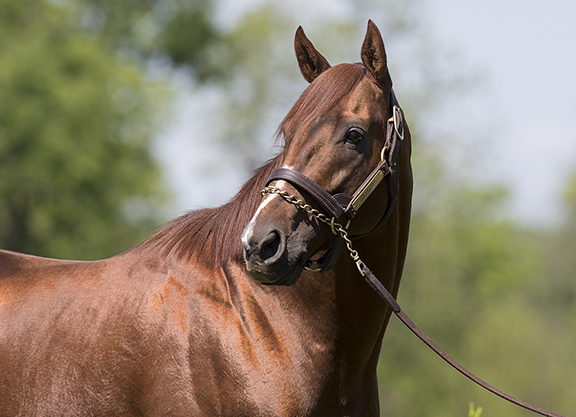
Winchell Thoroughbreds’s multiple graded stakes-winning homebred Finite (Munnings) invades from the east to face off against a talented group of sophomore fillies in the seven-furlong GI La Brea S. at Santa Anita Saturday. Trained by Steve Asmussen, the chestnut put together a four-race win streak which included scores in the Rags to Riches S. and GII Golden Rod S. at Churchill late last year and continued at Fair Grounds with victories in the Silverbulletday S. and GII Rachel Alexandra S. She went to the sidelines following a fourth-place effort in the Mar. 21 GII Fair Grounds Oaks and was well-beaten when returning over the Kentucky Downs turf Sept. 15. She got back on track with a narrowly beaten runner-up effort to Venetian Harbor (Munnings) in the Oct. 17 GII Raven Run S. at Keeneland. She is cutting back to seven furlongs for the La Brea following a win in the one-mile GIII Chilukki S. at Churchill Downs Nov. 21.

Grand Farm Family’s Himiko (American Pharoah), a $1-million Fasig-Tipton November weanling, jumps up to stakes company and stretches out to a mile following a pair of impressive victories. The Bob Baffert trainee suffered through three troubled trips to begin her career before breaking her maiden going six furlongs at Santa Anita Oct. 18. She romped home by 6 1/2 lengths in a 6 1/2-furlong optional claimer at Del Mar last time out Nov. 8.

Baffert also saddles Prince Sultan Bin Mishal Al Saud’s Merneith (American Pharoah). Third behind Swiss Skydiver (Daredevil) in the GII Santa Anita Oaks in June, the bay filly is coming off a gritty win in the Nov. 7 Qatar Fort Springs S. at Keeneland.

Baffert’s La Brea contingent also includes Speedway Stable’s Provocation (Into Mischief) and Pegram, Watson and Weitman’s Golden Principal (Constitution).

Trainer Chad Brown, who swept into Southern California to dominate holiday racing at Del Mar around Thanksgiving, sends out the lightly raced Motivated Seller (Into Mischief) in the La Brea. The Klaravich Stables runner opened her career with a front-running six-length victory at Gulfstream last January. Off nine months after that effort, she returned to add a Belmont Park allowance Oct. 11 and she was closing late when second behind Merneith in the Fort Springs.

The post Finite Invades for La Brea appeared first on TDN | Thoroughbred Daily News | Horse Racing News, Results and Video | Thoroughbred Breeding and Auctions.
Source of original post

Verified by MonsterInsights