Giving Back: Dr. Scott Pierce and the Central Music Academy

This is the first in a new TDN series on people in the Thoroughbred industry who have a passion for a non-industry charity. Want to recommend someone for the series? Email katiepetrunyak@thetdn.com or suefinley@thetdn.com

Dr. Scott Pierce has a lot to be proud of and even more to look forward to. The Rood and Riddle Equine Hospital partner and owner of Omega Farm is the breeder of MGISW Country Grammer (Tonalist), who is set to join the WinStar stallion roster this coming year. But if you caught Dr. Pierce bragging in between radiographs at this year's Keeneland September Sale, it probably wasn't about the first stallion to come off his boutique breeding operation. Instead, he was more than likely telling you about the Central Music Academy (CMA), a non-profit in Lexington that gives free musical training to students ages eight to eighteen who would not otherwise be able to afford professional musical instruction.

Pierce has been on the CMA's Board of Directors for nearly a decade and he has been the board's chairman since 2019. During that time, Pierce has been an outspoken advocate for the work being done through the organization.

“The bottom line is that it's all about the kids,” he shared. “It enables kids to receive really good, high-quality music lessons from very good teachers. It changes their lives; I've seen it happen.”
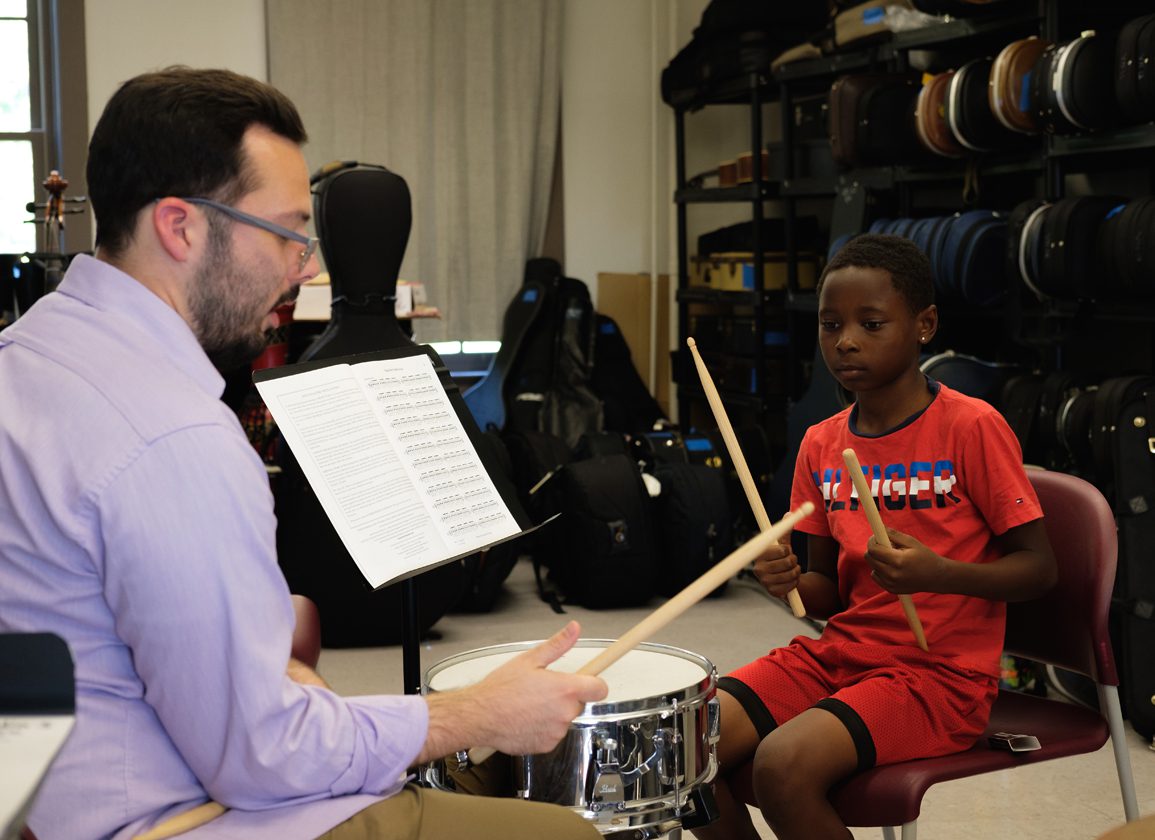
CMA student during a percussion lesson | courtesy CMA

In 2015, a close friend asked Pierce if he would be interested in joining the CMA's Board of Directors. Knowing little about the organization, Pierce wasn't sure what to think of the commitment initially but he soon became hooked.

“So many people agree to be on different boards and you can either be an active or a passive board member,” he explained. “Seeing the change that this has made in these kids' lives has made me a very active board member and it's been a big part of my life for the past few years. When you see the difference it makes, it's easy to get involved and you want to promote it.”

Founded in 2004, the Central Music Academy started with just five students in its first semester and gradually built from 11 attendees to 20 and eventually to the current enrollment of about 100 students. Since its inception, it has provided over 50,000 free musical lessons in all areas of musical performance to more than 1,500 children. The students receive high-level instruction from teachers who hold Bachelor of Music degrees. Half of the teachers have also completed or are working on their master's or doctorate degree in music.

In order to qualify for the program, a family of four must make less than $60,400. This threshold is based off the U.S. Department of Housing and Urban Development's Lower-Income Household Levels.

“100% of the kids would not be able to afford this without aid,” Pierce said. “What's phenomenal is that CMA students have a 100% high school graduation rate and many of them go on to college. A lot of the students have also auditioned into SCAPA [Lexington's School for the Creative and Performing Arts] or have gotten into all-state bands or orchestras, so it helps them move along in their education and potential careers.”

One graduate of the program began taking trumpet lessons at CMA when he was 11 years old and went on to receive a scholarship at the University of Louisville, where he is now majoring in music education.

Pierce also pointed out the diversity of their students, noting that 42% are Hispanic, 40% African American and 15% Caucasian.

“The only thing that is discouraging is that there is always a waiting list,” he admitted. “There is not enough money to hire enough teachers. Currently there are 45 students on the waiting list because it is expensive to provide these free lessons.”

Growing up in Missouri, Pierce was never destined to become a musical genius. While his mother begged him to learn the piano, Pierce admitted that he “fought her tooth and nail.” Looking back now, Pierce realizes his childhood mistake.

“This is making up for some of the things I missed because I've learned as I've gotten older that music is so important in my life,” he said.

In addition to limited monetary resources, CMA has also had to overcome the obstacle of a restricted amount space to conduct their lessons. The program has bounced from one building to another over the past 20 years until this spring, when Pierce found a building for sale that would become the CMA's permanent home. Formerly the location of a prosthetics company, the 5,000 square foot building was the perfect fit with seven small rooms that were easy to renovate into private classrooms.

“One of my goals was to purchase a facility that we could call home,” Pierce said. “It's a blessing that we were able to afford it. We still have some renovations that we need to do, but this has been a huge deal for us and for the future. It gives the kids a fun, safe space to hang out and do their lessons.”

One of the eventual goals for the new facility is to convert the open basement into a space for recitals. Typically the CMA rents out event centers in Lexington to host multiple recitals and events each year, but a remodeled basement that could hold over 50 attendees would provide a built-in location for recitals as well as larger group classes.

While Pierce's major goal of finding a permanent location for the CMA has been fulfilled, he is far from taking the metaphorical foot off the gas pedal in terms of moving the organization forward.

“I don't want to see any kid on a waiting list,” he said. “That's the primary thing and then also to get more notoriety, get the mission out there. We know that the CMA is growing because we do get generous donations from people just out of the blue. I think knowing that it makes a huge difference in the kids' lives makes it an easy nonprofit to donate to.”
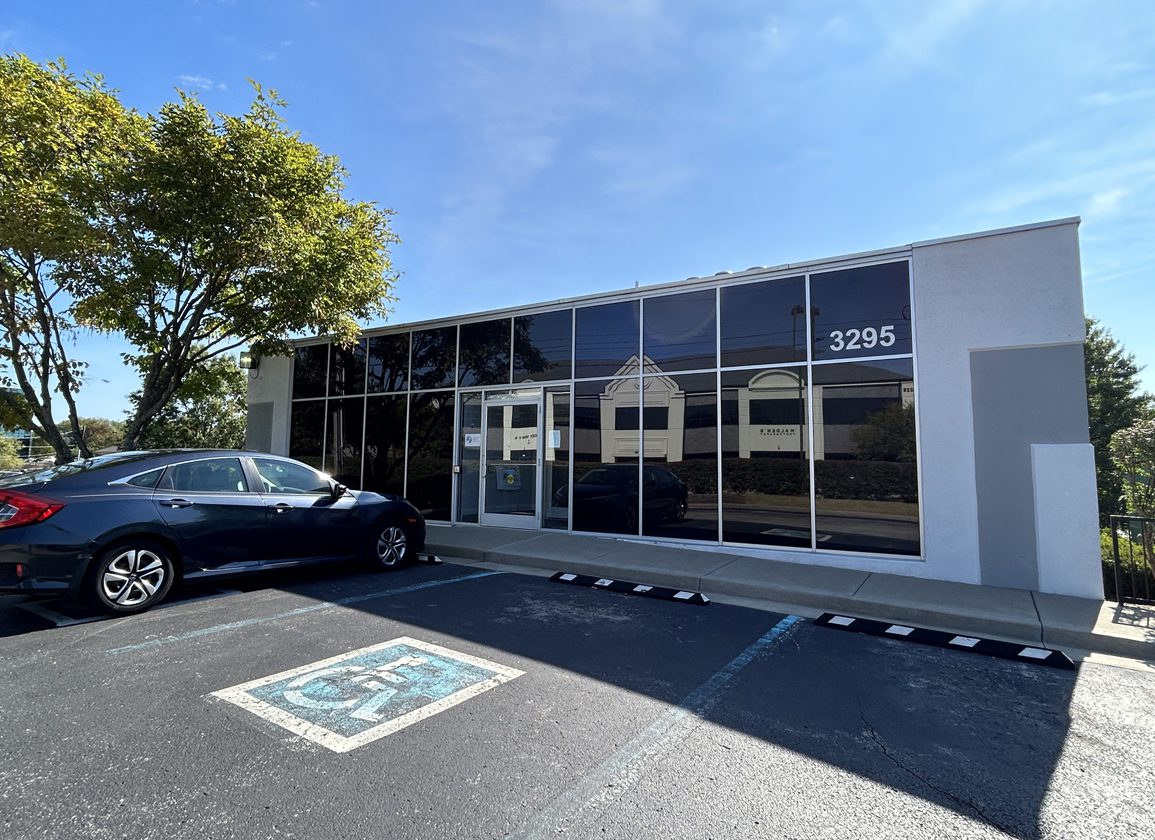
The new CMA building in Lexington | courtesy CMA

This year, Pierce's tenure as the CMA's chairman will come to a close. The program's Director Erin Walker Bliss said that Pierce's leadership over the past four years has been vital to the CMA's success.

“He's really excited about what CMA does and telling people about the program,” she said. “He's also excited about music. We were friends with him for years before he told us he had a cello in his closet that he had bought on a whim because he wanted to learn it. He's been a great voice for the organization and people take him seriously. Because he's a mover and a shaker in his own field, when someone is at that level it means that they're serious with anything that they're pursuing.”

Walker added that Pierce is now trying to recruit the next group of board members, perhaps even finding some music lovers from his circle of friends in the racing world.

“He has definitely helped spread the word throughout the horse industry,” she said. “We never had a connection to the equine industry before so it has brought in an entirely new group of supporters, which has been huge for us as well.”

Even when he is no longer on the nonprofit's board, Pierce has made it known to the CMA team that he isn't going anywhere.

“This has been truly fulfilling for me,” he reflected. “A lot of the kids know that I'm on the board and I've had some of them come up and thank me at recitals. To go down the hall and hear them in their lessons, I know it's really life changing for them.”

Pierce's involvement in the CMA is worlds away from his many achievements as an esteemed veterinarian and a successful breeder, but it holds an equally significant place in his heart.

“It's totally out of my wheelhouse, but it's been fun and rewarding,” he said. “I wish more people would get involved in things like this because it makes such a huge difference. I've been blessed to have many things come my way and it's a way to pay it forward, which I think there are a lot of people in the horse industry that do that. The generosity in the horse industry is phenomenal and I'm just a small part of it.”

Between his philanthropic endeavors, traveling far and wide for public auctions from Tattersalls to Ocala to Keeneland, and his managing shareholder position in Rood and Riddle's Wellington and Saratoga locations, Pierce shows no signs of slowing down.

“My goal 40 years ago was to breed racehorses and have a farm, so I'm living the dream,” he said. “You hear that a lot, but I truly am. I may slow down in terms of veterinary practice, but retire is not in my vocabulary.”

Click here to learn more about the Central Music Academy. 

The post Giving Back: Dr. Scott Pierce and the Central Music Academy appeared first on TDN | Thoroughbred Daily News | Horse Racing News, Results and Video | Thoroughbred Breeding and Auctions.

Source of original post

Catching Up with 2000-01 Breeders’ Cup Classic Winner Tiznow

“The American Horse of the Year and the Arc winner are heads apart with a furlong to go in the Classic… Here's the wire, desperately close. Tiznow wins it for America!”

Chances are you can actually hear Tom Durkin's legendary call as you read those words. And chances are listening to the call now will give you goosebumps all over again and bring you straight back to that amazing moment. Tiznow became an American hero that day at Belmont Park, just weeks after what would become known as 9/11.

Still the first and only horse to win back-to-back Breeders' Cup Classics, Tiznow's story is far more than one great victory. The robust California-bred's career reads like a modern-day racing soap opera: sandwiched between the Eclipse Awards, the Grade I races, and the two Classics, he was famously reluctant to train, lost his owner three days after his first Breeders' Cup win, and suffered a back injury that kept him on the sidelines for six months. He was quirky, he was game, and he was flat-out wonderful.

With perhaps a bit more modest pedigree than many stallions, Tiznow also wasn't guaranteed to stand in Kentucky. Thank goodness he did, though. Among his offspring are Breeders' Cup winners Folklore and Tourist and he's proving to be a darn good broodmare sire as well. Tiznow was pensioned from stud duty around this time of the fall in 2020. He remains at WinStar, where the affection stallion manager Larry McGinnis has for the big bay is palpable.

“I led him off the van when he arrived at WinStar,” said McGinnis. “It's been a pleasure to take care of him his whole life.

“He's very good boy. He's retired now and when he's ready to come in the barn, he walks down to the gate and lets us know. His paddock has a hill in it. If we can't see him from the barn, he's on the other side of the hill and he doesn't want to come in. If he's at the top of the hill, we know he'll want to come in soon. We just wait for him to walk down to the gate, because that's when he's ready for us to bring him in, not before. He knows if it's going to get hot and he'll want to come in. We let him tell us.

“He's one of the smartest horses I've been around, probably the smartest. He's just a very cool, collected horse, always in control. He always looks at things and assesses them.

“He didn't like us riding or exercising him when he retired, so we stopped that pretty quick with him. He let his opinion be known. He felt that was work and he'd done that and didn't want to do it anymore.

“He's very, very smart with a good temperament. He was also a very, very fertile horse. One time he got 15-20 mares in foal in a row. That doesn't happen very often.

“He's just always been very intelligent, very cool and collected about everything he's done. It's just a pleasure to be around him.”

Tiznow (1997 bay horse, Cee's Tizzy–Cee's Song, by Seattle Song)

Lifetime record: Horse of the Year, Ch. 3yo colt, Ch. older male, MGISW, 15-8-4-2, $6,427,830

Breeders' Cup connections: B-Cecilia Straub Rubens (CA); O-Michael Cooper and Cecilia Straub-Rubens (2000)/Cees Stable LLC (2001); T-Jay Robbins; J-Chris McCarron.

Current location: WinStar Farm, Versailles, Ky.

The post Catching Up with 2000-01 Breeders’ Cup Classic Winner Tiznow appeared first on TDN | Thoroughbred Daily News | Horse Racing News, Results and Video | Thoroughbred Breeding and Auctions.

Source of original post

Top ‘Gun’ Rewards Chris Baker’s Belief in ‘Run’

On the spectrum of Thoroughbred stallions, you won't find too many either side of Gun Runner and Despot. One, charging $250,000 a dance at Three Chimneys, is the most immediately accomplished sire of recent times. The other was claimed for $350 at Waterford Park, some 50 years ago, before being set to work annually producing a handful of half-breds in rural Maryland.

“Liver chestnut son of Stevward,” says the man whose career unites this unlikely pair. “You should have seen us trying to figure out how to breed mares on our own. 'Grab her tail.' There were no helmets and vests worn, I can guarantee you that.”

Chris Baker, chief operating officer at Three Chimneys for the past decade, chuckles at the memory.

“My father, in essence, thought that no uterus should be empty,” he says. “From cows to horses, to cats, dogs, everything. Breed, breed, breed. An old Catholic thing, I guess! But that's where the whole horse thing started.”

It has been quite an odyssey since. Crucially, in a sector of the industry that often feels culpably divorced from its ostensible purpose, Baker cut his teeth on the racetrack. He started at a barn that then housed A.P. Indy, and for a time was even a trainer himself. Baker went on to adapt those experiences to the challenges of breeding, so well that 11 years as general manager for Ned Evans at Spring Hill Farm yielded over 100 stakes winners, including another Horse of the Year in Saint Liam. During a stint at WinStar, he welcomed into the world yet another that would earn those laurels; and now Gun Runner and Baker have together brought their careers to fulfilment in the service of the Torrealba family at Three Chimneys.

Baker cuts a striking figure, nowadays, silver hair flowing beneath the broad brim of his hat. But the ease of his demeanor and conversation has been fully earned: the insights kindly shared with The TDN remind us that none of these things happen overnight, nor by accident.

Baker's forefathers were themselves achieving pretty high production. Baker himself is sixth of seven children; his father was one of nine kids from McKees Rocks, Pittsburgh; and his grandfather, in turn, was one of nine, seven being boys.

All seven brothers went into the family business: a bakery, inevitably. The one who became Baker's grandfather was charged with the care of 100 carthorses that delivered bread for the Baker Brothers Bakery.

“My dad tells of going with his father in a buckboard wagon at weekends to try out replacements for horses that had been retired, or come up lame,” he recalls. “One time this horse just wouldn't go and, after driving away at him for a mile or so, they turn round to go back. And then the horse just takes off. They can't stop him. He's running through the cobblestone streets like a lunatic, all the way back into the barn, where he comes to a screeching halt, dust flying everywhere.”

The panting driver leaned down to his sons cowering in the bottom of the wagon. His words have since been humorously invoked at any appropriate juncture in Baker family history: “Boys, whatever you do, don't tell your mother.”

It is to this gentleman that Baker traces his affinity for horses-though there were also weekends and summers at the farm owned by his other grandfather, an hour or so from his boyhood home in Washington, DC. This one was an attorney (as was Baker's own father) but also raised cattle and tobacco on 600 acres.

“So really we did a lot of our growing up in the country,” Baker says. “And we were riding before we could walk. There were horses for everybody- buckskins, palominos, Tennessee walkers-just not saddles or bridles for everybody! If you were the last to the tack room, you'd be riding with a halter and rope.”

The most expensive was a Chincoteague pony bought by his father for $45. But then a neighbors' daughter went away to college and gave her hunting mare, a retired Thoroughbred, to the Bakers. Suddenly they had a new sense of what a horse could be. Soon they started claiming the odd Thoroughbred from places like Charles Town and Mountaineer, Despot among them.

“And then somebody told my father that a stallion needs to be exercised,” Baker recalls. “Which is right. But next thing I'm the one, at 10 years old, getting run off with, all over the farm.”

Sometimes he would also be told to ride a mare to a nearby farm that stood Quarter Horse stallions. ([Its owners were raising a boy of their own into the game: the future veterinarian, Steve Allday.] Baker remembers being told to stand his mare uphill, and put his shoulder into her chest so that she might keep still. One way or another, then, it was a pretty seasoned young horseman who went off to read Agriculture and Animal Science at the University of Maryland.

It was during his college years that Baker first sampled racetrack work, at Bowie, and subsequently a three-year grounding at Lane's End included stints at Churchill and Keeneland with the farm's trainer at the time, Neil Howard. Baker had been a sufficiently able high school athlete-football, track, wrestling-to have developed an interest in physiological preparation. First and foremost, however, he had grasped that anybody intending to breed racehorses should understand the requirements of those who trained them.

Baker served as Hall of Fame trainer Richard Mandella's assistant for several years | Benoit

“I believe my experience on the racetrack makes me a way better farm manager,” Baker acknowledges. “And that was very intentional. It was something deeply ignited in me at that age, my early 20s: how could I breed and raise an athlete without seeing that athlete in training and in competition?”

True, that apprenticeship extended far beyond his expectations. He went to Australia and England, to see how things were done there; and ended up serving four years as assistant trainer to Richard Mandella. His resume by then included a year with Neil Drysdale, on hand when a $2.9 million son of Seattle Slew broke his maiden at Santa Anita. Baker was still very junior, at that time, but A.P. Indy gave him a glimpse of the elite Thoroughbred; and Mandella would now provide a wider perspective.

“Richard was a great teacher,” he recalls. “A great taskmaster, as well! I mean, you were going to learn, or you weren't going to be around at all. So I learned a tremendous amount about hard work and horsemanship, the kind that leaves no stone unturned. But also in terms of character, and approach to life.”

Within months Phone Chatter and Kotashaan (Fr) had won at the Breeders' Cup, while the South American conveyor belt would bring the likes of Siphon (Brz) and Gentlemen (Arg).

“Those horses had to go through a lot of filters to make it here,” Baker reflects. “Some had a lot of stamina in their pedigrees and, especially in California, you had to have speed as well. But most of them had good foot, good bone, some constitution. Watching Richard adapting both South American and French horses to U.S. methods, the acclimatization process, the patience required, was a fantastic education. At the same time, of course, he's getting horses like Afternoon Deelites and Soul of the Matter. At one time we had 40 horses in the barn and eight were Grade I winners. It was just a great environment, a great lab to study in.”

Eventually Baker became so absorbed by the track that he thought he might never leave. He took out a license, trained 11 winners over a couple of years. But then he got married, soon a daughter appeared, and a nomadic and uncertain existence became impractical. He returned to Kentucky and worked on a couple of farms until sounded out by his former employers at Lane's End about their client, Edward P. Evans, who was seeking a manager for his farm in Virginia.

Inauspiciously, Evans was doing so for the fourth time in five years. But it suited Baker, as a young father, to be close to family and he backed himself to forge a relationship with this notoriously demanding employer.

“He was tough but fair,” Baker says. “And he expected results. As his brother Shel told me, 'In Ned's life, nobody avoids the penalty box.' But so long as you were doing what you were supposed to, and helping him achieve his goals, he was a great guy to work for. So I just went in and worked hard, was honest and clear with him. And, as we got to know each other, we built some trust and mutual respect.

“He was a very intelligent guy. He could take what looked like complex situations, and distill them to one simple actionable item that would drive success. He read people well, read business well. And he had a highly developed bullshit monitor!”

Evans had been only 27 when buying the farm back in 1969.

“He'd always bred to good stallions: Northern Dancer, Mr. Prospector, Halo,” Baker says. “He'd bred to The Minstrel at Windfields in Maryland and got Minstrella, a champion 2-year-old [in Europe]. But having been operating with 20, 30 mares, the whole scale changed when he sold out of Macmillan [the publishing firm]. That was when he got right up to 90 mares, and his whole intent and focus changed. So when I fell in, it was Year 31 of a 42-year experiment. All the ingredients were there-the physical plant, the bloodstock-and he just needed somebody to help orchestrate things, from an operational standpoint. So, again, it was fortunate timing on my part.”

By that stage Baker had long been absorbed by pedigrees. He was barely 10 when his father would throw him the stallion edition of Maryland Horse to help pick a $1,500 sire. But now he could mix from a much larger palette, including Pleasant Tap-Evans had inherited a third share from his father-and homebreds like Silver Ghost and Stormin Fever.

By the time Evans died, on the last day of 2010, they had raised Saint Liam [sold as a yearling] and Quality Road, whose stud career has lavishly benefited his late breeder's charitable foundation.

“I didn't know everything about managing a farm,” Baker says. “Still don't. But I knew what I didn't know, and knew people to call to fill in the gaps. Working for Mr. Evans was like getting an MBA. We'd go over the financial statements on a monthly basis, we'd go over the annual budgeting with his controller in New York. To that point, I had focused my entire career on developing my horsemanship. But he opened my eyes to the macro, business level.”

Three Chimneys owner Goncalo Torrealba | Keeneland

In the process Baker also obtained a rare, cradle-to-grave perspective on equine potential. When preparing the Spring Hill dispersal, then, Baker was still presiding over matings and foalings, still liaising with pre-trainers and trainers. The authority with which he did so plainly impressed Benjamin Leon, who bought several of the mares and invited Baker to follow them into his operation. Baker having committed to WinStar, however, Leon said: “Chris, these mares are your handiwork. They should be with you. Will you ask Mr. Troutt if I can board them at WinStar?”

So it was that Baker came to be present when Saint Liam's $3 million half-sister Quiet Giant (Giant's Causeway) delivered a Candy Ride colt on 8 March, 2013. He still has a photo of the foal standing for the first time. A few months later, Baker was hired by the new owners of Three Chimneys-but he would not be parted long from Gun Runner.

By typical horseracing happenstance (Goncalo Torrealba's sister and Leon were both clients of the same Miami hairdresser) Leon invited the Torrealbas to his suite for the 2014 Kentucky Derby. Leon hit it off with Torrealba, and was invited to stay at Three Chimneys next time he was in town. When he did so, they look Baker to see all Leon's stock-and very soon sealed a partnership in everything that had come out of Spring Hill.

“So then all those horses were here with me at Three Chimneys,” marvels Baker. “If that's not luck, I don't know what is. It's fantastic, just makes the whole thing very, very meaningful. Because of the long connections, the multiple generations of multiple families.”

This has allowed Baker an emotionally gratifying stake in the outcomes of his own long diligence. Sure, he has only ever monetized his contribution as a salary; but he has felt privileged, throughout, to participate in his employers' far-sightedness.

“For so many people in our industry, just to make ends meet, the goal is to make a profit every time they can,” he acknowledges. “I've been fortunate to benefit from a completely different mindset: to focus on results, on accomplishing things, and ultimately to make a business profitable that way instead.”

The point being that with adequate resources and patience, this approach will eventually pay off commercially, too.

“I remember sitting down with Mr. Evans one time, and we were deciding between two stallions for this mare,” Baker recalls. “And I said, 'Well Mr. Evans, Pleasant Tap suits her greatly, but it's not really a commercial mating. Commercially, you'd want this one instead.' And he replied, 'Commercial sires? Racehorse sires? Who doesn't want a racehorse?' I mean, he could afford to kind of push that aside. But it was so black and white to him: if you can breed a racehorse, you'll be doing the right thing for your mare, for the family, for the whole thing.”

Of course this all ties in with Baker's grounding on the backside. His whole career has been oriented to finding a runner.

“Plenty of people that haven't had that racetrack experience have raised a lot of good horses,” Baker stresses. “I just know that for me, it makes me significantly better, because I understand what's going to be asked of them. I understand physically, mentally, even socially, things that might set them up to succeed. At the end of the day, as producers, we can't make them faster or better than they're individually hardwired to be. But by doing or especially not doing certain things, we can stay out of the way of them reaching their full potential.”

Gun Runner | Sarah K. Andrew

Gun Runner, as such, could not be better named. He's only top “gun”, after all, because he was all “run”. To Baker, of course, the horse will always have an unusually personal resonance. Knowing him so intimately, how does he account for Gun Runner's genetic prowess?

“Well, I certainly can't attribute it to any one thing,” he replies. “I think he's an alchemy of so many things that just came together. The only extremes of Gun Runner are his athleticism and his temperament, his will to win. Mental constitution, as much as anything. If you look at him, he's not too big, not too small; and his pedigree, also, suits a broad spectrum of mares. There's a melding of so many things: the brilliance of Candy Ride, the stamina and durability of Giant's Causeway. And you can go all the way back to Gallorette [foaled in 1942]. Just read her race record, and then keep tipping up the line!”

With this fulfilment of former patrons' legacy, then, Baker's present employment has brought things full circle. He repeatedly insists that he has been fortunate, “all the way through my career, to be in the right place at the right time.” But you also make your own luck. It was only because three different people-Evans, Leon and Torrealba-all recognized the skills of this “fabulous Baker boy” that a single set of fingerprints has remained, almost the whole way through, over one of the most remarkable Thoroughbreds on the planet.

“The Torrealba family has afforded us the opportunity to work with a lot of great horses, and a lot of great people,” Baker says gratefully. “All the way through my career, accomplishment has come through people having the right goals, the right stock, doing the right work. I do think I've worked hard for everybody who's been willing to employ me, but I also think I've been very fortunate to have people that believed in me, and in the teams that we could put together. It always takes a team effort, backed up with good stock and good facilities, and Three Chimneys is certainly an extension of that. So really the only way of looking at it is probably that I've been spoiled, right?”

The post Top ‘Gun’ Rewards Chris Baker’s Belief in ‘Run’ appeared first on TDN | Thoroughbred Daily News | Horse Racing News, Results and Video | Thoroughbred Breeding and Auctions.

Source of original post

Justify’s Fee Doubled at Ashford for 2024

Triple Crown winner Justify (Scat Daddy), currently North America's leading second-crop sire in stakes horses, will stand for a fee of $200,000, live foal, at Ashford Stud in Kentucky in 2024, Coolmore America announced on Tuesday. The 9-year-old's fee represents a jump of $100,000 from the figure of $100,000 that he stood for in 2023.

Justify's 2024 fee is the fourth-highest of the stallions announced so far for 2024, placing him behind perennial leading sires Into Mischief (Harlan's Holiday) and Curlin (Smart Strike), and third-crop standout Gun Runner (Candy Ride {Arg}).

Veteran sire Uncle Mo (Indian Charlie) remains at $150,000 while 17-year-old Munnings (Speightstown) sits at $75,000.

Following the top three are American Pharoah (Pioneerof the Nile) $50,000; Practical Joke (Into Mischief) $45,000; Epicenter (Not This Time), $40,000; Jack Christopher (Munnings) $40,000; Corniche (Quality Road) $25,000; Golden Pal (Uncle Mo) $25,000; Tiz The Law (Constitution) $20,000; Mendelssohn (Scat Daddy) $15,000; Maximum Security (New Year's Day) $7,500; Echo Town (Speightstown) $5,000; and Mo Town (Uncle Mo) $5,000.

The post Justify’s Fee Doubled at Ashford for 2024 appeared first on TDN | Thoroughbred Daily News | Horse Racing News, Results and Video | Thoroughbred Breeding and Auctions.

Source of original post

Verified by MonsterInsights