Taking ‘Flight’: Brown Barn Reloaded for Spring

Not to be lost off the heels of a very productive weekend of GI Kentucky Derby/Oaks preps for the Chad Brown barn–more on that in a bit–the four-time Eclipse Award-winning trainer recently unveiled a pair of ultra-impressive, stakes-quality Euro imports for allowance victories.

Juddmonte homebred Pocket Square (GB) (f, 4, Night of Thunder {Ire}), heroine of Deauville's G3 Prix des Reservoirs at two for trainer Roger Charlton, turned in an eye-catching, 2 1/4-length come-from-behind tally in her U.S. bow over the Keeneland lawn Wednesday, rocketing home in :28.21.

She was receiving first-time Lasix in the 1 1/16-mile affair while making her first attempt since an unplaced effort–her lone start at three–in last July's G3 Tattersalls Musidora S. at York. The lightly raced Pocket Square is a daughter of the multiple stakes-placed Dansili (GB) mare Shared Account (GB), a full-sister to French G1SW Zambezi Sun (GB).

“She ran terrific,” said Brown, who also won Friday's GI Maker's Mark Mile with Raging Bull (Fr) (Dark Angel {Ire}). “She got a good trip and a good ride from Irad [Ortiz, Jr.]. She had been training very well down at Payson Park all winter, so we were cautiously optimistic that she could get her campaign kicked off the right way.”

Pocket Square could potentially target Belmont's GI Longines Just a Game S. on the GI Belmont S. undercard June 5. Brown and Juddmonte followed a similar blueprint with Antonoe (First Defence), who also won a Keeneland allowance in her U.S. bow prior to adding the Just a Game in 2017.

“A race like the Just a Game is definitely in play,” Brown said. “She's already won at a mile, so I don't think cutting her back will hurt. We've had success before doing that with another Juddmonte horse Antonoe, who followed a similar track. It's something we'll nominate her to, but in no way is that firm yet. We'll get her back to New York and see how she's training first.”

Flighty Lady (Ire) (f, 4, Sir Percy {GB}), four times group-placed at two and three in France, also stamped herself as one to watch in her first attempt on these shores, punching on nicely with a smart, two-length score with first-time Lasix traveling 1 1/16 miles over the Aqueduct grass last Saturday (video).

She was purchased privately by Peter Brant's White Birch Farm following a third-place finish in the 2019 G1 Qatar Prix Marcel Boussac at ParisLongchamp. Her resume also includes a solid third-place finish behind subsequent GI Belmont Oaks Invitational S. heroine Magic Attitude (GB) (Galileo {Ire}) in the G3 Prix Vanteaux last May.

The 21,000gns TAOCT yearling is out of the unraced Dansili mare Airfield (GB), a full-sister to GSWs Early March (GB) and Aviate (GB). This is also the family of G1 Goffs Irish One Thousand Guineas heroine Al Bahathri (Blushing Groom {Fr}) and G1 Two Thousand Guineas winner Haafhd (GB) (Alhaarth {Ire}).

“She trained down there at Payson, too, and also got her season kicked off the right way,” Brown said. “I'm looking at the [GIII] Gallorette [S. at Pimlico May 15] as probably the leading candidate for her next spot. But we'll nominate her to a bunch of different stuff. I like the timing of that race and keeping her at that distance [1 1/16 miles] for now, so we'll see.”

Like his former boss, the late, great Bobby Frankel, Brown is no stranger to top-level success with these types of imports, led by champion female turfers and Breeders' Cup winners Sistercharlie (Ire) (Myboycharlie {Ire}); Uni (GB) (More Than Ready) (like Pocket Square and Flighty Lady, also out of a Dansili mare); and Zagora (Fr) (Green Tune); as well as champion grass horse Flintshire (GB) (Dansili {GB}); and South American champion turned MGISW in the U.S., Dacita (Chi) (Scat Daddy).

“Fortunately, I've had the combination of a great mentor with Bobby training me how to take these type of horses in,” Brown said. “Really no two are alike, right? They come from different areas of Europe or South America, what have you, so we adjust to what we receive. And the other part is getting the horses. The horses you mentioned were very highly regarded, and had a lot of ability to begin with. My team, I sort of trained them for what I know, and they then execute it with the horses that we're grateful to have. It's worked that way and it's nice to see that it's continuing to work. As long as we get these type of horses and my team continues to follow the boss's plan–which was really Bobby's–hopefully, we'll be able to add to that list.”

As the calendar quickly approaches the first Saturday in May, Brown–second in the 2018 Kentucky Derby with champion Good Magic (Curlin) and third in the 2016 Kentucky Oaks with Lewis Bay (Bernardini)-will be well-represented once again in those two Classics with a pair of Klaravich runners.

Highly Motivated (Into Mischief) punched his ticket to Louisville with an ultra-game runner-up finish to Essential Quality (Tapit) in the GII Toyota Blue Grass S., while the unbeaten Search Results (Flatter) now stands atop the Oaks standings following her stalk-and-pounce win in the GIII Gazelle S.

While still up for further discussion, Brown reported that Crowded Trade (More Than Ready), third in the GII Wood Memorial S., may await the GI Preakness S., a race won by the stable in 2017 with Cloud Computing (Maclean's Music).

“Very lucky to have a nice, diverse group of horses to complement those turf runners,” Brown said. “We've got some really nice dirt horses in the barn, too. It's exciting and we've been down this path before. We haven't won either race, the Derby or Oaks, but we've been close and knocking on the door a little bit with limited opportunities.

Brown concluded, “There's so many things to overcome, I've sort of become numb to it knowing everything that can happen. But we know more as a team now definitely, so you feel a little bit more comfortable going over there than the earlier days. Highly Motivated and Search Results seem to really fit with this group. We're really lucky to have these two horses.”

The post Taking ‘Flight’: Brown Barn Reloaded for Spring appeared first on TDN | Thoroughbred Daily News | Horse Racing News, Results and Video | Thoroughbred Breeding and Auctions.
Source of original post

Saturday’s Racing Insights: Bros to Champions Make Second Starts

Sponsored by Alex Nichols Agency

11th-KEE, $79K, Msw, 3yo, 7f, 6:38 p.m. ET

A pair of Pioneerof the Nile brothers to high-profile champions look to go one better off of runner-up debuts to close out the Keeneland card Saturday. John Gunther homebred Stage Raider (Pioneerof the Nile) is half to none other than Triple Crown winner Justify (Scat Daddy) as well as the ill-fated GSW The Lieutenant (Street Sense). A $950,000 Keeneland September RNA, the Chad Brown trainee was beaten 8 1/2 lengths by super impressive 'TDN Rising Star' Prevalence (Medaglia d'Oro) going this distance at Gulfstream Jan. 23. Prevalence came back and did what he had to do to take an optional claimer next out, but he settled for sixth in last Saturday's GII Wood Memorial S.

WinStar Farm and CHC Inc.'s Harvard (Pioneerof the Nile), meanwhile, was second going a furlong shorter at Gulfstream Feb. 28, good for a field's-best last-out Beyer Speed Figure of 75. Bred by China Horse Club, the Rodolphe Brisset pupil is a full to 2016 champion juvenile and 2017 GI Arkansas Derby winner Classic Empire, who has first 2-year-olds himself this season. TJCIS PPs

4th-OP, $93K, Msw, 3yo, 6f, 2:42 p.m. ET

Bob Baffert brings in Following Sea (Runhappy) for a lucrative maiden special weight try a few races before he'll be represented by the two expected favorites in the GI Arkansas Derby. Spendthrift homebred Following Sea crossed the wire second on debut behind stablemate and subsequent GI Runhappy Santa Anita fourth Defunded (Dialed In) at Santa Anita Mar. 6, but he was moved back to third by the stewards for interference. The bay was a $230,000 in utero purchase at the 2017 Keeneland November sale. His stakes-winning dam has already produced one stakes horse and is half to SW and MGSP Qahira (Cairo Prince), who is also conditioned by Baffert.

Frank Fletcher Racing and Ten Strike Racing will be represented by Brad Cox-trained firster Amazing Rocket (Into Mischief). The $500,000 KEESEP buy is a grandson of MSW Amazing Buy (High Yield). Happymac (Runhappy) was a $360,000 KEESEP yearling who RNA'd last year at OBSAPR for $800,000 following a :20 3/5 bullet breeze. The half-brother to speedy GSW/MGISP Shancelot (Shanghai Bobby) was fourth in the Saratoga mud last August–two slots behind recent GII Toyota Blue Grass runner-up Highly Motivated (Into Mischief)–and was beaten a neck after setting the pace at Keeneland in October. He's one of two to be saddled by Steve Asmussen, along with $170,000 Fasig-Tipton Saratoga New York-bred Arms an Armor (Laoban).

Rising Empire (Empire Maker) earned the same Beyer Speed Figure–64–when finishing fourth on debut that Happymac did at Keeneland one day earlier. The half-brother to MGSW marathoner and 'TDN Rising Star' Rocketry (Hard Spun) was a $275,000 KEESEP yearling turned $700,000 OBSAPR grad off a :10 1/5 move. Terawatt (Nyquist) was a $200,000 KEENOV weanling, $300,000 FTSAUG yearling and $295,000 FTMMAY RNA (:10 1/5). He's a half to GSW Native Bombshell (War Front). TJCIS PPs

The post Saturday’s Racing Insights: Bros to Champions Make Second Starts appeared first on TDN | Thoroughbred Daily News | Horse Racing News, Results and Video | Thoroughbred Breeding and Auctions.
Source of original post

This Side Up: A Tour With Many Dates

Well, I guess in the week we lost Mrs. Chandler–that elegant bridge at the center of five generations (and counting) of Kentucky horse lore–nobody will need reminding to take the long view. Certainly not Shug McGaughey, who will perhaps be reminding the disappointed connections of Greatest Honour (Tapit) how things didn't turn out too badly for Coronado's Quest (Forty Niner) after he was likewise derailed from the Classic trail. Maybe Greatest Honour can now become Shug's fifth winner of the GI Travers S., a race with an even longer history than the one he was targeting on the first Saturday in May.

Even so, the heart goes out to Mr. Adam and his team at Courtlandt Farm. We learn perspective with the passing of years, but horses teach us forbearance every single day. (That's the idea, anyway: some of us remain stubbornly slow to absorb our lessons…) But there's no getting away from it. Greatest Honour's absence further weakens a GI Kentucky Derby already deprived of the charismatic Life Is Good (Into Mischief); and reiterates how ruthlessly the race secures its mystique. Because from the moment every single Thoroughbred colt slithers into the straw, his breeders will already know the date–set in stone, albeit three Mays hence–when he will need to be fit and firing if he is to fulfil their ultimate dream.

True, last year was an unprecedented exception, as will be bitterly remembered by those who presented Nadal (Blame) and Charlatan (Speightstown) in imperious condition on the first Saturday in May. Oaklawn stepped up to the plate that day, after Churchill had unilaterally subverted the whole calendar (making a gamble, of course, that didn't pay off anyway). Water under the bridge, by now, and anyway imperfection is a constant of our species–and especially pardonable, as such, in such bewildering times. Oaklawn themselves, after all, arguably diluted their service to the breed by dividing a race that might just as well have been extended, exceptionally, into a 10th furlong.

This time round we must settle for a field that depends pretty exorbitantly on one colt. After the defections already suffered, certainly, we don't want that blanket of roses to lose any more petals. Concert Tour (Street Sense) arrives with an immaculate record to date, and bids to emulate Sunny's Halo (Halo), Smarty Jones (Elusive Quality) and American Pharoah (Pioneerof The Nile) by adding the Arkansas and Kentucky Derbys to the GII Rebel S.

Bob Baffert permitted himself comparisons with American Pharoah himself in the ease and swagger of Concert Tour's Rebel performance and, given how most of these were strewn hopelessly in his wake that day, the most intriguing question this time is whether their trainer will now extend the similarities by seeking some evidence of versatility. If he Concert Tour can rate as readily as Pharoah, that will obviously open up options in the 20-runner stampede at Churchill. Such an experiment, moreover, may well result in a more meaningful test here, as Caddo River (Hard Spun) clearly did not respond well when denied a chance to throw down the gauntlet in the Rebel. It was almost like he was stamping his feet and hollering that everybody knows you don't give an uncontested lead to horses from that barn.

As we've noted in the past, it was in the 1993 Arkansas Derby that Ben Glass saddled Rockamundo (Key To The Mint) for a 108-1 success that introduced patrons Gary and Mary West to the next level in their adventure on Turf. A lot of their success since traces to the happy fact that they were able to persuade Glass to stay on as racing manager after he quit training a couple of years later, and the homebred Concert Tour has the wholesome two-turn pedigree central to this program.

The Wests also bred Life Is Good, selling him for $525,000 as a yearling, but were already amply versed in the kind of vicissitudes that can befall a Derby horse. Two years ago they discovered that there are zero guarantees even if you not only show up on the day to run the race of your life, but also beat 19 rivals to that winning post. Maybe Concert Tour is the colt to redress their experience with Maximum Security (New Year's Day); maybe not. Who can say? Because the way destiny operates, in selecting a single member of the crop for that place in the Derby annals, is entirely unreadable.

None of us, then, can determine our fulfilment with Thoroughbreds solely on a two-minute roll of the dice in a race for which the odds of being both eligible and fit are so enormous. You wouldn't, for instance, want Whitmore (Pleasantly Perfect) to stand or fall on his performance under the Twin Spires: he was stone last that day, but while the winner Nyquist (Uncle Mo) has meanwhile sired an Eclipse Award winner, Whitmore was himself honored at the same ceremony at the age of eight, having discovered his true metier in sprinting.

And, to be fair, he's the real star turn on this card. The old gelding makes his fifth appearance in the GIII Count Fleet H., in which race only another champion, Mitole (Eskendereya), has ever beaten him.

Currently tied with 1965 Arkansas Derby winner Swift Ruler (Sir Ruler) on seven stakes wins at Oaklawn, he stands on the brink of the outright record. Whatever happens, he is already a Hot Springs legend and a huge credit to Ron Moquett.

Let's not forget that in terms of their optimal maturity, all these sophomores we obsess about are barely adolescent. Unfortunately, we tend to permit Thoroughbreds their full racetrack potential only by removing their competence to recycle at stud the hardiness they can then explore. That's one of the reasons I hope that Whitmore's contemporary Tom's d'Etat excels at WinStar. Because sometimes the only way horses can teach us the long view is if we let them play a long game.

The post This Side Up: A Tour With Many Dates appeared first on TDN | Thoroughbred Daily News | Horse Racing News, Results and Video | Thoroughbred Breeding and Auctions.
Source of original post

Political Climate in California

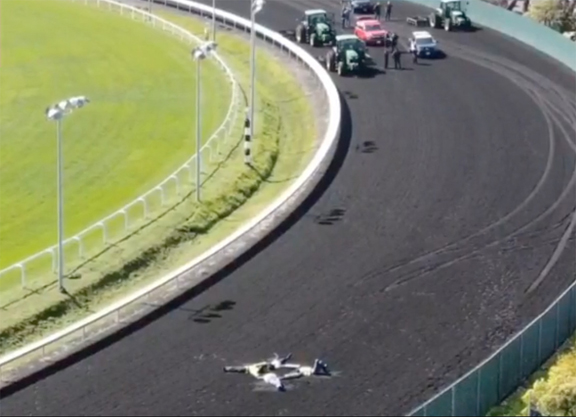
At the start of last month, a small cadre of animal rights protestors snuck onto the Golden Gate Fields racetrack, lay down with arms interlocked in pipes, and halted live racing–as well as a vaccination drive on facility grounds–until police intervention saw their removal.

While the incident had a flash-in-the-pan quality, it had the corollary effect of reminding those within the sport here in the Golden State of the somewhat precarious position in which it still finds itself–an important part of the economic puzzle, employing tens of thousands, but one that doesn't always fit squarely with the state's broader progressive bona fides on animal welfare.

And so, placed in the context of the last two years, during which time the sport has been buffeted by sweeping reforms and hitherto unbeknownst scrutiny, it begs the question: Where does the state's industry now find itself in terms of political favor and cultural currency?

The answer appears both promising and cautionary, with the California state senate's vote against the reappointment of Wendy Mitchell to the California Horse Racing Board (CHRB) Monday providing yet another indicator of a delicate balancing act.

“Two years ago, at this date, we were sitting at meetings with The Stronach Group [TSG], reviewing various plans whether to close Santa Anita for the rest of the meet,” said Greg Avioli, president and CEO of the Thoroughbred Owners of California (TOC), pointing to the welfare crisis that had engulfed Santa Anita.

Since then, the sports political roller coaster has been helter-skelter, taking in a joint hearing in Sacramento, a letter of condemnation from senator Dianne Feinstein, major pieces of legislation, a regulatory board dramatically reshaped by Governor Gavin Newsom–who told The New York Times in 2019, “I'll tell you, talk about a sport whose time is up unless they reform. That's horse racing”–as well as a proposed ballot initiative to end racing in the state (one that was ultimately extinguished before voters had a chance to weigh in).

Two years later, sweeping equine welfare and safety reforms have proven markedly effective. “We've come a long way,” Avioli said.

Del Mar | Horsephotos

As to the temperature in Sacramento toward horse racing, “We have conversations with legislators and representatives weekly. In this last week, the conversations have focused on the recent safety results, particularly at Del Mar,” Avioli added, referring to recent news out of the Southern California track that it is among the safest in the nation for the third year straight year.

As a result, “I do not expect that you're going to see additional bills on the same subject,” said Avioli about prospective legislation in Sacramento. “The core issues of horse safety and welfare right now seem to be adequately addressed by the legislature.”

That sentiment appears mirrored by Senator Bill Dodd, whose legislative fingerprint can be seen on a number of horse racing-related bills over the past two years.

A spokesperson for the state senator, who represents the northern San Francisco Bay Area and Delta region, wrote in an email: “As chairman of the committee overseeing horse racing, Sen. Dodd follows developments in the sport closely and continues to monitor his previous measures to improve rider and equine safety. He has not introduced any new legislation in this area so far this year.”

Josh Rubinstein, Del Mar Thoroughbred Club president, strikes a similar tone to Avioli.

Industry progress made at the local, state and national level–including recent passage of the Horseracing Integrity and Safety Act (HISA)–means there is now a “different tone in our conversations with governmental leadership” compared to two years ago, Rubinstein wrote, in an emailed response to questions.

“We have real tangible progress we can point to, which makes a difference,” he added.


Protesters on the track at Golden Gate | Direct Action Everywhere

“I think there's some positives in all of this”

And so, what to make of events up at Golden Gate, by an organization called Direct Action Everywhere, which purportedly seeks to shut the facility down?

Anti-racing protests in California aren't new or novel–picketers have routinely descended upon both Del Mar and Santa Anita in recent years, often prompting workers at both facilities to stage counter-protests.

Indeed, Scott Chaney, CHRB executive director, downplays the significance of what occurred last month.

“I don't think a few protestors at Golden Gate are representative of the larger population in California,” Chaney said, highlighting both overarching public sentiment toward the sport, and the fractured nature of animal welfare organizations in the state with disparate sets of goals and agendas. “I think lumping animal rights activists in one group is unfair.”

At the same time, Chaney acknowledged the long thread of political activism woven throughout the history of the City of Berkeley–whose district Golden Gate Fields partially overlaps–as something the industry needs to be cognizant of.

Political pressure was brought to bear on the CHRB last October, when Berkeley City officials wrote the board requesting an investigation into equine fatalities at Golden Gate.

(The track routinely boasts a better equine fatality rate than the national average, which was 1.53 per 1,000 starts in 2019, according to The Jockey Club. In 2020, it was 1.23, 0.64 in 2019, and 1.12 in 2018.)

The CHRB responded with a letter explaining these rates, while listing a series of increased medication and safety measures the board had recently undertaken statewide and intended modifications for the future, including those specifically geared toward Golden Gate.

How was the letter received? “I'm not certain,” said Chaney.

“But to be fair, this is all against the backdrop of a global pandemic,” he added, saying that the track had built a good rapport with the City's Public Health Division as a result of a large facility outbreak last year, illustrated by the vaccination drive conducted on Golden Gate property. “I think there's some positives in all of this.”

In a written response to questions, Craig Fravel, CEO of 1/ST RACING, wrote, “At 1/ST, we believe in the right to free speech and peaceful protest, but the types of actions exhibited by the activists that disrupted live racing at Golden Gate Fields last month run directly counter to a safe and healthy environment and endangered the lives of thousands of people as well as the horses they were claiming to protect.

“Animal rights and extreme activists are very different,” Fravel added. “Those in our industry who stand for ethical horse racing believe in the protection of these beautiful creatures and are working together to ensure that racehorses are cared for before, during and after their racing careers.”


A surface safety evaluation at Santa Anita | Horsephotos

“It's a very substantial undertaking”

Which brings us to the path forward, and political land mines still to be negotiated. Come the next election cycle, could racing face another potential challenge at the state ballot?

“You always have to be cognizant in California–just look at Governor Newsom and the recall effort–of the ballot initiative as a challenge for horse racing,” Avioli said.

However, “You generally need upwards of $100 million to support a ballot initiative successfully. It's a very substantial undertaking,” he said, adding, “There is no indication of serious talk of a ballot initiative right now to address horse racing.”

One important distinction, said Avioli, is that a history of state initiatives related to animal welfare show support “to some level” by the Humane Society.

“We have good relations with them,” he said, of the global non-profit. “It all goes back to the fact that we did two years of the most aggressive reforms that have ever been done in this country in horse racing and it appears to be working.”

But that brings us to perhaps the biggest sticking point moving forward, one that highlights the various levers and conflicts tugging at the sport both within and without: the issue of continuing reform.

Horsephotos

According to Avioli, after two years of snowballing regulatory change, the industry is at a point of consolidation, allowing the dust to first settle on a radically altered landscape before further modification.

“The CHRB seems right now to be not in an activist role,” he said. “They understand the massive amount of new regulations that have been put in place over the last 24 months, and they do not expect it to continue at the same rate.

“Now's the time to focus more on implementing those–see the results of the new rules–before we go on and add additional ones,” Avioli said.

Yet, Kathy Guillermo, vice president of People for the Ethical Treatment of Animals (PETA)–an organization, alongside the Humane Society, afforded key industry input–is critical of the rate of change since the CHRB has undergone its recent personnel reshuffle.

“For all the criticisms of the previous board, at the end, we were working very closely with them to try to make those changes,” Guillermo said, pointing to efforts that included tightened rules pertaining to multiple violators, as well as the implementation of central pharmacies on racetrack grounds, mirroring jurisdictions like Hong Kong.

And while the reforms instituted have seen the industry turn a corner, “a lot more still needs to be done,” Guillermo said.

“There has always been a division in racing about what needs to be done to correct the public perception. I see about half the people really get it,” Guillermo added. “And I see other entrenched parts of racing that still refuse to believe that they're going to have to be accountable to anybody but themselves. And they need to get on the same page.”

Here, it should be noted that the new board has been split on a number of controversial topics in recent months, including the issue of whether to grant Los Alamitos–the latest California facility under scrutiny for its welfare record–a truncated six-month license. After an extended period, the board granted the facility its typical 12-month license.

More recently, the panel was divided over the issue of whether to implement even tighter whip reforms than currently exist, with the board eventually voting 4-3 to table the motion for the time being.

Guillermo released the following statement regarding commissioner Mitchell's failed re-election to the CHRB:

“I've never had a conversation with Wendy Mitchell, nor has PETA ever contacted her directly, but it has become clear to us in the last several months that the California Horse Racing Board has failed to bring about the promised changes to protect horses.”

Guillermo added: “The board and, apparently, the California legislature remain beholden to the old guard in racing that considers abuse and death to be normal business practices, rather than listening to the public that has demanded change. PETA won't sit by quietly while the body count mounts. Legislators can expect to hear from our 700,000 supporters in the state.”

Del Mar | Horsephotos

It's unsurprising, then, many are circumspect about this ongoing balancing act.

“While we may not always agree, as stakeholders we share a collective vision to ensure a healthy and sustainable future for horse racing in North America,” wrote Fravel.

“There is a vast ecosystem that makes up the Thoroughbred racing industry and in order to move forward, the entire industry needs to continue to prioritize equine health and safety and to demonstrate that priority at every turn,” he added.

“It's complicated,” admitted Rubinstein, distinguishing between inclinations from the fringe elements of the animal rights movement and the more orthodox viewpoints of the mainstream.

“So, our messaging is aimed at the more reasonable people who want to see the sport continue and thrive, who appreciate that it is an economic engine for so many people, that it protects family farms and working open space.”

The majority of people support horse racing, he added. “As an industry, we have to take the initiative in Washington and at a state level to affirm recent progress and our overall commitment to safety and welfare.”

The post Political Climate in California appeared first on TDN | Thoroughbred Daily News | Horse Racing News, Results and Video | Thoroughbred Breeding and Auctions.
Source of original post

Verified by MonsterInsights
