Breeding Digest: Chinks of Light Against Fierce Competition

It very quickly became clear that the stallions launched in 2019 included an above-average proportion equipped to last the course. And the start being made by their second crop of sophomores has only reiterated that impression.

Thanks to the contentious prohibition of his ban by a gaming corporation, GI Arkansas Derby winner Muth is ineligible to give Good Magic a second GI Kentucky Derby from two attempts. (Though the Hill 'n' Dale sire might yet manage that with the same mare who gave him the first one, with Mage's brother Dornoch heading to the GI Blue Grass S. this weekend.) The stunning return to form of Fierceness in Saturday's other big rehearsal meanwhile renewed that colt's priceless service to City of Light.

Over the water, a Classic coronation is widely anticipated for the Justify colt who achieved equivalent superiority over his crop in Europe last year, City Of Troy. Oscar Performance, for his part, was so unabashed by last week's celebration of his work that his three runners last Saturday comprised two new stakes winners plus the neck runner-up in a graded stakes. Army Mule and Girvin have maintained terrific ratios from limited opportunity; the latter's neighbor Collected is quietly moving up the rail; and of course it was Bolt d'Oro who headed the whole class, as freshmen, in 2022.

Some of these impressive young sires will have to ride out a familiar bump in the road, their books having dwindled as commercial breeders showed their habitual nervousness about reputations actually being tested on the racetrack. The traffic of several duly rallied last year: Girvin, for instance, from 86 to 181; Oscar Performance from 63 to 160; Army Mule from 115 to 199; Good Magic from 126 to 179; Justify from 156 to 222. But that extra quantity, often matched by extra quality, obviously won't tell on the racetrack for a couple of years yet.

Expectations about City of Light had been so high (his fee, most unusually, was hiked from $40,000 to $60,000 after a stellar debut at the yearling sales) that he actually lost support last year, down to 85 from 132, but his quiet start was then redressed by the emergence from his second crop of Fierceness. Remember that City of Light was himself a fairly late developer, not really breaking out until the GI Malibu S. at the end of his sophomore campaign, and none of his stock has yet reached the maturity that disclosed the peak of his prowess. Nonetheless he has been prudently returned to $35,000 for the current season, an acknowledgement that he still only has one other winner at graded stakes level (Mimi Kakushi, UAE Oaks).

It says much about the way these Thoroughbreds like to tease us that the owner of Fierceness, such a committed spender at the yearling sales, should have come up with consecutive champion juveniles that were respectively a $110,000 Book 4 yearling (co-owned with St. Elias Stables) and a homebred.

As has been well chronicled, Fierceness is out of a daughter of Nonna Mia (Empire Maker), named for Mike Repole's grandmother (“nonna”) and one of the foundations of his program when acquired as a $200,000 Saratoga yearling in 2008. Herself precocious and Grade I-placed, Nonna Mia gave Repole a homebred scorer at that level in Outwork (by the horse that really put him on the map, Uncle Mo), while her own pedigree had meanwhile been gilded by the emergence of three-parts brother Cairo Prince (Pioneerof The Nile).

In a light career, Nonna Mia's daughter by Stay Thirsty, Nonna Bella, won her first two starts and only missed black type by a neck. Nonna Bella's first two named foals, both by Uncle Mo, did not make the track, but the explosive debut of Fierceness at Saratoga last summer certainly proved well timed for the family: a couple of weeks later Nonna Bella's half-brother by Into Mischief topped the September Sale at $3 million, Repole himself retaining a stake alongside West Point Thoroughbreds, Woodford Thoroughbreds and Chuck Sonson.

All in all, then, this has become a pretty illustrious family and Fierceness, when he goes to stud, can duly be promoted as born for the job-especially if his own sire, having capitalized on its precocity and class, can now keep consolidating.


Background Genes Needed Against Throwback Horse

Muth's performance the same afternoon itself underlined the freakish talent of Fierceness, as he had been the least embarrassed of his panting pursuers at the Breeders' Cup last fall.

Muth | Coady

In contrast with all the action under Nonna Mia, Muth has a compressed page: he's the first foal of a mare who was herself one of just two named foals out of her own mother. Obviously shoppers at OBS last March had all the evidence of functionality they could require, however, and Muth duly turned himself into a spectacular pinhook: sold to Bishop Bloodstock for $190,000 at Keeneland the previous September, he left Top Line Sales for $2 million. The gentleman who signed the docket is a genius at any level of the market, and Muth has already paid off three-quarters of that investment with a stud career now secure.

Muth was bred by Don Alberto Corporation out of Hoppa (Uncle Mo), who had shown bright ability in a curtailed career, romping in a Churchill sprint maiden on her second start but derailing next time. Hoppa had herself been acquired in utero when Don Alberto gave $170,000 for her dam Handoverthecat (Tale Of The Cat), winner of two of five starts, at the 2015 Keeneland November Sale. Unfortunately they appear to have lost her after delivering only one more foal, a son of Tiznow, though at least he covered her purchase cost-to the cent-when sold as a yearling. And Hoppa has meanwhile become so valuable that an attempt to cash her out at Fasig-Tipton last November, carrying a sibling to Muth, stalled at $1.9 million.

Though his foreshortened page obviously doesn't increase their actual influence, Muth must advertise such interesting genes as he can and those are all clustered around his fourth dam, Beautiful Bedouin (His Majesty). She was an unraced half-sister to Silver Hawk, third in the Derby at Epsom and one of the most inspired stallion discoveries of the late Brereton C. Jones.

One of her daughters similarly had a transatlantic impact: Wandering Star (Red Ransom) was a stakes winner in Europe before being acquired by Joseph Allen and winning the GII E.P. Taylor S., while two of her sons became juvenile Group winners in Allen's silks: War Command (War Front) won two of Britain's signature juvenile prizes for Ballydoyle (G1 Dewhurst/G2 Coventry); and Naval Officer (Tale Of The Cat), the G3 Prix de Conde.

Beautiful Bedouin had two other foals by Red Ransom: one produced a Classic winner in New Zealand, Rollout The Carpet (Holy Roman Emperor {Ire}); the other is the third dam of Muth. She, too, was unraced, meaning that the first four dams of Muth have a grand total of eight starts between them.

That history of fragility finds a striking contrast in the colt whose pursuit of Muth on Saturday carried him so far clear of the third. The way Just Steel (Justify) is thriving on his 11 starts is not only a trademark of his venerable trainer but also offers his young sire scope for a historic double, hours after City Of Troy is scheduled to line up for the G1 2,000 Guineas at Newmarket.

A $500,000 vote of faith in D. Wayne Lukas by BC Stables in Book I of the 2022 September Sale, Just Steel's teak constitution completes one of the most wholesome and cosmopolitan packages on the Triple Crown trail. He's out of an Australian Classic winner by the top-class distaff influence Fastnet Rock (Aus), and has siblings that have cut the mustard at Group level in both hemispheres; while his third dam was an Affirmed half-sister to matriarch Fall Aspen (Pretense). That puts Just Steel on the fringe of one of the modern breed's great dynasties and, with a throwback tenacity apt to his name, he will have more relish than many for the demands of the Derby.


Darling's Double Derby Impact

It feels like only a matter of time before the Japanese give American breeders the ultimate wake-up call in the GI Kentucky Derby itself. Whether or not Forever Young (Jpn) (Real Steel {Jpn}) proves to be the horse to deliver that shock to the system, his rehearsal in the G2 UAE Derby for now actually locates the race's genetic center of gravity in familiar territory.

For, quite remarkably, we now find that two of its strongest candidates share the same granddam. Forever Young's mother Forever Darling (Congrats) is a half-sister to GI Alcibiades S. winner Heavenly Love (Malibu Moon), whose son Sierra Leone (Gun Runner) is favorite for the GI Blue Grass S.

Forever Young | Dubai Racing Club

Their dam is Darling My Darling (Deputy Minister), purchased as a yearling at Keeneland in 1998 by John C. Oxley for $300,000. Her dam, GI Ballerina H. winner Roamin Rachel (Mining), was sold in the same ring that November to Nubuo Tsunoda for $750,000, a price vindicated the following summer when Darling My Darling (her second foal) won on debut at Saratoga and then finished second in consecutive Grade Is. Roamin Rachel was sold carrying a Storm Cat filly, who produced three Group winners in Japan, while her next cover by Sunday Silence produced Japanese Horse of the Year Zenno Rob Roy (Jpn).

This appeared to do curiously little for Darling My Darling's daughter by Congrats, who was pinhooked at $8,000 to become a $65,000 R.N.A. at OBS the following April. Surfacing in the silks of a partnership including trainer Richard Baltas, Forever Darling won a Santa Anita maiden on her second start and then the GII Santa Ynez S. on her sophomore bow. With her family thriving in Japan, Katsumi Yoshida moved to secure her in a private deal and, while she did not really continue her progress, she has since handsomely vindicated him in her second career.

Forever Darling was certainly given purposeful covers, starting with Frankel and Deep Impact (Jpn), and her son from the second crop of Real Steel made a sum equivalent to $700,000 as a yearling. (Yes, second crop! Forever Young is yet another Derby candidate sired by a stallion from the 2019 intake.)

This son of Deep Impact is a more resonant proposition overseas than some Japanese stallions, both as a winner of the G1 Dubai Turf in 2016 and as brother to ground-breaking Breeders' Cup winner Loves Only You. His third dam, moreover, is none other than the great Miesque (Nureyev)-one of the jewels of the program that also, as we'll see in a moment, played a key role in the headline act at Meydan.

Deep Impact | Junji Fukuda

A River Swollen by Niarchos Tributary

What Laurel River did in the desert on Saturday is hard to comprehend, but if any Thoroughbred is capable of doing that, it might be one bred like him.

If anything, he has now surpassed even two Kentucky Derby winners as the ultimate proof of how a steep upgrading of Into Mischief's mares has enabled him to stretch his trademark speed to Classic distances. Having been around as long as he has, Laurel River was admittedly conceived at no more than $75,000, but his dam certainly offered the Spendthrift phenomenon plenty of complementary stamina. In fact, Laurel River's first three dams are GI Belmont S. winners to a man: Empire Maker, Touch Gold and A.P. Indy.

True, his mother couldn't break her maiden in eight starts; nor could her own dam in six. But it was the latter whose recruitment by Juddmonte (for $550,000 at the 2005 Keeneland September Sale) gave one of the world's great breeding programs an invigorating injection of the best genes cultivated by another. Soothing Touch (Touch Gold)-who has additionally given Juddmonte multiple Grade I winner Emollient (by Empire Make, so a sister to Laurel River's dam) and GI Florida Derby runner-up Hofburg (Tapit)-was a granddaughter of Coup De Genie (Mr Prospector), one of several foals to qualify her dam, Coup De Folie (Halo), as a cornerstone of the modern breed. Having just noted that Forever Young's sire traces to Miesque, we really must salute again the Niarchos family's priceless legacy.

Coup De Folie was inbred 3 x 3 to Almahmoud, through her celebrated daughters Natalma and Cosmah. That's a blend for which I will always forage, even with its inevitable attenuation by the generations. In fact, that's one of the reasons I deplore the way breeders nowadays hop from one unproven new stallion to the next, with books as many as seven times greater than was standard in the old days. It means that too many modern pedigrees squash down the generations: how many foals born this spring, for instance, will be by very young sires out of mares by stallions that never achieved lasting viability?

Into Mischief's own pedigree shows what you risk that way. His granddam was sired by Stop The Music when 19 years old. I'm not sure how many commercial breeders today would still send a mare to a stallion with his kind of profile, at that kind of age. And that just makes it harder and harder for modern pedigrees to retain a meaningful trace of precious brands like Stop The Music's sire Hail To Reason (who of course also gave Halo to Cosmah).

Regardless, Into Mischief is surely on his way to beating his own earnings record as well as a sixth consecutive general sires' championship. He has never needed one of these modern megaprizes to dominate his rivals, but Laurel River has got him up to $12.6 million by the start of April, now just a few cents behind Senor Buscador's veteran sire Mineshaft. With his unrelenting quantity matched by the ongoing elevation of his mares, Into Mischief appears a lock to exceed his 2022 haul of $28.56 million.

The post Breeding Digest: Chinks of Light Against Fierce Competition appeared first on TDN | Thoroughbred Daily News | Horse Racing News, Results and Video | Thoroughbred Breeding and Auctions.
Source of original post

A Quick Study on Track, Celestial City Now Teaches at Lowell

By Francis LaBelle, courtesy Thoroughbred Retirement Foundation

Celestial City learned how to be a racehorse by continually proving himself against top competition. Each time he raced, he showed that the lessons he was learning were taking hold. Celestial City became a graded stakes winner, but just when his promising career was finally taking flight, he sustained an injury that ended his days as a racehorse. Now, he has a new home and a new purpose.

On February 12, Celestial City joined the Thoroughbred Retirement Foundation's (TRF) herd at the Lowell Correctional Institution for Women in Ocala, FL. He will provide vocational training in equine care and stable management as part of the TRF's Second Chances Program. The TRF is the nation's oldest and largest Thoroughbred rescue organization.

Forty years ago, the TRF started Second Chances at the Wallkill Correctional Facility in New York. The idea was that inmates would learn how to take care of horses and maintain the stable and grounds, while the horses got daily, supervised care. Many Second Chances graduates have gone on to find careers as farriers, veterinary technicians, and even farm managers. Since its start in 1984, Second Chances has expanded to several states. TRF expanded to Lowell in 2002 and has since added a Second Chances Youth Program located near the women's prison. Both the women's and youth programs have achieved deserving praise for helping horses and people find better lives.

At five years old, Celestial City is the youngest member of the TRF's national herd, half of which are 20 years or older, and average a stay of 15 years. Unlike the majority of other horses, Celestial City had a standout pedigree, terrific connections, and every reason to succeed.

A son of Uncle Mo, Celestial City's racing education was the responsibility of Hall of Fame trainer Claude “Shug” McGaughey. Under McGaughey's management, Celestial City had a record of 3-2-2 from 10 starts and earnings of just under $350,000. Two years ago, Celestial City came up short in a pair of stakes races at Saratoga Race Course. Both times, Celestial City's efforts were encouraging. He was figuring out racing while McGaughey was figuring him out.

Then in late October of 2022, Celestial City overcame a stumble at the start and posted a 2 1/4-length victory in the GII Hill Prince S. at Aqueduct. There was plenty of reason to be optimistic about Celestial City's 2023 racing season.

“He was doing well, and we gave him a blowout,” McGaughey said. “He was on the training track at Belmont and he fractured his right-hind ankle. He had surgery, and he would look like he was doing good, but then he would have a setback. We finally decided to pull the plug and not race him anymore.”

Celestial City's ankle was operated on by Dr. Patty Hogan, a noted veterinary surgeon who works with Thoroughbreds and Standardbreds. She is also a staunch advocate of aftercare for racehorses and encourages owners to include an aftercare plan for each horse they race. McGaughey had such a plan already in place.

Since Celestial City had his early racing education at Niall Brennan Stable in Ocala, he was assured a safe landing after he could no longer race. Niall Brennan and his wife, Stephanie, have developed racehorses since they went into business 33 years ago. In 2009, they started their own non-profit Thoroughbred aftercare program, Final Furlong Horse Retirement, to make sure that any horse that had been in their care for any length of time would find a decent home and, perhaps, a new career.
While most of McGaughey's retirees join Final Furlong, Stephanie had her own plan for Celestial City. As a TRF board member since 2022, she felt that Celestial City would be a perfect fit at TRF's Second Chances at Lowell.

“The inmates would learn how to 'let down' a racehorse and down the line, he will be a great horse for their riding program,” Stephanie said.

While TRF and Final Furlong are independent of one another, the chance to work together for the good of a horse will always be accepted.

“Later on, if Celestial City gets adopted, his connections will know that he is guaranteed a lifetime placement with TRF,” she added. “So, if circumstances should change, he can always come home to TRF. That is a huge selling point. Very few aftercare programs offer that safety net.”

Celestial City wasted no time in winning over everyone over at Lowell.

“The women are used to working with much older horses,” Stephanie said. “Along comes Celestial City and he is young, slick and fit. They were excited to meet him and they have taken good care of him. Now, they are helping him get used to being around other horses.”

“That shouldn't be a problem. He has always been such a cool horse.”

The post A Quick Study on Track, Celestial City Now Teaches at Lowell appeared first on TDN | Thoroughbred Daily News | Horse Racing News, Results and Video | Thoroughbred Breeding and Auctions.
Source of original post

The Road Back: After 46 Years, William Jackson Finds Solace in Stable Recovery

Stable Recovery is a rehabilitation program in Lexington, Kentucky that provides a safe living environment and a peer-driven, therapeutic community for men in the early stages of recovery from drug and alcohol addiction. Along with going to 12-step meetings and support groups, residents attend the School of Horsemanship at Taylor Made Farm to learn a new vocation in the Thoroughbred industry. The School of Horsemanship is a project that was created by Taylor Made two years ago and has since seen over 100 men go through the program. Many of those graduates have gone on to pursue a career in an equine-related field. Spy Coast Farm, Brook Ledge, Hallway Feeds, Will Walden Racing, Rood & Riddle, WinStar Farm and Godolphin have recently partnered with Stable Recovery as the program looks to expand its reach throughout Lexington.

In this month's installment of TDN's series, 'The Road Back,' we introduce you to graduate William Jackson, now the house manager for Stable Recovery.

When crossing the threshold into Stable Recovery's house on Hummingbird Lane in Lexington, a true feeling of 'being home' washes over you. The sound of conversation and laughter fills the air as staff and residents make their way through the house while an assortment of dogs wag their way into the mix. And there in the front office on the right, seated at the desk across from me, is William Jackson.

The 46-year-old man with the kind eye and constant smile shares his life story with a calm that speaks to his character, spoken with a reverent tone of voice that reflects where he's been and how far he's come in his lifetime.

As he talks, the realization of how poignant this introduction and this conversation is settles in the room. Because less than two years ago, after decades of witnessing death and living on the brink of it, Jackson's heart stopped after an overdose.

“In September of 2022, I lost the house, the nice truck I had, we had all of the utilities turned off, and I was damn near about to go to jail. Then, I ended up getting hit by that car and later, overdosing in the room in that trailer,” recalled Jackson.

He had hit rock bottom. And it was the result of a life that revolved around one constant: drug use.

Born in Springfield, Mo., Jackson spent his early years primarily in the company of his mom, since his stepdad had been sent to prison early on and his five older siblings were much further ahead in their lives, all off on their own. By the time he was in fifth grade, they had relocated to Corbin, Ky., to live near the rest of his extended family.

“Most of my family, all my uncles and aunts and everyone, used a lot of drugs and drank. All the men drank beer all the time and most of my aunts were taking pills and smoked marijuana. I remember my cousins were doing it, too, they were a little older than me. And one of my cousins even grew some pot with his father. That was what they did,” said Jackson. “By the time I was 11, I was taking pills and smoking marijuana and drinking on the weekends. I started out just doing a little bit of everything.”

Growing up, the tragedy that Jackson experienced only perpetuated his dependence on using drugs as an escape.

“When I was 12, my sister committed suicide. That was pretty traumatic. And then, it was the next year I guess, I remember walking in the house and finding my grandmother dead. I was the one who found her.”

The loss of a close friend in high school, and later the loss of his girlfriend, only darkened his outlook on life.

“I had lots of little things that kept me angry, confused, and mad at the world. But I always felt like doing drugs was wrong. It was bad and I wanted to do the right thing. I always did good in school and I wanted to please people, but all this stuff kept always pushing me towards all of that other stuff,” said Jackson.

By the time he was 27, he'd already married and divorced his first wife, who sadly overdosed and passed away a year after their marriage ended. From there, Jackson went back home to live with his mom and eventually picked up drinking.

“I was an alcoholic for about 13 years. Pretty heavy. I could drink at least 3/5 of a bottle of hundred-proof a day by myself. That all led to me being diagnosed with cirrhosis of the liver. They gave me a year to live,” said Jackson. “It scared me, so I decided to quit drinking. By this time, I had already met my second wife, I was married again, and she went with me to Alcoholics Anonymous for a while. But I only went for about three months.”

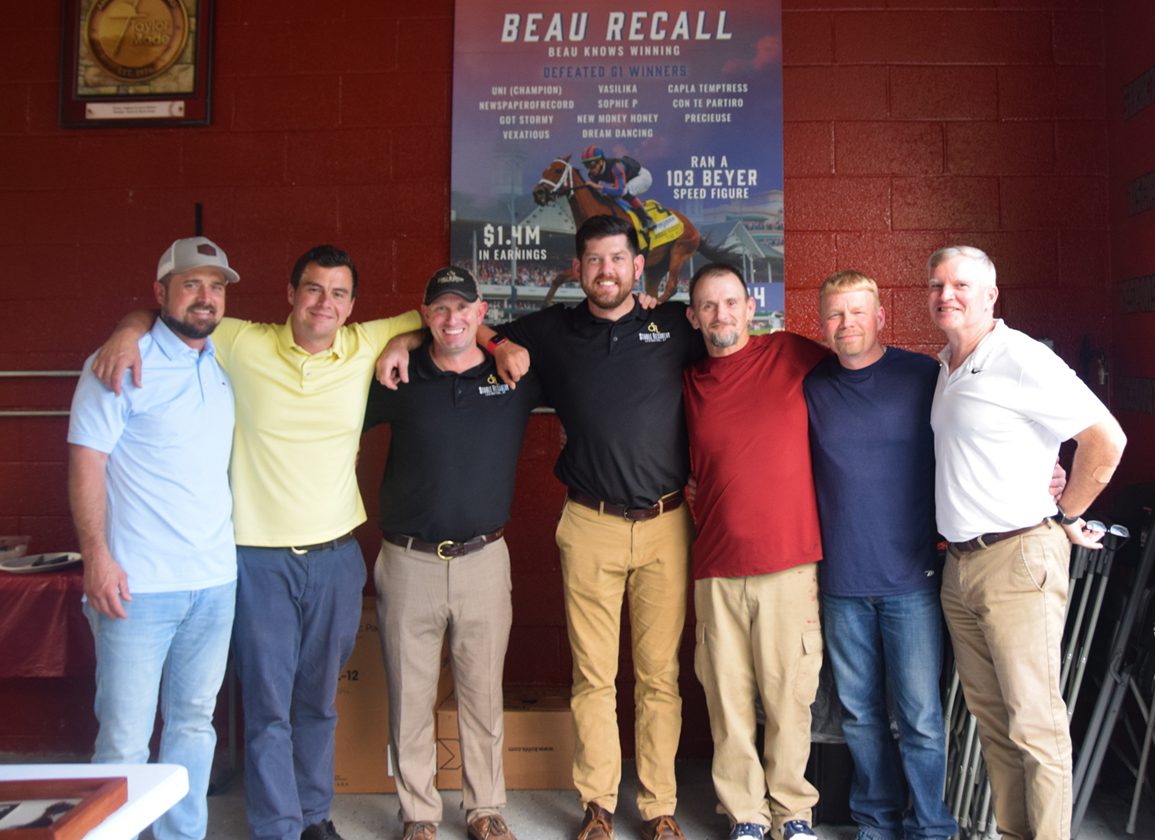
William Jackson becomes a Legacy of Stable Recovery. Pictured: Tyler Harris, Josh Franks, Christian Countzler, Ashton Becker, Carrol McCromick, William Jackson, and Dan Pride | Stable Recovery

Though he'd saved his liver, Jackson continued to pursue other avenues in his drug use, turning to buying and using Suboxone before eventually caving to the enticement of heroin by the time he was 41.

There seemed to be no end to the lows in his life, the many holes that he couldn't pull himself out of, until he dug the deepest of all that fateful night in September of 2022. A deadly mix of a Xanax bar laced with Fentanyl and a small dose of heroin in the early hours of the morning led to him collapsing on the floor, the sound waking his wife in the other room. She called 911 and held Jackson as he laid there, foaming at the mouth, his body eerily still. And after minutes that felt like hours, first responders arrived on the scene and revived him.

From there, Jackson decided to redirect his breaking point into a turning point, as he went to the hospital for treatment and later went to a Stepworks Recovery Center.

“I had so much guilt, shame and remorse. I just wanted it to be over, I wanted it to be done. This was the first time I'd ever been in treatment or anything like this. It was the worst. There was just so much stuff happening. It was so bad and I was just crying, at wit's end, and I was just done. I was ready to die,” said Jackson.

But it was there in the recovery center that he found a pamphlet for Stable Recovery. In one of those moments where one might question how heavy the hand of God truly is, Jackson felt a dream had been fulfilled with the opportunity to get back out on a farm.

“My dream was to work on a farm again. It just so happens that when you're in Stable Recovery, you're on the farm taking care of horses, driving tractors and doing all this stuff. It's like God sent me this perfect place and completely changed my life,” said Jackson.

Despite his addiction to drugs and alcohol throughout most of his life, and the health issues that arose because of that, he never missed a day of work. He was a carpenter by trade and had spent over 20 years building houses. And though he'd been hesitant to enter the program due to his strong need to return home to his family, he knew that Stable Recovery was the best thing for him, for all of them.

“One of the best things my wife ever did for me was call and say, 'You're not coming home.' Once I got here, it just changed my life. It saved my life. I spent a year on the farm, taking care of the horses, taking care of babies. I helped foal out 80 babies last year. I found peace on the farm, just out in the fields, in the quiet with the horses,” said Jackson. “Then slowly, as I was making better decisions and doing the right thing, people [in my life] started talking to me again. My wife would talk to me a little bit and then she'd started coming to see me. And my daughter would always visit.”

Now 17 months sober, Jackson serves as the House Manager for Stable Recovery, a role he took on a few months ago. The job entails overseeing the houses that the men in the program live in, which can involve anything from handling paperwork to driving the men to the farm for work or staying up late with a program participant who just needs someone to listen. Though the horses and the tranquility on the farm soothed his soul, Jackson has realized that being a mentor and friend to those in the program is his true purpose.

“My wife and kids would call it an 'astronaut job,' because we were coming in here and you can't even imagine a place like this. Especially when we think of the shape that we're in as despicable addicts. We have the worst opinion of ourselves when we're out there, but to be able to come in here and have somebody trust you and to be a part of the farm, it's hard to believe. It gives you such an unfair advantage almost compared to other treatment centers because you come here and it's just like a dream, and then all you have to do is do things right,” said Jackson.

Though the drug use was detrimental from a health standpoint, the biggest burden to Jackson was the regret and guilt he lived with as a result of his addiction. It wasn't until he arrived at Taylor Made that he finally had the chance to process, reflect and heal.

“I just wanted do what was right and I was always doing something wrong. I always felt guilty for using and drinking. When you first come in, even though the guys are like you, you're so uncomfortable with yourself at first that you can't open up. You don't even trust them or yourself at first,” he said. “But when you can go out there in that field and be with the mommas and the babies, and all you have to be is genuine and care about them, it's amazing how they open up and love you.

“It's a growing experience between you and the horses. At first you go in there and it's just like it is with anybody else, you're uncomfortable, scared, and awkward for a while. But you spend time with them and before you know it, it's crazy how much you can fall in love with them and how much they depend on and trust you. It's unbelievable what it does for you. It brought me a peace that I hadn't had in years, a feeling that I remembered when I was a child, but barely. I never thought I'd see it for many years.”

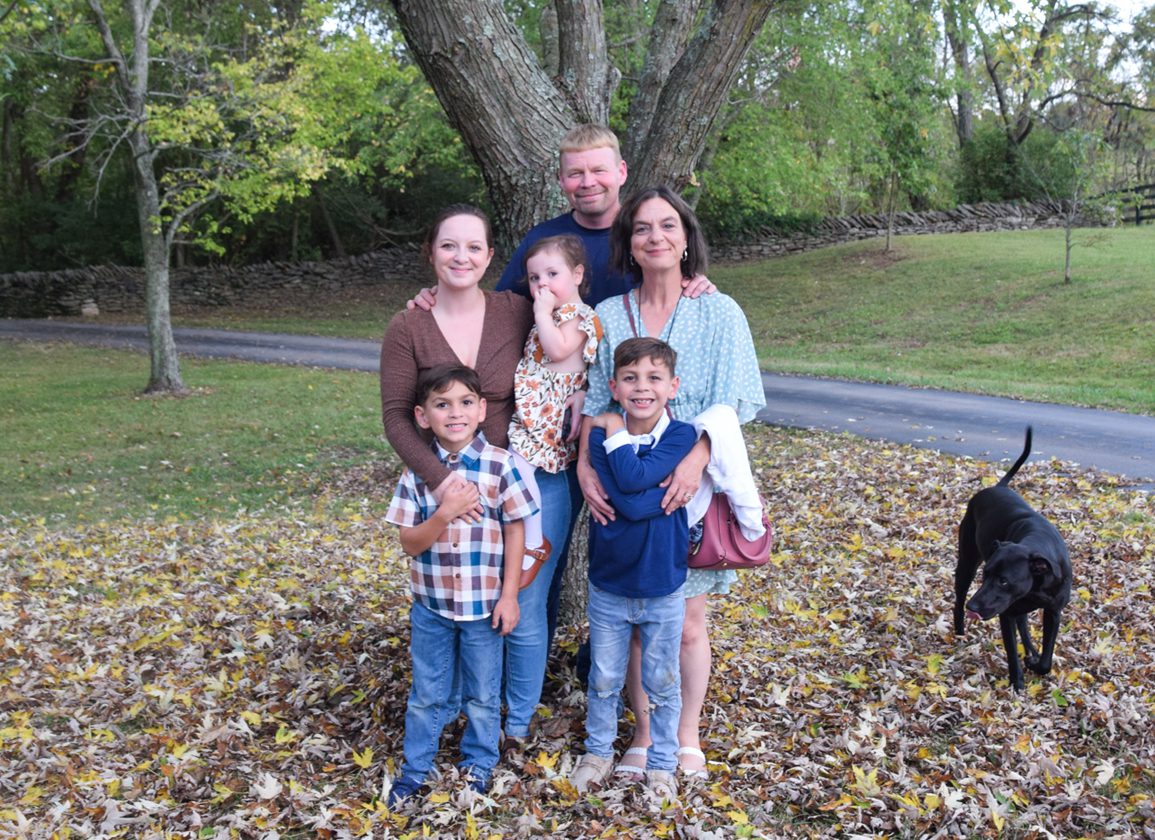
William Jackson and family | Stable Recovery

Since taking on this position with Stable Recovery, Jackson has received certifications as a peer support specialist and a supported employment specialist, while continuing to take classes and participate in webinars on topics such as peer support. Though it comes with plenty of responsibility, Jackson truly believes that the job has fulfilled him in a way that he never thought possible.

It is the reason he chose a job in the house over one he'd been offered on the farm.

“It just seemed like it would have been selfish of me to go [that route]. If I took that [job] for a house and a truck, I would have been sick again in my heart and soul. Not because of anything anybody said or thought, but in my heart, it would have made me sick because I want to give back and help the guys,” said Jackson. “It's a mutual respect [with the guys] where they love me and we love each other. It's a great house. The guys, even the hard ones that come in, they end up opening up and fall right into it, too. If you can last and you don't leave pretty quick, you end up being a part of the family and it's amazing. I get that same kind of love here as I did on the farm with the horses.

“This is my best medicine, to be right here helping the guys and interacting with them every day. It's the best thing that I can do. It's going to keep me alive and keep me sober.”

As Jackson speaks, you can feel the aura of selflessness that shimmers around him. He traveled the road not many make it back from and not only paved a new one for himself, but now does that for others every day.

Stable Recovery gave him the tools and the time, but Jackson dug the foundation and built his own house of healing.

“I'm truly blessed to be able to come in here and use the pain that I've felt to be able to help a man move on with his life and start over. I wake up thankful every day. It's crazy how wonderful that feels, right?”

To learn more, or to donate to Stable Recovery, visit stablerecovery.net/.

The post The Road Back: After 46 Years, William Jackson Finds Solace in Stable Recovery appeared first on TDN | Thoroughbred Daily News | Horse Racing News, Results and Video | Thoroughbred Breeding and Auctions.
Source of original post

“How Many Can I Have?” – Breeders Queue Up To Use Galiway

When Sunway (Fr) (Galiway {GB}) wrapped up his two-year-old season with a win in the G1 Criterium International at Saint-Cloud, it was both a confirmation that his sire's early success was no fluke, and that his breeder has an uncanny knack at stallion-making.

In 2007, Guy Pariente took a gamble on a horse no one else wanted to stand at stud and built an entire farm around him. Within a few years, Kendargent was one of the most popular stallions in France. So when he came up with another unheralded horse a few years later in Galiway, people said lightning couldn't strike twice.

But after producing Sealiway (Fr)-a Group 1 winner at two and three, and now a popular stallion at stud–Galiway is back with a Classic prospect in his full-brother Sunway (Fr). The siblings are out of the Kendargent mare Kensea (Fr). Pariente, it would appear, is not only a stallion maker, but a stallion breeder as well.

The backstories of both Kendargent and Galiway are similar; Kendargent won two races, was second in the G3 Prix Paul de Moussac, and fourth in the G1 Prix Jean Prat. Galiway also won two races, was twice Group-placed, was fifth in the G1 Prix du Jockey Club, and won a Listed race in his final start at three. There were undoubtedly more than a few eyes rolling when Pariente proclaimed his faith in each of them. Now they're not only working, they're working together.

Galiway was raced by Wertheimer & Frere, and was sidelined by a tendon problem at three. He was within 48 hours of being castrated in order to be brought back to the races as a four-year-old when Pariente stepped in with an offer to buy him and stand him at stud.

“He has the type of profile that Mr. Pariente really likes,” said Sally Ann Grassick, who serves as an international representative for Haras de Colleville. “He doesn't necessarily look for Group winners. He likes a horse with a good pedigree, and his being by Galileo was a real attraction. But he likes horses that have had consistent racing careers, and they don't always have had to have performed at the highest level, but just to have had those positive, promising performances at a certain level. It's the profile that Kendargent had as well. He's not going after those Group 1 horses that every other stallion man might be looking for. But Galiway was on Mr. Pariente's radar from pretty early on in his career.”

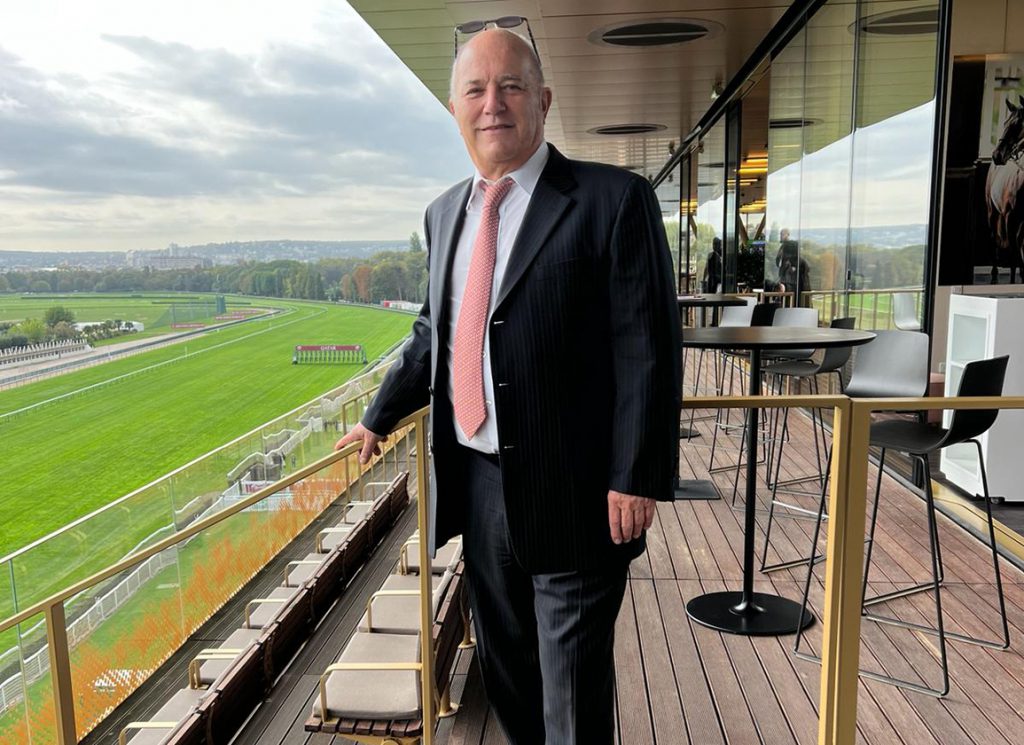
Guy Pariente has become a stallion kingmaker | Courtesy Haras de Colleville

Galiway retired to stud in 2016 for an initial fee of €3,000, but after siring eight black-type winners-four at the graded level-his star has risen steadily since. Not that there weren't early doubters.

Grassick said that they did hear the `lightning doesn't strike twice' line early on. “Everybody said that Kendargent was a fluke, was lucky. He was a horse that probably should never have been a stallion. Ninety-nine percent of the farms wouldn't have stood him as a stallion. And only through Mr. Pariente's support of him did he end up being as successful as he has been. He kept buying and sending him mares. And Galiway has been similar. In the early days, Mr. Pariente had these Kendargent mares. He needed a cross that would work with them. And that's why Galiway worked so well. But you can say that he's lucky and you can say that he has the Midas touch and all of those things, but Galiway is the proof. He's come out with another good stallion. He's been so popular and has surpassed what we achieved with Kendargent, which was already unbelievable. But now to have a stallion like Galiway standing here, and the breeders that are supporting him, the mares that are coming to him, it's just gone from strength to strength.”

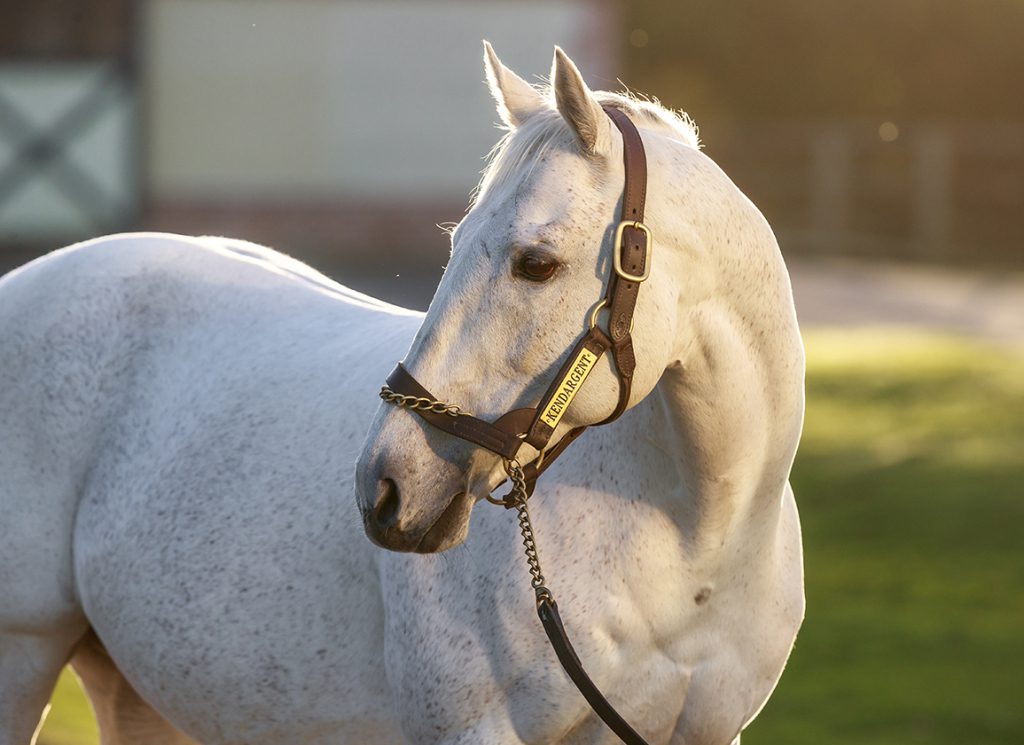
Kendargent | Zuzanna Lupa

From Galiway's first crop, he not only had a Group 1 winner on the Flat in Sealiway, but one over hurdles as well in Vauban. He's the rare higher-echelon stallion who is equally popular with Flat and National Hunt breeders.

“Sealiway really put Galiway on the map, but the fact that he's backing it up with other horses is now making people sit up and pay attention and take note and want to send him mares,” said Grassick.

His 2024 book is shaping up to be his biggest yet, and is expected to top the 169 mares he covered in 2021 and the 170 he serviced in 2022. Those 2022 foals will hit the track this year, and are from his strongest groups of mares to date.

“We've got some really, really nice mares, but also the support from the breeders,” said Grassick. “You know, we've got the Aga Khan, we've also got the Wertheimers sending mares, and we've outside mares coming from international breeders that have never used our stallions before-top-level breeders. Mr. Pariente is very keen on making him a success internationally. So he feels very strongly about encouraging more foreign breeders to come to France and use Galiway. And so now we have people coming and asking, `how many can I have?' And that's that's a nice problem to have.”

But a horse for the Classics could bring a whole other level of success.

G1 Criterium International Winner Sunway | Scoop-Dyga

“Sunway is a horse that we were always massively excited about,” said Grassick. “But I'll be honest, I never thought he was going to be a true two-year-old. Having seen him as a yearling, I always thought his best was to come as a three-year-old. I was in Doncaster when he was second in the Champagne Stakes last year and I actually messaged Mr. Pariente and said whatever this horse does here is just a bonus, because looking at him next to the other two-year-olds walking around the parade ring, he didn't look the finished article yet. Yet he came out and put up a really good performance that day and then went on and won the Criterium International, so I think this will really be his year.”

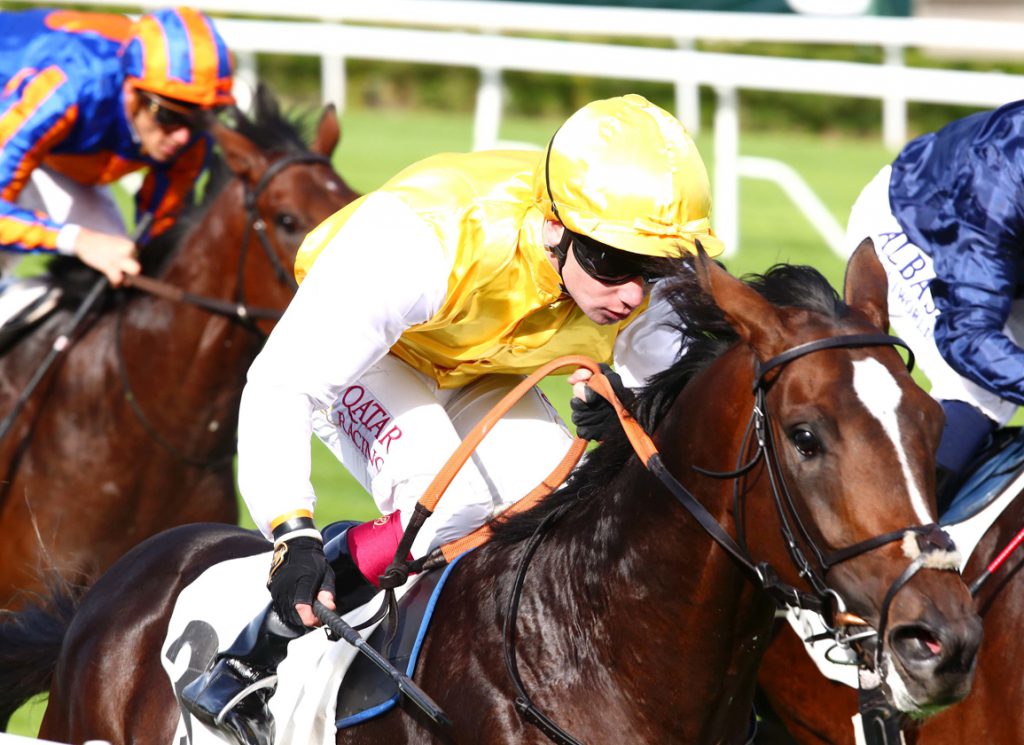
Now two-for-four, with that second in the Champagne S., Sunway is being pointed to either the April 7 G3 Prix la Force or the April 14 G3 Prix Fontainebleau at Longchamp. “David Menusier has never hidden what he thinks of this horse. He's called him his Classic hope since halfway through last year. He's just he's a really nice horse and he's just developing and getting stronger and stronger. Mr. Pariente always wanted this to be an international farm. So to then have them performing and racing on the track and having people pay attention and want to come and talk to us about our stallions is is really the end goal for him.”

Kendargent is a sire of sires himself, of course, with Goken (Fr) standing alongside him at Haras de Colleville. In 2023, he was the leading French-based sire of two-year-olds in France by earnings and by percentage of winners to runners (67%). He is the sire of 12 black type horses including Zorken (Fr), a dual Listed-winning two-year-old in 2023, as well as Go Athletico (Fr) and Fang (Fr), both Group 3 winners this year. And of course, he was also owned and bred by Pariente, and stands at Colleville for €15,000.

The fact that pinhookers are coming to France and buying Galiway's foals and then bringing them home to sell at the Irish and English sales is rewarding for the Colleville team, who found primarily French success with Kendargent.

“That's huge for a farm that was started only in 2007,” said Grassick, “and was started by a man who had a horse that he believed in. He bought him to be a racehorse, and he believed in him to be a stallion, and decided to stand him himself when no one else wanted to stand him. So now it's massive for us to have that demand and have people coming, especially to try and buy progeny of Galiway. It really cements what we've done, not just with Kendargent, but now continuing it on with Galiway. It wasn't just potluck. It wasn't a one-trick pony.”

From an initial fee of €3,000 in his first year at stud in 2016, Galiway now commands 10 times that amount.

“I think that the world is his oyster at the moment,” said Grassick. “He's had such success with the crops he's had to date, and it can only get better as he's got bigger crops, but also better quality crops to come. He's got more support than ever before from from really top breeders. For Mr. Pariente, the objective of being a top breeder is huge for him in its own right. But then to be so popular and in demand with all these top breeders, when you've only started your farm in the last 17 years or so, it's a big compliment that all of these breeders going back generations now want to come in and use your stallion. It's a really exciting time to be part of the team with Galiway.”

The post “How Many Can I Have?” – Breeders Queue Up To Use Galiway appeared first on TDN | Thoroughbred Daily News | Horse Racing News, Results and Video | Thoroughbred Breeding and Auctions.
Source of original post

Verified by MonsterInsights
