Integration Taking Larkin Armstrong Back to the Future

It was 12 years ago this week that a young bloodstock agent found a mare for one of his first clients, deep in the November Sale at Keeneland. Mesa Fresca (Sky Mesa) had won a Belmont maiden in a light career, and Larkin Armstrong knew her family inside out. In fact, her own bloodlines ran almost parallel to his own, his father being a cousin of her dam's breeder Emory Hamilton. Raised the way he was, Armstrong could not fail to recognize this mare as King Ranch royalty, and was duly gratified to buy Mesa Fresca on behalf of Jack Swain III for just $15,000.

“I think it was just timing,” he reflects. “She was in one of the later books and in foal to Badge of Silver, on a late cover, which wasn't too popular. Mayan Maiden (Lyphard) [her dam] had produced the dam of [turf millionaire] Al Khali (Medaglia d'Oro), but neither she nor had any of her offspring had black type. In fact Emory had sold Mayan Maiden as an older mare to Bobby Flay, carrying Mesa Fresca. And now here was her daughter, and I liked her, thought she looked like some of Emory's mares that I knew from Chic Shirine: that's really what attracted me, just having seen that family do so well for so many years.”

Chic Shirine, of course, was the daughter of Mr Prospector who established the premier branch of the dynasty centered on her dam Too Chic (Blushing Groom {Fr}). Three of Chic Shirine's daughters produced Grade I winners and a fourth has lately emerged as granddam of two more in Olympiad and Preservationist. Those young stallions are now seeking to establish a communal legacy for King Ranch, but for Armstrong the connection always felt highly personal. In his youth, he learned to recite King Ranch pedigrees long preceding his own lifetime–above all, those tracing to Monade (Fr), the imported 1962 Epsom Oaks winner and fifth dam of Mesa Fresca.

“I've been passionate about the horse business ever since I was a child, and have been coming to the sales for 30 years now,” he says. “My father's 'all in' on polo; he's head of the United States Polo Association, but he's interested in Thoroughbreds too and obviously my extended family has long been involved in the business–they raced Assault–and more recently through Emory and [her sister] Helen.
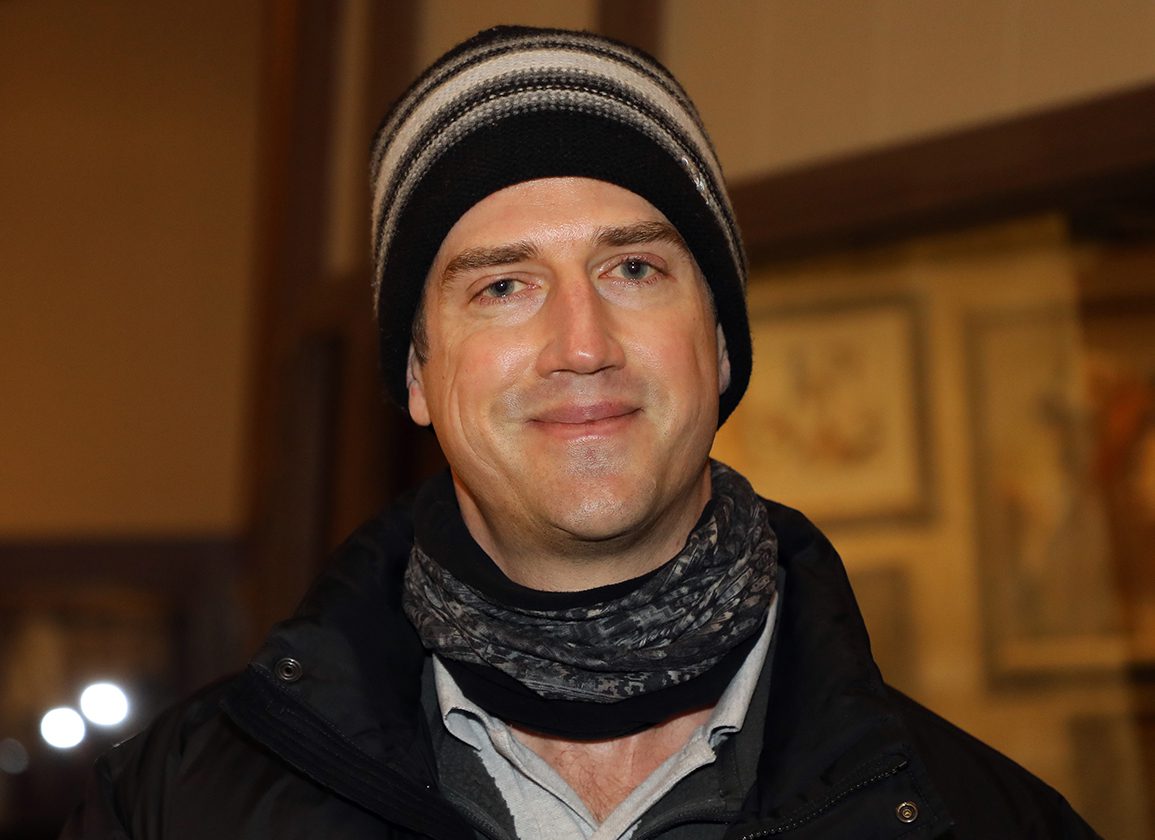
Larkin Armstrong | Keeneland

“So when I took an interest as well, I was able to learn all about it with them. It was more of an obsession than an interest, really: already at age 11 I was deep into catalogues, pedigrees, the Stallion Register. I grew up in Texas, but always came up and stayed with Helen for the sales, and got to look at horses with Emory as well. She bought Too Chic from the King Ranch consignment in the early '80s, and she became her foundation mare.”

Having secured Swain cut-price access to this genetic goldmine, Armstrong compounded the favor by urging the young Scat Daddy as her next cover.

“Jack makes all the final decisions,” Armstrong stresses. “But yes, Scat Daddy was the one I liked. He was just getting going, he'd had some of his Chilean success at that point, but was still only $17,500. So Mesa Fresca had a filly by him, and we always loved her. Jack's plan was to sell her, so when she came through the September Sale, I said that I'd bid on her. I was thinking how Emory keeps as many fillies as she can from that family. Yes, it was a couple generations back to Chic Shirine, but this filly looked a really nice physical athlete. I got her for $80,000, so Jack 'got out' on the mare, but I got a good price, too!”

Swain's real dividend was still to come. Armstrong named the Scat Daddy filly Harmonize, and watched in astonishment as she made her grandam the fifth daughter of Chic Shirine with a Grade I winner underneath.

“I did really, really like her as a foal, but then it just became an amazing ride,” he reflects. “I sent her to Bill Harrigan who used to work for King Ranch back in the day, and I've known forever. He was breaking her at Payson Park, and loved her. And then Bill Mott calls me out of the blue and says, 'I saw your filly go by on the track: would you let me train her?' My parents had horses with him, my uncle as well, and he'd been one of the first trainers I ever met as a child. And now this filly's such a beautiful mover that he wanted to recruit her. Of course I said yes. So she went into his program and next thing you know, she's running at Saratoga.”

Having been beaten a nose when green on debut, she broke her maiden by daylight in a stakes. That set her up for the GIII Jessamine, where she booked herself a spot at the Breeders' Cup. Though disappointing on rain-softened turf there, she matured to win the GI Del Mar Oaks as a sophomore and then missed the GI Queen Elizabeth II Challenge Cup only in a photo. She also won a Saratoga graded stakes at four, but came up with some bone bruising and had to be retired.

By that stage, her dam was in foal to War Front and Swain was able to sell her to Cheveley Park Stud at Fasig-Tipton that November for $2 million–a spectacular yield on the $15,000 he had paid for her just six years previously. Moreover Swain has two of her daughters (one retained, the other bought back when she came up for auction) in his own program.
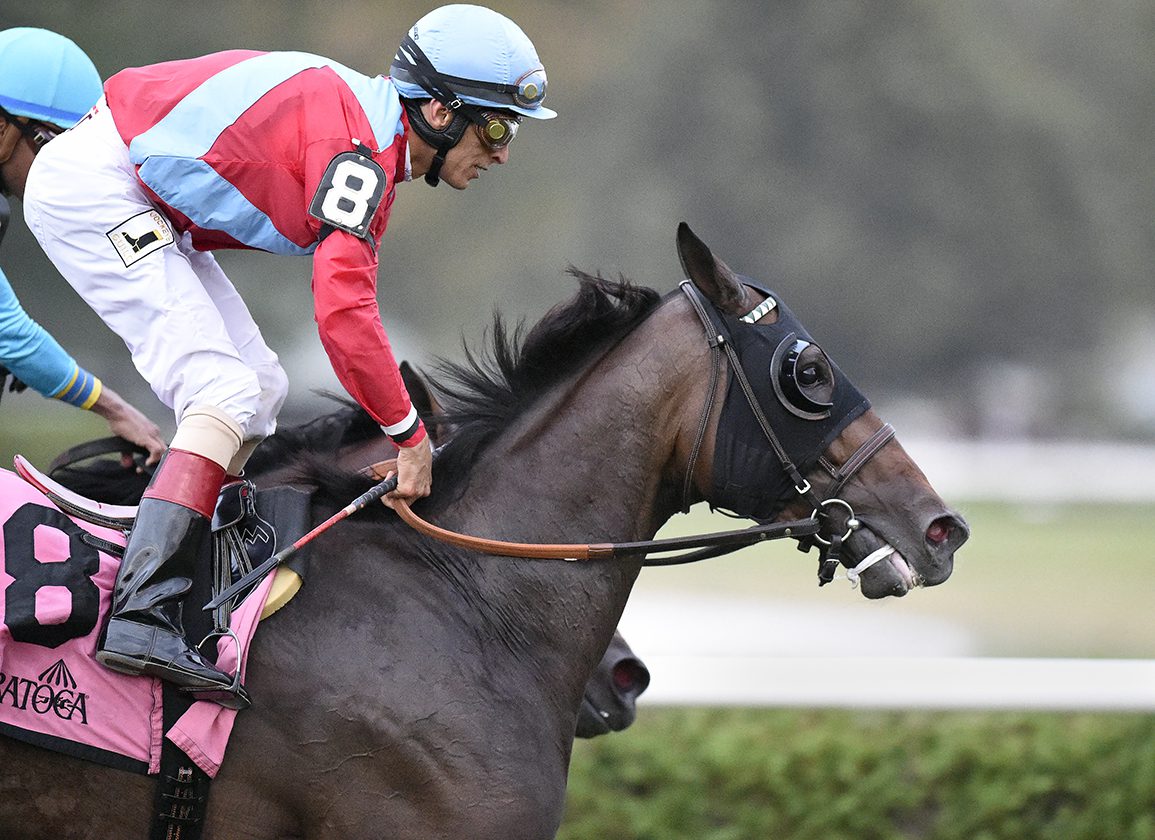
Harmonize | Sarah Andrew

Today Harmonize remains the one and only broodmare in Armstrong's ownership. (“I had a lot of offers along the way,” he acknowledges. “But there was always too much emotional attachment with the family to sell.”) As a graded stakes winner three years running, she clearly channels soundness as well as class from her aristocratic genes. Showing the length of perspective one would expect of his clan, Armstrong astutely started her with proven stallions. Her first foal, by the set-your-watch More Than Ready, admittedly produced only a claiming gelding. But then Armstrong sent her to Quality Road, and was rewarded with a colt that made $700,000 from West Point & Woodford Racing as a Saratoga Select yearling in 2021.

This colt required his purchasers to show a bit of patience, but he was in the right barn for that with Shug McGaughey. In August, he romped on debut in a Colonial Downs maiden. Fast-tracked to the GIII Virginia Derby, he overcame his rawness to cut down a strong field with a flamboyant turn of foot, claiming both the unbeaten streak of GI Saratoga Derby winner Program Trading (GB) (Lope De Vega {Ire}) and a new course record. For this, of course, is Integration–whose credentials, as potentially one of the premier talents of his crop, will be tested Saturday in the GII Hill Prince S. at Aqueduct.

“Harmonize's first foal hadn't really been a sales prospect so I raced him, just to start her off,” Armstrong recalls. “He has some ability, and tries hard, but it was Integration that always really looked the part: super athletic, super balanced, perfectly correct, medium-sized, great temperament. The mare is not exactly high-strung, but a little more energetic. He's always been just very calm and kind. Brookdale always loved him and so he ended up going to the Saratoga sale, where he was really able to shine. He has an incredible walk, which is I think what really sold him. And now fortunately that's translated to his racing.

“The Virginia Derby seemed like a bold move, but I thought, 'Well, they must really like him!' I thought he caught up with them easily enough, but then there was just a touch of greenness before he really kicked into gear. So I hope he can still improve.”

The one thing Armstrong knows for sure is that Integration had the perfect springboard in being raised and prepped by the Seitz family at Brookdale.

“It's where Jack Swain boards his horses, so Mesa Fresca went there,” he explains. “They did such a great job for him and, as they'd raised Harmonize too, it made perfect sense for her to go back to them when it was time to breed her. It's just been a really positive experience with them, all round. It's great land, and they're great people.”

Given the way Integration has worked out, Armstrong is glad that he has doubled down on the mare. Her next foal, a Curlin colt, brought $400,000 at Keeneland last year; Armstrong has retained her Nyquist yearling filly to race; and she has a weanling colt by Gun Runner.

“I just haven't wanted to shortchange her in any way, and have tried to breed her to really good stallions,” Armstrong says. “She's such an excellent physical, very correct, a beautiful mover, tons of quality. When I do a mating, I really like to have an idea of what I'm trying to produce with it. Obviously it's always a guess. But what are you trying to improve in the mare? What does she have that's going to complement the stallion? So mostly you start with the physical. And then look at pedigree after that. Those unproven sires, you just don't know yet what they're going to throw: both whether they'll be a good stallion overall, but also what traits. They do tend to sell, of course, so sometimes you have to do it–and I did breed her to Flightline this time. But I was just in such awe of him as a racehorse that I jumped at the chance.”

Of course, even if you do everything right, it confounds all the odds to be so lucky with your one and only mare. But his education in the game, and then his own professional experience, together mean that nobody knows that better than Armstrong himself.

“It's been kind of weird,” he admits. “I mean, working with clients, I know how hard it all is. I love the breeding side, love consulting with clients on their whole operation, especially matings, and seeing and evaluating the offspring. I saw Helen develop the Courtly Dee family, and all those horses; and Emory developing hers; and Jack Swain has bred some really good horses too. He bred Exaulted (Twirling Candy) [who won the GI Shoemaker Mile in May], he bred Marley's Freedom (Blame) and Noble Bird (Birdstone), who were also Grade I winners. So I've gotten to see those horses, as well. And it just teaches you that it's a very difficult business.

“Clients have different goals. Sometimes they're wanting to do something shorter-term. But mostly I try to focus on finding quality, and value; and matings to bring out the quality, hopefully to produce a beautiful athlete that can sell well and run. It doesn't have to be either/or. I don't think there's as huge of a disconnect as some people say, between a sales horse and a racehorse. Integration was bred to be a racehorse. He's not huge, not a super-muscular, bulky horse. He's just an athlete with a great mind, a great walk, and really well put together. But people appreciated that, and he sold very well. Chic Shirine has been incredible, of course, has shown how blood can continue on. But it's obviously a super difficult game and, no matter what, you need a whole lot of luck. It's an amazing game and an amazing challenge.”

The post Integration Taking Larkin Armstrong Back to the Future appeared first on TDN | Thoroughbred Daily News | Horse Racing News, Results and Video | Thoroughbred Breeding and Auctions.
Source of original post

Constitution Son of Mirth Makes Stakes Debut at Tokyo

In this continuing series, we take a look ahead at US-bred and/or conceived runners entered for the upcoming weekend at the tracks on the Japan Racing Association circuit, with a focus on pedigree and/or performance in the sales ring. Here are the horses of interest for this Saturday running at Kyoto and Tokyo Racecourses. A quartet of American-conceived juveniles running on Sunday at Tokyo will appear in Saturday's paper:

Saturday, November 18, 2023
5th-KYO, ¥13,720,000 ($91k), Newcomers, 2yo, 1200mT
EVEN NOW (f, 2, Catholic Boy–Evening Call, by Tapit), a $385,000 in-utero purchase by Katsumi Yoshida at Keeneland November in 2020, is out of an unraced daughter of SW For Royalty (Not For Love), the dam of GI La Brea S. winner Constellation (Bellamy Road), three-time stakes winner Truth Seeker (Into Mischief) and an additional pair of black-type performers. Even Now will be campaigned in the Sunday Racing colors. B-Northern Farm (KY)

11th-TOK, Tokyo Sports Hai Nisai S.-G2, ¥72m, 2yo, 1800mT
CIRCLE OF JOY (JPN) (c, 2, Constitution–Mirth, by Colonel John) belied debut odds of nearly 10-1 going this distance at Hanshin Sept. 10, coming from behind midfield to graduate in professional fashion (video, SC 4). The chestnut is the first foal from his dam, the GI Rodeo Drive S. heroine who was knocked down to Katsumi Yoshida for $1.05 million with this colt in utero at the 2020 Fasig-Tipton November Sale. Circle of Joy is bred on the same cross as Classic winner Tiz the Law, GSW We the People and SW/GISP Never Surprised, et al. B-Shunsuke Yoshida


The post Constitution Son of Mirth Makes Stakes Debut at Tokyo appeared first on TDN | Thoroughbred Daily News | Horse Racing News, Results and Video | Thoroughbred Breeding and Auctions.
Source of original post

The Road Back: Once Homeless, Mike Lowery Found Purpose at Taylor Made

Stable Recovery is a rehabilitation program in Lexington, Kentucky that provides a safe living environment and a peer-driven, therapeutic community for men in the early stages of recovery from drug and alcohol addiction. Along with going to 12-step meetings and support groups, residents attend the School of Horsemanship at Taylor Made Farm to learn a new vocation in the Thoroughbred industry. The School of Horsemanship is a project that was created by Frank Taylor two years ago and has since seen over a 100 men go through the program. Many of those graduates have gone on to pursue a career in an equine-related field. Spy Coast Farm, Rood & Riddle, WinStar Farm and Godolphin have recently partnered with Stable Recovery as the program looks to expand its reach throughout Lexington.

The TDN is launching a new series, 'The Road Back,' where once a month we will profile a graduate of the School of Horsemanship and Stable Recovery programs. First up is Mike Lowery, a divisional manager at Taylor Made Farm.

 “My first day at Taylor Made, I was scared to death,” Mike Lowery admits with a grin. He's sitting on the back porch of the Stable Recovery house at Taylor Made during his lunch break. Behind him, grazing mares dot an autumn-hued pasture.

“I had never touched a horse or been to Keeneland until two and a half years ago when I started the School of Horsemanship,” he recounted. “A horse is a really large animal and you want me to be up close and personal with it? I was terrified. But there was one mare that day and I don't know what it was about her. I was going through some things in my early sobriety and it was something about the way that she looked at me. It was weird. I can't explain it. It was like she was telling me that everything was going to be alright and I just fell in love with the horse at that point.”

One home of the Stable Recovery program is in downtown Lexington and the other is at Taylor Made Farm | Katie Petrunyak

Lowery, age 33, has hardly gone a day without being around horses since. Now the divisional broodmare manager at Taylor Made, he is responsible for overseeing 200 horses–managing their daily care, foaling mares every spring and preparing them for the breeding shed, and teaching foals their first lessons on the ground.

“It's a big responsibility, but I'm pretty honored and blessed to have this position,” he said.

A few weeks ago, Nov. 4 marked three years of sobriety for Lowery. Living and working on the farm and leading over a dozen employees, he is worlds away from the hopeless place he had once found himself.

His story before he stepped foot on the path to where he is now?

“It's dark,” he warns, but gives a small smile as he settles back into his chair. He's told this story before.

“Really it started young. When I was 14 I started dabbling in alcohol and marijuana and then it progressively got worse from there. I grew up with a single mother, so I always felt a little different. It got really bad when I was about 21, but it didn't hit home until I was sleeping in the park a few years later in my hometown at Woodland Park. I had an 'aha' moment where I saw myself and I didn't like the way that I looked or the way I felt with the pain and misery that comes along with drug addiction.”

Lowery had tried to reclaim his life many times in the years leading up to when he finally hit rock bottom. He had been to 13 different treatment facilities for short stays, but fell back into addiction as soon as he got out. He always had reservations in the back of his mind that the treatment wouldn't work, that recovery “was kind of BS.” He didn't want to take time out of his life by committing to sitting around a circle at a recovery center for months on end.

“My family is from Lexington and it wasn't that they didn't love me, but they just couldn't see me in the condition that I was in,” he explained. “They kind of cut ties. My mom had me at a young age so I can't imagine what it felt like for her to see her oldest son in that condition. Nobody wanted to see me like that. I thought I was just affecting myself, but I was really affecting the people around me who loved me. My children, my mother. Other people suffered as well.”

When Lowery finally checked into a year-long treatment program, the scale read 147 pounds, which is 100 pounds less than his current healthy weight.

He was living at the Shepherd's House, a transitional residential drug addiction treatment center in Lexington, when he first heard about the School of Horsemanship.

“I heard that this guy Frank Taylor had this crazy idea of taking alcoholics and drug addicts and putting them into the work force because there is shortage of employees in the equine industry,” Lowery recalled.

Lowery was a member of the very first group to join the School of Horsemanship in 2021. He and his classmates were dubious at first, but as they gained new skills like picking feet, showing a horse and cleaning a stall, they found themselves looking forward to what they might learn the next day.

“We were pretty lost at the beginning, but a few guys took us under their wing and showed us the ropes,” Lowery said. “Nobody could really believe that it was working. I still can't believe it sometimes, but it is.”

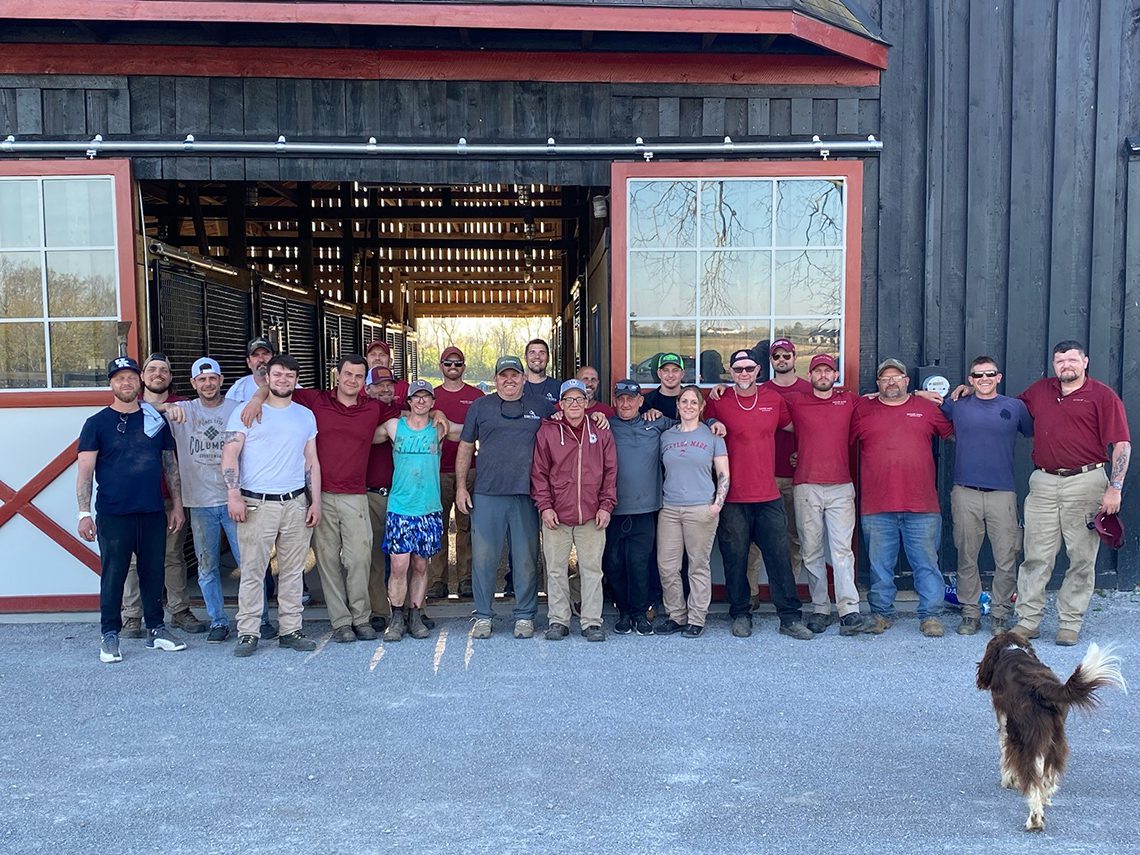
The Stable Recovery team at Taylor Made | courtesy Stable Recovery

After three months, Lowery graduated from the program and joined Taylor Made as a full-time groom.

Another member of his graduating class was Will Walden, who came up with the idea of starting something similar to the School of Horsemanship on the racetrack. Frank Taylor supplied Walden's venture with its first group of yearlings and Lowery joined Walden and one other classmate in Ocala to help break the babies. Their three-man team–with Walden as trainer, Lowery as groom and Tyler Maxwell as exercise rider–launched their stable at Keeneland last spring and had their first winner at Churchill Downs on May 13.

The barn took off from there and Lowery traveled with Walden from Churchill Downs to Turfway Park to Ellis Park. It was especially at Ellis, three hours away from home, that he realized he didn't want to be working so far from his family. Lowery had several job opportunities back in Lexington, but he ultimately found his way back to Taylor Made. He returned to the farm as a barn foreman and soon stepped up to his current position as a divisional manager.

“I could go work at a factory or do construction or whatever, but it would be the same thing every day,” he explained. “Here, with the number of horses that Taylor Made has, it's always something new every day. I love that and it drives me. It keeps me going because as soon as I think that I know something, I get humbled really quick.”

On any given day, Lowery manages several people in the School of Horsemanship program. It's one of his favorite parts of his job.

“I don't forget where I came from,” he said. “I'm just like those guys. I'm in recovery as well. The only difference is that I've put in a little more time.”

There is something about the horse, he says, that has a significant impact on people going through recovery.

“The way I look at it, we have domesticated them so they depend on us for everything–feed, water, their feet,” he explained. “I really think it gives people in recovery a purpose. Especially in early recovery, if you don't have a purpose then really what are you doing?”

Lowery and his family live on the farm and his two children ages two and four have developed a fondness for their four-legged neighbors. To be able to provide his family with a home in an tranquil environment like the rolling acres of Taylor Made is an opportunity that he never really thought was possible.

“It's special,” he said. “I grew up without a father, so that was something that I never wanted to put my children through but because of the drug addiction I ended up doing that to them. Now I can provide a beautiful home for them and they love the horses here. It means a lot to me.”

Stable Recovery, and its partner the School of Horsemanship, is looking to expand throughout Lexington. Rood & Riddle, Spy Coast Farm, Godolphin and WinStar Farm have already joined the project and there is a current wait list plenty long enough for more partners to join.

Lowery said he knows it might be a big ask for employers, but he can personally attest to the impact it could make.

“Not everybody that comes through here is going to make it or is going to stay sober, so you do have that,” he admits. “But for the most part, the percentage of success is high. You're getting good quality employees that can pass a drug test and will show up every day for work. To me that's all you can ask for. And you're helping people. My life is completely different than what it looked like a few years ago. Back then I wouldn't have known anybody crazy enough to hire guys like me, knowing my previous history. They gave me an opportunity when really nobody else would have, so for that I'm forever grateful.”

The post The Road Back: Once Homeless, Mike Lowery Found Purpose at Taylor Made appeared first on TDN | Thoroughbred Daily News | Horse Racing News, Results and Video | Thoroughbred Breeding and Auctions.

Source of original post

Forte Settles in at Spendthrift

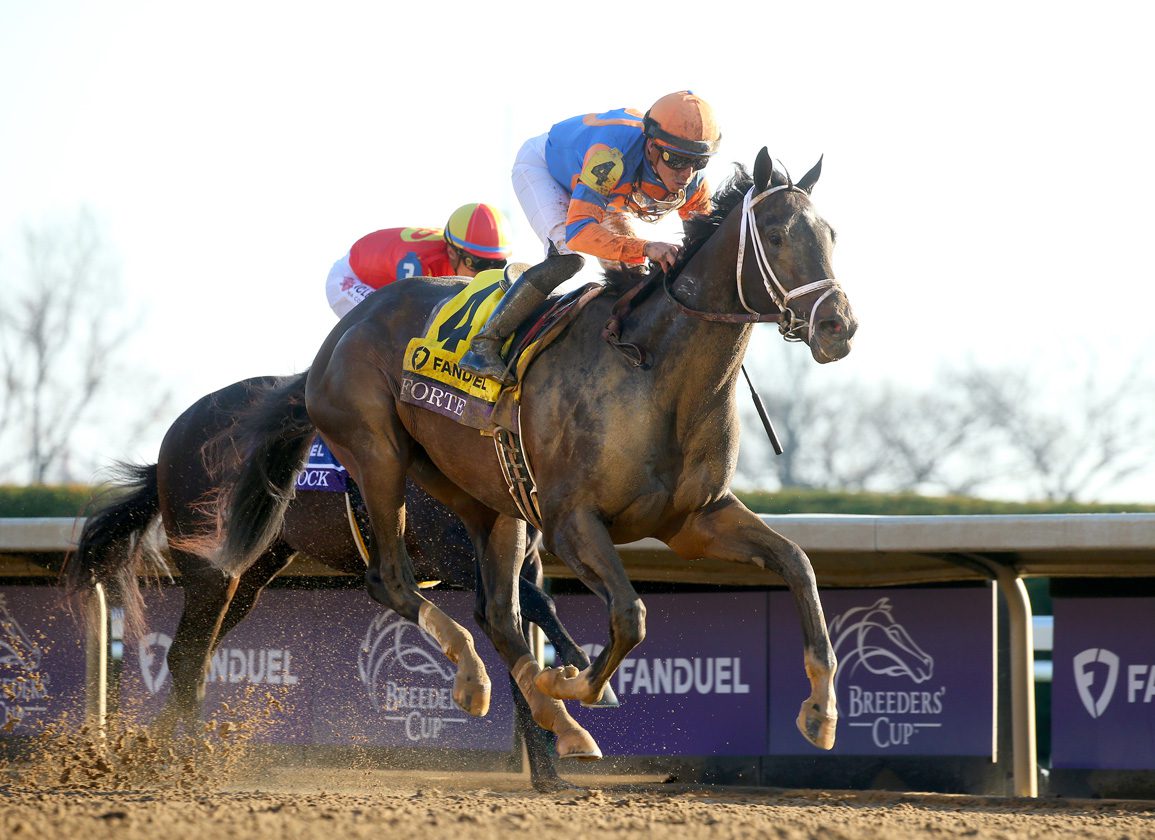
It didn't take long for champion Forte (Violence – Queen Caroline, by Blame) to settle in at Spendthrift Farm and after just a few weeks of breeder inspections, the 'TDN Rising Star' is already booked full for his first year at stud.

“Any time you get a chance to show a champion off to your breeders, it makes the sales team's job pretty easy,” said Spendthrift's Mark Toothaker. “He has been hugely popular and is completely sold out. Most every mare that he got is a blacktype mare, so he's going to get a huge chance.”

With an introductory fee of $50,000, Forte follows in the steps of Spendthrift sires like champion Jackie's Warrior, who stood for the same fee in his debut year last year, and the fast-starting first-crop sire Omaha Beach, who joined the roster in 2020 with a $45,000 fee.

“When Omaha Beach came in, he got the mares and then the next year Authentic got the mares,” explained Toothaker. “Jackie got the mares last year and so Forte will get them this year. He's a beautiful horse and we're so glad to have him here.”

The first champion 2-year-old to join the Spendthrift roster in over 40 years–since the likes of Seattle Slew, Affirmed and Lord Avie– Forte broke his maiden by nearly 8 lengths at Belmont, earning 'Rising Star' honors in that debut in May for Repole Stable and St. Elias Stable. The Todd Pletcher trainee would later score three straight Grade I victories in the Hopeful S., Breeders' Futurity and Breeders' Cup Juvenile, where he bested MGISW Cave Rock (Arrogate) and eventual GI Preakness S. victor National Treasure (Quality Road).

Forte wins the 2022 GI Breeders' Cup Juvenile at Keeneland | Horsephotos

It was a roller coaster of a 3-year-old campaign for Forte, as he continued his win streak in the GII Fountain of Youth S. and GI Florida Derby but was forced to scratch from the GI Kentucky Derby as the favorite due to a foot bruise. Off a 10-week layoff, he returned to the starting gate for the GI Belmont S. and was runner-up to Arcangelo (Arrogate). Before his final career start in the GI Travers S., Forte earned a career-high 105 Beyer Speed Figure in a hard-fought victory in the GII Jim Dandy S.

A quarter crack forced him to retire ahead of his bid in the GI Breeders' Cup Classic.

“He had some hiccups along the way, but still the talent came through,” said Toothaker. “The horse had so much class and he was just so push button. I think he just knew where the wire was. That was our biggest comment about him is that if you ever got in a dogfight with him, he knew how to win.”

Toothaker said that Forte first came on Spendthrift's potential stallion list after his win in the Breeders' Futurity at Keeneland, where he defeated fellow 'Rising Star' Loggins (Ghostzapper), a horse co-owned by Spendthrift.

“That race really puts him on our radar to try to get something done and we were able to get a deal done with Mike Repole and Vinnie Viola. We were thrilled we were able to get him secured late in his 2-year-old year. We got to ride the roller coaster this year, but it was all worth it.”

A $110,000 Keeneland September buy, Forte is out of the multiple stakes-winning Blame mare Queen Caroline, who just sold for $3 million to John Stewart at the Fasig-Tipton November Sale.

Toothaker said that Forte's physical is reminiscent of his sireline and has been another bonus to his credentials as breeders have stopped by the farm since his arrival.

“He's got that Medaglia d'Oro length to him,” he said. “He stands over some ground and he's such a good mover. You see why Jacob West picked him out. He just drops his head and motors when you show him. Breeders have loved that when you bring him out on the end of the shank. He's just got a classy look to him. We're thrilled to have him and so happy we can show him off to all of our breeders.”

The post Forte Settles in at Spendthrift appeared first on TDN | Thoroughbred Daily News | Horse Racing News, Results and Video | Thoroughbred Breeding and Auctions.

Source of original post

Verified by MonsterInsights