Keeneland Features Ashland Showdown As Spring Meet Opens Friday

Kentucky Senator Henry Clay might be considered one of the premier American politicians pre-Lincoln, but what is not up for debate was his fervent commitment to breeding equine athletes and attending the races.

You cannot actually visit his home–Ashland–because the structure that stands on the Clay Estate just south of downtown Lexington is not original to “The Great Compromiser” and his time. However, interpretations of Clay-related objects enliven the tour.

Ashland in name was imported as a stakes race when Keeneland opened in 1936. Some familiar female runners who graced the winner's circle at the old Keene Farm include Myrtlewood, Bewitch and Doubledogdare, and more recent fillies like Inside Information, Take Charge Lady and a personal favorite of mine, Bushfire.

As Keeneland kicks off racing on Friday, the GI Central Bank Ashland S. boasts a showdown with 3-year-old fillies looking to deposit 100 points into their Kentucky Oaks account.

For starters, the top three finishers from the GI Breeders' Cup Juvenile Fillies are present, including winner Just F Y I (Justify). The champion 2-year-old filly almost made the races this spring to kick start her 2024, but trainer Bill Mott was forced to wait until Keeneland.

Also Ashland bound is Jody's Pride (American Pharoah), who was second to Just F Y I at Santa Anita, and last month won the Busher S. at Aqueduct. She will be joined by the third-place finisher from the Juvenile Fillies, Candied (Candy Ride {Arg}), who also has not made a start this year for trainer Todd Pletcher. The filly returns to the site of her win in the GI Alcibiades S. last fall.

Impel | Coady Photography

In an effort to put her own stamp on an Oaks run, 'TDN Rising Star' Impel (Quality Road) will look to keep her record unblemished. Under Brad Cox's tutelage, the Juddmonte homebred  broke her maiden at Fair Grounds Jan. 1 and then posted an 8 1/2-length score and a 91-Beyer against optional claimers at Oaklawn Mar. 3.

Finally, Candied's stablemate Leslie's Rose (Into Mischief) justifiably earned her 'TDN Rising Star' when she broke her maiden by 9 1/4 lengths at Aqueduct last fall before returning to finish third in the GII Davona Dale S. at Gulfstream Park Mar. 2. Halina's Forte (Mitole) will seek to raise her game for Rigney Racing, as she attempts to capitalize on her first black-type win in the Ruthless S. at the 'Big A' Feb. 17.

Keeneland's Friday slate includes the GIII Transylvania S., which draws 12, plus a pair of also-eligibles. The field for the 3-year-old turf route includes Musical Act (Ire) (Dark Angel {Ire}), the first of several overseas arrivals in Kentucky for Godolphin and trainer Charlie Appleby.

With a packed stakes schedule, plus everything from the baby races to lower daily double takeout, these are just some of the storylines on tap at Keeneland. As for past April meet leaders, Jockey Tyler Gaffalione recorded 21 victories to secure his second consecutive spring meet riding title in 2023, while last year conditioner Wesley Ward earned his sixth consecutive training honor and ninth total.

The post Keeneland Features Ashland Showdown As Spring Meet Opens Friday appeared first on TDN | Thoroughbred Daily News | Horse Racing News, Results and Video | Thoroughbred Breeding and Auctions.

Source of original post

Back To The Future: The Day Citation Beat Man o’ War

When Gulfstream Park staged the “Race of the Century” 56 years ago this spring, 17,300 fans packed the grandstand. They stared out onto a horseless track, where an empty starting gate was parked ceremonially at the 1 1/4 miles position. They rooted, cursed and cheered home their picks.

Not a single person ended up witnessing the race. Yet those in attendance–and a nation of fans who tuned in via the NBC Radio broadcast or read about the outcome in coast-to-coast newspaper coverage–seemed to be in vehement agreement for weeks afterward that the best horse didn't win.

The Race of the Century on Apr. 6, 1968, was a promotional stunt, the sport's first major attempt at using a computer simulation for a form of entertainment. It was also, in part, supposed to serve as a testament to the emerging–even intimidating–power of computing technology.

It might have been a bust on both attempts.

But if your barometer is the old marketing adage “even bad publicity is good publicity,” the event could retrospectively be considered a hit.
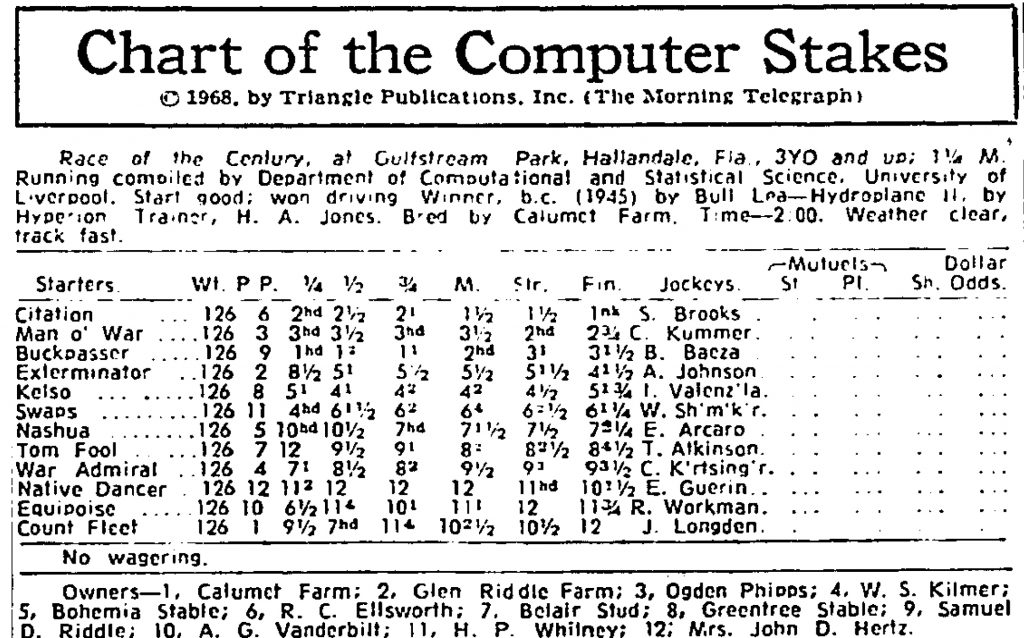
Morning Telegraph chart of the 'Race of the Century'

The imagined get-together of 12 of the greatest Thoroughbreds from different eras drew a decent amount of ink and interest in its day, and even today the concept of a “fantasy race” lives on. Every few years now in the 21st Century, as new fan favorites get added to the list of “greats,” the idea of a recreated showdown among epic champions keeps getting dusted off and repeated, powered by whatever latest and greatest technology happens to be in vogue.

In 1968, the entity that made its case for being the pre-eminent prognosticator of America's all-time historical horse race was a British technology team from the University of Liverpool's Department of Computation and Statistical Science.

Several months earlier, a panel of 150 stateside sports writers and broadcasters had been tasked with voting on the 12 luminaries who would line up in the digital starting gate, and they came up with (in eventual randomized post-position order) Count Fleet, Exterminator, Man o' War, War Admiral, Nashua, Citation, Tom Fool, Kelso, Buckpasser, Equipoise, Swaps and Native Dancer.

There was some pre-race griping that the selectors had concentrated too heavily on horses who had competed between 1948 and 1968. Today we would say that a “recency bias” contributed to the lack of better representation from horses who had competed in earlier times.


First came the knockout…

In partnering with the British computing team, Gulfstream was riding on the tails of a publicity experiment hatched by boxing promoters and a Miami radio station that had featured a computer-generated “tournament” among heavyweight greats past and present.

That venture had drawn criticism because, somewhat improbably, all the highest-ranked dead boxers and all the Black champs got eliminated via computer, leaving the popular (and white and still-living) Rocky Marciano and Jack Dempsey to slug it out.

Both retired champs were conveniently hired on for promotional purposes. The underdog Marciano scored a surprising “knockout.” Muhammad Ali ended up suing the promoters for $1 million in damages because he claimed his reputation had been tarnished by losing to the ghost of Jim Jeffries.

As columnist Robert Lipsyte explained in the New York Times, not many in the boxing industry seemed concerned that the computerized championship had come off like a badly scripted pro wrestling match. “People within boxing were not terribly exercised about the tournament,” Lipsyte wrote. “They are respectful toward anyone who can come up with a gimmick to make a buck, and are generally tolerant of fixed fights.”
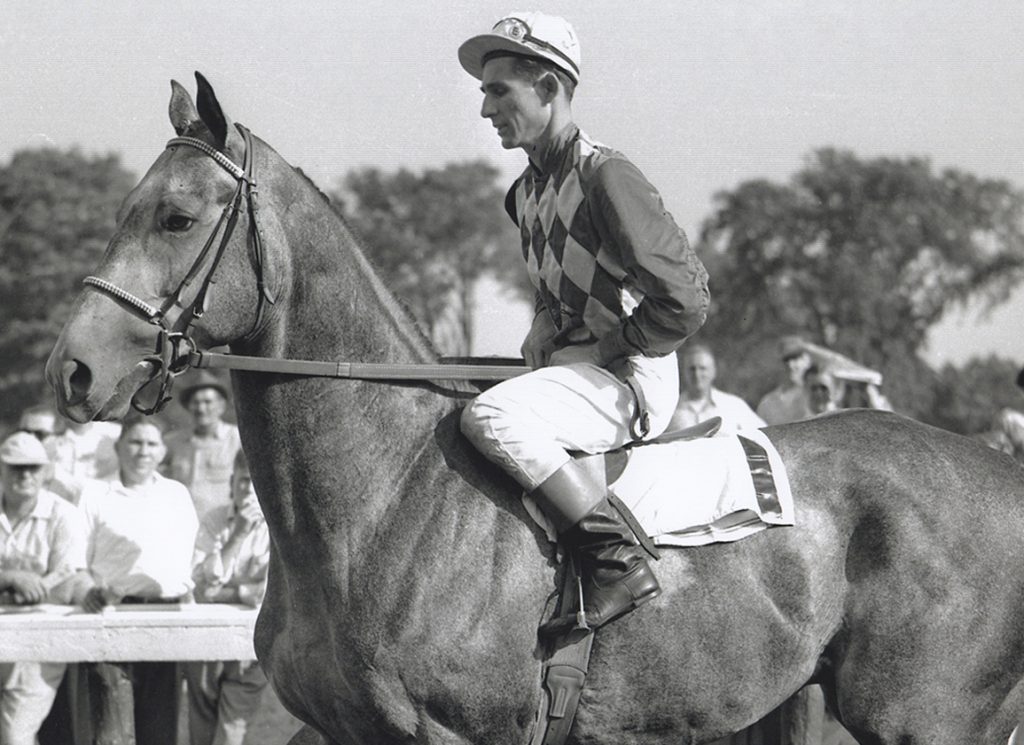
Native Dancer | Coglianese

In racing, presumably, there would not be as much acceptance for outcomes that were more orchestrated than computed.

Britain had already had a brief go at accepting bets on computer-generated racing in 1967, when bookmakers enlisted the help of programmers to stage “The Computer Gold Cup” after a bout of foot-and-mouth disease had shut down real horse racing for 40 days. Punters ended up not clamoring for that sort of action, and with the return of the real thing, simulated racing was cast aside.

It was against this backdrop that Gulfstream supplied the Liverpool team information about the selected horses' class, weight-carrying ability, and overall race records, and in turn the programmers fed that data into the computer. Final and fractional times, point-of-call margins, and winning margins were also included, but the computing team disclosed that those factors would not be given as much emphasis.

It took two full weeks to upload what was essentially past-performance data for a 12-horse field into the machine.

Man o' War's trainer, the then-84-year-old Louis Feustel, openly predicted the star colt who had won 20 of 21 races in the era just after World War I would “gallop” in the 1968 simulation despite the impressive credentials of his rivals.

“I'd have to fear Buckpasser a little. And maybe Citation,” Feustel told the New York Times several days prior to the event. “But Man o' War was the greatest. Even when he was walking or jogging, he wanted to get there first.”


Overwhelming fave…

Not many racegoers and turf writers disagreed with Man o' War's trainer. There was no pari-mutuel betting on the race, but Gulfstream had a pick-the-winner contest that offered prizes, and about 50% of the public chose “Big Red.” An estimated 40% of the published picks in the press also had him on top.

Yet some pre-race writeups tried to get inside the “brain” of the computer. Steve Cady of the New York Times took a contrarian approach in his handicapping by noting that despite setting American or world records at five different distances while winning under imposts up to 138 pounds, “An ominous note for Man o' War could be the emphasis placed on class of competition.”

Big Red's competition was practically non-existent late in his 3-year-old season, when he scared most it away and started favored at odds as low as 1-to-100 in six match races and four stakes that attracted only two other starters.

This, Cady reasoned, would count against Man o' War based on what reporters had been told about the computing methodology. The programming blueprint gave more credence to horses from larger foal crops who raced more often against larger fields.

Man o' War was made the (ridiculously high) 4-1 morning-line choice, with Count Fleet, who swept the 1943 Triple Crown, at 5-1, and Citation, the 1948 Triple Crown champ, at 6-1.

All entrants were assigned 126 theoretical pounds, and for the most part, they were “ridden” by the jockeys most associated with their prime performances in real life. The event was scheduled to be run prior to the first live race on Gulfstream's normal Saturday card.
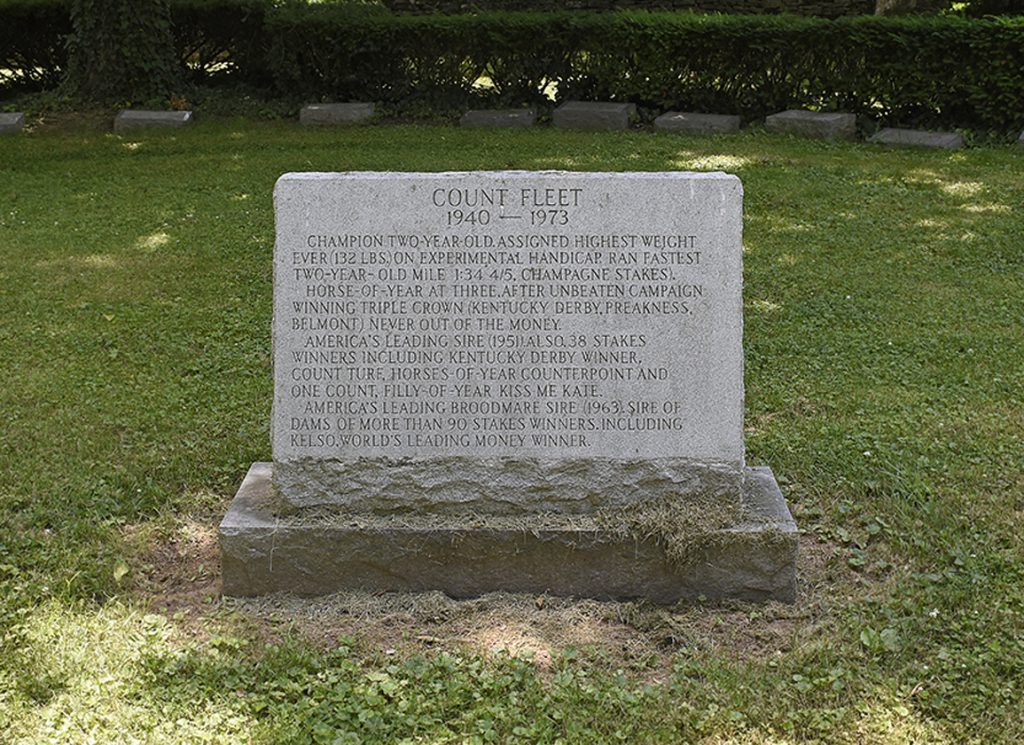
Count Fleet grave marker | Sarah Andrew

When the race went off, the University of Liverpool team transmitted positions and margins to Gulfstream at five-second intervals, and it was the job of press box impresario Joe Tanenbaum to formulate that data into a narrative and call the race over the public address system and for NBC.

There was a gasp of disbelief from the masses facing the empty track when Tanenbaum announced that Braulio Baeza had sent Buckpasser to the lead. Buckpasser had just retired the previous season after being named a champion in all three years he raced, and the crowd would have been well aware that this audacious move was totally contrary to the leggy, elegant colt's standard off-the-pace tactics.

Buckpasser led by a head over Citation, with Man o' War stalking another head behind in third in the early going. Fans staring at the running order on otherwise blank closed-circuit TVs saw little change as the stalkers allowed Buckpasser to open up by two lengths entering the backstretch. The top trio held their same positions past the half-mile marker, but Buckpasser's  leading margin had been sliced in half.

Around the far turn, Citation, the sport's first million-dollar-earner, swooped to the lead and now the main danger was clearly Man o' War, relentless in his pursuit and less than a length behind.

Big Red drove furiously at the smooth, efficient-striding Citation, extending his stride at a point in the race where jockey Clarence Kummer was usually easing him up in a romp. Man o' War loomed within a head 70 yards out, but Citation was emboldened by the challenge, surging under Steve Brooks to edge away by a neck at the wire.

Buckpasser hung on for third, ahead of Exterminator, Kelso, Swaps, Nashua, Tom Fool, War Admiral, Northern Dancer, Equipoise and Count Fleet.


Aftermath, and beyond…

An un-bylined New York Times recap reported the results with a tone of incredulity.

“Although no press box handicapper would fault Citation, a number expressed the opinion that 'Man o' War must be spinning in his grave,'” the story stated. “One handicapper who had picked Citation confessed that he believed 'Man o' War would have run all those horses off the track, but when I saw the factors they were considering for the computer, I figured the answer would come out Citation.'”

Even the simulated two-minute winning time for the 10-furlong race came under criticism, with some turf scribes noting that it was a fifth of a second shy of the actual Gulfstream track record established by Citation's lesser-heralded stablemate, Coaltown, who did not even come close to getting voted into the Race of the Century.

Russ Harris of the Miami Herald wrote that “the manner in which the dream race was run created a broad credibility gap between the data machine and oldtime racing fans.”
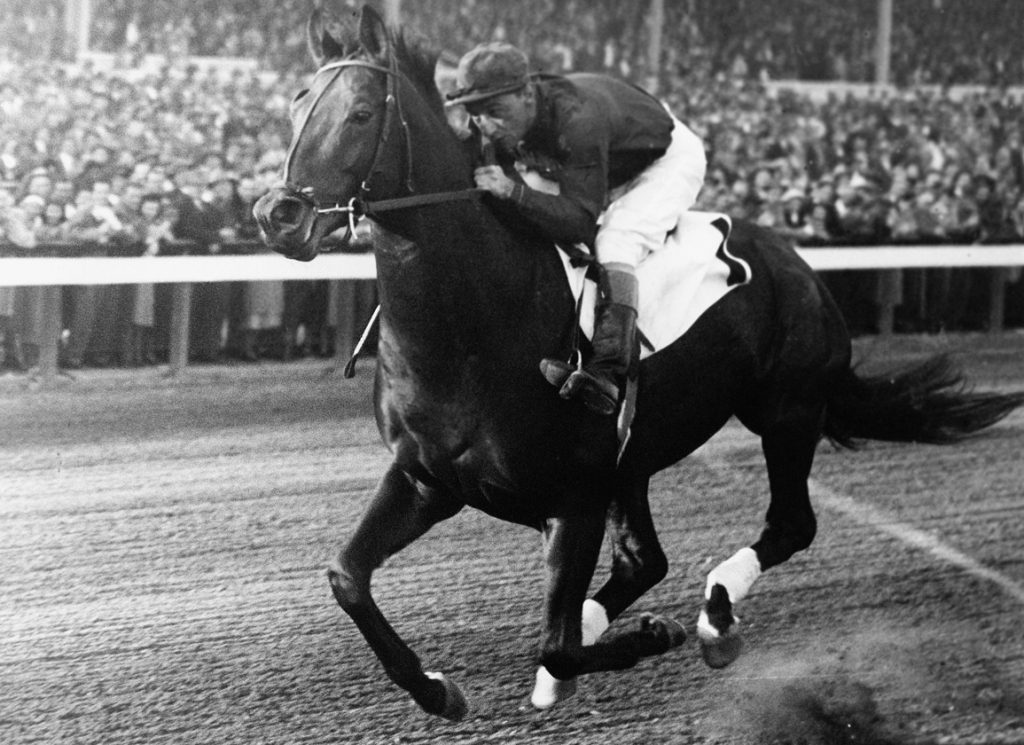
Citation at Belmont | Horsephotos

Sports columnist Arthur Daley of the New York Times put it this way: “Computers are only as reliable as the information fed them. This one obviously [shuffled] through cards that had been folded, bent, spindled and otherwise mutilated. How else can you explain a front-running whirlwind like Count Fleet lagging all the way and running last? How else can you explain a come-from-behind charger like Buckpasser blithely stepping in front even though he always loafed once he was in the lead?”

Maurice Hymans, the linemaker for the race, agreed. “Buckpasser never went to the front. Can you imagine Count Fleet being outrun to the first turn by Buckpasser? Why did they have to go to England to do this? Don't we have computers in this country?”

Turf writer Sam Engleberg, described by Harris as a renowned speed handicapper, expressed a frustration that would resonate today with horseplayers everywhere.

“They ought to smash the machine,” Engleberg said. “Twenty years after he's dead, I lose a bet on Man o' War.”

Lipsyte, of the New York Times, was still writing about the Race of the Century four months after it occurred, and his column about computers and sports from Aug. 12, 1968, contained profoundly prophetic words about how technology would unfold over the next six decades.

Although Lipsyte did not use the term “sports analytics” that we now hear every day, he aptly predicted it.

“In the future, the matings of Thoroughbred stallions and mares will be completely directed by computerized information, and stroke analysis in golf, play analysis in football, and scoring in ski-jumping will be electronically aided,” Lipsyte wrote. “There is no reason, except money, why professional baseball and football teams could not have elaborate systems designed to pin-point weaknesses and call plays. As long as computers are programmed by human beings, sports can only profit, through increased efficiency and fewer injuries, from electronic coaching aids.”

Yet Lipsyte also warned of the ominous effects of an over-reliance on technology, both inside and outside the world of sports.

“The Machine, you see, will eat anything a man feeds it and will swallow everything,” Lipsyte wrote. “People who are fearful of such things as rifles, projectiles, unsafe automobiles and sharp objects are almost unanimous in their fear of The Machine. They are terrified that their one human characteristic, rational thought, will be borrowed, improved upon, and never returned.”

The post Back To The Future: The Day Citation Beat Man o’ War appeared first on TDN | Thoroughbred Daily News | Horse Racing News, Results and Video | Thoroughbred Breeding and Auctions.

Source of original post
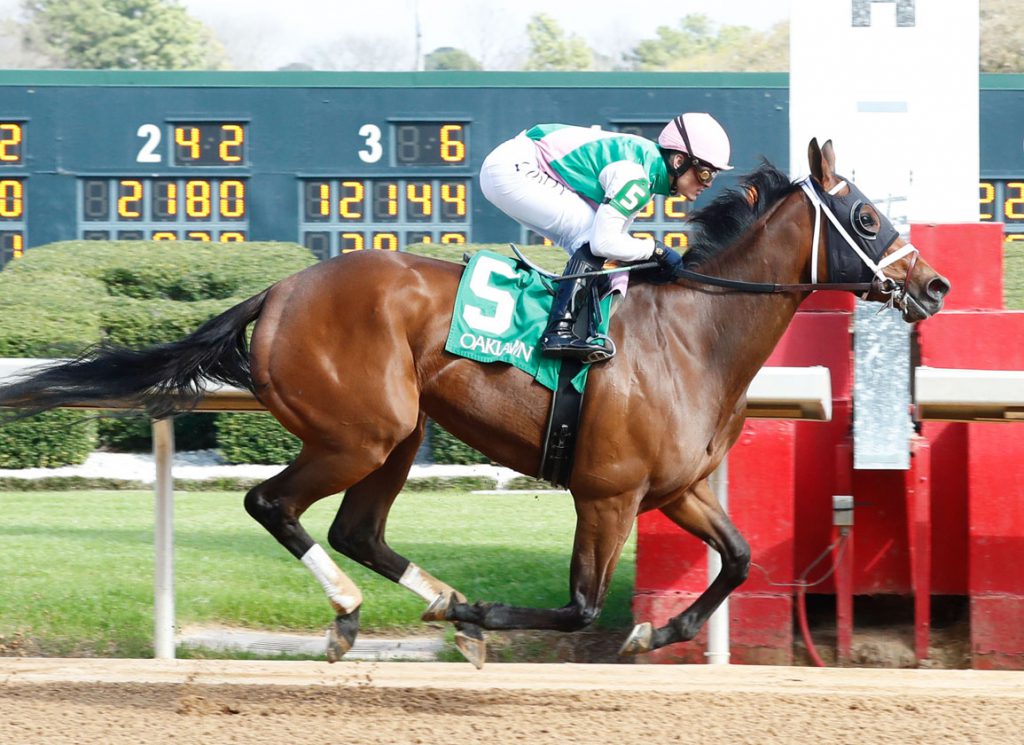
Partnerships, Presented By Taylor Made: A Taste of Victory

The exhilarating rush of adrenaline created when seeing your Thoroughbred soar across the finish line creates a sweet taste of victory that brings a sense of satisfaction and a touch of disbelief.

That often-elusive flavor remains on one's tongue in a constant search for more. Taste of Victory Stable's founders Kyle Yost and Brian Richardson have reveled in that sensation, knowing it can be interspersed with bitter moments that only life and owning Thoroughbred racehorses can produce.

The seeds of Thoroughbred ownership are typically planted by family and/or friends. Yost, a graduate of Penn State University, grew up on a small South Central Pennsylvania farm where his parents raised and brokered livestock. “My dad raised some mid-level Thoroughbreds on the farm which attracted me to the sport, almost by osmosis,” reflected Yost. “We would take in days at Penn National and Pimlico. There was just something about a Thoroughbred that drew me in.”

Richardson, on the other hand, and on the other side of the country, grew up just 20 minutes from Los Alamitos Race Course in Huntington Beach, California. “Aside from the early trips to Los Al, I will always remember my days at USC and making trips to Santa Anita with friends. On one occasion I hit an exacta for $680 and I was hooked as a horseplayer. As a fan, attending the races in Southern California was something special for our family.”

The road to ownership for Richardson began while on a fishing trip with his dad and his dad's best friend Gene Ward, who was affectionately nicknamed “Cherry.” “Cherry offered up what he called the idea of all ideas to my dad who they called `Hawk,' Richardson said. “Why don't we gather friends and family and rent out a luxury suite at Del Mar to take in the races and put Brian in charge?” It became an annual event, titled the Del Mar Cherry-Hawk event.”

The Partners | courtesy of Taste of Victory Stables

After a number of years enjoying Mexican buffets and drinks at Del Mar, it was another genius idea from `Cherry' who figured since they enjoyed going to Del Mar so much each year, it was time to buy a Thoroughbred and race themselves. So, 20 friends and family members got together, including Hawk, Cherry and Yost, who was a business associate and friend, and they started Cherry Hawk Stables.

The partnership's first horse was a yearling who the 20 partners opted to name Twenty Hawks (Unusual Heat). “We didn't think the name Twenty Cherries would provide the intimidating aura we wanted in our first racehorse,” quipped Richardson.

Twenty Hawks would go on to earn over $338,000 for the group of first timers, but sadly Brian's father passed away prior to the horse moving out to Charles Town and finding success. Twenty Hawks broke his maiden in his fifth lifetime start. “It was bittersweet considering my dad inspired us, along with Cherry, to start going to Del Mar and purchase a racehorse. I knew Twenty Hawks was wearing angel wings when he first scored for us. It was an emotional moment for me,” said Richardson.

Twenty Hawks: The Life-Changing Story of “The Iron Horse”

The concept of Taste of Victory Stables was amalgamated over multiple conversations between Yost and Richardson. “It was about 10 years ago, and we both wanted to somehow elevate the popularity of the sport,” said Yost. “There were other groups out there like West Point and Dogwood, but buying shares with them was out of reach for most people. We wanted to make it affordable for the average fan.”

Richardson concurs. “We had the ability to attract new owners from coast to coast and at a level that wasn't going to break the bank,” he said. “Giving people a `behind the ropes' experience that most racing fans have never been a part of was something we were committed to providing. The partners in Cherry Hawk Stables were also looking for more action and more horses so we launched Taste of Victory Stables in 2015.”

Partner Jeff Guffey and wife Nancy with Marley's Ghost at Saratoga | courtesy of Taste of Victory Stables

Current partner Dan Filipek recounted his initial connection to horse racing and Kyle Yost. “I let him know that I had been going to the racetrack with my father since I was a young boy,” said Filipek. “I had great memories of watching the Michigan Mile at Detroit Race Course and watching the Trotters at Northville Downs. I was sad that both of those tracks closed along with Hazel Park Raceway. I mentioned to Kyle that the three things my father and I did most together were go to the racetrack, work on cars and go hunting. But since my dad passed, my passion for working on cars and hunting faded, but not my love for horse racing. It was then that Kyle told me about the partnership group that Taste of Victory offered, and I thought what better way to rekindle my memories of watching horse racing with my dad then getting truly involved in the sport, so I joined.”

Another partner who said he was glad Taste of Victory started to expand is Larry Hopkins. “I have met some incredible people through TOV,” he said. “I have been on a few road trips to see our horses including our annual pilgrimage to Pimlico for Black-Eyed Susan day. It is interesting getting to mingle with more experienced horsemen and also meeting some of the trainers.  It has really opened my eyes to what a great sport Thoroughbred racing is.”

As the partnership expanded so did the management group. In 2016, while attending an owners' conference at Keeneland, Yost and Richardson met Russ Sapienza on a tour of Adena Springs. Originally from Pennsylvania like Yost, Sapienza would eventually make his way to Saratoga Springs where the former senior partner at PricewaterhouseCoopers currently resides. “I was first introduced to horse racing in high school when I went to Brandywine Raceway in Delaware to see the Stanley Cup, which was on tour after being won by the Flyers,” said Sapienza. “But I looked around and my attention turned to the horses. That experience and years of going to Saratoga and Belmont with my wife and her dad turned me into a hardcore fan of the sport and the horses. I enjoy handicapping and even participated in the 2020 NHC in Las Vegas and continue to play in tournaments today. I hope I bring a bit of the 'business of Thoroughbred ownership' in my role as an advisor to Kyle and Brian.”

Sapienza has focused on New York-breds and racing at Belmont, Aqueduct, and Saratoga for Taste of Victory. “New York has a friendly condition book for New York-breds, and the purse structure is extremely competitive. They also have a strong aftercare program which is important to our partners. When you race at places like Saratoga, you get to compete at an elite level in sport while still being part of a small barn or group. You can't do that in any other sport.”

Taste of Victory provides a variety of opportunities that can include young horses or claimers. Their groups are also regionally diverse with groups competing in California, the Mid-Atlantic, New York, and recently Ohio. “We like to keep the investment levels between $1,500 and $7,500 and want people to have at least a three percent interest in any group,” said Yost. “Each group has multiple horses to provide plenty of action and we don't mark up any of our purchases. Each group starts off with a budget that includes estimated expenditures for a year in advance, assuming no purse earnings. We don't want to be reaching out and making cash calls every month.”

The lower starting investment level was a key for partner Doug Shepherd. “The idea of purchasing a horse on my own was too daunting and expensive for a hobby, so the concept of an ownership group was perfect for me,” he said. “I have now been a part of numerous TOV groups that race in various parts of the United States. My wife and son have also become interested in horse racing and my son has recently joined a group with TOV.”

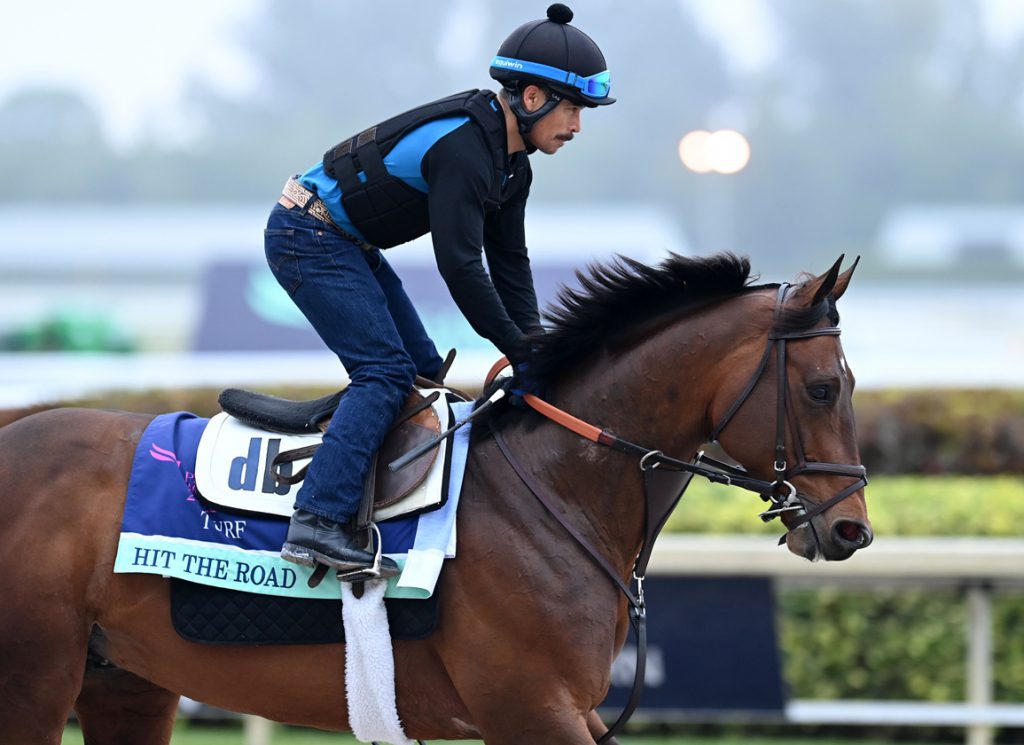
Hit the Road | Lauren King

Filipek agreed and aptly summed it up. “The cost of entry is affordable, but the thrills are priceless!”

Taste of Victory does reserve $300 per month for administrative expenses that go to cover professional fees and the services of their trusted bookkeeper Cara Thomas. The group has begun retaining 5% of purse earnings for new groups to provide funding for expansion and offering more social events. The trio of experienced managers has recently begun offering private management for individuals or groups that want to own horses on their own but need some additional guidance and support.

“Private management is great for families, poker or golfing groups, fraternity brothers and sorority sisters, corporate groups–essentially any individuals or groups that want a program customized to provide maximum enjoyment and flexibility,” said Yost.

Jeff Guffey is one partner who enjoys the events and access. “On race days, they are always willing to host owners at the track, and even set up barn tours for up-close access to the horses and the trainers. It really makes you feel like a true owner and horseman. I think that is what differentiates a group like Taste of Victory from other ownership groups that are less hands on, and more crowd-sourced.”

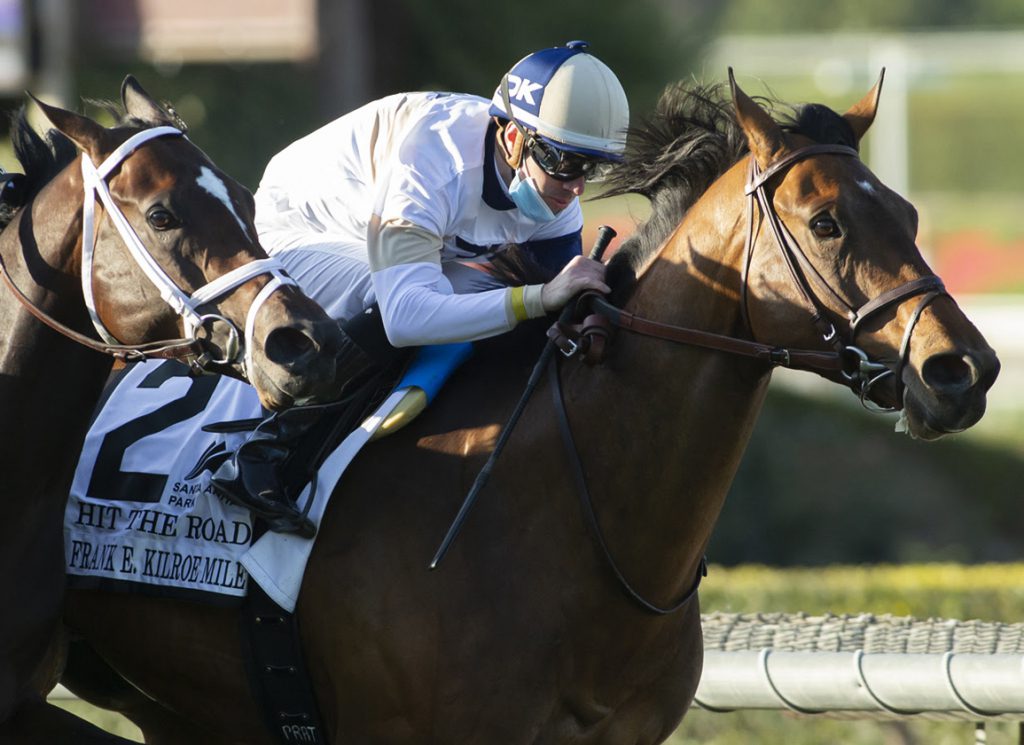
Taste of Victory Stables has sent two horses to the Breeders' Cup since its inception. GISW/GSW What a View (Vronsky) was the first in 2016, but success arrived in a big way when Taste of Victory Stables bought into Hit the Road in 2019. The More Than Ready colt won the GIII Thunder Road S. and the GI Frank E. Kilroe Mile in 2020.

“Hit the Road made it to the Breeders' Cup Juvenile Turf in 2019. Even though he didn't hit the board, it was such a joy to be able to host our partners and family at one of our home tracks,” Richardson said.

Hit the Road will be starting his stud career in South Africa this year.

Hit the Road | Benoit

The sweet taste of success was less palatable for Yost though. His wife of 15 years was also immersed in a cancer battle, which sadly she lost in June 2021.

“The horses, including Hit the Road, helped divert my mind for a bit and provide some positivity to the situation, but it was difficult for everyone,” said Yost. “I couldn't get over the outpouring of support from our partners and all the people in the horse racing industry we work with. From sending food for my family to simple notes of support, it was unbelievable.”

Shepherd reflected on the sentiment. “Sure, we love to win stakes races, but that is not what drives everyone. I have learned so much about the sport and the people involved, that it has made me love and appreciate the sport so much more than I ever imagined.”

As Taste of Victory Stables continues to welcome new partners, one thing will continue to hold true: The flavor of life and owning Thoroughbreds is a complex blend of sweet successes, bitter disappointments, and the savory experiences that linger in between.

The post Partnerships, Presented By Taylor Made: A Taste of Victory appeared first on TDN | Thoroughbred Daily News | Horse Racing News, Results and Video | Thoroughbred Breeding and Auctions.

Source of original post
The Kentucky Oaks Top 10 for April 4

It's come down to the last few preps. An outstanding field will meet Friday at Keeneland in the GI Ashland S. Four horses on our Top 10 list will take part in that race. At Aqueduct, they'll be vying for a spot in the field for the GI Kentucky Oaks in the GIII Gazelle S. At Santa Anita, fillies will contest the GII Santa Anita Oaks, but the horse expected to be he heavy favorite, Kinza (Carpe Diem), is trained by Bob Baffert and is therefore ineligible to run in the Oaks. By Saturday evening, we should know who will be running in the Oaks and who the favorites will be.

Here's a look at the latest installment of our Kentucky Oaks Top Ten:

1) TARIFA (f, Bernardini–Kite Beach, by Awesome Again) O/B-Godolphin (KY); T-Brad Cox. Lifetime Record: 'TDN Rising Star', MGSW, 5-4-0-0, $518,925. Last start: WON Mar. 23 GII Fair Grounds Oaks. Kentucky Oaks Points: 150. Next Start:
GI Kentucky Oaks, CD, May 4.
If the Oaks were run today, Tarifa would be the favorite. She emerged this year for trainer Brad Cox and has won three straight races, including the GII Fair Grounds Oaks, Presented by Fasig-Tipton and the GII Rachel Alexandra S., Presented by Fasig-Tipton. She is good, seems to be getting better and no one is better with 3-year-old fillies than her trainer, Brad Cox. The only way she won't be the favorite is if stablemate Impel (Quality Road) puts on a show in the Ashland on Friday at Keeneland.
Tarifa's top Beyer, the 95 that she earned in the Fair Grounds Oaks is the best this year among all 3-year-old fillies.

2) IMPEL (f, Quality Road–Your Love, by Flatter) O/B-Juddmonte (Ky); T-Brad Cox. Lifetime Record: 'TDN Rising Star' 2-2-0-0, $115,200. Last Start: WON Oaklawn AOC, Mar. 3. Kentucky Oaks Points: 0. Next Start: GI Ashland S., KEE, April 5.
If Tarifa loses in the Oaks, it may only be because stablemate Impel is faster. She looked nothing less than sensational when winning a Mar. 3 allowance at Oaklawn by 8 1/2 lengths. She got a 91 Beyer that day. A Juddmonte homebred, she faces the acid test in the Ashland, which will be her stakes debut. She's the 2-1 morning-line favorite. But with just two starts under her belt, does she have enough seasoning? Is she ready to be tested by some of the best in the division? Those questions should be answered Friday and a win by Impel may make her the horse to beat on the first Friday in May.

3) THORPEDO ANNA (f, Fast Anna–Sataves, by Uncle Mo) O-Brookdale Racing, Inc., Mark Edwards, Judy B. Hicks & Magdalena Racing (Sherri McPeek); B-Judy Hicks (Ky); T-Kenneth McPeek. Sales history: $40,000 yrl '22 FTKOCT. Lifetime Record: GSW, 4-3-1-0, $584,363. Last Start: WON GII Fantasy S., Mar. 30. Kentucky Oaks Points: 105. Next Start: GI Kentucky Oaks, May 3.
This 'TDN Rising Star' cracks the list for the first time this year and lands on the No. 3 spot after her impressive win in the GII Fantasy S. at Oaklawn. A bargain buy at the 2022 Fasig-Tipton Kentucky Fall yearling sale for $40,000, her breakthrough race was a Nov. 10 allowance at Churchill which she won by nine lengths, earning an 87 Beyer. She faltered a bit in her next start when finishing second in the GII Golden Rod S. as the odds-on favorite. But she roared back with the authoritative win in the Fantasy in what was her first start this year. Trainer Kenny McPeek has had a lot of success with yearling purchases in the neighborhood of $40,000. It looks like he has done it again.

4) JUST F Y I (f, Justify–Star Act, by Street Cry {Ire}) O/B-George Krikorian (Ky); T-Bill Mott. Lifetime Record: Ch. 2yo filly, GISW, 3-3-0-0, $1,317,750. Last start: WON Nov. 3 GI Breeders' Cup Juvenile Fillies. Kentucky Oaks Points: 40. Next Start: GI Ashland S., KEE, April 5.
The champ is back. After being scratched from the GII Davona Dale S. because of a fever, she has been re-routed to the Ashland. With her coming off a five-month layoff and with the Oaks being the main goal, how ready will trainer Bill Mott have her? But the main question that remains is this: is she fast enough? Despite a 3-for-3 record last year, an Eclipse Award and a win in the GI Breeders' Cup Juvenile Fillies, her Beyer numbers suggest she's not quite as good as she looks on paper. She needs to step up her game, but there's no reason she can't do just that.

5) JODY'S PRIDE (f, American Pharoah–Jody's Song, by Scat Daddy) O-Parkland Tbreds & Sportsmen Stable; B-Mr. Steve Weston (Ky); T-J Abreu. Lifetime Record: MSW & GISP, 4-3-1-0, $590,250. Last start: WON Mar. 2 Busher S. Kentucky Oaks Points: 65. Next Start: GI Ashland S., KEE, April 5.
She's a little like Just F Y I. She doesn't run particularly fast, but she just keeps on winning. After finishing second and losing by just a neck to Just F Y I in the Breeders' Cup Juvenile Fillies, she returned with an easy win over outclassed rivals in the Busher Invitational S. at Aqueduct. Her connections were going to keep her in New York for the Gazelle, but changed their minds and have wound up instead in the Ashland. To show how tough the Ashland is, she is 8-1 on the morning line. She would have been an odds-on favorite in the Gazelle, so it's a bit puzzling that the connections wound up going to Keeneland instead of staying in New York.

6) POWER SQUEEZE (f, Union Rags–Callmethesqueeze, by Awesome Again) O-Lea Farms, LLC; B-Forging Oaks Farm, LLC (Ky); T-Jorge Delgado. Sales history: $50,000 yrl '22 KEESEP; $90,000 2yo '23 OBSAPR. Lifetime Record: GSW, 6-4-1-0, $337,450. Last start: WON GII Gulfstream Park Oaks, Mar. 2. Kentucky Oaks Points: 120. Next Start: GI Kentucky Oaks, May 3.
She came into the GII Gulfstream Park Oaks riding a three-race winning streak, which included a pair of stakes races. But she was totally overlooked Saturday at Gulfstream, going off at 11-1. She beat the 1-2 favorite and much hyped Ways and Means (Practical Joke), winning by a neck. She was ridden in the Gulfstream Park Oaks by Daniel Centeno. It will be interesting to see if the journeyman keeps the mount. After sprinting earlier in her career, she is 3-for-3 around two turns. Don't go to sleep on this one.

7) KOPION (f, Omaha Beach–Galloping Ami, by Victory Gallop) O-Spendthrift Farm; B-Tall Oaks Farm (Ky); T-Richard Mandella. Sales history: $270,000 yrl '22 KEESEP. Lifetime Record: GSW, 3-2-1-0, $116,600. Last start: 2nd Feb. 10 GIII Las Virgenes S. Kentucky Oaks Points: 20. Next Start: GII Santa Anita Oaks, SA, April 6.
May be the only California-based filly to make it to the Kentucky Oaks. She goes Saturday in the GII Santa Anita Oaks and will once again face her nemesis, Kinza. If the race runs to form, Kinza will win and Kopion will be second. That would give Kopion enough points to make it into the field for the Oaks, where she could be in the neighborhood of 15-1. Then again, if Kinza is as good as some people think, doesn't Kopion deserve a lot of credit for finishing second behind her?

8) WAYS AND MEANS (f, Practical Joke–Strong Incentive, Warrior's Reward) O/B-Klaravich Stables (Ky); T-Chad Brown. Lifetime Record: GISP, 'TDN Rising Star,' 3-1-2-0, $165,750. Last start: 2nd Mar. 30 GII Gulfstream Park Oaks. Kentucky Oaks Points: 50. Next Start: GI Kentucky Oaks, May 3.
She romped in her maiden debut at Saratoga and then finished second in the GI Spinaway S., despite the fact she took a chip off her right ankle and was lame afterward. That meant a long trip to the sidelines before she launched her comeback in the Gulfstream Park Oaks where she did everything right but win. She was steadied going into the first turn, raced wide throughout and then made what appeared to be a winning move in the stretch. She just ran out of gas in the final sixteenth, which is perfectly understandable. Trainer Chad Brown is eyeing the Oaks, but says he's worried his filly won't have enough points to make it into the field of 14.

9) OUR PRETTY WOMAN (f, Medaglia d'Oro–Dazzletown, by Speightstown) O-Courtlandt Farms; B-Woods Edge Farm, LLC and Godolphin; T-Steve Asmussen. Sales History: $900,000 yrl '22 KEESEP. Lifetime Record: GSP, 3-2-1-0, $150,200. Last start: 2nd Mar. 23 GII Fair Grounds Oaks. Kentucky Oaks Points: 50. Next Start: GI Kentucky Oaks, CD, May 3.
A $900,000 yearling buy, the daughter of Medaglia d'Oro gave divisional leader Tarifa all she could handle in the Fair Grounds Oaks. She battled every step of the way before finishing second by three-quarters of a length. It was only her third start and first in a stakes, so she has plenty of room for improvement. She's quick from the gate and may be the one setting the pace in the Oaks. If she gets a good trip, there's no reason why she can't win.

10) LESLIE'S ROSE (f, Into Mischief–Wildwood Rose {Ire}, by Galileo {Ire}) O-Whisper Hill Farm; B-John D. Gunther & Eurowest Bloodstock Services (Ky); T-Todd Pletcher. Sales history: $1,150,000 yrl '22 KEESEP. Lifetime Record: 'TDN Rising Star', GSP, 3-2-0-1, $89,950. Last start: 3rd Mar. 2 GII Davona Dale S. Kentucky Oaks Points: 15. Next Start: GI Ashland S., KEE, April 5.
A $1.15-million purchase at Keeneland September by Into Mischief, she is 2-for-3 lifetime. This Todd Pletcher trainee has the potential to be a very good horse. She just needs to prove it in stakes company. At odds of 3-10, she was third in the Davona Dale in her stakes debut and was beaten 2 1/4 lengths. It wasn't a terrible effort, but she was somewhat of a disappointment. She must run well in the Ashland and pick up some points in order to earn a spot in the Oaks field.

The post The Kentucky Oaks Top 10 for April 4 appeared first on TDN | Thoroughbred Daily News | Horse Racing News, Results and Video | Thoroughbred Breeding and Auctions.

Source of original post

Verified by MonsterInsights