Body & Soul: Empire State Perspectives

Been paying attention to what's going on in the Empire State lately (er, you might know it as New York)? We speak not of the mess in the Governor's Mansion or resulting headlines and cable news rumblings. Rather, we refer to the status of registered New York-breds, exploits of which are tickling the fancy of the state's breeders–many of whom went home dancing with dollars following the conclusion of the Fasig-Tipton sale for a brace of indigenous yearlings.

The sale continued a recent demand from owners, trainers, and pinhookers because New York-breds are winning important open company stakes, and a lot more of them are earning tons of money in bonuses and other rewards offered through the Empire State's incentive program.

However, we are not here to shill for these horses–they do well enough on their own. Rather, we are here to offer perspective on how this has come about, a perspective that will focus on the development of the state's stallion rosters since the program was initiated in the late 1970s. That's because without perspective there is no other way to explain the current success of the program.

First, let's get this concept of “perspective” defined relative to this exercise. According to the Oxford English Dictionary, putting something in perspective has two basic definitions (italics added): 1) “the art of drawing solid objects on a two-dimensional surface so as to give the right impression of their height, width, depth, and position in relation to each other when viewed from a particular point,” 'a perspective drawing'; and 2) “a particular attitude toward or way of regarding something, a point of view.”

Your correspondent is in a unique position to present this perspective because: 1) the algorithms for the biomechanical analysis we have utilized since the early 1980s generates a series of graphs for each horse measured, hence a “picture” of how the horse is constructed in terms of potential racing and breeding efficiency; and 2) your correspondent has been intimately involved in the New York Thoroughbred industry since the early 1980s in many ways including as an adviser to breeders and owners, newspaper publisher, compiler of state sire lists, and one who also helped shaped policy for the program.

As for the latter issue, without getting too deep into the weeds, suffice it to say that as president of New York Thoroughbred Breeders (NYTB), your correspondent wrote the rules and regulations passed into law in 1994 governing mare residency and stallion breed-back requirements, which in 2020 were altered modestly to expand the residency issue to attract more quality mares.

Over the years we have watched the comings and goings of stallions in New York and have come to several conclusions based on what the market wants, what the stallions brought to the breeding sheds in pedigree and biomechanics, and how the development of a stallion program in New York is not very different from those in other states, including Kentucky.
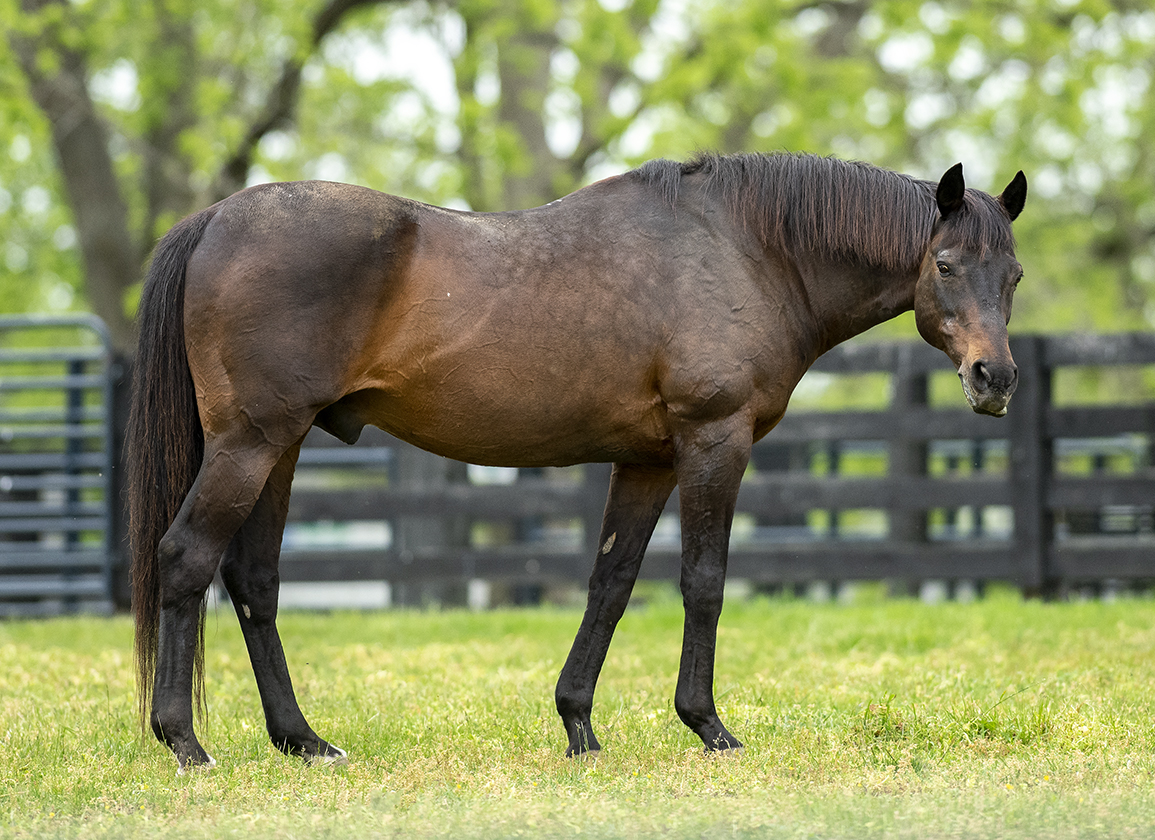
Go for Gin, shown in retirement, was by New York-based Cormorant | Sarah Andrew

Our conclusion: While dozens of stallions were either retired to stand in the state or moved from elsewhere, all faced a basic disadvantage regardless of the rules and incentives promulgated by the state. The majority of available mares lacked either the pedigree and/or biomechanical qualities to match many of the stallions available.

That said and “all Gaul” notwithstanding, the Empire State's breeding program can be divided into three parts (or, in this case, three time periods, or “cycles”). Each is defined by economic and regulatory factors that strongly affected the development of a competitive stallion roster within the state.

Five stallions emerged through those cycles that shaped the story of the entire program: two of which moved into the state and three of which retired to stud there. Parenthetically, each of those five had a favorable biomechanical profile to be successful irrespective of pedigree and, given the quality and quantity of the mares they attracted, all of them succeeded as expected on those scores.

In the late 1970s two stallions moved to New York early in their careers and, despite being completely different in pedigree and race records, dominated the state's sire lists for many years. One was Cormorant, a son of His Majesty who sired Kentucky Derby winner Go for Gin, Eclipse Award winner Saratoga Dew, and Grade I winner Grecian Flight among his 46 stakes winners. The other was Talc, a son of Rock Talk who did not sire as many stakes winners as Cormorant but who consistently battled that one on the sire list. In the 1970s and 80s it was not uncommon for several races a day at NYRA tracks and Finger Lakes to feature one or more offspring of these two.

New York's multiple leading sire, Freud | Sarah Andrew

Both were average sized, very well-balanced individuals who stamped their foals in their own image. Indeed, you rarely saw a Cormorant or Talc that was anything other than bay or brown except when toward the end of his career Cormorant got the gallant gray gelding Gander, a fan favorite. The irony here is that even though Go for Gin sired Grade I winner and sire Albert the Great, the His Majesty line–and therefore the Ribot line–in North America saw the beginning of its end in Cormorant. And the Rasper II line, of which Talc was a major part, also basically ended with his demise.

Yet these two were so consistent in getting winners from any pedigree or physical type that the only caveat during that time was the well-worn advice that you should make sure the mare you bred to Cormorant mitigated his personality (which was, how you say, difficult), but you could breed a dog to Talc and get a runner.

These two paved the way to the next cycle wherein two stallions who retired directly to stud in the state met the challenge in completely different ways. First came D'Accord, a Grade II-winning son of Secretariat out of champion Fanfreluche, by Northern Dancer, who was purchased by John Hettinger of Akindale Farm in 1984. He was unquestionably the most prominent “marquee” stallion prospect to stand in the state if only because of his pedigree.

He came along before his sire became better known as the broodmare sire of epoch-making stallions Storm Cat, Gone West, and A.P. Indy rather than as a sire of sires, and in many ways D'Accord turned out to be right up there among Secretariat's best sons at stud. Richly supported by Hettinger, his book was also very carefully monitored for quality, so he never had huge crops commercial sires required as a pivot for success. Though he got one good son who went on to become a sire in Montreal Red, it was his fillies among his 19 stakes winners who stood out. Thus, like Cormorant and Talc before him, D'Accord, in effect, was one of those who helped precipitate the end of a sire line.

On the other hand, a large multiple Grade III-winning speedball son of Danzig came into the stallion barn at Sugar Maple Farm, a few miles up the road from Akindale, and immediately became the star of the show. That would be Belong to Me, who was not only a phenotypical carbon copy of his sire (though larger) but given his opportunity in New York, a most propitious pedigree and physical match for the state's broodmares.

His first runners set the tracks on fire and after siring four crops at Sugar Maple, he was dispatched to Kentucky where he subsequently became a successful shuttle sire in Australia. By the time of his demise at age 31 last year, and without a son to establish a Danzig branch, it was most probably forgotten by many that he rang the bells initially in New York.
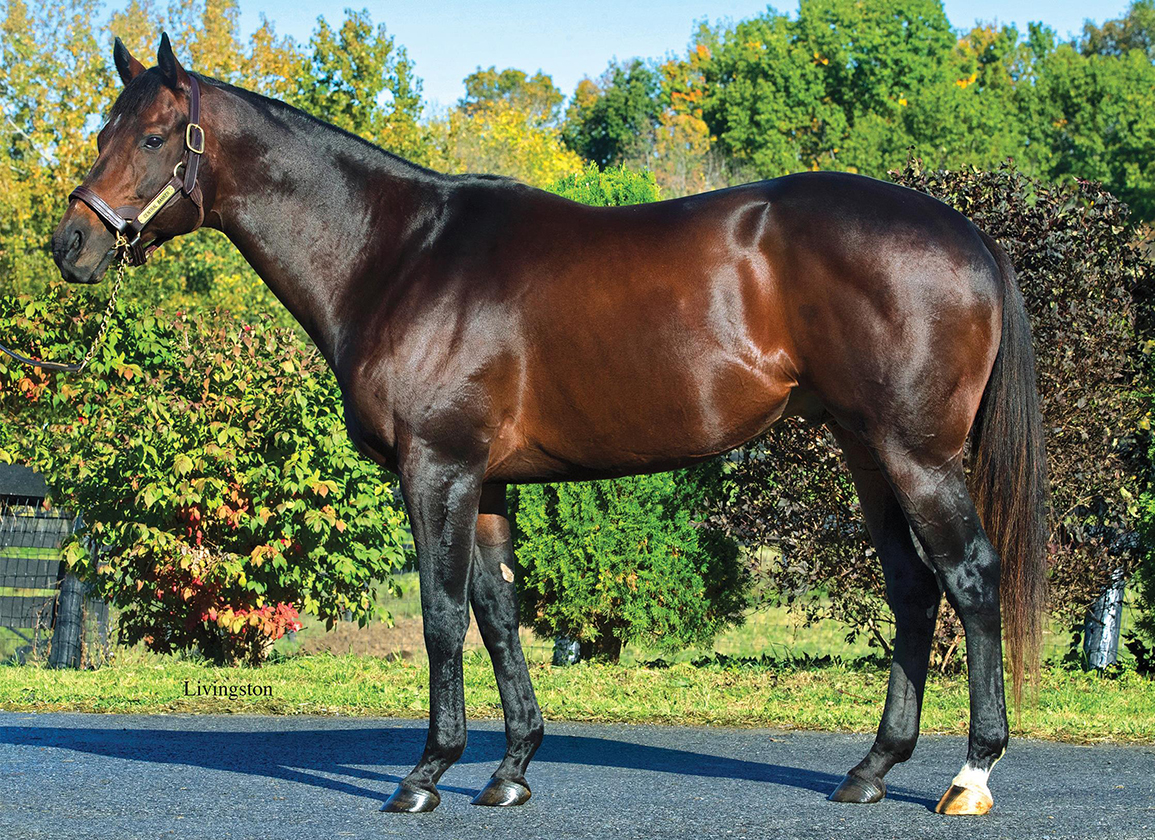
The young Central Banker is getting early, fast runners | Barbara Livingston

Which brings us to the third cycle which has been dominated by a horse with a name that should require him to explain everything to us: Freud. Retired to the state after a modest group-placed career in Europe, he was given a chance primarily because he was a full-brother to international champion Giant's Causeway, being by Storm Cat out of Mariah's Storm, by Rahy. First impressions might lead one to believe, as a friend once remarked, “well, that shoots the full-brother theory,” for Freud is a dark bay resembling Storm Cat while Giant's Causeway was a chestnut though much bigger than his similarly colored broodmare sire.

However, the tale of the tape shows that they were virtually twins phenotypically and in body measurements, so much so that on several key biomechanical tests they scored almost identically. Thus, it was not so much of a surprise to those who bred to him early on with this knowledge that Freud would be successful, at least in a state-bred program. That he has sired nearly 70 stakes winners including 17 graded victors thus far has certainly solidified his standing as the most successful stallion to retire to stud in the Empire State. The fact that two of his leading earners are out of mares by D'Accord sweetens the pot.

Freud has been New York's leading sire many times but in the past two years he has been challenged and now surpassed by Central Banker, a son of Speightstown who benefitted from huge books in his first few years to gain a reputation for getting a lot of early, fast runners. He needs to step up with more than the few black-type earners he has at this time to justify a prognostication for leading a future cycle, but as of now his yang to Freud's yin at the top of the list of stallions retired directly to the state is somewhat analogous to the counterbalance that Cormorant and Talc brought with them when they hopped on vans all those years ago and settled in the Hudson Valley.

Bob Fierro is a partner with Jay Kilgore and Frank Mitchell in DataTrack International, biomechanical consultants and developers of BreezeFigs. He can be reached at bbfq@earthlink.net.


The post Body & Soul: Empire State Perspectives appeared first on TDN | Thoroughbred Daily News | Horse Racing News, Results and Video | Thoroughbred Breeding and Auctions.

Source of original post

Buyers, Sellers, Sales Companies Talk COVID-19 and the Fall Sales

The daily number of U.S. deaths from the Covid-19 virus neared 1,000 per day last week, the highest level the country has seen since February. The seven-day moving average of Covid-19 cases reported by the CDC, is at 149,263, and continues to rise.

There are currently four variants circulating in the United States; Alpha, Beta, Delta, and Gamma, with Delta making up over 99% of all cases.

It seems like every day, someone we know in racing has contracted Covid, from trainer Todd Pletcher to the TDN's own Christina Bossinakis, and many of the people surveyed below. At no time is the demand to travel and circulate with others for our jobs in racing greater than it is for the fall sales period.

The TDN talked to a number of buyers and consignors about how they feel about traveling to the sales, what precautions they'll take, and what sales companies can do to make them feel safe.

We start off our conversation with Keeneland's President and CEO Shannon Arvin, who talked about sales protocols.

Shannon Arvin
First and foremost, the health and safety of our clients, staff and equine stock is Keeneland's primary focus. COVID-19 has presented us with many challenges these past 18 months, but by working together, we have successfully navigated a constantly changing world to create a stable and steady market. And I believe we will do that again this fall sales and racing season.
Looking ahead to the September Yearling Sale, Keeneland will follow the guidance of health and government experts to create the safest environment possible for our sales participants. And just like last year, we ask for the continued support and cooperation of our customers and their staffs.

Shannon Arvin | Keeneland photo

We strongly encourage those who have not yet been vaccinated to do so. Vaccination offers the best protection possible from COVID-19.

Most of us are extremely aware of the risk presented by COVID-19 and take the proper precautions where necessary.

At Keeneland, we have reinstated a mask mandate for all employees, both vaccinated and unvaccinated, while working indoors. Our unvaccinated employees are required to be tested weekly.

Consistent with current CDC guidelines, we strongly recommend that all sales participants wear a mask when indoors. This is an added layer of defense that keeps you and those you come in contact with safe.

Our facilities at Keeneland will undergo a deep cleaning following each sales session, and we've located hand sanitizing stations throughout the Sales Pavilion and grounds.

We also will continue to offer online bidding and phone bidding for buyers unable to attend the September Sale in person.

The Keeneland team looks forward to welcoming our friends and customers from around the world to Central Kentucky this fall. A silver lining of the pandemic is the resiliency and optimism of horsemen that always seem to carry the industry through challenging times. We are confident the market will continue to be buoyed by enthusiasm at the sales and a keen passion for racing.

Price Bell, Mill Ridge
I'm so glad you all are doing this story on the vaccine and protocols. I think it's important. Considering that last year Keeneland and Fasig-Tipton conducted multiple sales, and quite frankly kept our industry going, I know we can stay safe through this sales season as well. I think the key is keeping activity inside limited and being respectful of people and the variant.

Price Bell | Mill Ridge photo

I'm vaccinated, and look forward to the booster. I will wear a mask indoors and in the back ring, where I hope it is crowded. I do feel comfortable going because I thought they did a phenomenal job last year. They created a wonderful environment to conduct business utilizing so much of their outdoor space and I would expect they do something similar this year. I think we have learned from our friends who got sick in Saratoga that the vaccine is not bulletproof and the variant is real.

As for our team, we have worked hard to make everyone aware of the benefits of the vaccine and nearly every team member has been vaccinated. We will provide masks to co-workers and opportunities for us to not gather in the tack/warm rooms.

Liz Crow, BSW Bloodstock
I will feel comfortable but I will also be a little hesitant because I have a 6-month-old baby who is not vaccinated. My concern is always how can I keep her safe. For that reason, I will be a little nervous. I will be wearing a mask and will be careful. I will probably only wear the mask when I am inside. When I look at horses, I generally am not super close to a lot of people except for my team. They are all fully vaccinated, which makes me feel safer.

As for protocols, that's above my paygrade so far as all the thought that has to go into that. I do think there should be a mask mandate for inside. That's probably the right thing to do.

Justin Casse
I won't mind going. I've gotten my vaccinations. I had Covid and I got it when I was in Newmarket last year for the yearling sales. Covid changed my life in regards to the amount of traveling I want to do. To be honest with you, my time at horse sales going forward is going to be less than usual. In regards to fear of getting the disease, that's not on my mind. But so far a what it has done to me and my values in life, it's made me step back and look at what might be more important. I want to spend more time enjoying life and my family.

I won't wear a mask unless prompted and told to do so.

I know it's a pain in the butt, but I do feel that proof of vaccination is nice and if not proof of vaccination then you should have to show that you have tested negative. It should be one of the two. I went to the Grateful Dead concert in Saratoga last week and to get into the area of the pit you had to show that you had been vaccinated. To get into the concert, you had to have a negative test or the vaccination. That's like 20,000 people in an outdoor setting and they did their best to make sure that we were at event that would not turn into a super spreader event.

Jon Green | Courtesy DJ Stables

Jon Green, General Manager, DJ Stables
I personally attended the Saratoga sale and was surprised more people were not wearing masks, especially inside the sales pavilion. The number of people who caught some type of illness directly stemming from the sales and/or races was not surprising in my mind–COVID in particular is just that contagious. Since my parents are older, and more susceptible to the negative consequences of any virus, we have opted not to attend the September Sales. Like last year, we have assembled a great team of short listers, trainers and veterinarians to provide us with the information required to make our decisions from afar. Keeneland has done an outstanding job of establishing and improving their digital platform, and we have the utmost confidence bidding on their site. Hopefully the CDC figures will improve over the coming weeks so we can return to Kentucky in November.

J.R. Boyd
I feel very comfortable because I had COVID and I have the antibodies and according to the doctors the antibodies last up to 90 days. I got it at the very end of July. The doctors and nurses told me that 99% of the people in the hospital were not vaccinated and I was not vaccinated either. I definitely regret not getting vaccinated. My wife had it about six months before I did and I was around her the whole time and I never caught it. It's not that I was against the vaccination. I just thought I didn't need it. That was a mistake.

I worry that there's not a lot anyone can do. If you're going to get it you're going to get it. I won't say that I won't go inside the pavilion, but I'm going to try to keep my distance from other people. Everyone should definitely have the Germ-X sanitizer in their pockets and should keep their distance when they can. Having said that, I would feel more comfortable if everyone were vaccinated.

I don't plan on wearing a mask. That's because every doctor has told me I have full-blown antibodies and for 90 days I cannot get COVID and I cannot carry it. I don't feel like I can receive it or give it to anyone. If they want me to wear a mask in certain areas, I will not mind. I'm not against masks by any means.

Doug Cauthen
I feel comfortable going to the sale. I will take precautions like trying to keep my distance from others. Thankfully, most of it takes place outdoors. I won't be going inside the pavilion unless people are masked.

Masking indoors is a no-brainer. We've seen how well that woks and it especially works when everybody does it. I'll definitely wear a mask indoors. When I'm out looking at horses I'll probably have one around my neck and if somebody comes up to me I'll pull it up and talk to them. Thankfully, I am vaccinated. I know I can still get COVID, but my preference is obviously to not get sick.

Meg Levy, Bluewater Sales
Mike and I actually just got over Covid. We both had been vaccinated. We were in Saratoga and the Delta variant was going around, we got it and we're over it and we've been re-vaccinated. Personally, I will feel comfortable.

Meg LEvy | Bluewater Sales

I just assumed they were going to go back to protocols similar to what they did last fall when they had badges and temperature checks. That seemed to be easy and seemed to go well.

I will wear a mask when I am near people. I think that's only fair the best way to keep others safe. I'm not worried about myself, but it's kind to do the right thing when it comes to others.

Pete Bradley
I feel comfortable going because I have been vaccinated. At this point, life is going on in the world. Going to the sale wouldn't bother me any more than going to a restaurant. I wear masks indoors and usually outdoors I don't.

I see no reason not to wear masks, especially in indoor situations. That's me personally. Outdoors, I don't think it really helps. I don't know how much a mask helps, but it certainly can't hurt.

Craig Bandoroff, Denali Stud
I feel comfortable going. I am vaccinated and if I can get the booster before the sale I will. On protocols, that's a tricky one. What I have been seeing at various places is that when you go inside you have to wear a mask. I don't think that's unreasonable. If you're going to be inside the pavilion, perhaps you should have to wear a mask, that is unless things start to change.

I don't think I will wear a mask outside. But I am 66 and in a more vulnerable group, so I probably will wear a mask inside. I understand it's hard to get into the country and the Japanese have either had a hard time coming or are reluctant to come. They are a big part of our market. It will be disconcerting if they don't or can't come.

Conrad Bandoroff, Denali Stud
We're doing some simple things that we started last year. We made some changes that we thought would help. As far as protecting our staff, most of our staff have been vaccinated. There's going to be one person responsible for taking down someone's card and rather than have a buyer or agent fill out a card there will be somebody there to do that. That way you'll have fewer touch points. Most likely, we will not be requiring our staff to wear masks, but we will have masks available for our crew if they chose to wear one. Our feeling is that we are outside.

The post Buyers, Sellers, Sales Companies Talk COVID-19 and the Fall Sales appeared first on TDN | Thoroughbred Daily News | Horse Racing News, Results and Video | Thoroughbred Breeding and Auctions.

Source of original post

Saratoga’s 1863 Club Available for Off-Season Events

The 1863 Club at Saratoga Race Course will be available for private events during the racing off-season beginning after Labor Day and through June 2022. The three-story hospitality building is located on the Clubhouse turn and first opened in 2019.

“We have received tremendous feedback from those who have enjoyed a day at the 1863 Club during the Saratoga racing season and are excited to provide even more guests with the opportunity to experience this unique space year-round,” said NYRA Vice President of Sales and Hospitality Kevin Quinn. “The 1863 Club, with its sweeping views of Saratoga Race Course, is ideally suited to host events of all shapes and sizes during the off-season.”

Mazzone Hospitality will oversee catering operations at the venue.

The post Saratoga’s 1863 Club Available for Off-Season Events appeared first on TDN | Thoroughbred Daily News | Horse Racing News, Results and Video | Thoroughbred Breeding and Auctions.
Source of original post

Tattersalls Graduates on a Tear at Saratoga

A win by Sifting Sands (GB) (Dubawi {Ire}) last Sunday in Saratoga in the Better Talk Now S. continued a pattern that has been hard to miss this year. He became the seventh horse sold at a Tattersalls October Yearling sale to win a stakes race at the meet. One, Technical Analysis (Ire) (Kingman {GB}), has won two graded stakes, the GII Lake Placid S. and the GIII Lake George S. Only one of the winners, State of Rest (Ire) (Starspangledbanner {Aus}), is based in Europe. Five are trained by Chad Brown. Jorge Abreu trains the other, Star Devine (Ire) (Fastnet Rock {Aus}), the winner of the Galway S.

“It's been a fairly spectacular run of success and this is something that has been in the making for a while,” said Tattersalls Marketing Director Jimmy George. The influx of horses coming to the U.S. after being bought at European sales began in earnest in 2017 when Brown and his bloodstock advisor Mike Ryan started shopping at Tattersalls. Their purchases included Newspaperofrecord (Ire) (Lope de Vega {Ire}), the winner of the 2018 GI Breeders' Cup Juvenile Fillies Turf, the 2020 GI Just a Game S. and two other graded races. At the same sale, they found Digital Age (Ire) (Invincible Spirit {Ire}), the winner of the 2020 GI Old Forester Bourbon Turf Classic S., and Demarchelier (GB) (Dubawi {Ire}), a Grade III winner now standing at stud at Claiborne.

“We've seen this success building since the first year that Mike Ryan came over with Peter Brant and Chad Brown and was buying for Mr. Brant and Seth Klarman,” George said. “Their first visit was in 2017 and, to the best of my recollection, they bought 12 yearlings. They got two Grade I winners out of that. They got off to a dream start with their first visit to Tattersalls and, more specifically, the October yearling sale.” Brown has been represented at every Tattersalls sale since and has continued to find stakes- quality horses. The list includes Domestic Spending (GB) (Kingman {GB}), a winner of two Grade I races this year and the leading contender for the male turf championship.

Finding that buying proven race horses in Europe had gotten to be too expensive, Brown reasoned that a better way to stock his stable with European grass horses was to buy them as yearlings. “There are a number of factors at play,” George said. “It stands to reason that if you are focused on buying turf horses, which these buyers are because they want success on the grass, then the Tattersalls October sale is a perfect place to go looking. Book 1 of that sale is established as basically the premier sale in the world for turf horses.” Brown, Klarman and Brant have been able to buy horses at Tattersalls without spending an exorbitant amount of money. Technical Analysis and Newspaperofrecord both cost 200,000 guineas; Domestic Spending went for 300,000 guineas; Digital Age cost 325,000 guineas.

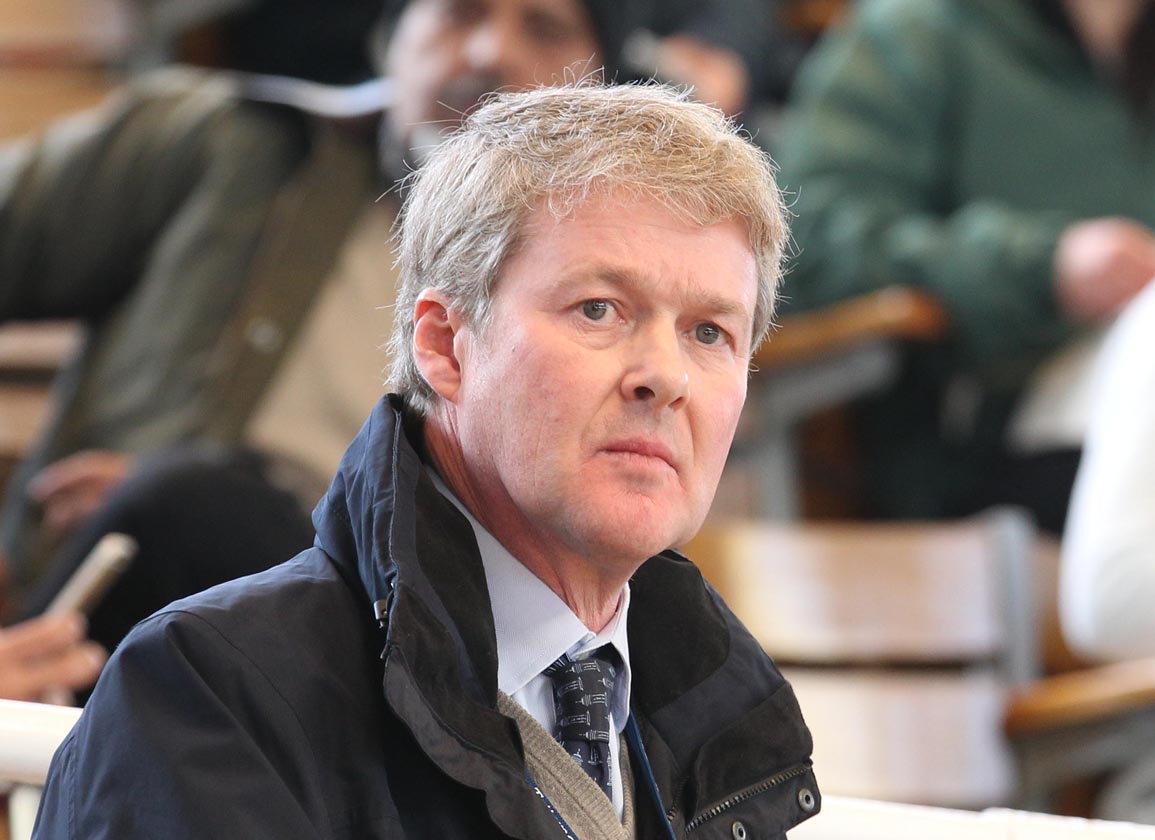
Jimmy George | Tattersalls

“Interestingly, these guys have very shrewdly focused on a market where they can find unbelievable value for the money they have been spending,” George said. “The average price paid at the sale is between 200,000 and 250,000 guineas and their success is coming in that area, anything from about the high one hundreds up to 350,000 guineas. They have focused on a particular section of the market. They've identified a sector that really works for them.” George also believes that, when it comes to European sales being able to offer quality horses, this is an unprecedented time. “Producing the best turf horses in the world, that's what we are good at,” he said. “Between Ireland, France and Britain, we have a depth of quality when it comes to stallions that is unmatched over the last 40-50 years. Galileo, Dubawi, Frankel, Sea the Stars, Kingman, Lope de Vega, Dark Angel, Siyouni. These are stallions that would be at the very top in any normal year and they've all come around at the same time. These are phenomenal stallions.”

Newspaperofrecord | Horsephotos

It didn't take long for others to follow Brown's lead. In 2019, Ben McElroy, representing Stonestreet Stables, paid 190,000 guineas for Campanelle (Ire) (Kodiac {GB}). Campanelle is based in the U.S. with Wesley Ward, but has done most of her running in Europe, where she has won the 2020 G1 Commonwealth Cup and the 2021 G1 Darley Prix Morny. That same year, Aunt Pearl (Ire) (Lope de Vega {Ire}) was bought at Tattersalls for 280,000 guineas, with BSW Euro Venture/Liz Crow listed as the agents. Trained by Brad Cox, Aunt Pearl went on to win the 2021 GI Breeders' Cup Juvenile Fillies Turf. Along with Newspaperofrecord, two of the last three running of the Juvenile Fillies Turf have been won by U.S. based horses purchased at Tattersalls.

The 2019 sale also saw Todd Pletcher's first foray into the market. He returned home from Tattersalls with two yearlings. George said it's too early to tell how many Americans will come over this year to buy, but he was optimistic that the list will continue to grow. He noted that there are 43 Kingman yearlings in Book 1, which should appeal to the Brown team, which has purchased nine Kingmans since first coming over. “In the wake of the success enjoyed by Seth Klarman, Peter Brant and Chad Brown, we've seen greater focus from U.S. buyers,” George said. “You had Ben McElroy buying Campanelle for Barbara Banke and Liz Crow and her team buying Aunt Pearl. That demonstrates that what these horses have accomplished has not gone unnoticed. It's not just deeds. It's words. Success breeds more success.”

The post Tattersalls Graduates on a Tear at Saratoga appeared first on TDN | Thoroughbred Daily News | Horse Racing News, Results and Video | Thoroughbred Breeding and Auctions.
Source of original post

Verified by MonsterInsights
