Abijah’s on the Backside Changing Lives at Canterbury Park

While racing seems to be scrambling for any piece of positive public perception it comes across, Sally Jane Mixon has a vision. She wants to save the lives of people across the country, and she wants to do it by bringing them to the backsides of racetracks to work with retired racehorses.

“Mental health is a huge crisis right now everywhere you go,” Mixon said. “The hope is to bring people who maybe have a bad taste in their mouth for racing and they'll come and work with off-track Thoroughbreds and their lives will be changed–at a racetrack, with horses that have raced.”

This summer, Mixon's vision came to life with the launch of Abijah's on the Backside– a therapy and wellness center nestled on a quiet piece of the backside at Canterbury Park. There, a pair of retired racehorses reside and engage with people struggling with anything from PTSD and anxiety to depression and suicidal ideation through Equine-Assisted Psychotherapy. Through this form of therapy, individuals have the opportunity to step into an experience and 'see' their behaviors and how those behaviors impact themselves and others around them.

Abijah's on the Backside began holding sessions in June. Initially, it was reserved for members of Canterbury's backside community, but it has just recently opened to the broader public in Shakopee, Minnesota. Mixon, who works alongside Abijah's Vice President of Development Dani Palmer, said their long-term goal is to open Abijah's on the Backside locations at tracks across the country.

“There could be hundreds of people a week eventually coming in for sessions at a racetrack,” she said. “It's a really unique way for racetracks to gain amazing public awareness in a positive light and for people to see that horses nobody knows that name of that can't race anymore are just as valuable as a Triple Crown winner because they're now saving lives.”

Mixon's vision for this unfolding project has developed slowly over her lifetime.
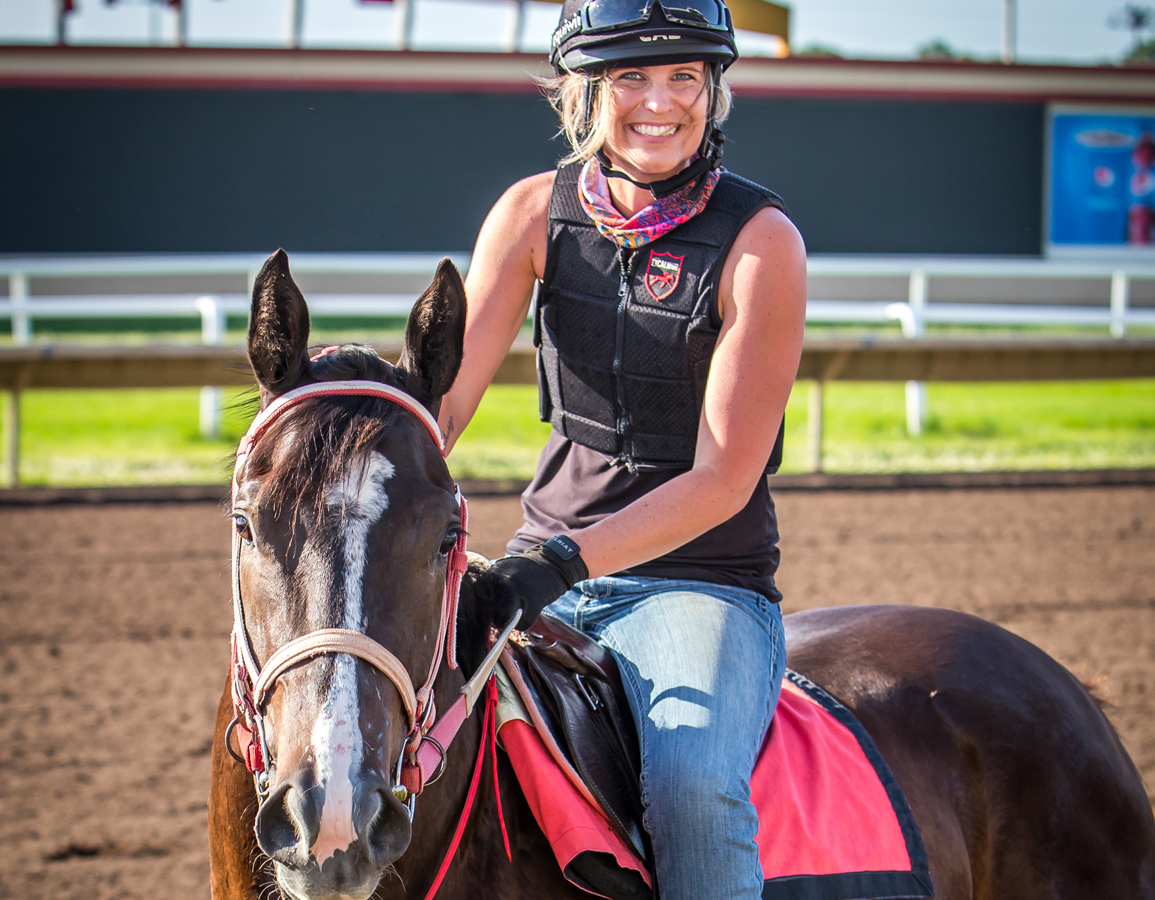
Sally Jane Mixon | photo courtesy Abijah's on the Backside

She remembers first taking an interest in racing as a child watching Winning Colors win the Kentucky Derby in 1988. While in high school, Mixon started struggling with an eating disorder. By the time she was in college, it got to the point where she was forced to drop out and go to an in-patient program.

“That's where God really got a hold on my heart,” she said. “Horses have always pulled me out of stuff and reminded me of my faith. That's where the name Abijah's Hope came from. Abijah was the first horse I ever owned and it's Hebrew for 'The Lord is my Father.'”

By working through her own struggles, Mixon developed a passion for helping others going through similar challenges. She eventually earned her Masters in Professional Counseling and started working with incarcerated youth.

When she and her husband moved to Atoka, Oklahoma, she met Jeff Lukas, the son of Hall of Fame trainer D. Wayne Lukas. Mixon and Lukas bonded as he regaled her with stories of her childhood heroine Winning Colors, as well as the many other Lukas stable stars.

“Jeff became a really close friend of mine,” Mixon recalled. “We would spend time in his living room talking about how horses were so important to him and his life. Through that and through having my own experience with mental health and knowing how horses, especially Thoroughbreds, can work their magic, I started the vision for Abijah's Hope.”

Mixon later moved to Minnesota and got connected with Acres for Life, an organization in the state that has provided equine-assisted psychotherapy for over 20 years. She eventually took on the role of their Chief Development Officer, but knew if she wanted her vision for Abijah's on the Backside to come to fulfillment, she would need to get connected at Canterbury Park.

“I asked [former jockey] Mark Irving if he could let me in on the backside because I wanted to tell people about my vision for Abijah's. I started walking around telling people about it and was told I needed to meet [trainer] Bernell Rhone and his right-hand guy Martin Escobar. They asked me if I could ride, so I started ponying and they taught me how to gallop.”

Mixon has been an exercise rider at Canterbury for three years now, planting seeds throughout Canterbury's racetrack community on the launch of Abijah's on the Backside along the way.

Her next step was to get funding. She met Joe Scurto, Executive Director of the Minnesota Racehorse Engagement Project, and told him about her vision. To Scurto, the program sounded like a win-win for them both.

“I'm constantly looking for opportunities to find second careers for racehorses,” Scurto said. “It's easy to find homes for that 3-year-old coming right off the track, but it's harder for the 10-year-old that maybe has a bad ankle. I started talking with Sally and it was a perfect opportunity to ask her if we could use Thoroughbreds exclusively for her program.”

Mixon and Scurto shared their idea with Canterbury Park, the Minnesota Racing Commission and the Minnesota HBPA.

“Everybody came together and stepped up,” Scurto shared. “It was really collaborative. It's hard to get people to sign checks, but everyone thought this would be terrific for the stable workers.”

Mixon said they had always planned to keep the program initially exclusive for the track's backside workers.

“There's not a whole lot of support for them,” she said. “With having a program like this literally at the backside of the racetrack, it's home for them. It's an awesome sport, but there's a lot of pressure. You think about an exercise rider that has a tough fall. It's traumatizing, but you have to get back on to get paid. So there's anxiety, there's PTSD, there's all these things that we can help and support them with so they can be a better exercise rider, a better groom, a better jockey. Whatever it is, they can be more successful which helps the entire industry become healthier.”
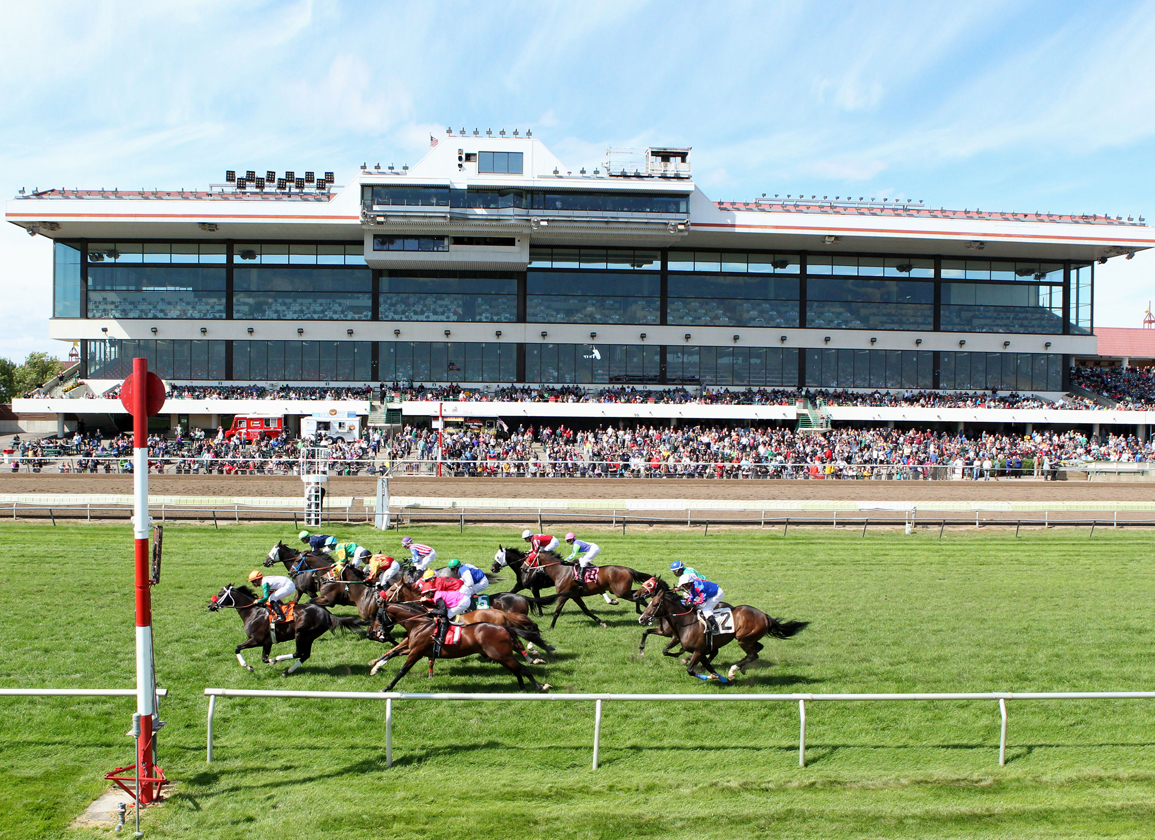
A busy day on the front side of Canterbury Park | Coady

Mixon has been asked the obvious question hundreds of times. For people who work with horses every day, how is this equine-centric program going to help their mental health?

She got her answer from a backside worker who opened up to her team after his first session this summer.

“He told us, 'This has been my work for 21 years. Now these horses that have supported me monetarily and helped me give back to my family are going to be a part of my healing.' In that moment with this individual, it was a different perspective because horses have shown up for these people their entire lives but in a different way. Now they're going to be part of their healing as well.”

During each session, clients will undergo an assessment before stepping into the paddock to work with the horses alongside an equine specialist and mental health professional. All activities take place on the ground and no prior experience with horses is required.

“We believe that in the model we use, stories matter,” Mixon explained. “We start getting to know their story and the characters in their story and then the horses become that. It might be addiction. There might be a horse that continues to move into the client. They're big, they can't push them away and finally there's this click and they realize, 'this is my addiction.'”

One of the most fascinating aspects of this type of therapy, according to Mixon, is that the horses respond differently for different people.

“They're picking up things inside the person and it's like they play it out in front of us. I've had someone struggling with major depression and suicidal ideation. When they step into the space, all the horses lay down and the person actually sees their story unfold outside of themselves. So now their depression isn't in them and we can talk about what's out in front of us. It's so powerful.”

Canterbury's Abijah's on the Backside is located on a quiet portion of the backside behind the chapel. Sessions begin every morning after training has concluded.

“Canterbury has been amazing,” Mixon shared. “They've made sure it's private, it's HIPAA compliant and it's not like a shaming thing to go back there, it's a positive thing. They've been amazing in marketing it and spreading the word across the backside.”

The first horse to join Abijah's program, a mare named Dangerous Wave (Graydar), raced exclusively at Canterbury Park in her seven career starts.  As a juvenile in 2018, she won the Northern Lights Debutante S. and retired the following year. Mixon worked with the Bernell Rhone trainee during her time on the racetrack and knew she would be perfect for the program.

“She's sassy and she tells you what she wants when she wants it,” Mixon said with a laugh. “Some people who knew her as a racehorse have asked, 'Really? She's going to do therapy sessions?' But she's been phenomenal. She was one of the toughest horses to gallop but you get her in these sessions and she's a puppy.”

An important aspect of getting Abijah's on the Backside up on its feet has been Mixon's connection with the backside community through working alongside potential clients every morning.

“I'm not their therapist; I'm their friend,” she explained. “I ride with them in the morning so I can be that bridge and help them get connected with my team.”

Another important key, Scurto added, has been the support of Canterbury's racing stewards, who have directed workers facing potential license removal or fines to Abijah's.
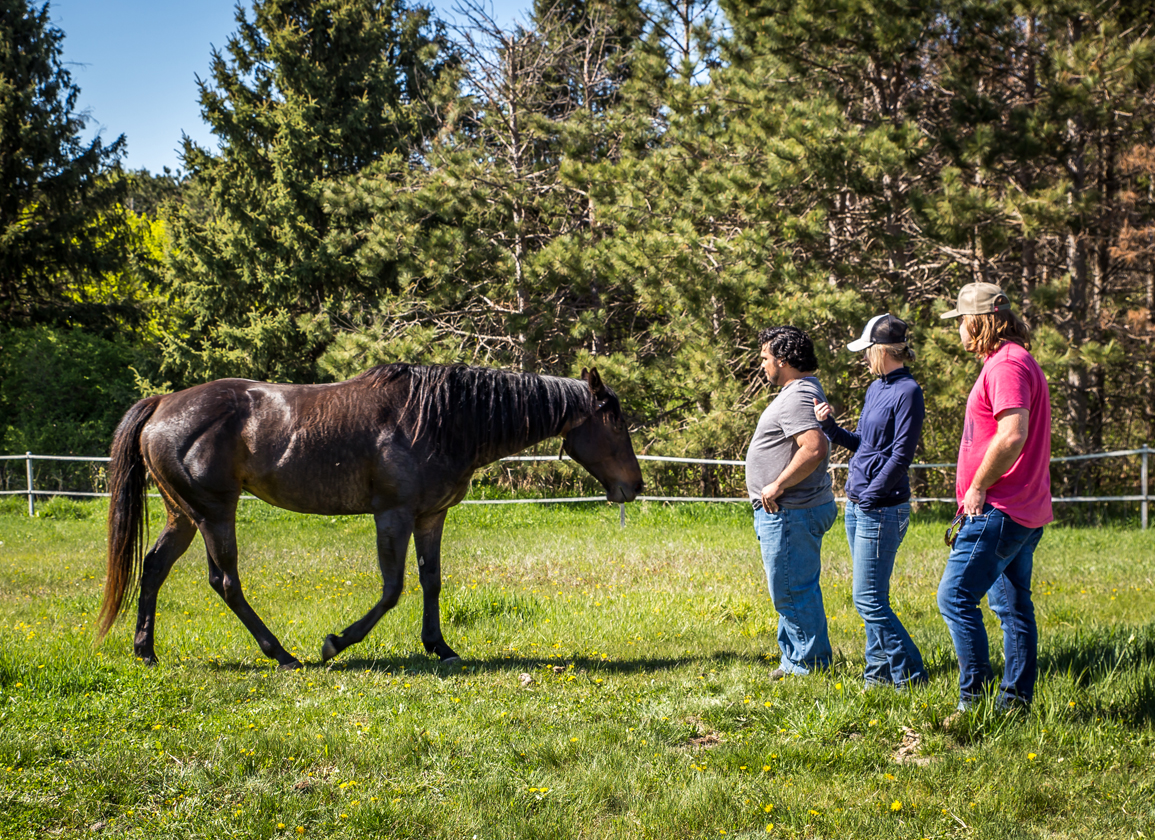
Mixon's goal is to have Abijah's on the Backside locations at racetracks across the country | photo courtesy Abijah's on the Backside

“I was always aware of the substance abuse issues that exist in the stable areas and our stewards here have been very helpful because they would rather send individuals to be evaluated rather than just taking away their license to work,” Scurto said. ” To me, that helps keep people in our stable area which we so desperately need and it provides support.”

While Canterbury has conducted substance abuse support programs annually, Abijah's on the Backside is unique in that it will provide year-round opportunity for workers to receive help even when live racing is not running at Canterbury.

While the program is only a few months underway, Scurto has already heard glowing reviews as word spreads around Canterbury and the city of Shakopee.

“I was concerned that people might not step forward because of the taboo of getting help,” Scurto admitted. “But what I'm hearing is that people are really stepping up. There's no doubt a need, but it's going to be a culture change in the stable areas. Having it right here and accessible is going to be a big step up.”

Now that Canterbury's race meet has concluded, many of the workers who have been undergoing sessions throughout the summer are following the horses on to the next track. Mixon's goal is that in the future, wherever they go next will also have an Abijah's on the Backside where they can continue their sessions.

“The hope is that there will be Abijah's on the Backsides at different tracks across the country,” she said. “So if someone starts sessions and then they're heading to Tampa, for example, I can call up my team there and they can pick up their treatment so that everywhere they go they feel like they have a home, a place to land, at Abijah's.”

Eventually, the plan is for each location to open to the public to help people overcome personal challenges while simultaneously undergoing a life-changing experience through working with Thoroughbreds at a racetrack.

“When racing has done well, it's the best thing in the world,” Mixon said. “Everyone has a shot, and that's a rare opportunity. A lot of the people I've worked with feel like underdogs–like veterans or backside workers. There's this parallel between these people and retiring Thoroughbreds that we don't know what to do with.”

“With this model, these off-track Thoroughbreds become characters in people's story. I've been doing hundreds of sessions and have watched miracles happen. If off-track Thoroughbreds can do this work, why not bring it to the racetracks where they have the barns and they have the set up? How could you hate racing if you can look at what these tracks will be doing?”

Interested in supporting Abijah's on the Backside? Click here.

The post Abijah’s on the Backside Changing Lives at Canterbury Park appeared first on TDN | Thoroughbred Daily News | Horse Racing News, Results and Video | Thoroughbred Breeding and Auctions.

Source of original post

Glut of Early Speed in The Classic? Not So Fast

The Week in Review

We're inside the five-week mark to the Breeders' Cup, and the top five contenders for the GI Classic all won their final graded stakes prep starts over the last two weekends.

This past Saturday, three of those horses wired 1 1/8-miles graded stakes and earned roughly equal Beyer Speed Figures of 107, 107 and 104.

At first blush, those performances look similar on paper, and it's tempting to make the leap to say the Classic will be glutted with early gunners who could hook each other into a sacrificial, multi-horse speed duel.

But closer scrutiny suggests that not all of those Classic aspirants truly need the lead to succeed.

Parsing the front-running wins by Medina Spirit (Protonico), Art Collector (Bernardini) and Knicks Go (Paynter) reveals that each is dangerous for different reasons heading into the Classic.

So which of those three produced the most authoritative wire job on Saturday?

The narrow advantage goes to Medina Spirit in the GI Awesome Again S. at Santa Anita Park.

Pace elements of his performance stand out from the other two. Medina Spirit ran the fastest opening quarter mile of those three nine-furlong stakes (:23.34), yet also uncorked the quickest final furlong (:12.62).

In between, however, jockey John Velazquez expertly gave Medina Spirit a breather in the fourth quarter-mile segment. That soft internal fraction of :25.29 was a full 1.33 seconds slower than the :23.96 fourth quarter cranked out by the under-pressure Art Collector in the GI Woodward S. at Belmont Park and 1.03 seconds slower than the :24.26 clocking produced by home-free Knicks Go in the GIII Lukas Classic S. at Churchill Downs.

Back in February, when the overachieving (based on auction prices of $1,000 at OBSWIN and $35,000 at OBSOPN) Medina Spirit was still only about fourth-best on trainer Bob Baffert's GI Kentucky Derby depth chart, Baffert expressed a belief that this colt was more effective pressing the pace rather than setting it.

That theory got abandoned after Medina Spirit seized the lead when no one else was keen to take up the early running in the Derby. His withstood several mid-race attacks then held off a cavalry charge of legit closers in the stretch to win over 10 furlongs.

Although Medina Spirit looked like a spent horse when running a no-impact third on the lead in the GI Preakness S., he rebounded capably to wire the Aug. 29 Shared Belief S. at Del Mar, then upped the ante with a career-best 107 Beyer in the Awesome Again S. while facing older horses for the first time.

Heading into the Classic, Medina Spirit has now won at 1 1/4 miles, over the Breeders' Cup surface (Del Mar), and against his elders. In sports wagering, there is a maxim about not betting against overachievers who keep winning “must” or “elimination” games. Plucky, hard-trying Medina Spirit is the pari-mutuel equivalent.

One irony that is unlikely to play out in the Classic is a rematch with 'TDN Rising Star' Life Is Good, the Into Mischief colt who is the only rival to have beaten Medina Spirit twice this year. That former Baffert trainee was the early Derby favorite until he got sidelined in March by ankle chip surgery. Now trained by Todd Pletcher, Life Is Good is instead aiming for the GI Dirt Mile, chiefly because he's never raced beyond 1 1/16 miles.


Work of 'Art'

Art Collector wasn't a major presence in the Classic picture prior to his 107-Beyer score on Saturday. Yet he's now riding a three-race win streak since being turned over to trainer Bill Mott. One of those wins was in an ungraded stakes at Saratoga and another was in the GII Charles Town Classic. He wasn't even favored for his gate-to-wire Woodward S. win.

But the professionalism Art Collector displayed under sustained pressure marks him as a sneaky-good Breeders' Cup contender who is just now rounding back into the form he displayed last year before a minor foot injury caused him to miss the pandemic-delayed Derby in September.

For the first time since 2005, the Woodward was run at Belmont instead of Saratoga, which meant that it was once again contested around a one-turn configuration. Art Collector never had to swat back multiple attacks on Saturday. But that's largely because he continuously held the all-out competition at bay with a workmanlike, grind-it-out win on the front end.

Art Collector's Woodward rates a distinct edge in terms of field quality among Saturday's preps for the Classic. While Medina Spirit's next closest competitor was a 54-1 shot and Knicks Go was 1-10 in the betting against five softies who are unlikely for the Breeders' Cup, Art Collector was pulsing away from the likes of odds-on Maxfield (Street Sense) and several other graded stakes stalwarts.

The Woodward win was the fifth in Mott's career, the most ever for a trainer in that stakes. The victory also gave Art Collector the unique distinction of having won three straight nine-furlong stakes under three different track configurations: two turns (Saratoga), three turns (Charles Town), and one turn (Belmont).

Art Collector has crossed the finish wire first nine times (one DQ), and in seven of them he has either led or pressed in second for most of the trip. But his GII Blue Grass S. win from last July provides a prime example of how this colt is fully capable of executing stalking tactics: He applied pressure from third behind dueling leaders, then ratcheted up the tempo to wrest control through a length-of-stretch slugfest.

Despite all of these pluses, Mott will be hunting for a new jockey for the Breeders' Cup, because winning rider Luis Saez is committed to ride likely Classic favorite Essential Quality (Tapit).

In an August 2020 pre-Derby analysis I wrote that “Art Collector looms like a quietly intimidating bruiser, speaking softly while carrying a big kick.”

Some 13 months later, I'll stick with that assessment heading into the Classic.


Fast, but Can He Last?

Knicks Go (104 Beyer) had the easiest tour around the track on Saturday among the three Classic contenders. He utterly toyed with overmatched competition, allowing them to creep closer before edging away at several points in a largely even-paced race.

His final eighth (while wrapped up and cruising home solo through the stretch) was a respectable :12.69, only .07 seconds slower than the last-furlong clocking turned in by Medina Spirit.

And Knick's Go's final time of 1:47.85 was only .57 seconds off Victory Gallop's 22-year-old track record.

Beyond those numbers, Knicks Go carries himself with a confident swagger that doesn't immediately register when watching Medina Spirit or Art Collector.

But of those three, it is also evident that Knicks Go is the horse whose success is most closely tied to attaining the top spot at the head of affairs.

Knicks Go has nine lifetime wins. Eight of them sport “all ones” running lines indicating he was on the lead at every point of call. The only (very minor) deviation from that pattern was in Knicks Go's career debut, when he was second at the start, then rushed up to grab the lead.

It was one year ago—Oct. 4, 2020, to be precise—that Knicks Go wired an $80,000 optional claimer/3x allowance at Keeneland by 10 1/4 lengths while making just his second start for trainer Brad Cox. It was then on to the Dirt Mile, which seemed a touch ambitious considering the Breeders' Cup would only be the gray's third start off an extended layoff.

Knicks Go won the Dirt Mile with unexpected aplomb and then the GI Pegasus World Cup by open lengths (both 108 Beyers) before faltering in a pair of one-turn 1 1/8 mile races, the $20-million Saudi Cup and the GI Metropolitan H. This summer he regrouped with easy two-turn scores in the GIII Cornhusker H. at Prairie Meadows and GI Whitney S. at Saratoga.

But Knicks Go's Beyer numbers have tailed off (113, 111, 104 last three races) even as his winning ways have resumed. That's not an enviable pattern for a horse who is locked into a set style of running and has never before attempted 10 furlongs, the distance of the Classic.

The post Glut of Early Speed in The Classic? Not So Fast appeared first on TDN | Thoroughbred Daily News | Horse Racing News, Results and Video | Thoroughbred Breeding and Auctions.

Source of original post

TIEA Award To Honor Richardson

In conjunction with the sixth annual Thoroughbred Industry Employee Awards presented by Godolphin, this year's Community Award has been renamed the Dr. J. David “Doc” Richardson Community Award presented by Churchill Downs.

The announcement was made following the sixth race Saturday at Churchill Downs as the track hosted a Celebration of Life for Richardson, the distinguished Louisville surgeon who was an owner, breeder and widely respected leader in the horse racing industry. He died Sept. 7 in Saratoga Springs, NY, from complications due to a breakthrough COVID infection at the age of 76.

The Thoroughbred Industry Employee Awards, which will take place Oct. 15 at 11 a.m. in the Keeneland Entertainment Center, recognize and reward the outstanding talent, diligence and commitment of the farm and racing stable staff who are at the heart of the sport.

Dr. Richardson chaired the Community Award committee and helped select this year's winner and runner-up by the first panel which met in August: Nicholas Caras of the New York Racetrack Chaplaincy and Diana Pinones of the Maryland Thoroughbred Horsemen's Association, respectively. The winner will receive $7,500 and $2,500 to their charity of choice. The runner-up will be awarded with $2,500.

Ideal candidates for the Dr. J. David “Doc” Richardson Community Award should work either for or with a charitable organization, or as part of the charitable arm of the Thoroughbred business for which they work. Nominees for this award do not need to be directly employed in the Thoroughbred industry.

Qualities for nominees include


  • Commitment, dedication and enthusiasm


  • Propensity to work hard


  • Evidence of a desire to improve and progress skills and knowledge


  • Team spirit approach in the workplace


  • Willingness to learn with examples of involvement in industry events and activities


Eligible candidates include, but are not limited to, those employed in Thoroughbred aftercare; backstretch programs; education related initiatives; racetrack or farm chaplaincy; etc.

The post TIEA Award To Honor Richardson appeared first on TDN | Thoroughbred Daily News | Horse Racing News, Results and Video | Thoroughbred Breeding and Auctions.

Source of original post

Breeders’ Cup Hopefuls Breeze in Kentucky

A quartet of horses headed towards engagements at the Breeders' Cup World Championships at Del Mar Nov. 6 were out for serious workouts Saturday morning at both major Kentucky venues.

Champion Essential Quality (Tapit) worked five furlongs in the company of Ellis Park allowance winner Colonel Bowman (Curlin) just after the track opened for business shortly after 5:30 Saturday morning. The duo broke off at the half-mile pole, crossing the wire in :46.80 before completing the move around the clubhouse turn in :59.20. Essential Quality outgamed Midnight Bourbon (Tiznow) to take out the GI Runhappy Travers S. in his most recent start and is being trained up to the Classic, for which he figures no worse than the second choice.

“Essential is the type of horse that just keeps finding more in every race,” trainer Brad Cox said. “I thought his race in the Travers was a tremendous effort to run down [Midnight Bourbon]. He's a really nice horse in his own right.

He continued, “The distance in the Classic is not going to be an issue for him. He'll be fit and ready. There wasn't a race in between the Travers and the Classic that made a lot of sense for him to run in. We gave him two easy half-mile works prior to [Saturday] and we'll keep tightening the screws each week.”

The Cox-conditioned Shedaresthedevil (Daredevil) turned in an easy half-mile in :50.40 Saturday morning, her first move since winning the GIII Locust Grove S. Sept. 17.

Bell's The One (Majesticperfection), a latest second to Sconsin (Include) in the Sept. 17 Open Mind S., also returned to the tab Saturday morning for trainer Neil Pessin. The 5-year-old, who will look to improve on her third-place effort to Gamine (Into Mischief) in last year's GI Breeders' Cup Filly and Mare Sprint, went in the company of recent allowance runner-up Audrey's Time (Uncle Mo) and covered a half-mile in :48 (14/131), breaking off five lengths behind her stablemate before joining her on the wire.

Across Interstate 64 at Keeneland Saturday morning, pro-tem divisional leader Letruska (Super Saver) tuned up for the Oct. 10 GI Juddmonte Spinster S. by working five-eighths of a mile in :59 over a fast main track. She was clocked in splits of :22.60, :35.40 and :46.80 before energetically galloping out six furlongs in 1:11.

Golden Pal (Uncle Mo), winner of the 2020 GII Breeders' Cup Juvenile Turf, worked five furlongs in 1:01 over the firm turf course in preparation for next Saturday's GII Woodford S. His workmate was the fleet 2-year-old filly Averly Jane (Midshipman), who is ticketed for the Oct. 10 Listed Indian Summer S. en route to a possible appearance in the Juvenile Turf Sprint.

The post Breeders’ Cup Hopefuls Breeze in Kentucky appeared first on TDN | Thoroughbred Daily News | Horse Racing News, Results and Video | Thoroughbred Breeding and Auctions.

Source of original post

Verified by MonsterInsights