Values Sires for 2022, Part 3: First Yearlings

With the global economy tottering in the Covid headwind, last year a lot of stallion farms went out of their way to help breeders with fee cuts. As a result, as I've previously suggested, the market's remarkable rally since means that the present trading environment represents a pretty historic opportunity. And that particularly applies to the next group in our series, as the first to have absorbed those cuts. (Even last year, it felt as though the rookies had been priced with the usual and necessary opportunism.) Especially because one or two of these, from that lowered base, have now received an extra trim of the kind customarily offered, in plainer times, for stallions beginning to lose the priceless commercial advantage of novelty.

His third book is always an early crossroads in a stallion's career. While the second might at least start to reflect the physical impression made by first foals, the third will be responding to some concrete evidence of their reception in the ring. If things have not gone well, in that initial test, then some breeders will tend to back off and wait until stock has been measured more rigorously on the racetrack.

Obviously there's no guarantee that the guy who tops the weanling averages will retain his primacy when finally reaching that stage, and vice versa. But it's no less clear that a depressing number of people will by then have disappeared over the horizon, the job done, meanwhile engaged on the next cycle of sires that remain spared the inconvenience of exposing their ability (or otherwise) actually to come up with runners.

As things stand, then, we must pick a precarious path between trying to harness the undeniable energies of the market-commercial esteem, after all, will hold up book sizes and so fill “the pipeline”–and keeping the faith with those that you think deserve a chance to reward it, once their stock finally gets somewhere near a starting gate. As such, each having come through his first market test in decent shape, we make no apologies for sticking by three stallions we've liked from the get-go.

With this particular intake, most roads have led to Spendthrift. In the first instance, that was simply because so many of its most coveted prospects were herded up there. Even with their reliably competitive pricing strategy, the late B. Wayne Hughes and his team launched the first, second and joint-third most expensive rookies in 2020. That felt like a pretty significant moment in the evolution of the aggressive commercial model that had revolutionised competition for mares in the Bluegrass.

But then, last year, you also had to factor in the characteristic lead taken by Hughes in cutting fees so purposefully. Rival farms will duly have to pardon Spendthrift's central role in the value conversation, at least for this instalment of our series, even though our top pick a) wasn't one of their headline recruits when starting out and b) was already priced too attractively to be one of the 15 of 21 stallions on the farm roster to take a cut last year.

As ever, however, these choices reflect just one person's highly subjective opinions. Different stallions fit different mares; different fees fit different pockets. But what I would say is that it's a good time to stick with any of this group that you do like, as you'll be taking the foals to market after they have actually started to show their wares on the track. That introduces a degree of volatility, and tends to drive nervous breeders elsewhere. But the odds for those who do get it right will certainly be rewarding.

Bubbling under: The $360,000 Audible filly that topped the fifth session at Keeneland November was the most expensive weanling sold by those taking their bow at the sales, but the WinStar stallion's $110,000 median was also outstanding. He was a pathfinder for his sire in stretching out for a Derby podium and, as a classier type, also leads a fresh wave in Into Mischief's career as a sire of sires. He covered over 400 mares in his first two seasons and duly holds his fee at $22,500. He has all the momentum he needs, but he's just competing with another son of Into Mischief who simply can't be dislodged from the podium at a much cheaper service.

Mitole was one of those that took a really businesslike cut at Spendthrift last year, slashed to $15,000 from $25,000. Having followed up his staggering debut book of 230 with one of 208, there will be a lot of people out there gratified that his pedigree has meanwhile received such a lift from the stellar sophomore endeavors of half-brother Hot Rod Charlie (Oxbow). That might feel especially useful for a son of the exported Eskendereya, but don't forget that Mitole was his second GI Met Mile winner in three crops. His first weanlings having performed in line with his opening fee, fourth in the averages, this brilliant racehorse finds himself precisely where the program would hope to have placed him at this stage.
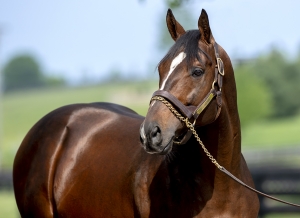
Bronze: PRESERVATIONIST (Arch-Flying Dixie by Dixieland Band) Airdrie, $10,000

This guy was always going to require a little patience, so it's no surprise that he couldn't repeat his opening three-figure book. But we can't just allow block-booking of the podium for stallions that churn through industrial numbers, in the idle hope that they will keep jumping through the market hoops until you discover, too late, that they don't sire runners!

A runner is exactly what you are entitled to expect from Preservationist, and I remain adamant that those who keep the faith will ultimately get their due reward. He offers everything we should be looking for in a young sire: a superb physical ($485,000 yearling, when Arch was a $30,000 cover); a pedigree without a single loose rivet, with sire and dam both tracing to King Ranch matriarchs; and elite performance, for instance in thrashing Catholic Boy (More Than Ready) by 4 1/2 lengths in the GII Suburban. (The runner-up went to market at more than twice the fee.)

A lack of precocity is perceived by some as the cardinal sin, but Preservationist's weanlings actually performed perfectly respectably (averaging just under $40,000) and he will run down those commercial hares in the end.

Silver: OMAHA BEACH (War Front-Charming by Seeking The Gold), Spendthrift, $30,000

The loss of Spendthrift's owner this summer has given the poignant look of a parting gift to the characteristically decisive lead he took on fees this time last year. Now the team continuing his work has given Omaha Beach another trim, from $35,000 to $30,000, even though he had appeared sportingly priced (notwithstanding his status as the most expensive of the intake) when starting out at $45,000.

This latest gesture to breeders is one that the horse hardly appeared to need. Last spring he precisely replicated his opening book, at 215 mares, and then did the necessary in his debut at the weanling sales, topping the averages at $142,692.

Bottom line, then, is that Omaha Beach has been given every possible chance to this point. And he really is abundantly equipped to seize it. Winning Grade Is at six and nine furlongs in the same campaign was as compelling a signpost as we could hope to find, nowadays, for the speed-carrying elixir we crave in stallions. As such, he must be counted a vital ambassador on the main track for a son of Danzig whose influence has proved so international.

It's not hard to figure out where he has found the genes to do that. He's a half-brother to champion Take Charge Brandi (Giant's Causeway) out of a half-sister to two other Grade I winners in Will Take Charge (Unbridled's Song) and Take Charge Indy (A.P. Indy), their dam Take Charge Lady (Dehere) herself a multiple elite scorer. He also doubles up War Front's damsire Rubiano behind his third dam. We know how Rubiano's half-sister gave us a monster dirt influence in Tapit, while the other three sires seeding the bottom half of Omaha Beach's third generation are Raise A Native, Buckpasser and Deputy Minister.

Omaha Beach looked pretty good value at his opening fee, as the market has immediately confirmed. He looked great value, last year, at $35,000. So what can we call him at $30,000? Even those who can afford to play at this level of the market appreciate that kind of saving. In relative terms, then, this is a very generous fee.

Gold: MAXIMUS MISCHIEF (Into Mischief-Reina Maria by Songandaprayer), Spendthrift, $7,500

We couldn't really offer a greater contrast to Preservationist than this blatant commercial formula. But from the outset Maximus Mischief had the look of a horse that could bring back memories for those clients of the farm who got his sire started, and everything has so far been functioning like clockwork. In this day and age, in fact, I find it mildly surprising that he could muster “only” 171 mares last spring after receiving 198 in his debut book.

His first weanlings sold every bit as briskly as one would hope, 26 of 31 finding a new home for an average $42,153–approaching six times his covering fee. With his record of precocity, Maximus Mischief looks tailormade for pinhookers and his yearlings will surely be high on the list for a winter in Florida. (Remember he was himself a $340,000 2-year-old at Timonium.)

Having disappeared after his first defeat, on his sophomore debut, Maximus Mischief went to market with a seamless juvenile record, beaten to a single call in three starts while opening up by an aggregate 17 lengths, the visuals underpinned by the fastest Beyer of the crop. We're familiar with Into Mischief upgrading his early mares, not least in producing some of his first sons to stud, so it counts for plenty that this guy's second dam also produced the tragic juvenile Grade I winner Secret Compass (Discreet Cat) from only three foals.

It's the easiest thing in the world to picture all this translating into a run at the 2023 freshman championship. If that happens, not only will this fee soon recede in the rear-view mirror: it will be those who stay aboard now who reap the benefits at ringside.

There really is a limit to how many horses like this, flaring brightly but briefly, we want to see shaping the breed. But if the purpose of this exercise is to identify value, then the modest stakes–and the potential odds of reward–are just too tempting to resist.

The post Values Sires for 2022, Part 3: First Yearlings appeared first on TDN | Thoroughbred Daily News | Horse Racing News, Results and Video | Thoroughbred Breeding and Auctions.


Source of original post

Kitten’s Joy Filly Catapults to Rising Stardom

Marc Detampel's New Year's Eve (Kitten's Joy) was overlooked at 11-1 in this career bow, but that won't happen in her next start after a good-looking graduation at Fair Grounds Friday. Squeezed out by her neighbors at the start, the chestnut raced near the back of the pack through opening splits of :24.41 and :50.24. Swung out to the center of the course in the stretch, New Year's Eve unleashed a furious late rally, sling-shotting past her competition to win going away by 1 1/2 lengths. Missoni (Flintshire {GB}) filled the place spot.

Awesome Rafaela also has a yearling colt named Will Take Cash (Will Take Charge). She visited Volatile earlier this year. The winner's second dam is Brazilian Group 1 winner Linda Rafaela (Brz) (Bin Ajwaad {Ire}), who also produced G1 Brazilian Oaks winner Viva Rafaela (Brz) (Know Heights {Ire}).

8th-Fair Grounds, $40,000, Msw, 12-10, 2yo, f, 1mT, 1:41.68, fm, 1 1/2 lengths.
NEW YEAR'S EVE, f, 2, by Kitten's Joy
1st Dam: Awesome Rafaela {Brz}, by Elusive Quality
2nd Dam: Linda Rafaela (Brz), by Bin Ajwaad (Ire)
3rd Dam: Poli Arumba, by Executioner
Sales history: $110,000 RNA Ylg '20 KEESEP; $105,000 Ylg '20 FTKOCT. Lifetime Record: 1-1-0-0, $24,000. Click for the Equibase.com chart, the free Equineline.com catalogue-style pedigree or VIDEO, sponsored by TVG.
O-Marc Detampel; B-Stud TNT LLC (KY); T-Brendan P. Walsh.

The post Kitten’s Joy Filly Catapults to Rising Stardom appeared first on TDN | Thoroughbred Daily News | Horse Racing News, Results and Video | Thoroughbred Breeding and Auctions.

Source of original post

This Side Up: Faults On All Sides Require Fairness All Round

Ever get the feeling that somebody up there doesn't like us very much? Of all of the horses, in all of the world… But really it doesn't make any difference, however you interpret the tragedy of Medina Spirit (Protonico). The net result, for our community, is the same–whether you think the whole melodrama unfolded, entirely and lucklessly, at random; or was somehow determined by our own culpable behaviors. Whoever is writing these scripts, we have been cast in the same role. We are being tested. And if we don't get our lines right, we shouldn't be surprised if they turn out the lights and board up the theater.

It's a test that demands courage. That's not the same as fearlessness. Without fear, in fact, there can be no courage. And we should certainly be scared. With so many enemies out there, ever louder and better resourced, this increasingly feels like an existential crisis. That makes hysteria hard to resist, whether it takes the form of confrontation or surrender. But the kind of bravery we require now is all about staying calm, thinking clearly and, ultimately, doing the right thing.

There are no easy answers. Instinctively, however, I feel that our twin imperatives are not to yield to mob rule, on the one hand; while also, for once, not just circling our wagons.

The challenges we face reflect two endemic vices of social media: conspiracy and conflation. Conspiracy theory is rabidly resistant to rational engagement: every sheep is perceived as a slavering wolf under a bloodily stolen fleece. The habit of conflating unrelated issues is not so wild-eyed, just lazy and credulous. Both, however, nourish shrillness and anger–the principal cultural and political currency of the internet age.

Conspiracy depicts our entire industry as engaged in satanic exploitation. But conflation, whether through a lack of patience or intelligence, can't be bothered with nuance; can't be bothered with the idea that all our various travails should be judged on their individual merits. Any walk of life, says conflation with a shrug, that can present us with so many ghastly stories, one after another, is just too disgusting to be allowed to continue. Unfortunately, the Medina Spirit disaster has rendered that view more vocal than ever, and right in the middle of Main Street.

So how does conscience respond? On one level, it would seem pretty straightforward. Just as no reasonable person, away from the venomous extremes, wants society to be governed by ignorance, prejudice and rancor, so we should be able to reject those poisons directed at a community we know, in the vast majority of cases, to be utterly devoted to the horse. It must be terribly hard for those who have groomed Medina Spirit so lovingly, to have their grief over that empty bridle compounded by the vituperation of some whose professed empathy for animals will never remotely measure up to the arduous and reverent services they render daily to Thoroughbreds.

The trouble is that perceptions, shared sufficiently widely, ultimately obtain the political force of reality. If the social media wildfire ends up with millions giving our industry moral equivalence with cockfighting or bear-baiting, then there would seem limited point in persuading a rational minority that they should not bundle together, say, the allegations against Navarro and Servis with the reality that a foal can shatter a limb while cavorting innocently in a paddock. Even if we can collectively achieve the kind of self-improvement so plainly necessary, we may never retrieve the “social licence” if enough people have already taken a position that would, logically, end up with a handful of horses preserved in safari parks.

Our opinion that horses will never make good housepets feels like an informed one. But let's say that we accept, and strive to meet, far more exacting terms for the conscionable use of horses for any kind of sport. In the meantime, do we have to go out and meet halfway people we consider to be wholly wrongheaded? Do we, as a matter of sheer pragmatism, abandon other precious precepts, simply to be allowed to continue doing business?

That may sound a woolly question. But isn't that pretty much where we find ourselves with Bob Baffert? Because if we expect a fair hearing, as an industry, then surely we have to remain scrupulous in applying the same standards ourselves. However vexing Baffert's serial provocations, we can't just say: “Look, we don't care whether you have just been fantastically unlucky, or culpably inattentive, or something far worse. You have now become so tiresome that you simply have to go away.”

If jurisdiction can be established and due process is observed then, sure, Baffert should expect to pay a proportionate price for individual and indeed cumulative infractions. But you can't respond to the harrowing denouement of the Medina Spirit saga by exchanging the principles of equity for lynch-mob standards of evidence.

In such a gale of hatred, it takes a degree of courage to keep weighing probabilities fairly, keep heeding the science. But exactly the same nerve and dispassion will also be required to tackle any whose idea of fairness is for people just to back off their buddy Bob, simply because he may have favored them with his stardust, his charm, above all his professional success.

As we know, some very powerful patrons already appear to have taken the view that Baffert is responsible for enough damage to the sport for them to feel obliged to take their business elsewhere. However innocent the circumstances in which Medina Spirit has been added to the list not only of Baffert violations, but now also to that of Baffert fatalities, maybe the kind of ratios that wouldn't in themselves support a regulatory prohibition are sufficient for the market to apply a less exacting standard of evidence.

Would that be a form of mob rule? Or wouldn't it actually represent an informed judgement? Not necessarily of an individual horseman, but of the extremely perilous situation in which all horsemen find themselves. For the courage we need most urgently, now, is in acknowledging that some of the generalized charges against our entire community are actually pretty fair. Because anyone still in denial about our sport's ongoing failures must accept a share of responsibility for those. And, to that extent, it's by no means unfair even for those who “know nothing” about what we do to conflate all the various headlines that have done us so much damage over the past two or three years. Why shouldn't outsiders make such angry inferences, when they see such willing complicity among those of us who “really understand” the business?

Far more egregious offenses than have ever been suspected of Baffert remain incorrigibly indulged. We see programs in plain sight that cannot be coherently explained, other than by flagrant cheating; and we don't necessarily mean only “juicy” improvement in certain blue-collar claims on certain blue-collar circuits.

Meanwhile we see non-racing states cynically harnessed to stand up for horsemen's constitutional right to bear syringes. And of course we see hundreds of mares bred to stallions with the flimsiest credentials, while others that might recycle soundness and constitution are neglected as somehow “uncommercial.”

Doubtless some of those who profit from dubious training programs will only discover a dormant capacity for moral indignation if the stallions graduating from any given barn start to be received with due scepticism by breeders. All that glisters, remember, may not be genetic gold. But that would be doing the right thing for the wrong reason. Cowardly, in other words. And now, as we said, is the time to show some moral courage. Time to be fair to everyone–including our critics.

The post This Side Up: Faults On All Sides Require Fairness All Round appeared first on TDN | Thoroughbred Daily News | Horse Racing News, Results and Video | Thoroughbred Breeding and Auctions.

Source of original post

Messier Takes Next Step at Los Al

'TDN Rising Star' Messier (Empire Maker) will look to take his talent around two turns as a prohibitive favorite in Saturday's GII Los Alamitos Futurity. A $470,000 FTKSEL buy by the powerful ownership conglomerate nicknamed The Avengers, the bay settled for second at 1-2 in his local unveiling July 27. He resurfaced at Santa Anita Oct. 22 after a minor foot issue, and blew away his competition by 6 1/2 lengths. The son of MSW router Checkered Past (Smart Strike) made similarly short work of Del Mar's GIII Bob Hope S. over seven panels Nov. 14, and trainer Bob Baffert now puts the blinkers back on that he took off for that start. The Avengers will also be represented by Barossa (Into Mischief), who graduated third out over a mile at Santa Anita Oct. 15 before wheeling back quickly to finish ninth behind stablemate Corniche (Quality Road) in the GI Breeders' Cup Juvenile Nov. 5. Baffert has won each of the seven runnings of this race since it was moved to Los Al and owns 13 victories in it overall.

Trainer Doug O'Neill has two chances at his first Futurity win. Durante (Distorted Humor) ran Barossa to a half-length two back, before earning his diploma Nov. 14. Slow Down Andy (Nyquist) was a sharp debut winner sprinting against fellow Cal-breds Oct. 9, and was a close second as the chalk in the Golden State Juvenile S. on Breeders' Cup weekend Nov. 5.

Longshot Olympic Legend (Street Boss) rounds out the field of five coming off a distant third in the restricted Capote S. here Sept. 18.

The post Messier Takes Next Step at Los Al appeared first on TDN | Thoroughbred Daily News | Horse Racing News, Results and Video | Thoroughbred Breeding and Auctions.

Source of original post

Verified by MonsterInsights