Indiana Grand Offers ‘Road to Louisville’ Contest

Indiana Grand Racing & Casino will be hosting a “Road to Louisville” contest beginning in early 2022 and offering up to $50,000 in prize money. The 18-week contest begins Jan. 8 and continues to the Kentucky Derby May 7. The winner of the contest will have the option to purchase a yearling package at the 2022 ITOBA Fall Sale valued at $30,000, courtesy of the Indiana Thoroughbred Owners and Breeders Association (ITOBA) along with Indiana Grand.

“Road to Louisville” is open to players both online and on-track at Indiana Grand and Clarksville OTB. Weekly and monthly prizes will be provided as points are cumulative throughout the event. The contest, which will include numerous races each week from select tracks, will be completed on Kentucky Derby Day to crown the overall winner of the $1,000 prize money and a chance to own a future Indiana racehorse.

“Our contests both online and on-track have become increasingly popular, and we wanted to do something to raise the stakes next season,” said Eric Halstrom, Vice President and General Manager of Racing. “After talking with ITOBA President Tom Mosley, we decided to partner with them on our current breeding and racing program, which is so lucrative right now. The idea was created to get one of our loyal racing fans involved with a hands-on ownership experience and enjoy a risk-free way to enjoy the thrill of Indiana Thoroughbred racing.”

If the winner opts in for the purchase of a yearling at the ITOBA Sale, they will receive up to $15,000 to purchase a yearling out of the sale, plus an additional $15,000 for care and training of the horse leading up to its racing debut in the summer of 2023. ITOBA is facilitating the details and assistance for the new owner and their new purchase.

“Road to Louisville” gets underway with the racing card from Gulfstream Park. Points are based on payouts for the selected horse in the contest races. Weekly prizes will be allotted to the top three players each week with the top handicapper receiving $150, second place receiving $100 and third place receiving $50. Prizes are doubled if the player is competing at either Indiana Grand or Clarksville OTB.

The post Indiana Grand Offers ‘Road to Louisville’ Contest appeared first on TDN | Thoroughbred Daily News | Horse Racing News, Results and Video | Thoroughbred Breeding and Auctions.

Source of original post

California Series: Art Sherman, Part II

In part one, Art Sherman discussed his foundational years as a horseman and trainer. Here, he talks California Chrome, managing injuries and the evolving nature of the industry.

The large, cobwebbed and straw-scattered stall brimmed floor to ceiling with a pirate's bounty of backstretch riches.

Towers of scrubbed feed buckets, a soldier's row of saddle horses stacked high with sheepskin pads and saddles worn thin at the knees, electric fans lacquered with thick dust, patched-up horse blankets chewed at the shoulders, girth sleeves tossed over doors, bridles and martingales and nosebands enough to equip a cavalry, a thick wedge of stall doors like old metal skeletons, Dali-drooped webbings draped here and there, bundles of rope and re-used feed bags and bottles of vitamins.

All Art Sherman's. All for sale. A livelihood on offer to the highest bidder.

It's fitting, then, that the Los Alamitos display case for these items–two stalls knocked into one–was once home to the horse that did more than any other to enrich a training career that is now at an end after more than four decades at the plough.

“I remember when I went back for the Preakness, a lady that breeds horses there–a big breeder in the Maryland industry–she came up to me and said, 'Art, you don't know what you've done for this business. You made people want to stay in it. It's getting to where, all of a sudden, the little guy's getting pushed out. But you came up with a horse that is the people's horse,'” Sherman said, of his two-time Horse of the Year, California Chrome.

“I'm still getting letters. I got a stack of letters the other day thanking me for all the good times. I didn't realize that many people remembered that horse that much, and from all over the world. Unbelievable.”

In spinning the offspring of an $8,000 mare and a stallion with a $2,500 stud fee into a near $15-million money maker, Sherman performed one of the most remarkable–and quite frankly, satisfying–magic acts in racing.

He didn't achieve it through sleight of hand–the smoke and mirrors of a cosseted campaign engineered to produce maximum rewards from the minimum expenditures. “He just loved to train, loved to run, that horse,” Sherman said. Indeed, California Chrome's competitive resume was busier than any other Kentucky Derby winning colt since 1991.

“He just kept getting better and better and better,” Sherman said. “I didn't expect him to blossom like he did–not into a Kentucky Derby-like horse. Not to begin with. But when I started him as a 3-year-old and he kept winning this one, and another, winning them races. Then…”
Aggressively campaigned, certainly, but judiciously handled when it came to his training, keeping the lid on very much the order of the day. “He was a natural type of horse. I tell you, he'd go a minute and change or 1:01 like–he would do anything like that so easy.”

The virtues of Sherman's less-is-more approach to the mornings can be evinced by the way he tossed tradition aside, deciding not to breeze California Chrome after arriving at Churchill Downs in the lead-up to the race.

“Because I know that track is hard and cuppy, I didn't breeze him. And a lot of the other trainers, they said, 'Well, he didn't even work, so we're not afraid of him.' No, really! Hard-boots think you have to work in :59 to be in with a shout [in the Derby]. I had a lot of apologies after that.”

Apologies would have been forthcoming, too, subsequent to the Derby of 1955, after a wet-behind-the-ears Sherman arrived at Churchill Downs with the Californian trainee, Swaps, and a few unusual tricks up his sleeve as the horse's exercise rider.

“They went crazy when we brought Swaps back there because I got on him and figure-eighted him between the barns bareback,” said Sherman, chuckling at the memory. “We'd do that all the time. I'd jump on them and figure-eight them bareback for about 15 minutes the day after working.”

Later that same year, of course, Swaps and Nashua–the horse Swaps held comfortably at bay in the Derby–met in a fabled match-race at Washington Park, a race Sherman maintains his horse should never have competed in.

“He had a hole in his frog. He had a hole in his frog like that,” Sherman said, making a gob-stopper sized circle with his thumb and fore-finger.

“They cleaned out the frog, put iodine on it, put a leather patch on it which made him go sound. But the pressure of that bad track, you know what I mean, the horse I could tell he wasn't happy on it. He was trying to get out a little bit going into his first turn. And in a match race you have to–look, speed horses always win in a match race.”

That Swaps still performed so credibly, said Sherman, was a testament to how much of a “freak” he was. “He was something else. He was a monster.”

Which leads the conversation to the current regulatory environment in California, where heightened veterinary scrutiny is bound and tied with this Gordian knot of a question: When should an issue be ignored and when should it be addressed?

On the one hand, taken as a whole, California's efforts “are better for the horses,” said Sherman. But then, the sometimes binary nature of the official veterinarian's role–either a horse is allowed to run or it's not, for instance–can mean important context that should underpin diagnostic decision-making gets lost.

“Horses can be arthritic. They're crabby. They're old. Don't just scratch him because you took him out the stall and jogged him for 20 feet and say, 'Oh, well, he looks off to me,'” Sherman said, with the frustration of someone who has spent a lifetime watching equine athletes deal with their requisite aches and pains as imaginatively as their human counterparts.

“When you ask them to run for all they've got, you're going to have horses that are going to have problems. All horses are different,” he said, turning memories from his jockey days. “I've never had a crippled horse fall with me. It's the sound ones I always got hurt on, and that's no lie. Sound ones, they don't protect themselves.”

And so, the question evolves into even more of an intangible: How do you manage horses with different pain thresholds?

“I was riding a horse once–brave horse. Bad knees. He had a knee that you could put your foot on, looked like a step stool,” he said. “After he raced, he laid down for three days. Couldn't get up. They would never let you run these horses now.”
Should a horse like that be allowed to run these days?

“Oh Christ, no,” Sherman replied. Still, Sherman wonders how some of his heavy-hitters would fare if running today.

“He always had quarter cracks. He drove me crazy. Had them all the time, all four feet,” Sherman said of Lykatill Hil, his 13-time stakes winner who ran with aplomb for eight consecutive seasons.

“I never ran a horse with four bar shoes–you never hear that. That's the kind of horse he was. He was just that tough. He ran through anything. When you sent him down there and raced him, you got tied on because he was going to run,” he said.

All too often in horses, however, the spirit may be willing, but the frame is often wanting.

“He was so big and massive, when he hit the ground the vibration from the compaction of the dirt, [his hoof] started splitting into little layers.”
By keeping Lykatill Hil's feet on the softer side of hard, Sherman, once more, abjured tradition.

“We would pack him full of mud, keep him like that all day. Tried to keep his foot soft and not brittle, like he could get. His feet just dried out so bad. It was a challenge.”

“I kept him running for a long time,” Sherman added, proudly.

Talk of the longevity–or not–of the average racing career among modern Thoroughbreds leads to an axe that Sherman is keen to put to the round stone.

“We don't have the older horses like we used to–they were the drawing cards,” said Sherman, who knows a thing or two about the magnetic attraction of the horse.

“You can't stop and breed them horses the minute they make X amount of dollars. You've got to keep them around so we can have stars to play with, you know what I mean? You take the football players and the quarterbacks–they're draws. People come to see these people.”

Another “pet peeve”? The rise in recent decades of the numerical super trainer, which he sees as having bought to the role something of a clinical distance.

In explanation, Sherman tells the story of a friend who had a horse with an unnamed trainer on the East Coast.

“The guy went to [Belmont Park] to see his horse and he said, 'Oh, I thought my horse was here.' The trainer said, “Oh no, we shipped him to Jersey. I'll let you know how he's doing.' So, [the trainer] got on the computer. 'Oh yeah, he just galloped and he's doing really well.'”

“My friend, he shook his head when he was talking to me and he says, 'Boy, that hands-on training is no more, is it?' I said, 'No.'”
Sherman took a moment, glanced through the screen over his office door at a shedrow with more empty stalls than horses.

“I love it when I can just go and see my horses, go through and feed them some cookies and look at them and ask the groom, 'How's the temperature? How'd they eat up last night?' This is something that you see less of these days because you can't when you've got 200-300 to command. You can't do that.

“Our era is the Last of the Mohicans almost, you know what I mean? I'm getting to the point where all my friends are gone now. All the trainers I knew and was raised with and everything, that era is gone. So, I'm kind of the last of the old timers,” he said, not with a sense of nostalgia but with a hard pragmatism.

“It's a fun game. I'm going to miss it. I'm going to miss the horses.”

The post California Series: Art Sherman, Part II appeared first on TDN | Thoroughbred Daily News | Horse Racing News, Results and Video | Thoroughbred Breeding and Auctions.

Source of original post
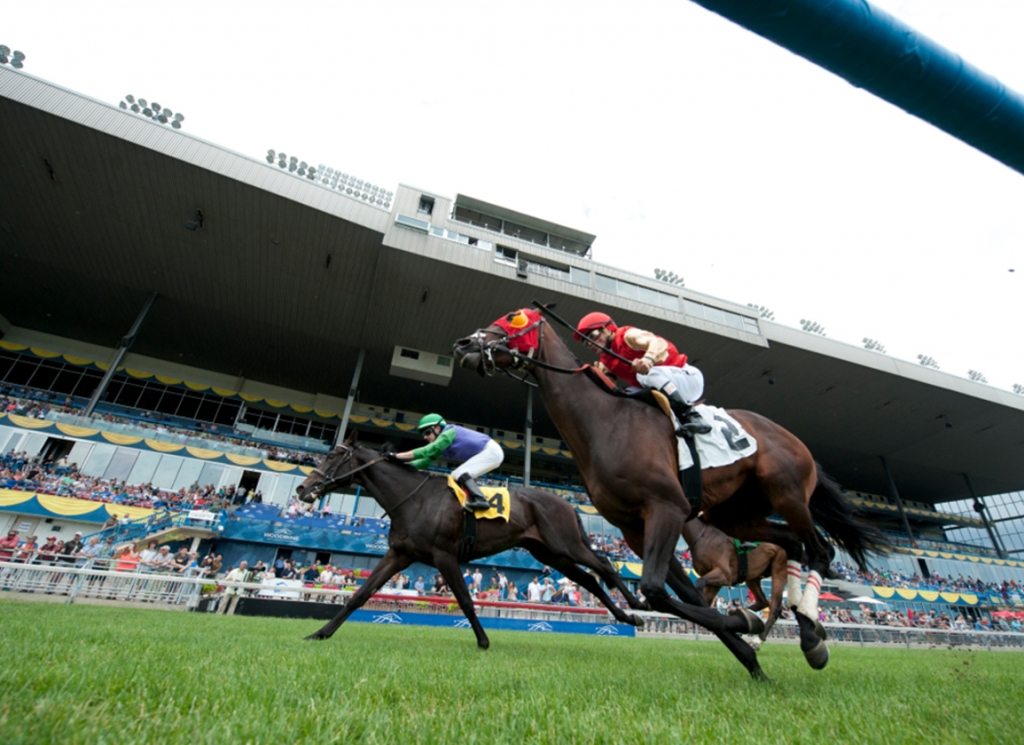
Racing in Canada Remains Resolute Amid COVID Turbulence

by Nigel Reid

The memory of what COVID-19 restrictions did to Canada's racing industry during the past 18 months, allied to the looming spectre of the troubling new variant, has done little to dispel the general uncertainty surrounding the sport north of the 49th parallel.

However, if the results of what was a truncated season are to be believed, there is cause for optimism over the manner in which the sport, especially at the country's flagship Woodbine facility in Toronto, bounced back in 2021.

Indeed, rumours of Canadian racing's demise appear to have been largely exaggerated. Most provinces, and especially Ontario/Woodbine, demonstrated impressive tenacity to not only survive the COVID-19 onslaught but also begin to 'build back better'.

Woodbine did an extraordinary job under the guidance of Woodbine Entertainment Group (WEG) CEO Jim Lawson–initially turning the world-class Toronto facility into something of a poster boy for how sports could continue to operate under COVID-19 protocols, and then doggedly lobbying for some common sense when the government temporarily shut down the track.

Fortunately, the two-month delay to the start of the Woodbine campaign could not prevent the 2021 Thoroughbred season generating an all-sources handle of more than $505 million, the third-highest season total in Woodbine Thoroughbred history.

Woodbine's stellar facilities helped ensure trainers were happy and that contentment resulted in an enviable average field size of nine. In turn, that helped generate a 4.8% increase in average per-race handle–an impressive $534,194 in 2021.

Talking at an end-of-season meeting, Lawson said: “Our racing team did a great job in creating appealing and competitive races throughout the entire season. The support of the owners and trainers through these hard times deserves recognition and our commitment to providing the best overall experience to those racing at Woodbine will only heighten in 2022.”

He continued: “Growing and strengthening the Woodbine brand across North America has been a focal point of our day-to-day activities over the past several years and we're proud of our success in this area, as it's evident these efforts continue to raise the profile of our world-class racing product at Woodbine.”

Woodbine racing | WEG/Michael Burns

Away from Woodbine, and despite the sudden and permanent closure of Marquis Downs in Saskatchewan, there were some positive signs for Canada's supporting cast of racing venues.

Century Mile Racetrack, Alberta's fledgling facility in Edmonton, continues to bed in and, conveniently located by an international airport, is slowly building a facility that has impressed the local horseracing community and attracted plenty of raiders from further afield. Century Mile hosts the Canadian Derby, which this year fell to Uncharacteristic (Texas Wildcatter), a horse claimed for $8,000 by his connections earlier in the season and whose victory in the Grade III contest came on the heels of a Manitoba Derby win the previous month.

Manitoba, like Alberta, endured stop-start scenarios of its own. But, when the province was finally up and running, organisers at Assiniboia Downs were rewarded with more of the eye-catching handles ($2.5 million on Derby Day alone) that began the previous year when the track benefitted from a continental shutdown of most other sports.

West of the Rockies, Hastings Racecourse also endured the shuttering of casinos that, in turn, temporarily halted virtually all funding for the sport across Canada. Thanks in large part to the lobbying by the British Columbia Horse Racing Industry Management Committee and other industry groups, there was a significant cash injection from the government ($3 million, divided equally between the Standardbred and Thoroughbred disciplines). The initiative enabled the picturesque track not only to keep racing going this summer, but also plan for a full slate of stakes races for 2022 and two days racing a week between May and October.

It was touch and go at Hastings for a while, with one industry stalwart needing to personally underwrite the season with his own money.

Glen Todd | Horsephotos

A self-described “glass half-full” man, Glen Todd, owner, trainer, breeder and the man behind the North American Thoroughbred Horse Company (NATHC) that remains such a driving force in BC racing, shrugged off the need to dig into his own pocket in typically modest fashion. Todd said he was content that, after a lot of hard work behind the scenes, the 2021 season, albeit severely truncated, was saved and the immediate future of the sport in BC secured.

“There were obviously moments when it was very dark,” Todd told the TDN this week, “but I'm not a doom and gloom person and I was always confident that we'd be back.”

Todd said he is also optimistic that the new owner of Great Canadian Gaming Corporation, which was bought out earlier this year by Apollo Global Management, represents an opportunity to press the reset button on the relationship between Hastings' front and back sides.

“We've had a few meetings already,” explained Todd, “and I'm optimistic. Talks about the future have been positive and encouraging, but only time will tell.”

Although not unique to Canada, the horse population, along with owner numbers, continues to be a concern in every racing province, even Ontario, and it's fair to say that the country's breeding sector was navigating turbulent seas even before the pandemic hit.

However, imaginative and generous breeding incentives in the four main racing provinces continue to help underpin a delicate sales market after several worrying years. This year's yearling sale in British Columbia, for instance, offered bonuses for BC-bred yearlings that will add as much as 50% to winning purses for qualified horses. The result saw the strongest demand for locally bred runners in years, and will hopefully result in a much-needed boost in backstretch numbers for 2022.

There are a variety of schemes across the provinces and, while some in the racing community have doubted the sustainability of these 'walled garden' incentives, there seems little doubt that, in the short-term at least, they have helped to shore up the residual value of bloodstock.

The average cost of a yearling at September's Canadian Thoroughbred Horse Society (CTHS) Yearling Sale in Toronto was, at $20,027, marginally up on the previous year. Averages at the equivalent CTHS sale in Alberta, meanwhile, rose to more than $10,500 from $8,350 in 2020 and, at the CTHS auction in BC, results were even better, with an average price of $15,959 representing a near 20% boost on the same sale 12 months ago.

Like many jurisdictions around the world, Canadian racing has endured a torrid 12 months. However, with the commitment of many and the assured steering of a few others, the sport has, so far, withstood the many blows from COVID-19 and can begin once more to consider the future with real hope.

The post Racing in Canada Remains Resolute Amid COVID Turbulence appeared first on TDN | Thoroughbred Daily News | Horse Racing News, Results and Video | Thoroughbred Breeding and Auctions.

Source of original post
Joseph Eyes Triple Crown Trail With Make It Big

Red Oak Stables' Make It Big (Neolithic) may have earned a position on the Kentucky Derby trail with his win in Friday's Remington Springboard Mile S. The Saffie Joseph, Jr. trainee accumulated 10 qualifying points to the Derby with his half-length victory over Osbourne (Tapiture) in Oklahoma.

“We are, obviously, very excited. He was stepping up in class, shipping for the first time and going two turns [for the first time]. He handled it all as good as you could ask for,” said Joseph. “He sat in the pocket, made a move down the backside, and was gutsy enough to hold off Osbourne.”

Make It Big, a $120,000 purchase at this year's OBS April sale, opened his career with an 8 1/2-length win against fellow Florida-breds at Gulfstream Oct. 9 and added a victory in the Oct. 30 Ocala Stud Juvenile Sprint–both at seven furlongs–before shipping to Remington Park.

“The [Feb 5 GIII] Holy Bull might come a little quick, but everything is still in play. Maybe, the [Mar. 5 GII Fasig-Tipton] Fountain of Youth,” Joseph said of possible next starts for Make It Big. “We'll talk it over with the ownership group and Rick Sacco, the stable manager. He was the one that recommended, after he won last time, that we should try this race [Springboard Mile]. It turned out a perfect choice of race.”

Joseph said he thinks Make It Big will handle longer distances.

“You would think the more distance the better. That's how he trained. Up until six weeks before he made his debut, he kind of seemed he'd go long, long, long,” Joseph said. “He was lacking that early speed. When we put blinkers on him, they gave him that dynamic, showing some speed. We already knew he had the stamina. He's really turned around.”

Joseph also trains Triple Crown prospect White Abarrio (Race Day), who captured his first two races impressively before finishing third in the Nov. 27 GII Kentucky Jockey Club at Churchill Downs.

“He's doing well. We gave him a little freshening,” Joseph said of the colt who worked three furlongs in :36.00 (3/11) at Gulfstream Sunday. “He's most likely going in the Holy Bull.”

The post Joseph Eyes Triple Crown Trail With Make It Big appeared first on TDN | Thoroughbred Daily News | Horse Racing News, Results and Video | Thoroughbred Breeding and Auctions.

Source of original post

Verified by MonsterInsights