It’s a World of Mischief

As a year of unprecedented achievement draws to a close, the distribution of laurels among our champion stallions must first and foremost celebrate their sheer potency. For while we already know Into Mischief to be a phenomenon, he demands fresh admiration in sealing his third consecutive general sires' championship with a prizemoney haul just shy of $25 million, shattering the $22,507,940 record he set in his second; the work of 260 winners, similarly raising the bar giddily on the 221 who compiled his first. As the revelation of the year, equally, Gun Runner reached uncharted territory in the freshman's table, his tally of $4,209,350 surpassing the record of $3,717,490 set by Uncle Mo in 2015.

For these twin peaks to have been scaled simultaneously, however, also requires us to reflect on what such a historic coincidence might tell us about the changing nature of this business. Whatever else he achieves, Into Mischief is presumably going to end up the most prolific champion sire in the story of the breed, measured by simple volume of paternity. Yet that does not seem to have eroded his efficiency. His ratios, in producing elite stock this year, remain competitive or better with the other leading stallions, and best of all–if only just–in terms of black-type performers at almost precisely 16%.

(All figures, incidentally, are correct on TDN's database through Dec. 29. In any final analysis, minor updates will obviously be required to incorporate the final two days' sport of the year.)

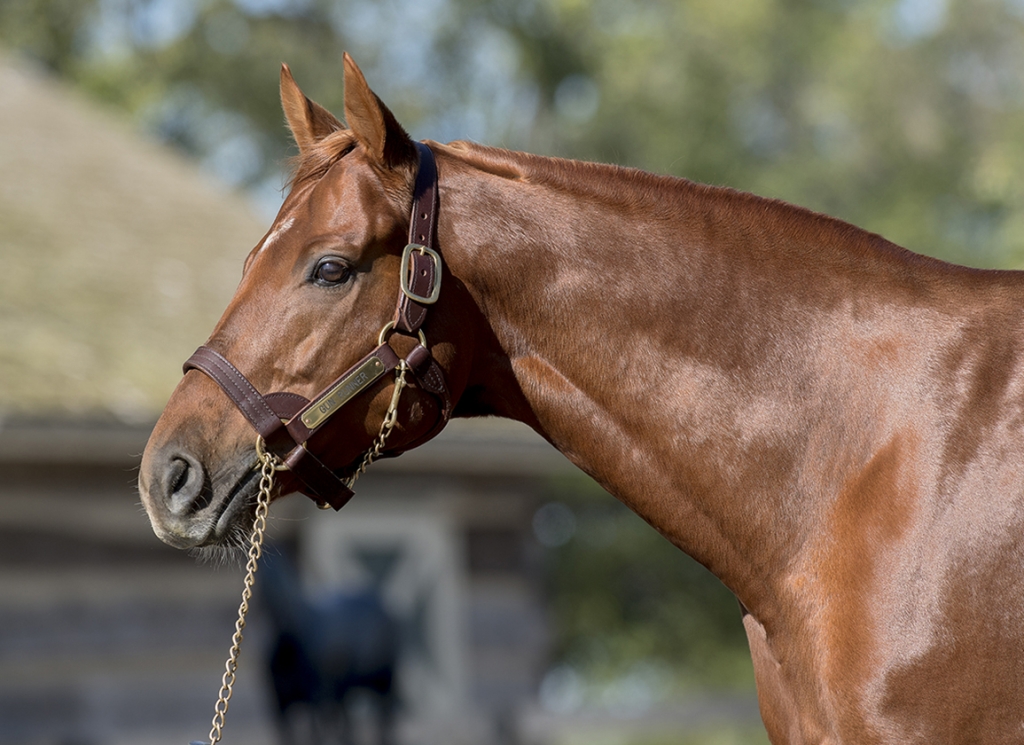
On one level, you couldn't ask for better evidence of the functionality we seek–but rarely find–in every stallion prospect. In the axiom of one of the masters of this trade, John Sikura, the genetic switch is either “on” or “off”. Into Mischief famously overcame the modesty of his first covers, in both quality and quantity, to brandish an unmissable capacity to impart prowess to his stock. Gun Runner, as a Horse of the Year starting at $70,000, had all the advantages Into Mischief lacked at the outset. Nonetheless he appears to have cut straight through the kind of mitigations we would often expect to offer a two-turn stallion who reached his peak in his third campaign.
Gun Runner | Sarah Andrew

If his stock can still abide by original presumptions, and build higher yet on this foundation of unexpected precocity, then Gun Runner will surely join Into Mischief among that premier tier of stallions who sustain the commercial primacy of the “bull” over the “herd”. (Which is a question far more fundamental than their useful promiscuity, relative to the mares necessarily confined to a single progeny every year.)

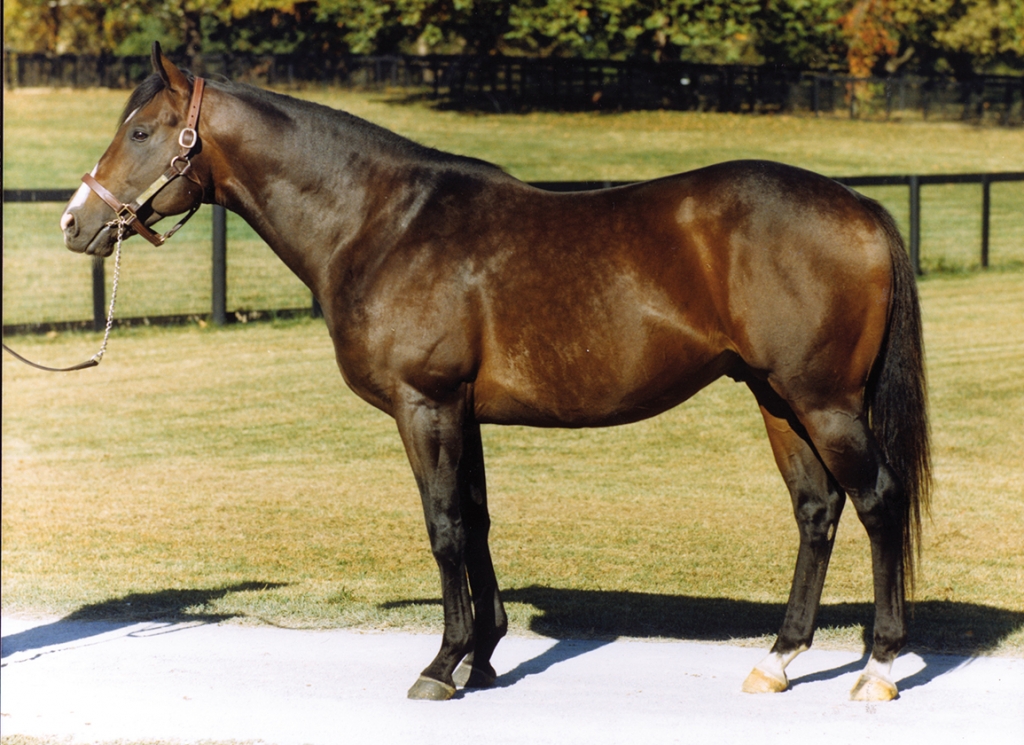
But if the genetic “switch” has a primal quality, then the scale against which we measure stallions is not so absolute. It will fluctuate with an ever-changing environment. As champion freshman in 1984, Danzig had just 13 starters. These included 11 winners, nine stakes horses and three Grade I winners, including the champion juvenile colt. Two made the Derby podium the following May. Nowadays, in contrast, veterinary vision and commercial myopia together ensure that new sires constantly inundate the gene pool.

When that process discloses a Gun Runner, that's fine. He has had 62 starters from 115 named foals in his debut crop, the result of 171 covers; and we'll detail his success below. But Klimt, who has launched 79 juveniles without finding a stakes winner, has reportedly been exported to Turkey already. And obviously every intake will include Klimts by the dozen for every Gun Runner.

Pending The Jockey Club's attempt to restrict book sizes, however, the industry appears to be widely and wholeheartedly committed to volume. I guess the question is whether the damage done by prolific duds is adequately addressed by those whose switch is “on”. And that's why it's important for Into Mischief and others to demonstrate that the intensity of their impact is not diluted by its expansion.
The great Danzig | Claiborne photo

Who knows, conceivably Danzig's breed-shaping legacy around the world might have been still greater, had he covered mares on the same industrial scale as Into Mischief. Being additionally blessed by fertility and libido, the Spendthrift champion has been able to maintain huge books even as his fee has soared, with a staggering 250 mares at $175,000 in 2019, and 214 even at $225,000 last spring. He commands $250,000 for the coming season, but the fact is that his 2022 sophomores will be his first conceived even at six figures–and, pending the outcome of what has tragically become a posthumous saga about Medina Spirit (Protonico), this incoming Classic crop may well be seeking to give Into Mischief a third consecutive GI Kentucky Derby.

That would sit very nicely with this third general sires' title off the reel, a distinction shared most recently with Tapit (2014-2016) and, before him, Danzig himself (1991-1993). But the overall trajectory of Into Mischief's career is such that perhaps only the unaccountable bounties nowadays available in the desert inhibits sacrilegious speculation about Bold Ruler's streak of seven in the 1960s.

These modern megaprizes, of course, permit a single horse's wild distortion of the overall standings: in 2017, for instance, Unbridled's Song would have finished 44th, not first, but for Arrogate. Down the line, perhaps, we must try to devise a way of levelling out the playing field. Otherwise we will someday end up with a champion sire long since exported to Uruguay, who happens to have left behind a standout who wins the G1 Saudi Cup and G1 Dubai World Cup.

As it is, much the most striking aspect of Into Mischief's record $24,945,619 earnings in 2021 is how widely his best performers have spread their contributions. His premier earner is Mandaloun, with $1,560,000 as things stand, though he may yet get that Derby windfall. That represents just 6.3% of his sire's overall bank for the year, compared with the whopping 45.5% contribution made by Mystic Guide to the $16.2-million haul of runner-up Ghostzapper.

Into Mischief admittedly owed 31.9% of his 2020 total to Authentic, but he would still have been champion even without his Horse of the Year. And the previous year Covfefe banked just 5.5% as the premier contributor to his sire's first title.

That looks the most instructive measure of both the legitimacy and the sustainability of the dominion established by Into Mischief. For while he may have fielded more runners than any other sire, at 444, they include not just that record-breaking number of individual winners but also 71 black-type horses. As noted already, no other sire surpasses that clip–quite.
Curlin | Sarah Andrew

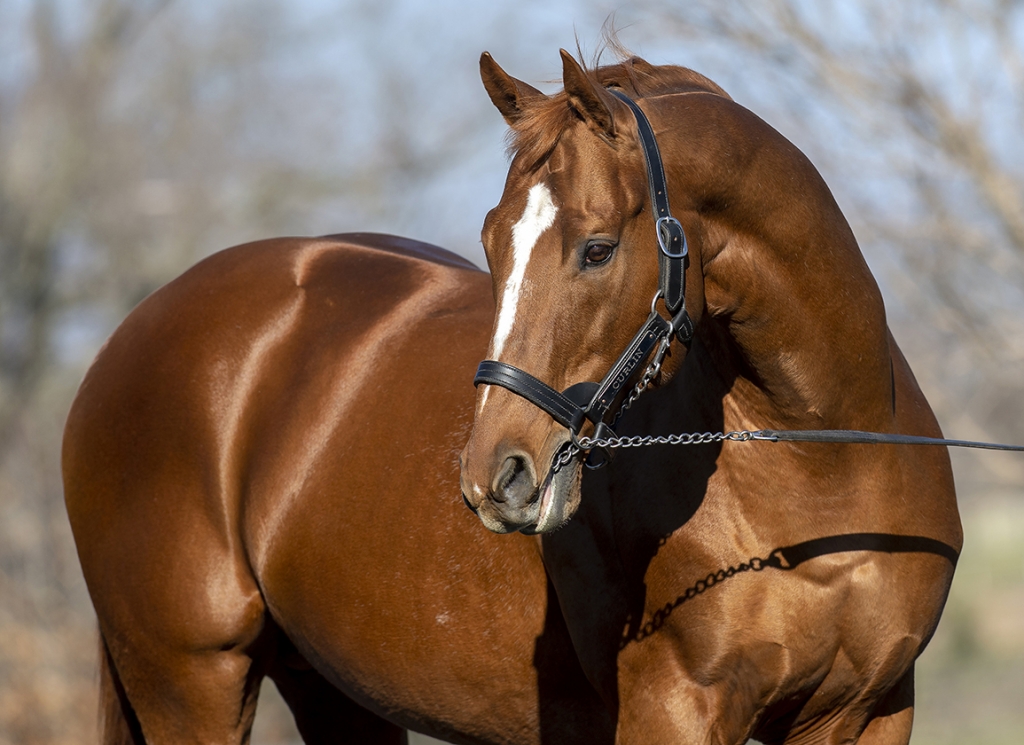
But there are one or two who basically match it, while also exceeding his ratios in other indices. Constitution's third crop has elevated him to 13th in the general sires' table, for instance, and his elite percentages beat Into Mischief in all bar Grade I winners. And, you know what, there's a sire out there who has credible claims to be saluted as stallion of the year, even with Into Mischief again breaking so much new ground. Over at Hill 'n' Dale, certainly, they'll be making a very coherent case for Curlin. While confined to third in the prizemoney standings, he has unequivocally outperformed even the champion when their respective indices with elite stock are compared.

Both have had 13 graded stakes winners in 2021, but Curlin has done so from almost exactly half the number of starters: 224 against the remarkable tally of 444 already noted for Into Mischief. These represent just about 5 and 3% respectively of their starters. And while Into Mischief has 32 graded stakes performers overall, compared with 24 for Curlin, in percentage terms that again favors the less prolific footprint of one (9.3% of starters) over the other (7.2%). As the icing on the cake, Curlin has had five Grade I winners and 9 Grade I podiums, at 1.9% and 3.5% of starters; compared with four and eight for Into Mischief (0.9 and 1.8%). Their overall stakes action, meanwhile, is broadly in step: Into Mischief's 29 black-type winners and 71 performers represent 6.5 and 16% of starters; Curlin's 19 and 41, 7.3 and 15.8%.

That's not to diminish Into Mischief in the slightest. He still has a lot of stock out there conceived at lower fees and we've all seen how seamlessly he has entwined his rising mare quality with his arc of achievement, immediately establishing himself as a Classic influence the moment he covered mares like the dam of Authentic at a bare $45,000. (That same spring was Curlin's first as a six-figure cover.) To be fair, Into Mischief had got a couple of colts from early crops that finished strongly for Derby/Preakness placings, but he has now definitively shown himself capable, with the right partners, of stretching his trademark speed through a second turn.

Nonetheless Curlin merits a special mention for a magnificent year. And his achievements should not be swamped by those disproportionate elements that have exalted two others above him in the table: the lucrative endeavors of Mystic Guide, in one case, and sheer scale in the other.
Tapit | Sarah Andrew

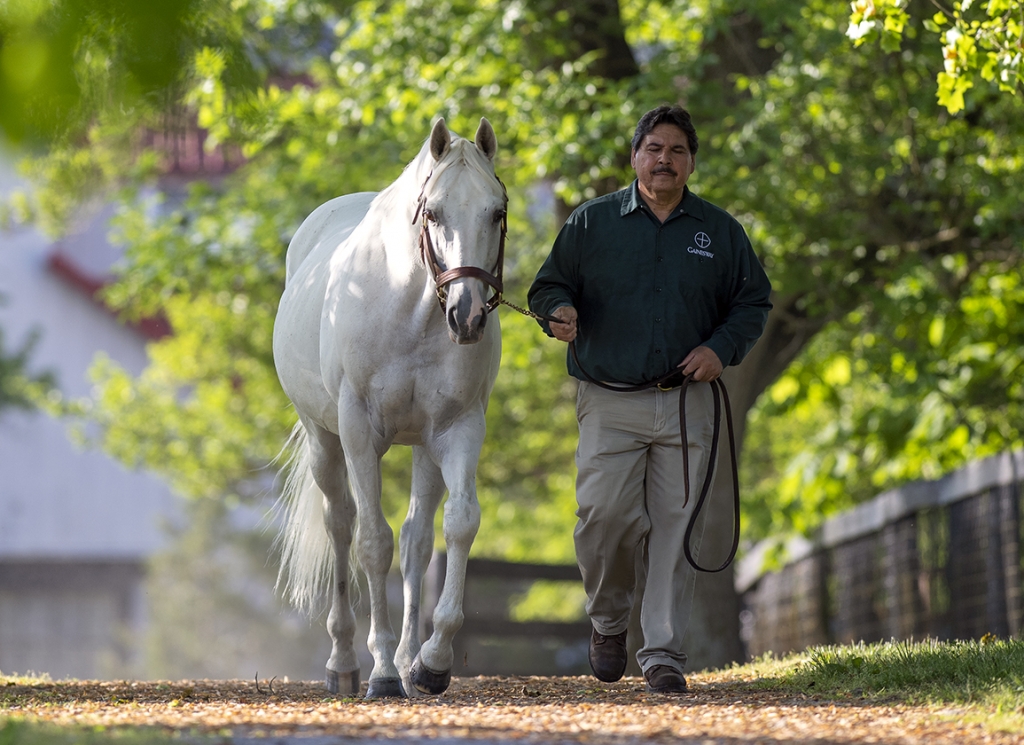
We also need to mention Tapit, for his sheer, metronomic consistency. In adding the later-blooming Flightline to the relentlessly accomplished Essential Quality, notably as his fourth GI Belmont S. winner, Tapit mounted a late charge for fifth place. Heading to the wire, he needed less than $1,500 from one of his last runners of the year to catch Speightstown–and so extend a unique distinction, across the last 12 years, of 11 finishes in the top five. Let's remember that Tapit previously held the prizemoney records both for general sires, meanwhile claimed by Into Mischief, and for freshmen, now in the hands of Gun Runner (following the Uncle Mo interregnum).

All the way through, remember, Tapit's books have been managed with commendable restraint at Gainesway, yet in August he became the highest-earning North American stallion of all time when overtaking Giant's Causeway. He has now passed $178 million, and needs another six graded stakes winners to reach 100 in 2022.

If favored by good health and longevity, perhaps Into Mischief can challenge for that record, too. Even as Tapit reached his milestone this summer, Into Mischief was breaking the $100-million barrier, and he's meanwhile already raced past $109 million. Whatever happens, there's no mistaking him as a champion for our times, and a fitting bequest by the late B. Wayne Hughes. It was as a struggling young stallion by Harlan's Holiday, of course, that Into Mischief famously inspired the kind of incentive scheme by which Spendthrift have meanwhile transformed the entire commercial breeding landscape. We now have the incredible state of affairs in which the three busiest stallions of 2021, with 682 covers between them, were all sons of Into Mischief: Goldencents and Authentic in the same barn, and Practical Joke at Ashford.

The latter must count himself unlucky to have landed in the same intake as Gun Runner, as runner-up in the first-crop sires' championship. As it was, the Three Chimneys freak has almost doubled the tally of his nearest pursuer, with Practical Joke gasping in his wake on $2,339,717. As noted above, Gun Runner has banked $4,209,350. Sometimes the laurels in this category can be divided across different indices, but the son of Candy Ride (Arg) also dominates by individual winners (28 beats 26 for Connect), wins (39) and, inevitably, across-the-board in terms of stakes action.

Admittedly Gun Runner is one of those stallions to have started out with a useful propensity for landing his best punches where they make most impact. Of four graded stakes performers, all four have won at that level, two in Grade Is, from a total of six black-type scorers. Uncle Mo, in accumulating the previous record, had a very similar pattern. He, too, had 28 winners but from more runners (73 against 62); he also included among them two Grade I scorers; he had two more graded stakes performers than Gun Runner, but one fewer such winners.

Uncle Mo's fee was promptly trebled from $25,000 to $75,000, and he stands at $160,000 for 2022. Gun Runner, having been clipped to $50,000 last spring, now smashes into the six-figure club at $125,000. Hats off to Gonçalo Torrealba and his team, to their partner Ron Winchell, and to Steve Asmussen who continues to develop the legacy of the horse he trained so expertly.
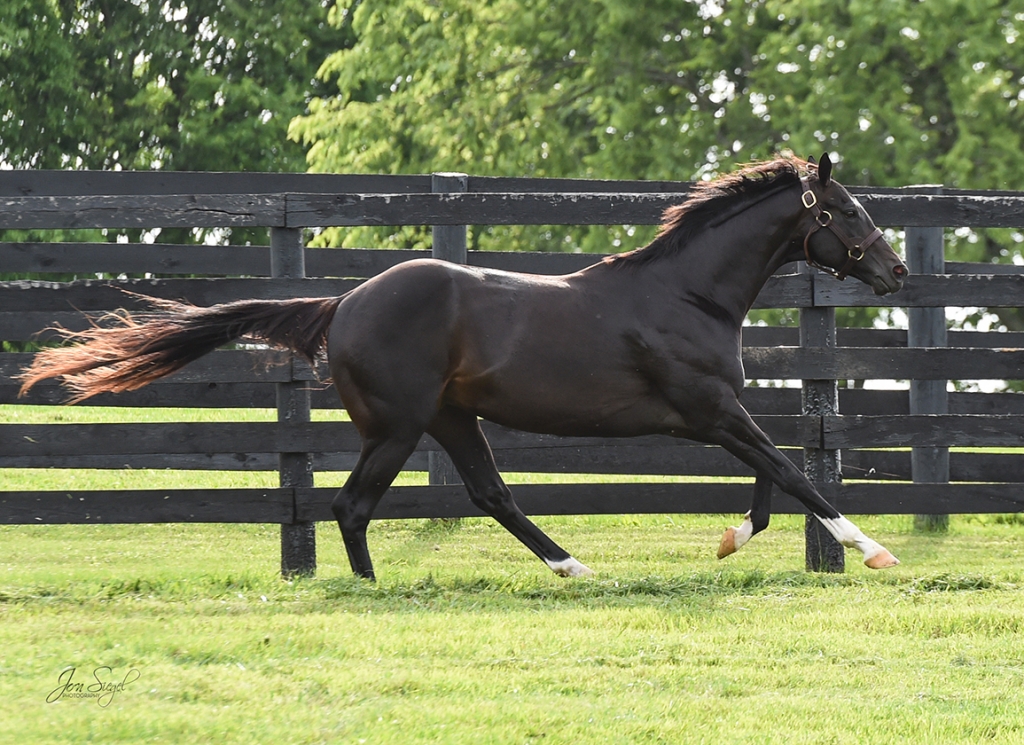
Not This Time | Jon Siegel

Champion second-crop sire with $5,458,779 is Not This Time, whose 13 stakes winners represent 10.24% of starters: the best ratio in the general sires' list, an outstanding achievement that consolidates his persisting claims as a precious late conduit for his sire Giant's Causeway.

Runner-up Nyquist ($4,807,628), top freshman last year, sent out as many as nine graded stakes performers, representing 7.4% of his starters, but had to wait until Slow Down Andy's GII Los Alamitos Futurity to get one of them into the winner's circle. From very similar numbers (Nyquist 121 starters, Not This Time 127), Not This Time clocked 68 winners against 50 for his rival at Darley, but the pair were exactly in step in terms of overall stakes action, with 18 black-type performers apiece.

But Not This Time is really on his way, now, given the upgrade in mares he will have earned with his breakout. Best of luck to him in 2022, and to all those hoping to find the next one whose time has come.

The post It’s a World of Mischief appeared first on TDN | Thoroughbred Daily News | Horse Racing News, Results and Video | Thoroughbred Breeding and Auctions.
Source of original post

Life After ‘Lloyd’

For many in racing, Pink Lloyd (Old Forester) would be a horse of a lifetime. A competitor that year after year would show up and give his best, while continuing to perform at a high level. And for three-time Sovereign Award recipient and Canadian Hall of Fame trainer Robert Tiller, it is no different.

“He's just the most amazing horse I've ever been around,” said Tiller. “I've won probably around 160 stakes races, and I've had some pretty good horses, but nothing ever like him. To be able to beat the best at the age of nine and to win 26 stakes, that's unheard of. At least not up here. What do you do for an encore?”

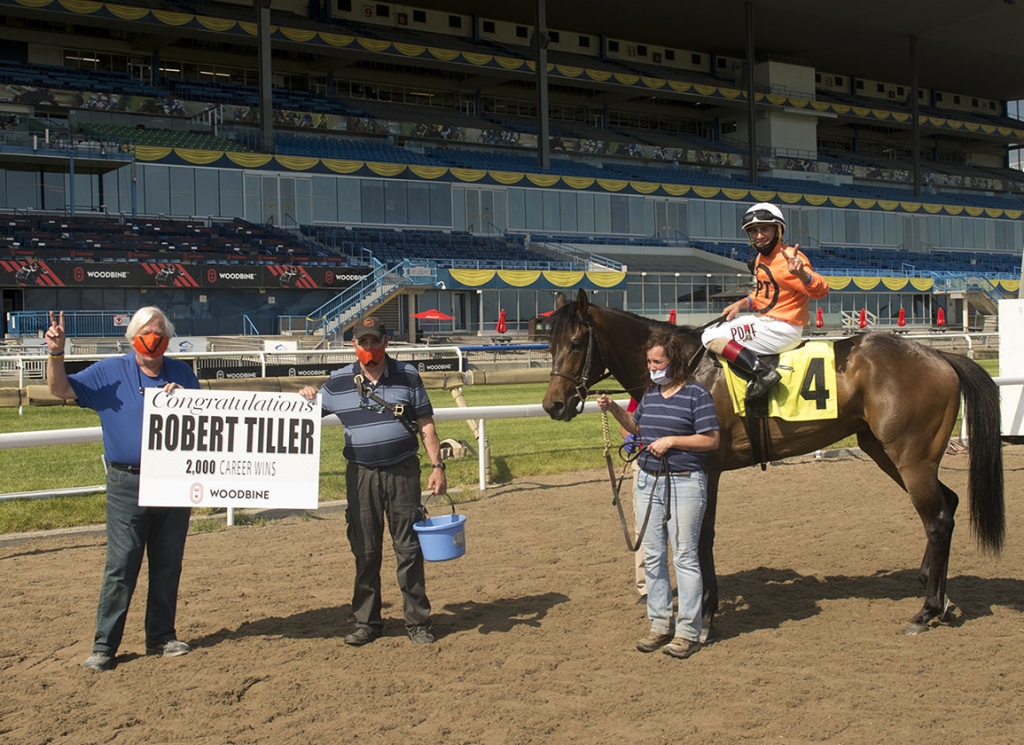
Responsible for a quartet of Woodbine training titles (1994, 1997, 2001, and 2003), a Canadian Classic winner (Win City, 2001 Horse of the Year), juvenile champions Rare Friend (2001) and Simply Lovely (2004) and millionaire Brass in Pocket, a Sovereign award finalist in 2003, the 72-year-old also trained a pair of Canadian champion female sprinters: Indian Apple Is in 2010 and River Maid in 2016. A regular fixture on the Canadian racing stage for over five decades, Tiller achieved yet another career high on June 19, 2020, recording his 2,000th career victory with Have a Souper Day (Souper Speedy).

“I was something of a 'Wonderboy' in those days when I first got going,” the Brampton resident said with a chuckle. “I came in and started claiming horses and had some good clients and things really took off quickly. We went through a period when everything was great, but then the roof kind of caved in. But over the last 30 years, we've had some top-caliber horses and achieved things with them that I'm proud of.”

A native of Amsterdam, Holland, Tiller immigrated with his family to Ontario at age 12 and it wasn't long before the racetrack came calling. Employed as a hot walker for John Calhoun at Woodbine Racetrack at 16, he later filled the same position for trainer Glenn Magnusson before becoming the point man for the latter trainer's Blue Bonnets-based string in Montreal, Quebec. After spending a brief stint at Finger Lakes, Tiller returned to Woodbine, securing his own license at 21. During his initial season, he captured his first win with Royal Greek Ship before rounding out the 1972 season with 21 victories. Continuing to grow over the next two seasons, he closed out 48 wins in 1974. As with many trainers, Tiller started off with an abundance of claiming horses, however, quickly started to show his ability with higher-caliber animals. Among them was Near the High Sea, who represented Tiller in his first Canadian Classic in the 1975 Queen's Plate. Overlooked at long odds, he finished second behind winner and subsequent Canadian Hall of Famer L'Enjoleur.

And while claimers made up a good portion of his early stable, Tiller explained it didn't take long to branch into a higher level.

“I had a lot of claiming horses early on, but I also bought and sold a lot of horses, too,” he recalled. “From the beginning, I just loved the whole game. Buying young horses and developing them–it's a lot tougher than claiming them, in my opinion. We seemed to do well with whatever we happened to have at the moment. I think in the time I've been training, I've covered pretty much every aspect of the business.”

Robert Tiller after winning his 2,000th career victory | Michael Burns Photo

'Pink' Panther

Offered at the 2013 Canadian Thoroughbred Horse Society's Canadian Premier Yearling Sale, Pink Lloyd was secured for $30,000, along with five others, for a partnership including longtime client, Frank Di Giulio, Jr., who, in tandem with his father Frank Sr., also benefitted from Tiller's work with claimer-turned-Grade II winner Domasca Dan. Although two of those 2013 purchases never made it to the races, three of them ended up winning races and the sixth, of course, would go down in the history books.

“He looked like a very athletic horse and we were lucky enough to buy him,” said Tiller. “Early on, we got the call from the farm telling us he was sore. Since nothing really showed up on his X-rays, we just decided to just give him time off. These little things would show up and he'd be lame, but we couldn't really pinpoint anything major, so we just gave him more and more time. That's my philosophy, if a horse needs time, just give it to them. And I am very fortunate to have very patient owners. He's probably one of the best managed horses in Canada and that has a lot to do with the ownership.”

Making his belated debut at age four for Entourage Stable, Pink Lloyd, cheekily named after a character on the hit show 'Entourage' while playing on the famed rock band, won his first three Woodbine starts in 2016, but failed to take the next step up to stakes company through the fall of that season. Given some time off to work out a few kinks, namely an overly intense work ethic that often played to the gelding's disadvantage, Pink Lloyd returned the following April and reeled off six consecutive stakes victories, highlighted by graded wins in Woodbine's GII Kennedy Road S. and GIII Virgil S. Punctuating his sparkling undefeated 2017 season with a pair of Sovereign Awards as Canadian Champion Horse of the Year and Canadian Champion Male Sprinter, the chestnut picked up where he left off in 2018. Annexing his first three starts of the new season, he concluded his 5-year-old campaign with five stakes wins from eight starts, and once again was named the leading male sprinter in the country.

Pink Lloyd rounding out his career by winning his third GII Kennedy Road S. Nov. 27 | Michael Burns Photo

“We had a few rough patches with him early on,” explained Tiller. “He could be pretty head strong and actually broke through the gate at one time. And he bled once and we stopped on him for six months after that. He also has some foot issues through most his career. There were scary times when we thought it was all over. But he just always came back. He always came back.”

Tasting defeat only once from seven starts in 2019 and again from five starts in 2020, Pink Lloyd kicked off the current season with a pair of runner-up efforts in the GIII Jacques Cartier S. and GIII Vigil S.–a race he won on four prior occasions. Showing the tenacity that had already earned him an armful of Sovereign Awards, the champion sprinter took his next three, beginning with the GIII Bold Venture S. in September and the Nov. 7 Ontario Jockey Club S. before rounding out his illustrious career while securing his third GII Kennedy Road S. win Nov. 27. After a career that spanned six seasons, the Ontario-bred was retired with 29 victories–26 earned at the stakes level–from 38 career starts and earnings of $1,884,584.

“He got his two to three months off every winter, and I think that really helped him,” said Tiller. “But it is very difficult to keep a horse going year after year. Since I'm at Woodbine year round, you get all the seasons up here: intense summer heat and snow in the winter and everything in between. And we also had a pandemic in the middle of all that. To be able to keep winning like the way he did, it's just amazing. This horse has done it all.”

Asked if he thought Pink Lloyd would have been able to achieve the longevity for over six seasons with another trainer, Tiller laughed, “Well, the fact that I've been doing this about 50 years probably helped. I've had several people say that to me of late, and I don't like to think this is just my ego talking, but I was given a truly horse wonderful horse. I also think the ownership really helped me. I have a 35-year relationship with the Di Giulio family, and while we would talk about everything relating to the horse, they always left the final decision to me. And that really helped, especially with this horse.”

Moving on to the next phase in his life, Pink Lloyd received a hero's welcome upon his arrival at his new home, LongRun's 100-acre property in Erin, Ontario in early December.

“I just saw him at LongRun and he's so happy up there,” said Tiller. “He's looking good and adjusting very well.”

While the entire Tiller team rejoices in the gelding's moving on to enjoy his senior years in a more tranquil setting, the departure of the perennial champion has left a void in both the Tiller barn and the entire team's hearts.

“When we put him on the van, it was very emotional,” recalled Tiller. “Michelle Gibson, who groomed the horse for six years, was very emotional. We all were. We are quite sad, but there is also a bit of relief too, because some would be looking for something to be wrong or for him to fail. For him to go out a winner like that was such a relief. We have mixed feelings. We'll really miss him in the springtime when he doesn't come back in from his winter vacation. We've prepped ourselves for this. All good things come to an end. And the only way I felt good about stopping on him was because he retired while he was still on top. This whole experience was so very special.”

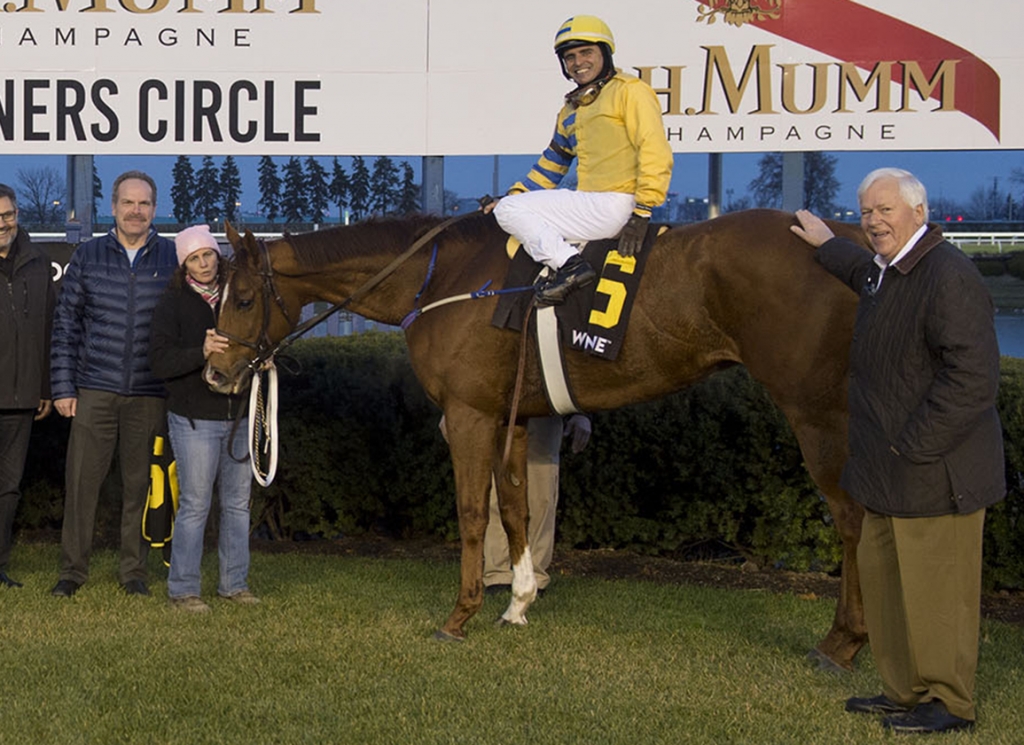
Pink Lloyd in the familiar Woodbine winner's circle, Tiller far right | Michael Burns Photo

Good People, Good Horses

One of only six trainers with over $1 million in seasonal earnings at Woodbine in 2021, Tiller–who concluded the recent Woodbine season in fifth overall–registered 20 wins, 29 seconds and 29 thirds, for a 38% in-the-money strike rate.

“You're only as good as your horses,” he said. “You also need good owners and good help. I've been fortunate enough to have had seven people who have been with me for over 30 years and I don't think many people can say that at Woodbine or anywhere else. It's a difficult business. You have to work hard and you have to love it. But the rewards can be very high. So if you love it and want to work hard, go for it. If not, maybe look at a career with computers.”

With the vast majority of Tiller's racing stock comprised of homebreds, the horseman typically maintains a racing team ranging from 30 to 45 head. And while it's tough to compete head-to-head with trainers whose string can amount to twice or three times that number (in some cases much more), Tiller remains pragmatic about the disparity among his peers.

“I'm a hands-on horseman,” he stated. “I've spent most of my life on my hands and knees in stalls feeling horses' legs and watching them jog up and down. Other trainers who have a lot more horses can't really get their eyes or hands on every animal. I'm not knocking it. They've made it work for them and have been very successful. I was brought up in a different time. If you had 40 horses, that was a lot of horses. You were always present on the grounds. But for a lot of trainers, that has totally changed. They do it differently than I like to do it. That's all.”

He added, “Regardless of the number of horses you have, you're only as good as your horse. I never had the type of horse that somebody would pay $200,000-$300,000 for. I was always the little guy's trainer. But we made it work.”

And despite facing runners from some of the biggest and most loaded equine arsenals in North America, it appeared that the 2021 season did in fact prove to be the year of the little guy. The stars aligned and a $30,000 Canadian-bred rose to the top of the ranks and took his trainer and connections on a ride of a lifetime.

“I'm getting a little long in the tooth, but he didn't seem to get long in the tooth,” Tiller laughed. “We are so proud of him and so in love with him.”

Might another sprint championship be in the offing?

“There are three certainties in life: death, taxes and Pink Lloyd winning the title as [Canada's] best sprinter,” he laughed. “I think he should be, he deserves to be and I believe he will be the outstanding sprinter. Anything else is icing on the cake.”

Tiller admits while the gelding's departure early this month was very hard, the champion's absence will really hit home later this spring when he would have been due to return from his winter spell. And while he will be physically absent, Pink Lloyd will certainly be remembered for the things that set him apart from the rest.

“The heart, the courage and the desire to win, he had it all,” said Tiller. “I'll never forget him.”

The post Life After ‘Lloyd’ appeared first on TDN | Thoroughbred Daily News | Horse Racing News, Results and Video | Thoroughbred Breeding and Auctions.
Source of original post

Chasing Ghosts: Swaps

In the unlikeliest of places, far from the rolling hills of Kentucky or any of racing's other hallowed grounds, there's a connection to racing lore. Located in the high desert of California–west of the Mojave Desert, inland from the Pacific Ocean, and due north of Los Angeles–is the sprawling mountain community of Tehachapi. It was here that Hall of Famer Swaps was bred and raised on Rex Ellsworth's ranch.

Swaps, of course, had that glorious rivalry with Nashua in 1955 and was named Horse of the Year in 1956. But while Nashua was a classic blueblood and a Belair Stud homebred trained by the legendary James “Sunny Jim” Fitzsimmons, Swaps was more of a blurred contradiction, especially in the media at the time, which frequently portrayed him and his connections as anything but polished. Even his pedigree fell somewhere between the old adages of “breed the best to the best and hope for the best” and “a good horse can come from anywhere.”

By all accounts, both Ellsworth and his trainer, Meshach “Mesh” Tenney, were cowboys with unconventional horse management standards. They had grown up together in Arizona, cattlemen and horsemen to the core. The pair were just 26 in 1933 when Ellsworth and his brother, Heber, drove a rickety trailer to Kentucky and returned $600 poorer but accompanied by six broodmares and two weanlings. It was only the beginning. Ellsworth's bloodstock holdings gradually increased, as did his land. He eventually purchased Khaled, Swaps' sire, from the Aga Khan in Ireland and stood the stallion himself in California after he was unable to seal a deal for the horse he really wanted: Nasrullah, who would, ironically, sire Nashua.

Whatever his methods, there was no arguing with Ellsworth's success, as he won not just the Kentucky Derby with Swaps, but a total of three editions of the Santa Anita Derby, and eventually added both a Preakness and even a Prix de l'Arc de Triomphe. In 1963, he joined Calumet Farm and Cornelius Vanderbilt Whitney as only the third owner in history to win $1 million in a year. That year Sports Illustrated called him “the world's largest non-market breeder and, with about 500 head at his disposal, he is unquestionably owner of the world's largest active racing stable.” He estimated he also owned about 1,000 square miles of land at the time and about 20,000 head of cattle.

Rex Ellsworth, Mesh Tenney, and regular rider Bill Shoemaker at Hollywood Park's Swaps statue dedication in 1958 | Getty Images

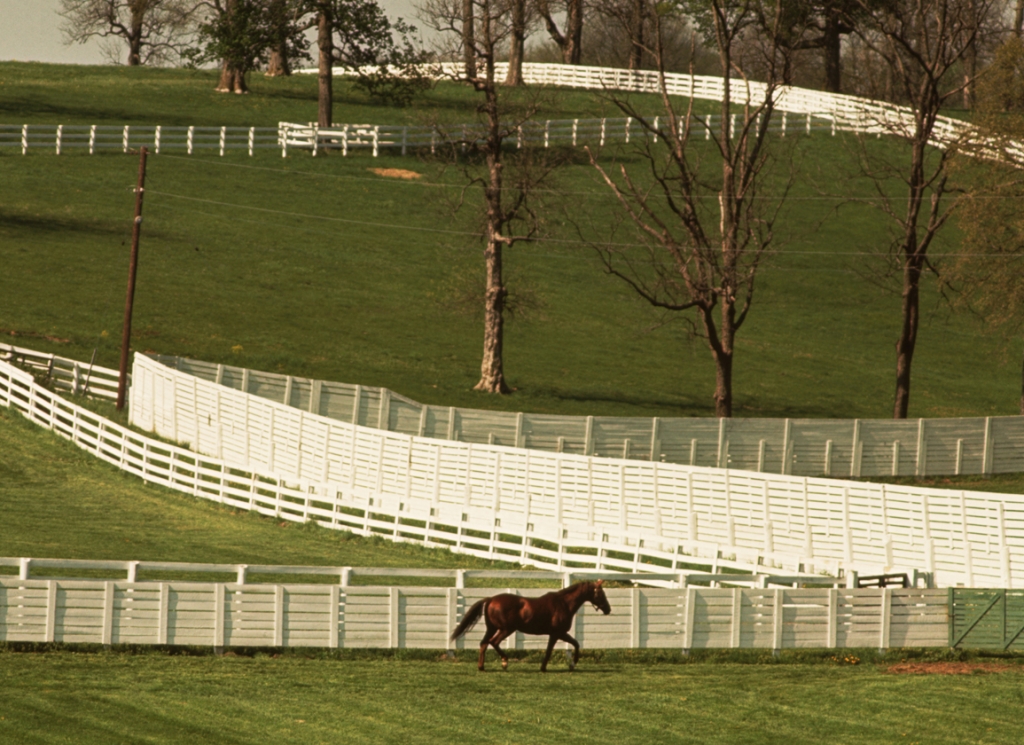
Ellsworth's Southern California farm on 440 acres in the Chino area–where Swaps stood his first season at stud–is the better known of his Thoroughbred properties, but it was on his 24,000 acres in Tehachapi where Swaps took his first breath.

“Ellsworth apparently liked the fact that [the area] in the Tehachapi Mountains was fairly close to racing tracks and all the activity of the greater Los Angeles area, yet was still quite remote and agricultural,” said lifelong Tehachapi resident and local historian Jon Hammond. “Many of his neighbors raised hay that could be purchased to feed the Ellsworth horses, and there were plenty of locals who could be hired to help run the ranch and horse operation. Summertime temperatures were typically in the high 80s during the day and 60s at night, making it a cooler, more comfortable place for the mares and their foals to live. The surrounding areas–San Joaquin Valley, Mojave Desert, Antelope Valley, etc.–are all considerably hotter.”

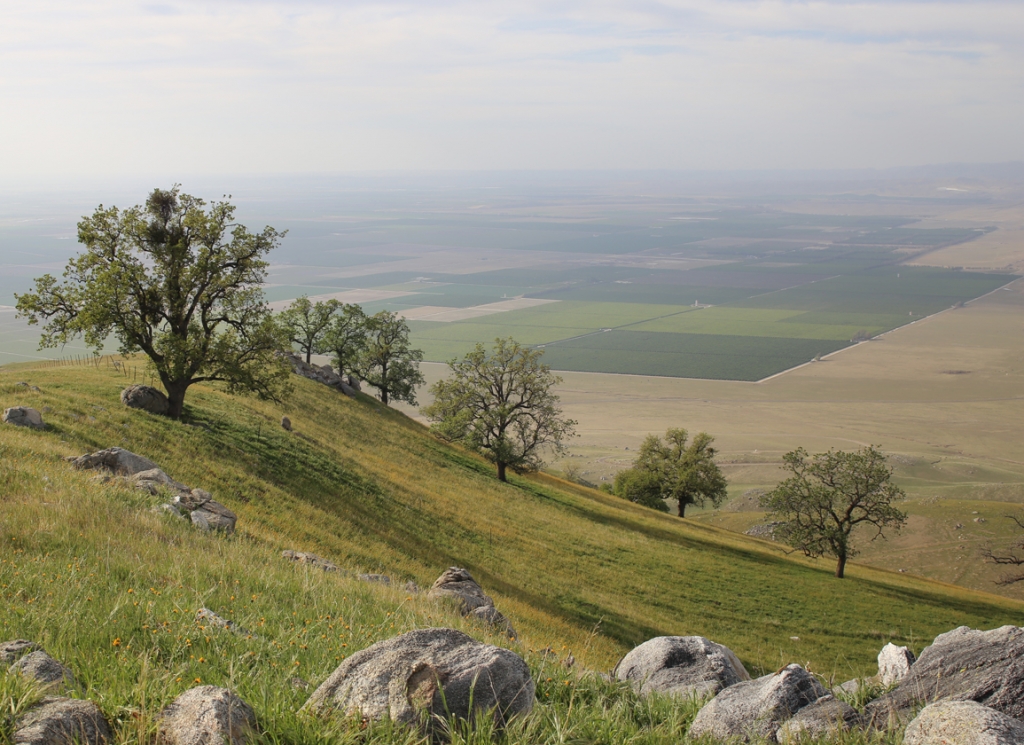
Named for a Native American word reportedly meaning “the place where the people of the acorns lived” instead of a word of Spanish origin like so many others in California, Tehachapi includes a series of valleys with both grasslands and rugged terrain that have been claimed by ranchers since California first became a state. It is an isolated oasis at 4,000 feet, subject to all four seasons unlike the desert sands that extend beyond the mountains that entirely encircle it. Mortar holes made by Native Americans in large boulders–where acorns were ground into coarse meal–are still found all over the valley, including on Ellsworth's former property.

Cattle and sheep land since the 1850s, the property that became Ellsworth Ranch changed hands at least four times over nearly a century until Ellsworth acquired it. With some wheeling and dealing and swapping of land, his Tehachapi ranch eventually encompassed approximately 24,000 acres. As had been his preference since childhood, horses and cattle were his livestock of choice on the spread. Hammond theorized Ellsworth bred Thoroughbreds on the ranch to gain a perceived advantage. “Being raised at this elevation, which produced stronger pulmonary systems, was said to have benefitted horses that were racing at tracks that were mostly located at about sea level.”

Typical Tehachapi terrain opening into flat valley land | Jill Williams

Swaps was born somewhere on the property Mar. 1, 1952–reports range from in a stall under Ellsworth's watchful eye to outside in a puddle away from any human intervention. The year he was born, the earth shook. Swaps was a mere four months old when a devastating earthquake measuring somewhere between 7.3 and 7.7 on the Richter Scale flattened much of the tiny town and killed 12. The population at the time was fewer than 2,000.

Ellsworth eventually sent Swaps south to be broken and to race, but he continued to raise Thoroughbreds in Tehachapi. Swaps, of course, was the second of an eventual four California-breds to win the Kentucky Derby and had a storied career that included six world records.

The fellow Hall of Famer Nashua will always be inextricably linked with Swaps, but they actually only met twice and it was a draw. Swaps beat Nashua in the Kentucky Derby. Nashua beat Swaps nearly four months later in a match race at Chicago's Arlington Park. They never met again on the racetrack, but the two would eventually stand side by side at Spendthrift Farm.

Swaps ended his career abruptly in October, 1956, when he seriously fractured a rear leg. Fitzsimmons, Nashua's trainer, sent Tenney a special sling used to raise and lower the horse. The sling was credited with helping to save his life.

A deal was struck with John Galbreath of Darby Dan Farm in Lexington for half of Swaps, with the original agreement calling for Swaps to ship back and forth between California and Kentucky each year. Swaps did stand his first season at Ellsworth's farm in Chino, but Galbreath reportedly visited and was taken aback by the functional yet Spartan and decidedly non-Kentucky-like facilities. The next year, Ellsworth sold the other half of Swaps outright to Galbreath. The horse transferred to Darby Dan and never saw California again.

Ellsworth was derided publicly for selling his stable star. His response would not have won him any sympathy in today's world of social media: “I was criticized by some people for selling Swaps out of the state and all that. They said it was lack of affection for a horse that had won me all that money. They just don't know. I sold Swaps for $2 million to Mr. Galbreath because it was a case of necessity for me. I couldn't afford to keep him. But fondness is not the right word anyway. I had no more fondness for Swaps over the rest of my horses than I have fondness for one of my five children over the other four.”

Swaps at Spendthrift in his later years | Getty Images

Swaps would sire three U.S. champions, all in his initial crops: Chateaugay, who emulated his sire with a Kentucky Derby win and only missed the Triple Crown by a second in the Preakness to Ellsworth and Tenney's Candy Spots; the grand filly Affectionately, whose 18 stakes wins included the Spinaway at two and the Vosburgh against males at four; and Chateaugay's full-sister Primonetta, who was the first foal by Swaps to be born and whose nine black-type wins included such luminous races as the Alabama and Spinster.

Unfortunately, Swaps didn't exactly set the world on fire with his sire sons, but he has made a lasting impact with his daughters. Primonetta was named Broodmare of the Year in 1978, but that was only the beginning. A number of blue hens–including Fall Aspen, Toussaud, Numbered Account, Glorious Song, and Take Charge Lady–have Swaps on their dam side. Through their sons and daughters, Swaps will live on in pedigrees for a very long time. Swaps moved to Spendthrift for the last five years of his career and died in 1972 at age 20.

As for Tehachapi, in late 1969, Ellsworth sold his ranch to Benquet California Corporation for a planned subdivision. A residential community was developed with a golf course and named Stallion Springs. Few concrete reminders remain of Swaps or Ellsworth in Tehachapi, but Stallion Springs is littered with streets named with racing in mind. Names like Tanforan Drive, Tim Tam Place, Man o' War Drive, Bimelech Court, Hialeah Drive, Busher Way, Kelso Court, and more remain. It's a safe bet that most of the people living on Bowie Street don't know Bowie was once a racetrack, nor that those on Shut Out Place know that Shut Out won the 1942 Derby and Belmont Stakes, and still fewer on Stymie Court know that great horse's Hall of Fame credentials. Those of us who do smile when we drive by and let our hearts be warmed by memories of the greats while so far removed from the heart of the Thoroughbred industry.

“Some of Ellsworth's ranch buildings lasted for many years after he was no longer active in the area,” said Hammond. “Some of these were on property later owned for many years by actor Jack Palance. As large agricultural operations of row crops–almost entirely organic greens, carrots, cabbages, etc.–became active in [the valley] in the 2000s, I believe that the last of those buildings were removed.”

Ellsworth himself, of course, had a famously ruinous end to his 40-plus years in racing. In 1975, Ellsworth's Chino ranch was seized by the state of California when over 100 horses were found neglected and severely malnourished on the property. Among the perished was Iron Reward, the 29-year-old dam of Swaps who had been named Broodmare of the Year in 1955.

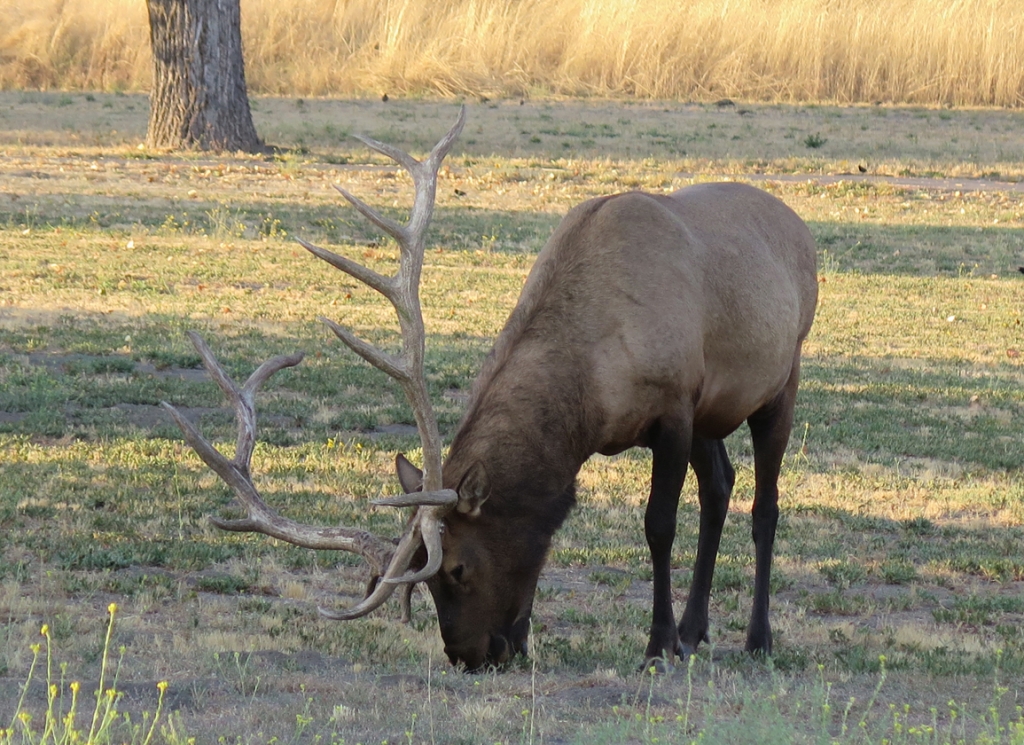
A descendant of one of Ellsworth's elk | Jill Williams

The Ellsworth name didn't leave a lasting impression in Tehachapi, other than a footnote in history. However, Ellsworth did change the landscape in one crucial way. In the mid-60s, in one of his many ventures, he brought around 400 Rocky Mountain Elk from the Yellowstone area to his ranch, reportedly with the intent of increasing the herd and eventually charging visitors to hunt them.

From the start, the elk project didn't go well. A number died during shipping and the animals originally failed to thrive in their new home. Ellsworth had them housed in a 640-acre enclosure, but the numbers had dwindled to approximately 200 in 1967 when a storm blew down a massive oak tree and damaged the tall fence surrounding them. The majority escaped and today, nearly 55 years later, large bands of elk roam all over Tehachapi mountains. The cows and calves tend to stick together at higher elevations, but bachelor herds are a frequent sight all over the local valleys. They loll in the local ponds during summers. Gardens, lawns, and lawn decorations are no match for their appetites or brute strength, but they remain a magnificent sight in front yards and in open spaces. More than one resident in the area has had been tardy to an appointment as elk are in no hurry when crossing local roads.

Swaps himself? There is no marker in Tehachapi commemorating the great champion. There is no record of exactly where he was born or in exactly which fields he spent his early years before leaving his hometown for a Hall of Fame career. His name is instead relegated to a small street, just off Seabiscuit Way and just over a mile removed from Nashua Court. For the record, the stretch of Swaps Court exceeds Nashua Court by several lengths.

The post Chasing Ghosts: Swaps appeared first on TDN | Thoroughbred Daily News | Horse Racing News, Results and Video | Thoroughbred Breeding and Auctions.

Source of original post

Smaller, But Still Super: Patrick Gallagher

The concept of the super trainer is by no means a new phenomenon in horse racing, but the huge stables run by super trainers have undoubtedly changed the landscape of the sport in many ways, from the backside to the racing entries. Are super trainers bad for the sport?  Are there any benefits for an owner in using a “smaller” trainer? We asked these questions and more to a few trainers who may not be considered super trainers in terms of their stall numbers, but they have made the most of the horses they're given to build competitive racing stables over their careers.

   For longtime California-based trainer Patrick “Paddy” Gallagher, it all comes back to the horse. “The best part of my job is being around the horses…and spoiling them a bit,” said the amiable Irishman. Once the assistant for Bill Shoemaker, Gallagher went out on his own in 1997 after the legendary jockey retired from a brief stint as a trainer. Some of Gallagher's most notable runners include four-time Grade I winner Magical Fantasy (Diesis {GB}) as well as millionaire Flamboyant (FR) (Peer Gynt {Jpn}), a multiple graded stakes winner who Gallagher still follows today as the gelding excels in a second career.


KP: How did you first get involved in horse racing?

PG: I grew up in Ireland and on school holidays I used to go down and work in the racing yards. After I finished school I needed to get a job so I went back and got a job there and got started on the Curragh. I worked there for a couple of trainers and then I moved to America in 1980.

When I went to California, I worked at Green Thumb Farm in Chino, California. While there, I met some people who worked at the racetrack. I went home for a time but came back and worked for a trainer named John Sullivan for about nine years. When Bill Shoemaker started training, he asked if I would come work for him. He had spoken with Sullivan before he approached me and they both agreed that it was a good move for me, so I ended up working for Bill Shoemaker.

I started with Shoemaker in 1990. After his accident the following year he kept training until around the end of 1997. When he told me that he wanted to retire, he helped me from the get-go in keeping the business going and he was always here at the track when I had runners. He was a big, big help to me.

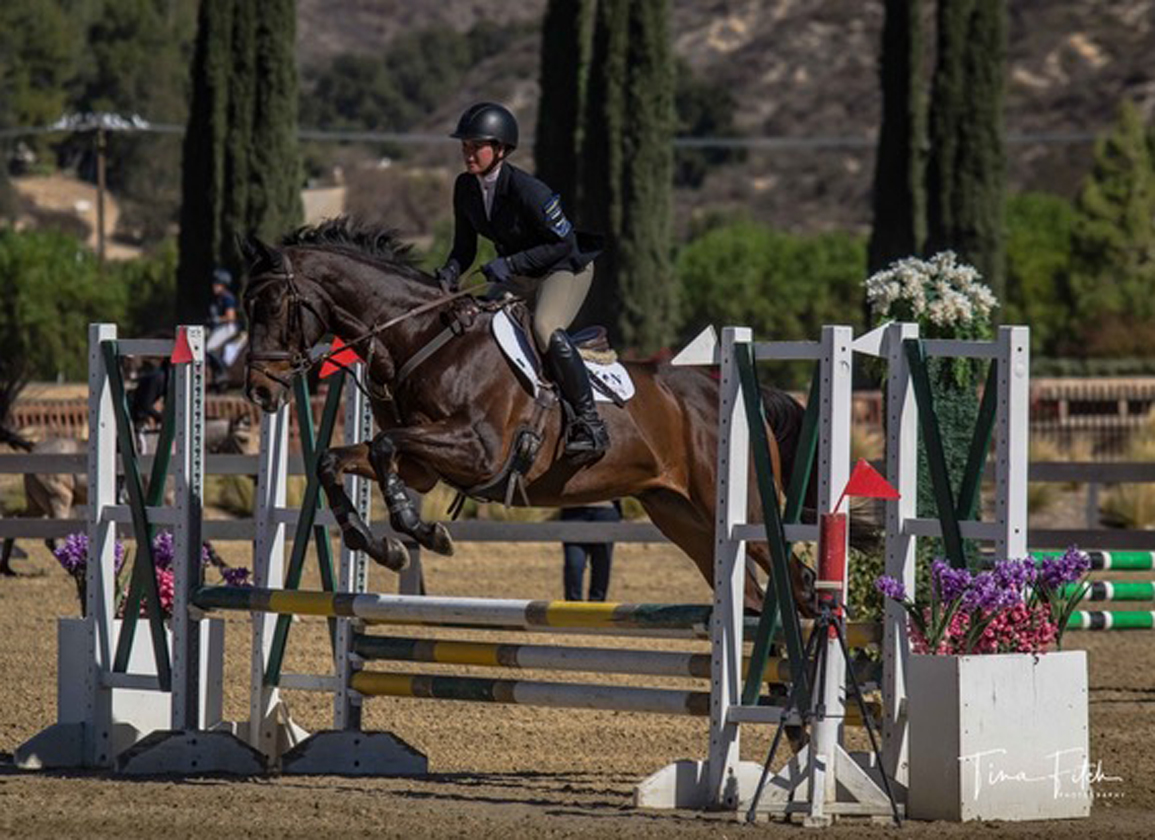
Ridden by Sarah Pinfield, MGSW Flamboyant takes on his first eventing show this fall at Galway Downs | photo courtesy Paddy Gallagher Racing

KP: How many horses are normally in your stable?

PG: Right now we have around 30. It's usually always between 30 to 45 head.

KP: What do you believe makes your stable unique?

PG: I think in certain ways I'm a bit old-school, but I have a lot of younger staff so they don't let me be too old-fashioned. We like to keep up to date and we just like to take good care of the horses as best as we can and hope that at the end of the day, it shows.

KP: What do you believe are the benefits for an owner in using a “smaller” trainer?

PG: Like everything, it depends on each individual owner and what makes them happy and keeps them comfortable. I'm not as big because I like to be in contact with my owners at all times. I want to be accessible at all times and keep them up to date. I want to make everyone feel comfortable, including the horses.

It comes down to the fact that some people like the bigger operations and others prefer ones not quite so big. I guess that's what keeps the business going. The bigger guys have to have the smaller guys to keep the business going.

KP: Do you think super trainers are bad for the sport?

PG: No, I think super trainers, for one reason or another, get used and get big, so best of luck to them. I don't like to call anyone a smaller trainer because they might be trainers who have less horses, but that doesn't necessarily mean that they're not as good of a horseman as anyone else. I think everyone deserves to have a good horse, whether it's once in a while or all the time. That's what makes the game so great. There are some good horsemen with not a lot of horses who can take on the big guys once in a while and it's great for the game when that happens.

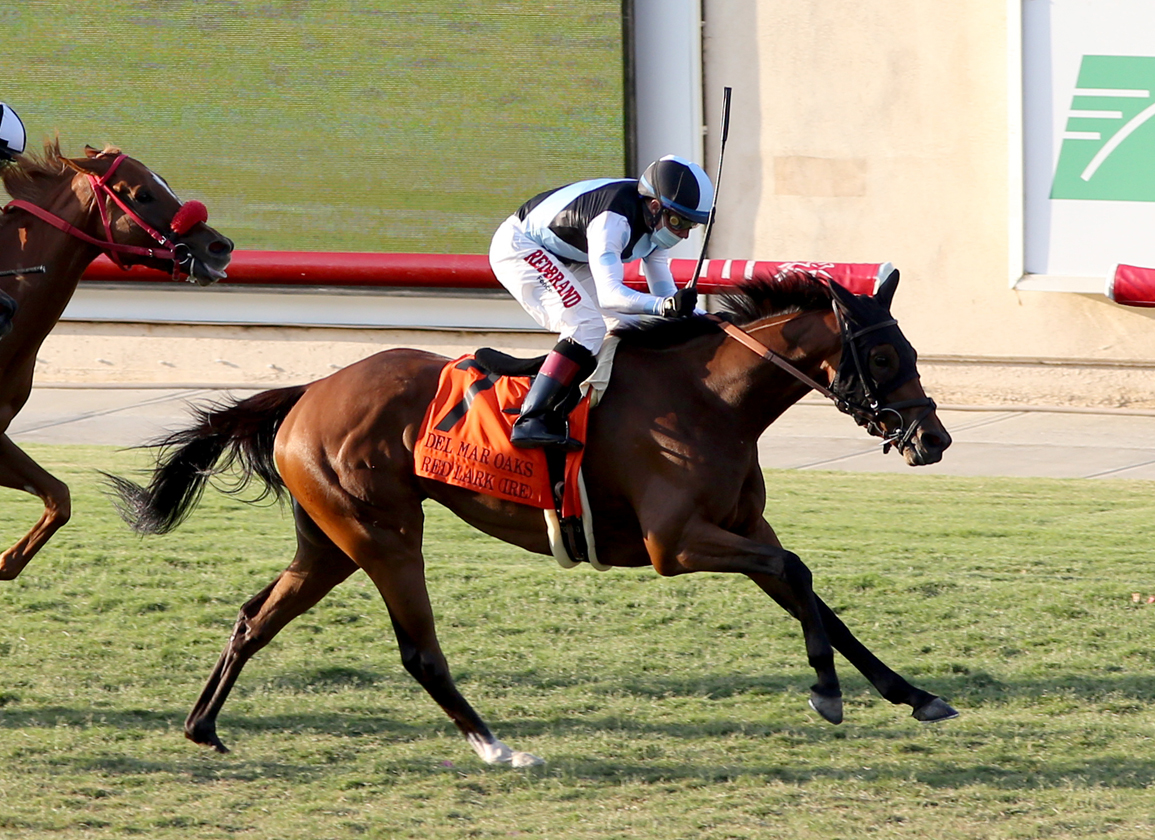
Red Lark (Ire) (Epaulette {Aus}) wins the 2020 GI Del Mar Oaks for Gallagher and owner Eclipse Thoroughbred Partners | Horsephotos

KP: What do you enjoy most about your job?

PG: I enjoy the owners who like their horses and the way they act when they win–hopefully even the way they act when they loose. But the best part is being around the animals, taking care of them, keeping them happy and healthy and spoiling them a bit. We want to bring out the best in them.

It's also important to me that we find a second job for our racehorses so that someone else can experience these horses. It helps us an industry because now you have owners who are not involved in racing and they get to enjoy these Thoroughbreds that are so enthusiastic and eager to please.  We had a horse named Flamboyant (FR) (Peer Gynt {Jpn}) who won several graded stakes for us. We retired him when he was eight and he has gone on to be a show-jumping and dressage horse and he is doing really well. He has made the new owners very happy and he still has that same enthusiasm he had on the track. We put a big emphasis on aftercare in our stable.

KP: What is the most frustrating aspect of your job?

PG: I never like to see anything bad happen to anyone's horse. I just like to see horses that are happy and healthy when they're running. Things happen and if you don't say anything about them, it will keep you frustrated. I learned from Bobby Frankel a long time ago that it's not good when you don't talk about things right when they happen. You're better off saying something at the time and then moving on.

KP: What horse has had the most influence on your career?

PG: Where I come from, the obvious horse that comes to mind was a rockstar named Arkle. He represented Ireland as a steeplechaser and he had a big influence on me as a kid. Another horse that always sticks out in my mind is Dubai Millennium. He always to me acted as if there was something special about him.

Thinking back, I've been lucky enough to have success with several fillies and Magical Fantasy might stand out on paper because she won four Grade I races. But for one reason or another, all of the horses I've had in my stable stand out to me. Every one of them deserves the chance to be that superstar. Sometimes it doesn't happen, but I still think they all deserve to be given that chance.

To catch up on our 'Smaller But Still Super' series, click here.

The post Smaller, But Still Super: Patrick Gallagher appeared first on TDN | Thoroughbred Daily News | Horse Racing News, Results and Video | Thoroughbred Breeding and Auctions.
Source of original post

Verified by MonsterInsights