This Side Up: The Tough Get Going

I'm pinning my faith in Happy Jack. Not to win, obviously, even after a Derby so outlandish that it still confounds the handicapper's genius for rationalizing the most unaccountable events with the invincible benefit of hindsight. As a Calumet homebred by Oxbow, however, you can certainly envisage this fellow proceeding to the GI Belmont S. and so ensuring that at least one horse has contested each leg of the Triple Crown–which would, dismally, be one more than was managed last year even by a crop containing Oxbow's outstanding son to date, who has meanwhile confirmed toughness to be his genetic trademark.

Of course, those of us outraged by renewed proposals to desecrate the Triple Crown heritage will be hoping, far ahead of Happy Jack, either to see Epicenter (Not This Time) show that he has soaked up his remarkably generous exertions in the Derby; or Secret Oath (Arrogate) make it equally plain that this kind of Classic schedule remains within the compass even of modern Thoroughbreds, if only they are bred and/or trained the right way.

As things stand, it feels an affront to both these splendid creatures that their showdown on Saturday, one wholly worthy of the 147th GI Preakness S., should have been so unceremoniously displaced from the top of the week's news agenda. Regardless of whether Rich Strike (Keen Ice) can ever again remotely approach what he did at Churchill, a single, freakish performance should not qualify him, overnight, to subvert the legacy of so many generations of horsemen.

(Click the arrow below to listen to this column as a podcast.)


In fairness, it's not as though his connections set out to start some national debate. They just made a decision about their own horse, and what they figured might work best for him. True, if weighing their decision on bigger scales, they might perhaps have been a little more cognisant of the broader responsibilities–to their sport, with a rare opportunity of engaging the attention of the world beyond–that arguably accompany such a literally fantastic gift from the racing gods. As it is, we have to conclude that they were concentrating on one horse, standing there in his stall. And that's absolutely their prerogative.

But when other people start using that decision as a pretext to review the whole future of the Triple Crown, then you have to ask yourself whether the challenge to all logic, when Rich Strike suddenly materialized along that rail at Churchill, has incidentally prompted us to discard all sanity as well. Because while Eric Reed and Rick Dawson certainly had a pretty interesting start to their month, I am not sure how far they have advanced up the line of horsemen eligible to turn so much of our history on its head.

Sure, there are a whole bunch of other Derby participants sitting out the Preakness. By this stage, however, that feels wholly consistent with the prejudices of modern trainers, in either observing or merely perceiving some inadequacy in the kind of animals we're breeding today. Some of these guys are either automatons themselves, or think that their horses are. As with every question asked by a Thoroughbred, targets should be determined by the flesh-and-blood differences between individuals–and not reduced to a formula, according to the number a horse might have run, or the date on a calendar.

What a drab convention of the faint-hearted, if the schedulers were to yield meekly to such timidity! Thank goodness for D. Wayne Lukas, who has reliably redeemed both the caliber and the narrative of this race. The real torment–for those grateful to him for this, the latest of so many services to our sport–is that we might actually have had a filly on the Triple Crown trail but for the ride that blunted her blade when she tested the Derby waters.

As I've remarked before, the Triple Crown schedule doesn't just maintain the historic integrity of the way we measure the breed. It's how horsemen of the past keep us honest. And while this may not be the most truthful age in the story of civilisation, we have no excuse for lowering our own standards when our livelihoods depend upon a creature as transparent and trusting as the Thoroughbred.

Which, as it happens, is exactly why we can't let training be all about pharmacy–and why people also have to be honest about why they might be trying to emasculate the policing of medication. There's a virtuous circle here. For one thing, a horse is never going to be in greater need of time between races than when a rival has called on artificial reserves. Conversely, it's the horse bred and raised and trained with a clean conscience that will ultimately give us a genetic package worth replicating.

And that conscience comes into play long before the appointment of a scrupulous trainer. It is also required of those whose spending and/or advice at ringside currently, somehow, makes commercial poison of the most wholesome paternity. Calumet may have let a Derby winner slip through their grasp but at least they are prepared to stand against the tide. And that's another reason to hope that Happy Jack can disclose something of the quality that for now remains no more evident than it was in Rich Strike this time two weeks ago.
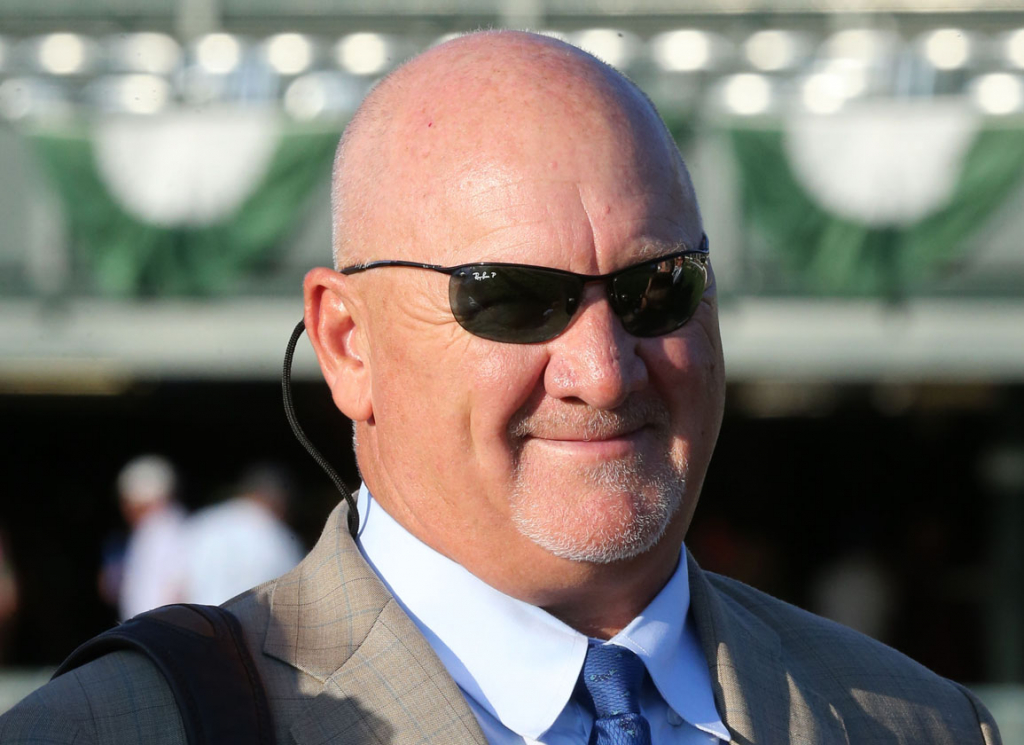
Kenny McPeek | Coady

This, after all, is an unpredictable game. Who could have imagined that Kenny McPeek, having last winter looked as though he might come up with a Derby trifecta of his own, would roll up here with none of those horses–instead buying a $150,000 wild card for a horse that won, you guessed it, two weeks ago at Churchill?

Obviously Creative Minister (Creative Cause) is unlikely to have endured as taxing a race then as the three who do accompany him here from the Derby. As such, he arrives as a kind of compromise between those making a quick turnaround and the ambush party headed by Early Voting (Gun Runner). Whether that proves the best or worst of both worlds remains to be seen, but I do know one thing. We gain nothing by trying to make things “easier”. In the old axiom, it's when the going gets tough that the tough get going. We need to find out who those horses are, and reward the horsemen who produce them.

The post This Side Up: The Tough Get Going appeared first on TDN | Thoroughbred Daily News | Horse Racing News, Results and Video | Thoroughbred Breeding and Auctions.
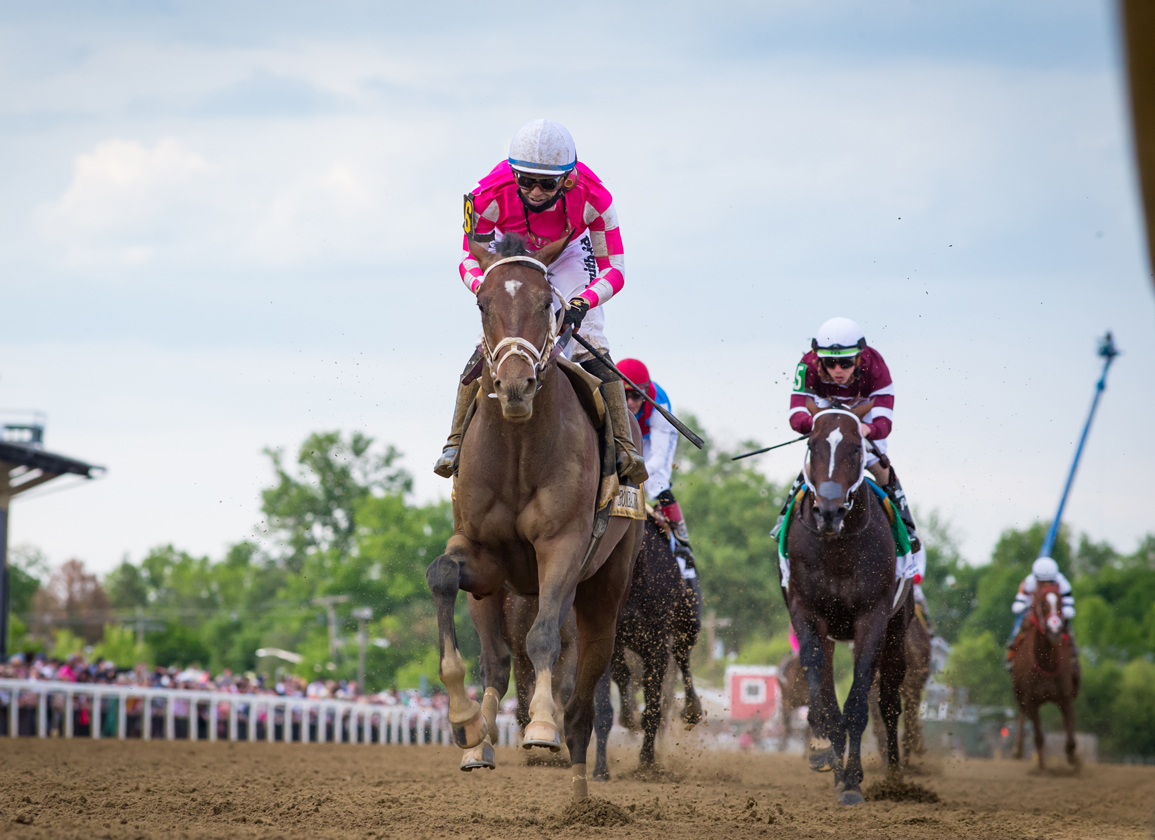

Source of original post

Should the Triple Crown Be Changed? Veteran Industry Participants Weigh In

After the connections of GI Kentucky Derby winner Rich Strike (Keen Ice) opted to skip the GI Preakness S. and instead prepare for the GI Belmont S., the structure of the Triple Crown races has been a subject of debate leading up to the second leg of the historic series. Should the timing between the races be adjusted? We asked a few veteran industry participants here.

Steve Asmussen:

I think it's what makes it the Triple Crown. There are other lucrative races on the calendar, but these are the American Classics. I think that it all depends on who has what horse in what year.

[Asked about timing between races with Preakness contender Epicenter] I'm far more concerned about the weather, which you would have no control on that if you ran it later. If anything, there's a good probability of it being that much hotter.

The difference of two weeks from the Kentucky Derby to the Preakness and three weeks from the Preakness to the Belmont is negligible. I think a similar argument that would come into that is, would you have more entries if the Belmont wasn't a mile and a half? But the Belmont is a mile and a half. That's what makes it the Belmont. Having the Preakness two weeks after the Derby is what makes it the Preakness.

I've had several runners in the Preakness and our two winners were Rachel Alexandra, who won running back 15 days after the Kentucky Oaks, and then Curlin running back 14 days after the Derby. I've had fresh horses coming into the Preakness who ran well, but none that were winners.

Kenny McPeek:

I don't think there's anything wrong with the timing of the Triple Crown. I think it's fine. It's the ultimate challenge and I think especially without Lasix nowadays, it's even better. Horses can come back quicker. It's tradition and it's hard to do. It takes a really special horse.

Chris McCarron:

I don't think it should be changed. I know that it has changed a number of times over the last 150 years, or whatever it is.

Even if we adjusted things by one week and had three weeks between the Preakness and the Derby and then three to the Belmont, it would certainly make things a little bit easier because a horse is going to have another seven days to rebound and to avoid any kind of a bounce. But if that happened, you'd have to put an asterisk next to any future Triple Crown winners. It would diminish the accomplishment.

With Alysheba, he won the Preakness easily but he was a little bit tired, a little bit knocked out coming into the Belmont. The timing of the races probably did catch up to him. That being said, I don't believe it's in the industry's best interest to fool around with the timing of the races.

Check in tomorrow for more responses from industry participants and see our responses from yesterday here.

The post Should the Triple Crown Be Changed? Veteran Industry Participants Weigh In appeared first on TDN | Thoroughbred Daily News | Horse Racing News, Results and Video | Thoroughbred Breeding and Auctions.

Source of original post

Preakness Hero Rombauer Seeks New Kentucky Home

Last year's edition of the GI Preakness S. marked one of the best days of John Fradkin's life when Rombauer (Twirling Candy-Cashmere, by Cowboy Cal), a second-generation homebred for the California native and his wife Diane, took the second leg of the Triple Crown.

Going off as the fifth choice, Rombauer stormed past favorites Medina Spirit (Protonico) and Midnight Bourbon (Tiznow) in the stretch to win by 3 1/2 lengths. It was the first Preakness victory for trainer Michael McCarthy and jockey Flavien Prat and the first Grade I win for his breeders and owners, the Fradkins.

“It was a glorious day,” John Fradkin said as he reflected on last year's achievement. “At the time I was not expecting to win, but I didn't think it was impossible. I knew the horse was doing really well and I knew he would run the race of his life, but I didn't think he would improve as much as he did.”

Since that unforgettable day, Fradkin has learned just what is meant when it is said that racing is a game of highs and lows. After another big-hearted effort to run third in the GI Belmont S., Rombauer enjoyed a 90-day layoff and returned to the racetrack last fall. He was preparing for bids in the G1 Dubai World Cup and GI Pacific Classic when he took a bad step during training and was officially retired early this year.

While the Fradkins were disappointed in how their stable star's racing career was put to a sudden end, they now have big plans for the Classic winner. This month, they launched a campaign for Rombauer's stud career and are hoping to send him to the big leagues in the Bluegrass.

“We would really like to see him stand in Kentucky,” Fradkin said. “He got hurt at a very inopportune time where it was too late to do anything for this year's breeding season. To give him the best chance, it made sense to do it right and wait until next year. Everyone likes first-crop stallions and I don't think it's impossible for him to get 150 mares in 2023.”

Rombauer won first time out as a juvenile, speeding home in :22.93 going a mile on the turf at Del Mar. Also at two, he ran second in his dirt debut in the GI American Pharoah S. and was fifth in the 2020 GI TVG Breeders' Cup Juvenile. He was successful on the Tapeta at Golden Gate in his winning sophomore debut in the El Camino Real Derby and was third in the GII Toyota Blue Grass S. ahead of his victory at Pimlico, which was the sixth-fastest running of the Preakness at its current distance.

Rombauer bests Medina Spirit and Midnight Bourbon in the 2021 Preakness S. | EquiSport Photos

“I always had high hopes for him,” Fradkin noted. “He seemed to always have the look of eagles and he was a good mover. He was also really intelligent, even from the times when I played with him in the field. Eddie Woods really liked him so I always had high hopes, but he obviously surpassed all our hopes.”

While Fradkin pointed to Rombauer's versatility and precocity as some of his best credentials as a future stallion, he said the 4-year-old's most attractive quality for breeders will be his pedigree. He explained how Rombauer is bred on a similar cross to hot sire Gun Runner, noting the success Candy Ride (Arg) and his sons have had with Storm Cat-line mares, and he also talked about the quality surrounding Rombauer's female family.

Rombauer's second dam, Ultrafleet (Afleet), was purchased by the Fradkins as a yearling for $10,500 in 1993. She never placed in a race, but went on to become a highly-successful broodmare. She produced five-time graded winner California Flag (Avenue of Flags) and MGSW Cambiocorsa (Avenue of Flags), the dam of four stakes winners including Grade II winners Moulin de Mougin (Curlin) and Schiaparelli (Ghostzapper). Cambiocorsa's GISP daughter Vionnet (Street Sense) produced European highweight and multiple Group 1 winner Roaring Lion (Kitten's Joy).

“Even if I didn't have anything to do with this horse, I would look at that pedigree and think, wow that's an amazing family,” Fradkin said. “It's done a lot of everything. Rombauer is a Classic winner on dirt. Roaring Lion is a Classic winner in Europe going a mile and a half. Then you have California Flag who won a Breeders' Cup Turf Sprint. Basically this family can do it all.”

Fradkin said he believes that Rombauer's dam, Cashmere (Cowboy Cal), has inherited her family's potent genetics. She has produced five winners from five to race. Three of those won as first-time starters. The mare's 3-year-old daughter Republique (Strong Mandate) just won on debut at Gulfstream in April and she also has a promising 2-year-old Cairo Prince colt named Alexander Helios in training with Michael McCarthy.

“There's a lot of precocity there and there's a good chance that Rombauer can pass that on,” Fradkin said. “I think if he gets a shot in Kentucky, he has a good chance to succeed. There's so much in that family that you know is going to come out eventually.”

Rombauer currently resides at WinStar Farm. There has already been interest in the stallion prospect, but Fradkin is biding his time and waiting for the right offer to come in.

“We're looking forward to supporting him and cheering on a whole crop of baby Rombauers in the future,” he said. “It's not all about the money. There is reason to believe that Japanese interests will come to look at him in September, but I would accept a lower offer from Kentucky because it would be more fun for us. If you look at history, almost every male Preakness winner who wasn't a gelding got a chance to stand in Kentucky, so why not Rombauer?”

The post Preakness Hero Rombauer Seeks New Kentucky Home appeared first on TDN | Thoroughbred Daily News | Horse Racing News, Results and Video | Thoroughbred Breeding and Auctions.

Source of original post

Notable US-Sired Runners in Japan: May 22, 2022

In this continuing series, we take a look ahead at US-bred and/or conceived runners entered for the upcoming weekend at the tracks on the Japan Racing Association circuit, with a focus on pedigree and/or performance in the sales ring. Here are the horses of interest for this Sunday running at Tokyo Racecourse, where the featured event is the second leg of the Japanese Filly Triple Crown, the G1 Yushun Himba over 2400 meters:

Sunday, May 22, 2022
2nd-TOK, ¥9,900,000 ($77k), Maiden, 3yo, 1600m
CHAMP DE MARS (JPN) (c, 3, Arrogate–Pressurizing, by Henrythenavigator) is the first Japanese-foaled produce for her dam, an unraced half-sister to the legendary Zenyatta (Street Cry {Ire}) and MGISW Balance (Thunder Gulch), who was bought back on a bid of $875K when offered at the 2017 Fasig-Tipton November Sale after which she was acquired by Northern Farm. Pressurizing produced a filly by Speightstown in 2018 and was among the first book of mares bred to Arrogate before being exported to Japan. Pressurizing's current 2-year-old, a colt by Kizuna (Jpn), fetched better than $907K at last year's JRHA Select Sale. Damian Lane has the call on Champ de Mars. B-Northern Farm

The post Notable US-Sired Runners in Japan: May 22, 2022 appeared first on TDN | Thoroughbred Daily News | Horse Racing News, Results and Video | Thoroughbred Breeding and Auctions.

Source of original post

Verified by MonsterInsights