Attfield Closes in on the 2000 Club

In an era where robust stables seem to dominate the upper echelon of racing, dual Hall of Famer Roger Attfield has proven that while numbers matter, how you handle the ones you've got is often of greater consequence. And although one operation might attain a certain number of wins at half the speed of another, in part buoyed by its sheer loft, crossing the wire first remains the great equalizer. Illustrating that importance of reaching the milestone following a lifetime of churning out the highest quality runners, Attfield remains only two shy of yet another career achievement, the 2000-win mark.

“It's obviously a milestone,” he said. “I feel it's a big accomplishment considering how many horses I've actually run over the years. Honestly, I hadn't really thought about it too much until very recently. But all of these milestones are very satisfying, aren't they?”

Attfield's list of racing accomplishments would make any racing novice blush. The native of Newbury, England has accounted for 22 Canadian Classics, winning a record eight Queen's Plates, the Prince of Wales S. five times and the Breeders' S., the final jewel in Canada's Triple Crown, on nine occasions. Earning the Sovereign Award as the Outstanding Trainer eight times, the 82-year-old has also shown his might south of the border on racing's biggest days, including a victory at the Breeders' Cup in the 2011 Filly & Mare Turf with Perfect Shirl. He is also responsible for molding the careers of seven Canadian Horses of the Year and subsequent Hall of Fame inductees–Norcliffe, Play The King, With Approval, Izvestia, Peteski and Alywow. Included among Attfield's 51 Canadian champions is GI Shadwell Keeneland Turf Mile winner Perfect Soul, the leading grass horse in 2003. Among his most recent Grade I winners, Lady Speightspeare (Speightstown) took the 2020 renewal of the GI Natalma S. before adding last season's GII Bessarabian S. And already this season, he showed he still has fire power in the arsenal when Shirl's Speight (Speightstown) annexed the GIII Tampa Bay S. in February before giving his Hall of Fame trainer yet another win at the highest level in the Apr. 15 GI Maker's Mark Mile S. at Keeneland.


Scaling the Cliffs

Armed with a degree in agriculture, while specializing in farm management, Attfield was an accomplished international show jump rider in his native England, and also spent a time as an amateur steeplechase rider, before immigrating to Canada in 1970.
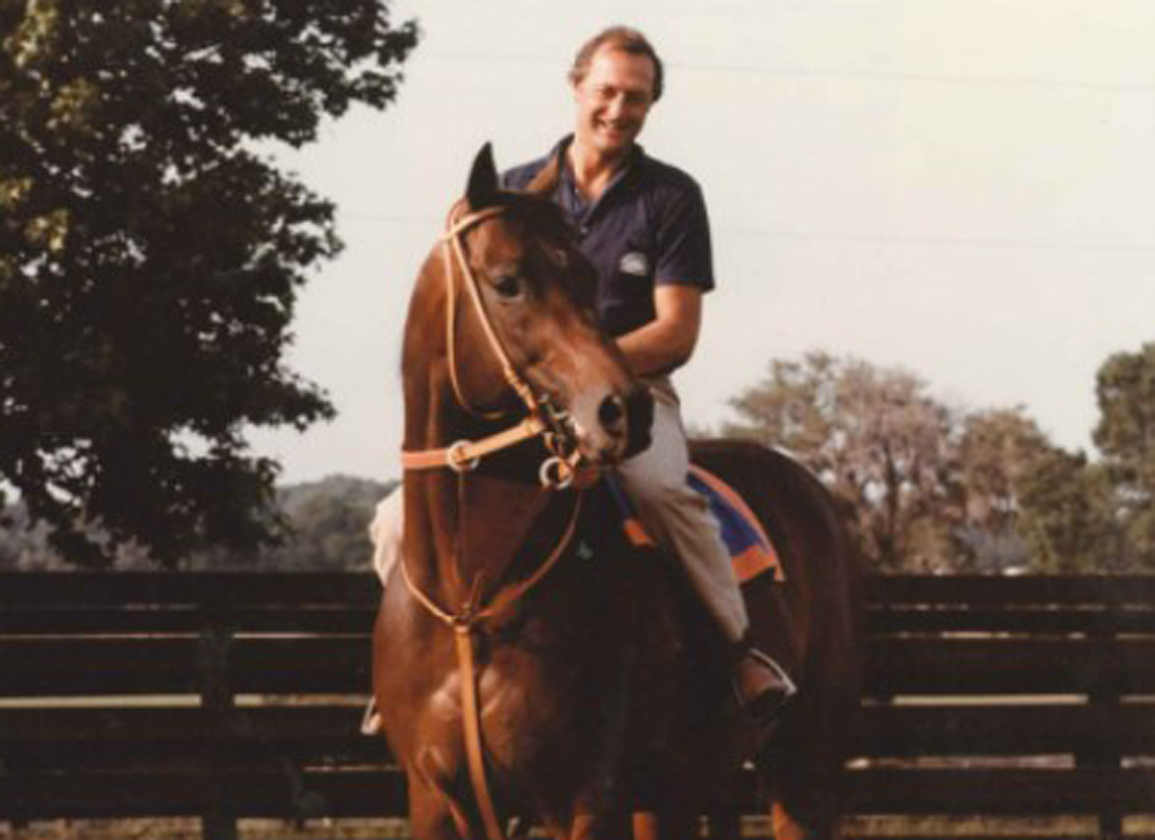
Norcliffe and Attfield | Woodbine Photo

“I had anticipated carrying on with my show jumping career but I got sidetracked a little bit,” he recalled. “I started to help Frank Stronach out. He had a very small stable at that time, about 25-acre farm in Canada. I trained a few for him, so that got me started with the flat racehorses. I also had a few surgeries on my ear which affected my equilibrium, so I wasn't really able to carry on with showjumping anyway.”

In 1971, the Englishman began training for Roy Kennedy's Gateway Farms in Milton, Ontario and three years later, took over as head trainer of Lt. Col. Charles (Bud) Baker's Norcliffe Stable.

“Col. Baker bought a young horse named Norcliffe,” he explained. “At that particular point in time I galloped all my horses, and he approached me about training privately for him since he was concerned about how this young colt would be handled. In 1974, I went to Payson Park with him as a yearling turning two.”

Getting off to a fast start with that operation, Attfield nurtured Norcliffe to a juvenile championship in 1975 and the colt followed up the next season with a victory in the Queen's Plate, the trainer's very first attempt at the Canadian Triple Crown. The son of Buckpasser, who also won the Prince of Wales S., failed to handle the soft turf while finishing fifth in the final leg of the Triple Crown. He went on to earn 1976 Horse of the Year honors.

“In the early years, the Prince of Wales was actually held on the turf at Fort Erie,” explained Attfield. “Norcliffe won the Plate and then won at Fort Erie, where the turf was rock hard because it was the middle of the summer. But the [old turf course] at Woodbine could be very soft indeed. And some horses, like Norcliffe, just couldn't handle that soft going. He had low action, so that was really tricky. But he went on to be a tremendous horse. That really launched my career in Canada.”

While successful in his first decade of training, Attfield's career hit another gear after becoming the private conditioner for D.G. 'Bud' Willmot's Kinghaven Farms in 1985. It didn't take long for him to register his second Queen's Plate win in 1987 with Market Control before bagging lucrative $1-million bonuses when Kinghaven runners With Approval and Izvestia won consecutive Triple Crowns in 1989 and 1990. With the help of Attfield, Kinghaven rounded out the 1990 season as Canada's leading owner with over $5-million in earnings. The trainer also guided Alydeed, the 1992 winner of the Queen's Plate, to a second-place finish in that season's GI Preakness S. and added a victory in the following year's GI Carter H. In all, Kinghaven earned the Sovereign Award as Canada's leading owner on five occasions, four of those under the guidance of Attfield.

“We had a great relationship for a number of years,” he said.

Although Attfield largely made his mark handling high quality stock and many leading prospects in the north, he also proved his ability to develop less likely candidates into champions as well.

“A horse that has always been a favorite in my mind, but wasn't really the best horse was Play The King,” he said of the Canadian champion that went on to be inducted into the Hall of Fame in 2020. “He was a huge surprise that went on to become a very good horse. He was an absolutely useless 2-year-old. We left him in Canada when we went to Florida that year. In fact, the farm manager tried to find a good home for him as a riding horse. He was clumsy. He'd stumble over a pole on the ground and fall down, so he never went anywhere. I came back the following spring and I saw him turned out with a donkey and a retired pony. That pretty much says it all. So, we started to train him again to see if we couldn't find a way to find him a home. All of a sudden, he turned around to be a very good horse. Literally, the change came from out of the blue, which surprised all of us. I had never seen anything like it in my life before and I don't think I'll see anything like that again.”

Attfield and The Queen Mother in 1979 | Woodbine Photo

Unraced until his sophomore season, the Kinghaven homebred won four of six starts at three, before taking seven of 13 starts at four–six at the stakes level–including Aqueduct's GIII Toboggan H. in 1987. Injured prior to that season's Breeders' Cup, he underwent surgery to insert screws into the damaged leg and was given seven months off, but had done enough to earn the Sovereign awards as champion sprinter and older horse for the 1987 season. He returned at five better than ever, winning four of six starts, including a repeat in the GIII Nearctic H., and finishing a close-up second behind eventual Eclipse Award-winning sprinter Gulch in the GI Breeders' Cup Sprint at Churchill Downs.

“He was an amazingly good horse,” stated Attfield. “Just a really nice horse to be around. He always tried his best. And he was always a barn favorite because of his laid back character. He might not have been the best horse I trained, but he definitely was one of my favorites.”


Esteemed Company

When Mark Casse's induction to the National Museum Hall of Fame was announced in 2020, it marked the latest commendation of the Canadian racing industry. However, it wasn't the first time that a horseman entered the great Hall on both sides of the border. It began with the 1977 induction of Quebec-bred Lucien Laurin (inducted a year later in Canada), who famously trained the mighty Secretariat, and the trend continued when Argentine-born Horatio Luro, overseeing the powerful Windfields Farm of E.P. Taylor, joined the U.S. elite in 1980 (he was inducted into Canada's HOF in 2014). However, Attfield remains the sole member of the illustrious bi-Hall of Fame club to win a Canadian Triple Crown. Inducted into the U.S. National Museum of Racing Hall of Fame in 2012, he was inducted to its Canadian counterpart in 1999, his first year of eligibility at 60 years old. Attfield further widened the chasm between himself and his illustrious predecessors, sweeping the Canadian Classic trio on three separate occasions with Kinghaven's With Approval in 1989, that operation's Izvestia in 1990 and Peteski, campaigned by Earle Mack, in 1993.


Triple Wow

Considering the Canadian Triple Crown has been landed only 12 times since 1932, the fact that a single trainer has accounted for three of those victories illustrates Attfield's dominance in the Canadian racing landscape. And all three of his Triple Crown heros provided Attfield with rollercoaster rides that are often associated with horse racing.

Attfield's first Triple Crown winner With Approval proved he could compete, and win, on either surface. And while talented, the grey was definitely not a lock.

“We definitely saw the talent in him early, but we also knew he was a turf horse. To win the Triple Crown with him, we had to win the first two phases of it first. We thought he was capable of doing it, but it was going to be a struggle because he really didn't like the dirt.”

“When he won the Plate, it was literally a head bob that could have gone either way. He later won the Prince of Wales, but not very convincingly. I longed to see him on the grass, so when the Breeders S. came around, I just knew he'd win it. After that, he never set foot on the dirt again.”
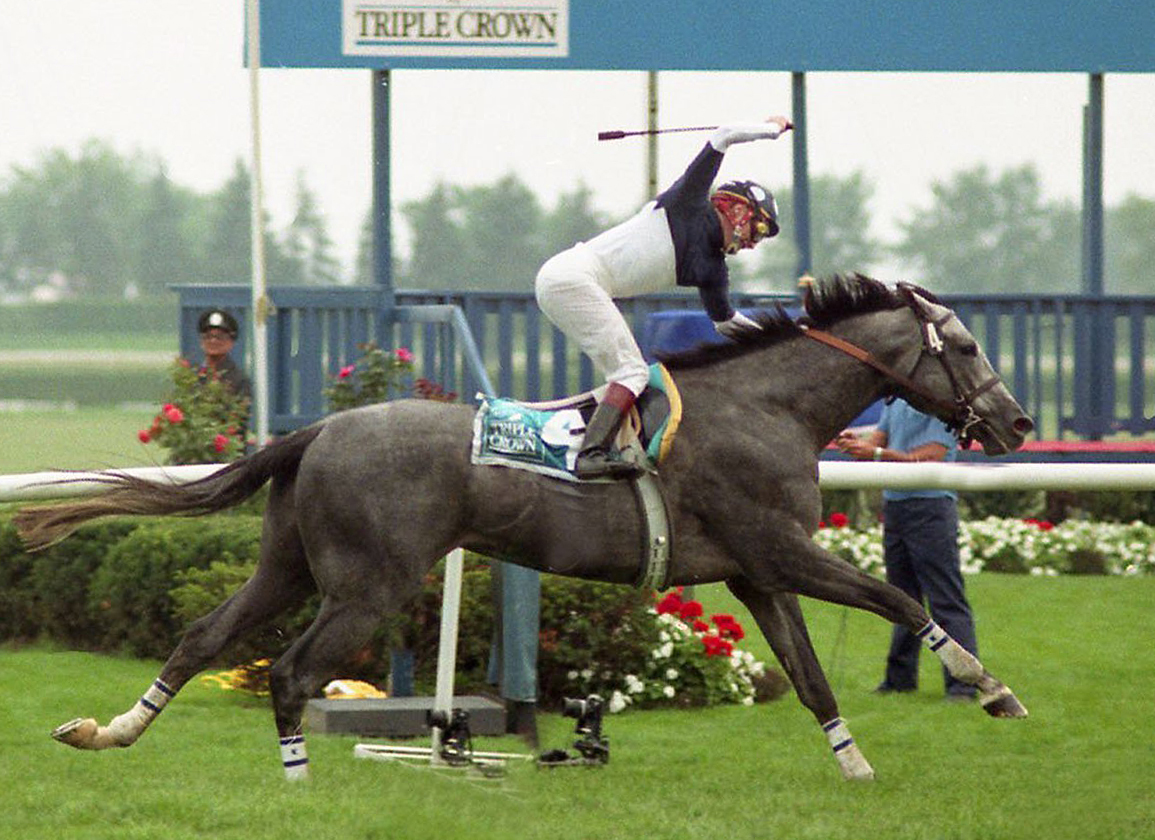
With Approval sweeping the 1989 Canadian Triple Crown | Michael Burns

In addition to the trio of Classics, the son of Caro also took the 1989 renewals of the Marine S. and Plate Trial S. en route to a 3-year-old championship and Horse of the Year honors. He also annexed the Bowling Green H. and Tidal H. at four. The grey was inducted into the Canadian Racing Hall of Fame in 1993.

Whereas With Approval had to earn his stripes, Izvestia was pegged a star early on. Flashing his brilliance at Keeneland when winning the Transylvania S. and Forerunner S., the grey later added wins in a pair of Woodbine stakes, including the Plate Trial S., before sweeping the triple in impressive fashion.

“I knew [Izvestia] had a great deal of ability, but after he won those two stakes so impressively at Keeneland, I began to think he could sweep the Triple Crown too,” recalled Attfield.

Later in the season, he added a win in the Molson Export Million. Named Canadian Horse of the Year, Champion Turf Horse and Champion 3-year-old in 1990, the son of Icecapade kicked off his 4-year-old season with a pair of stakes wins, including Gulfstream's Canadian Club H.

“Izvestia really took it to another level to be quite honest,” said Attfield of the colt who tragically broke down in the 1991 Rothmans International. “He was just an exceptionally good horse. He won the Triple Crown by over 31 lengths. I had a real soft spot for him.”

Flashy in both look and style, Peteski wowed Canadian racing fans by sweeping the Triple Crown by a combined 16 lengths. Setting a track record while taking the 1993 Prince of Wales, the son of U.S. Triple Crown winner Affirmed gave Attfield yet another win in the lucrative Molson Export Million, besting that season's Kentucky Derby winner Sea Hero and GI Belmont S. scorer Colonial Affair, in addition to Grade I winner Kissin Kris. Following a narrow loss in the GI Super Derby, the chestnut was forced to miss the Breeders' Cup Classic due to an ankle injury and was retired thereafter.

“He was an exceptionally good turf horse,” said Attfield. “He also went through the Triple Crown impressively.”

With 12 horses officially recognized as winning the Canadian Triple Crown, Attfield has won a quarter of them, more than any other trainer in Canadian history. The only other conditioner to win more than one is Pete McCann, who trained 1959 winner New Providence and Canebora, who swept the triple in 1963.

If there is a secret recipe to Triple Crown success, surely Attfield must know.

“There really isn't a secret,” he admitted. “First, you have to be lucky and that nothing happens to them between one race and the other. A little thing like a cough could knock them off course. So timing is a big factor. But the main thing is keeping the horse fit and happy. As far as the Triple Crown goes, you have to train them with the intention of bringing them into every one of those races at their peak. That can sometimes be difficult [because of the spacing on the calendar]. You sometimes have to just let them down a little bit so you can bring them back to peak. You just can't keep them up there for an extended period of time. And experience helps you in that regard.”


Five Decades and Counting

A regular on the Woodbine racing scene, Attfield has also raced at many racetracks throughout North America, including Arlington, Pimlico, Hialeah, Belmont, Saratoga, Delaware, Monmouth, Santa Anita, etc. Attfield, who has been based at Payson Park during the winter months since he took his first champion Norcliffe there in the early '70s, continues to compete at Gulfstream during the Championship meet when the opportunity arises. Having enjoyed vast amounts of success at Keeneland, he continues to target the Lexington oval's spring meet before returning to his Woodbine base for the summer and fall months.

“I've raced all over America,” the horseman affirmed. “I think I've won stakes at every track and in every state that I've run at. At one point in time, I was traveling a lot. I had three divisions and I had a motor home to facilitate moving from one track to another. We did a lot of moving around, which is difficult to do now, especially given how we did it in those days.”

Alydeed after winning the 1992 Queen's Plate | Woodbine Photo

With approximately 30 horses currently under his care, Attfield recalls having as many as 65 horses during the height of his career.

“The number of horses in my barn never really fluctuated too much,” he admitted. “In the last couple of years I decided to cut back, because getting good help is getting more and more difficult. And I can't stand doing things incorrectly, so I decided to downsize. I also didn't want to travel as much as I used to. So, I don't really want to top out at any more than 30 horses.”

Attfield continued, “I've pretty much run everywhere, but I never really ran all that many horses. I went about 20 straight years averaging 20% [winners]. Last year, I may have run 20 horses in total. So, I don't run many horses anymore. But I never really did, as compared to some of the trainers out there now. And I wouldn't even want to be trying that at this point right now honestly. I know when I had the three divisions, I was working very hard. I was at every track at least once a week. Having the motor home helped a lot. But that all gets old after a few years.”

In an era that has proven wildly lucrative, yet tempestuous in equal measure for the contemporary trainer, Attfield admits that the current racing landscape has its challenges.

“To be honest with you, I'd find it difficult to be starting off now, the industry has changed so much,” he admitted. “Training is really very time consuming. You have to be a good horse person but you also have to be a good people person. You have to be very good at communicating, which quite honestly, has never really been one of my strong points. I get so wrapped up in the horses that I would forget to bring anyone else into the picture. But despite everything that has changed, the one thing that really hasn't is you need to surround yourself with the best help you can find.”

And the other ingredient for training success that hasn't changed?

“I just love horses,” he said. “And I plan to keep training until I am just not capable of doing it anymore or I just fall off my perch.”

The post Attfield Closes in on the 2000 Club appeared first on TDN | Thoroughbred Daily News | Horse Racing News, Results and Video | Thoroughbred Breeding and Auctions.

Source of original post

Another Great Navigator, Another Star?

The minute owner Vincent Annarella of Holly Crest Farm named a New Jersey-bred he owned and bred Great Navigator (Sea Wizard), the colt had a lot to live up to. The name was borrowed from the first Great Navigator (Gulch), who was trained by a longtime Monmouth Park stalwart, the late John Mazza, and won the 1992 GI Hopeful S. at Saratoga. Could this one be as good? It's not out of the question.

Running in an open-company maiden special weight race on the June 4 card at Monmouth, Great Navigator won by 5 3/4 lengths, covering the 4 1/2 furlongs in 52.34 seconds.

“I don't know how good he is,” winning trainer Eddie Owens, Jr. said. “I know he's a nice horse. How far will he go? I don't know. He's going to grow and is only going to get bigger. After he passed those horses, the jockey pretty much eased up on him. He might be a lot better than I think he is.”

The first Great Navigator was owned by Ron and Rosemary Shockley. He was bred in Kentucky and was bought for $70,000 at a Fasig-Tipton 2-year-old sale. After breaking his maiden at Monmouth by eight lengths, he finished second in the Tyro S. and third in the GII Sapling S. before registering the upset in the Hopeful at 24-1. He would go on to win three more stakes and finish second in the GII Fountain of Youth. He had to be euthanized after breaking down in the 1993 Jersey Shore Breeders' Cup at Atlantic City. He was later buried in the Monmouth Park infield.

Mazza passed away in May of 2020 at the age of 82. In what was one of the final chapters to his training career, he trained New Jersey-bred Horse of the Year Horologist (Gemologist) through the first part of her career and won the GIII Monmouth Oaks with her in 2019. He also trained Sea Wizard (Uncle Mo) during his brief career.

Though Annarella did not own the first Great Navigator, he was closely connected to Mazza throughout his long training career, as Mazza served as the private trainer for Holly Crest for about 50 years. To name a horse in honor of the best horse Mazza ever trained was a fitting way to remember a person who was beloved on the Monmouth backstretch. When Mazza passed away, Owens, his former assistant, took over as Holly Crest's trainer.

“John was a good friend of mine” said Owens, a Long Branch, NJ, resident. “I was the assistant to Joe Orseno for 17, 18 years. We were in the barn next to John's and then in the same barn. He was the nicest guy. We talked almost every day and he always asked me to come to work for him. When Joe didn't send any horses to New Jersey in 2019, I took John up on his offer.”

Owens said he would have preferred to run Great Navigator first time out in a Jersey-bred race, but there weren't any scheduled for 2-year-old maidens until the last week of June. Knowing his horse was ready to run, he opted for the open- company maiden.

With Jairo Rendon aboard, Great Navigator, sent off at 17-1, settled into third early. He started rolling coming out of the far turn and rushed past the pacesetters in mid-stretch to win easily.

“I wouldn't have ran him in that race if I didn't think he could compete against those horses.” Owens said. “I thought he would run well and I wasn't surprised that he did run well. I was surprised that he finished so strong. I was wondering if I had him tight enough. I guess I did.”

It was a big day not only for Great Navigator, but also for his sire. Sea Wizard was picked out by Mazza at the 2015 OBS March 2-Year-Old Sale, where he sold for $190,000. For Mazza and owner Mac Nichol, he finished second in his debut in an Oct. 11, 2015 race at Belmont before winning a March 27, 2016 maiden at Gulfstream by three lengths. Mazza had big plans for the colt but he was injured and never ran again after the maiden win. He never got a chance to show what he could do on the racetrack.

Sea Wizard stands at stud at Sam Fieramosca's Colonial Farms in Colts Neck, New Jersey, for a stud fee of $1,500. On the same day that Great Navigator won so impressively, Owens and Holly Crest sent out another first-time starter by the sire, the 2-year-old Jersey-bred filly Carats Forever (Sea Wizard). Also facing open company, she flashed some early speed before finishing third, 3 1/4 lengths behind the winner.

“I knew she would run well,” Owens said. “What surprised me with her was that she was on the front end battling. I was hoping she would relax a little more.”

Great Navigator and Carats Forever were the first two horses by Sea Wizard to make a start. It's early, but Sea Wizard showed a lot of promise during his brief career and his first two foals ran beyond expectations in their debuts. He is an interesting sire.

Owens isn't sure what is next for Great Navigator and said he will look for a stakes race for him. With few options available in the early summer months for 2-year-olds that have broken their maidens, Great Navigator's next race could come in the July 16 GIII Sanford S. at Saratoga. The Sanford, of course, is a prep for the Hopeful, run this year on Sept. 5, 30 years and six days after the original Great Navigator won the race.

“How good is this horse?” Owens said. “We're going to find out.”


The post Another Great Navigator, Another Star? appeared first on TDN | Thoroughbred Daily News | Horse Racing News, Results and Video | Thoroughbred Breeding and Auctions.

Source of original post

Can Churchill Downs Music Video Attract New Race Fans?

Jack Harlow, one of the most popular up-and-coming rappers in America, was in the spotlight at Churchill Downs when the 24-year-old delivered the 'Riders Up' call for this year's Kentucky Derby. The Louisville native made his visit to the races an all-day event by filming a music video for his new song entitled 'Churchill Downs.'

Named a top new artist at last year's Billboard Music Awards, Harlow's popularity has skyrocketed this year after the release of his album Come Home The Kids Miss You, which includes his No. 1 hit 'First Class.'

The 'Churchill Downs' music video was released on June 1 and instantly became a viral sensation. Performing from a glass enclosure in the infield, Harlow is joined by fellow rapper and pop culture figure Drake, who is featured in the song.

Racing fans will recognize several key moments from Derby Day throughout the video: the turn into the stretch in the GI La Troienne S. with Pauline's Pearl (Tapit) flying on the outside, Jack Christopher (Munnings) taking the lead in the GII Pat Day Mile S., and of course Rich Strike (Keen Ice) squeezing past horses in the GI Kentucky Derby.

Now less than two weeks after its release, the video has over 10.5 million views and is currently one of the top 10 trending music videos on YouTube.

Samantha Bussanich is the co-founder of Nexus Racing Club, a current Godolphin Flying Start trainee, and a big Jack Harlow fan. She has been anticipating the release of this music video since Harlow hinted at its filming during his interview with NBC Sports at the Kentucky Derby.

“In our generation, Jack Harlow is really the next big thing,” she said. “Especially with him being from Kentucky, it's a really big deal to have a superstar like that. All my friends that I went to school with were asking how they can go to the races and maybe see Jack Harlow.”

Bussanich took to social media to share her excitement, but received a surprising stream of backlash from many who disagreed with her belief that a social influencer like Jack Harlow can be positive marketing for racing.

One common argument was that people in their early to mid-20's should not be racing's target market because young people don't have the time and, more importantly, the money to contribute to the industry in a meaningful way.

Busssanich, who recently spent a stint in Australia during her Godolphin Flying Start training, explained that the Australian racing industry is an example of effective marketing that targets an array of race-goer demographics.

“If you're involved in racing at any level, you know that Australian racing is doing it the best,” she said. “Owners, bettors and young people all have a good time. A lot of people get defensive about who is racing's target market. I think that there are multiple target markets and everyone is vital to the success of the industry.”

She pointed out a club in New Zealand called Boy's Get Paid, which was founded 10 years ago by a dozen young men in their mid-20's. According to their website, they were founded as “a group of lads who loved to back a winner.” Their numbers grew over time and today, Boy's Get Paid has over 18,500 members. At the 2020 Karaka Million, their group of 450 people bet $250,000.

“People on social media talk about how the college kid betting $15 or $20 isn't that important, but if you multiply that by 50 or 100, they become vital for the game,” Bussanich explained. “With Jack Harlow's video, even though it might not seem like the biggest deal, it's still getting exposure for the racing industry. If you connect it with something like the Boy's Get Paid club, maybe young people here in the U.S. could become interested in racing and form a club. Those 10 kids could turn into 100 and maybe someday they could buy a horse. It's really about long-term gain.”

Another argument Bussanich encountered was that Harlow's time at Churchill Downs is not the first instance of a famous person stopping by the track. What makes Harlow's Kentucky Derby visit any different?

Bussanich explained that while racing can easily get high-profile names on big race days, the industry often falls short in taking the next step.

“We can't just have a music video and expect people to fall in love with the sport,” she admitted. “We need racetracks and the industry to educate people. The next part of that is about how we grasp people and educate them further from beyond thinking that the track is a fun place to get a drink.”

Again, Bussanich referenced Australian racing as a model worth following.

“In Australia, every trainer has a way for people to get involved,” she said. “If you look on [Hall of Fame Australian trainer] Chris Waller's website, it shows different ways to own horses. There's education there.”

So, can Jack Harlow's music video, and future headlines of pop culture figures at the racetrack, help attract fans who will stick around after the social influencers have come and gone? According to Bussanich, it all depends on how the industry responds.

“Not every day is Kentucky Derby Day, but there are some really awesome events at tracks across the U.S. where young people are bound to have a good time,” she said. “If we can get them to the track and grasp their attention, we need to figure out where to go from there. The education part needs a lot of work. What do we do after we get them to the races? This music video is really great exposure for horse racing and it looks at the highs of the sport in video concept, but now it's about taking that video and seeing what can come from it.”

The post Can Churchill Downs Music Video Attract New Race Fans? appeared first on TDN | Thoroughbred Daily News | Horse Racing News, Results and Video | Thoroughbred Breeding and Auctions.

Source of original post

The Week in Review: The Day That Jack Christopher and Flightline Stole the Show

After winning the GII Remsen S. and the GII Wood Memorial S. and running a credible fifth in the GI Kentucky Derby, Mo Donegal (Uncle Mo) put it all together on Saturday. He was the decisive winner of the GI Belmont S. to give New Yorker Mike Repole a one-two finish in the final leg of the Triple Crown at his home track. It was a good story and a good performance from a very good horse.

It was not, however, the highlight of the day.

It's hard to overshadow a Triple Crown race, but that's exactly what happened Saturday at Belmont Park, where we saw a pair of performances from two special horses that are freakishly fast and talented. It's rare when horses can live up to the hype, but Flightline (Tapit) and Jack Christopher (Munnings) didn't meet expectations, they shattered them. These are superstars.

As impressive as Flightline had been in his first three starts, he came into the GI Hill 'n' Dale Metropolitan H. with something to prove. He had won the GI Runhappy Malibu S., but that was against 3-year-olds and at seven furlongs. The Met was an entirely differently story. Though there were just five horses in the field, the competition included GI Breeders' Cup Sprint winner Aloha West (Hard Spun), GI Jockey Club Gold Cup winner Happy Saver (Super Saver) and the hottest horse on the East Coast, GI Carter H. winner Speaker's Corner (Street Sense).

It was going to be the first true test of his brief career and the test became even more daunting when he broke a step slow. That kept him from getting the lead, which was where jockey Flavien Prat wanted his horse to be. Riding the rail, Prat tried to squeeze past Speaker's Corner but it didn't work. Flightline had to regroup, take back and come around Speaker's Corner. None of it mattered. He swept past a fading Speaker's Corner on the turn and proceeded to gallop away from the field to win by six lengths over Happy Saver. He's not just good, he's tenacious.

Flightline earned a 112 Beyer speed figure.

While it may seem sacrilegious to say that a horse who has only run four times is among the best horses we've ever seen, in the case of Flightline, it doesn't seem like a stretch. That's how dominant he's been and how fast he has run. Horses that can do what he can do come around once in a decade, if even that.

How good is Jack Christopher? We still don't know.

He showed a tremendous amount of potential when winning the GI Champagne S. last year but a shin problem kept him out of the GI Breeders' Cup Juvenile. He had to have surgery, so he was not ready for the Triple Crown races. Instead, trainer Chad Brown took his time and had Jack Christopher ready for the GII Pat Day Mile on Derby Day. He won the Pat Day Mile by 3 3/4 lengths and was arguably the best 3-year-old to perform that day at Churchill Downs.

Not ready to go a 1 1/2 miles, Jack Christopher bypassed the Belmont and was sent to the GI Woody Stephens S. at seven furlongs. As good as he had been in his three prior starts, it was the Woody Stephens where he made a statement. He won by 10 lengths and earned a 107 Beyer, nine points higher than the number given to Mo Donegal. Once again, he was the best 3-year-old to perform on the card.

The Belmont is the unofficial ending of the first half of the season and the second half figures to include some of the best races we have seen in some time.

As for the 3-year-olds, it's been hard to define who's the best of the group since so many horses ducked one or more of the Triple Crown races. Starting with the GI Haskell S., which is expected to attract Jack Christopher, that should change. This year, the Haskell, the GII Jim Dandy S., the GI Runhappy Travers S. and the GI Pennsylvania Derby may turn out to be more important than the Triple Crown races. You might just get a race that includes some combination of Jack Christopher, Rich Strike (Keen Ice), Early Voting (Gun Runner), Mo Donegal and the division's unluckiest horse, Epicenter (Not This Time).

It's not clear yet where Flightline will run next. The GI Whitney H. at 1 1/8 miles seems like the perfect spot but after the Belmont, co-owner Kostas Hronis mentioned the GI Pacific Classic at 1 1/4 miles when asked about Flightline's next race.  Considering that he's by Tapit and probably better suited to those distances and two-turn races than what he has been running in, there's every chance he might even get better. It's a scary thought.

The older-horse division also includes Life Is Good (Into Mischief), who looked so good when winning the GI Pegasus World Cup, where he thrashed Horse of the Year Knicks Go (Paynter). After running fourth in the G1 Dubai World Cup, he's scheduled to come back in the July 2 GII John A. Nerud S. at Belmont before going in the Whitney. And don't forget about Country Grammer (Tonalist), the winner of the Dubai World Cup. He'll resurface soon.

A lot can happen between now and the Breeders' Cup Classic and the key for every horse is that they have to stay healthy. But there's a chance that the Classic could include Flightline, Jack Christopher, Life Is Good, Country Grammer, Rich Strike, Early Voting, Mo Donegal, Epicenter and a bunch of other really good horses. Let's hope so. It could be one of the best fields ever assembled.

Super Trainers Dominate at Belmont

While it's nice to see a “little guy” like trainer Eric Reed win the Kentucky Derby, the reality is that the “super trainers” have become more dominant than ever. The very best horses in the sport are concentrated in the hands of just a few trainers, which is not a good thing.

The top four trainers in the nation in terms of earnings combined to win seven of the nine graded stakes run Saturday at Belmont.  Steve Asmussen, who is first, won the GI Ogden Phipps S. with Clairiere (Curlin). Chad Brown, who is second, won the GI Woody Stephens with Jack Christopher, the GI Just A Game S. with Regal Glory (Animal Kingdom) and the GI Manhattan S. with Tribhuvan (Fr) (Toronado {Ire}). Pletcher, who is third, won the Belmont and the Brooklyn S. with Fearless (Ghostzapper). Fourth-place holder Brad Cox won the GI Acorn S. with Matareya (Pioneerof the Nile).

Mike Maker, who is fifth in the earnings standings, did not have a Belmont day winner. Bill Mott, who is sixth, did. He won the GI Jaipur S. with Casa Creed (Jimmy Creed). John Sadler, who is the trainer of Flightline and is 19th in the standings, was the only trainer not among the top six in earnings to win a stakes race. Brown, Asmussen and Cox also won graded stakes Friday at Belmont.

The post The Week in Review: The Day That Jack Christopher and Flightline Stole the Show appeared first on TDN | Thoroughbred Daily News | Horse Racing News, Results and Video | Thoroughbred Breeding and Auctions.

Source of original post

Verified by MonsterInsights