Champagne Room’s First Foal Goes For Two Straight in Japan

In this continuing series, Alan Carasso takes a look ahead at US-bred and/or conceived runners entered for the upcoming weekend at the tracks on the Japan Racing Association circuit, with a focus on pedigree and/or performance in the sales ring. Here are a pair of fillies by American Pharoah for this Saturday running at Hakodate and Hanshin Racecourses. Notable American-breds entered for action Sunday will appear in Saturday's TDN:

Saturday, June 18, 2022
3rd-HAK, ¥9,900,000 ($75k), Maiden, 3yo, 1000m
GLUTTON LASSIE (f, 3, American Pharoah–Brassy Lassie, by City Zip) was crunched into 7-10 favoritism for a 1400-meter Tokyo maiden last Nov. 20, but never landed a serious blow in seventh and makes her return to the races over the minimum trip Saturday. A $40K Keeneland September yearling, the February-foaled bay was knocked down for $350K at last year's OBS March Sale after breezing an eighth of a mile in :10 flat. Glutton Lassie is the only live foal to date for her dam, a half-sister to 2015 GIII Jefferson Cup S. winner Saham (Lemon Drop Kid). The filly's stakes-winning third dam Ticket to Houston (Houston) produced GSW/MGISP Runway Model (Petionville), the dam of four-time 'TDN Rising Star' Grade I winner and current Gainesway stallion McKinzie (Street Sense). B-Fleur de Lis Stable & Ashford Stud (KY)

8th-HSN, ¥14,670,000 ($111k), Allowance, 3yo/up, 1800m
CORDON ROUGE (f, 3, American Pharoah–Champagne Room, by Broken Vow) just failed at odds-on going this distance on Chukyo debut Mar. 13, but got it right last time, carrying the visiting Damian Lane to a popular four-length graduation at that same track and trip (see below, SC 10). The bay is the first foal from her dam, who secured an Eclipse Award with a victory in the 2016 GI Breeders' Cup Juvenile Fillies. Champagne Room's Japan-based 3-year-old half-brother Fidele (Jpn) (Kizuna {Jpn}) was third at Group 3 level last term and is listed-placed this season. B-Northern Farm (KY)

The post Champagne Room’s First Foal Goes For Two Straight in Japan appeared first on TDN | Thoroughbred Daily News | Horse Racing News, Results and Video | Thoroughbred Breeding and Auctions.

Source of original post

Mark Casse Displays Perfect Record With Juveniles So Far in 2022

That Mark Casse won a pair of 2-year-old maiden races Sunday at Woodbine should not have come as a surprise. The trainer hasn't just been hot when it comes to his juvenile runners, he's been perfect. Casse has sent out eight 2-year-olds so far this year and all eight have won.

Six were first-time starters and two others won in their second career starts. He leads all trainers in the category of 2-year-old winners on the year. Steve Asmussen is next with six.

How has Casse done it?

“For one thing, we have a bunch of good 2-year-olds,” he said. “That has not ever been my agenda, to win first time out. All those winners have come off our training center in Ocala and I'm proud of that. That's where I spend a lot of my time. We crank them up at the farm a little more. Those horses have been breezing halves and five-eighths going out of the gate. Our training center is almost like a racetrack, so it doesn't take us long to get them ready.”

Casse added that when it comes to his current crop of 2-year-olds, he was more hands on when they were purchased at sales compared to how he had been in prior years when he relied heavily on agents to send him horses.

“I kind of stepped away for a while and had stopped buying,” he said. “I was going more by the agents. We still train a lot of horses that agents bought. But with this crop, especially, my wife, Tina and I, were pretty involved with it. Nothing was bought without us approving them. Len Green (owner of DJ Stable) said that if you are going to ask a guy to cook it helps if he gets to buy the ingredients.”

It's also notable that Casse didn't exactly break the bank when purchasing the eight. The highest price paid for any among the group was $450,000 and two sold for less than $100,000.

A look at Casse's elite eight:

Adora (Into Mischief): Owned by Tracy Farmer, she broke her maiden on May 14 at Woodbine, winning by 4 3/4 lengths. She cost $450,000 at the Fasig-Tipton Saratoga sale. She is being pointed for the GIII Schuylerville S. on July 14 at Saratoga.

“With Adora, we paid $450,000, more than you'd normally see us pay,” Casse said. “But she has built-in value. A filly like her, if she goes on and is successful she's worth millions of dollars. If you see us paying that kind of money there is usually some residual there.”

Boppy O (Bolt d'Oro): Owned by John C. Oxley and Breeze Easy, LLC, he broke his maiden on May 20 at Gulfstream. He cost $190,000 at Keeneland September and is a half-brother to the Casse-trained Pappacap (Gun Runner), the runner-up in last year's GI Breeders' Cup Juvenile.

Stayhonor Goodside (Honor Code): Named by TDN Writers' Room superfan Skip Anderson, who submitted the winning entry in a TDN name the foal contest. He won a May 21 maiden at Woodbine by 5 1/2 lengths and is being pointed to the July 4 GIII Bashford Manor S. at Churchill Downs. Sold for $85,000 at Keeneland September.

Me and My Shadow (Violence): The filly won a May 28 maiden at Woodbine and is owned by DJ Stable. Cost $185,000 at Keeneland September. Is also being pointed for the GIII Schuylerville.

Ninetyfour Expos (Outwork): After running third in his debut on May 1, won a May 29 maiden at Woodbine by 8 1/4 lengths. Sold for $80,000 at the Fasig-Tipton Kentucky Select Yearling Sale.

Wonder Wheel (Into Mischief): The filly is owned by DJ Stable and cost $275,000 at Keeneland September. She broke her maiden by 2 1/4 lengths when debuting June 3 at Churchill Downs.

“I had been telling the Greens for two, three months that she was something special,” Casse said.

Wonder Wheel is being pointed for the July 4 Debutante S. at Churchill.

Battle Strike (Connect): The Ontario-bred colt won a May 12 maiden at Woodbine by 6 1/4 lengths in his debut. Owned by Tracy Farmer, he cost $130,000 at Keeneland September. He will go next in the July 17 Victoria S. at Woodbine.

Cahira's Blessing (Maclean's Music): Owned by Epona Thoroughbreds, Inc, the filly finished third in her debut and then came back to win a June 12 maiden at Woodbine by 2 1/2 lengths. She will run next in the July 16 My Dear S. at Woodbine.

Casse will have one juvenile starter this weekend in Saturday's first at Gulfstream, and said he expects to unveil a number of other top prospects during the weeks ahead. He said he has about 55 2-year-olds in training.

“We just have a lot of good 2-year-olds this year,” he said. “I think if people took a look at our record with 2-year-olds over the years they'd be surprised by how well we've done. I have a really good crew in Ocala. Mitch Downs has worked for me for 40 years and I have seven or eight people who have worked for me for 30-plus years. I like to think that we are a well-oiled machine.”

The post Mark Casse Displays Perfect Record With Juveniles So Far in 2022 appeared first on TDN | Thoroughbred Daily News | Horse Racing News, Results and Video | Thoroughbred Breeding and Auctions.

Source of original post

Echo Zulu Latest to Show Best of Bill Betz

Bill Betz won't forget the first day he worked on the farm he now calls home. Dr. McGee's son never even got out of his car, just told the college kid to start out front and work his way up.

“Back then they had those weed-eaters with a motor you strapped onto your back,” Betz recalls. “Weighed about 40lbs. So 7:00 a.m., I started weeding down the front of the farm. Get to 10:00 a.m., 11:00 a.m., 12:00 p.m., 1:00 p.m., I don't see anybody. I'm thinking, 'Boy, people really work hard on a farm.' Finally, about quarter to six, no lunch or anything, I'm weeding round these trees up here, and Doc McGee comes in off his rounds. And he drives by, backs up, rolls down the window and says: 'Who are you?'”

Betz introduced himself to the Hagyard veterinarian. First day of his summer job, funding classes at the University of Kentucky: nutrition, farm management, that kind of thing. He'd arrived from Notre Dame with all his worldly possessions–a '64 Dodge and a dog–with a vague plan to transfer some Bluegrass know-how to the Quarter Horse game where he'd been learning the ropes.

At that moment Mrs. McGee appeared with a tray.

“Young man,” she said. “You look like you could use some iced tea.”

Many years later, they all met again on the top floor of the First Security building in downtown Lexington, to close on the sale of the farm. And Mrs. McGee reminded Betz of his response.

With a self-deprecating chuckle, he admits: “Apparently I said to her, 'Yes, I could. Because now I know how Jesus felt when he carried that cross up Golgotha.'”

When Mine That Bird crossed the line, the first person to call was Dr. McGee, saying how happy he was that the farm had raised a Kentucky Derby winner.

Mine That Bird famously brought only $9,500 as a yearling. Betz doesn't pretend he was any kind of standout, though he always believed in the genes: he'd bought the granddam because she managed second in the Canadian Oaks despite cracking a knee. “Something like Mine That Bird, though, that's just the icing on the cake,” Betz says. “That's just being in the game and giving yourself a chance to get lucky.”

Among countless other photos sharing the office walls, however, are a sale-topper and the half-brother to Roman Ruler and El Corredor who made $4.6 million at the 2006 Keeneland September Sale; and many besides, that did their job both in the ring and on the track. The latest is Echo Zulu (Gun Runner), herself a $300,000 yearling, who assisted her American Pharoah half-sister to $1.4 million last September at Keeneland, even though she had just won the first of the three Grade Is that secured her Eclipse Award.

These mementos of elite horses-remarkably copious, for a farm that has seldom grazed more than a couple of dozen mares–attest to the journey dividing that perspiring college kid from the reflective figure now lounging behind the desk. But perhaps it can better be charted by less familiar navigational points dotted about the room: native American totems, a scale model of a Great Lakes freighter, even the “Meditations” of Marcus Aurelius. Hardly standard issue, on horse farms. But never mind that Betz was a Philosophy and English major; here, simply put, is a man profoundly inquisitive about the world around him. And, really, that was also what drew him to horses.

“I think that's the number one thing you need in this business,” he says. “A natural curiosity. To be a careful observer. I think in some ways it's probably been an advantage, not to be second or third generation [in the industry]. Some of those people either don't have that curiosity to really see things and learn. Experience is a great teacher.”

Betz is instead indebted to his father for the template of a self-made man. Having started out as locomotive fireman, he had ended up president of the railroad–and his sons, in turn, were expected to learn about life by experiencing it. Hence the desk replica of the SS Kinsman Enterprise, where Betz had another of his summer jobs.

“She was built in 1927 and was sister ship to the Edmund Fitzgerald that they wrote the song about,” Betz says, referring to the loss of all hands in a Lake Superior storm in 1975. “Having this here reminds me of a different time in my life. We'd bring taconite pellets mined in Minnesota and Wisconsin down to the steel mills. Loading onto the dock, being the young kid, they'd swing you over in what they called the bosun's chair, with a big cable you had to run up and put on a cleat. And the taconite, of course it spills out and you're running over these marbles, with the boat coming in and the gap so wide.” He holds his hands apart. “These boats come in at 660 feet, into a real high dock. And there are no brakes on a boat! There weren't a lot of safety rules back then.”

It was a grounding that gives Betz a distaste for any sign of entitlement in young people today, and he's grateful that his father's “nepotism” was confined to putting his sons on a section gang, laying the track.

“We were knocking these spikes in with a sledgehammer, and the Mexican men would go all day and then build a fire and cook their tacos,” Betz recalls. “But after about five hits, my arms were rubber. And they'd come up, put their arms round me and say, 'That's okay, you go rest.' So when the Mexicans started embracing the horse business, I had nothing but respect for them. It does open your eyes: what the real world is like, and that if you want something you have to go out and earn it.”

A first exposure to horses came through upcountry Ohio weekends with his great uncle, who drove a school bus, but traded work horses on the side.

“He was quite a character,” Betz recalls. “He'd go in there and next thing you knew he'd be coming out with a different horse from the one he went in with. And he'd hook them up to a sleigh, and we'd go on trail rides, and he'd tell all these stories round the camp fire.”

Having learned to handle horses, Betz hooked up with another rare type to show Quarter Horses through his high school years.    “This trainer took me all over the country: Dallas, Denver, Fort Worth, Chicago,” he says. “He liked the drink, he liked the ladies, so he'd go out and party while I stayed behind to feed and groom and then bed down in the corner of the stall. Interesting experience, to say the least. But there I was, a 15-year-old kid, paid $25 for every horse I showed in the ring. I'd go into tack shops and buy myself fancy chaps, I was king of the walk.”

To persevere with horses, even so, struck his family as “a ridiculous thing to do” with law school beckoning. But it was a time of opportunity. People were starting to cross Quarter Horses with Thoroughbreds, and Betz figured that he should come to the Bluegrass and learn a few angles–only to become so absorbed by Thoroughbreds that he never went back.

Lee Eaton gave him a little office to comb through regional racecards, digging out the pedigrees of any fillies entered for a claim. He also had to index, longhand, the families of the many horses sold by Eaton's pioneering agency: toil that left him thoroughly versed in pedigrees. Betz then rounded out his education with the chance to manage Helmore Farm for Edgar Lucas in Maryland.

“They stood three stallions and bred a couple of hundred mares each year,” he recalls. “I didn't have much experience of handling stallions, and it was three old racetrackers and me. I can remember to this day the first mare I foaled on my own, I was so nervous. But you got a lot of stuff thrown at you, real quick, and you learned how to deal with it. After that baptism under fire, coupled what I'd learnt with Lee, I felt there wasn't anything I couldn't do in this business if I kept working hard.”

Betz befriended another outstanding horseman in David Hanley, nowadays at WinStar, but then managing a farm in Ireland before an impressive stint as a trainer. They'd begun a transatlantic pinhook partnership, along with Irish vet James Egan, at a time when the weanling market was little contested.

By now Betz was leasing a farm near Paris from his former boss Lucas, who kept his mares there as part of the package. But then he heard that the McGees were selling and Betz, initially with partners, became only the third proprietor of 300 lush acres previously maintained on a revolutionary war land grant by heirs of Patrick Henry. (“Give me liberty, or give me death!”)

“I knew I didn't want to work for anybody else,” Betz reflects. “I'm my own best critic. It's my life, not somebody else's, and you're not going to give that away. But I realized early on that there was no money in boarding horses, if you do it as you should without cutting corners. So if I was going to have a farm, I decided I'd want a piece of everything that's on it. That was the business model: populate the farm in partnerships, with people loyal to your program. And then upgrade as much as you can, whenever you have the capital.

“You have to be willing to take chances–I started out week to week, payroll to payroll–and you have to be objective. It's like running a sports franchise. These mares are draft choices: some work out, some don't. I want to strengthen their weaknesses without weakening their strengths, but to do that you have to see those strengths and weaknesses clearly. You can't be sentimental. And I think over the years, you develop intuition about it.”

To Betz, mating is all about match-making. “I don't think any stallion is too 'cheap' or too 'expensive',” he says. “All that matters is whether it's the right one for the mare. Can he enhance her? That's what you strive for. Breed the best to the best? Nice if you're Vanderbilt. But sometimes best to the best isn't the best. Yes, I have to be aware of the commercial side, because I sell yearlings for a living. I only race the odd filly. But within that context, within that group of successful stallions, there will always be matches that fit my mare.”

A case in point is Echo Zulu's dam Letgomyecho (Menifee), who had fallen beyond reach in the 2010 Keeneland November Sale, at $235,000, only to slip to $135,000 in the same ring a year later. Her first covers had been pricey, commensurate with her record as winner of her first three starts including the GII Forward Gal S. But maybe they weren't the right covers. Betz sent her to Mineshaft, and came up with graded stakes winner J Boys Echo; to Speightstown, for Grade I winner Echo Town; and then to Gun Runner for her champion. As Steve Asmussen said to him, after Letgomyecho's American Pharoah hit the home run last September: “'Well, I got mine. Now you got yours!'”

“I want to breed aptitude to aptitude,” Betz says, dismissing another lazy convention. “If your mare's fast, don't breed her to a stayer. Breed a stayer to a stayer and hope it's fast, or a sprinter to a sprinter and hope it can carry its speed. But those are just principles over-riding the program. It's like if you're a painter, and someone says why did you use that color? It all goes together at the end of the day, and you just hope that you got it right.”

That feels an instructive analogy, for there's a really creative sensibility at work here.

“I think I do have an artistic side,” Betz accepts. “I love music, I love art, and the way people can express themselves like that. To me, this is really my way to express myself. I'd love to be a musician, but I'm not, so this is kind of my extension.”

Like all artistry, all intuition, horsemanship is hard to articulate. As Betz says, if he can't always remedy a situation with a horse, he tries not to be confused by what's causing it.

“We like to give them human qualities, say they're courageous or whatever,” he muses. “And maybe there's a little bit of that: they can be competitive. But truth be told, the ones that excel, I think it's probably just easier for them. What did Vince Lombardi say? 'Fatigue makes cowards of us all.'

“I remember being sent down to Hialeah to look at this filly Jimmy Conway had, who used to train for Darby Dan. And I was asking him what he looked for, in terms of soundness and all that, and he said: 'Bill, if they can run, they're all unsound.' You train them hard; they run hard. So there's probably some truth to that, too.”

What does seem obvious is that Betz's empathy must reflect a hinterland so much wider than you tend to encounter in the obsessive, all-consuming world of Thoroughbreds. Asked about the Native American totems, for instance, Betz gives a shrug.    “They understood one very important premise, in my view,” he says. “People complain about the world. But if there's a God, maybe he didn't just make the world for us. That may be inconvenient for us, but maybe we're missing the point. We think we're the center of everything-and those native cultures understood that maybe they weren't.”

Not that he pretends the slightest immunity to the vexations of a horseman's life, whether in trivial daily frustrations or the disasters that can ruin a whole business cycle.

“It is a rollercoaster,” he says. “The emotional highs and lows can be pretty dramatic. That's not for everybody. I've had people over the years wanting to get into the business, but I'm pretty careful who I partner with-just because you know what's coming, and you need the mentality to accept those pitfalls. But I guess if you've got enough nerve to keep getting back on the rollercoaster, the thrills can be memorable.”

And surely the good days, all those photos on the wall, redress the disappointments?

“I think that's true in life,” Betz replies. “But I don't know that you do this for those kinds of things. You do it because this is what you do.”

The post Echo Zulu Latest to Show Best of Bill Betz appeared first on TDN | Thoroughbred Daily News | Horse Racing News, Results and Video | Thoroughbred Breeding and Auctions.

Source of original post
Hot Rod Charlie Carries Banner for Ever-Growing Hermitage Farm Legacy

Hot Rod Charlie (Oxbow), runner-up in this year's G1 Dubai World Cup, will return to the starting gate on Saturday in the GIII Salvator Mile S. The winner of last year's GI Pennsylvania Derby and GII Louisiana Derby has put in five works over the past month in preparation for his next start.

“He came back from Dubai in great shape and we intentionally gave him a little extended time between then and now,” said the 4-year-old colt's trainer Doug O'Neill. “He's training with great energy and good stamina. I'm really optimistic about the Salvator Mile being a good stepping stone for the rest of the year. We have the Breeders' Cup Classic at Keeneland circled as our ultimate goal.”

While Hot Rod Charlie will indubitably have a sizeable cheering section at Monmouth this weekend from a partnership that includes Roadrunner Racing, Boat Racing, Strauss Bros Racing and Gainesway Thoroughbreds, another group of 'Charlie' fans will be watching from back home in Goshen, Kentucky.

Hot Rod Charlie was foaled and raised at Hermitage Farm, a 700-acre commercial Thoroughbred nursery outside of Louisville with a rich history of raising top-class racehorses. The close-knit equine team at Hermitage has kept tabs on the star colt throughout his career.

“We have a text chain that we're all on so we know when to watch,” said Hermitage's farm manager Brian Knippenberg. “With Charlie being on the world stage, I don't think I can even explain how important he is to us. This business can be difficult, so these are the kinds of things that keep us going.”

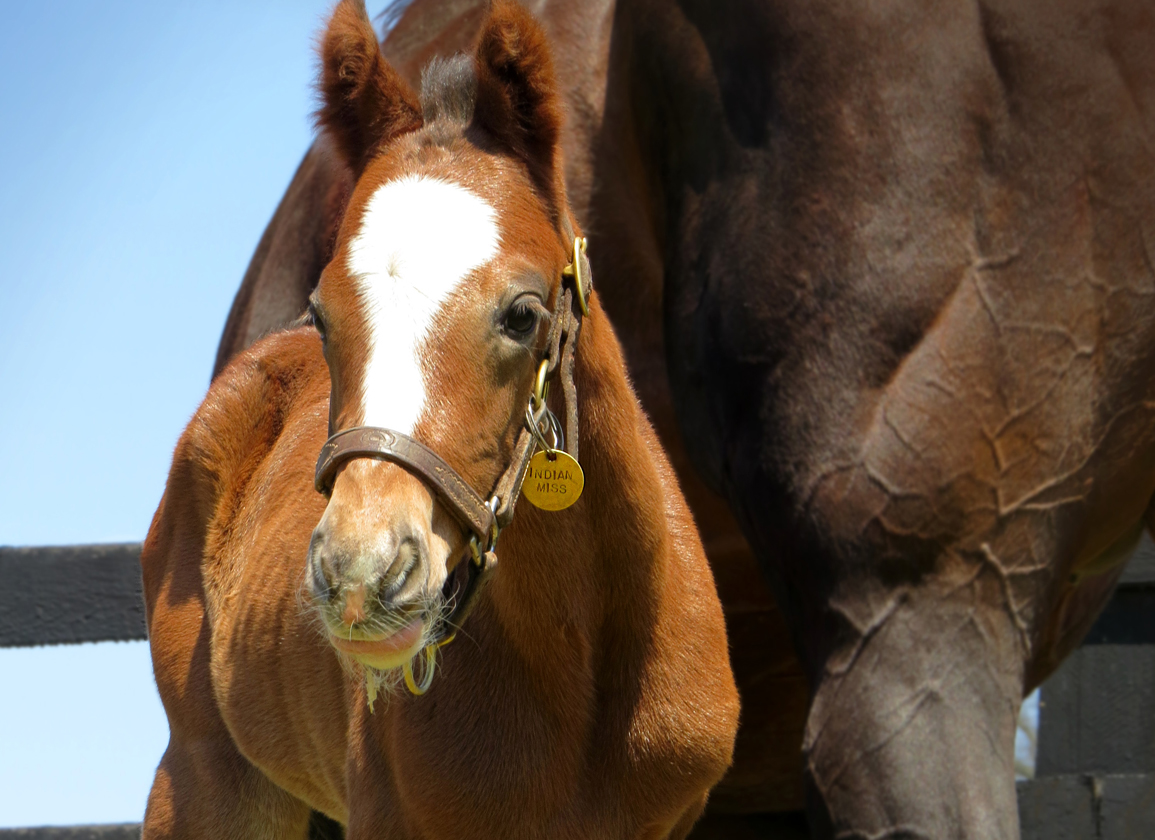
Hot Rod Charlie's dam Indian Miss (Indian Charlie) was a third-generation broodmare for the late Edward A. Cox Jr., a longstanding Hermitage client. Just one day after Hot Rod Charlie was foaled, the colt's half-brother and future 2019 Eclipse Champion Male Sprinter Mitole (Eskendereya) won his first stakes race.

One of 30-some foals to arrive at Hermitage in the spring 2018, Hot Rod Charlie might stick out slightly in the memories of those who worked with him daily.

“He was deathly ill as a foal,” Knippenberg explained. “He had a pretty serious intestinal infection. We had three foals with the same issue. The other two got over it quickly, but Charlie had a really hard time of it.”

While some foals may have quickly gone sour from receiving constant treatment, Hot Rod Charlie was always a good patient and slowly, he began to improve.

“He let us do what we needed to do to get him well,” Knippenberg said. “He is quite a testament to the clinic that helped us with him and to the people here on the farm who took such good care of him, because obviously he made a full recovery. I think that heart and determination he had then is what got him to where he is today.”

While the blaze-faced weanling continued to improve steadily, his breeder faced a terminal illness. When Cox decided to disperse of his stock at the 2018 fall breeding stock sales, Hermitage's longtime general manager Bill Landes encouraged him to keep the one colt behind.

“Landes told him to wait with selling Charlie because one, this horse had a really exciting family coming up and two, he would need as much time as possible,” Knippenberg recalled.

A few weeks before Cox passed away, Hot Rod Charlie was sold at the 2019 Fasig-Tipton Kentucky February Mixed Sale, where he brought just $17,000. He was sent to auction again in October and, having continued to blossom with time, sold to Dennis O'Neill for $110,000.

Flash forward almost three years, and the talented colt has earned over $5.1 million and is now pointing for a repeat appearance in the GI Breeders' Cup Classic.

“Having a horse like Hot Rod Charlie is such an inspiration and a morale booster,” said Melissa Cozart, the Equine Operations Manager at Hermitage. “It re-energizes everybody because we all get so excited when we have a good horse. Our staff is so involved in the success of each of these horses and they follow them all once they leave here and go into their racing careers.”

An Ongoing Tradition of Success

Blaze-faced Hot Rod Charlie as a foal | photo courtesy Hermitage Farm

Established as a Thoroughbred nursery in the mid-1930's by Warner L. Jones, Hermitage Farm has been associated with a myriad of notable horses including 1953 GI Kentucky Derby winner Dark Star, 1967 Kentucky Oaks victress Nancy Jr. and 1988 Breeders' Cup Juvenile winner Is It True, a son of Hermitage's leading sire Raja Baba.

Hermitage dispersed of their stallions shortly after Is It True's racing career, opting to focus on growing their commercial nursery. Today, they foal out around 35 mares each year and their program includes broodmares, foals, yearlings, layups and rehab cases. Along with Hot Rod Charlie and Mitole, 3-year-old champion and young sire West Coast also once called Hermitage home in recent years.

“Hermitage Farm is unique in that it is one of the only commercial Thoroughbred farms in the Louisville, Kentucky area,” Cozart explained. “We have several clients here in Louisville that want to be close to their horses so they have chosen us as a boarding operation. We work diligently to keep up with everything that is going on in Lexington. We have access to exceptional veterinary care and to the major sale companies and their advising, so we really are a full-service, all-around facility that offers a service for everyone.”

Cozart said that the group of broodmares at Hermitage is made up of an approximate 50-50 split between client-owned and Hermitage-owned mares. They have several exciting Hermitage-bred racehorses in the pipeline this summer including Efficiency (Gun Runner), a Klaravich Stables-owned 3-year-old who broke his maiden at Belmont last month by 11 lengths, as well as Cadillac Candy (Twirling Candy), a juvenile filly who recently broke her maiden at Churchill Downs.

The New Hermitage Farm

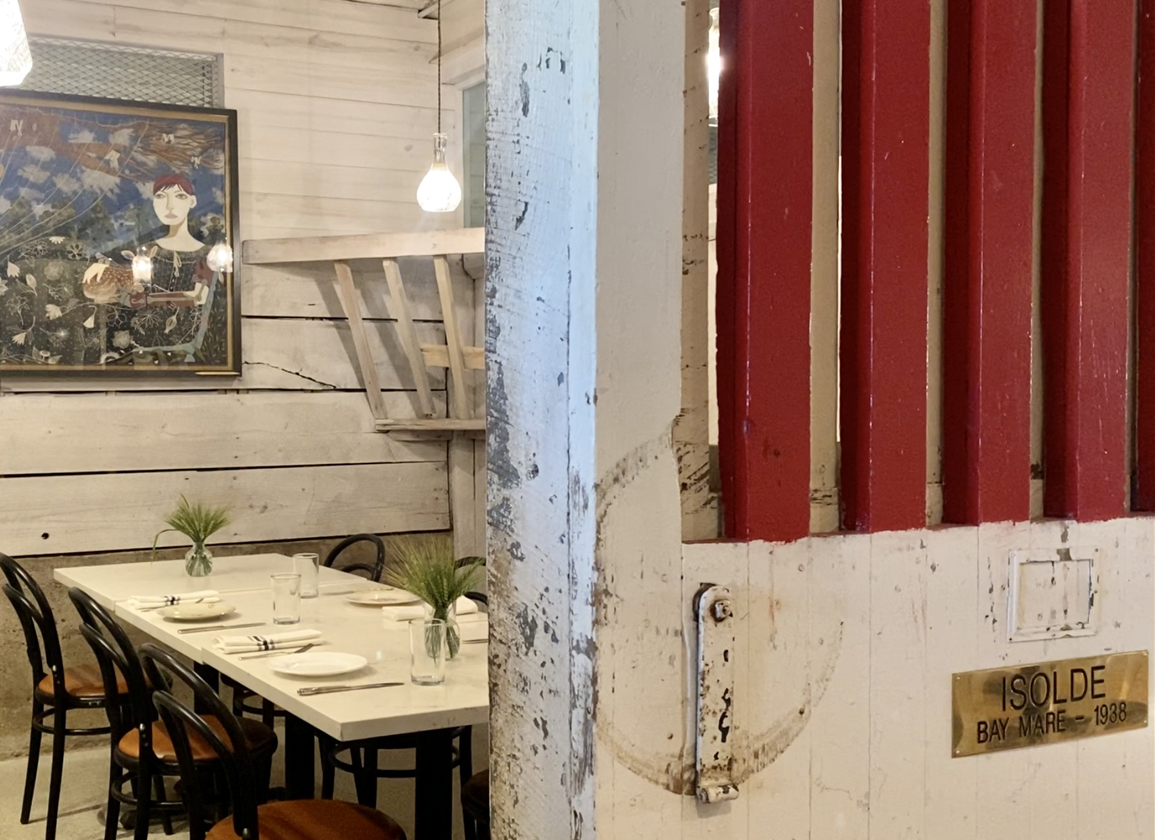
A peak into the dining experience at Barn8 | Katie Petrunyak

Hermitage Farm was purchased over a decade ago by Steve Wilson and Laura Lee Brown, the entrepreneurs behind the 21c Museum Hotel brand. Since then, the famed property's recognition has grown to a wider audience as it has transformed into a tourist destination.

First, the farm's new owners put Hermitage in agricultural easement, ensuring it will remain farmland for many years to come.

While continuing to grow the Thoroughbred division of the farm, a sport horse division was added. Co-owner Steve Wilson is a four-time champion competitive carriage driver and founded the Kentucky Classic, a marquee event for Combined Driving Event competitors that takes place every other year at Hermitage Farm.

Two years ago, Hermitage Farm's Barn8 restaurant officially opened for business. One of the farm's original barns retained its name and was transformed into a restaurant and bourbon bar that presents a farm-to-table dining experience and a constantly-rotating menu.

“The basic concept of Barn8 is not necessarily Southern food or Kentucky food,” explained Executive Chef Allison Settle. “It's more of making sure that we are a part of the solution to factory farming and overdevelopment, as well as making sure we are providing the season's bounty and accentuating what is good during a particular period. Our philosophy is about making sure that we're providing sustenance as a means to continue farming in the area.”

A sprawling greenhouse adjacent to the restaurant provides much of the produce and herbs served to guests. Settle explained that if the greenhouse's eggplant is ripe for harvest one week, it might be used in an Asian-inspired entree one night and then a Mediterranean lamb-stuffed eggplant the next. Barn8 also partners with farms in the surrounding area to bring in additional locally-grown products.

Settled added that Barn8 is more than just a dining experience.

“We have tours, tastings, mixology classes and pretty much everything that Kentucky does well, we do it here,” Settle said. “We want you to feel comfortable here, it's not stuffy. I think people find it to be a little bit of a vacation.”

Guests can dine at tables running down the main aisle of the barn or enjoy a more private experience at one of the tables in a stall. Some of the stall doors are adorned with the nameplates of Hermitage Farm's most famed broodmares.

Before sitting down to a meal, visitors can tag along on one of the various tours, which range from an art walk and a bourbon tasting experience to a tour of the equine facility. Hermitage's farm store offers farm-grown products, bourbons from around Kentucky and locally-made kitchen utensils and cooking items.

“Hermitage Farm is a really incredible place simply because of the vision of our ownership,” Settle said. “I think what's truly special is that there isn't really an agritourism project like this in the area or maybe even in Kentucky. There is only one place that I'm aware of that if you come to Louisville and you want to see horses, drink really good bourbon and learn about what Kentucky does well, this is the place to go.”

It took a period of adjustment, Cozart admitted, for the Thoroughbred division of Hermitage to acclimate to the many new changes, but she said they are excited about sharing their passion for the industry with new faces every day.

“In recent years, agritourism has become a huge part of Kentucky Thoroughbred breeding farms,” she said. “You're engaging a whole new demographic of people that may not otherwise be exposed to racing. People seem to have a better understanding of where these horses come from once they've seen it, rather than just relying on the public perception of the industry.”

As the farm shares its story to an expanding list of visitors from around the world, and with a horse like Hot Rod Charlie vying for a top position in his division this year, Hermitage Farm's famed legacy not only holds steadfast, but continues to grow.

The post Hot Rod Charlie Carries Banner for Ever-Growing Hermitage Farm Legacy appeared first on TDN | Thoroughbred Daily News | Horse Racing News, Results and Video | Thoroughbred Breeding and Auctions.

Source of original post
Verified by MonsterInsights
