“Horrifically Wrong”: California VMB and Equine Practitioners at Odds

Last month marked the resumption of business as usual for Jeff Blea, back as California Horse Racing Board (CHRB) equine medical director after an eight-month plus enforced hiatus due to the California Veterinary Medical Board's (VMB) controversial step of suspending his license.

In a settlement with the medical board, Blea agreed to continuing education classes in record keeping, a remittance to the VMB of $131,464 for the investigation costs, and a three-year probationary period.

Those believing the return of Blea to his prior role would bring an end to the veterinary medical board's regulatory inroads into the state's racing industry would be sorely mistaken.

The medical board has ongoing cases against at least nine other backstretch veterinarians in California, and the nature of some of the accusations–often identical in nature to those leveled against Blea–reveal a yawning schism between the veterinary board and the CHRB concerning approaches to standard equine veterinary care.

Until these differences are rectified, the legal ramifications hang like a Sword of Damocles over not just the state's racetrack practitioners but the performance horse veterinary community in general.

“It's been very unusual,” says David Foley, executive director of the American Association of Equine Practitioners (AAEP), about the nature of the complaints against Blea and some of the other backstretch veterinarians.

“If the veterinary medical board is going to interpret the rules in a companion animal manner towards equine practitioners, nobody's going to want to practice in California,” Foley says.

Areas of Conflict

The main areas of disconnect with the medical board–at least where the CHRB is concerned–surrounds the use of what the VMB terms misbranded drugs like Thyro-L, non-FDA approved compounded drugs and the correct nature of the veterinarian-patient-client relationship. More broadly, the disconnect also ensnares the prophylactic use of medications and record keeping differences between small and large animal veterinarians.

In the process, these areas highlight often conflicting sets of rules between these separate state agencies throwing the work of backstretch practitioners into confusion and possible professional jeopardy.

In short, some of the veterinarians with pending cases face a conundrum should they settle with the VMB and return to work under probation: If they then continue to practice under the CHRB's standard of equine veterinary care-but against the VMB's interpretation of the rules-they could face stark professional consequences.

The VMB deems Thyro-L, or thyroxine, misbranded under the Federal Food, Drug, and Cosmetic Act. And in laying out its accusations against some of the veterinarians, the medical board argues that the use of such misbranded drugs is prohibited through statutes written into the California Health and Safety Code.

Specifically, the code states that it is “unlawful for any person to receive in commerce any drug or device that is misbranded or to deliver or proffer for delivery any drug or device.”

Sarah Andrew

Essentially, a drug is misbranded if its labeling proves false or misleading in any particular situation, says attorney Mike Casey, who represented Blea in his case against the veterinary board. This could mean that the drug has been proven effective in the treatment of ailments for which it hasn't been labeled, says Casey, or vice versa.

But confusingly, Thyro-L is labeled for use in horses to treat hypothyroidism–a relatively rare equine condition–if dispensed by a licensed veterinarian.

Furthermore, many equine veterinarians routinely use it to treat a variety of conditions, including insulin resistance, for which there's a body of research.

“Veterinarians have a wide authority to prescribe medications,” says David Ramey, president of the Los Angeles Equine Advisory Committee, who says the VMB's stance on Thyro-L runs “absolutely contrary to regular medical practice.”

Most pertinent for backstretch veterinarians operating in California within the last decade is how the CHRB has issued advisories outlining thyroxine use in racehorses.

The first such advisory came in 2014 following an agency investigation into a series of sudden deaths among Bob Baffert-trainees, which found that the uniform use of thyroxine among the horses in question is “concerning in horses with suspected cardiac failure.”

The CHRB's much tightened rules surrounding thyroxine use went into effect earlier this year.

“If the VMB truly believed that Thyro-L was prohibited in use by the FDA as misbranded, why didn't they simply pick up the phone and call the CHRB,” says Casey. “They've been aware of the concerns surrounding Thyro-L since 2013.”

As a non-FDA approved drug, thyroxine overlaps another key area of conflict between the two agencies-the use of non-FDA approved compounded medications, which is permitted in veterinary practice in California.

So, where does the conflict arise?

Look no further than the CHRB's own Rule 1867 (b) which states that “the possession and/or use on the premises of a facility under the jurisdiction of the Board of any drug, substance or medication that has not been approved by the United States Food and Drug Administration (FDA) for use in the United States.”

The veterinary medical board appears to interpret that rule categorically, stating in complaints against several backstretch veterinarians how no compounded drugs are FDA approved, even if compounded from FDA approved parent drugs.

The list of drugs the CHRB prohibits–at least according to the veterinary board–includes commonly used compounded medications like dantrolene, used on horses that tie-up, and naquasone, which ameliorates swelling.

Crucially, the CHRB's own interpretation of its rules follows existing state law, leaving the door open to backstretch practitioners using compounded medications so long as they contain FDA-approved parent drugs.

Indeed, just last month–seemingly with this interpretive discord in mind–the agency issued an advisory to its relevant stakeholders stating that while compounded medications are not FDA approved, the CHRB's “longstanding interpretation” of rule 1867 “is that lawfully prescribed, compounded medications which are manufactured according to Federal and State guidelines do not violate this regulation.”

The advisory continues: “The CHRB recognizes that compounded medications are necessary for the safe and effective treatment of horses. These medications contain approved Federal Food and Drug Administration (F.D.A.) substances, which have been compounded to achieve proper dosages for safe and effective equine treatment and are necessary for equine veterinarians to effectively treat various medical conditions.”

Furthermore, the CHRB has never filed a complaint for violation of 1867 (b), according to CHRB spokesperson, Mike Marten.

Which leads to the final area of tension-how to define the proper veterinarian-client-patient relationship on a racetrack backstretch.

As the veterinary medical board sees it, no veterinarian can prescribe, dispense or administer a medication without first performing three main tasks: examining the patient and documenting the findings, establishing and documenting a diagnosis, then communicating the best course of treatment with the client.

Among the list of common medications that backstretch practitioners allegedly issued without first performing these tasks includes acepromazine, a tranquilizer used routinely to keep horses calm, and GarstroGard, used to treat stomach ulcers.

But backstretch practitioners and performance horse veterinarians voice frustration with what they see as the VMB's narrow interpretation of this relationship.

The problem arises, says Ramey, because the Veterinary Medicine Practice Act-the overarching rules by which all licensed veterinarians must comport their business-is almost entirely geared around small animal practice.

“The practice act doesn't really address herd health,” says Ramey, who added the American Veterinary Medicine Association (AVMA) is currently reviewing its model practice act to possibly address this. “In herd health, animals aren't always treated individually every time.”

Indeed, California's current laws are “far easier to understand and follow for small animal practitioners (who typically see individual animal patients in a brick-and-mortar context) than they are for veterinarians who treat herds, such as equine or livestock veterinarians,” wrote Dan Baxter, executive director of the California Veterinary Medical Association (CVMA), in an emailed response to questions.

Another wrinkle in the picture, say experts, concerns the currently routine prophylactic use of certain medications in performance horses to avoid injury and the onset of common training-driven ailments.

A prime example in racehorses would be the use of acepromazine-or ace, for short-used ubiquitously during morning training to keep fractious horses calm and to minimize the risk of harm to themselves and others.

“They're saying you can't give GastroGard without listening to their gut sounds and without taking their temp' and what-not on every horse every time. But not every medication requires that degree of [daily diagnosis],” says John Madigan, professor emeritus at the UC Davis school of Veterinary Medicine, calling the VMB's recent actions “horrifically wrong,” due to what he sees as those unfamiliar with equine practice leading complaint investigations.

Who Wields the Stick?

One of the main questions that arise is this: To whose rules should backstretch practitioners adhere?

The CHRB strikes the note that neither agency appears to have “primacy” of authority when it comes to regulating backstretch veterinarians. “And that's the problem because in certain areas there seems to be a disagreement about interpretation,” says CHRB executive director, Scott Chaney.

Veterinary medical board spokesperson, Monica Vargas, equivocated, writing that while the VMB “cannot advise on CHRB enforcement of laws applicable to their licensees,” the VMB has jurisdiction over the practice of veterinary medicine in California “unless otherwise pre-empted.”

Legal pre-emption, in this case, appears to come in the form of the federal Horseracing Integrity and Safety Act's (HISA) racetrack safety rules, which went into effect July 1 and provides guidelines for record keeping and appropriate veterinary-patient-client relationships.
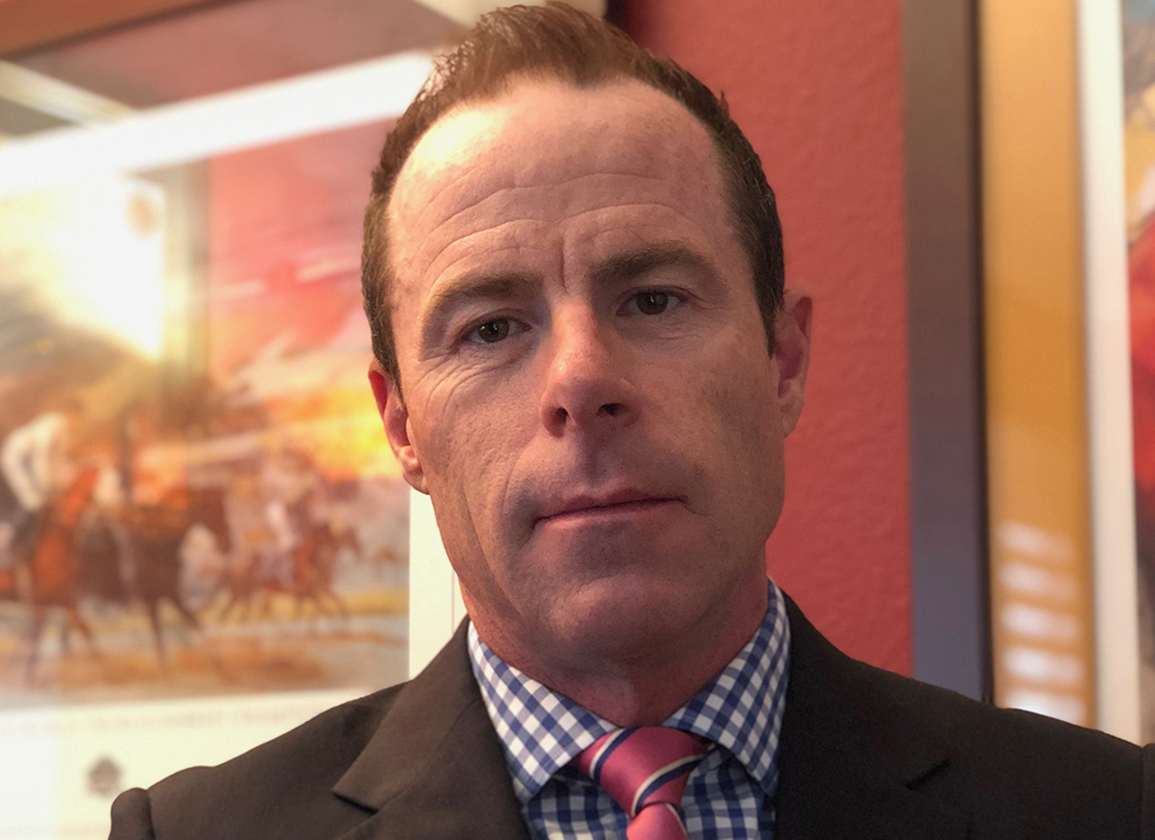
Scott Chaney | CHRB

Indeed, “federal authority does pre-empt state law and state reg's,” says Chaney.

A HISA spokesperson told the TDN that the agency has not yet involved itself with the differences that have arisen between the VMB and CHRB.

For backstretch practitioners with cases from prior years open against them, however-along with the state's broad contingent of performance horse practitioners-HISA pre-emption is a moot point.

That's why California's equine veterinarians and leading equine veterinary bodies have been publicly sounding the alarm about the potential pitfalls of this schism since at least the January veterinary board meeting.

After that January meeting, the CVMA and other stakeholder groups asked the VMB if they could submit a presentation at the following April board meeting about their concerns. The board pulled that presentation prior to the meeting, however.

Asked why, Vargas responded that the presentation went beyond the scope of the request and included, among other things, discussion regarding pending disciplinary matters. “The Administrative Procedure Act prohibits the Board from receiving communications regarding the merits of any issue in a pending disciplinary proceeding,” wrote Vargas.

Interestingly, in a subsequent statement to its constituents, the CVMA took issue with that interpretation, writing that the VMB routinely holds policy discussions concerning the Veterinary Medical Practice Act, including while enforcement cases are simultaneously being conducted.

“If it were the case that the VMB could never talk about problematic regulations or statutes due to a risk of infringing on current disciplinary cases, then the VMB would not be able to function as a rulemaking body at all,” wrote the CVMA.

After that aborted presentation, the VMB assembled a two-person Equine Practice Subcommittee tasked with researching the equine practice regulations and statutes, taking “input” from relevant stakeholders, then “returning to the Board with particular recommendations,” wrote Vargas.

The VMB failed to answer other questions about specific goals of the subcommittee, including those about timelines and about whether the subcommittee's work could lead to amendments to the California Veterinary Medicine Practice Act.

Vargas did write, however, that at the upcoming Multidisciplinary Advisory Committee meeting this Tuesday, the Equine Practice Subcommittee will provide an “update on the issues the Board has directed the Subcommittee to research.”

One of these key stakeholders is the CVMA, which has already approached the VMB several times requesting an “in-depth look be taken at the aforementioned laws,” wrote Baxter.

“The CVMA will continue to engage the VMB in dialogue about the regulations and will strongly advocate for the veterinary profession,” Baxter added.

According to Chaney, the CHRB met with the subcommittee some two weeks ago.

The CHRB's goal for these ongoing negotiations, Chaney says, is “clarity” for licenced backstretch practitioner. “All racing veterinarians that I've spoken with want to comply with CHRB rules and vet' med' board rules, they just don't know what they are right now,” he says.

This “clarity” could come the way of changes to the California Veterinary Medicine Practice Act or to the CHRB's own regulations, says Chaney. But changes to these state rule books can be a glacially slow process.

In the meantime, backstretch practitioners with open cases against them face a Catch-22.

On the one hand, they're incentivized to settle their cases swiftly or even to defend themselves due to the VMB's right, if it prevails on any finding, to seek cost recovery, says Casey.

For Blea, that was a six-figure sum.

However, if the veterinarians settle with the VMB before these practical differences have been smoothed over, they face potentially serious consequences if they then return to active practice under a probationary period.

The VMB is “aware of that potential,” responded Chaney, when asked about this conundrum. But he was unable to elaborate on whether the VMB has proposed any timeline for resolving the agencies' differences.

Investigatory integrity

Which leads to concerns among certain stakeholders about the manner in which the VMB is conducting its investigations into California's backstretch practitioners.

According to both Casey and Blea, neither Blea nor the clients relevant to his case were interviewed as part of the investigatory process.

“At no point did anyone ever ask Jeff [Blea] what was the purpose of administering acepromazine. What was the purpose of administering aspirin powder. He was never asked at any point during the quote, investigation, end quote about anything in his medical record. Not once,” says Casey.
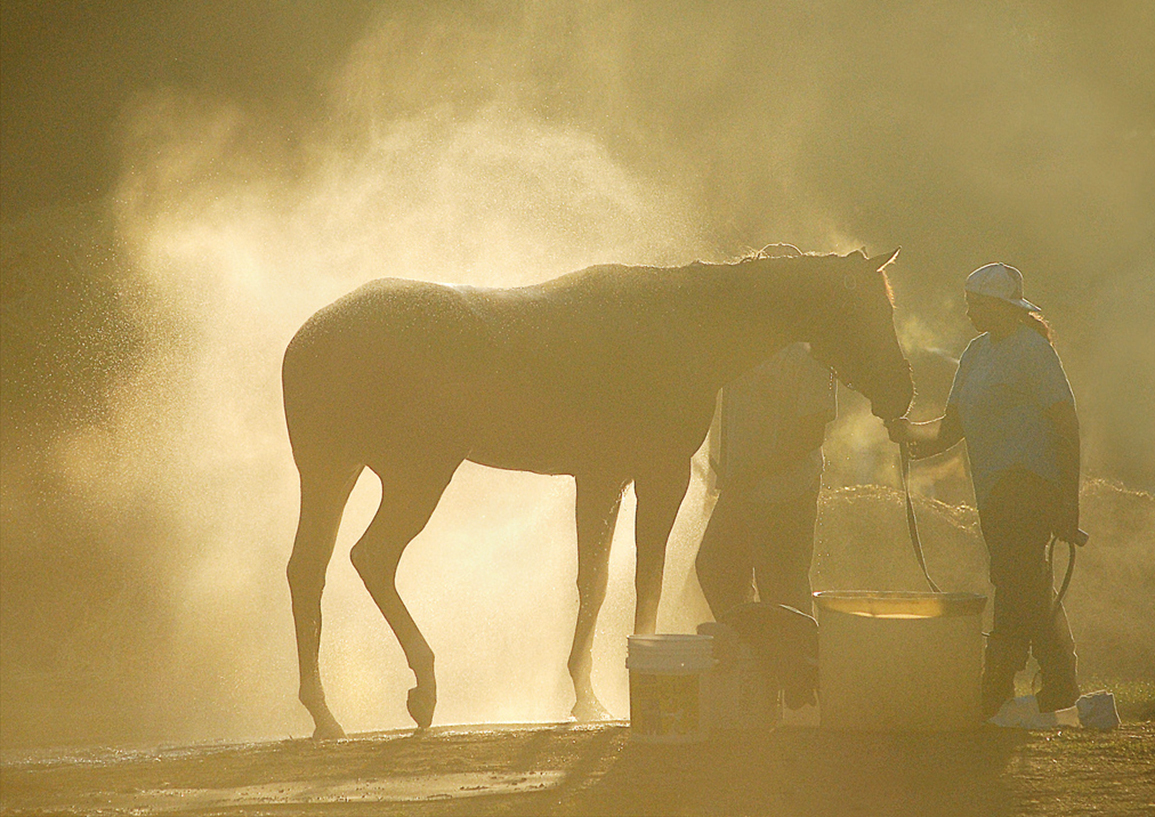
A busy backstretch | Sarah Andrew

“Neither were the trainers, the owners, the grooms,” Casey added. “No one.”

The TDN asked the veterinary medical board about these claims-including about standard investigatory procedures when a practitioner's veterinarian-patient-client relationship is in question-but the agency offered no response.

Other prominent figures in equine practice question the VMB's impartiality in these matters.

As someone frequently called upon to provide expert testimony in cases involving equine practice, Ramey responded to the veterinary medical board's open call for experts in Blea's case, he says.

Ramey told the TDN that when he saw the accusations against Blea, however, he spent an hour and a half explaining to two VMB attorneys that the accusations against Blea amounted to typical standards of care in horses facing rigorous training programs.

“These horses are at risk of developing certain problems, and you're trying to help mitigate that risk,” says Ramey, describing his version of the conversation with the VMB's attorneys.

“The next day they let me know that they did not need my services as an expert witness,” says Ramey, who added that he is “firmly convinced” that the VMB had a “pre-determined outcome that they were looking for.”

It should be noted that Ramey considers himself Blea's professional and personal acquaintance.

“I think it's important that the public is protected against poor veterinary practice,” he responded, when asked about how this relationship might color his opinions. “But [Blea's case] wasn't that.”

When asked about Ramey's claims, Vargas wrote that “As the adjudicator in administrative disciplinary actions, the Board does not participate in prosecutorial activity leading up to an administrative hearing. As such, the Board has no knowledge of expert witness preparation discussions for administrative hearings.”

In speaking with nearly a dozen equine practitioners or leading figures within prominent veterinary organizations, it's clear the ongoing philosophical and practical discord in equine practice has rattled the veterinary community in California.

Some veterinarians have already begun to question their professional futures in the state, says Madigan. “Unfortunately,” he adds, “a lot of veterinarians are thinking 'I just hope it doesn't happen to me.'”

The post “Horrifically Wrong”: California VMB and Equine Practitioners at Odds appeared first on TDN | Thoroughbred Daily News | Horse Racing News, Results and Video | Thoroughbred Breeding and Auctions.


Source of original post

Spotlight on the Night of the Stars: Gamine

John Velazquez wouldn't give a definitive answer on where Gamine (Into Mischief – Peggy Jane, Kafwain) ranks on the list of all-stars the Hall of Fame jockey has been associated with over the years, but he came pretty close.

Asked how the champion sprinter stacks up against a long line of high-class fillies he has ridden to Grade I success, he responded, “She's definitely one of the top ones. Like definitely one or two, I would say.”

That answer is high praise coming from the two-time Eclipse Award-winning jockey, who said that he will never forget Gamine's authoritative way of going or how she could effortlessly switch gears coming down the stretch.

“What I will always remember about Gamine is how powerful she was,” Velazquez reflected. “Her stride and everything she did was so easy. For a horse as fast as she was, she was also really kind. She had a great mind on her and she had a big heart. She would give you everything she could at any time. That's what made her Gamine.”

Together, Gamine and Velazquez raced to five Grade I victories highlighted by a record-setting win in the GI Breeders' Cup Filly and Mare Sprint at Keeneland.

Now approaching exactly two years since that day, Gamine is carrying her first foal by Quality Road and in a few weeks, she will sell at the Fasig-Tipton 'Night of the Stars' Sale. There, she will be consigned by Hill 'n' Dale at Xalapa as Hip 289.

Gamine is no stranger to the Fasig-Tipton sales ring. The flashy bay made her first of many headlines there when she topped the 2019 Fasig-Tipton Midlantic 2-Year-Old Sale, selling to Michael Lund.

“Gamine has always been special to us at Fasig-Tipton ever since her breeze at the Timonium Sale,” said Fasig-Tipton's Boyd Browning. “She had one of the co-fastest breezes, working an eighth of a mile in :10 flat, but she looked like she was just galloping. She had a beautiful stride on her and beautiful mechanics. When you went back to the barn to see her, she never turned a hair. She had the class. She had the elegance. I think we all knew that she was poised to do something special in that sales ring.”

Bob Baffert can quickly recall his first encounter with Gamine at that sale. Standing alongside agent Donato Lanni, it took the trainer less than 10 seconds to know he wanted the filly in his barn.

“It's very rare that I have horses that I just look at and see something magic in them,” Baffert said. “Gamine had me at hello. I walked away and told Donato that we needed to call Michael Lund, who was just getting in the business, and tell him he needs to buy this filly. Michael said, 'Well Bob, how far should I go?' And I said these fillies are hard to find. You stop when you own her. He stepped up and she went for $1.8 million. It was incredible.”

Gamine made quick work of justifying her sales price the following year as she completed a near-perfect, Eclipse Award-worthy sophomore campaign. A 'TDN Rising Star' on debut, the brilliant filly took the GI Acorn S. by almost 19 lengths and the GI Test S. by seven before her spectacular Breeders' Cup victory.

“I think history will reflect the fact that Gamine's 2020 racing campaign was one for the ages when you take into consideration not only that she won, but the dominant, brilliant way in which she won,” Browning explained. “She was a horse that when you watched her on the racetrack, she gave you goose bumps. You knew you were watching something special when Gamine broke from the starting gate and got into that poetic motion that she ran with.”


Just as much of a force to be reckoned with at four, Gamine added four more graded victories to her resume including the GI Derby City Distaff S. and the GI Ballerina H. She retired with only two losses in her 11 career starts.

“Gamine was probably the grandest, smartest, kindest and most beautiful filly I ever trained,” her conditioner said. “I would always look forward to watching her run because I knew she was going to 'wow' us and that's what she did.”

Browning said that he believes one of the most remarkable aspects of Gamine's career was that she fulfilled expectations every step of the way.

“The bar has always been set very high to begin with for her and she has always exceeded those expectations, so I think she'll likely do that as a broodmare as well,” he said. “She certainly has the opportunity to be a once-in-a-multigenerational type of opportunity. Gamine has been part of the Fasig-Tipton team since she walked through the sales ring for the first time and we're delighted and honored to have the opportunity to sell her in foal on behalf of Michael Lund this November.”

“She's the whole package,” Baffert said. “She is a generational talent. That's what you need in this business. That's why we always refer to her as Queen Gamine.”

The post Spotlight on the Night of the Stars: Gamine appeared first on TDN | Thoroughbred Daily News | Horse Racing News, Results and Video | Thoroughbred Breeding and Auctions.

Source of original post

The Week in Review: Small-Circuit State-Breds Spark Underdog BC Appeal

The Breeders' Cup is always a bit more interesting when underdog horses from smaller circuits are in the mix, and both Slammed (Marking) and Tyler's Tribe (Sharp Azteca) have the potential to bring outsized attention to their respective breeding programs in New Mexico and Iowa when they run in the Nov. 4 and 5 championships.

In the entire history of the Breeders' Cup dating to 1984–out of a pool of 4,344 horses–those two states have accounted for just one state-bred starter each.

Slammed will represent New Mexico, and you could say that she arguably has the better chance in her race, the GI Breeders' Cup Filly and Mare Sprint. After breaking out at Del Mar this summer, she's more proven at the national level, and she also owns a recent sharp win over the Keeneland surface, having earned a Breeders' Cup berth with an Oct. 8 GII Thoroughbred Club of America S. victory.

But figuratively, Slammed has to outrun the oddball specter that lingers from the only other Land of Enchantment-bred to give the Breeders' Cup a go: Ricks Natural Star, whose start in the GI Turf in 1996 rates as one of the most captivatingly bizarre happenstances in the history of the series.

As Andrew Beyer wrote in his Washington Post preview of that year's championships, “On a morning when the world's best horses were entered for Saturday's Breeders' Cup, the main object of attention at Woodbine Racetrack was a hopeless 7-year-old from New Mexico…. In the view of many at Woodbine, [Ricks Natural Star] is making a mockery of the sport's biggest event. To others, this quixotic venture epitomizes the romance of the game.”

When the gelding's offbeat owner and trainer, William Livingston, took out a loan and submitted a surprise $40,000 entry to enter his one and only racehorse against the planet's top turfers, Breeders' Cup officials were both appalled and perplexed. This was the era prior to the current stricter qualifying standards and more enlightened veterinary oversight, and to say the entry was off their radar would have been an understatement: Ricks Natural Star hadn't raced in over a year and hadn't won a race in three years, since besting $3,500 claimers on the dirt at Sunland Park.

Livingston, a veterinarian from New Mexico who claimed to treat everything from “parakeets to elephants,” had only gotten his training license just prior to the Breeders' Cup, and he told the media that he had conditioned Ricks Natural Star by driving alongside him on a ranch in a pickup truck.

Livingston then drove the gelding to Canada in a one-horse trailer, keeping his Turf entrant in a makeshift pen in the parking lots of motels when he stopped for the night. Informed by Breeders' Cup officials along the way that Ricks Natural Star lacked a required published workout that would preclude him from starting, Livingston made a side trip to Remington Park in Oklahoma so the gelding could stretch his legs in a leisurely six furlongs in 1:21.46.

There were border-crossing difficulties getting into Canada and Livingston arrived without proper tack and equipment, yet he delighted in showing off Ricks Natural Star, even allowing onlookers to climb atop the gelding's back for photo opportunities. This was the Breeders' Cup that would feature the mighty Cigar's final race (he'd finish third in the GI Classic), but all of the pre-event attention was riveted on Ricks Natural Star, with Livingston insisting he would win the Turf.

Local jockey Lisa McFarland was recruited (or perhaps drew the short straw) from the local riding colony to pilot Ricks Natural Star, and if her strategy was just to let him run freely then get out of the way of everyone else, she executed it with precision. Far underlaid in the betting at 56-1, the popular gelding forced the pace for a half-mile then was eased back through the field, distanced well behind winner Pilsudski (Ire).

Ricks Natural Star made one more start a couple months later in New Mexico for a $7,500 tag (sixth, with the chart caller's comment “showed nothing”), but was claimed out of that race by new connections solely for the purpose of retiring him.

Conversely, the unbeaten 2-year-old Iowa-bred Tyler's Tribe, who has never been headed while winning five dirt races by an aggregate 59 3/4 lengths, is on target for the GI Juvenile Turf Sprint.

Tyler's Tribe will bring a little more “undefeated appeal” into his Breeders' Cup appearance (his connections are opting for first-time turf rather than stretching out to two turns against what looms as a deep GI Juvenile field on dirt). But his Iowa roots don't come with any oddball back story like his New Mexico counterpart. The only previous Iowa-bred in the Breeders' Cup was Topper T (Bellamy Road), who ran eighth in the 2018 GI Juvenile.

End Zone Athletics Hits 200 Wins

With a pair of victories at Remington on Saturday night, End Zone Athletics, the stable name for horses owned by trainer Karl Broberg, quietly hit the 200-victory mark for the year–again.

End Zone, which operates at numerous tracks throughout the South and Midwest, is well on its way to leading the continent for wins as an owner, as it has every year since 2016.

Save for the pandemic-altered 2020, when Broberg's outfit won “only” 165 races, End Zone has now cracked the 200-win mark every season since 2017.

Even more impressively, consider for perspective that during that entire time frame, only one other owner has reached 200 victories in a single season (Loooch Racing Stables in 2018).

In the North American trainer standings, Broberg is currently second on the year for victories. He was the continent's winningest trainer by that metric between 2014-19, and was second in wins in 2013, 2020 and 2021.

No Walk in the Park for 'Beverly'

Beverly Park (Munnings) came a neck shy of winning his 12th race of the year on Saturday at Keeneland. But the third-place effort might have been gutsier than any of the 11 victories racked up so far this year by North America's winningest horse for 2022.

Facing $20,000 starter-allowance company for the second straight time after feasting primarily on $5,000 starter-allowance foes during the earlier part of the season, the 5-year-old forced the issue under jockey Rafael Bejarano while widest in a four-way speed duel, put away those three rivals by the quarter pole, led until the eighth pole, then couldn't withstand a pick-up-the-pieces late rally from a fresh closer.

Beverly Park, who races for owner/trainer Norman Lynn Cash (Built Wright Stables), still has a three-victory cushion over his next closest competitor, Exit Right (Effinex), who ran sixth and last in a $5,000 starter/optional claimer at Delaware Park on Friday.

No North American Thoroughbred has won more than 12 races in an entire calendar year since 2011.

The post The Week in Review: Small-Circuit State-Breds Spark Underdog BC Appeal appeared first on TDN | Thoroughbred Daily News | Horse Racing News, Results and Video | Thoroughbred Breeding and Auctions.

Source of original post

Ron Magers Reflects On His Decades In Racing And Breeding

“It all happened only because my wife, Elise, is very careful about where she walks…especially around horses.”

A Chicago-area veteran and established local TV news anchor, Ron Magers knows a good story when he hears one. It was Gulfstream Park in the spring of 1990 when Ron, accompanied by his wife, Elise, were making their way out of the paddock on their way to the airport at the end of the day's races. When something shiny in the dirt caught Elise's eye, she bent and scooped up what was an unassuming and fake-appearing diamond tennis bracelet. In a hurry to make their flight back to Chicago, the pair decided to figure out the identity of the missing bracelet's owner the next day.

“The next morning in Chicago, we were closing on a real estate purchase,” Magers said. “Elise pulled a pen out of her purse and the bracelet was caught on the clip. We told our attorney about the find and he suggested we start by getting it appraised to see if it is real.”

A local jeweler examined the piece and determined that not only were the stones real, but that they were of high quality and worth quite a bit of money. Ron's attorney made a quick phone call back to Gulfstream Park to inform them of the found item of value and, within a couple of days, heard back from a man in California whose wife had lost her bracelet while visiting Gulfstream.

“It turns out that the California man knew Chicago jeweler Lester Lampert, [so] we took the bracelet to Lampert who had it returned to the owners in California. The owner had offered a reward so we gave him the name of a Chicago charity we supported and suggested he send the reward as a donation.”

A story with a happy ending. But, little did Magers know, his story was just beginning.

“Another attorney, Howard Feinstein, called me [later] to say that he knew our attorney and had heard about the bracelet story. He had also been told of our love of horse racing and that we were thinking about buying a racehorse,” Mager said.

From humble beginnings, a partnership was formed.

“[Howard asked], did I have $10,000 that I'd be willing to throw out the window in hopes of having some fun and learning about racing? That's the way he [Howard] approached things. He also joked that anyone dumb enough to return that bracelet was the kind of person that he wanted to take advantage of. [I liked that], Howard was fun.”

As the pair settled into their partnership, Ron's love for the sport only grew and by the summer of 1991, he was ready to buy a horse on his own.

“Trainer Bob Voelkner turned down several horses I proposed claiming,” Magers said. “He finally agreed to put in a claim for a filly named Lemhi Go who was running for a tag of $16,000.”

Lemhi Go (Lemhi Gold), a 3-year-old Virginia-bred, won the race and there were four other claims put in for her besides Magers's. One winning shake of the dice later, Ron Magers was now the owner of his own racehorse.

And what a horse she would go on to become. Racing under the aptly named Diamond Stable, Lemhi Go picked up wins in the GIII Arlington Matron H. and the GII La Prevoyante H. before retiring with a record of 41-12-5-6 and earnings of over $330,000

“When her racing career was over, we sent her to Needham/Betz Farm in Kentucky to be sold as a potential broodmare,” Magers remembered. “That choice came at the urging of longtime horseman, Rob Marcocchio, who had done business before with that farm.”

Thankfully for Magers, he was talked out of the decision to sell.

“A few weeks later, the farm owner, Bill Betz, called me to say he didn't want to see this mare sold. I told him I knew nothing about the breeding business and wasn't sure it was for me. His proposal was to have the mare appraised, the farm would buy half, and we would be equal partners sharing the same risk while I would learn about breeding.”

In what would prove to be a wise choice, Magers kept Lemhi Go and bred her that first year to GISW Gone West. The resulting filly, named Triple Treasure, sold for $650,000 as a yearling. Magers retained Lemhi Go's second foal, a filly by MGISW Summer Squall, before finally selling Lemhi Go, in foal to 3-year-old champion colt and GI Kentucky Derby winner Unbridled, in the 1996 Keeneland November Breeding Stock Sale for $400,000. That Summer Squall filly, later named Temporada, would go on to produce a Kentucky Derby contender in 2016 GII Xpressbet.com Fountain of Youth S. winner Zulu (Bernardini).

“Elise and I continued to breed a band of mares with Needham Betz and other partners for more than 25 years,” said Magers. “We had great success along the way and one of our last crops of yearlings included champion 2-year-old filly Echo Zulu (Gun Runner).”

Echo Zulu wins the GI NetJets Breeders' Cup Juvenile Fillies | Eclipse Sportswire

As Magers prepares to step away from the racing and breeding industry after over 30 years, he couldn't help but go back to where the whole story started.

“We stepped away from the breeding business in 2019 but, in wrapping [that up], we bought back three babies from the partnerships out of a line that traced back to Lemhi Go,” said Magers. “All three raced at Gulfstream Park with trainer Ralph Nicks and all three were mid-level claiming winners running in bright, coral-colored silks with a black diamond on the back.”

Magers admits, “It is a delightful way to end our career with horses.” He continued, “Diamonds will last forever and, for us, so will the stories and memories that came with a career in racing and breeding.”

The post Ron Magers Reflects On His Decades In Racing And Breeding appeared first on TDN | Thoroughbred Daily News | Horse Racing News, Results and Video | Thoroughbred Breeding and Auctions.

Source of original post

Verified by MonsterInsights