Thirty Two Years and 5,794 Starters Later, Rick Schosberg Calls it a Career

There would be no fairytale ending Thursday at Aqueduct for trainer Rick Schosberg. Silken Dollar (Central Banker), the last horse he will start before retiring from training, finished eighth in Thursday's fourth race at Aqueduct. That's OK. Schosberg, 61, learned a long time ago that the life of a horse trainer is never that easy.

“Obviously the game has changed with the emergence of unlimited stall allocations,” Schosberg said. “It's really affected the competitiveness of it. It used to be that every barn had a different outfit. Now there are trainers that take up five barns. That has really hurt the smaller trainer. It's hard to compete. I have nothing against Todd [Pletcher] or Chad [Brown]. They did nothing wrong and played by the rules. More power to them.

“There are a lot of reasons I'm doing this now and certainly the financial part of it was a factor.  It's hard to work seven days a week living in New York and taking home $55,000.That just covers the property taxes around here.”

But Schosberg is not complaining on his way out the door. Nor is he about to disappear. Schosberg will remain active on several fronts and will continue to spend much of his time working on horsemen's issues and advancing the cause of Thoroughbred aftercare. He is a vice president with the New York Thoroughbred Horsemen's Association and the president of two aftercare initiatives, Take 2 Second Career Thoroughbred Program and Take the Lead. He also sits on the board of the Thoroughbred Aftercare Alliance. He has been called the “conscious of the backstretch.”

“Something had to change,” he said. “We needed a system whereby the horsemen had an avenue that included a safety net for the horses. The industry has a responsibility to take care of these horses once they transition off the racetrack. Seventy-five percent of their lives comes after they are done racing. It's daunting task to be able to find facilities and organizations that are up to standard to make sure these horses are taken care of and rehabilitated for purposeful second careers. This work is very important to me.”

Schosberg will also continue to work with the Horse Racing Integrity and Safety Authority and is on that organization's horsemen's advisory committee. There's more: he will continue on as an owner and has some horses in partnership with Clear Stars Stable. He also sits on the board of Marx Realty, a Manhattan-based commercial real estate company that was started by his grandfather.

“I'm still going to be around,” he said. “It's just that I don't have to get out of bed at 3:30 in the morning any more. Trust me, that gets old fast.”

Schosberg, a Cornell graduate, worked for trainers Tom Skiffington, Sid Watters and Walter Kelley before going out on his own in 1988. He won 62 races in 1993, 63 in 2000 and will finish his career with 876 winners from 5,794 starters and earnings of $38,278,409. His best horse was Maria's Mon, the champion 2-year-old colt of 1995 and the winner of the GI Champagne S. and the GI Futurity S. He also campaigned Affirmed Success, whose career included wins in the GI Cigar Mile H., the GI Carter H. and the GI Vosburgh S. Schosberg won 25 graded races.

“I've had a wonderful career and have been lucky to have wonderful clients and owners,” he said.

With his stable including about 15 horses through much of this year, Schosberg has won 12 races in 2022. He won seven last year and six the year before. He will officially continue on as a trainer for the remainder of the calendar year, but does not have any horses entered for the rest of 2022. His horses will be dispersed, some going to trainer David Duggan and the rest to trainer David Donk.

For Schosberg, Thursday was like so many other days, thousands of them in fact. He got up early, worked, drove back and forth between Aqueduct and Belmont, ran a horse who didn't live up to her 5-1 odds and put in a 13-hour day. But now that's all done with.

“How did it feel? I don't think it has sunk in yet,” he said when asked about starting his last horse.

Come Sunday and the beginning of the new year, he can catch a couple extra hours of sleep and won't have to deal with the pressures of trying to grind out a living with a medium-sized stable. It figures to be a good day.

The post Thirty Two Years and 5,794 Starters Later, Rick Schosberg Calls it a Career appeared first on TDN | Thoroughbred Daily News | Horse Racing News, Results and Video | Thoroughbred Breeding and Auctions.

Source of original post

From Blazing Trails to Changing Lives

Long before Shannon Arvin made headlines as the first female president and CEO of Keeneland and Jessica Paquette was named the first female full-time announcer at a major racetrack, Jenine Sahadi was breaking barriers as the first female trainer to win the Breeders' Cup. However, unlike the others, Sahadi made her mark and stepped away at the peak of her career. She now devotes herself to making a difference on the backstretch as the president of the Edwin J. Gregson Foundation.

More than two decades into her time with the organization, Sahadi and the Foundation are so intertwined it's impossible to separate the two.

“It's been so long since I've trained a horse and my focus is now the Foundation,” said Sahadi. “This has been 22 years of my life. We started it with nothing and now we're getting to the place where we are flush enough to be able to jump in and help the second we need to.”

Sahadi is modest about her part, but the Foundation literally changes the lives of backside workers in California. Best known for granting scholarships–more on that in a moment–the Foundation does everything from help with childcare, assist with taxes, take backside kids on fishing trips and to Dodger games, organize soccer tournaments, provide Christmas presents for children, and more. A pilot program this past year involved summer daycare assistance at Del Mar for workers whose extended families had to stay behind at Santa Anita. The Foundation steps in wherever needed, whether it's the fostering of community or arranging babysitting so parents can do their jobs caring for the horses.

“It's the little things that no one knows about that I love,” said Sahadi. “You know, every year we have people sit at the track and do tax preparation. It's the kind of program that encourages everybody to get their taxes done and I think it encourages responsible behavior. It's a win-win for everybody. But it's things like that, the nitty-gritty boots-on-the-ground work, that you wouldn't normally think of that are the types of programs we're super proud of.”

Education is the Foundation's main focus and the most visible one. Since 2001, Sahadi and her cohorts have raised over $6.5 million and have provided scholarships to 281 individual children.

“There have been 742 grants provided,” explained Sahadi. “The kids do an application very similar to many college applications; their parents must work on the backside.

“I think everybody deserves an education. It's invaluable. It's very important for kids to be able to learn and walk away with something, some sense of pride. I think a degree is probably the biggest sense of pride that you can find.”

While there are plenty of wildly successful stories among the Foundation's graduates and plenty who knew what they wanted to accomplish from the start, it might be the ones who need a little extra guidance who are closest to Sahadi's heart and harken back to her training days the most.

“Some take longer to find their way than others,” said Sahadi. “I always say horses are just like people: you've got to treat each one individually and they'll get there in the end when they can explore what they're capable of. Sometimes they have no idea. It's just remarkable.”
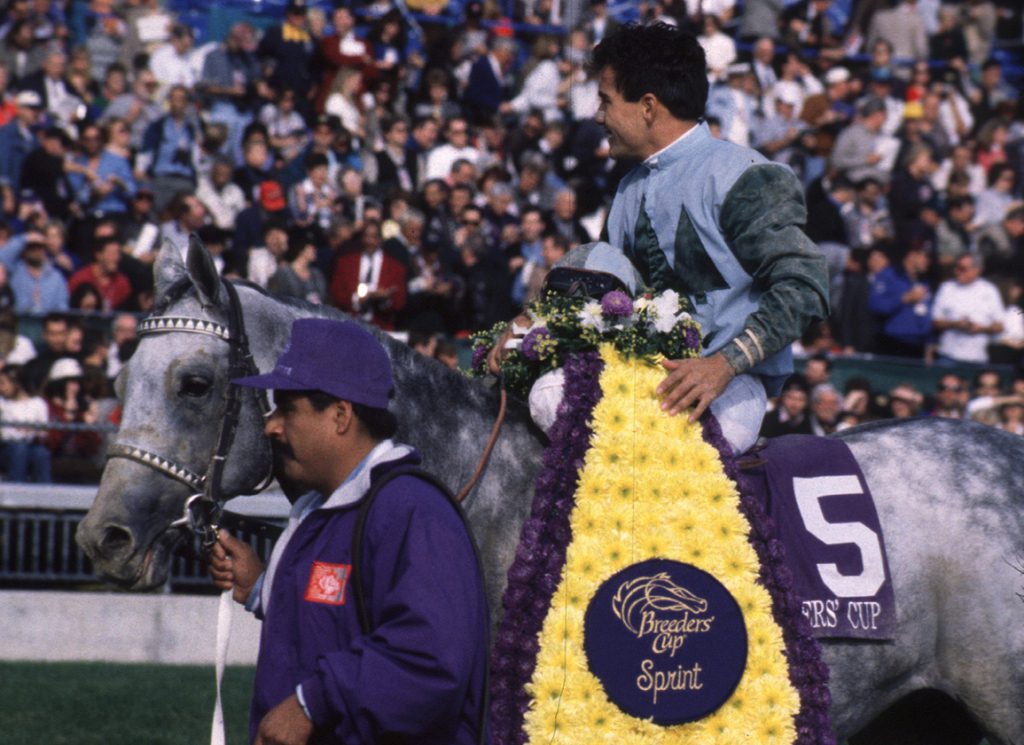
Lit de Justice won the 1996 Breeders' Cup Sprint | Horsephotos

Sahadi and the Foundation team treat every backside kid on a case-by-base basis according to their needs and work with them to attain their educational goals. Some have gone on to vet school or pursued higher education; one became a dental hygienist, one is an architect, another works at Ford as a mechanic, yet another is currently at Tulane in medical school.

“They run the gamut,” said Sahadi, “and they seem to be making really wise decisions, following their hearts. Once we identify what their need is, the goal is to try to eliminate the burden of debt as much as we can for them. We try to be very helpful in applying for federal and state grants. We have situations where maybe the kids are not sure what they want to do yet, so we'll help them go to a community college for a year or two and then transfer into a university once they have a better idea. We'll offset book costs, laptop costs, whatever else is needed. We are willing to make some fast decisions and do what is needed. Who wants a kid to lose an experience or struggle?”

The Foundation got its start as an idea under the California Thoroughbred Trainers (CTT), but blossomed after the death of trainer Edwin J. “Eddie” Gregson in 2000 as his colleagues sought a way to honor him. Gregson is best known publicly for winning the 1982 GI Kentucky Derby with Gato Del Sol, but was better known among his friends and family members as being willing to give the shirt off his back to anyone in need. His wife, Gail, is still on the board.

“It really came to fruition after Eddie passed away and as time went on, we morphed as we figured out a way to honor Eddie's legacy,” explained Sahadi. “He was very philanthropic and big on education. He was just a very generous guy. If somebody walked up to him and said, 'Can I borrow 20 bucks?' he'd give you 40. That's just the kind of guy he was.”
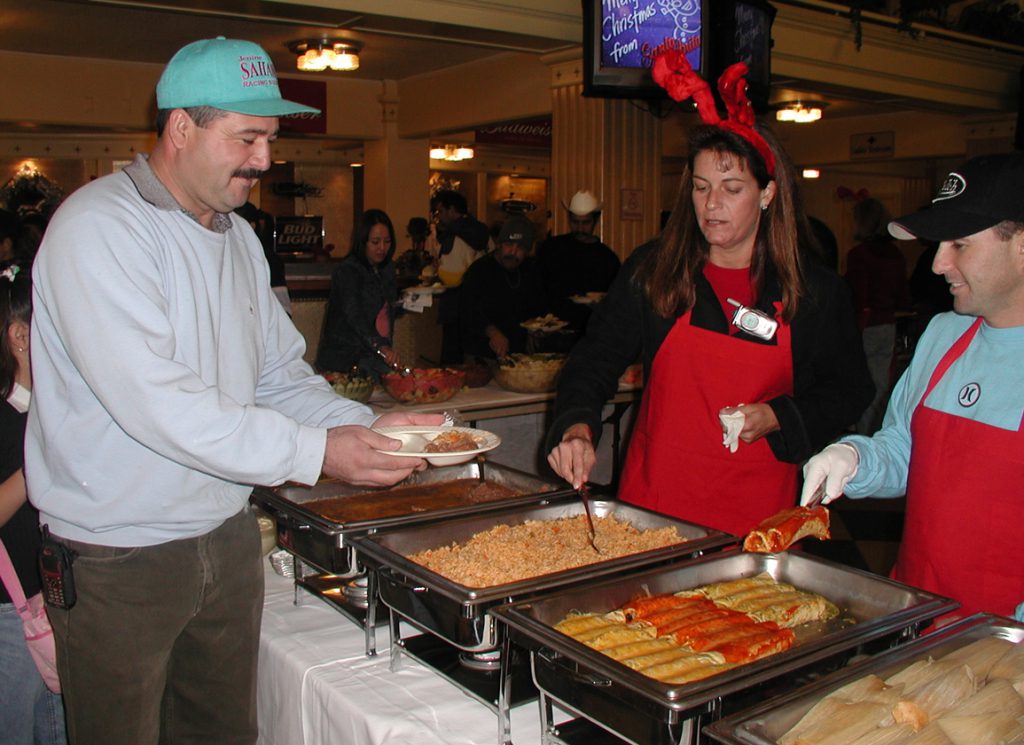
Sahadi serves at one of the Foundation's annual Christmas parties for backside workers | Courtesy Gregson Foundation

Sahadi was named president of the then-fledgling Foundation in 2001, a full decade before she would leave the training ranks and devote herself to the organization. No one could have imagined how it would grow in the more than 20 years since that time and how many lives would be impacted for the better. It started with the broad vision of enhancing “the quality of life of California Thoroughbred horse racing's backstretch workers and their families” and has developed into a vital part of California racing.

“It's a game changer and I just love it,” said Sahadi. “Every year as we've gotten a little bit more of a cushion, we've been upping the amounts of help [we can give]. It's been almost $1.9 million in scholarships alone since we started. It took a long time before we got rolling, but we're very proud of all these kids who have gone through the program.”

Sahadi practically grew up at the racetrack herself. Her parents, Fred and Helen Sahadi, began claiming horses in the 1960s and built Cardiff Stud Farm, which they would eventually sell to the late Alex Trebek of “Jeopardy” fame. Her father founded Barretts Equine Ltd., the auction company so prominent in California for so many years. And Sahadi herself was mentored by the late Charlie Whittingham, as well as Ron McAnally, with whom she is still close. Out of college, she worked first for seven years on the frontside at Hollywood Park.

She began training in 1993 and quickly broke through on a major stage, becoming the first female trainer to hoist a Breeders' Cup trophy when Lit de Justice won the Sprint in 1996. The next year, she did it again, with Elmhurst giving her back-to-back Sprint wins.

A handful of other women trainers have followed her in the Breeders' Cup's winner's circle, including Laura De Seroux with Azeri's Distaff in 2002 and Kathy Ritvo with Mucho Macho Man's Classic in 2013, yet not only was Sahadi the first female trainer to win the Breeders' Cup, she remains the only one to win more than once.

During her 18 years as a trainer, Sahadi's 441 wins included 86 black-type victories and 45 graded wins. Among the additional Grade I winners she developed were Grand Flotilla, Fastness, Rainbow Dancer (Fr), The Deputy (Ire), and Golden Ballet. And then, at the height of her career, she stepped away.
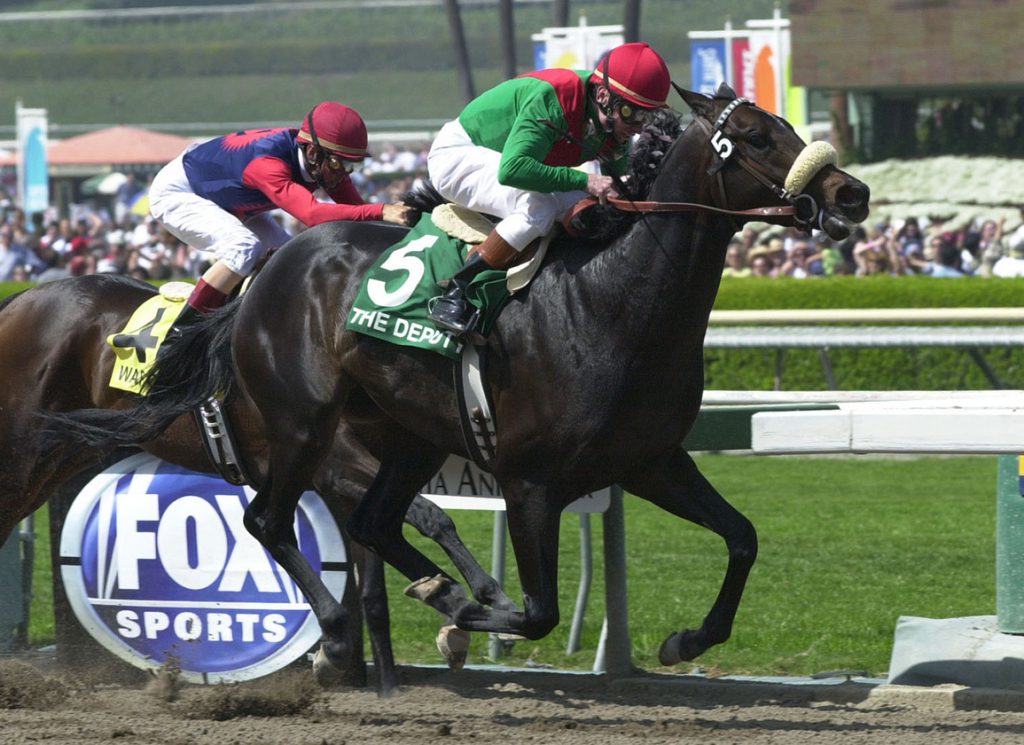
The Deputy's 2000 Santa Anita Derby win, making Sahadi the only female trainer to win the race | Horsephotos

“I loved it, but it's a lot and the game is different now,” said Sahadi. “I was always very vocal, very political, president of the CTT for many years. I didn't really love the direction that racing was going. Regardless of what the achievements were or whatever, for me it was always just about taking care of the horse and being bluntly honest, sometimes to my own detriment. I always just tried to be a purist and never had a drug positive ever.

“Now we're in this sort of new realm where even a therapeutic medication is maybe not legal,' continued Sahadi. “If we as an industry are going to keep conflating legal therapeutic overages with PEDs and dopers, I think it's really dangerous and bad for the overall health of the industry. I hate it because I feel like we all need to be loyal to the game and to take care of it.”

The loss of Sahadi to the training ranks is the backside workers' gain. The Foundation has changed and grown since she took the helm more than two decades ago, but the legacy is secure. Not only have hundreds of lives already been impacted for the better, but the Foundation is poised to continue evolving with the needs of the backside.
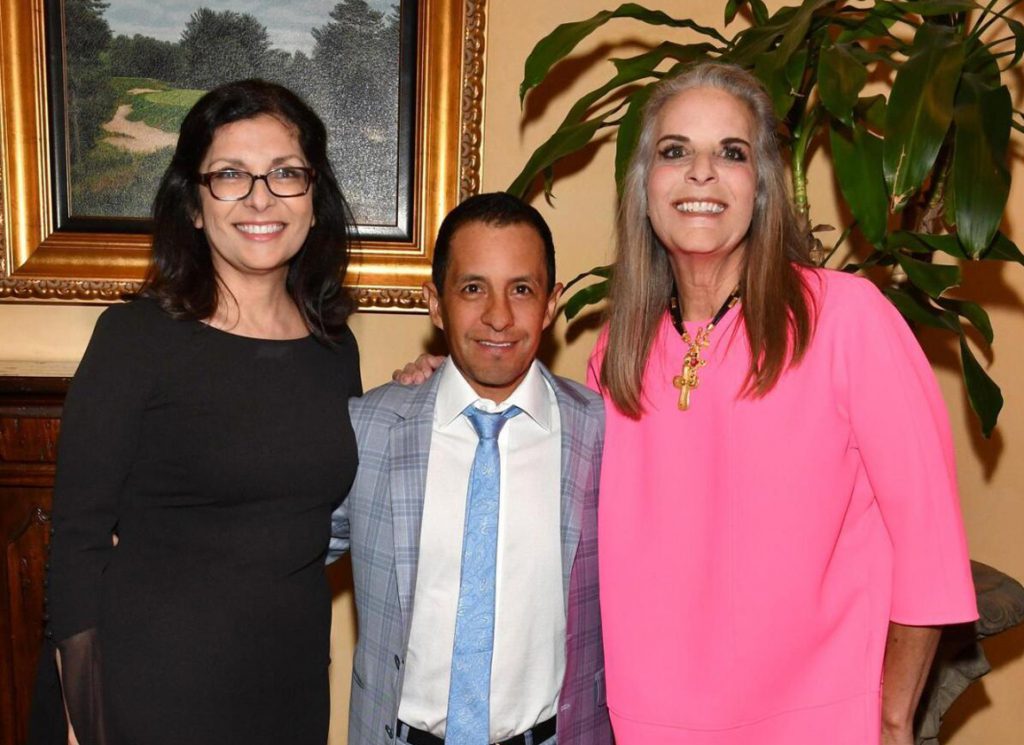
Foundation secretary Angie Carmona and Hall of Famer Victor Espinoza with Sahadi | Courtesy Gregson Foundation

“We want to keep doing what we're doing, try to pivot and jump in and help. Since we're the bricks and mortar, boots-on-the-ground kind of people, the Foundation jumps in the second that we need to if there's a problem that arises that we weren't expecting. We will hopefully keep improving and reinventing programs. Our board is just phenomenal. Everybody sort of has their role.

“We are just trying our best to make a big difference and not make a big deal about it,” said Sahadi. “I don't think anyone on the board is looking for a pat on the back. That's not really what our motivation is, even though I personally am so grateful to so many of them. If somebody needs something, we're going to try our best to figure out how to get it done as much as we can.”

Sahadi is quick to point out the Foundation is not just her.

“I'm just kind of the mouthpiece. I'm so grateful for everyone who has been loyal to this Foundation. They've made the difference; it really has nothing to do with me. It's the board. [Foundation secretary] Angie Carmona is a saint. She is invaluable. None of this would be possible without Angie. She knows all the backstretch workers by name. I can help raise money, but she is the one that really does the day to day.”

As the Foundation's board quietly goes about serving backstretch workers, Sahadi says she doesn't mind that other non-profits in racing are far more visible.

“I love any philanthropy that goes on in horse racing,” said Sahadi. “With all the aftercare and everything, it's almost overwhelming. There's so many to pick and choose from.”

For the backstretch workers in California though, likely nothing beats the Gregson Foundation. Sahadi agrees.

“You get a little weepy when you watch these kids and they just excel. When one graduates or gets a job, the parents are so proud of their children when you see them at the racetrack. They're genuinely grateful and it's the best feeling in the world.”

For more information on the Foundation, visit gregsonfoundation.com.

The post From Blazing Trails to Changing Lives appeared first on TDN | Thoroughbred Daily News | Horse Racing News, Results and Video | Thoroughbred Breeding and Auctions.

Source of original post

12 Questions: Sue Finley

Sue Morris Finley, Publisher & CEO of the Thoroughbred Daily News, spent her childhood driving back and forth to Aqueduct, Belmont and Saratoga with her family. In 1993, she was part of the team that took over the production of the Thoroughbred Daily News, and oversaw its move to Red Bank, NJ, becoming its co-publisher. For 12 years, she was the First Vice President of the Thoroughbred Retirement Foundation, a national organization dedicated to the humane retirement of former racehorses, and served three years on the board of the Thoroughbred Aftercare Alliance.

What was your racing highlight of the year?

Unquestionably, Flightline's Breeders' Cup. I bought my Breeders' Cup tickets early, made sure to get outdoor seating so I could see him in person, and then kept my fingers and toes crossed all year that he would make it. It was worth the wait.

What is one moment in 2022 that you haven't gotten over yet?

The turmoil over HISA. I feel as if all of our lives and careers are hanging in the balance, and no one is in charge.

Who, if anyone, do you think was the equine breakout star of the year?

Forte. Totally in command in the Breeders' Cup Juvenile to win his third Grade I. Wow.

What about a human breakout star?

It's a tie among the 26 incredible people who work at the TDN. Their journalistic skills and dedication to their jobs are second to none, and they've driven us to another record year. It's an honor to work with them all.

Favorite international meet?

I love going to the races at Deauville during the Arqana summer yearling sale, but I think my favorite day at the races ever was at a small track outside of Berlin called Hoppegarten. Not only did almost everyone at the track bring their dog to the races with them, but they all stood and applauded each horse as they came back from the race—win or lose.

Favorite Thoroughbred of all time?

It's a tie. Affirmed, because my parents took me to see the 1978 Belmont Stakes and it kindled my love for the sport. And Renaissance Bob, who we rescued from a slaughter auction and who went on to spend 23 years at the TRF's Wallkill Correctional Facility, helping incarcerated men to change their lives. Both chestnuts, incidentally.

What is one change you'd like to see happen in racing in the foreseeable future?

I would like to see video replays made freely accessible everywhere. How can we promote the sport when we can't see it and show it to others?

What or who surprised you the most this year?  Could be a performance, a stallion, a sales price, etc.

Sharp Azteca, who's currently number one on the first-crop list with 34 winners!

You get to have one conversation with someone deceased in the racing industry.  Who are you talking to and what's the topic?

My dad. I'm counting him as being in the industry since he was one of our most important assets: a die-hard fan and a $2 bettor who loved nothing more than coming home with a $10 profit after a long day at the track. And because I'd give anything to talk to my dad again.

What was the biggest lesson you learned in 2022?

Don't count your chickens.

Finally, what are you most looking forward to in 2023?

Discovering the next Flightline. Is it too early to start looking for him?

The post 12 Questions: Sue Finley appeared first on TDN | Thoroughbred Daily News | Horse Racing News, Results and Video | Thoroughbred Breeding and Auctions.

Source of original post

Lured By Huge Purses, British Rider McEntee to Debut at Turfway

Unless you are riding in the very best races for the best stables, it's not easy being a jockey in Great Britain. Prize money in the bread-and-butter races is dreadful and, even in these lower-level events, the competition for mounts can be fierce. Four years into her career, 22-year-old jockey Grace McEntee had had enough. In search of a better life, she booked a one-way ticket to Kentucky and will begin the next stage of her career Saturday at Turfway Park when she makes her U.S. debut.

“This is very exciting,” said McEntee, who will be joined in the Turfway riding colony by her boyfriend, Tyler Heard. “I have never been to the States before. It will be a completely new world for me and I just want to make the most of the opportunities. I've been riding over here for four years now and I feel I'm at the stage where I'm ready to go on and do something in America. The prize money and the opportunities at home are a lot more limited than they are in America. I'm young enough and in a position where I could move to America and try to take advantage of all the opportunities here.”

McEntee is the daughter of Newmarket trainer Phil McEntee and began riding in 2019. She was neither a star nor a bust, settling in somewhere near the middle of the pack when it came to British riders. She won 24 races in 2021 and 24 this year from 224 mounts.

“I'd get plenty of regular rides, but not in stakes races or in the bigger handicaps,” she said. “The jockeys are so good and so competitive there are very few opportunities at the higher levels. Everyone wants to use one of the top jockeys.”

McEntee's earnings this year were £153,958. She said that jockeys in the U.K. get 8 percent of their horse's earnings, making her 2022 paycheck from prize-money £12,316. That comes out to $14,864.

For McEntee, choosing Kentucky over other U.S. circuits was an easy choice. Not only is the purse money good but she has a number of relatives there who can help her out. Her first Turfway mount will be in Saturday's Gowell S., where she will ride Baytown Lovely (Fast Anna) for Paul McEntee, who is her uncle. Her brother, Jake, is an assistant to trainer Kenny McPeek. She has two other uncles working in Kentucky, one a bloodstock advisor, the other a farm manager.

McEntee was set to travel to Kentucky on Friday and to make her way to the Turfway backstretch Saturday morning to work horses and meet trainers. She has hired Jose Santos Jr. to be her agent. She should not have any trouble adjusting to Turfway's Tapeta surface as many of her winners in the U.K. have come over all-weather surfaces. McEntee said she doesn't know yet if she will stay here permanently and will decide after she sees how much business she gets.

The purse for the Gowell is $125,000 and Baytown Lovely is 20-1 in the morning line. She said she will have a mount on Sunday's card for trainer John Ortiz. The goal is to meet as many trainers as possible and to convince them to give her a chance. She doesn't have to ride in seven races a day. Thanks in large part to the revenue that comes in from Historical Horse Racing machines, maidens go for $70,000 at Turfway and the purse for allowance races is in the neighborhood of $75,000. There's plenty of money to go around. By way of comparison, McEntee's most recent winner came in a Dec. 29 race at Southwell and the purse was the equivalent of $9,000.

“It's pretty simple,” she said. “I can have a better life in the States.”

The post Lured By Huge Purses, British Rider McEntee to Debut at Turfway appeared first on TDN | Thoroughbred Daily News | Horse Racing News, Results and Video | Thoroughbred Breeding and Auctions.

Source of original post

Verified by MonsterInsights