Rosen Made To Measure For The Chief’s Crown

He was tailor-made for both walks of life; raised to be equally at home with the racetrack cavalcade, or the catwalk parade. From the outside, fashion and the Turf perhaps share their most obvious bond in pageant: all those shimmering silks, all those sleek creatures. To Andrew Rosen, however, it's a more internal thing. Outlook, not aspect.

In both cases, he explains, you're adding one plus one and hoping to get four. “Or six, or eight,” he says, smiling. “So, it's all about anticipating the future. In the clothing industry, you're always reading six, nine, 12 months ahead. In the horse industry it's even longer, because it's 11 months from conception to foal, and then a couple of years till they race. So there's always this thing that the future is going to be better than the past. You're going to find a better way to make this dress, or fit that jacket; you're going to find a way to produce a better racehorse. And that's just the way I was brought up, the way my mind works. I always believe that maybe the horses next year are going to run better than they did this year.”

He gives a shrug, another wry smile. “Sometimes they do,” he adds. “Most of the time they don't.”

Rosen inherited an aptitude for both these different worlds from his father Carl, who had turned the small Massachusetts dress company founded by his own father into fashion giant Puritan; and then, incredibly, made Hall of Famer Chris Evert (Swoon's Son) his first ever yearling purchase at Keeneland. His premature death, in 1983, created a challenging test of precocity in his 25-year-old son. In soon breaking out his own brand, however, Rosen would ultimately make the third Rosen generation in the trade the most successful yet. In the meantime, his parallel legacy on the Turf had already brought him to new heights virtually overnight.

Just weeks after losing his father, Rosen went to Claiborne and saw a Danzig colt, bred from Chris Evert's daughter by Secretariat, getting his basic training alongside the other yearlings. It was decided to name him for Rosen's father, who had been known throughout firm and family as “The Chief.”

“I remember looking at this colt with Seth [Hancock] and Roger Laurin, who was training the horses,” he recalls. “First crop of Danzig, a little on the small side but well-balanced. Who could have said, then, what was going to happen the next year? But I soon knew that something was different because Roger, before, was, 'Don't bother me, kid.' And then when Chief's Crown came around, all of a sudden, he was paying lots of attention to me! And actually, Roger and I ended up being amazing friends.

“Roger badly wanted to win the Kentucky Derby, because he should have won with Secretariat. He was the trainer of Meadow Stable when Eddie Neloy had a heart attack and died. Bull Hancock called him and said, 'You have a new job.' He had to give up his public stable to train for the Phipps family, but who wouldn't have done that? And he said, 'Well, okay, as long as my father can train these horses.' And that's how Lucien got to train Secretariat and Riva Ridge.”

In the event, Chief's Crown had to settle for third in the Derby, but it was nonetheless a remarkable and emotional journey for the whole Rosen family, with championship laurels secured in the inaugural GI Breeders' Cup Juvenile.

“Maybe in those days, so soon after Chris Evert, you didn't understand how hard it really was to have a horse of that caliber,” Rosen admits. “But he ran 21 races in two years and won eight Grade Is. That's unthinkable today. My father always wanted a Derby horse so something like Chief's Crown, that would have been the ultimate for him. He'd said to me, 'I don't want you to sell the horses, I think there's something special there.'”
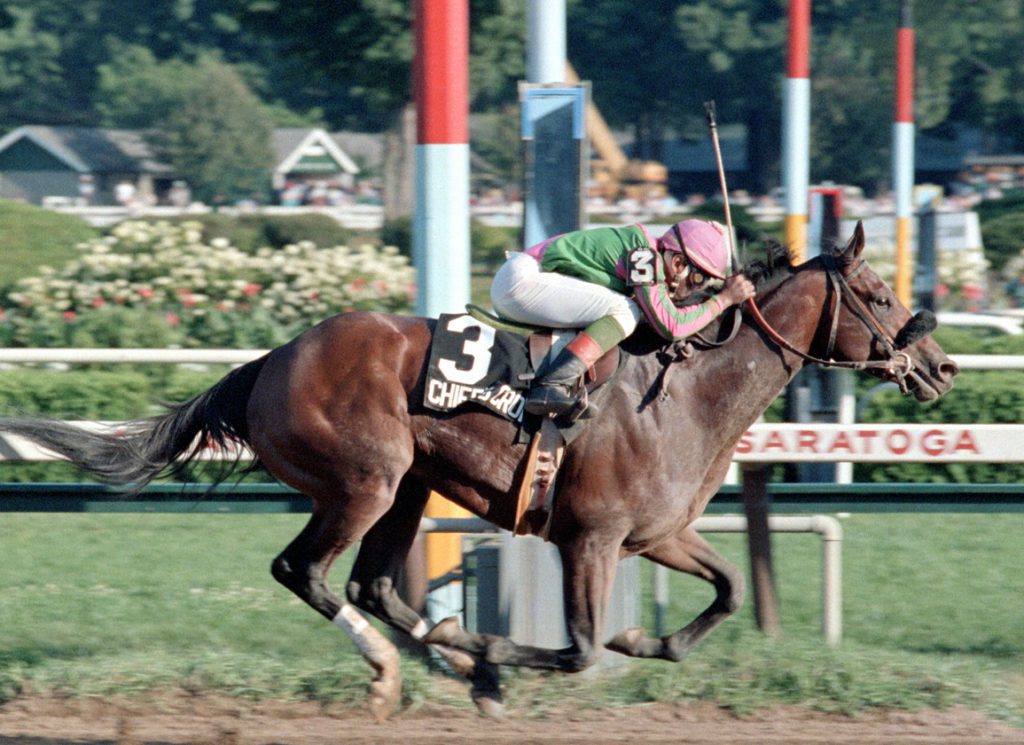
Chief's Crown wins the 1985 Travers S. | Coglianese

Seasoned horsemen immediately recognized the caliber of the young heir, when the time came to syndicate Chief's Crown, and many cherished friendships have been maintained ever since. Rosen still talks most days with John Stuart of Bluegrass Thoroughbred Services, while a round of golf with Roger Laurin and Shug McGaughey identified a lasting successor once his first trainer retired.

“I have a lot of good relationships in the horse business,” Rosen says. “I understand the clothing industry: that's how I make my living. The horse racing, I'm still learning a lot. In both cases, it's what I grew up with, hanging out with my father. I would go with him to the factory or the office, and they're always talking about clothing. Same thing with the horses, though he was more into the gambling. He'd come home after a big day, and I'd be allowed to count the money and tell him how much he'd won. (And he'd give me $100!) So it was something that I just naturally gravitated towards, as I got older.”

Evidently his father made no more valued bequest than the counsel of his friend Miles Rubin, who did everything possible to redress the grievous void in a young man's life. But while plainly inheriting the same, uncommon acumen, Rosen's coolly confident and reflective nature has made him a contrasting if no less natural “chief” than his extrovert father.

“My father and I had a really great relationship,” he says. “Parenting in the '60s and '70s was not the same as today. But we had a connection: I understood how he thought, appreciated what he did, and learned so much from him. He died when he was young, and I was very young. But I'd had the opportunity to work with him, I'd been long exposed to what he did and thought, and that gave me a platform for the future.

“In some ways, I admire people that go off and do things very different from their family. But it felt like my responsibility to take over. I had a feel for the clothing business, and I had a feel for the horses. Everything was there for me, all I had to do was follow in my father's footsteps. And that's what I did, without ever looking back.

“I ask myself now, 'How the hell did I do that?' But my father was sick for a while, so he had prepared me as best as he could. And you're young, and bold, and confident. Sure, that there were things I did right and things I did wrong. But there's nothing I look back on and say, 'Oh, I should have done that differently.' Other than maybe when my mother called me the night before the Preakness and told me to change the jock!” (He couldn't do that, and Chief's Crown lost by a head.)

Going back to our opening premise, the common challenge both on the Turf and in couture is not merely to anticipate the future (i.e. demand) but to shape it, too. Is there perhaps some equivalence between breeding purely to sell and mass-producing cheap threads? Because surely, it's those who keep faith in quality who set standards, and ultimately set trends?

“I'm in the business I'm in because I love the clothing industry,” Rosen replies. “I want to do things that I'm proud of, and that people working for the company are proud of. I want to be able to inspire somebody. I'm not in that end of the clothing business which is just about finding a way to make money. I want to create something meaningful, part of the future of our industry. And I think it's a lot the same with breeding. I'm trying to produce horses that can run on Saturday.

Andrew Rosen | Eclipse Sportswire

“I understand that there's a market for everything. The clothing industry is huge. I focus on one part of it, try to be really good at that. And horseracing is another enormous industry. As many people have tried to own it, and control it, it just doesn't work that way. So, again, I try to focus on what I think works for what I believe in.”

This aspiration has prompted Rosen to develop a transatlantic program that needs to be curated with exceptional skill, given how the competition at that level tends to enjoy apparently infinite resources.

“I always had the relationships in America but had to develop them in Europe as well, because I wanted exposure to bloodlines over there,” he explains. “I always felt that the 2-year-old racing in Europe was much better. It started earlier and, because it was all on the turf and on the straight, it was safer. You could get more runs into a horse, and aid its development that way. The 2-year-old racing there is pretty open and can be competitive for everyone. But then, as the horses get older, I think the big outfits-the Godolphins, the Coolmores, the Juddmontes-have a huge advantage. As the racing heats up for the 3- and 4-year-olds, it's pretty tough to compete.”

On this model, the likes of Icon Project (Empire Maker) and Theyskens' Theory (Bernardini) have thrived Stateside after laying foundations on European grass. With the right material, however, Rosen is also happy to keep campaigning indigenous stock in Europe. Last year, for instance, in partnership with Marc Chan he celebrated Group 1 success with Lezoo (GB) (Zoustar {Aus}) and Prosperous Voyage (Ire) (Zoffany {Ire}).

Prosperous Voyage was actually recommended by trainer Ralph Beckett when her original owners were looking to cash out; while Lezoo was proposed at the Arqana Breeze-Up by another of Rosen's trusted collaborators, Jamie McCalmont.

Rosen told McCalmont that she would bring €300,000 after a breeze like that, and that would be too much. “Jamie looked at me and laughed,” he recalls. “Then Marc saw her and liked her, so we said we'd follow her through. None of us thought we would get her at that price [€110,000]. Then, before she ran first time, Ralph told us that this one wasn't very good. 'Oh well,' I said, 'We have to go through bad ones to get good ones…' So she has been a very pleasant surprise!”

Rosen is hardly alone in recognizing how Beckett has now sealed a place in the European elite, but remains a grateful admirer of Brian Meehan along with Andrew Balding, Roger Charlton and John Gosden. “Although really good horses can overcome everything, it's obviously best if you can have them managed them the right way, put them in the right spots and so on,” he says. “But I'm very lucky that way, and I like having these relationships with a few different people over there. In America, basically all the horses go to Shug first. The American system is very different. But the racing is very different, too. The Americans don't really understand Europe, and the Europeans don't really understand America!
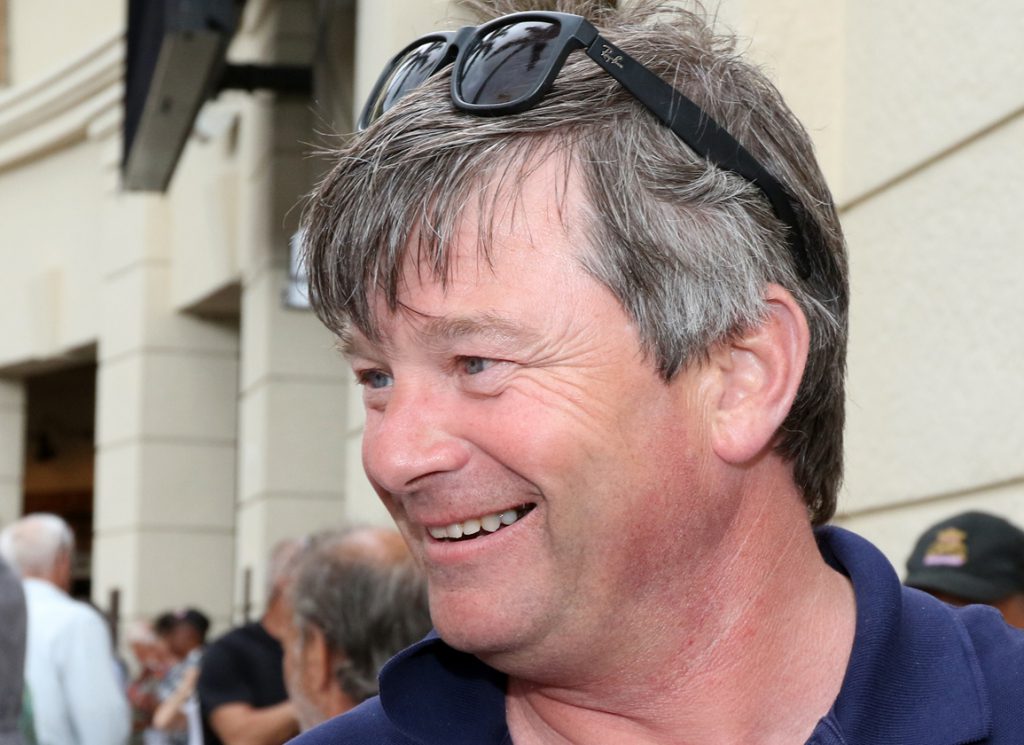
Jamie McCalmont | Fasig-Tipton

“But listen, that kind of polarization creates opportunities. The Americans are strictly focused on dirt racing, yet 60 percent of their major racing is on turf. That's why Europe has benefited from so many of us coming over to support the yearling sales and the secondary market. In the old days you had Gainesway and Claiborne and others bringing those top turf stallions over, and I do believe that we're not far away from that kind of horse working again [in Kentucky]. Peter Brant, a few other people are trying. The only reason it hasn't happened yet is because none of them has worked. But it only takes one.”

As things stand, a little over half of Rosen's 30-odd horses in training are based in Europe; while he has 10 broodmares either side of the water, respectively divided between Watership Down and Kilshannig, in Europe; and Claiborne, Gainesway and Merriebelle in America. If you add young stock, you're looking at around 70 to 75 horses. But there's constant refinement: fillies retiring from one division to the other; other horses culled or sold to fund reinvestment.

“My philosophy is that I want to sell enough to cover the overhead of my operation,” Rosen explains. “Generally, I would always sell the colts, and sometimes fillies as well. My intention is for the horseracing to be a business, too. So, I have to do things that are commercially acceptable, and try to make the pieces fit together that way. But I wouldn't think of myself as a commercial breeder. Ultimately, what am I trying to do? Just develop good racehorses so I can have better broodmares. But that process requires me to sell horses, for sure. Because my operation would [otherwise] cost several million a year to run, and there has to be some logic to it.”

“Ultimately, you want your business to get a little bigger, a little better, each year. You're always looking at how to build. So, I am a commercial breeder to the extent that if I ever need to sell something, I want somebody always to be interested in what I have produced.”

As the conversation proceeds, it feels increasingly as though Rosen's twin enthusiasms share the same impetus: a dynamic, empathetic interest in where we find identity, and how we might cultivate it into something better. Maybe that drive traces to his grandfather, a Russian immigrant who was a cutter in a dress factory until launching this remarkable, dynastic engagement with American opportunity.

At one point, for instance, Rosen discusses efforts to preserve the historic identity of the Garment District in New York. He recently started a company where everything is manufactured locally. That's not easy, when Americans today are evidently reluctant to sit at a sewing machine all day, while expecting wages far in excess if those that suffice in other economies. But the quality Rosen seeks can't be produced by robots.

“I understand that this has to be more of a niche, that it's not for everyone,” he says of this domestic venture. “And I know it's never going to come back to what it was in the '60s and '70s. But I do think it's important to have a manufacturing base close to your design, because they go hand-in-hand. The closer they are, the better both are going to be. It's just like the countries that have the best stallions will also have the best horses. But to make these things happen, you need vision, passion, commitment. Without that, and without integrity-well, you won't ever keep something just because you always had it before.”

That last remark applies to us all, in that we all share the same patrimony, the same cumulative bequest from breeders past. But it also applies to Rosen on personal level, in terms of a passion inherited from his father.

“My early days in horseracing were so exciting,” he reflects. “First the Chris Evert times, with my father, and then all of us remembering him with Chief's Crown. There was no way I could not like it. And I have enjoyed it, all the way, with all the highs and lows. The lows haven't scared me, neither have the highs deceived me into thinking it's always going to be that way. I have always just really enjoyed it all: not only the racing and the breeding, and the trading, but above all the people.”

The post Rosen Made To Measure For The Chief’s Crown appeared first on TDN | Thoroughbred Daily News | Horse Racing News, Results and Video | Thoroughbred Breeding and Auctions.

Source of original post

Q & A With Breeders’ Cup President and CEO Drew Fleming

This past year was a good one for the Breeders' Cup. Returning to Keeneland for the first time since the pandemic year of 2020, the event generated a global wagering total of $189.1 million, which set a record, 3.4% higher than the previous mark. The Breeders' Cup also produced big numbers when it came to the total economic impact for Keeneland, Lexington and the surrounding community. It was announced Friday that a survey conducted by University of Louisville Economics Professor Thomas E. Lambert, Ph.D., showed that the Breeders' Cup was responsible for a total estimated economic impact of $81,846,897. It was the second-highest economic impact recorded in Breeders' Cup history, following the record set in 2017 at Del Mar. On the track, it was a spectacular two days of racing, highlighted by a memorable win by Flightline (Tapit) in the Breeders' Cup Classic.

How is it that the Breeders' Cup's momentum never seems to wane and what's ahead for racing's championship event? We posed those questions and more to Breeders' Cup President and CEO Drew Fleming.

TDN: The handle figures are particularly impressive as the Friday card yielded a record $66.1 million in handle and the Saturday card produced $122.9 million in handle, also a record. What has caused the growth in handle and what needs to be done to see that it continues to grow?

DF: We are very grateful to the horseplayers that have been supporting us and our Thoroughbred industry for a long time. At the Breeders' Cup, we take pride in the fact that we have the best horses in the world competing, which equates to really great betting races. Additionally, the Breeders' Cup, for many years, has been conducting its own global pool and we had 27 countries last year bet into the common pool. We had an additional six countries betting separately. One of the things that the company continues to invest in, not only in time but capital, is in the awareness of the Breeders' Cup as a whole. We felt we ran an effective awareness campaign last year, which caused an increased consumption of content as well as generating additional wagering dollars.

TDN: As they are proud of saying, Lexington is the horse capital of the world. There are racing fans all over the country, but it's just different in Lexington. How does that factor into the success of the 2022 Breeders' Cup?

DF: The moment you get off the plane in Lexington, Kentucky, horse racing is in the air. You go to a restaurant, a bar, a coffee shop, people are talking breeding, training, owning race horses. It's a way of life. The city was so welcoming. Unfortunately, in 2020 we weren't able to have fans due to the pandemic. We told the city we would be back as soon as we could. We were able to come two years later and deliver on that promise and they could not have been more thankful. The hospitality was everywhere. People were thrilled to have fans back and were also very thrilled to have the World Championships back in Lexington and to be able to showcase our industry.

TDN: The 2020 numbers aren't applicable because of the pandemic. Before that, the last Breeders' Cup at Keeneland was in 2015. The economic impact numbers from 2015 to 2022 increased by 27.8%. What was different about 2022 versus 2015 that the number increased the way that it did?

DF: A couple of things played a role. The brand and the demand for the Breeders' Cup continues to grow. Last year, we had people from all 50 states purchase tickets as well as 18 countries. Because the brand continues to grow we continue to see investment not only in the Breeders' Cup but in the surrounding areas when we are there.

TDN: It's not just Lexington. The entire state of Kentucky is horse-crazy and Louisville is also a great racing town. We haven't seen the Breeders' Cup at Churchill Downs since 2018 and it is not scheduled for there either this year or next. Is there any reason for that and what is the status of the event returning to Churchill Downs?

DF: Churchill is a great partner and we enjoy working with them and had a very successful Breeders' Cup there in 2018. Normally, we don't talk about future host sites until we have made a host site announcement. With the impact and the success of the past few times we have been in Kentucky, I anticipate that shortly in the future we will be back in Kentucky.

TDN: You had a superstar in the Breeders' Cup this year in Flightline. What impact did he have and can you address both the business aspects of the event and the excitement level that he brought to the event. Fifty years from now, people will still be talking about his win in the Classic.

DF: NBC compared Flightline's performance to Secretariat. Any time you have a horse like that there will be increased interest, not only for the Breeders' Cup but for the sport as a whole. It was amazing to see him deliver in the horse capital of the world. Being a hometown boy, seeing him come around the turn and the energy he generated was just amazing. It's something I will remember for the rest of my life. One thing about the Breeders' Cup that we are so proud of is that we know we're going to have the best horses in the world competing. In 2015, we had American Pharoah, who was the first 'grand slam' winner. That was also amazing. You feel humbled to be a part of that. As far as a monetary impact, that's hard to quantify. But we knew with him there would be increased interest and that was evident when he came into the paddock. It was like the Beatles were coming on stage.

TDN: Flightline aside, what were some of your favorite moments from this Breeders' Cup?

DF: There was not a dry eye in the house when Cody's Wish won. That was such a tremendous and compelling story. It's great when racing can tell feel-good stories like that. It was also great just having the fans come back after we couldn't have fans in 2020.

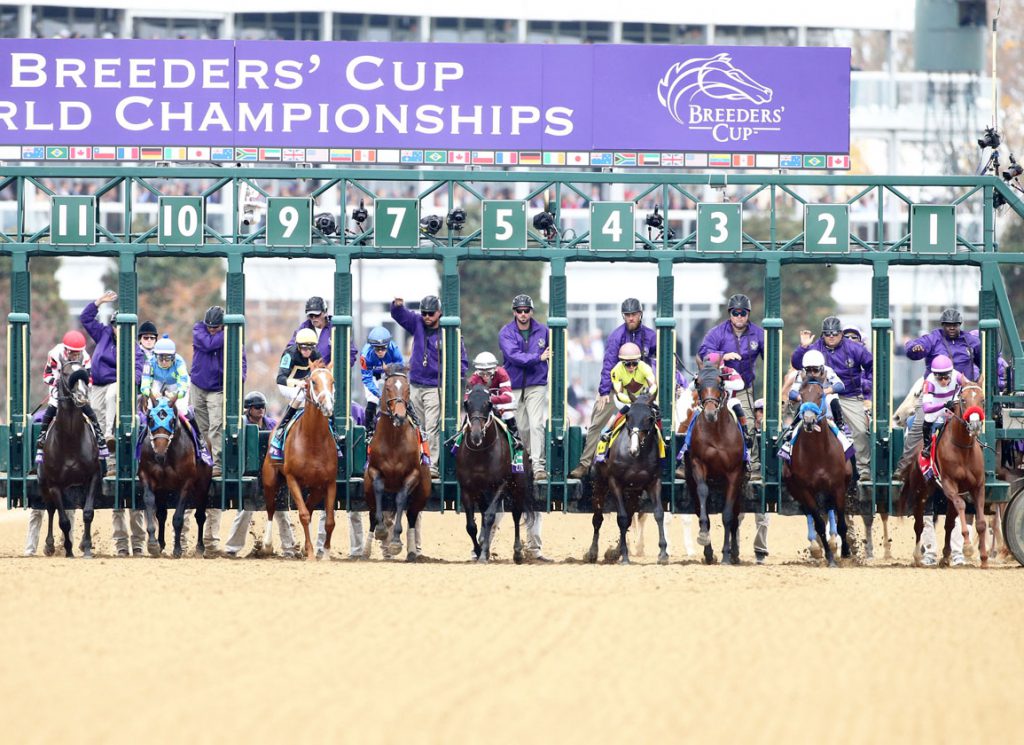
The horses break from the gate in the Dirt Mile | Coady

TDN: The Breeders' Cup Festival has become a big part of the whole experience. It's not just two days anymore. You have several events leading up to race day. Can you tell us a little bit of the history of this and how much has the Festival helped when it comes to things like economic impact?

DF: In addition to having the two best days of racing, the Breeders' Cup is a celebration of equestrian life. Like most major sporting events across the globe, it's important to have a festival component so that fans can come and see what a beautiful area the event is taking place in, be welcomed, have great hospitality and celebrate the equestrian lifestyle. We want them to walk away and say, 'Wow, not only was that two great days of racing, but it was a wonderful vacation, a wonderful experience and I want to come back.' In any of the cities that we are in, we work with the locals to develop that festival and to highlight key aspects of the region to our visiting guests.

TDN: NYRA is trying to get a loan from the state so that it can refurbish Belmont Park. You are on the record saying that if this gets done the Breeders' Cup would love to come back there. Your thoughts on a return to New York?

DF: We're incredibly supportive of NYRA and we will support any redevelopment at Belmont. We have a great relationship with the executive team at NYRA. I am having dinner Wednesday night in New York with (NYRA CEO) David O'Rourke. We wrote him a letter several months ago with the title, 'If you build it we will come.' The Breeders' Cup sticks to its word.

TDN: The Breeders' Cup has not been to Belmont since 2005, understandable because the current track is not a good fit when it comes to hosting an event like this. How much has the Breeders' Cup missed New York?

DF: We very much miss New York. There's so much energy up there and they are large investors in the game. We look forward to coming back. If they build it we will be there.

TDN: What can you tell us so far about what's in store for this year's Breeders' Cup at Santa Anita when it comes to new initiatives and things you can do to maintain the momentum?

DF: One of the challenging but also fun things when it comes to working for a company like the Breeders' Cup is that we are always innovating. We are continuing to move the ball forward on technological advancements in viewing and look forward to working with NBC, FanDuel and some other partners to continue to make sure that those who are watching have many different angles and experiences when it comes to watching the sport. Along with having great views of the San Gabriel mountains, we want to make sure that they have a world-class time when it comes to hospitality. We will continue to work to advance the culinary offerings and will have some exciting things to announce in the near future. We will also have some new ticket packages that we are putting the final touches on to make sure, again, that everyone has the best experience possible.

TDN: You brought up FanDuel. It's obvious that racing needs to find a way to attract the sports bettor and we need to have the FanDuels of the world offering betting on the Breeders' Cup and all racing on their sports betting platforms. Where do things stand when it comes to getting the sports bettors to follow and bet on the Breeders' Cup?

DF: Hats off to FanDuel for advancing the technology so there can be an aggregated wallet experience for the sports bettor. It's a tremendous marketing opportunity for our sport to be on the same bookshelf as the NFL, the NBA and MLB. Horse racing will be able to be cross-marketed from a wagering standpoint to those who are already wagering on other sports. This is one of the largest marketing opportunities we have had in a long time.

The post Q & A With Breeders’ Cup President and CEO Drew Fleming appeared first on TDN | Thoroughbred Daily News | Horse Racing News, Results and Video | Thoroughbred Breeding and Auctions.

Source of original post

Racing Insights: Big Pedigrees Shine On Saturday

Sponsored by Alex Nichols Agency

10th-SA, $67K, Msw, 3yo, f, 6 1/2f, 8:01 p.m.

The first of a pair of Juddmonte fillies racing for Bob Baffert, PLEASANT (Munnings) is the latest filly to make the races out of Fair Lady (Medaglia d'Oro), herself a daughter of GISW Honest Lady (Seattle Slew) making her a half to GISW First Defense (Unbridled's Song), SW & GSP Honest Mischief (Into Mischief), SW Phantom Rose (Danzig), and SW Honest Quality (Elusive Quality). Pleasant's third dam is none other than Toussaud (El Gran Senor), the broodmare of the year responsible for the likes of MGISW and late sire Empire Maker (Unbridled), GISW Chester House (Mr. Prospector), MGSW & GISP Decarchy (Distant View), GISW Chiselling (Woodman), and the dam of MGSW Honorable Duty (Distorted Humor). The bay worked a sharp five-furlongs in :59.1 (3/32) Mar. 6 and picks up veteran John Velazquez.

Her un-coupled stablemate breaking from the inside gate, Enclosure (Arrogate) is the first foal out of Juddmonte's $500,000 Fasig-Tipton Saratoga purchase Cognitive (Uncle Mo). This is the extended family of $3.3m Fasig-Tipton Night of the Stars pick up MGISW Dream Rush (Wild Rush) and her daughters: GISW Dreaming of Julia (A.P. Indy) and MGSW Dream Pauline (Tapit).

“They are both nice fillies,” Baffert said Friday morning of the Juddmonte pair. “The Arrogate (Enclosure) is probably going to need a race and I think she wants two turns. The Munnings (Pleasant) is quicker.”

Also of note in this field is the outside runner Ruby Nell (Bolt d'Oro), purchased for $1.2m as a 2-year-old at the Gulfstream Sale last year. She was last seen in second behind SW Ag Bullet (Twirling Candy) when debuted on the grass Jan. 22. TJCIS PPS

7th-FG, $50K, Msw, 3yo, 1 1/16m, 5:15 p.m.

Triple-Crown nominated PURSUIT OF POWER (Gun Runner) brought $875,000 from Courtlandt Farm at the 2021 Keeneland September Sale. Distorted Lies (Smart Strike), herself a daughter of GI Kentucky Oaks runner up Broadway's Alibi, is a half-sister to newly-crowned Eclipse champion sprinter Elite Power (Curlin), MGSW Golden Lad (Medaglia d'Oro), and MSW & GISP R Gypsy Gold (Bernardini). This is also the family of Armed Forces S. winner Lights of Broadway (City of Light).

First Mission (Street Sense), a Godolphin homebred from the family of Argentinian champion 3-year-old filly Forty Marchanta (Arg) (Roar), will try to improve off his three-quarter length defeat on debut Feb. 18. TJCIS PPS

3rd-GP, $84K, Msw, 3yo/up, 1m, 1:38 p.m.

A $460,000 Fasig-Tipton Saratoga Select Yearling purchase, MAGICAL POWER (Good Magic) enters his debut off a pair of bullet drills Feb. 26 and Mar. 11 for trainer Todd Pletcher and owners AMO Racing USA and Stonestreet Stables. The colt is out of a half-sister to MSW More Moonlight (More Than Ready). TJCIS PPS

9th-GP, $84K, Msw, 3yo, 1 1/8m, 4:37 p.m.

A homebred for Mandy Pope's Whisper Hill Farm, UNION TAP (Union Rags) is from the family of champion 3-year-old colt Afleet Alex (Northern Afleet) and MGSP Unforgettable Max (Northern Afleet).

Making his second start for Todd Pletcher and Repole Stable, Phipps Stable and St. Elias Stable after a close third over the all-weather track Feb. 16, Clever Thought (Quality Road) is out of a daughter of champion 3-year-old filly Dancinginmydreams (Seeking the Gold). His dam is a half to GISW Dancing Forever (Rahy) and the to the dams of GSP Miss Yearwood (Will Take Charge), GSP Tuggle (Point of Entry), and GSW & GISP Carrumba (Bernardini). Under his third dam is another champion 3-year-old filly in Heavenly Prize (Seeking the Gold), MGISW Good Reward (Storm Cat) and GISW Oh What A Windfall (Seeking the Gold). TJCIS PPS

The post Racing Insights: Big Pedigrees Shine On Saturday appeared first on TDN | Thoroughbred Daily News | Horse Racing News, Results and Video | Thoroughbred Breeding and Auctions.

Source of original post

This Side Up: Veterans’ Day at Oaklawn

When it comes to ageing, as the wiseguys remind us, it's when you're over the hill that you begin to pick up speed. And it's true: the magnolia trees where I live are coming into blossom, and I swear that each passing year compresses both the duration of those brief candles and, above all, the intervals in between. The inference is a dismal one: time flies when you've had your fun.

So on a weekend when we temporarily suspend our search for the adolescent Thoroughbred maturing sufficiently to beat his peers on the first Saturday in May, let's celebrate the fulfilments that remain available later in life–whether on two legs or four.

The GIII Essex H. is the kind of race that warms the cockles of my heart. Last year it retrieved graded status, and deservedly so after increasing its purse fivefold between 2016 and 2021–a telling snapshot of the thriving Oaklawn program. And this time round it throws together a couple of evergreen veterans who show that whether age turns us into vinegar or vintage wine is largely up to us.


Listen to this edition of This Side Up.


In the case of D. Wayne Lukas, it actually stands to reason that he should still maintain the standards of his heyday even with a much smaller barn. True, he does seem as blessed in indefatigability as in the genius he always brought to his vocation, and harnessing one to the other has simply given a fresh dimension to his unique status in our community. A wider application, however, surely applies to the principle that any decline in the physical powers even of lesser mortals is compensated, and amply so, by experience.

It's not as though anyone sends an expensive Thoroughbred to a given trainer because he might otherwise have made a cage-fighter or lumberjack. I've never understood why “ageing” trainers (an alarmingly elastic concept) should have become unfashionable as they certainly are in my homeland. Some of the biggest yards in Newmarket these days seem to be supervised as a perk accompanying appointment as head boy at various prep schools. As I have frequently remarked, if I owned the Derby favourite, and he had a foot in a bucket of ice the evening before the race, I would rather my trainer was dealing with the problem for an umpteenth time, and not the first.

It would be nice to think that a few people pondered this after the longest-serving trainer in Newmarket won the Arc last autumn, and I was delighted to learn that Sir Mark Prescott will be training for the new monarch this year. On the other side of the water, meanwhile, Lukas himself offered a similar prompt to reflection with Secret Oath (Arrogate) in the GI Kentucky Oaks last year. Though he was now closer to 90 than 80, perhaps one or two people recognized that the guy might finally be getting the hang of the game.

Admittedly it was hard, after Rich Strike (Keen Ice) emerged from nowhere (both figuratively and literally) the next day, to resist a wistful sense that Secret Oath in that form might well have cut down the boys in the Derby after all. While her form then tapered off, last weekend she looked as rejuvenated as her trainer when resurfacing at the track where she first made her name.

That was a gratifying sight, after her breeders had resisted all blandishments to keep her in the Briland family. And Last Samurai, who represents Lukas in the Essex, similarly looked better than ever when taking his earnings past $1.6 million in the GIII Razorback H. Even in his fourth campaign, however, he remains a relative greenhorn compared to the horse who closed for fourth that day.

Rated R Superstar (Kodiak Kowboy) won this race last year, as he had back in 2019 when a callow 6-year-old, and now bids to retain the trophy on his 68th career start. Here's a horse, then, to renew the perennial question: who do we blame for the fact that the modern Thoroughbred is treated like porcelain? Is it the trainers themselves? Or do they only treat horses this way because of the raw materials they're nowadays given by breeders?

One trainer who sets himself apart in that respect is Kenny McPeek, who actually trained Rated R Superstar through his first 30 starts, including when third in the GI Breeders' Futurity. And on Saturday McPeek takes on his old buddy with another who exactly matched that effort as a juvenile, in Classic Causeway.

This time last year, this horse had just won the GII Tampa Bay Derby and was sketching out an apt memorial as one of just three colts in the final crop of Giant's Causeway. True to that legacy of toughness and versatility, in the summer Classic Causeway reinvented himself in startling fashion, winning a Grade I on turf just two weeks after finishing third in the GIII Ohio Derby. Few American trainers today would dare attempt anything like that, so who can presume to anticipate what he might yet achieve back on dirt?

This week McPeek has already dusted off another of last year's sophomores to make a really heartening return. It certainly seems a long time since Smile Happy (Runhappy) beat Classic Causeway (then in another barn) in the GII Kentucky Jockey Club S., not having been seen since his midfield finish in the Derby. But his rehearsals last spring had confirmed him among the best of the crop, and it's very wholesome to be reminded that there is life after the Triple Crown trail. Three years ago, after all, Last Samurai himself trailed in a distant fifth of six in the GI Arkansas Derby; while his rivals Saturday also include Silver Prospector (Declaration Of War), who had bombed out in the previous running of that race.

So let's hope that Litigate (Blame) can likewise return to build a career commensurate with his talent and potential after the hugely disappointing news that he's out of the Derby. All of us have some kind of stake in this horse doing enough to earn a place at stud, given that he has Numbered Account (Buckpasser) facing Thong (Nantallah) on either side of his pedigree. As that indicates, he has been in the best of hands throughout and hopefully his time will still come.

Even without him, the GII Louisiana Derby next week looks deep enough for horses to show that they could have a legitimate shot at Churchill but without banking enough points to prise open a gate. If that happens, however, nobody should despair. You might yet end up with a millionaire contesting the Essex H. in 2025. There are worse fates. Because what they say of people is probably just as true of many a horse: youth is wasted on the young.

The post This Side Up: Veterans’ Day at Oaklawn appeared first on TDN | Thoroughbred Daily News | Horse Racing News, Results and Video | Thoroughbred Breeding and Auctions.

Source of original post

Verified by MonsterInsights