The It Girl: Monomoy Girl Shines at Spendthrift Alongside First Foal

Champion Monomoy Girl displayed many admirable traits during her four years on the racetrack, but those closest to her would be quick to say that she has never exactly been known for her easygoing nature. Independent, tenacious and self-assured would be much better adjectives to describe the GI Kentucky Oaks victress and two-time GI Breeders' Cup Distaff heroine.

“She's very sassy, that's for sure,” said Florent Geroux, who teamed up with the chestnut daughter of Tapizar for 16 of her 17 lifetime starts. “She's not really a 'people horse' who likes to hang out with people. She likes to be on her own. If you bring her some treats, she might come see you for a bit. Although if you come empty handed, it's not very good to visit her.”

Two years ago, Monomoy Girl retired to Spendthrift Farm. The operation's General Manager Ned Toffey can attest that the seven-time Grade I winner has maintained that same sure-of-herself personality.

“Ever since she came to Spendthrift, and I think during her training days as well, she has been a pretty tough mare,” he said. “She's definitely not so much of a pet as she is sort of a tough, athletic race mare. She's more settled into a routine now, but she still has her preferences. There are things she likes and things she doesn't like and you still see that fire pop up in her from time to time.”

Despite her seemingly tough nature, Monomoy Girl has revealed a softer side over the past two months. Early on the morning of Feb. 17, her first foal arrived at Spendthrift. While there is always concern for how any mare will take to a second career as a broodmare, in this case all worries were eased as soon as her Into Mischief colt took his first steps.

“She has done everything right,” said Toffey. “She's a very settled mare when she goes outside and she takes good care of her foal. Sometimes you'll run into things with race mares where you may even have to go so far as to have to put the foal on a nurse mare. That has been far from the case with Monomoy Girl.”

As for the foal, Toffey said they couldn't be happier with the new arrival.

“He's a medium-sized foal, which is really what we like to see. He's very well-made, very put together. He's got great bone and is very balanced and athletic .”

Monomoy Girl's first foal by Into Mischief | Sara Gordon

The team at Spendthrift was so enamored with this Into Mischief colt that Monomoy Girl was bred back to the farm's same supersire and she recently checked in foal.

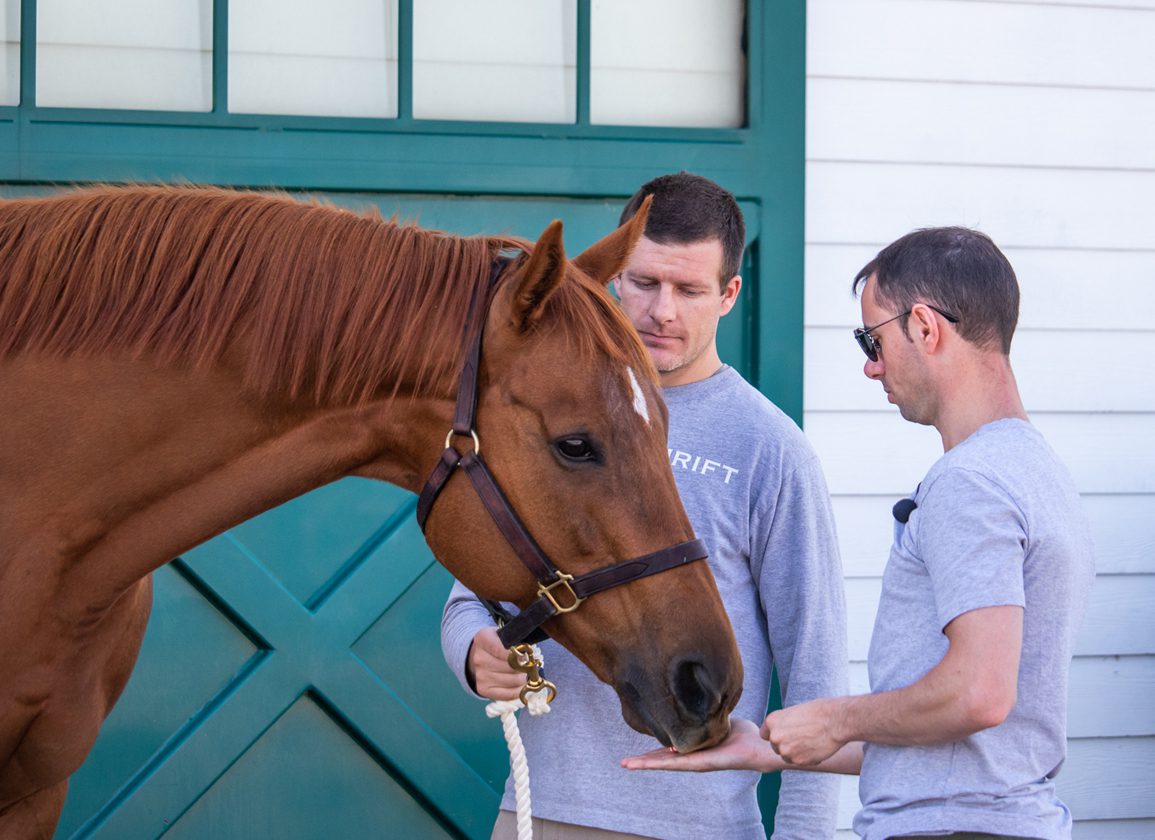
Just as spring brings new foals to the Bluegrass each year, many of the nation's best jockeys are welcomed to Lexington every spring for the Keeneland meet. On a light day of racing, Florent Geroux stopped in to visit an old friend at Spendthrift and meet her first foal. The seasoned jockey has sat aboard countless top-class horses, but it's not every day that he gets near one of their offspring.

Geroux was blown away by how well the champion seems to have taken to retirement.

“She looks great and she has a beautiful colt,” he said after peppermints had been distributed and the mare and foal were turned out for the morning. “I think everything is going very well for her. It makes me happy to see her here and she looks amazing. Her coat is beautiful and she looks super healthy, all dappled out.”

There is no question that Geroux's top earner, Gun Runner, has gone on to do great things after the racetrack. Now he is hoping that his second-highest earning performer can share similar success.

The sky has always seemed to be the limit for Monomoy Girl, who has a knack for setting the bar throughout every step of her career.

Purchased as a yearling by Liz Crow for only $100,000 and originally campaigned by Michael Dubb and Sol Kumin's Monomoy Stables, the Brad Cox-trained filly was a stakes winner at two and her Eclipse Award-worthy sophomore season was highlighted by six graded stakes wins from seven starts, including the Kentucky Oaks and the Breeders' Cup Distaff.

While she missed her 4-year-old season due to colic and a hamstring injury, the chestnut came back the following year and claimed another Breeders' Cup Distaff-Eclipse Award double. At the end of her 5-year-old campaign, she was sent through the ring at Fasig-Tipton's Night of the Stars Sale, where she brought $9.5 million from Spendthrift Farm. MyRacehorse joined in on the partnership along with one of her original owners Sol Kumin under his Madaket Stables banner. She was a graded stakes winner again at six in the GIII Bayakoa S. before entering retirement.

Flo knows to come bearing peppermints when visiting Monomoy Girl | Sara Gordon

Reflecting on Monomoy Girl's career, Geroux said that her Kentucky Oaks victory over fellow champions Wonder Gadot and Midnight Bisou, as well as her victorious return to the Breeders' Cup in 2020, are two of his fondest memories with the talented filly.

Monomoy Girl's intelligence, he added, is another trait he will never forget from their many rides together.

“She's extremely smart,” he said. “Probably one of the smartest horses I've been around.”

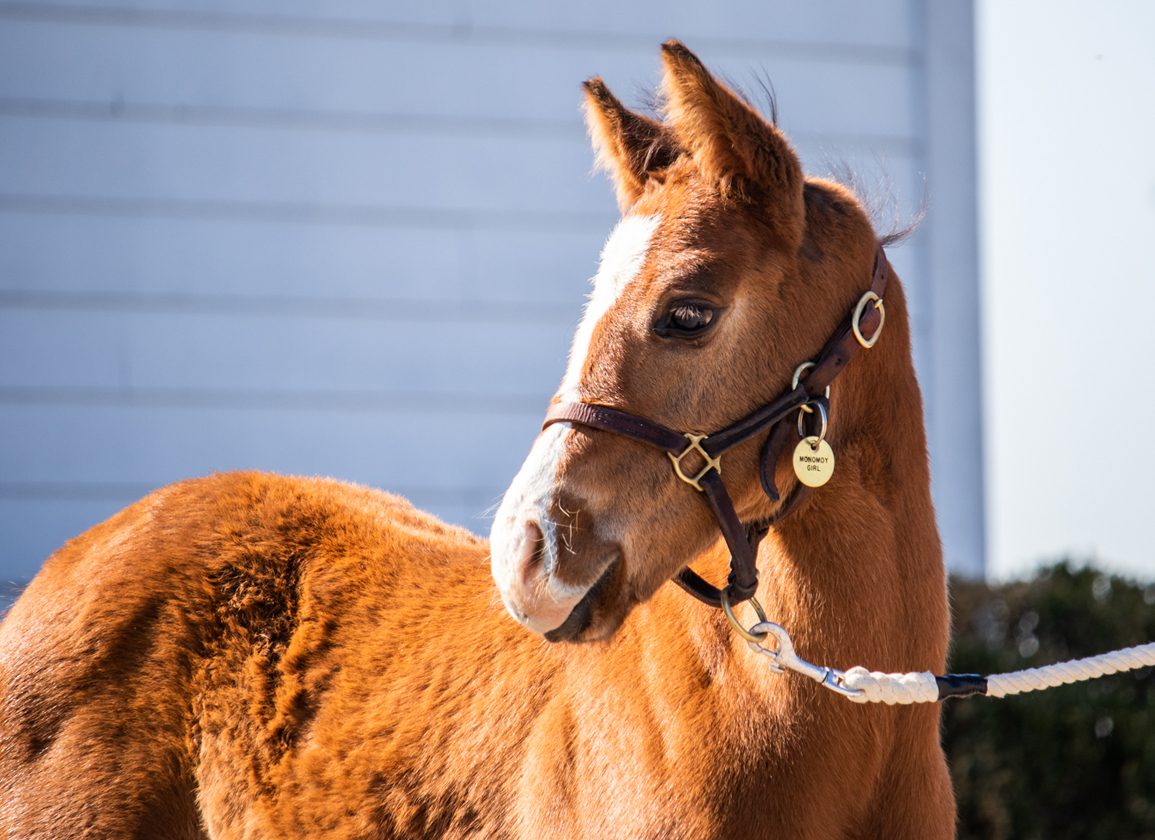
While it remains to be seen if this first foal has inherited his dam's athletic abilities, there is already no question of his paternal heritage. A flashy light bay with varying degrees of white on all four legs, the colt has a prominent blaze that is unquestionably Into Mischief.

At just two months old, the youngster has already grown to love the spotlight.

“He could not be a more personable foal,” Toffey explained. “He loves people. You try to get a picture of him and he'll come over to the fence. Everything looks like a selfie with him because he just comes up and wants to get in your face.”

Toffey said that while plans can always change, their goal is to keep the foal under his existing ownership.

“I think he's one that we're likely to keep right here in house,” he explained. “There is a lot of time between now and next year when he would potentially sell as a yearling, but there is so much stallion potential there. It's a wonderful pedigree and he looks like an athlete. If he has ability that comes anywhere close to his looks and pedigree, he'd be a horse that we could hope to one day have in our stallion barn. That's really one of our big goals here at Spendthrift. We're breeding for the stud barn and the broodmare band. Obviously first comes athleticism, but if they can do the job on the track, our goal is to get them back here and stand them at stud.”

No matter where the youngster ends up some day, 'Flo' said that he would like to put his name in the hat to be the colt's future jockey.

“I would have to talk to the owners and maybe the future trainer,” he said with a smile. “Hopefully they can arrange that for me. It would be special.”

The post The It Girl: Monomoy Girl Shines at Spendthrift Alongside First Foal appeared first on TDN | Thoroughbred Daily News | Horse Racing News, Results and Video | Thoroughbred Breeding and Auctions.

Source of original post

TDN Derby Top 20: The Waiting is the Hardest Part

The rankings below are independent from the “Road to the Derby” leaderboard Churchill Downs uses to determine starting berths, with several horses included here who are currently below the cut. View the qualifying list here.

1) PRACTICAL MOVE (c, Practical Joke–Ack Naughty, by Afleet Alex) O-Leslie & Pierre Jean Amestoy & Roger Beasley; B-Chad Brown & Head of Plains Partners (KY); T-Tim Yakteen. Sales history: $90,000 RNA yrl '21 KEESEP; $230,000 2yo '22 OBSAPR. Lifetime Record: GISW, 7-4-1-2, $884,200. Last Start: 1st Apr. 8 GI Runhappy Santa Anita Derby. Kentucky Derby Points: 160.

Practical Move has the distinction of being the only Derby contender this year to run two triple-digit Beyer Speed Figures at age three, earning a 100 in each of his last two wins, the GII San Felipe S. and the GI Santa Anita Derby.

Among all the “Road to the Kentucky Derby” qualifying races in 2022-23, this Tim Yakteen trainee also produced the two fastest final clockings at 1 1/16 miles (GII Los Alamitos Futurity and San Felipe), plus the quickest nine-furlong winning time (Santa Anita Derby).

Beyond the question of “how fast,” Practical Move rates highly from a “how he does it” perspective. Regular rider Ramon Vazquez should feel pretty confident he's on a colt who has enough tactical speed to be placed within the first flight and doesn't shy from slicing through tight inside passages. Practical Move's late-race torque is a proven commodity that he's used to his advantage in three consecutive rail-running victories.

Vazquez has had only one previous Derby mount, a trip-troubled 13th in 2015 aboard the 36-1 Mr. Z.

Although Practical Move's sire, Practical Joke, was a three-time Grade I winner in New York, he never won a two-turn race (fifth in the 2017 Derby). Maternal grandsire Afleet Alex, though, ran third in the 2005 Derby, then won both the GI Preakness S. and GI Belmont S.
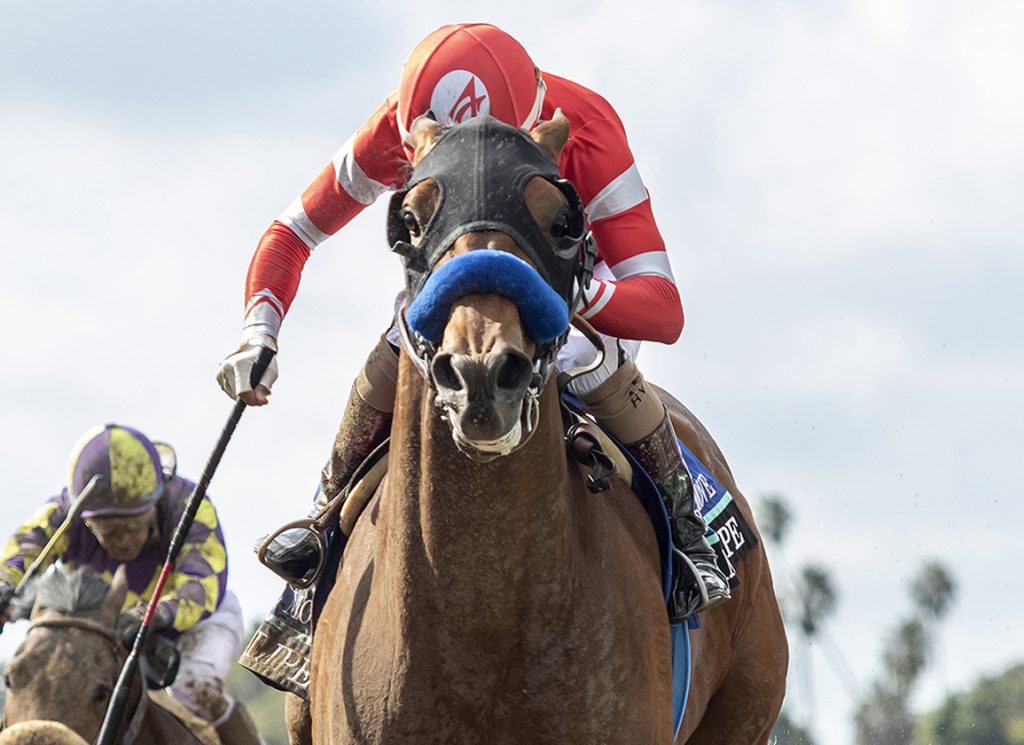
Practical Move | Benoit

2) FORTE (c, Violence–Queen Caroline, by Blame) 'TDN Rising Star'. O-Repole Stable and St. Elias Stable; B-South Gate Farm (KY); T-Todd Pletcher. Sales history: $80,000 Wlg '20 KEENOV; $110,000 Ylg '21 KEESEP. Lifetime Record: Ch. 2yo Colt, MGISW, 7-6-0-0, $1,833,230. Last start: 1st GI Curlin Florida Derby at Gulfstream Apr. 1. Kentucky Derby Points: 190.

'TDN Rising Star' Forte sports a daunting 6-for-7 career record and he hasn't had a single training setback at age three, winning the two prep races (GII Fountain of Youth S. and GI Florida Derby) that trainer Todd Pletcher said he would target after this tall, lanky colt won last November's GI Breeders' Cup Juvenile.

Peer closely at that past-performance block though, and you can see reasons why some handicappers will be willing to bet against this son of Violence on Derby Day.

Even if you don't believe in speed figures at their face-value level, it's concerning when any horse-let alone a divisional champion-regresses in his overall pattern from age two to three. Forte ran a 100 Beyer in the Juvenile, dipped to a 98 in the Fountain of Youth, then checked in with a 95 in the Florida Derby.

That Fountain of Youth slippage might be forgiven considering Forte prowled around the track like he knew he had the field at his mercy and was geared down in the final stages when his win was evident. The Florida Derby, though, featured robust early splits (it was the only nine-furlong prep this season in which the first three quarters were all clocked in sub-24 seconds). Yet when Forte unleashed his customary late kick, it came during a so-so final quarter in :25.72 and a tepid final eighth in :13.02.

Still, you have to respect that this is an A-level athlete who simply fires on the far turn every time out.

It's also noteworthy that Forte's three most visually appealing races (GI Breeders' Futurity, Juvenile, Fountain of Youth) all came over short-stretch configurations with the finish line at or near the sixteenth pole, a setup that does not traditionally favor horses kicking in from farther back. The Derby distance and Churchill's ample stretch both have the potential to work to Forte's advantage.
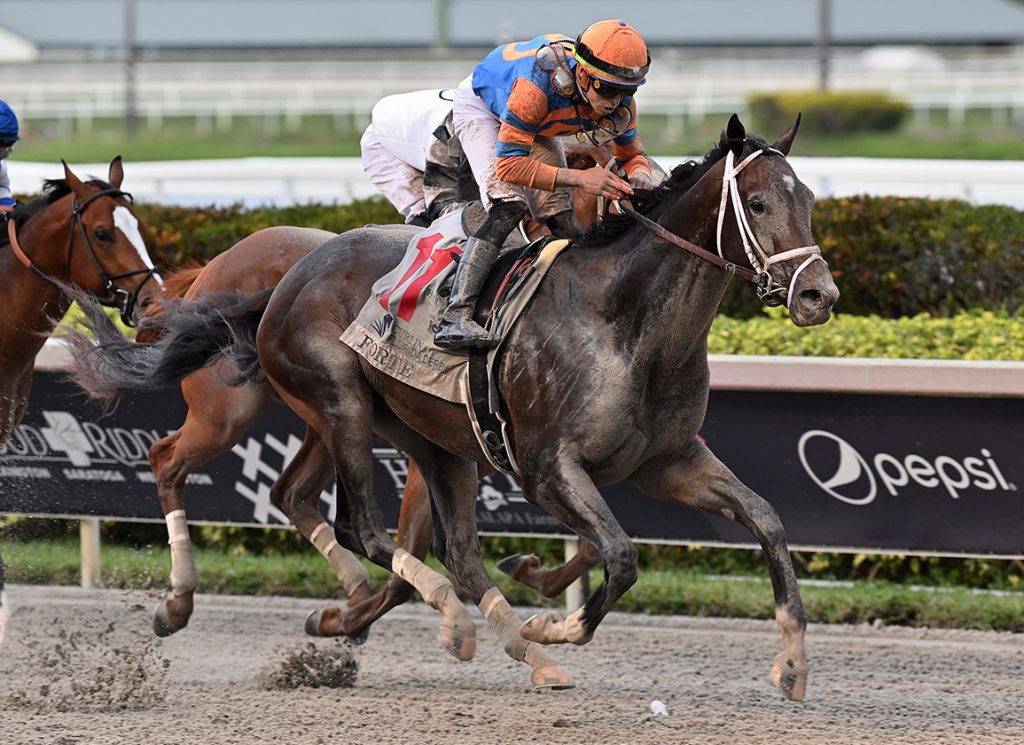
Forte | Lauren King

3) HIT SHOW (c, Candy Ride {Arg}–Actress, by Tapit) O/B-Gary & Mary West (KY); T-Brad Cox. Lifetime Record: GSW, 5-3-1-0, $404,375. Last Start: 2nd in GII Wood Memorial S. at Aqueduct Apr. 8. Kentucky Derby Points: 60.

Hit Show, a 3-for-5 Candy Ride (Arg) homebred for Gary and Mary West, has the distinction of going off favored in every one of his races. His three victories were open-length romps, and his only two losses were a second by a nose in the roughly run GII Wood Memorial (after overcoming post 12) and a fourth at age two in his first try against winners (when he bobbled at the break).

Although the two horses ranked above him-Practical Move and Forte-earned their spots based on proven ability, Hit Show is more of a speculative selection based on the assumption that he'll offer significantly overlaid value while being primed to peak on Derby Day.

Hit Show is a May 9 foal. Although exact foaling date records are sketchy prior to 1940, 11 known May foals have won the Derby dating to 1875. The most recent two were Authentic in 2020 (who won a Derby that was run in September) and Country House in 2019 (who crossed the wire second but was elevated to the win because of the disqualification of Maximum Security).

4) VERIFYING (c, Justify–Diva Delite, by Repent) O-Westerberg, Mrs John Magnier, Jonathan Poulin, Derrick Smith & Michael Tabor; B-Hunter Valley & Mountmellick Farm (Ky); T-Brad Cox. Sales history: $775,000 yrl '21 KEESEP. Lifetime Record: MGISP, 6-2-2-0, $489,900. Last start: 2nd GI Toyota Blue Grass S. at Keeneland Apr. 8. Kentucky Derby Points: 54.

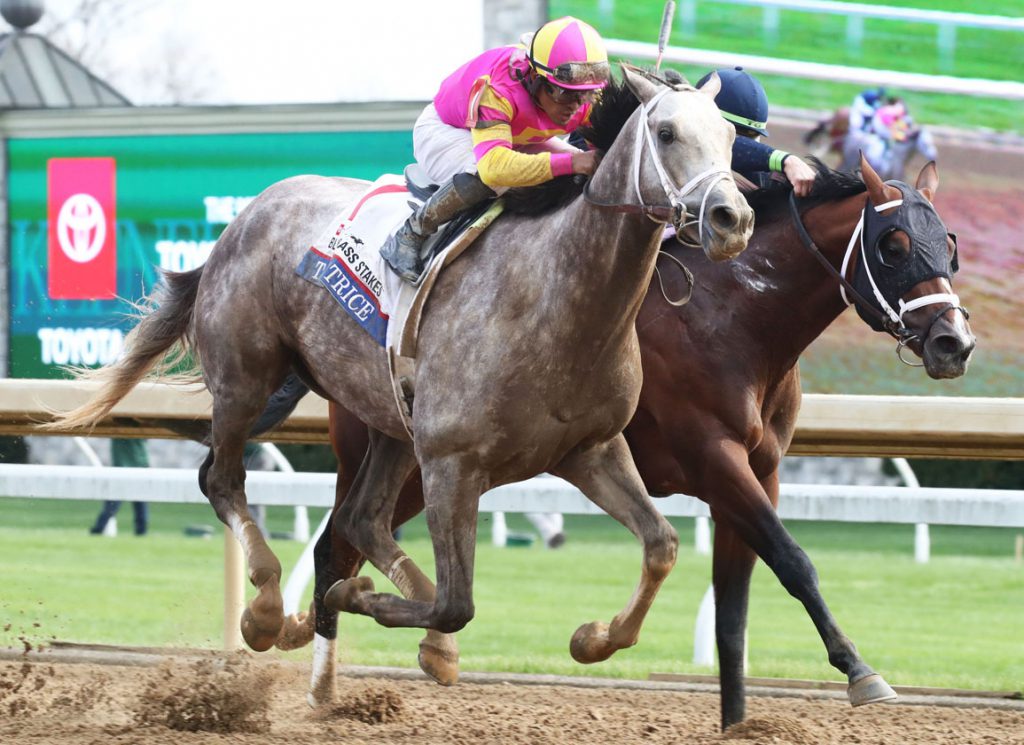
Verifying ($775,000 KEESEP), like Hit Show, also won't technically turn three until after the Derby (May 11). But he ran a “wise beyond his age” second in the GI Blue Grass S., beaten only a neck after twice clawing back the lead in a heavyweight stretch smackdown with No. 5-ranked 'TDN Rising Star' Tapit Trice (Tapit).

This Justify colt is a half-brother to 2019 champion older dirt distaffer Midnight Bisou. Beyond the Triple Crown-winning cachet atop his pedigree, Verifying's female family includes some overlooked nuggets. Damsire Repent was a hard-charging early favorite for the 2002 Derby before getting derailed from the Triple Crown series by an ankle injury. And Repent's sire, Louis Quatorze, wired the 1996 GI Preakness S.

A decent post draw and a clean break almost certainly puts Verifying in the hunt for the lead in the Derby, an obvious plus considering eight of the past nine Derbies have been won by horses either on the front end or forcing the issue.

5) TAPIT TRICE (c, Tapit–Danzatrice, by Dunkirk) 'TDN Rising Star'. O-Whisper Hill Farm LLC and Gainesway Stable (Antony Beck); B-Gainesway Thoroughbreds Ltd. (KY); T-Todd Pletcher. Sales history: $1,300,000 Ylg '21 KEESEP. Lifetime Record: GISW, 5-4-0-1, $100,150. Last start: 1st GI Toyota Blue Grass S. at Keeneland Apr. 8. Kentucky Derby Points: 150.

'TDN Rising Star' Tapit Trice “takes a little while to get going,” according to jockey Luis Saez. But once he picks up steam, look out. He rolled to victory from off the tailgate in the GIII Tampa Bay Derby, and looked beaten on the far turn of the Blue Grass S. before relentlessly reeling in Verifying to win a length-of-stretch battle.

Tapit Trice closed with gusto through a final furlong in :12.40, the fastest final eighth in the Blue Grass since Keeneland switched back to dirt in the fall of 2014. Even more impressive is that he launched his sustained move six furlongs out, which no other competitor on the Derby trail has come close to doing this season.

This gray son of Tapit ($1.3 million at KEESEP) has come around horses in all four of his victories. But his wide-and-driving tactics, combined with his propensity for dawdling at the break, could work against him in a 20-horse Derby.

Even though the two are built differently, consider a comparison to Essential Quality, another 'Rising Star' gray who was favored in the 2021 Derby and also ridden by Saez.

The juvenile champ went into the Derby undefeated after similarly making big, outside moves. Like Tapit Trice, Essential Quality's final prep was the Blue Grass, and it, too, featured a demanding stretch duel through the previously fastest Blue Grass final eighth in the new-dirt era (:12.53).

In the Derby, Essential Quality got off slowly, then Saez kept him four wide on both turns in an effort to avoid getting jammed inside. The colt rallied, but his fourth-place try lacked the spark of previous tries. The tough last prep didn't help him, and the lost ground definitely hurt him. Essential Quality skipped the GI Preakness. S., then won the GI Belmont S., GII Jim Dandy S. and GI Travers S. in succession.

Regardless of whether you think that sort history will repeat with Tapit Trice, you at least have to factor in those tactical similarities when assessing whether or not banking on a closer who gives himself so much extra work to do is a sound bet in a crowded, chaotic race like the Derby.

Tapit Trice | Coady

6) SKINNER (c, Curlin-Winding Way, by Malibu Moon) O-C R K Stable; B-Stonestreet Thoroughbred Holdings LLC (KY); T-John Shirreffs. Sales history: $40,000 Ylg '21 KEESEP; $510,000 2yo '22 OBSAPR. Lifetime Record: MGSP, 6-1-0-3, $216,300. Last start: 3rd GI Santa Anita Derby at Santa Anita Apr. 8. Kentucky Derby Points: 45.

Skinner still needs two defections to make the qualifying cut. But I can see him emerging as a “wiseguy” horse at over 30-1 if he gets in.
To arrive at that conclusion, you have to buy into the benefits of the patient, confidence-building training methodology of John Shirreffs, and basically put a line through Skinner's uninspiring race results at age two.

Instead, focus on his progression at age three, which includes a mile maiden win followed by a pair of thirds over increasing distances behind No. 1-ranked Practical Move, the latter punctuated by a purposeful, three-furlong late kick.

All three efforts generated strong Beyers (95-94-99) that leave room for improvement. There's also the been-there-done that factor, based on John Shirreffs's 50-1 Derby upset with Giacomo in 2005, and jockey Victor Espinoza's three Derby wins with War Emblem (2002), California Chrome (2014) and American Pharoah (2015).

7) KINGSBARNS (c, Uncle Mo–Lady Tapit, by Tapit) O-Spendthrift Farm; B-Parks Investment Group (KY); Todd Pletcher. Sales history: $250,000 yrl '21 FTSAR; $800,000 2yo '22 FTMAR. Lifetime Record: 3-3-0-0, $657,300. Last Start: 1st GII Twinspires.com Louisiana Derby at Fair Grounds Mar. 25. Kentucky Derby Points: 100.

This 3-for-3 son of Uncle Mo ($250,000 FTSAUG; $800,000 FTFMAR) projected to control the tempo in the GII Louisiana Derby, and he did just that, leading at every call through very moderate fractions (:24.71, 49.50, 1:14.69, 1:39.13) and light pressure. The effort earned a 95 Beyer, a decent number despite the 1:57.33 clocking for 1 3/16 miles being the slowest in four years since that stakes got elongated from nine furlongs.

Still, the win represents capable advancement through only 10 weeks of racing experience, and the overall trend for the undefeated Kingsbarns shows no regression (74-85-95 Beyers). Beyond what he's shown on paper, this is a no-nonsense colt who goes about his business without drama, and he's already handled shipping to and racing over three very different dirt surfaces (Gulfstream, Tampa, Fair Grounds).

Only two horses have won the Louisiana Derby and then the Kentucky Derby: Grindstone in 1996 and Black Gold in 1924.

8) REINCARNATE (c, Good Magic–Allanah, by Scat Daddy) O-SF Racing LLC, Starlight Racing, Madaket Stables LLC, Robert Masterson, Stonestreet Stables LLC, Jay Schoenfarber, Waves Edge Capital LLC & Catherine Donovan; B-Woods Edge Farm (KY); Tim Yakteen. Sales history: $775,000 yrl '21 KEESEP. Lifetime Record: GSW & GISP, 6-2-3-1, $231,900. Last Start: 3rd in the GI Arkansas Derby at Oaklawn Apr. 1. Kentucky Derby Points: 45.

Reincarnate is a glass half empty/half full proposition. Winless since his Jan. 8 GIII Sham S., his Beyers share a similar in-decline pattern over three races as Forte's (95-90-86), and his no-impact third in the Arkansas Derby doesn't supply much next-race momentum.
Yet this long-striding $775,000 KEESEP colt by Good Magic has never been out of the money from seven starts, all at a mile or longer, and he gives the impression of a contender who should be finishing better than his running lines suggest.

Jockey John Velazquez said three months ago that Reincarnate was “still learning how to run” and tended to wait on other horses once he made the lead. His speed-centric style should give him the advantage of being forwardly placed and potentially ahead of trip trouble in the Derby, but you'd better hold out for a sizable mutuel before banking on that investment.

9) DISARM (c, Gun Runner–Easy Tap, by Tapit) 'TDN Rising Star'. O/B-Winchell Thoroughbreds LLC (KY); T-Steve Asmussen. Lifetime Record: GSP, 4-1-2-1, $290,350. Last Start: 3rd in the GIII Lexington S. at Keeneland Apr. 15. Kentucky Derby Points: 46.

All that 'TDN Rising Star' Disarm had to do in Saturday's GIII Lexington S. was run third to secure the six qualifying points that would put him into the Derby, and jockey Jose Ortiz made sure the colt did just that. Unless it was obvious this Winchell Thoroughbreds homebred was going to blow by the field under his own power, everyone knew going into the race there would be no sense in asking Disarm for too strenuous an effort in the interest of keeping him fresh for May 6.

Disarm broke okay then was briefly squeezed back entering the first turn. The momentum loss wasn't serious, and he took up the chase seventh onto the backstretch, incrementally edging his way toward the top by the time the field hit the far turn.

Disarm responded when asked for a test-drive spurt of energy that propelled him to third at the top of the lane. But Ortiz realized he wasn't going to catch the dueling duo up front (especially with Keeneland's short-stretch configuration for 1 1/16 miles ending at the sixteenth pole), so he wisely kept Disarm to task just enough win the “race within the race,” securing show by three-quarters of a length.

No wins at age three and having never raced beyond 1 1/16 miles aren't ideal. But those circumstances were dictated by Disarm having been out of action between August and February. A bet on him in the Derby is essentially a wager that his Gun Runner (out of a Tapit mare) bloodlines are going to put him over the top at 10 furlongs.

10) ANGEL OF EMPIRE (c, Classic Empire–Armony's Angel, by To Honor And Serve) O-Albaugh Family Stables LLC; B-Forgotten Land Investment Inc & Black Diamond Equine Corp (PA); T-Brad Cox. Sales history: $32,000 RNA wlg '20 KEENOV, $70,000 yrl '21 KEESEP. Lifetime Record: GISW, 6-4-1-0, $1,069,375. Last Start: 1st in the GI Arkansas Derby at Oaklawn Apr. 1. Kentucky Derby Points: 154.

Trainer Brad Cox has secured the services of jockey Flavien Prat to ride Angel of Empire (Classic Empire) in the Derby. Prat, currently tops in the nation with 15 graded stakes wins in 2023, had piloted both Angel of Empire and No. 7-ranked Kingsbarns in their respective final preps.

Prat has ridden in five Derbies and finished in the money four times. In 2019 he rode Country House, who was declared the 65-1 winner via disqualification of Maximum Security. Prat was also third at 40-1 with Battle of Midway in 2017, second with Hot Rod Charlie at 5-1 in 2021, and third with Zandon at 6-1 in 2022.

Angel of Empire is 4-for-6 lifetime and at his best when given front-end targets to track down. Although his GII Risen Star S. win (89 Beyer) could be attributed him benefitting from a pace meltdown, this colt's Oaklawn score (94 Beyer) was noticeably more assertive, with this Pennsylvania-bred decisively overpowering the pacemaker.
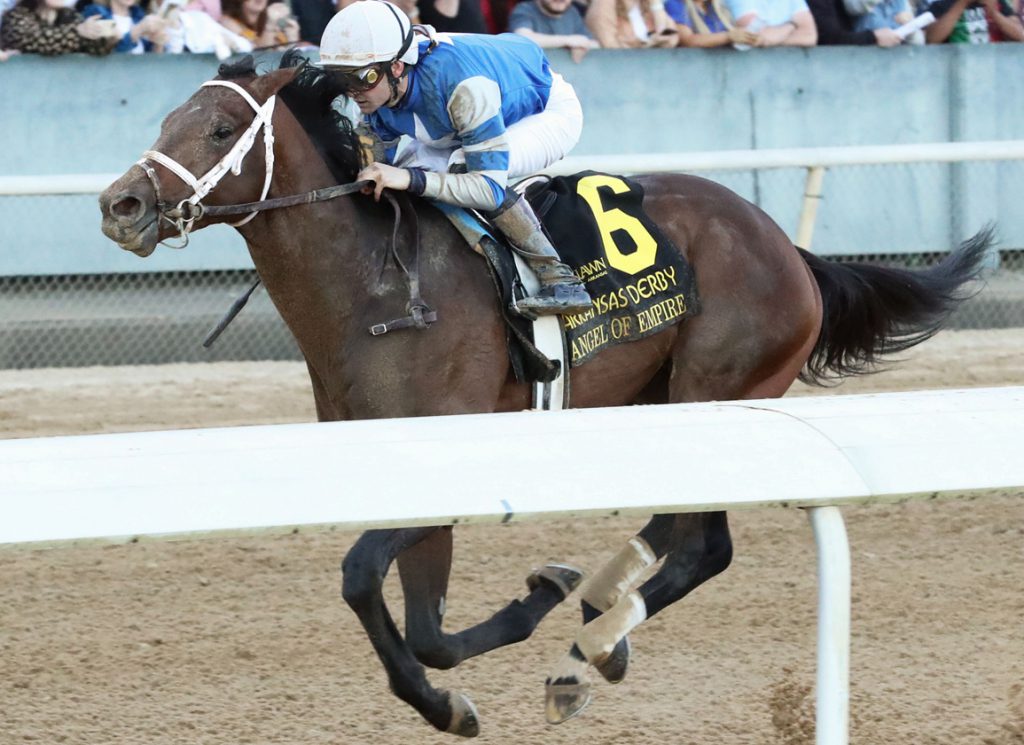
Angel of Empire | Coady

11) TWO PHIL'S (c, Hard Spun–Mia Torri, by General Quarters) O-Patricia's Hope LLC and Phillip Sagan; B-Phillip Sagan; T-Larry Rivelli. Sales History: $150,000 RNA Ylg '21 KEESEP. Lifetime Record: MGSW, 8-4-1-1, $683,450. Last start: 1st GIII Jeff Ruby Steaks at Turfway Mar. 25. Kentucky Derby Points: 123.

Two Phil's ($150,000 RNA KEESEP), the 101-Beyer winner of the GIII Jeff Ruby Steaks, is 4-for-8 closer/stalker who rates highly in terms of versatility and adaptability.

Off as the 2.8-1 second choice in the Jeff Ruby, Two Phil's broke alertly, rated kindly, then was content to be parked outside while sixth down the backstretch. He gathered momentum four deep through the far turn, then shadowed the favorite as the two jointly accosted the pacemaker at the head of the stretch. Two Phil's deftly shrugged off the fave, then chugged for the wire under his own power, with no one seriously challenging.

But this son of Hard Spun does own a 5 1/4-length win at 7-1 odds over a sloppy, sealed Churchill dirt track in the Oct. 30 GIII Street Sense S., which could mean his connections will be doing a rain dance come Derby week.
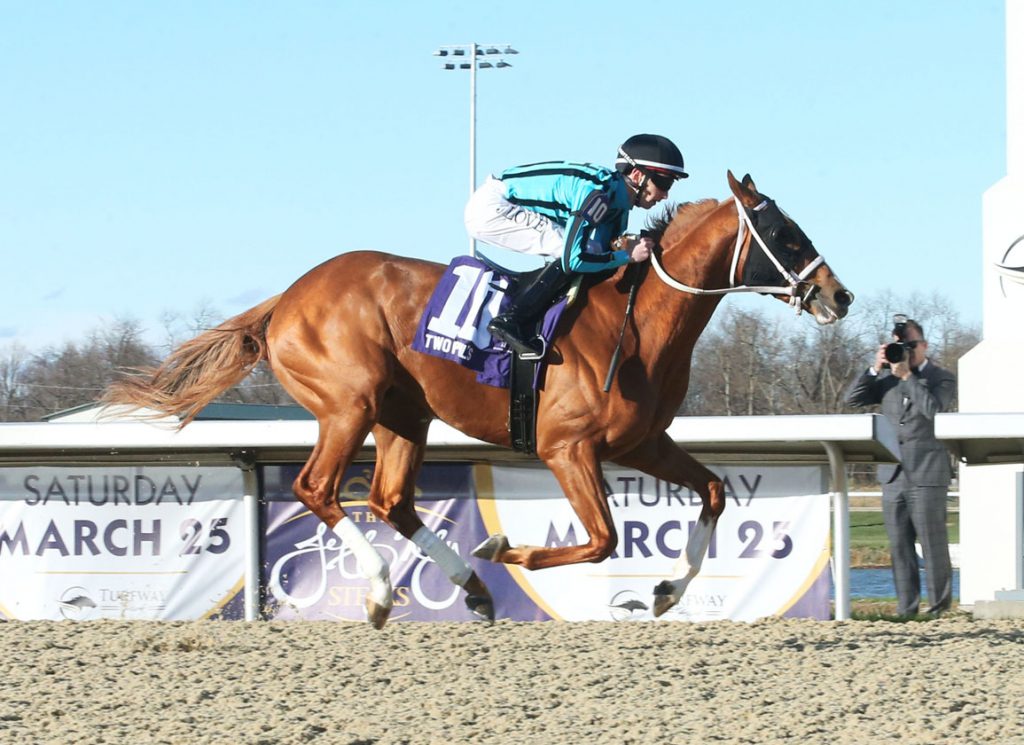
Two Phil's | Coady

12) MAGE (c, Good Magic–Puca, by Big Brown) O-OGMA Investments, LLC, Ramiro Restrepo, Sterling Racing LLC and CMNWLTH; B-Grandview Equine (KY); T-Gustavo Delgado. Sales history: $235,000 yrl '21 KEESEP; $290,000 2yo '22 EASMAY. Lifetime Record: GISP, 3-1-1-0, $247,200. Last Start: 2nd GI Curlin Florida Derby at Gulfstream Apr. 1. Kentucky Derby Points: 50.

Mage, who celebrates a birthday Apr. 18, is still without a committed Derby rider as of this writing. This son of Good Magic popped with an encouraging second in the Florida Derby, launching a big, far-turn bid, repulsing a stern stretch drive from the eventual third-place horse, but still being no match for the vastly more experienced winner Forte.

The conundrum facing Derby bettors centers on whether that 94-Beyer improvement represents the ceiling for Mage or if it is just a sneak preview of a higher phase of his development.

Mage's company lines from his Jan. 28 MSW win at Gulfstream got a boost over the weekend. The runner- up in that race, Bourbon Resolve (Hard Spun) came back to win a MSW route at Keeneland as the favorite.

The fourth-place finisher, Perform (Good Magic), who had already won his subsequent start at 7-10 odds at Tampa back on Mar. 11, won again at Laurel, capturing the Federico Tesio S. by a head at 10-1 odds.

Potentially Rounding Out the Starting Gate:

13) Lord Miles
Lord Miles (Curlin) broke his maiden by 5 ¾ lengths sprinting at Gulfstream. Then he ran third in the one-turn-mile Mucho Macho Man S., beaten only three-quarters of a length. Stretched out to two turns to take advantage of his stout, female-family bloodlines (A.P. Indy, Seeking the Gold), Lord Miles then drew the rail in both the GIII Holy Bull S. and the Tampa Bay Derby, encountering trouble at the start on both occasions while sixth and fifth. He was bumped at the break in the Wood Memorial too, but overcame it to force the issue, drop back, then re-rally to charge home to a $120 victory in a roughly ridden, three-way stretch fight.

14) Derma Sotogake (Jpn)
When Derma Sotogake (Jpn) wired the G2 UAE Derby, it marked the first group winner for Mind Your Biscuits, the Grade I and Group 1-winning sprinter from five or six years back whose last stateside triumph was a successful stretch-out to nine furlongs in the 2018 GIII Lukas Classic at Churchill Downs. This ¥18,000,000 JRHJUL yearling orchestrated a comfortable, 5 1?2-length score in that 1 3/16-miles Meydan stakes, leading home a Japan-based 1-2-3-4 finish. Since 2000, 12 winners of the UAE Derby have gone on to compete in the Kentucky Derby, and the best finish among them was sixth (along with two DNF's and a 20th-place try). But times are changing, as Japanese horses are increasingly stamping themselves as worthy global competitors at racing's top levels. Getting too mired in past results might be a mistake in prognosticating how Derma Sotogake will fare in this year's edition.

15) Rocket Can
After Rocket Can (Into Mischief) ran a lackluster fourth as the beaten fave in the Arkansas Derby, trainer Bill Mott surmised that this $245,000 FTSAUG RNA gray has the ability to do better, but “he's just not quite giving it all” yet. A bullet half-mile over the Churchill strip in :46.60 (1/34) last Thursday might be a step toward bringing about an attitude adjustment, but Rocket Can is generally a sharp work horse anyway, having routinely posted bullets at Payson Park over the winter. He has five route races leading up to the Derby, and he earned style points in most of them as a punch-above-his-weight type of stalker. But the poorest try among them was over nine furlongs at Oaklawn, leading to realistic concerns about whether 10 furlongs will be within his scope. Churchill does seem to be Rocket Can's preferred surface. He broke his maiden there back on Oct. 30 and was second, beaten just a half-length, in a Nov. 26 allowance.

16) Sun Thunder
Trainer Kenny McPeek described Sun Thunder as a Derby “fringe horse” in a Daily Racing Form interview last week, and that label fits. This late-running Into Mischief colt ($400,000 KEENOV; $495,000 RNA FTSAUG) was fourth, 6 ½ lengths off Tapit Trice in the Blue Grass S. He still hasn't won beyond the maiden ranks, but he's run second, fourth (twice), and fifth in graded stakes against decent company through a winter/spring campaign. He is going to need help both pace-wise and trip-wise in the Derby while also having to find at least another 14 or 15 points on the Beyer scale to be in it to win it (he's twice maxxed out at 89).

17) Jace's Road
Prior to last Saturday, Jace's Road barely made the qualifying cutoff. But Disarm's six-points third in the Lexington S. knocked him back onto the also-eligible list. A $510,000 KEESEP son of Quality Road, this colt ran a non-threatening third in the Louisiana Derby, and the best race on his résumé is still the 90-Beyer Dec. 26 wiring of the Gun Runner S. Jace's Road's status as an early 'TDN Rising Star' whose form has taken a hit reminds me a little bit of fellow Brad Cox trainee Mandaloun, who was also a 'Rising Star' and had a subpar final prep in the 2021 Louisiana Derby. Mandaloun reawakened with a 26-1 second in the Kentucky Derby, then subsequently was upgraded to the win because of the still-under-appeal drug DQ of Medina Spirit.

18) Confidence Game
Confidence Game, the 18-1 upsetter of the Rebel S., registered a 94-Beyer win by getting third run at wilting leaders. This $25,000 KEESEP Candy Ride (Arg) colt was initially slated for one more prep, but in March trainer Keith Desormeaux said it took Confidence Game “a little longer than usual to recover.” There was speculation he'd enter this past Saturday's Lexington S., but he instead breezed a mile from the gate on Friday in 1:38.20 (1/1). Now Confidence Game will head to the Derby off a 70-day layoff and never having run beyond 1 1/16 miles. Since 1929 (the advent of complete records), the longest winning layoff for a regularly scheduled Derby in May was 42 days, equaled by Needles (1956) and Animal Kingdom (2011).

19) Continuar (Jpn)
The 2-for-5 Continuar (Jpn) was third and beaten 10 lengths by Derma Sotogake in the UAE Derby. In their three common races, Derma Sotogake now has two wins over Continuar (the other was by a nose in a Nov. 6 handicap at Hanshin). Derma Sotogake was also third ahead of Continuar (fifth) in the G3 Saudi Derby. This ¥70,000,000 JRHJUL yearling's most recent victory was in the Cattleya S. at Tokyo last Nov. 26. Stateside fans will recall his sire, Drefong, as the Bob Baffert-trained champion sprinter in 2016.

20) Wild On Ice
Every Derby needs a massive, small-circuit-based longshot as a rooting interest, and Wild On Ice (Tapizar) fits the bill this year. The 35-1 winner of the GIII Sunland Derby in New Mexico has 60-year-old jockey Ken Tohill poised to become the oldest rider ever to compete in the Kentucky Derby. In the Sunland Derby, this Texas-bred homebred for Frank Sumpter stalked two front-running favorites who had shipped in from Santa Anita, and when the invaders dueled themselves into defeat, Wild On Ice opportunistically picked up the pieces for a 77-Beyer, 1 ¼-length score.

Note: Mandarin Hero (Jpn) (Shanghai Bobby) was ranked at No. 11 here last week but has now dropped to the 25th spot in qualifying points. Because of his diminished chances at making it into the main body of the race, he got relegated out of the TDN Top 20. Two horses who are currently inside the qualifying cut–Raise Cain (Violence) and Blazing Sevens (Good Magic)–are also not listed in this week's write-up.

The post TDN Derby Top 20: The Waiting is the Hardest Part appeared first on TDN | Thoroughbred Daily News | Horse Racing News, Results and Video | Thoroughbred Breeding and Auctions.

Source of original post
The Week In Review: Prime-Time Real Estate Remains Vacant On Derby Prep Calendar

An unintended consequence of moving all of the final, 100-point, nine-furlong preps for the GI Kentucky Derby to four weeks out is that there is now nearly a full month without any meaningful (to the general public) action in the lead-up to America's most historic and important horse race.

When viewed alongside other professional sports, which have significantly expanded their playoff structures in recent seasons to capitalize on the immediacy (and bettability) of wild-card  and play-in games with last-chance qualifying berths on the line, the lead-up to the Derby has gone in the opposite direction, minimizing the relevancy of making the final cut as the main event looms closer.

Although four-week spacing is in line with the current less-is-more approach to training top-level sophomores, it's difficult to believe that trend is so etched in stone that it necessitates stacking up the final, most lucrative preps so that three races with the exact same conditions at the exact same distance-the GI Blue Grass S., the GI Santa Anita Derby, and the GII Wood Memorial S.-all must go off within an hour of each other four weeks prior to the first Saturday in May.

No disrespect to 'TDN Rising Star' Disarm (Gun Runner), but the six points he accrued by running third in this past Saturday's GIII Lexington S. at Keeneland didn't exactly make for must-watch racing. It elevated him from 26th to 18th on the qualifying list and dislodged one other competitor, fellow 'Rising Star' Jace's Road (Quality Road).

The Lexington S. is more of a last-gasp shot at the tail end of the “Road to the Kentucky Derby” points series with only 20 total points up for grabs, and its 1 1/16-miles distance is a cutback compared to the stakes that precede it.

If the Derby is going to have a qualifying points system, why not accentuate the inherent drama of racking up points when they are most coveted? If one of those final three 100-points, 1 1/8-miles stakes were to get boldly repositioned to three weeks out, would horses not come?

I think they would-and there would be additional advantages to the track that tries it from the perspective of having a marquee day of racing without much competition.

As recently as 2021, Oaklawn Park was the “only game in town” three Saturdays before the Derby, with its premier stakes, the GI Arkansas Derby, the focal point on the national calendar.

Angel of Empire wins the 2023 GI Arkansas Derby | Coady

Over the previous decade, that three-week template worked pretty well. It was the springboard for American Pharoah's Triple Crown campaign in 2015, plus the Arkansas Derby also produced the 2012 Kentucky Derby favorite, Bodemeister (who ran second in Louisville), and the 2019 Kentucky Derby morning-line favorite, Omaha Beach, who had to scratch days before the race with an entrapped epiglottis.

But in 2022, Oaklawn readjusted its series of prep races by moving back the date of the Arkansas Derby so it sat five weeks out. A pre-Kentucky Derby void now exists that generates little meaningful news or excitement, and the kicker is that this past weekend is also a traditionally slow one on the mid-April national sports landscape.

No, this is not an unrealistic plea to roll back the clock four decades to the era when Churchill Downs used to card the Derby Trial S. on the Tuesday (four days!) before the Derby itself, where it served as a legitimate prep opportunity.

But it's interesting to see how the timetable has evolved for the spacing of the spring's big 3-year-old stakes at Keeneland, Santa Anita and Aqueduct.

The Blue Grass was last run three weeks before the Derby in 2014, having occupied that spot on the calendar for 26 years. As recently as 1988, it was carded 10 days before the Derby.

The Santa Anita Derby has maintained four-week spacing prior to the Kentucky Derby since 1981, when it ran 20 days before the Derby. In 1980 and in some years in the 1970s, a late-March placement five weeks out was the norm.

The last time the Wood Memorial ran three weeks out from the Derby was in 2004. It had been that way since 1993, when two weeks out was the standard.

Of those three races, the Wood Memorial could be best positioned to make a move back to three weeks out. The New York Racing Association (NYRA) has been innovative about readjusting other aspects of its stakes schedule in recent years. And-let's face it-as the lone Grade II race among that trio, it has more incentive to distinguish itself in an effort to regain the Grade I status that the American Graded Stakes Committee stripped away after the 2016 edition.

Had the Wood (and its same-day supporting stakes) been carded for Apr. 15 this year, it wouldn't have had to contend with the opening Saturday of the Keeneland meet, and it would have simultaneously sidestepped the biggest day of the Santa Anita season. In addition, all of racing on that Apr. 8 weekend had to go up against the immensely popular Masters golf tournament, which since the advent of legalized sports wagering in the United States has intensified the competition for viewing eyeballs and betting dollars.

There's another upstream advantage to making the switch as well: When Oaklawn retooled its Derby prep schedule, it also left a vacancy in the national schedule for the third week of March, which had previously been occupied by the GII Rebel S.

This year and last season there were no points-awarding “Road to the Derby” stakes in the two weeks between the GIII Tampa Bay Derby and the GII Louisiana Derby. If NYRA were to retrofit the Wood to three weeks before the Kentucky Derby, it could also move the GIII Gotham S. off its similarly crowded first-Saturday-in March slot, giving it solo status in mid-March while also putting the race in a spot where it isn't as endangered by the threat of winter weather.

Despite their shifting placements on the calendar, the last Wood Memorial winner to score in the Derby was Fusaichi Pegasus in 2000, and the last Blue Grass winner to wear a blanket of roses in Louisville was Strike the Gold in 1991. The Santa Anita Derby has been more recently productive, with its winners scoring in the Kentucky Derby in 2018, 2014 and 2012.

Maybe it will take Disarm winning the Derby this year off a three-week prep to nudge some track to claim that potentially lucrative piece of prime-time real estate.

The post The Week In Review: Prime-Time Real Estate Remains Vacant On Derby Prep Calendar appeared first on TDN | Thoroughbred Daily News | Horse Racing News, Results and Video | Thoroughbred Breeding and Auctions.

Source of original post
When Do CAWs Help And Hurt California Racing?

Last month, a lengthy Financial Times feature detailed the growing share of overall handle generated through Computer Assisted Wagering (CAW)–both in California and nationwide.

CAW players are a small group of high-volume and largely anonymous gamblers with an outsized impact on the betting markets due in no small part to the sophisticated wagering tools at their disposal. Because of their high stakes play, they're offered inducements in the form of rebates and reduced takeout rates largely not available to the average punter.

CAW proponents argue that these deep-pocketed players provide much needed financial ballast to an industry in flux. Critics say the industry has bent over backwards to accommodate their trade, to the point where their influence on betting pools is akin to a run-away train. It's not an easily told story–attention needs to be paid to the numbers behind the numbers.

Using California Horse Racing Board (CHRB) data, the story illustrated the way total California handle has shrunk appreciably between 2007 and 2021, but the share of that handle from CAWs has increased hand over fist during the same window.

When it comes to by far the most influential of these computer syndicates, the Elite Turf Club–a Curacao-based company owned in part by The Stronach Group and NYRA Bets LLC–their share of overall wagering has increased from about 3% to roughly 30% between 2007 and 2021, according to the FT's analysis of CHRB data.

Just two Elite Turf Club accounts account for the majority of all “Elite Turf Club” wagers bet, the FT calculated. Though here it should also be noted that other important betting entities facilitate CAW play, including some key ADW platforms.

Bill Nader, president and CEO of the Thoroughbred Owners of California (TOC), told the TDN that the Elite Turf Club's percentage share of the overall handle during Santa Anita's recently completed “Classic Meet”–which ran Dec. 26 last year through April 9–was 22.89%.

This number is important for one crucial reason: There is a tipping-point when the percentage share from CAW players on overall handle becomes so large that their participation at these levels becomes unsustainable–that it begins, essentially, to cannibalize the market.

“I think everyone would pretty much agree that around 25% is the cap and anything above that might be taking it too far,” said Nader, who presides over the organization given final say over any betting-related contracts inked in the state.

“Even the CAW player would agree that in striking the right balance through their lens–to avoid the CAW player competing against the CAW player which is not what their model wants–they need liquidity in the pools for distribution of investment,” said Nader.

Scott Daruty, president of Elite Turf Club, agrees there's a balance to strike–but he takes a more circumspect route as to what the tipping point is, highlighting different variables factoring into the equation, like the size and location of a racetrack.

“There are very different answers. I can only speak to the tracks that we operate,” said Daruty, pointing to the 1/ST Racing facilities.

“I would think if CAW is 15% of the pool, you're fine. I think if it's 30% or more of the pool, I personally would start to get worried about that,” Daruty said. “Other tracks who have different circumstances may answer that question differently.”

Does the 22.89% CAW play on total handle from the recent Santa Anita Classic Meet strike the right balance?

“I am not overly troubled at 22% if in fact that is the [right] number,” said Daruty, adding how, at the time of the interview, he was not able to verify the figure.

Earlier this week, the Daily Racing Form reported that Santa Anita will cut purse levels for the upcoming Spring meet. This cut was anticipated months in advance, said Nader, but has been influenced by issues like a slate of lost racing days through inclement weather this winter in Southern California.

Not inconsequentially, the purse account is in an operating deficit–a number currently sitting at $554,417 in the red, but expected to shrink to $430,789 through June 18, said Nader. How much of the state's purse account deficit can be attributed to the impacts from CAW play?

“They're volume players and they make a significant contribution,” Nader responded. “That's where I come back to the need to strike the right balance.”

Santa Anita | Benoit

Modifications Already Instituted in California

That said, efforts have already been made at Santa Anita and Golden Gate Fields to control CAW growth in California—the first concerning the Rainbow Pick 6.

Since Santa Anita's fall meet last year, CAW players have been prohibited from taking out the Rainbow Pick 6 jackpot on a non-mandatory payout day.

“CAW players must bet in a 40-cent unit which means they can't take out the jackpot,” Nader said. By rule, the only way the jackpot would be paid is to a single 20-cent unit.

The second concerns a bête noir of CAWs among ordinary gamblers–swinging last-minute odds changes. In response, CAW players must pay a surcharge of around 3.5% on top of their normal rate if they want to bet to the close of the win-pool, said Nader.

These modifications, said Daruty, were made at least partly in response to player feedback.

“There were complaints about late-odds shifts and a lot of focus on CAW players as the cause of that, and we wanted to take steps to try to alleviate the problem if not wholly at least partially,” Daruty said.

Have these modifications rectified the problem of late-odds changes? “We've monitored it carefully and we believe it has had a materially beneficial impact on that issue,” Daruty replied, leaving the door ajar for further possible pricing changes in CAW play.

“I don't know there is ever a perfect answer or a final answer,” Daruty said, adding that anything more specific on possible pricing tweaks would be a hypothetical. “It's an issue we will continue to monitor and if necessary make adjustments.”

Nader took a similar stance to Daruty, saying that the CAW surcharge is so prohibitive, “it effectively prices them out of participating in the win pool.”

But these modifications haven't fully addressed the issue of striking the right balance between CAW and non-CAW play, Nader added, once again saying “it's all about how we control access to the pools and how we price it to ensure fairness.”

As to what additional controls on the betting pools could and should be instituted, Nader also largely steered away from specifics, explaining that contract negotiations are ongoing between the tracks and the TOC with the Del Mar summer meet on the horizon.

Del Mar offers an intriguing case study as to the growing impact from CAWs in California.

According to publicly available CHRB data, the total amount Elite Turf Club wagers at Del Mar annually has increased nearly 56% comparing 2018 data–the year prior to the Santa Anita welfare crisis and a global pandemic–and 2022 numbers.

On a handle-per-race basis, the increase is even more stark. Comparing 2018 numbers to 2022, the Elite Turf Club's per-race handle increased 73.1% at Del Mar.

“I'm not trying to avoid the question, but we still need to have the conversations with the track partners,” Nader said, when asked about specifics concerning these ongoing negotiations. “We have the rights to approve, but I need to respect the position of the tracks. We need to come together.”

Nader pointed, however, towards the higher takeout wagers–like the Pick 4, 5 or 6 bets–as an area for possible pricing modifications.

“The CAW players have gravitated towards the multi-leg wagers which are higher takeout wagers. In many cases, higher takeout wagers can lead to higher rebates. There's where I think there's room for discussion,” said Nader.

For win, place and show or Exacta wagers, the takeout is extracted one time for each race. In the multi-leg wagers, however, the takeout is extracted only one time for a sequence of races.

“So, in terms of payments to tracks through commissions and to owners through purses, those dollars are not working nearly as hard as they would be in the single race pools,” said Nader.

Del Mar | Horsephotos

Concern Over Core Customers

The Thoroughbred Idea Foundation (TIF), an industry think-tank, has been banging the drum about the rise of CAWs, and the implications for the industry, for several years.

Just this March, TIF co-founder Craig Bernick warned that the current trajectory of CAW play risks substantial losses to both mainstream betting customers and to racehorse ownership.

In the same vein, Pat Cummings, TIF executive director and a former executive with the Hong Kong Jockey Club, stressed how vigilant California horsemen should be to the impacts from CAW to the long-term sustainability of the state's racing industry.

“No group should be pushing more for reform in this space–and to date, that has not really happened,” Cummings said, pointing to how California's purses are built solely upon handle, unlike other states which bolster their purse revenues through other sources. “Wagering is the lifeblood of the sport, but in America, nowhere more so than California.”

As such, pricing is key. “The growth of CAW play is proof that the cost we charge bettors via takeout matters,” Cummings said.     “If takeout was higher for CAWs, they wouldn't wager or churn as much as they do,” Cummings added. “And while we don't have access to the deals cut to incentivize them, their overall growth is the sign that improving their experience through better pricing has worked.”

Indeed, the lack of public transparency by the industry at large about the impact from CAWs is glaring. Take the CHRB, one of the more transparent commissions when it comes to CAW data.

Until 2021, the CHRB issued detailed annual betting data on individual Elite Turf Club accounts. Last year, the CHRB lumped all Elite Turf Club accounts into one block.

More specifically, the incentives offered these players is another major bugbear of CAWs. According to the FT, the rebates that CAW players receive can be around 10% of whatever they bet.

When asked if these details should be made public, Nader said that any effort at pricing transparency should ideally be done uniformly across the nation. “But I'm not sure there's a willingness to do that,” said Nader, who added that legal obstacles could similarly hinder such endeavors.

When asked the same question, Daruty said that “we believe very strongly that the personal wagering habits of our customers and their personal situations is something that should remain private, so we're not prepared to discuss specific rebates of specific players–that would not be appropriate.”

Individual rebates, Daruty explained, are dependent upon a wide variety of factors.

“Thus far we haven't found a one-size fits all model that we think makes sense for our racetracks, the horsemen who run there, as well as our customers. Until we can come up with such a model, we're going to continue to have a wide variety of rebates available to a wide variety of customers,” Daruty added.

Which leads to a fear among track operators that weakened CAW incentives could drive these price-sensitive players from the game. At the same time, without controls on CAW access to the betting pools, CAW is only going to further sour the average gambler to the game, Nader admitted.

“For the casual bettor, I'm not so sure,” Nader said. “It's the core customers, they're the ones I'm concerned about. I'm talking about the ones at a level just below the CAWs–they're the ones contributing on a day-to-day basis or participating at a higher rate. We want to make sure we're looking after their interests.”

What should that look like? Nader skirted specifics, calling it “a question for the industry at large to look at.” That said, “the key is introducing new people to the sport. Maybe we haven't done a good job at that for the last 10 to 20 years.”

The post When Do CAWs Help And Hurt California Racing? appeared first on TDN | Thoroughbred Daily News | Horse Racing News, Results and Video | Thoroughbred Breeding and Auctions.

Source of original post
Verified by MonsterInsights