Happy Trails at Oaklawn

Like countless owners, Marshall Gramm has a race circled on the first Saturday in May. But it's not the “Greatest Two Minutes in Sports,” aka the Kentucky Derby.

Gramm's affection is for a race that lasts approximately three minutes, a 1 3/4-mile event at Oaklawn Park with a history, albeit, esoteric, of its own. The “Trail's End,” a starter-allowance marathon, is traditionally the final race each season at Oaklawn, the Hot Springs, AR, venue that opened in 1905. The 1 3/4-mile race debuted in 1972 and has been won the last three years by Ten Strike Racing, a highly successful racing syndicate founded in 2016 by Gramm and Arkansas native Clay Sanders, and trainer Bentley Combs.

“It means the world to me,” said Gramm, a noted handicapper and economics professor at Rhodes College in Memphis. “I set my calendar by it. Again, it's hard to imagine ever being in a position to own like a Derby horse, even though we put together partnerships, and to be in a position to spend the kind of money to chase those kind of dreams. A Trail's End horse, a guy like me, claim a horse for $10,000 and take a shot. It's great.”
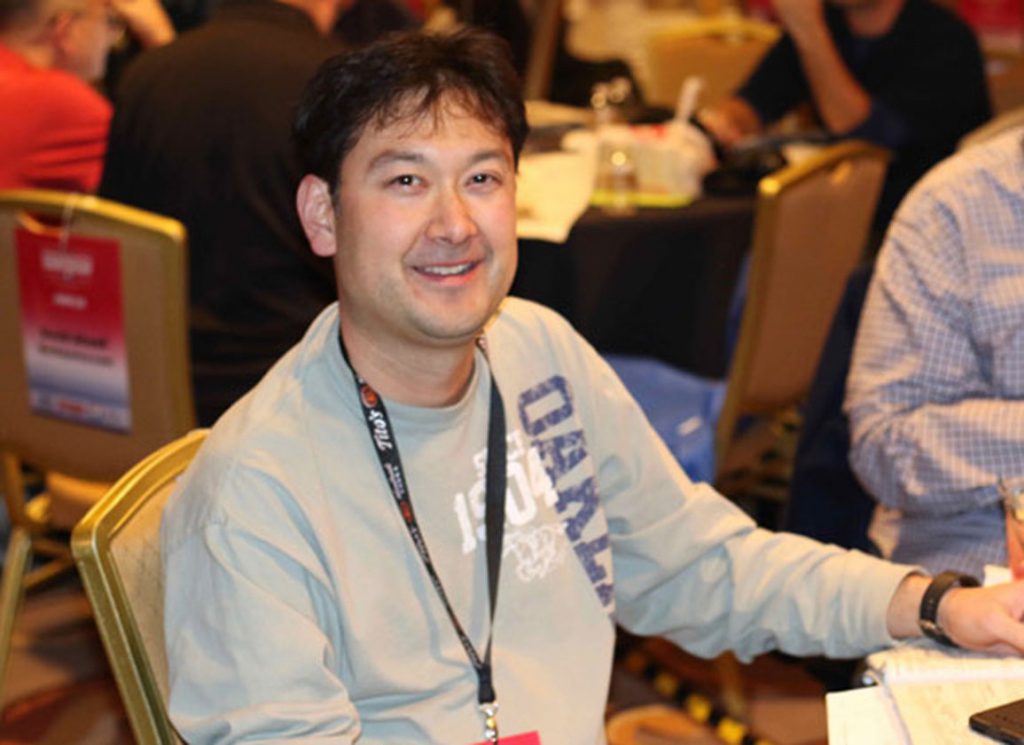
Marshall Gramm | Lucas Marquardt

Oaklawn senior vice president Eric Jackson said he believes the Trail's End was the brainchild of the late W.T. “Bish” Bishop, an iconic figure at Keeneland before becoming Oaklawn's general manager in 1978. A visionary, Bishop was instrumental in creating Oaklawn's popular Racing Festival of the South in 1974. It featured a stakes race each day during the final week of the meeting.

Prior to the Trail's End, Oaklawn had ended its season with a non-descript race, 1 mile and 70 yards, 1 1/16 miles or 1 1/8 miles, for lower-level claimers immediately following the Arkansas Derby. The 1 3/4-mile Trail's End starts in the six-furlong chute and covers three turns, making it the longest race each season at Oaklawn.

“It's without a doubt one of the neatest things about Oaklawn,” said Jackson, a Hot Springs native who became Oaklawn's director of operations in 1979 and succeeded Bishop as general manager upon his death in 1987. “The only time we screwed it up is when we ran it as the first race. I think (racing secretary) Pat Pope had a shortage of horses. When we ran it as the first race, we heard about it from everybody in the grandstand.”

What gives the Trail's End added zest is the buildup throughout the day and, ultimately, a sentimental twist at the end. The horses stop and face the crowd during the post parade as “Auld Lang Syne” is played by the bugler.

“That's beautiful,” said jockey Martin Garcia, who has won the last two runnings of the Trail's End. “That's really beautiful because that's like an appreciation to all those people that have come. That's the last day and last race and kind of a thank you to them for being here this year with us. Believe it or not, all those people, the public, that means a lot to us because they're coming to see and support us.”

Garcia guided favored Hellorhighwater (Ghostzapper) ($5.20) to a 10 1/2-length victory May 6. A 7-year-old gelding, Hellorhighwater covered 1 3/4 miles over a fast track in 3:00.10.

Garcia, Ten Strike and Combs also teamed to win the 2022 Trail's End with Original Intent (Creative Cause). Original Intent won the 2021 Trail's End under Ramon Vazquez.

Combs joined David Vance as the only trainers to win the Trail's End three consecutive years. Vance captured the first three runnings (1972-1974), all for powerhouse Arkansas owner Dan Lasater.

Reflecting its popularity, the Trail's End had a $125,000 purse the last two years, a colossal sum for the starter-allowance level. It has averaged 11.8 starters the last four years.

“This race right here, now don't get me wrong, it's almost like that treasure island for me at this point,” Combs, 35, jokingly, said.

“It's a $125,000 starter ($10,000). Don't tell people about this damn thing, although I'm sure Pat's going around saying, 'Tell everybody about this.' I've got the bug. It's bitten me. We've won it three years in a row. We've tied David Vance and, hopefully, we're looking for the one to go ahead and beat David.”

Combs, who saddled his first winner in 2017 after coming up under trainer Dallas Stewart, said he initially believed the Trail's End was just another race before being in the crosshairs of the pomp and circumstance for the first time in 2021.

“I had no idea,” Combs said. “I went in and saddled the horse and was kind of walking away and some lady looked over and said, 'Have you ever seen this before? I said, 'A post parade? Yeah, I've seen a post parade.' She said, 'No, no, no. The horses face the crowd and we do “Auld Lang Syne” and all this stuff.' I didn't know it was that big of deal and I kind of got worried that my horse was going to get loose, to be completely honest. Like I said, I had no idea. It's kind of funny because it's Marshall's biggest thing and now he's kind of got the bug bitten in me. It's like, 'Man, we've got to point towards this race.' It's really cool when everybody sings the song and the stuff like that.”

The 2023 Trail's End was for 3-year-olds and up that had started for a claiming price of $10,000 or less in 2022-2023. Combs, on behalf of Ten Strike, claimed Hellorhighwater for $10,000 out of a fifth-place finish Nov. 3 at Churchill Downs.

Hellorhighwater won a co-meet-high four races this season at Oaklawn, helping Ten Strike finish third in the owner's standings with 15 victories. Ten Strike's biggest score came with Eyeing Clover (Lookin At Lucky), a one-time fringe Kentucky Derby candidate, in the $200,000 Hot Springs S. for 3-year-olds at 1 mile April 1. Eyeing Clover was a $55,000 Keeneland September Yearling Sale purchase.

Ten Strike finished second with its two other Trail's End starters to date–Far Out Kailee (Summer Bird) for trainer Randy Matthews in 2017 and Tiger Moon (Upstart) for trainer Lindsay Schultz in 2023. The Trail's End purse was $55,000 in 2017. The May 6 exacta gave Ten Strike a sparkling 3-2-0 record in five Trail's End starts, with purse earnings of $231,000.

“I'm not from the area and didn't grow up like Clay and some of our other partners following the race,” Gramm said. “I remember learning about it, of course, watching the Arkansas Derby. It was always followed up by this mile and three-quarters race and I loved the tradition and pageantry. I think one of the most underrated moments in horse racing is when they go through the post parade and they turn to the crowd and play “Auld Lang Syne.” I quickly realized this is my kind of race. Claiming race, it's a marathon race, it's a dirt race. I should start looking for horses that sort of fit the profile of a Trail's End horse.”

Oaklawn ran the closing-day Trail's End in April, capping the Arkansas Derby Day program, until shifting its racing dates in 2019. A May close means the Trail's End is now run on the heels of the Kentucky Derby. Gramm attended this year's Kentucky Derby and said he watched Hellorhighwater's victory from a home adjacent to Churchill Downs.

Ten Strike and Lasater, a three-time Eclipse Award winner, are the only owners to win the Trail's End three consecutive times.

“It's my favorite race out there,” Gramm said. “Obviously, I would aspire to win the Derby and stuff like that. I want to win the Trail's End every year. I'm looking right now for a Trail's End horse.”

The post Happy Trails at Oaklawn appeared first on TDN | Thoroughbred Daily News | Horse Racing News, Results and Video | Thoroughbred Breeding and Auctions.

Source of original post

If Baseball Can Change, So Can the Triple Crown

Baseball had a problem. Because games were taking way too long, because stolen bases were near an all-time low, because defensive shifts were cutting down on offense, the product that is baseball wasn't as good as it could be. Too many boring, interminable, bad games could only mean one thing, that fans were and would continue to lose interest in the national pastime.

Sound familiar? Horse racing has a Triple Crown where the product has been weakened because trainers, who simply refuse to run their horses back on short rest, are reluctant to run racing's stars in all three races, and in particularly in the GI Preakness. The Triple Crown is the sport's most important asset and the one product that the general sports fan will pay attention to. The sport can't afford to allow anything that limits its appeal or diminishes its excellence. When you now get a Preakness every year where you have to hold your breath that the Derby winner will actually run and the rest of the field is made up of a horse or two that straggled across the finish line at Churchill Downs plus a few new uninspiring faces you have a problem and a series that needs improvement.

With bold new rules that arrived this season, baseball has been fixed and most agree that the game has never been better or more exciting. Now, it's time for the Triple Crown to do the same. It, too, needs to be fixed and the obvious solution is to extend the time between races.

I cannot believe that I just wrote that. For decades, I have defended the Triple Crown, the spacing of the races and implored the industry to not change a thing. But now I realize, thanks in part to my interest in baseball, that I was putting tradition over practicality. Tradition is fine but not when it means being so stubborn that you don't change with the times, not when it means that we keep getting Preaknesses like this one.

Baseball could have made the same mistakes and remain tradition-bound. Forcing the pitchers to deliver a pitch within 15 seconds (or 20 if there is a man on base) is a radical change. So are the new anti-shift rules, which meant players could no longer be positioned wherever a team's analytics department dictated. Because the bases are bigger and a pitcher is limited so far as how many times he can throw over to a base, teams are starting to steal again. The biggest change is that games are now, on average, about 30 minutes shorter than they were in 2022. Everyone loves the new rules and the new game.

The NBA game changed dramatically in 1979 when the three-point shot was added. No one is complaining. That sport has never been more popular.

It's great that GI Kentucky Derby winner Mage (Good Magic) isn't pulling a Rich Strike (Keen Ice) and will run. But where is runner-up Two Phil's (Hard Spun)? His trainer, Larry Rivelli, was quoted this week saying that even if he had won the Derby he's not sure that he would have run back. Where is third-place finisher Angel of Empire (Classic Empire)? Both Two Phil's and Angel of Empire turned in terrific efforts in the Derby and would be 4-1 or less in the middle jewel of the Triple Crown, which goes for $1.65 million. That's a position any owner should love. Yet, they won't be taking part. Where is GI Blue Grass winner Tapit Trice (Tapit)? Oh, that's right, Todd Pletcher never runs in the Preakness. All we're getting from the Derby is Mage as fourth-place finisher Disarm (Gun Runner) defected Monday to wait for Saratoga. The best of the new faces is First Mission (Street Sense). He has a chance to turn out to be a good horse, but let's not forget that his biggest win came in a minor Derby prep, the GIII Lexington S.

Part of my stubbornness was that I hate it that trainers insist on having so much time between races and on running so infrequently. It's bad for the sport and limits the amount of money an owner can make. To me, it makes no sense. Horses used to run 25 times a year and three weeks between races was considered a layoff. It's scientifically impossible that the breed has changed so much that five races a year or a only month between races is something that taxes them.

I also used to think that extending the time between the races would mean the task of sweeping the series would be easier and that future Triple Crown winners wouldn't match up to the ones that came before them. In hindsight, the Triple Crown has never been easier to win because the Preakness can turn into an uncontested layup for the Derby winner.

Sure, I'd rather see a change of mind-set where trainers target the entire series as it is, but with the current scheduling of the Triple Crown that's not going to happen. There's often talk that the Preakness should be run a week later, three weeks after the Derby. Then there would be another three weeks to the GI Belmont S. That wouldn't work. To the modern trainer, that's still not enough time between races.

To keep as many of the best 3-year-olds in the series from start to finish, you'd probably need six weeks between races. But that would be overdoing it. The best solution is to have each race run on the first Saturday of the month. This year the Derby would have been on May 6, the Preakness on June 3 and the Belmont on July 1. I'm sure there are some factors that I haven't taken into account, like how would the networks react? The new set up would also likely weaken races like the GI Haskell S. and the GI Travers S.

But there's no doubt that a Triple Crown where there are four weeks between each races would be a better Triple Crown than one where three races are crammed into five weeks. It's all about the product we are selling to the fans.
If you're going to be in Baltimore for Preakness week you might want to check out the red-hot Orioles. They play the Angels and Shohei Ohtani on Monday, Tuesday, Wednesday and Thursday. Go catch a game. You'll enjoy it. The sport's never been better.

The post If Baseball Can Change, So Can the Triple Crown appeared first on TDN | Thoroughbred Daily News | Horse Racing News, Results and Video | Thoroughbred Breeding and Auctions.

Source of original post

The Week in Review: Betting on Good Karma to Overcome Bad Headlines

Next week at this time, we'll know if the sport is on the cusp of another Triple Crown sweep. Of all the potential excuses for GI Kentucky Derby winner Mage (Good Magic) not emerging victorious from the GI Preakness S., intense media pressure is unlikely to be one of them.

You could make the argument that the diminutive, white-blazed chestnut with the endearing overbite has enjoyed one of the least-scrutinized post-Derby weeks of any winner in recent history. That's not so much because the spotlight on his accomplishment has dimmed. It has to do with overlapping waves of chaos commandeering the game like a searing mint julep hangover that won't go away.

Colleague Bill Finley wrote in this space last week about the seven horse deaths at Churchill Downs that overshadowed Mage's Derby score. That was followed a few days later by proponents and opponents of the Horseracing Integrity and Safety Act (HISA) sparring in federal court, where the highlighting of racing's recent, grim headlines to prove points underscored a nasty turn in a two-year-old lawsuit that has no end in sight.

Additionally, Mage was eclipsed in the news by the colt who was favored to beat him, but had to scratch on the morning of the Derby with a foot bruise. That would be the 2-year-old champ Forte (Violence), who on May 9 was revealed to have failed a drug test at Saratoga last September, with the public kept in the dark the entire eight months afterward until the scoop was leaked to the New York Times.

Two days later, on May 11, Forte was disqualified from the GI Hopeful S. on the basis of a non-steroidal anti-inflammatory medication positive. The case is under appeal, with the only certainty being that it, too, is likely to linger in the courts for a long, long time.

The same day as word of Forte's DQ broke, the connections of last year's underdog Derby upsetter, Rich Strike (Keen Ice), also got dragged into the headlines for a cringe-worthy cameo. The issue had nothing to do with the colt's 0-for-6 record since winning the first leg of the 2022 Triple Crown.

Rather, trainer Eric Reed informed owner Rick Dawson (via text) that he was resigning after the two failed to come to an agreement over–Are you ready for this?–a proposed movie deal. Reed's version of events is that he stepped away after Dawson gave him an ultimatum to either drop the project or get fired. Dawson's take is that he was being kept out of the loop on negotiations and that “things were done behind my back.”

Will “Richie” still be destined for the big screen? Destined for prolonged litigation seems more like it.

And finally, even though it managed not to percolate to the top of the news cycle last week, trainer Bob Baffert and Churchill Downs, Inc., were still trading court filings in Baffert's federal civil rights lawsuit against the gaming company that controls the nation's most important horse race. Yes, Baffert's two-year banishment from the Derby has come and gone, but the lawyering is far from done and the legal fight grinds on.

Separately, we still don't know the outcome of the appeal of Medina Spirit's betamethasone DQ from the 2021 Derby, which is what sparked both Baffert's ruling-off and the lawsuit. That's because the Kentucky Horse Racing Commission still hasn't adjudicated the appeal, 743 days after the test sample was drawn.

Bottom line? All this attention being deflected away from Mage lets him coast into Baltimore further under the radar than most Derby winners. Theoretically, that's great for the colt. For the sport as a whole, it's embarrassing.

The last four Derbies have all been dysfunctional to some degree. An inexplicable 80-1 winner was 2022's oddity. The in-limbo drug DQ appeal of Medina Spirit still clouds the 2021 Derby. The 2020 pandemic necessitated that year's Derby be run in September instead of May. In 2019, it was the DQ of first-across-the-line Maximum Security for in-race interference, the only demotion of a Derby winner for an in-race foul, and it too sparked a failed federal lawsuit.

Mage's trainer, Gustavo Delgado, had a peripheral role in that controversial 2019 Derby. He saddled the 71-1 Bodexpress, who, just like Mage, set sail for Louisville after running second in the GI Florida Derby.

The difference was that Bodexpress went into the Kentucky Derby while still a maiden. Nevertheless, he showed grit by pressing the pace and holding a forward position against far more seasoned horses before tiring and then dramatically checking out of action in the far-turn scrum that resulted in Maximum Security's DQ.

Delgado, who had saddled multiple Classics-level stakes winners in his native Venezuela prior to trying his luck with a stable in America in 2014, wheeled Bodexpress right back two weeks later, giving him his first starter in the Preakness. The colt went off at 20-1, but dislodged jockey John Velazquez at the start and careened around the track riderless before being safely corralled.

Because of his antics, Bodexpress became a social media sensation and something of a fan favorite. After a five-month freshening, he broke his maiden in Florida and subsequently won two allowance races.

In 2020, Bodexpress scored at 11-1 odds in the GI Clark S. at Churchill to cap off his racing career, while giving Delgado his second Grade I winner in the United States. That turn of events signaled better Triple Crown karma might eventually be in Delgado's pipeline.

The trainer's son and assistant, Gustavo Delgado, Jr., told TDN's Katie Petrunyak on Friday that his father initially scoffed at the $290,000 purchase of Mage at EASMAY last spring.

“He didn't like him because he's got parrot mouth,” Delgado, Jr., said. “I remember he looked at me and said, 'The next time you are buying a horse, send me a video first and don't buy a parrot mouth.' But I told him, 'Trust me, this guy can run.'”

Talk about looking a gift horse in the mouth.

Mage fits the profile of a Derby winner who might not be fancied as the favorite in the Preakness, where he'll face a wave of fresh competition. But he's now uncorked big moves on the far turn in two straight Grade I races, and as a light-framed colt, his way of going doesn't seem to impose the type of pounding that would be detrimental to firing right back in two weeks.

On Saturday, we'll find out if Mage can spare the sport a little of his upbeat mojo. Right now the game could use a touch of his no-drama, all-business vibe.

The post The Week in Review: Betting on Good Karma to Overcome Bad Headlines appeared first on TDN | Thoroughbred Daily News | Horse Racing News, Results and Video | Thoroughbred Breeding and Auctions.

Source of original post

First Mission Works Ahead of Preakness

Godolphin's First Mission (Street Sense), the runaway winner of the GIII Lexington S., completed his final major work Saturday ahead of next Saturday's GI Preakness S. at Pimlico. The colt covered five furlongs in :59.20 early yesterday morning at Churchill Downs.

“He's lightly raced, but I liked what I saw of him all winter and into the Lexington,” said trainer Brad Cox. “He bounced out of it in good shape and he's got a lot of talent. I'm looking forward to giving him a swing at a Grade I.”

Runner up in his career debut at the Fair Grounds in February, the dark bay followed up with an impressive 6 3/4-length victory going a route of ground for the first time the following month.

“He came into our barn last spring and just needed some extra time to develop,” added Cox. “It was nothing major why we gave him time off. We just thought he was a later developing horse. Ever since we brought him back he's impressed us and been very consistent in his training.”

To view First Mission's work and Brad Cox discussing the colt's move afterward, click here.

The post First Mission Works Ahead of Preakness appeared first on TDN | Thoroughbred Daily News | Horse Racing News, Results and Video | Thoroughbred Breeding and Auctions.

Source of original post

Verified by MonsterInsights