Yuugiri Half-Brother Down To Debut at Niigata

In this continuing series, we take a look ahead at US-bred and/or conceived runners entered for the upcoming weekend at the tracks on the Japan Racing Association circuit, with a focus on pedigree and/or performance in the sales ring. Here are the horses of interest for this weekend running at Kyoto, Niigata and Tokyo Racecourses. The 3-year-old Classics resume this Sunday with the running of the G1 Yushun Himba (Japanese Oaks) at headquarters, led by the very talented Liberty Island (Jpn). Click here for our race preview:

Saturday, May 20, 2023
2nd-KYO, ¥10,480,000 ($76k), Maiden, 3yo, 1400m
LA LA BELLEVIlLE (f, 3, Union Rags–Divine Praises, by Medaglia d'Oro), a $130,000 Keeneland September acquisition, is out of a daughter of the stakes-winning Grand Prayer (Grand Slam), whose six scorers from eight to race include GISW Malibu Prayer (Malibu Moon) and four-time GSW and GISP Valid (Medaglia d'Oro). The February foal is also a half-sister to the same owner's La La Chandon (Street Sense), a three-time winner of better than $262,000 in Japan. B-Three Chimneys Farm LLC (KY)

6th-TOK, ¥14,880,000 ($108k), Allowance, 3yo, 1400m
WORLDS COLLIDE (c, 3, War Front–Elizabeth Browning {Ire}, by Galileo {Ire}) was bet into 8-5 favoritism for his six-furlong debut at Nakayama Apr. 8 and got the job done by three-parts of a length (see below, SC 13). A $400,000 purchase out of the 2020 Keeneland November Sale, the bay is out of an Irish Group 2-winning full-sister to G1SW Johannes Vermeer (Ire), SW Sapa Inca (Ire), MG1SP Wembley (Ire) and SP Covent Garden (Ire). The champion third dam Miletrian (Ire) (Marju {Ire}) won the G2 Ribblesdale S. at Royal Ascot in 2000. B-Lynch Bages Ltd & MacQuarie Bloodstock (KY)


Sunday, May 21, 2023
3rd-NII, ¥10,480,000 ($76k), Maiden, 3yo, 1800m
MALEFICENT LOVE (f, 3, Arrogate–Highway Mary, by U S Ranger), a half-sister to GI F. E. Kilroe Mile S. winner Hit The Road (More Than Ready), is the latest to the races from a daughter of GII E. P. Taylor S. winner Wandering Star (Red Ransom), the dam of G1SW War Command (War Front) and GSW Naval Officer (Tale of the Cat). This is also the female family of Silver Hawk. B-Fred W Hertrich III (KY)

5th-NII, ¥10,480,000 ($76k), Maiden, 3yo, 2000mT
AIR GRIFFON (c, 3, Air Force Blue–Yuzuru, by Medaglia d'Oro) is the third foal to race out of his dam, a stakes winner for these breeders and trainer Michael Matz, who is also responsible for Yuugiri (Shackleford), last year's GIII Fantasy S. victress and successful in this year's Carousel S. at Oaklawn Park. Yuzuru is a half-sister to Nokaze (Empire Maker), herself the dam of Japanese Group 2 winner Air Almas (Majestic Warrior) and of Air Fanditha (Hat Trick {Jpn}), who doubled his Japanese stakes tally in listed company just last weekend. The female family includes Saint Ballado and the Japanese MGSW and Classic-placed Danon Ballade (Jpn) (Deep Impact {Jpn}). B-Sekie & Tsunebumi Yoshihara (KY)

The post Yuugiri Half-Brother Down To Debut at Niigata appeared first on TDN | Thoroughbred Daily News | Horse Racing News, Results and Video | Thoroughbred Breeding and Auctions.

Source of original post

Preakness 148: Could It Be Magic?

Continuing on the heels of a stacked card Friday, Pimlico offers a robust eight-stakes offering Saturday, led by the $1.5 million GI Preakness S. With GI Kentucky Derby winning Mage (Good Magic) looming as the one to beat, the race suffered a notable blow Friday with the defection of Godolphin's 'TDN Rising Star' First Mission (Street Sense), shaving the field back to seven. Having not only showed a recency in form but also the ability to win at the highest level, none of the chestnut's rivals can really make the same claim. The lightly raced colt ran three times at Gulfstream Park this winter, culminating with a runner-up finish behind 'Rising Star' Forte (Violence) in the Apr. 1 GI Curlin Florida Derby. Sent off at 15-1 odds in the Run for the Roses, the Gustavo Delgado-trained colt came from well off the pace to win by a length, propelling his entire team into a ride of a lifetime.

“I think he came back from [the Derby] better than he did from the [Florida Derby] to be honest,” confirmed Gustavo Delgado Jr., his father's assistant

Throughout the week at Pimlico, Mage went through his paces like an old pro, never turning a hair despite the throng of spectators and media turning out to the see the reigning Derby winner.

“Professional, that's the best way to describe [his demeanor],” said Delgado, Jr. “[He's] very quiet. The track being so quiet with only a few horses at the same time [during the Preakness training period], that helps too.”

Added Ramiro Restrepo, who owns the 3-year-old with OGMA Investments LLC, Sterling Racing LLC and CMNWLTH, “He's so smart. I can't overstate that. He's a really intelligent horse. Not only does he take care of himself during his races, but he knows when to commence.

“The races are developing him race by race. We're just waiting to see how much he has in the well of talent. Every day, he's showing more and more signs of maturation and understanding his job as a racehorse. It's great to see it happening.”

GI Champagne S. winner Blazing Sevens (Good Magic) is winless in three starts this season, finishing a solidly beaten third last time out in the Apr. 8 GI Toyota Blue Grass S. Despite some of the shortcomings, the colt's trainer Chad Brown has already tasted victory on two prior occasions in the Preakness with 'fresh' horses–Cloud Computing (Maclean's Music) and Early Voting (Gun Runner). Additionally, he is responsible for guiding Good Magic through his championship juvenile season in 2017 before finishing runner-up in the Kentucky Derby the following spring. Fourth in that year's Preakness, Good Magic also won the GI Haskell Invitational S.

Setting up the race for a possible 'Magic' trifecta, Perform offers trainer Shug McGaughey the opportunity to win his first Preakness. At Pimlico's annual Alibi Breakfast Thursday morning, McGaughey took to the podium following an enthusiastic round of applause to discuss the chances of the Federico Tesio S. winner. Somewhat stayed while assessing his chances in the second jewel of the Triple Crown, the Hall of Famer spoke with the confidence of somebody who knows they have a legitimate contender. And supplementing the horse for $150,000 seemed to underscore that belief as well.

“If he hadn't run well [in the Tesio] we wouldn't be running here,” said McGaughey. “Although we didn't go into the Tesio thinking we'd run here if he ran well. He was not nominated to the Preakness. After the way he ran..[jockey] Feargal [Lynch] said he thought it was too bad the horse wasn't nominated because he thought he was a Preakness-type horse.”

You don't know if you're good enough until you try them. I've never won the Preakness and I won't win the Preakness if they're standing there in the stall.”

Trainer Bob Baffert is also represented with National Treasure (Quality Road) a first-out winner who has hit the board in four of five career starts. Third in the GIII Sham S. in January, he was last seen finishing fourth in the GI Santa Anita Derby. Baffert is bidding for his record-breaking eighth victory in the Preakness. His most recent victory was in 2018 with Triple Crown winner Justify.

Rounding out the field are a trio of stakes winners, Chase the Chaos (Astern {Aus}), Coffeewithchris (Ride On Curlin) and Red Route One (Gun Runner).

East vs. West in Chick Lang
It's East versus West in the six-furlong GIII Chick Lang S. Saturday afternoon. Representing the left coast is Havnameltdown (Uncaptured), a three-time graded stakes winner trained by Bob Baffert. Runner-up in last season's Del Mar Futurity, he finished a close-up second his latest start in the G3 Saudi Derby.

“He ran a great race,” Baffert said of the Saudi Derby. “A mile is a little bit too far for him. He's a sprinter. That's his distance, six to seven furlongs.”

Also having shown his affinity for three-quarters of a mile, four-time stakes winner Super Chow (Lord Nelson) enters the Chick Lang off an impressive 5 1/4-length score in Gulfstream's Hutcheson S. in March.

“The horse hasn't done anything wrong since he came to the barn as a 2-year-old,” said Jorge Delgado, who is based at Monmouth Park in the summer and Gulfstream Park in the winter. “His record is magnificent. In his eight starts he has run at [five] different racetracks with six wins, one second and one third. The last time he got beat [GIII Swale Feb. 4], he got beat by a horse that won at Churchill [Downs] on Derby Day [General Jim, GII Pat Day Mile]. So, he's been competing against real quality horses. I do know the race is going to be very competitive, but my horse is 100% ready to run this race.”

Never to be discounted on te big days, trainer Steve Asmussen saddles Ryvit (Competitive Edge), who rides a three-race winning skein. In his latest start, the colt took a muddy renewal of Oaklawn's Bachelor S. Apr. 29.

Motion Well Armed on Turf
Trainer Graham Motion once again presents a customary strong hand in Pimlico's graded turf features. Motion is represented by a trio of runners in the GIII Galorette S., headed by dual stakes winner Vergara (Noble Mission {GB}). Off since a runner-up finish in last fall's GII Sands Point S. at Aqueduct, the bay is reunited with Joel Rosario. The trainer also offers up Italian import Sopran Basilea (Ire) (Night of Thunder {Ire}) and MSW Bipartisanship (GB) (Bated Breath {GB}), runner up in a Keeneland allowance in her sole race in 2023.

Hoping to get a win early in the day is Chad Brown, who saddles SP Whitebeam (GB) (Caravaggio) in addition to SW Eminent Victor (Mr. Z), making her 2023 debut under Flavien Prat.

One race later in the nine-furlong GIII Dinner Party S., Motion returns with another three runners, including last out Keeneland winner Hurricane Dream (Fr) (Hurricane Cat). The French import will be accompanied by GI Hollywood Derby scorer Speaking Scout (Mr Speaker) and Easter (Fr) (Exosphere {Aus}), a winner going a mile in a Big A allowance Apr. 7.

Todd Pletcher brings to the fore 'TDN Rising Star' Emmanuel (More Than Ready), victorious in the GIII Tampa Bay Derby and GIII Canadian Turf earlier this winter. Most recently, he was seventh after a tardy start in the GI Maker's Mark Mile Apr. 14.

This winter's GI Pegasus World Cup Turf Invitational winner Atone (Into Mischief) tries to bounce back following a lackluster ninth in the Muniz Memorial Classic S. Mar. 25.

Rounding out Pimlico's graded action is the GIII Maryland Sprint S. Trying to recapture their winning form are Grade III winners 'Rising Star' Prevalence (Medaglia d'Oro) as well as Willy Boi (Uncaptured). Likely to take much of the money at the windows, Straight No Chaser (Speightster) and GSW Wonderwherecraigis (Munnings) will try to successfully take the next step up to graded company following last out allowance wins. Wesley Ward returns with Nakatomi (Firing Line), winless in his last three starts, including a fourth-place finish in Keeneland's GIII Commonwealth S. Apr. 8.

Churchill offers it's solitary graded test of the day, the card's anchor the GIII Louisville S. Mike Maker offers a strong pairing led by last out GII Pan American winner Therapist (Freud). He also takes a shot with former claimer turned recent Gulfstream allowance winner Yamato (Artie Schiller).

The post Preakness 148: Could It Be Magic? appeared first on TDN | Thoroughbred Daily News | Horse Racing News, Results and Video | Thoroughbred Breeding and Auctions.

Source of original post

Stonestreet Team Hoping For Some Good Magic In The Preakness

Some kind of wand has been waved here. Of eight starters in the GI Preakness S., three represent the first crop of Good Magic–including GI Kentucky Derby winner Mage. Just weeks after their program received what felt like the ultimate accolade, in Broodmare of the Year honors for Dreaming Of Julia (A.P. Indy), Barbara Banke and her Stonestreet team duly have still further cause for gratification. Because just like Dreaming Of Julia, Good Magic is out of a daughter of one of the foundation mares bought by Banke's late husband, Jess Jackson.

Moreover, both Good Magic and the two, star daughters of Dreaming Of Julia are by Curlin, the dual Horse of the Year co-owned by Jackson. And while Good Magic was sold as a $1 million yearling, Stonestreet immediately retrieved a stake and could accordingly celebrate his rise as a racetrack champion and now, in partnership with John Sikura, as an overnight success alongside his sire at Hill 'n' Dale.

It's been a fulfilling experience for all concerned, then, not least Stonestreet's bloodstock adviser John Moynihan–who came on board 18 years ago precisely on the premise that the project would share the same spirit of patient cultivation that had underpinned Jackson's success as a vintner. For just as a long journey divides the planting of a vineyard from the savoring of the wine, so with the sowing of these recent triumphs.

Nowadays, true, no such patience tends to be offered in the commercial judgement of new stallions. If the first sample of grapes don't measure up, they tend to be left to wither on the vine. Yet Good Magic, who had himself confounded the slow-burning Curlin stereotype as a champion juvenile, not only finished second in the freshman championship but is now consolidating with his maturing sophomores. Mage himself, remember, emulated his sire's Derby nemesis Justify in winning the Derby despite not having raced at two.

Mage | ThoroStride

Good Magic broke the mold along with his maiden in the GI Breeders' Cup Juvenile.

“Obviously, we'd had a lot of Curlins up to that point,” Moynihan recalls. “And the unique thing about Good Magic was that he was always extremely precocious. A lot of Curlins get better as they mature. But he already looked special at the training center, before we ever sent him to Chad [Brown]. He acted like he was going to be an extremely early horse, to the point where I thought he would start much earlier than he eventually did, in Saratoga.

“So, he was an anomaly that way, but he was also like so many other Curlins that you know will get even better the next year. Had he not run into Justify, we'd have had a Kentucky Derby winner and probably a Preakness winner too.”

To that school of thought, Good Magic has unfinished business at Pimlico on Saturday, in that he probably paid for squaring up so boldly to the Triple Crown winner, just run out of the places in the last strides.

“So, it feels kind of redeeming that he's turning out to be as good a stallion as he has,” Moynihan says. “We obviously bred a lot of nice mares to him, that first crop. And when the foals start hitting the ground, they looked just like he had: medium-sized, precocious-looking horses. And that's how they ran last year, too. But just as he went on to be a very good 3-year-old, so they're now making the same jump. And when a horse does that, in my eyes, they're usually on the road to becoming a very good stallion.”

One neat touch about Good Magic is that he's out of a Glinda the Good, a stakes-winning daughter of Curlin's hard-knocking rival Hard Spun.

“The two horses he kept running against were Street Sense and Hard Spun,” Moynihan reminds us. “And we had a ton of respect for Hard Spun, because he usually set the pace in all those races. Mr. Jackson really wanted to breed to that horse, and Good Magic is the culmination of that. Obviously, we love Curlin and now that he's getting older, to have one of his sons showing so much promise is a huge blessing.”

Glinda the Good's Curlin colt was always so highly regarded that prospectors at the 2016 Keeneland September Sale were advised that the vendors would be eager to retain a significant stake.

“We had put the word out,” confirms Moynihan. “And we talked with Bob Edwards [of E Five Racing] beforehand–we break horses for him at the training center–and said how much we liked the horse and would want to stay in. So, a deal was struck.”

As it happens, Glinda the Good's dam Magical Flash (Miswaki) marginally predates Moynihan's arrival, Jackson having included her among a bunch of mares acquired to support his first stud venture, Saarland. But a rather more focused agenda resulted in Dreaming Of Julia, who has made a remarkable start to her breeding career from just three named foals of racing age.

The first, a daughter of Medaglia d'Oro, was apparently sensational in pre-training but was lost in a starting gate accident. The other two (both, as noted, by Curlin) redressed that tragedy last year as GI Breeders' Cup Distaff winner Malathaat and GII Demoiselle S. scorer Julia Shining.
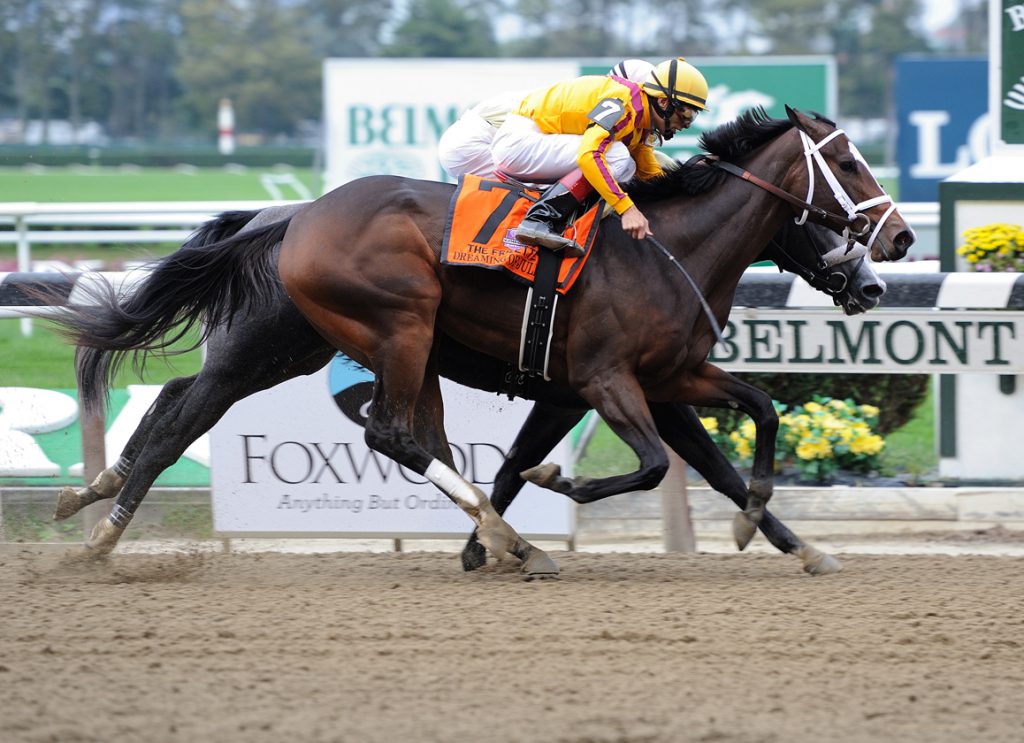
Dreaming of Julia | Coglianese

Dreaming Of Julia's dam Dream Rush (Wild Rush) had been top of Moynihan's list at Fasig-Tipton in November 2007, having won two Grade I sprints as a sophomore that summer, but the white flag had to be raised at $3.3 million. A couple of years later, however, her purchaser contacted Moynihan and asked whether they were still interested in the mare. Unbelievably, they had just bred her to A.P. Indy–which is just what Stonestreet had planned to do. And the result was Dreaming Of Julia, who won the GI Frizette S.

“You know, Dream Rush had a very light page,” Moynihan admits. “But she could fly. And we thought that if you bred a mare that fast to A.P. Indy, you could get a fast horse, you could also get a Classic horse.”

And from those days onwards, Stonestreet has put a distinctive hallmark on the breed: cycling back to a genetic core, whether cultivated or grafted, while admitting judicious transfusions of external blood and funds. (Malathaat, remember, made $1.05 million as a yearling and Shadwell, another elite program now assisting the family, have chosen Into Mischief for her first cover.)

“Broodmare of the Year felt like a huge accomplishment for us,” Moynihan says. “For an operation such as ours, that takes so much pride in doing things from the ground up, it's the pinnacle. I mean, her mother may have been the fourth or fifth mare that we bought.”

While Stonestreet must also trade, selling 80 to 90 percent of its yearling crop, even to maintain a breed-to-race core demands vision and courage.

“First time I ever met Mr. Jackson, he laid out was what his ambitions were,” Moynihan says. “Breeding to race on any kind of scale was in a massive decline in America. Still is. You just don't have the Mellons, the Phippses, the real sportsmen anymore. But Jess and Barbara had always been creators, in their wine business: they owned the land, they grew the grapes, the whole thing was vertically integrated.”

And that, to Moynihan, was key. He had found subsequent Derby winner Charismatic (Summer Squall) as a weanling for his first big clients, Robert and Beverly Lewis, but they were scaling down with the advancing years. Nor had they been quite so engaged by the breeding side anyway. Thinking on this kind of scale, then, was just what he wanted to hear.

“There's a lot of people out there buying yearlings,” Moynihan remarks. “They buy the yearling, the guy races his horse, they lose track. I've always been part of a program. You buy a weanling or yearling, and you manage that horse through its entire racing life, potentially its breeding life, and you see the fruits of a cyclical process. So, I'm always more interested in building something.”
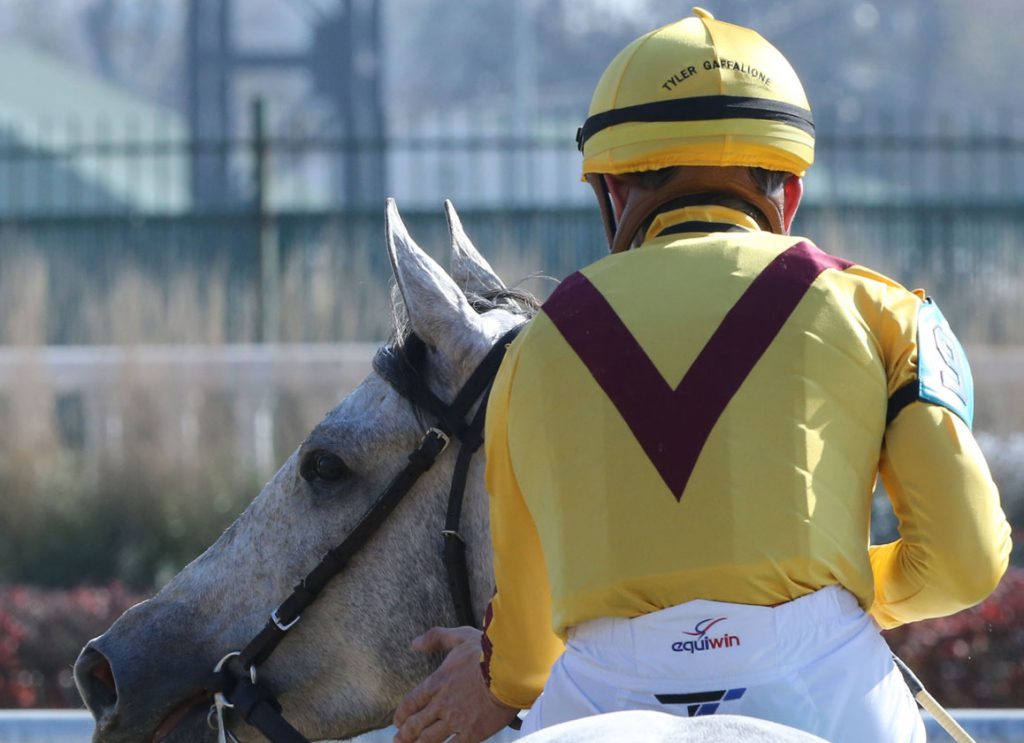
Stonestreet silks | Coady Photography

As it was, Jackson and Banke brought him out to California, to the vineyards, and he saw for himself that these people would do things properly.

“Mr. Jackson knew, starting off, that we had to work our way up to what he'd call a critical mass of horses,” Moynihan recalls. “He showed me his wine operation, and I saw the best of practices within that, and the scale and the scope of what he did. But it's never just scale. A lot of people in the horse business have been big, but they haven't necessarily been great. But I saw straightaway that here was a person who was extremely passionate; and that a lot of his ideas lined up with the way I'd want to do things. And I thought, 'Well, here's an amazing opportunity to create something really great.'”

By the time he passed, in 2011, Jackson had been party to three consecutive Horse of the Year campaigns: Curlin in 2007 and 2008, and then Rachel Alexandra (Medaglia d'Oro). But it's this longer harvest that Moynihan feels would most please his late patron.

“He always said that one day we should be in a position where we can potentially produce better horses than we can buy on the marketplace,” he says. “And every year now, when we go to the yearling sales and see what's out there to purchase, a lot of times we end up saying, 'Well, we're not going to buy Hip 354 because we already have two of those.'”

That said, it's important that you also sell elite stock; that the market won't suspect you of holding back the cream. So, while two retained filles, Clairiere (Curlin) and Pauline's Pearl (Tapit), made it to the GI Kentucky Oaks in 2022-and have both since become Grade I winners-they could not beat Malathaat.

“No, you absolutely want that, for the people that buy them,” Moynihan emphasizes. “Apart from anything else, you sell the good ones because they tend to bring the most capital. If you think a yearling like Malathaat can bring a million, well, you know what, that's a lot of money. That's one horse doing a lot to fund the program.”

Obviously, we can't expect Moynihan to share too much methodology, but he plainly views racetrack excellence as evidence of a functional pedigree.

“The foundation here in America is speed,” he says. “And races like the Test and the Prioress, those are so difficult to win.  Winning them made Dream Rush the fastest of her generation. And from what I've experienced, that brilliance a lot of times gets passed down to the offspring.

“A lot of people have bought unraced mares with amazing pedigrees and done extremely well, but for me that's somewhat unfamiliar. I've been much more of a results person. If I see a filly go break her maiden by 10, and something happened with her and there's no stakes on the page, I know she had brilliance and that's what interests me.”

But affinity of pedigree emphatically enters the mating equation–where another vital piece of the armory is Moynihan's familiarity, through scouting the sales so thoroughly, with the trademark traits of every stallion.
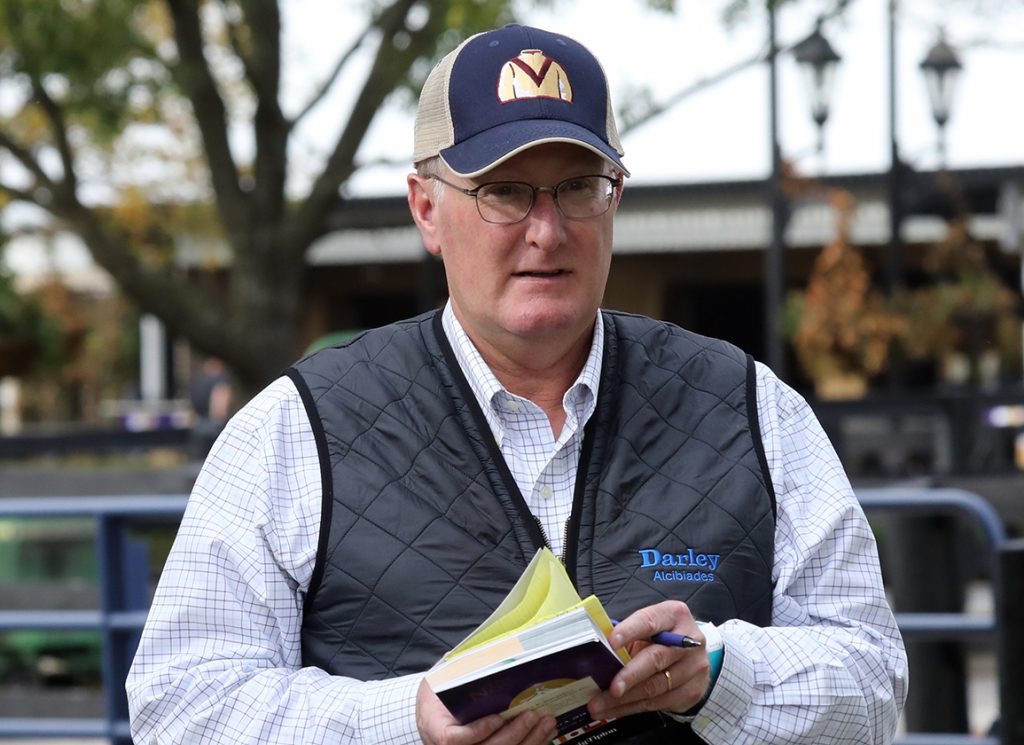
John Moynihan, 2020 Fasig-Tipton Kentucky November Sale

“We take everything into consideration,” Moynihan says. “Everything. It's like we put it all in a box, shake it up, pour it out, and find what gives us the best chance of producing a great racehorse. When we're doing matings, it's eight hours a day for 20, 30 days, locked in a room. And then you finally think yes, this is really going to work–only to come back and critique it maybe five more times before it gets finalized. A tremendous amount of intellectual property goes into mating a Stonestreet mare. That's not to say that it's always going to come out right. But when it does, with a great physical that we can either run or sell, then you feel like all the hard work has paid off; that the model works.”

It's a long road from the computer science degree taken by a young fellow from Frankfort, with a single strand to draw him into the horse business: Ryan Mahan, senior auctioneer at Keeneland, was a family friend. By stages Moynihan became intrigued, immersed. He read the trade press and figured: “You know what, with the securities business, you don't really have any control. But if you learn this business the right way, potentially you could have control.”

One decisive boon, on graduating to a first job at Fasig-Tipton, was being sent to spend time at Belmont Park. “You can't learn about racehorses at a yearling sale,” he was told. “You need to go to the track, look at the finished product. Go look at the sprinters in the Vanderbilt. Look at the two-turn horses in the Jockey Club Gold Cup. The 2-year-olds in the Spinaway, the Hopeful. Then come back to the unproven marketplace, and see what you should be trying to replicate.”

There was also some cherished mentorship from Johnny Jones at Walmac, before Moynihan landed running in his solo career with Lewis.

“I've been so blessed,” he says. “I've had amazing clients that have stuck with me through thick and thin. Bob gave me freedom to see the big picture. That way I really learned the business of procuring and racing a great colt, and coming full circle by being able to sell him to a stallion farm.”

An exciting new cycle for Stonestreet may have begun in the stunning Keeneland debut of American Rascal–yet another Curlin, and the first foal out of the brilliant Lady Aurelia (Scat Daddy).

“But it's such a finite number of these horses that get to the promised land,” Moynihan reflects. “Today, let's face it, everyone is after three or four stallion prospects [in each crop]. There's just a handful of races you have to win if you're trying to make a stallion. Luckily that's just what Good Magic did. But it's very hard to procure those horses today, because besides needing the racing luck, you're also going up against guys that might be spending $50 million on 120 yearlings.”

Moynihan emphasizes the contribution of Sikura to Good Magic. “He's done an amazing job with our stallions,” Moynihan says. “A lot of people think that we just stand our horses there. That's not the way it evolved. John put up his money and bought these horses, whether it be Charlatan off two races, or Maclean's Music off one.

Maclean's Music | Lee Thomas

“The only reason Maclean's Music is a stallion at all is John Sikura. I think a lot of stallion farms look at a resumé and say, 'Well, yeah, we can make money if we stand him for this fee and get paid out two or three years.' I don't think that's his model. I think he wants brilliance. The horses he has on that farm, they're there for a reason. Right or wrong, he believes in those horses and he's willing to put forth that passion to turn them into successful stallions.”

However big the business might become, then, it's nothing without that human spark. And that, evidently, has been no less essential to the evolution of the Stonestreet program under Banke, in the 12 years since the loss of her husband.

“It was always his passion, but Barbara became extremely interested with a horse called Curlin,” says Moynihan. “And when Mr. Jackson passed away, I think she wanted to continue his dream and see what we could accomplish. All credit to Barbara, if she's in town and we're foaling mares, she's there for the foaling. She's not saying, 'Hey, what kind of foal was it?' She's there. I mean, she really cares.

“When some of these things happen, I think all of us ask ourselves: 'How would he feel today?' And I think he would be over the moon, I really do. Because it's exactly what he set out to do. There are so many wealthy people that buy or breed horses: they're in wine, they're in real estate, they're in auto parts, they're a Sheikh from the Middle East. And a lot of them never have any luck. It doesn't necessarily matter how much money you have. It's how you spend it, and how you manage the horses. And so many of these processes were all Mr. Jackson's vision. I'm sure he looks down today and is very proud of what he created.”

The post Stonestreet Team Hoping For Some Good Magic In The Preakness appeared first on TDN | Thoroughbred Daily News | Horse Racing News, Results and Video | Thoroughbred Breeding and Auctions.

Source of original post
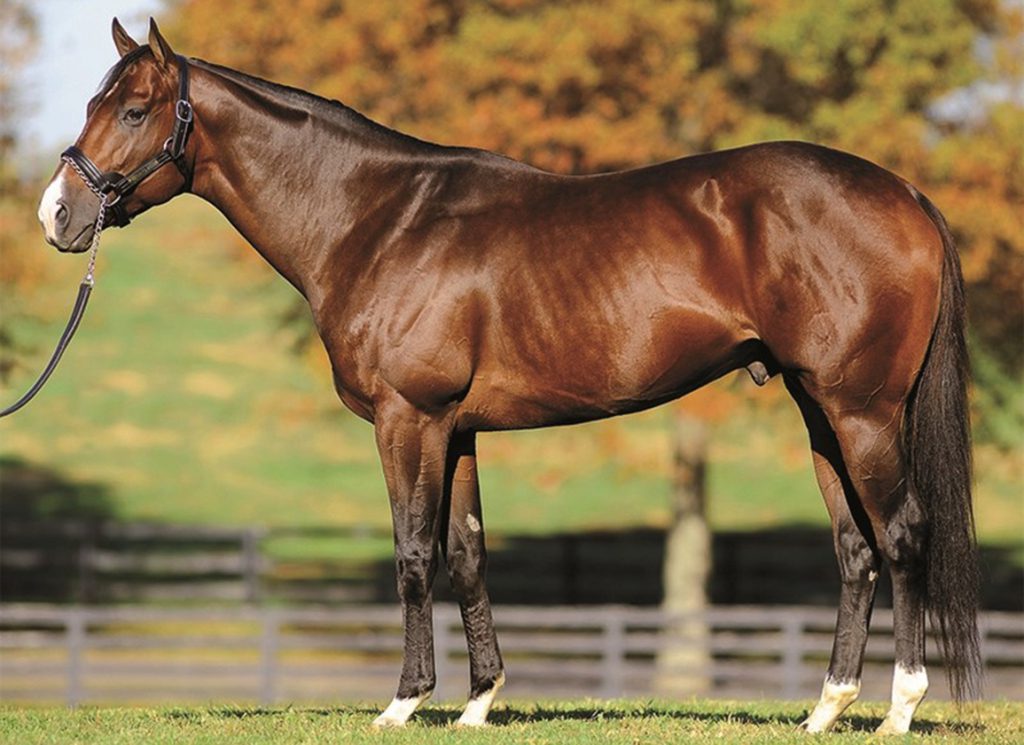
This Side Up: How To Make The Crown Fit Again

Nostalgia, they say, isn't quite what it used to be. In times past, it was not so much a wistful state of mind as an outright medical condition. The Union Army in the first two years of the Civil War reported precisely 2,588 cases, no fewer than 13 of which proved fatal. And I must admit to some concern that this may in fact be the version to which I am destined to succumb, nailed into the same coffin as the five-week Triple Crown.

The whole premise of nostalgia is irretrievability: the yearning for a time or place that can't be revisited. (Very often, perhaps, because it never existed in the first place.) This morbidity is suggested in the Greek stems of the word: nostos, homecoming, and algos, pain or distress. Unfortunately, while the first of these is doomed to remain notional, the second can even be national. It spills over into the here and now, corroding the happiness not just of individuals but whole societies. All round the world, we see populists promising to renew some golden age by restoring lapsed imperial or demographic boundaries.

But that observation obliges me to ask myself whether I'm doing anything so very different, in stubbornly resisting the groundswell towards Triple Crown reform?

With a solitary Kentucky Derby runner deigning to line up for the second leg of the series, for the first time since the current schedule was adopted in 1969, many whose opinions I respect appear to be accepting that there is no longer any point trying to turn back the side. They look at the seven runners in the GI Preakness S. on Saturday, and say the time has come to yield principle to pragmatism.

Well, they may be right. But first, I have a couple of questions. One is exactly where we can find this putative engagement with a disaffected wider public? Is it from having more competitive Triple Crown races, or is it from the romance of the quest itself?

Mage, Pimlico Race Course | Horsephotos

For a long time, during the drought between Affirmed and American Pharoah, we were told (despite several extremely close misses) that the assignment lay beyond the modern Thoroughbred and that we were duly squandering our best chance of engaging fan attention. On that basis, however, the defection of so many rivals clearly only enhances the prospects of Mage (Good Magic) heading to Belmont with a Triple Crown within reach. If that is supposed the grail of publicity, pricelessly combining heritage and accessibility, then does anyone imagine that casual viewers will tune out because the Preakness field lacked triple-figure Beyers?

But maybe the whole premise is wrong anyhow. If the Triple Crown is the best way of stemming our sport's drift from mainstream affections, then how do we assess the impact of the two we have saluted as recently as 2015 and 2018? While unanswerably demonstrating that the current schedule remains perfectly within the competence of the 21st Century Thoroughbred, American Pharoah and Justify hardly reversed the slide. As should be painfully obvious by now, we must address far more serious and challenging deficiencies in the way we present ourselves to a changing world.

Not that we can afford complacency in the audience we already have: the people, that is, who know enough about our arcane world to be dismayed by the lack of both quality and quantity in the field awaiting Mage at Pimlico. When so many indices are spiraling down, retention must be a still bigger priority than expansion. But a Triple Crown extended into July–which, in itself, might well stretch the fickle attention of a casual sports fan–could prove disastrous for other cherished races of high summer, especially now that horses are supposed to need a break before regrouping for a Breeders' Cup prep.

It is, as we know, the trainers who are driving this whole agenda. They have either seen or for some reason decided that horses today cannot soak up the kind of campaign that once allowed breeders a reliable measure of the kind of genetic resources they could aspire to replicate. The incidental benefit of this approach, of course, was precisely the fan engagement we have forfeited in protecting horses not only from competition but also from visibility.

The trainers have given the industry a choice. Either we concede that commercial breeding must be producing a Thoroughbred lacking the physical resources of its predecessors; or we candidly take issue with the trainers, and employ people who will explore the capacity of their charges more thoroughly. In both cases, however, the solution is in our own hands. What we are seeing in the Triple Crown series is a symptom of the problem, not the cause.

If it's about the physical caliber of the horses we are producing, then that obviously ties into another and far more serious challenge. If modern horses can't race twice under the same moon, or even stand up to federal regulation, then surely, we need to address the crazy situation where breeding for the sales ring has somehow become different from breeding a runner.

If it's simply the trainers that are wrong, however, then there are also things we can do about it. And that's not just because D. Wayne Lukas is still doing his thing at 87. I've regularly cited the example of another old master, Jim Bolger, just a couple of years ago running Poetic Flare (Ire) (Dawn Approach {Ire}) in three Classics in 22 days, before winning at Royal Ascot barely three weeks later; and, as often, deplored how only the Japanese could find a place for this horse at stud. But Bolger was also the mentor of Aidan O'Brien, who has himself frequently taken a similar approach. (One of my favorite instances was Peeping Fawn (Danehill). She was placed in a Classic 11 days after breaking her maiden at the fourth attempt; and then ran second in another, over an extra half-mile, five days after that. That experience so damaged her that she proceeded to four Group 1 wins inside eight weeks.)

Good Magic | Sarah Andrew

To me, it looks as though Bolger and O'Brien both believe that a thriving horse has a window of opportunity. And, on that basis, it may actually prove harder to maintain a Derby winner at the same peak for a Belmont in July than with the present calendar.

Most American trainers today evidently disagree. And look, I accept that times change. Mage himself, a horse we hadn't heard of 10 minutes ago, is a Derby winner for our times. He has a different scenario to tackle this time, and shouldn't give a start to one working as briskly as National Treasure (Quality Road). Even in this small field there are some pretty legitimate horses, and it's certainly an incredible achievement for Good Magic's first crop to yield three of seven starters in a Classic.

According to the behavior of trainers, it should be nearly inevitable that a raw colt like Mage regresses from his effort two weeks ago. If he happened to do that, however, it's a fair bet that whichever “mediocre” horse (not my view, I stress) took advantage could still be rewarded with 200 mares at stud next spring. Suffice to say that we have a lot of other stuff to sort out before we start scapegoating an anachronistic Triple Crown.

Good luck to Mage. He has a ton of talent. Who knows? Maybe he will prove the last Triple Crown winner over five weeks–and the last, therefore, who can validly claim parity with the previous 13. And then, when these elusive young fans become as old and grumpy as me, he may even be the stuff of nostalgia.


The post This Side Up: How To Make The Crown Fit Again appeared first on TDN | Thoroughbred Daily News | Horse Racing News, Results and Video | Thoroughbred Breeding and Auctions.

Source of original post

Verified by MonsterInsights
