A Different Role but Still Made to Measure

Keeneland Breeders' Spotlight

When Saint Ballado came to the farm, Duncan Taylor recalls Les Brinsfield telling him to try Mari's Book mares.

“Mari's Book!” he exclaims now. “It's not like there were Mari's Book mares all around, out there in the population. But Les was a smart guy, very analytical.”

And it was easy to see the logic: Mari's Book was by Northern Dancer out of a Maribeau mare; and Maribeau, like Saint Ballado's sire Halo, was out of Cosmah–whose half-sister Natalma, of course, gave us the sire of Mari's Book. Plenty of genetic wheels within wheels there, then.

“So we bought this mare by Mari's Book, Goulash, [for Aaron Jones] and bred her to Saint Ballado four times,” Duncan resumes. “And we got like three stakes winners, one of them being Ashado. And it really made the stallion. But then Mr. McNair had a mare with very similar breeding, and I kept saying, 'You've got to breed her to Saint Ballado, got to!' So he did. And he got a swayback.” He chuckles. “Named it Duncan.”

Just one snapshot, this, of the breadth of experience that have given the Taylor brothers their plain-talking sense of how to make the best of a difficult game; and a wholesome, hard-headed scepticism about any theory or system purporting to make it easy.

And that, in turn, is why we've seized the pretext to visit two of them, Duncan and Mark, in a rather different capacity from the usual: to hear how the family ended up breeding an elite sprinter in Sibelius, winner of the G1 Golden Shaheen in Dubai.

Taylor Made is obviously far better known as the largest consignor in the business, and also for standing the likes of Not This Time, the sire of Sibelius. But anyone familiar with the energy and imagination they have always brought to their principal roles can only be curious to hear how they adapt their know-how to the kind of challenge that occupies the majority of their clients.

“Anytime you're big, you get exposed to more people, with more theories and more thoughts,” reasons Duncan, who formally handed over to Mark as President and CEO last year but remains a vital influence as Senior Consultant. “So you're able to soak those in, and get to talk about lots of different aspects. Where a guy that's out on his farm with his 15 broodmares, that's all he is focused on. He can read all the books, but–well, we're not even trying to hear stuff and we hear it.”

And that ties into a parallel conviction: that the best breeders, historically, have been able to weave many different strands of horsemanship together.

“I'm not knocking anyone else,” stresses Duncan. “But in my lifetime, just watching what's gone on, there's been two or three people that you just thought really knew what they were doing. John Nerud was one, Alec Head was another. There was a guy named Bob Bricken at Elmendorf that was a guru of breeding. And, like Tesio himself, what did they have in common? They basically had a 360-degree view of every horse. They knew how to train, knew how to raise horses. And they were around every single one, watching and looking and trying to figure out what worked best where.”

Mark Taylor | Keeneland

“Nobody is going to breed a terrible stall-walker to a terrible stall-walker,” agrees Mark. “Nerud, if he trained the sire and the dam, would know that this filly had a lot of talent but wasn't so good between the ears. So he'd need to give her something to balance that out. But a lot of these people doing matings on a computer, honestly they may never even have seen the mare or the stallion and they certainly have no idea about any of these other characteristics.”

And even when a Nerud or a Head noticed a recurring motif, they didn't make sweeping extrapolations.

“Say they see a Nodouble mare coming through this, this and this, and they could all run,” Duncan says. “Well, if I brought up a Nodouble mare that looked the exact opposite, they would know: 'Just because that S.O.B. is by Nodouble, it isn't the Nodouble that I want. I want one that looks like this one over here.'”

And seeing the bigger picture cuts through the whole program. “When you have control over the entire operation, you're not sending your horse to Trainer X,” Duncan says. “Because Trainer X is thinking, 'I could probably back off this horse and he would be okay later on, maybe win a stake or two. But he might be my only chance ever to win a Kentucky Derby. So I'm going to keep training hard on him.' And then he breaks down.

“Whereas if Nerud had him, he'd have said, 'Nope, we ain't running in the Derby. Back to the farm, and give him all he needs.' Because when that horse hits, it affects the value of eight others in his operation.”

The Taylors' own remarkable story, of course, attests to the fruitful combination of nature and nurture. Their father Joe literally wrote the book on farm management, having supervised Gainesway for 40 years; and any congenital flair for horses was further underpinned by the discipline and faith of their upbringing. And whatever they have in common, even this closest of clans are hardly cookie-cut, whether in aspect or outlook.

Duncan Taylor | Keeneland

“Well, we had eight in our family,” muses Duncan. “And you can see a common look. But we're all different–and it's a 100% nick. It's the exact same with horses. The evolutionary scheme of genetics has so many variables.”

No guarantees, then, but nonetheless there are plainly rewards available if you put the work in. Another thing Duncan did when Saint Ballado arrived, for instance, was create a scoring system on every mare ever bred to his full-brother Devil's Bag.

“Let's say the ancestor was Buckpasser,” he explains. “Anytime Buckpasser was in the first six generations, I said, 'Okay, was it a stakes winner or not?' So if it was one-for-49, I know I don't like a lot of Buckpasser in there. And so on, for all the relatives. I had them in an alphabetical order and knew the rate that they hit at. And as Saint Ballado came through the ranks, we started keeping the same statistics. You're trying to see which ancestors are going to go with the horse, and sometimes you'd find others carried along the same way.”

But only sometimes.

“And what you find in this business is that most people want a simple answer,” he continues, in exasperated tones. “If there's 12 pies here, they want to be told that this one will taste best because it has half the ingredients my grandmother used, and she baked a hell of a pie. But the other half of the pie, we don't know what the damned ingredients are. And when I eat it, it doesn't taste like grandma's. But that pie brings more.”

“It's the microwave mentality, unfortunately,” Mark adds. “Whether it's accurate or not, they don't care, they just want something they can understand. So I get into fights all the time with people that just get fixated on one tool, which a lot of times will send you in totally the wrong direction. To me, if you look at what works on 'blood' then you find a lot of times it makes sense as a physical mating, from a conformation perspective.”
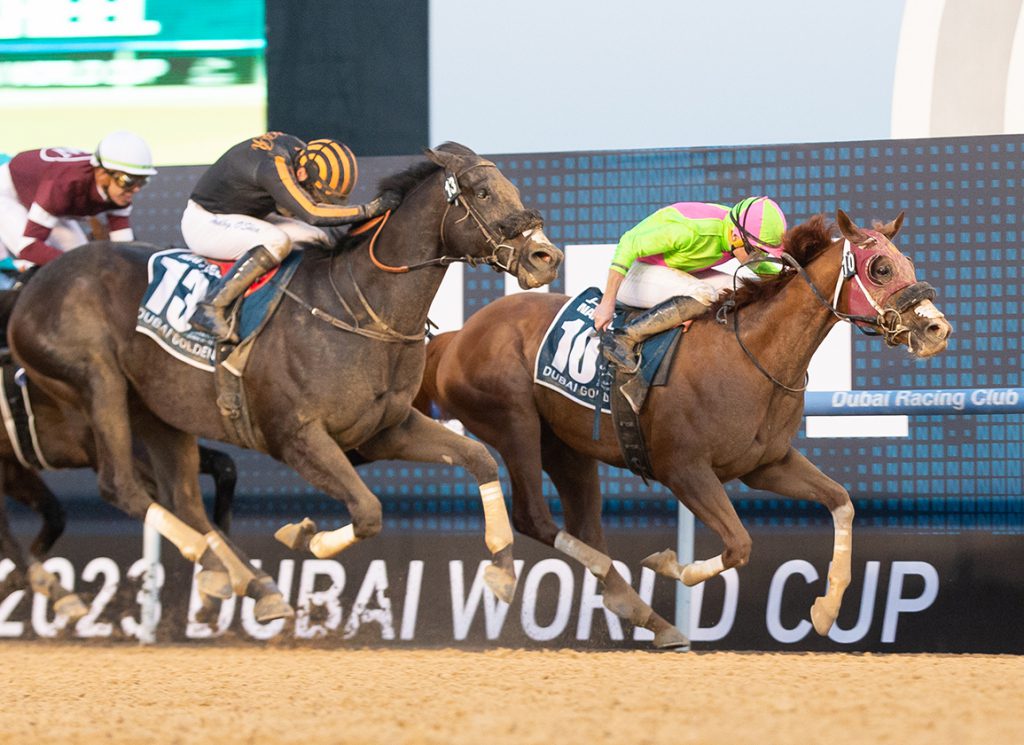
Sibelius wins the G1 Golden Shaheen | Erika Rasmussen

But we're forgetting why we troubled these gentlemen in the first place. And this Sibelius (targeting his first start since Dubai in the GII True North S. at Belmont on June 10) is a nice story, bringing together some of the most cherished stalwarts of this remarkable family firm.

He's out of Fiery Pulpit (Pulpit), an unraced half-sister to graded stakes winner Clamorosa (Seattle Dancer), acquired as a 7-year-old for $55,000 at the Keeneland November Sale of 2011. There's quite a gang involved: Pat Payne, who might almost be another brother; Jeff Hayslett, who's been working here for over 30 years; and two of the farm's oldest clients, in Louis Brooks and Sam Pollock.

“This mare is a good example of any breeding success that we've had,” Mark says. “Because most of the mares we own are in partnership with customers. We've never aspired to go out and say we're going to build some world-class broodmare band, become great breeders. It's more just coming alongside partners, who like to be commercial breeders. And in this mare's case, it was an interesting group. Pat was a partner of ours. Jeff was our farm manager and then our first Thoroughbred Advisor. The Pollocks have probably been with us 30 years, and the Brooks family maybe 40. The first yearling I ever took to the sales ring was a Secretariat filly [co-]bred by Louis.”

(That was the old July Sale at Keeneland in 1983: Wayne Lukas gave $525,000 for her and, as Fiesta Lady, she ended up a Grade I winner.)

Fiery Pulpit had managed to produce a minor stakes performer by Broken Vow, a son of Unbridled, so they tried her with Unbridled's Song. The result was a $400,000 Keeneland September colt who won seven times. Next came a colt by Graydar, this time a son of Unbridled's Song: Peter O'Callaghan bought him as a Keeneland November weanling for $185,000, and he became a hard-knocking, 11-for-48 campaigner. Then a colt by Will Take Charge made $250,000 at Keeneland September.


The late Unbridled's Song, a cornerstone of Taylor Made's stallion barn | Taylor Made

“Before we got ahold of her, her babies weren't bringing anything at all,” Mark notes. “But just by knocking on this Unbridled's Song thing, she became a slot machine, paying off every year.”

Typically, however, the one exception was her foal from the first crop of Not This Time–who has turned out to be her best runner. Offered as a short yearling at Keeneland January, he was a $62,000 RNA and it was a similar story after he had been moved on, returned at $75,000 in the same ring that September. Bottom line, however, is that Sibelius currently has a 19-7-3-3 record: pretty robust, for a horse that didn't vet.

“He was a beautiful horse,” Mark emphasizes. “Just sesamoiditis. We got him sold privately. It's like Duncan's just been saying about breeding theories. Vetting, X-rays, they're a tool, get you part of the way. But people want to be told that it's simple.”

That said, commercial breeders nowadays tend to think about the ring sooner than the racetrack–a reality in which Mark cheerfully acknowledges complicity.

“My winning post is making money,” he accepts. “The one thing I don't have the luxury of doing is breeding something that might come out ugly, and the market's going to reject it, but it might be a great racehorse. I can't afford to do that. I'm trying to breed a good-looking horse.”

Sadly it feels as though age may be catching up with Fiery Pulpit herself. She required colic surgery and, donated to one of the Taylor Made sales team who has a small farm, successfully conceived to Catalina Cruiser. After Sibelius won in Dubai, Mark called and said: “Hey did you see that? She just got a Grade I winner!” Unfortunately the reply was: “Didn't you get my text last night? She had a dystocia, the foal died.”


So much can go wrong, at any time. But just as people shouldn't pretend that the game is easy, nor should we make the simple things complicated. A lot of it is common sense.

“Basically, when we're breeding a mare, we're looking at the value and we're looking at the conformation,” Duncan says. “And not only the conformation of the two horses. If the mare's had foals before, you look at those too. Because she might not be toed-in herself, but three of the first four foals have been. So you're not going to breed to one that toes in.”

Maybe you'd have bred her to Unbridled, though, as he toed out somewhat. Duncan, indeed, remembers the team more or less having to beg people to support the horse pending his first runners.

“And then Unbridled's Song comes out of his first crop, and Grindstone,” he recalls. “Well, if Unbridled's Song had died foaling and Grindstone broke down before the Derby, maybe he'd have been in Turkey or something.”

The margins are always so fine. Duncan remembers deciding that Mutakddim mares might work with California Chrome, whose damsire was a half-brother to that horse's dam. That was a Mari's Book type of call. But sure enough, just about the best runner Chrome left behind was Cilla, whose second dam is by Mutakddim.

“Of course all the knockers of my theory can say, 'Cilla's out of an Into Mischief mare, you can breed anything to that horse,'” he admits. “But Mutakddim, I picked a random horse. Most of his horses are in South America. And he ends up in the pedigree of California Chrome's best horse. So there's something to it. But if you bred every Mutakddim mare to California Chrome, it still might only be three or four out of 100 foals. And then two of them, the trainers mess up, and another one gets loose on the track.”
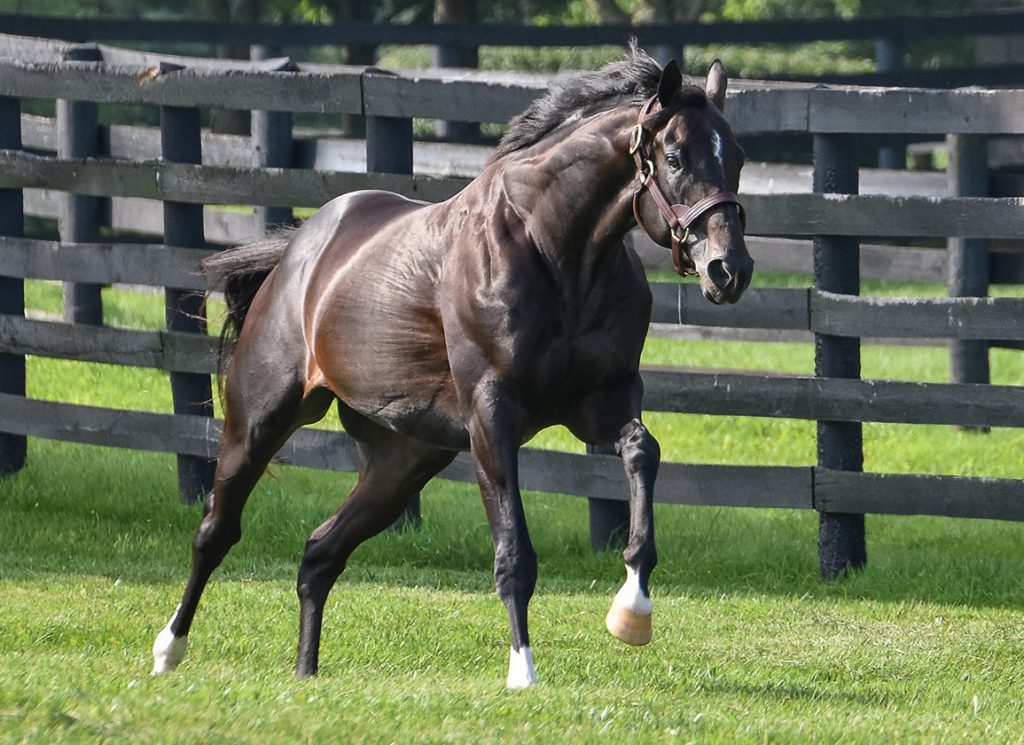
Current Taylor Made stalwart Not This Time | Mary Ellet

Back we come, then, to the holistic approach. Because it's no good getting everything else right, and then having the whole thing unravel because you haven't matched the horse to the right trainer.

“If you want someone to coach a bunch of egomaniacs that all want to be the star, and turn them into the Bulls, you get in Phil Jackson,” Duncan reasons. “Somebody else is coaching them, it probably would never have happened. Same with trainers. The mating's one key factor. But you could have the smartest mating in the world, and you have a bad trainer or a bad foaling man, it's never going to come to fruition. So you need a team.”

He mentions one highly successful program. Could just be lucky, maybe, but he ticks off the quality of its land, farm management, sales scouts, trainers. “And if that gets a stallion from 10% stakes winners to 15%, that's a hell of a change in the economic value of that stallion,” he says. “Because he becomes the superior horse.”

Conversely, some stallions face adverse odds from the outset. At a given market level, they will only tend to get mediocre mares–and that won't just tell in the genes.

“Mortality and conception rates are hugely important to a stallion,” Mark says. “With lesser stallions, the conception rate tends to be just not as good because most of their mares come from farms that don't have the same resources or organization. So from the very beginning that stallion has more to overcome.”

“There's so many variables,” concludes Duncan. “But if that's a curse, it's also a blessing. Because if it was easy to do, these rich people wouldn't be intrigued as they are. They know it's hard, and that's just what keeps everybody interested.”

The post A Different Role but Still Made to Measure appeared first on TDN | Thoroughbred Daily News | Horse Racing News, Results and Video | Thoroughbred Breeding and Auctions.
Source of original post

Legal Expert: If Fifth Circuit Finds HISA Constitutional, Texas “Absolutely” Can Implement Law

Like rival boxers primped and posturing, proponents of the Horseracing Integrity and Safety Act (HISA) and the Texas Racing Commission (TXRC) have taken to their respective corners during the unfolding legal fight over the law and have remained un-budged.

At stake is the lucrative business of nationally beaming Texas's simulcast wagering signal.

The TXRC initially took the stance that it is legally prohibited from permitting Texan tracks to export their signals. Then at the start of February, the Fifth Circuit Court of Appeals sent the congressionally amended version of HISA down to the district courts for further review.

The Texas commission interpreted this action as meaning that HISA is “facially unconstitutional and therefore has no effect on the State of Texas,” seemingly opening the door to Texas tracks once again engaging in interstate simulcasting.

As of writing, no Texas-based track has adopted that policy, and the simulcasting signal remains flatlined. Furthermore, just this May, the federal court judge out of the Northern District of Texas, Lubbock Division, found this version of HISA as constitutional. The case has now been appealed back up to the Fifth Circuit Court of Appeals.

In the meantime, though purses in the state remain fairly stable, the tracks are taking a huge financial knock, and horsemen there are raising concerns about other ancillary impacts on their businesses. Some of the horsemen are now asking: Can HISA be implemented in the state in order to facilitate the interstate simulcasting signal?

The TXRC has taken the stance that state law bars HISA from being implemented in the state unless it is replaced or altered to become a cooperative agreement grant program–an alternative financial and regulatory model for the federal government to cooperate with individual states.

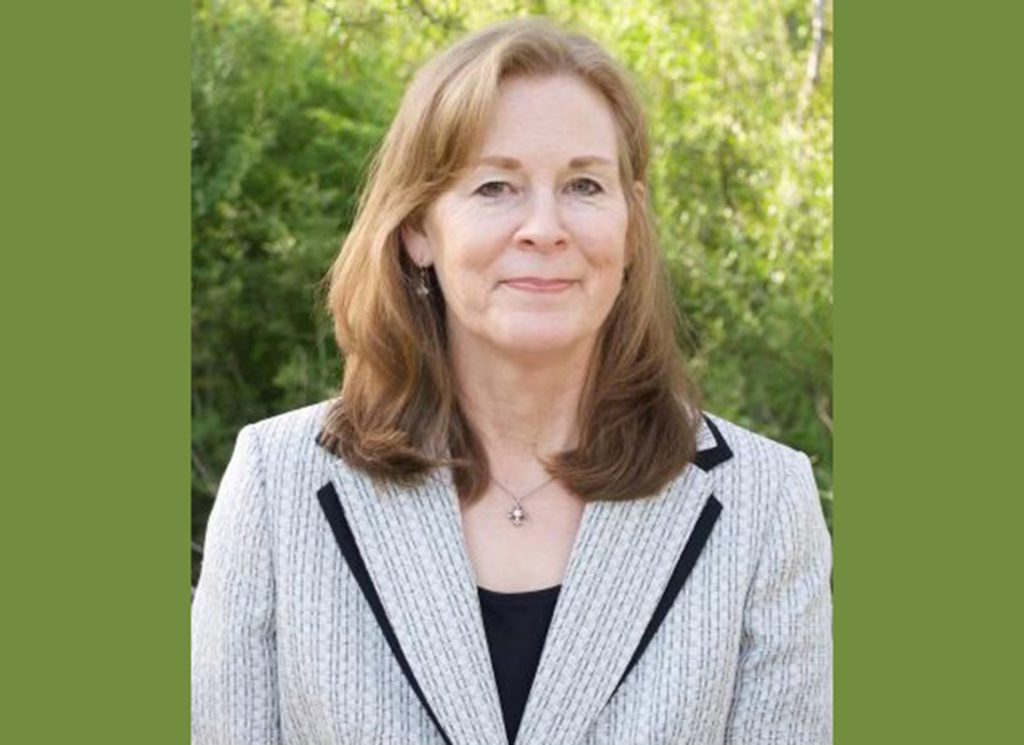
Amy Cook | Courtesy of Amy Cook

Even then, “our statute doesn't even allow us to take grants,” TXRC executive director, Amy Cook, told the TDN last week.

“We've actually made a request to have our statute conform, so, if HISA did become a cooperative agreement grant program, and the [Federal Trade Commission] FTC became a grantor, we could actually take that money and work with HISA. That's the only pathway I see,” Cook added.

In a follow-up email, Phil Fountain, the TXRC's chief of staff, pointed to a previously released commission “fact-sheet” broadly outlining its legal argument. The fact-sheet cites the Texas Racing Act, which directs the commission to “regulate and supervise each racing meeting in this state” that involves wagering.

“There is no provision for the Texas Racing Commission to cede this authority to another party. This means there is no preemption of Texas law under HISA's opt-in structure because HISA does not regulate pari-mutuel horseracing activities,” wrote Fountain.

A legal analysis put together for HISA by the law firm Akin Gump takes the opposite stance. It finds that HISA indeed preempts the Texas law that the commission says confers it exclusive authority to regulate all matters relating to horseracing.

Furthermore, under HISA and state law, the TXRC can implement HISA and still continue to regulate matters outside the reach of HISA's jurisdictions, the Akin Gump analysis finds.

“There is no legal impediment to reversal of the Texas Racing Commission's self-destructive policy decision of restricting interstate wagering on horse racing. Under State and federal law, the Commission may continue to regulate horse racing in Texas to the extent not preempted by HISA rules,” the analysis for HISA finds.

Which side stands on the sturdiest legal legs?

For an independent take on the dispute, the TDN spoke with Daniel Rodriguez, former dean of the Northwestern University Pritzker School of Law and former Minerva House Drysdale Regents Chair in Law at the University of Texas, Austin.

Prior to being asked to sort through the legal bones of the matter, Rodriguez said that he was unaware both of the HISA legislation passed into law at the end of 2020 and of the legal conflict that has arisen in Texas.

His answers hinge on the looming decision in the Fifth Circuit Court of Appeals, which is set to rule on the constitutionality of the congressionally amended version of HISA. That ruling, however, could still take a number of months.

“What the Fifth Circuit is being asked to do is rule on a matter of federal constitutional law, just as they were asked to do on the ruling back in 2022, when the Fifth Circuit struck down the statute as violating what they call the private non-delegation doctrine,” he said.

If the court rules in tandem with the Sixth Circuit Court of Appeals–which recently found the revised HISA statute constitutional–there is “absolutely nothing” in Texas statute that bars HISA from being implemented in the state, he said. “That we can all agree on–even the lawyers for the Texas racing commission.”

When asked about the Texas commission's stance–that state law bars HISA's implementation in Texas, irrespective of any court ruling in its constitutionality–Rodriguez called it “foolishness” as well as “head-scratching.”

In other words, what the commission is saying in that scenario is that “I can't comply with the law,” he said, before describing the stance as a policy posture rather than a solid legal argument.

“I lived in Texas for five years so I get to say that this is typical Texan intransigence,” Rodriguez said.

At the same time, Texas could indeed enter into a cooperative agreement grant program with the federal government, if HISA were structured that way, said Rodriguez. “You certainly could implement [HISA] through a regional compact. But Congress has chosen a different mechanism,” he added.

Sam Houston Race Park | Coady Photography

On the flip side, however, if the Fifth Circuit rules that the amended version of HISA remains unconstitutional–just as it ruled on the prior version of HISA–then the TXRC would be correct in barring HISA implementation in the state, said Rodriguez.

Rodriguez declined to weigh in on whether HISA could be implemented in Texas currently–that is, before the Fifth Circuit ruling drops–explaining that he had not researched the legal landscape of the question enough to opine on the matter.

More within Rodriguez's wheelhouse are the ideological whims and fancies of the various Courts of Appeals–including the Fifth Circuit.

“The Fifth Circuit has a reputation for being an eccentric court of appeals–they've reached judgments in the past that leave us law professors to scratch our heads and wonder exactly why their views are so outside the mainstream of other circuit courts. They do what they do,” he said.

When asked which way he thought the Fifth Circuit would rule on the constitutionality of the congressionally amended version of HISA, Rodriguez sided with the federal government. “I really don't anticipate the Fifth Circuit striking it down as unconstitutional,” he said.

In that scenario, said Rodriguez, the plaintiffs would likely file a petition of certiorari with the Supreme Court–a request that the Supreme Court orders a lower court to send the case up to them for review.

But in that instance, there would be no obvious “circuit split” between the Fifth and Sixth Circuit Courts of Appeals for the Supreme Court to weigh in on and consider, meaning it's unlikely the highest court of the land would take the case, he said.

“It's always important for those of us to check our biases, no matter how much expertise we have as law professors,” said Rodriguez.

“But in a nutshell, the issue is, 'can Congress, consistent with their authority, delegate authority to an administrative agency whose constitutionality has never been questioned–I'm talking the FTC–to establish rules for Thoroughbred horse racing?' And the answer to that now is clearly, 'yes,'” he said.

The post Legal Expert: If Fifth Circuit Finds HISA Constitutional, Texas “Absolutely” Can Implement Law appeared first on TDN | Thoroughbred Daily News | Horse Racing News, Results and Video | Thoroughbred Breeding and Auctions.

Source of original post

John Velazquez Joins TDN Writers’ Room Podcast

The credit for the win in the GI Preakness S. goes to National Treasure (Quality Road), but the assist goes to Hall of Fame jockey John Velazquez. Able to get to the lead and then slow the pace down to a crawl, Velazquez put in a perfect ride on his way to his first ever win in the Preakness. Fresh off his victory, Velazquez joined this week's TDN Writers' Room podcast presented by Keeneland. He was this week's Green Group Guest of the Week.

“It was just one of those things that worked out perfect,” Velazquez said of his Preakness trip. “You plan it but you never dream that you'll have the trip we had.  The only thing that I was worried about…I saw Irad Ortiz (the rider of Blazing Sevens (Good Magic) warming up his horse in the post parade and I thought he was going try to get closer to the pace. If he wanted to get close to that pace, he was going to have to go fast enough to go across from me. So when I broke, I started drifting my horse out. So then when I pushed him out he started grabbing his horse back and he went backwards. I thought, 'Okay, he's out of there'. And I went right back to the inside. And that kind of slowed the pace really well.”

The race came down to National Treasure and Blazing Sevens in the stretch and National Treasure gamely held off his rival to win by a head. Velazquez and Ortiz were in close quarters the whole way and the two bumped. It sometimes seems that every time Ortiz is in a stretch battle something happens. Velazquez's thoughts on Ortiz and whether or not he too often crosses a line?

“I don't think he's a dirty rider,” Velazquez said. “I think he definitely crosses the line and does it a lot. I have talked to him many times. I try to teach him that we can be aggressive, but we have a line that we have to put in there. For him, it's hard to control. For me, I've been riding for a long time, so I always try to take the edge as much as I can, but try not to cross those lines. We all make mistakes. But I try to make as few mistakes as possible so I don't cross the line.”

Velazquez also revealed that he was almost taken off of National Treasure before the Preakness.

“I had to plead my case,” he said. “I made a few phone calls and I pleaded my case. I had to explain what happened in the Derby (where he rode Reincarnate (Good Magic), who was surprisingly close to the early pace), and I'm going to leave it at that.”

Should National Treasure start in the GI Belmont S., Velazquez thinks the mile-and-a-half will not be an issue.

“His gallop-outs are really strong every time,” he said. “He's always given me the feeling that he can do more and, obviously, he put it together in the Preakness. He put in a really good effort and his gallop out was really, really good. So I think the mile-and-a-half shouldn't be a problem. The way he gallops out, he's always giving more and more.”

Elsewhere on the podcast, which is also sponsored by Coolmore,https://lanesend.com/  the Pennsylvania Horse Breeders Association, Kentucky Thoroughbred Owners and Breeders1/st Racing, WinStar Farm, XBTV, Lane's End and https://www.threechimneys.com/ West Point Thoroughbreds, Bill Finley and Randy Moss reviewed the Preakness and the incredible highs and lows Bob Baffert experienced during the day. The breakdown of Havnameltdown (Uncaptured) and the way it was covered by the mainstream media was a major topic of discussion. Finley said that it is time for the sport to take another look at synthetic surfaces, noting that horses are 3 1/2 times more likely to die in a dirt race than they are in a synthetic surface race. With the Belmont next, Moss and Finley took a look at the story of Forte (Violence) re-emerging in the Triple Crown and wondered if he will be ready for his best after what would be a 10-week layoff and some missed training time due to the bruised hoof that led to his being scratched from the Derby.

Click for the video of the latest podcast or the audio-only version.

The post John Velazquez Joins TDN Writers’ Room Podcast appeared first on TDN | Thoroughbred Daily News | Horse Racing News, Results and Video | Thoroughbred Breeding and Auctions.

Source of original post

F-T Midlantic Opener Builds Up Steam With $800K Mendelssohn Filly on Top

TIMONIUM, MD – The opening session of the Fasig-Tipton Midlantic May Sale of 2-Year-Olds in Training Sale got off to a tepid start at the Maryland State Fairgrounds Monday morning, but momentum built throughout a session which ultimately produced figures ahead of the auction's record-setting 2022 renewal.

“It was a strong start to the sale,” Fasig-Tipton President Boyd Browning, Jr. said at the close of business Monday. “There was significant increase in average price compared to the first day and the overall sale last year. It was certainly an acceptable RNA rate. The median increased 20% from the first day last year and a little more than that overall.”

During Monday's session, 161 horses sold for $16,975,000. The average was $105,435–up 15.1% from last year's opening session and up 10.5% from the 2022 record-setting overall average of $95,391. The session median was $60,000, up 20% from the opening session figure a year ago.

From 300 catalogued lots, 215 horses went through the ring Monday. With 54 horses reported not sold, the buy-back rate was 25.1%. It was 25.5% last year.

“It's an interesting marketplace,” Browning said. “There is dramatic competition on the 'more expensive' horses in a sale of this nature. You can see the pavilion fill up when a horse is going to bring a couple of $100,000 or more. You see the people come in and you know they are going to bid, and they are going to bid, and they are going to bid. But when a horse is going to bring $25,000, you can see the auction team working their tails off to try to get bidders on those type of horses. So it's an interesting marketplace. It's very, very healthy at the upper end–it's the same trend that we've seen at the other 2-year-old sales this year. We saw it to a lesser extent at the yearling sales last year, with the competition really focused on the upper end. So it's healthy, but it's not euphoric.”

A filly by Mendelssohn brought the session's top price when selling for $800,000 to Speedway Stables. Consigned by Paul Sharp, the session topper was one of 23 to sell for $200,000 or more. Nineteen juveniles hit that mark during last year's opening session.

The Midlantic sale concludes Tuesday with a session beginning at 11 a.m.

Ciaran Dunne, 2023 Fasig-Tipton Midlantic 2 Y-O-in Training Sale | Fasig-Tipton

Speedway Strikes for Mendelssohn Filly
Speedway Stables' Peter Fluor went to a session-topping $800,000 to acquire a filly by Mendelssohn (hip 245) during Monday's first session of the Fasig-Tipton Midlantic May sale. The gray filly, who was consigned by Paul Sharp, worked a furlong in :10 1/5 during Wednesday's second session of the under-tack show last week.

“We thought she was a great physical,” Fluor said of the filly. “We loved her breeze, as everybody else did. She is just a standout. Mendelssohn is on the move, but she just looked like a tremendous athlete to us.”

The juvenile is out of stakes-placed Lady Hansen (Hansen).

“We loved the filly before I even got here for the Preakness,” Fluor said. “[Bloodstock agent] Marette [Farrell] had seen her and had seen her breeze. We just thought she had a huge amount of potential. And we loved her demeanor.”

Sharp, along with pinhooking partner Liz Crow, purchased the filly for $125,000 at last year's Keeneland September sale.

“I really liked her and she carried herself well,” Sharp said of the filly's appeal last fall. “She looked like the type of horse that would do well at a 2-year-old in training sale.”

Of her progression through the winter, Sharp said, “She just did everything we could have asked for. She was one of my favorite fillies that we had on the farm all year. She's just done everything right.”

Hip 245 was the second purchase of the afternoon for Fluor and K.C. Weiner's operation, which went to $500,000 to acquire a colt by Not This Time (hip 198) from the Pick View consignment.

“He had a nice breeze (:10 3/5), not an incredible breeze, but a great physical and his mind is in the right place,” Fluor said. “We liked the way he handled it. He's a young horse–I think he's a May foal–so we will give him a little time and maybe shoot for maybe September, October for the races.”

Both juveniles will be trained by Bob Baffert.

Fluor admitted Speedway has been targeting fillies who might join the operation's fledgling broodmare band after their racing careers.

“We are predominately looking for fillies, but we look at other horses too. That's why we bought the Not This Time colt,” Fluor said.

While still in its early stages, the Speedway breeding operation enjoyed sales ring success with its first crop of yearlings last summer when selling a daughter of Tapit (hip 72) for $750,000 at the Fasig-Tipton Saratoga sale.

“We kind of backed into the breeding,” Fluor said with a laugh Monday. “When we retired some fillies, K. C. Weiner, my partner at Speedway, asked what we would do with this filly. We said, 'Well, we can sell her or we could breed her.' He said he'd do whatever I wanted to do, and I said I don't care, we can do whatever you want to do. We never made a decision, so we bred her. That's how we got into the breeding business.”

Awesome Slew Colt Lights Up Midlantic
A colt by Awesome Slew (hip 91), who became the first of the under-tack show to work a furlong in the co-bullet :10 flat last week, caused the first fireworks of the opening session of the Fasig-Tipton Midlantic May sale when selling for $700,000 to the partnership of WinStar Farm's Maverick Racing, Siena Farm and CMNWLTH.

“We just loved him,” said WinStar's Elliott Walden. “We thought he was the best horse in the sale. We loved his breeze. We are happy to get him, but it was a lot. We thought like he would be in that $500,000 to $700,000 range, so he was in the top end of that range.”

Following his bullet breeze, the colt did have trouble navigating the turn on the Timonium oval last Tuesday.

“He was going so fast, he didn't make the turn,” Walden said. “So it's a good and a bad thing. But he just seemed like a really nice colt.”

The Commonwealth partnership pioneered by Chase Chamberlin and Brian Doxator has already famously enjoyed success with graduates of the Midlantic sale. They partnered up on 2022 graduate and now GI Kentucky Derby winner Mage (Good Magic).

Hip 91 is out of Cash Reserve (Distorted Humor) and is a half-brother to stakes-placed Reckling (Dialed In) and Campy Cash (Race Day). He was consigned by Tom McCrocklin, who purchased him for $150,000 on behalf of Michael Sucher's Champion Equine at last year's Ocala Breeders' Sales Company's October Yearling Sale.

“I literally recall telling Michael Sucher that I thought he was the best horse in the [OBS] sale,” McCrocklin said following the colt's work last week.

The colt's yearling price tag made him the most expensive yearling by Awesome Slew to sell last year. He is now well on his way to being the stallion's most expensive 2-year-old of 2023. Awesome Slew stands at Ocala Stud for $4,000. His first crop of 2-year-olds were led in the sales ring last year by a colt who sold for $400,000 to Klaravich Stable at OBS March.

Sucher's multiple pinhooking successes with McCrocklin this spring are led by a son of Arrogate who sold for $1.050 million and a filly by Munnings who sold for $1 million, both at the OBS March sale. At the same sale, McCrocklin sold a daughter of Arrogate, purchased on behalf of Sucher for $250,000 at the Keeneland September sale, for $950,000.


Hip 186, 2023 Fasig-Tipton Midlantic 2 Y-O-in Training Sale | Fasig-Tipton

Uncle Mo Filly to LNJ Foxwoods, NK Racing
A filly by Uncle Mo (hip 186), who turned in a flashy :10 1/5 work last week, delivered in the sales ring Monday in Timonium when selling for $625,000 to the bid of bloodstock agent Alex Solis. Solis was bidding on behalf of a partnership of the Roth family's LNJ Foxwoods and Nancy Favreau and Kathy Psoinos's NK Racing.

“She's a beautiful Uncle Mo filly with a big pedigree, out of a Blame mare,” said Solis. “So for us it made sense from a pedigree perspective and her breeze was phenomenal. I think I gave out three stars for the whole breeze show and she was one of them.”

The filly will be trained by Brad Cox, who trained champion Covfefe (Into Mischief) for LNJ Foxwoods.

The bay filly is out of Gabriellestoblame (Blame), a half-sister to GI Kentucky Derby winner Nyquist (Uncle Mo). She was consigned by Pick View, as agent for her breeder, Bridlewood Farm.

Tapit Colt to Young
A colt by Tapit (hip 250) will be joining the barn of trainer Todd Pletcher after bloodstock agent Steve Young purchased him for $600,000 on behalf of an undisclosed client. Consigned by Julie Davies and bred by Gainesway, the juvenile is out of Lady Pewitt (Orientate) and is a half-brother to champion Jaywalk (Cross Traffic) and to multiple stakes winner Danzatrice (Dunkirk), the dam of this year's GI Toyota Blue Grass S. winner Tapit Trice (Tapit).

“He is arguably the best bred horse in the sale,” Young said. “He has a lot of similarities to some of the good Tapits that I have bought. I think he has a sire's pedigree. He trained great. It was a challenging track and a challenging week for people buying and selling and he was the one we wanted.”

Young compared the colt to Anchor Down, another son of Tapit out of an Orientate mare, whom he purchased for $250,000 at the 2012 Keeneland September sale. Anchor Down was a multiple graded stakes winner for Alto Racing.

“Anchor Down was a terrific horse, maybe not the luckiest horse who ever lived, but a Grade II winner nonetheless,” Young said. “[Hip 250]'s got subtle things that make you like him even more every time you look at him.”

Looking ahead for the colt, Young said, “He was a popular horse here. He had a lot of shows. He's going to get a chance to catch his breath and then he will go to Todd Pletcher.”

Not This Time Colt Pays for Pick View
Just a few hips after selling a filly by Uncle Mo for $625,000 on behalf of Bridlewood Farm, Joe Pickerell's Pick View hit a pinhooking home run when Speedway Stables purchased a colt by Not This Time (hip 198) for $500,000. Pick View had purchased the gray for $260,000 at last year's Keeneland September sale.

“That's a step up for us, that's getting us out of our comfort zone a little bit,” Pickerell said of the colt's yearling price tag. “But when you find one that looks like him with that pedigree, you just go for it. Fortunately there are some amazing partners on this horse that are very close friends and family.”

The colt is out of the unraced Goodness Unbridled (Unbridled's Song) and is a half-brother to stakes-placed Chart Topper (Leroidesanimaux {Brz}).

His trip to the sales ring was not without a little hiccup, following a furlong work in :10 3/5 last week.

“That was not the best day of his life,” Pickerell said of the work. “The best thing about it was that we've been doing it long enough that we have some people who trust our word, people who saw him at the farm and saw him progress through the winter. And we all knew there was a lot better in him. He's a young 2-year-old, they are allowed to have a bad day, but one bad day does not negate from September to now. We always said if we can get him on the shank in front of people, they are going to fall in love.”

The colt went through the ring shortly after Pick View sent out Bridlewood Farm's homebred Uncle Mo filly to sell for $625,000.

“Bridlewood raised her and they did a great job and then George Isaacs was gracious enough to let me take her for the training part,” Pickerell said. “She's an Uncle Mo, who needs no introduction, and then that female pedigree is probably one of the better pedigrees in the sale. When they work like she did, it's just who is going to be the last one standing. She's one that, you want not only on the racetrack, but if you're racing fillies and breeding, that's the kind of filly you want for the long term. So not only is she going to be a phenomenal racehorse, but we really look forward to her down the road as a broodmare.”

Also Monday afternoon, Pick View offered a filly by Tapit (hip 156) who sold for $250,000 to Charlie Allen. The bay, who is out of multiple stakes winner Enchanted Ghost (Ghostzapper), was purchased by Hoby and Layna Kight for $150,000 at the Keeneland September sale. She worked in :10 1/5 before selling to Remount Thoroughbreds for $200,000 at the OBS March sale.     “We sold her for a client who bought her in March,” Pickerell said. “It's a little different group [that bought her in March].”

The filly worked in :10 2/5 last week in Timonium.

“She's another filly with a bright future,” Pickerell said. “She's just a tiny little bit of vet work away from them paying $1 million for her. She's by Tapit, a beautiful filly, she breezed at two 2-year-old sales sound. We just need these buyers to have a little more confidence in horsemanship and a little less confidence is some of these new state-of-the-art diagnostics.”

Omaha Beach Colt Heads West
A colt from the first crop of Omaha Beach (hip 93) will be heading to Southern California after trainer Mark Glatt signed the ticket at $425,000 to secure the juvenile on behalf of an undisclosed client Monday in Timonium.

“He's a beautiful horse who worked well,” Glatt said. “The Omaha Beaches have presented themselves well. He had a strong bottom side and he looked like an athletic horse. He just looked like a horse you could right on with. We are really pleased to get him.”

The colt, who was bred by Castleton Lyons and Kilboy Estate, is out of multiple stakes winner Catch My Fancy (Yes It's True) and is a half-brother to stakes winners Dubini (Gio Ponti) and What a Catch (Justin Phillip), as well as to Catch the Moon (Malibu Moon), who produced Grade I winner Girvin (Tale of Ekati) and graded winner and multiple Grade I-placed Midnight Bourbon (Tiznow).

Consigned by Wavertree Stables, the chestnut worked a furlong last week in :10 2/5.

The post F-T Midlantic Opener Builds Up Steam With $800K Mendelssohn Filly on Top appeared first on TDN | Thoroughbred Daily News | Horse Racing News, Results and Video | Thoroughbred Breeding and Auctions.

Source of original post

Verified by MonsterInsights