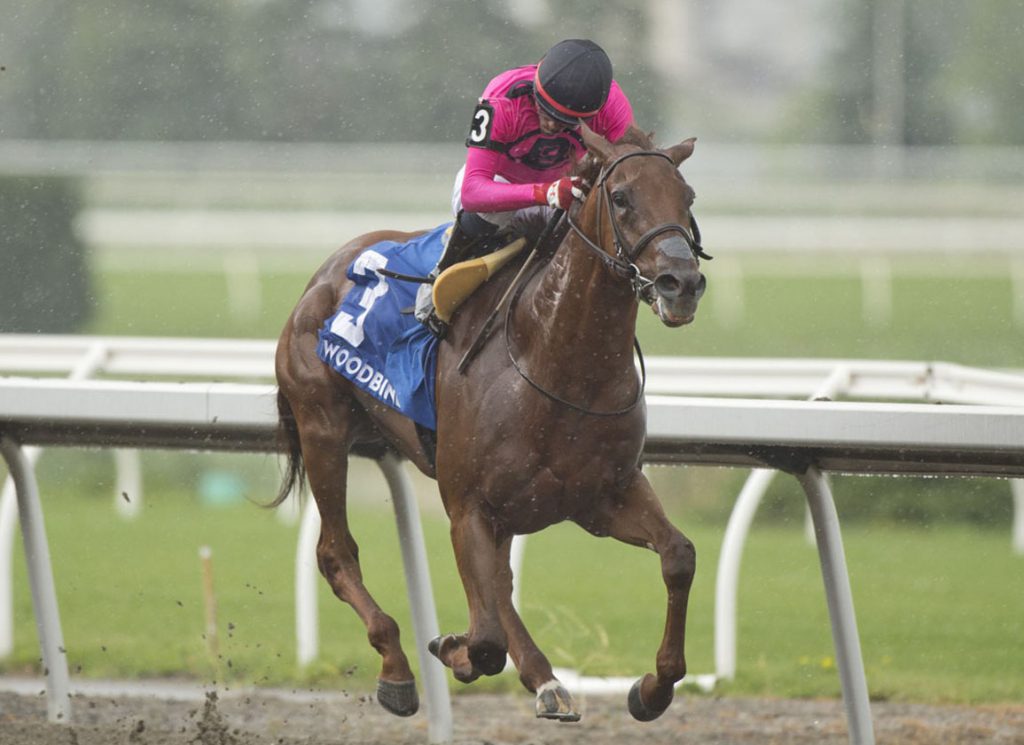
For a stallion farm, it's the equivalent of the “difficult second album” so notorious in the music industry. You've launched a new sire, and profited from the customary stampede of commercial mares. But the vogue proves to be cruelly fleeting. When he returns to the covering shed, the following spring, he offers exactly the same performance history, chromosomes and conformation as before. But suddenly the phone is cold. Precisely the factors that drove his debut book–novelty, plus security from imminent exposure of his competence (or otherwise) to replicate ability–have meanwhile prompted everybody to switch to the next bunch of rookies off the carousel.
In the old days, farm accountants might reckon on three seasons to retrieve the investment required to land a stallion prospect. The model was “three and out.” Nowadays, they're having to calculate closer to “one and out.”
In the verdict shared by one confidant, the market for second-season sires in 2024 is proving “brutal.” Already five years ago, one of the big commercial farms managed to find just 53 mares for the second book of a stallion that had started out the year before with 223. It's very hard to see who benefits from that kind of volatility.
Knowing that the only thing as certain as demand for a new stallion is the brevity of attention, opening fees now tend to be very high. In fact, the percentage of sires that will achieve a viable niche in Kentucky naturally being very small, the majority will turn out to have started at the highest fee they will ever command.
The agents and managers tell their clients that first-crop yearlings represent their one shot to land on the next Into Mischief or Tapit while he's still affordable. But if that were true, why don't they stick to their guns in the stallion's third and fourth seasons, when fees, books and medians are on a giddy slide? That, after all, is precisely when your vaunted “judgement” is about to be vindicated by his first runners.
That leaves as their only real pretext the self-fulfilling one that a stallion's debut book will generally prove the biggest and best of his life. But if you've truly identified a stallion who can upgrade his mares, then wouldn't you want one of the few yearlings going to market the year after he has demonstrated that ability to a waiting world?
Look, everyone is doing this stuff with their eyes open. The industrial model enables a stallion farm to charge a relatively lenient fee because they're going to process a ton of mares. But if a turf sprinter could last year cover 293 mares in his first book, then breeders already know that they had better stand out from the crowd.
In fairness, these high-volume operations would surely prefer a consistent spread of temperate support, through four or five years, to the current polarities. True, some of them have mastered the challenge impressively, maintaining the famous “pipeline”–whether with their own mares, or through the kind of imaginative incentive schemes introduced by the late B. Wayne Hughes for an ice-cold second-year stallion named Into Mischief. And the farms that do struggle to maintain traffic can hardly blame commercial breeders, who need to put bread on their table. So we can only conclude that it all starts with those directing investment at ringside.
So what can be done? Anecdotally, we're hearing of farms offering deals on second-year sires: two-for-one, even free seasons. We're also told that “nobody's talking about it.” Well, let's change that. At the end of this article you'll find an email address to share your views or experiences.
In the meantime, one man characteristically prepared not only to address the situation but to do something about is Price Bell of Mill Ridge. This farm has made a pretty spectacular return to the stallion game with Oscar Performance, and is now determined to help its latest recruit face the headwind in his second year.
Aloha West, winner of the GI Breeders' Cup Sprint at Del Mar in 2021, covered 83 mares in his first book. Emboldened by the quality they report in his first foals, Bell and the shareholders are offering a new incentive to keep the horse (an $8,500 cover) in the game.
“If you're the breeder of record of an Aloha West that wins a maiden special weight, as a 2- or 3-year-old, you'll get a free season the next year,” Bell explains. “In other words, it's after actually having done something that you'll get rewarded. As opposed to what you hear now, where it's like, 'You get a free season this year, but then if the horse makes it, you're going to have to pay a $20,000 stud fee to breed back to him.'
“Heaven forbid, Aloha West has 40 maiden winners his first crop? Then we'll have to give away 40 seasons. But it would also mean he's champion first-crop sire, so I'd love nothing more than that problem!”
The point is that it should all come down to belief.
“At the end of the day, if you stand a horse at stud, and support him with your mares, that's got to be because you believe that their foals will become successful racehorses,” Bell says. “And now that purse money is where it is, you can make that play. You won't always have to go to the commercial sales market. Yes, you've got more bills if you don't. But the reward, at the end, is potentially worth it.”
Somehow, somewhere along the line, people have come up with this idea that there's a difference between breeding for the racetrack and breeding for the ring. For anyone prepared to play a slightly longer game, however, there should be nothing more commercial than putting a winner under your mare.
“Absolutely,” Bell agrees. “For your mare and for your stallion, right? I mean, I don't have all the answers, anything like it–but I guess that is exactly my query about the whole thing.”
Aloha West found himself in a very tough intake: Flightline, Life Is Good, Jackie's Warrior, Jack Christopher, Epicenter. But it was no picnic for Oscar Performance to lock horns with Justify, Good Magic, City of Light. And he duly had to earn his stripes through the standard adversities.
“Oscar Performance actually had the same number of mares in his first and second years, which was like 120,” Bell says. “Just like Aloha West, because of the breadth, quality and belief of the shareholders, he was going to remain supported through those early years. He went 120, 120, 80, and then 60. And it was probably only as many as 60 because he had a winner at Keeneland in April. That got him another 10 mares or so in that fourth book.”
Which brings us back to a point made earlier: if you actually believe in what you were doing, the fourth season is exactly when you would be playing: you get the best value about a horse even as he's about to announce his prowess for all to see.
“And yet some horses don't even get to a fourth crop in America!” exclaims Bell. “I think my dad [Headley Bell] made that point when he bred to Arrogate in his fourth crop. There was a lot of uncertainty along the way, before he exploded with Cave Rock and all the rest. Nobody gets it right every time. Well, it's that yo-yo of chicken and feathers–you're still back at feathers. With the middle market so bifurcated, you stick to your guns because you're either going to be rewarded or you're not. There's no safe 'bond' play. If you hit, you're going to get well paid; and if you don't, you got nothing anyway.
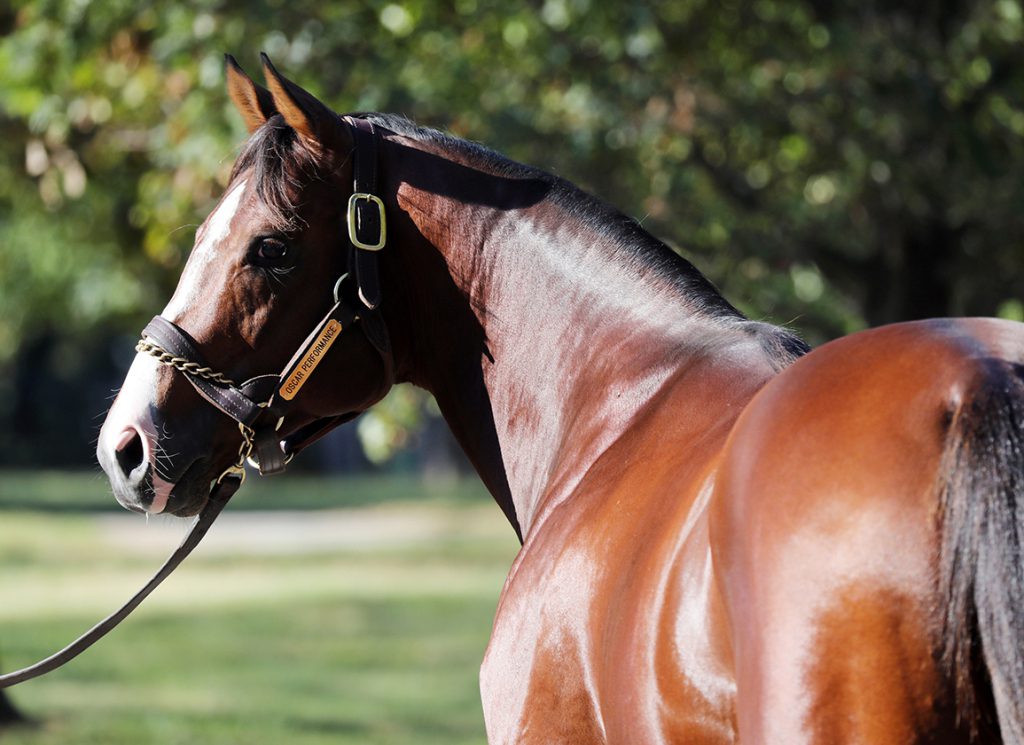
Oscar Performance | Photos By Z
“That's why you do see some very shrewd breeders using horses in years three and four. And I'd like to believe that a little bit of that's happening right now. There's still a lot of mares to be booked. People have seen the incentives. They're like, 'Well, let's see her foal and then see what kind of deal I can get.' Which may also be a reaction from last year, which felt quite transitional.”
Arguably, the staggering books reported in 2023 felt as though one or two farms were making a point after seeing off the proposed mare cap. But it's certainly interesting to hear these imaginative perspectives from Mill Ridge, which last engaged with the sector way back with Diesis and Gone West. After all, the whole environment has seen wild changes in the meantime.
“We're all kind of sheep and if we're not careful we'll run ourselves right over a cliff,” Bell warns. “The whole beauty of the game, the whole reason we do it, is that ultimately no-one knows for sure where a good horse comes from. So if you believe in Aloha West, or any other horse, the whole quest should be about the finish line.
“People say, 'Oh, I have a commercial broodmare band, therefore I should only breed the first-year sires.' I mean, I appreciate that. But if everyone has that attitude, then nobody stands out. And I think it also makes you question your horsemanship, your judgment. So maybe we should just get back to believing what we believe in, and going for it–above all, like I said, because purses are really good.”
Bell, of course, has a heartening example front and center in the thriving Oscar Performance.
“Our shareholders believed in him and look how well they've been rewarded,” he remarks. “Oscar Performance was pigeonholed. He didn't really have much support from pinhookers, because they were like, 'What am I going to do with a turf horse?' But then he starts having 2-year-olds winning six-furlong stakes on dirt. So now he's being supported because he's exceeded expectations.
“And for Aloha West and Eclipse Thoroughbreds, it's always been the same: believe, and believe big. We really believe in this horse, in his brilliance and his opportunity to contribute to the breed. And that's why we want to reward those who believe with us.”
The horse's obvious challenge, commercially, is that he didn't race until the February of his 4-year-old campaign. But Bell points out that he was routinely posting bullet works as a juvenile, before being sidelined.
“So while it doesn't show in the form line, when you look at his work pattern, there's no doubting his 2-year-old quality,” he says. “And he's a gorgeous horse: not a typical Hard Spun, maybe, I think he gets more from the Speightstown mare: he's really typey and beautiful. So he's got the pedigree, he's got the brilliance, and then he has the great partners and other breeders who believe in him.”
The paradox is that second-season sires actually face one question mark fewer than the rookies who enjoy such clamorous attention: breeders have at least had the chance to see what kind of stock they're putting on the ground. But even that will have its limits: Lookin At Lucky could never overcome the lack of physical glamor in his stock even after he produced winners of the GI Kentucky Derby and GI Breeders' Cup Classic. In the end, different people pin their belief on different things. But where there is authentic belief, then it's logical for both sides of the deal to keep the faith and share the rewards.
“I mean, we're all looking for the golden ticket,” Bell concedes. “Maybe we need to recalibrate our expectations a little, and not always be searching for the lottery win. But I do think that if you're breeding a horse, you should at least believe that they're going to win a maiden race, right?”
Contribute to the debate: Do you have something to add about the first-year/second-year sire conundrum for publication? Email suefinley@thetdn.com.
The post Seeking Solutions When The Rookie Buzz Has Gone “West” appeared first on TDN | Thoroughbred Daily News | Horse Racing News, Results and Video | Thoroughbred Breeding and Auctions.