This Side Up: Tapping At The Door Of History

So, what's next? The plague of locusts? The only surprise is that the smoke filling the air at Belmont Park has drifted across the continent from Canadian forests, and didn't actually emerge from a widening fissure in the crust, crumbling daily, that appears to divide horsemen and their horses from the inferno.

Hopefully a reprieve of the GI Belmont S. might yet be extended to some other elements in what has become too relentlessly apocalyptic a narrative. In terms of what has been definitively established, our sport's macabre run of misfortune in recent weeks may owe as much to sulphurs exhaled from hell as to the difference between dirt and synthetic surfaces.

As a community, we obviously have a major challenge on our hands. But that's precisely why we need to avoid panicked, impulsive solutions in favor of calmly diligent, far-sighted leadership. Just because social media has empowered some pretty deranged minorities, we can't allow their disproportionate reach to pervert whole societal agendas.

It would seem pretty unarguable that American racing can benefit from a greater role for synthetics but let's not throw the baby out with the bathwater. Horsemen and handicappers alike have a legitimate stake in dirt racing–and, to be clear, that stake is not just financial but a matter of cultural identity–and there its long history can surely be extended by discovering and addressing any practices that undermine its sustainability. I suspect there's probably quite a crossover between those who are resisting HISA and those who can't abide synthetics–and these are the guys who really need to smell the coffee. If you want to keep dirt racing, then call your dogs off HISA.
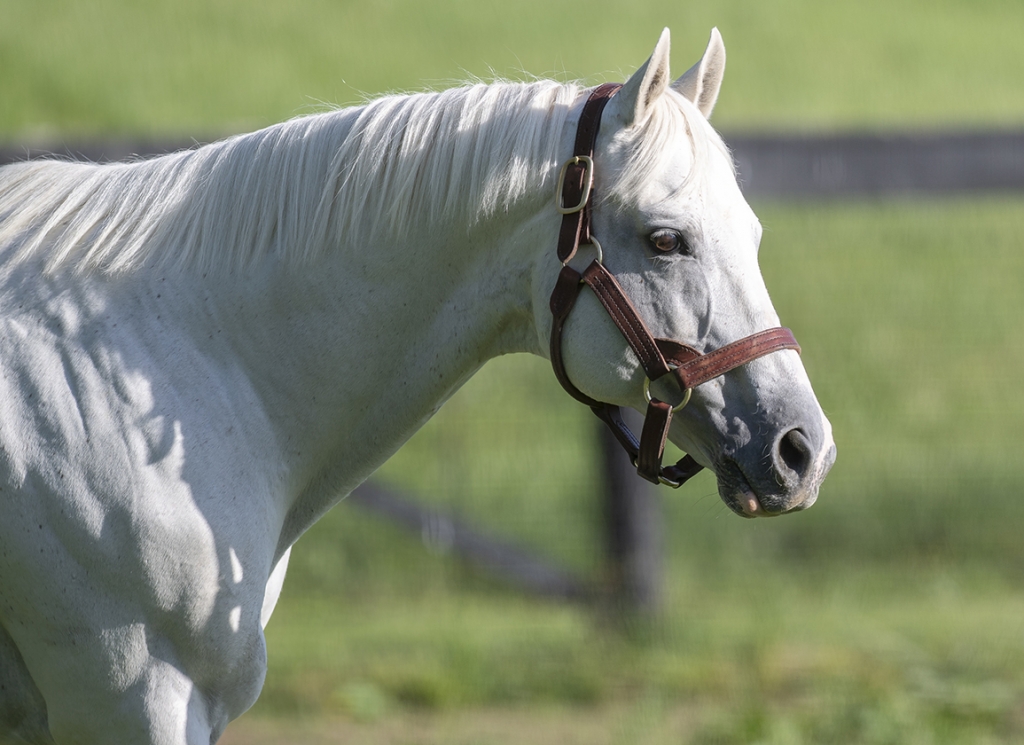
Tapit | Sarah Andrew

You couldn't ask for a better context to ponder these issues than the 155th running of a race designed to showcase precisely those genetic assets that equip the Thoroughbred to deal safely with tasks set before an increasingly (and, for the most part, properly) vigilant audience. And that's not just because it asks for the robustness to carry speed for a distance that is nearly freakish, in the American theatre, but also because historically many runners would already have contested two demanding races in the preceding five weeks.

Though it is the trainers who are driving corrosion of the Triple Crown, they implicitly transfer the culpability to the breeders. Hopefully our collective endeavors to identify and resolve vulnerabilities in the Thoroughbred will include analysis of the relative incidence of breakdowns (and not just catastrophic ones) in the stock of different stallions. If so, we might learn whether there's any scientific substance to our nervousness about horses today being “too fast to last.”  For now, however, we can only follow our instincts and conscience. But it's certainly striking that Germany should have achieved such a sensational impact with its bloodlines–far outrunning its troubles as a racing economy–by paternalist strictures in favor of soundness and competitive longevity. And even the most stubborn commercial breeders in Europe and America must acknowledge that Japan isn't doing too badly, either, in prizing the same assets.

Happily, the 50th anniversary of Secretariat's Belmont has drawn a perfectly presentable field in both quality and intrigue. With four other Kentucky Derby graduates meanwhile siphoned to the GIII Matt Winn S., it's clear that the Classic taking all the punishment from trainers right now is the Preakness. But how edifying that the Belmont–such an outlier, in the numbly repeating wheelhouse of most American trainers–should retain sufficient prestige to tempt a juvenile champion who'd be well within his rights to find a more obviously congenial way of regrouping from his recent vexations.

Quite a leap of imagination is required to picture a speed brand like Violence siring a Belmont winner, but his grandsire El Prado (Ire) sits comfortingly opposite Arch (behind damsire Blame) in the pedigree of Forte. So you never know, and clearly the runner-up has meanwhile upgraded his white-knuckle GI Florida Derby.

But his second dam was fast (stakes winner at 6f) and will need to have smuggled through some stamina from her own mother. That's by no means impossible, as she was by Seattle Slew and her half-sister by a speedier agency (Storm Cat) unites the pedigrees of 12-furlong Classic winners Contrail (Jpn) (Deep Impact {Jpn}) and Essential Quality (Tapit), as third and second dam respectively.

Essential Quality, of course, was his sire's fourth Belmont winner, a unique distinction in the modern era. The only precedent, Lexington, had emerged from a forgotten era of four-mile heats and matches to prove an ideal influence for what was then a newfangled type of sprinting in a single, congested dash. The dial has since turned so far that the Belmont stands out as a curio, a positive marathon. Breeders of the 21st Century must count themselves blessed, then, to retain access to such a wholesome influence in the evening of his career.

Forte | Coady Photography

Astoundingly, this time Tapit himself accounts for two of the nine runners, while no fewer than FOUR others are out of his daughters.

The Gainesway patriarch's Belmont record, including in a couple of desperate finishes, is all about the ability to carry speed under duress. That is supposed to be a dirt hallmark, though it was exported to revolutionary effect by Northern Dancer's sons in Europe, where the dynasty's principal heir Frankel (GB)-having himself always run just like a dirt horse-is now siring stock that similarly just keep going.

Actually, there's a case for saying that Tapit is a far more effective turf sire than his stats might imply, given that only his most disappointing foals would even try the weeds. He's certainly been disgracefully untested in Europe. Of just nine Tapits started by British trainers over the last decade, seven are winners and three stakes performers. But whatever the future may hold, in terms of racing surfaces, it looks as though he will just have to settle for being the richest sire in the history of the American sport.

Into Mischief is almost certainly going to run him down, in time, but Tapit started Belmont weekend on a statistical brink–$198 million in progeny earnings, from 999 winners and 99 graded stakes winners–that surely beckons him towards another date with Belmont destiny. And if he's going to make history, then he's also the type of horse that can give us a future.

The post This Side Up: Tapping At The Door Of History appeared first on TDN | Thoroughbred Daily News | Horse Racing News, Results and Video | Thoroughbred Breeding and Auctions.


Source of original post

Belmont Stakes Analysis: It’s ‘Show’ Time

Hit Show (Candy Ride {Arg}) can make some noise at what has to be a terrific price in Saturday's GI Belmont S. He continues to improve with each of his six career starts for trainer Brad Cox, and was a bit unlucky in his last two tries. The handsome gray came up just a nose short with a wide trip after bouncing off rivals down the stretch in the GII Wood Memorial S., then was a respectable fifth after racing too close to a scorching pace in the GI Kentucky Derby.

By the sire of Gun Runner out of a two-time graded stakes-winning Tapit mare going 1 1/8 miles, Hit Show is certainly bred to handle Classic distances. He also gets plenty of stamina from his Canadian champion second dam Milwaukee Appeal (Milwaukee Brew), who hit the board in the GI Alabama S. as well as two legs of the Canadian Triple Crown facing males. Hit Show boasts the right running style for the Belmont and should sit a perfect trip just off the early leaders if he's good enough.

Tapit Trice (Tapit) looks like the one to beat for four-time Belmont winning trainer Todd Pletcher if he can overcome his slow-starting ways in what appears to be a race without a whole lot of pace signed on.

Arcangelo (Arrogate) has come on nicely in his last two, led by a game win in the local prep GIII Peter Pan S., and still has room to take another leap forward while making his two-turn debut.

Sherack Selections: 1-#7 Hit Show (10-1). 2-#2 Tapit Trice (3-1). 3-#3 Arcangelo (8-1).

The post Belmont Stakes Analysis: It’s ‘Show’ Time appeared first on TDN | Thoroughbred Daily News | Horse Racing News, Results and Video | Thoroughbred Breeding and Auctions.

Source of original post

The Remains of One Magnificent Day

The 50 years that have passed since Secretariat's Herculean victory in the Belmont Stakes have taken a toll on the number of the 67,605 souls who came to witness history and saw a day sanctified by the racing gods. But then, unlike Secretariat, we are mere mortals. I am one of the dwindling number of those who were present on that sweltering day in June 1973. The memory of that magnificent day remains, intensely vibrant and charged with emotion, but it is now more a mosaic than a painting, with some chips lost to time. These are the images of that turbulent time and of that glorious day that have endured:

In the spring of 1973, a country steeped in discord was waiting with open arms to welcome a new standard-bearer, pure and noble, better than the best of themselves. A hero emerged in the form of a charismatic horse, as burning red as a spark sprung from the torch of a god. Within his body beat a titanic heart, nearly three times the size of the average Thoroughbred's. His name was Secretariat.

The second Saturday in June dawned hot and sultry, the first day of the year to reach 90-plus degrees. In anticipation of heavy demand, the Long Island Railway had added extra cars to its Penn Station-Belmont run. I was soon seated cheek-by-jowl amongst every definition of racing's demographic in a sauna on wheels, all stoked with the hope that the 25-year Triple Crown drought would be brought to an end.

At Belmont, the heat and humidity were stifling, and every available shady spot was soon snatched. In defiance of the fire laws, fans were standing on the stairways and in the aisles, anyplace they could to catch a glimpse of the horse which had captured the country's imagination for the past five weeks. I found a few spare inches in the grandstand and guarded my ground.

The hour before post-time was a clinic in anxiety management. I wanted Secretariat to win so badly, I would have gladly traded years off my life to seal the deal. The noise from the crowd was unrelenting and rose to a crescendo when the familiar blue-and-white checkered colors of Meadow Stables appeared on the track. Secretariat's coat caught the late afternoon light and shone like burnished copper. His neck was bowed, and he walked with a demeanor which was regal in its calmness. I can recall nothing about the four other competitors. My eyes were riveted on that piece of equine perfection which carried 126 pounds and 25 years of hope on its back.

The crowd cheered, shouted, and clapped, the reverberations from the excitement so high, the air seemed to sing. Secretariat was a model of deportment throughout the playing of the traditional “Sidewalks of New York,” the announcer's introductions, and the uproarious reception from the multitude. His composure was so restrained, that it was only in the warm-up that one caught a glimpse of the enormous power of his underlying musculature.

In watching countless replays of Secretariat's Belmont, I have felt like a pilgrim returning to holy ground. What remains is a recollection of an event so transcendent that it has illuminated my life and lit my inner world for 50 years.

I will never forget the angst of watching what many considered to be a premature move by Ron Turcotte on the first turn, and the heart-cracking fear that the long sweep of Belmont's stretch would sap Secretariat's last ounce of strength. I cannot hear a replay of TV announcer Chic Anderson's classic call of “Secretariat is widening now, he is moving like a tremendous machine,” without reliving the fervor of the crowd, which recognized that they were present at that rarest of alignments–when greatness gives birth to legend; the terror that the giant grandstand would not withstand the seismic shaking of thousands of stomping feet; and the euphoria that motivated a wall of humans to rise in unison to applaud a horse that, for one moment in time, became the embodiment of as much beauty as one could ever hope to see in this world. With tears streaming as I watched Secretariat's incredible lead continue to lengthen and Ron Turcotte steal a backward glance at history, I experienced an elation so magnificent that I cannot manufacture the words to describe it.

Secretariat had run the fastest Belmont on record, shattering the old mark by an amazing 2 3/5 seconds, and he had broken the world record for 1 1/2 miles. His winning margin was a mind-boggling 31 lengths. But it was not merely a matter of time and distance. For two minutes and 24 seconds on June 9, 1973, Secretariat was the culmination of the best of his breed and the consummate expression of the highest part of ourselves. He was everything that his Maker and nature had intended. The world was not perfect that day. But he was. Fifty years later, the flame of that memory endures. His name is Secretariat.

(Watch Secretariat's Belmont below:)

The post The Remains of One Magnificent Day appeared first on TDN | Thoroughbred Daily News | Horse Racing News, Results and Video | Thoroughbred Breeding and Auctions.

Source of original post

Background Check: Acorn

In this continuing series, we examine the past winners of significant filly/mare races by the lasting influence they've had on the breed. Up today is Belmont Park's GI Acorn S., the first leg in New York's prestigious summer trio of Grade I events for 3-year-old fillies.

Long a coveted prize, the Acorn has been designated a Grade I from the very beginning when the grading system became official in 1973. A disproportionate amount of its winners are in the Hall of Fame, ranging from Top Flight to Twilight Tear to Cicada to Ruffian, and so many more. The quality of the Acorn winners set the tone for their broodmare careers as well. Not surprisingly, the Acorn boasts a ridiculous number of high-class future broodmares among its winners, including a glorious five-year streak in the 1950s that saw five consecutive winners eventually cultivate champions among their descendants.

Following are highlights of some of the most important Acorn winners by what impact they've had on the sport through their sons and daughters.

Finder's Fee (1997, Storm Cat–Fantastic Find, by Mr. Prospector), bred by Phipps Stable: Granddam of 2022 Horse of the Year and current first-season sire Flightline (Tapit), whose fee of $200,000 at Lane's End is one of the highest introductory fees in history.

Prospectors Delite (1989, Mr. Prospector–Up the Flagpole, by Hoist the Flag), bred by W. S. Farish: The 2003 Broodmare of the Year produced Horse of the Year Mineshaft (A.P. Indy), MGISW Tomisue's Delight (A.P. Indy), and three other graded performers. She is also the granddam of GISW Mr. Sidney (Storm Cat).

Meadow Star (1988, Meadowlake–Inreality Star, by In Reality), bred by Jaime S. Carrion: This memorable ginger was granddam to the dams of champion and gone-too-soon sire Arrogate (Unbridled's Song) and MGISW Belle Gallantey (After Market).

Stella Madrid (1987, Alydar–My Juliet, by Gallant Romeo), bred by Calumet Farm: Japanese champions Lucky Lilac (Jpn) (Orfevre {Jpn}), Mikki Isle (Jpn) (Deep Impact {Jpn}), and Diamond Biko (Jpn) (Sunday Silence), as well as additional Japanese G1SW Aerolithe (Jpn) (Kurofune) and U.S. GISW Lilacs and Lace (Flower Alley) all trace to this classy bay.

Chris Evert (1971, by Swoon's Son–Miss Carmie, by T. V. Lark), bred by Echo Valley Horse Farm: From five daughters, U.S. champion Chief's Crown (Danzig); French champion Special Duty (GB) (Hennessy); GISWs Classic Crown (Mr. Prospector), Sightseek (Distant View), Tates Creek (Rahy), Etoile Montante (Miswaki), Obligatory (Curlin), and Dominican (El Corredor); and many more very useful graded winners hail from this lovely chestnut.

Marking Time (1963, To Market–Allemande, by Counterpoint), bred by Ogden Phipps and Wheatley Stable: Her champion daughter Relaxing (Buckpasser) turned into a Broodmare of the Year responsible for champion Easy Goer (Alydar), as well as additional GISWs Easy Now (Danzig) and Cadillacing (Alydar). Others tracing to her include GISW Strolling Along (Danzig) and several other high-class winners.

Gun Runner is one of several top horses descending from 1945 Acorn winner Gallorette | Sarah Andrew

Quill (1956, Princequillo {GB}–Quick Touch, by Count Fleet), bred by R. N. Webster: Champions Run the Gantlet (Tom Rolfe) and Awesome Feather (Awesome of Course), Japanese champion Maruzensky (Jpn) (Nijinsky II), and GISWs Dance of Life (Nijinsky II), Sumptious (Summing), Caucasus (Nijinsky II), and Vettori (Ire) (Machiavellian) are among those who trace to this grand gal.

Bayou (1954, Hill Prince–Bourtai, by Stimulus), bred by Claiborne Farm: A number of high-class horses descend from this mare, including champions Slew o' Gold (Seattle Slew) and War Pass (Cherokee Run); GI Belmont S. winner Coastal (Majestic Prince); and GISWs Aptitude (A.P. Indy), Sleep Easy (Seattle Slew), Oath (Known Fact), Slew's Exceller (Exceller), River Flyer (Riverman), and Victory Ride (Seeking the Gold).

Princess Turia (1953, Heliopolis {GB}–Blue Delight, by Blue Larkspur), bred by Calumet Farm: Her son Forward Pass (On-and-On) was just 1 1/4 lengths shy of winning the Triple Crown, but took the 1968 sophomore colt championship.

High Voltage (1952, Ambiorix {Fr}–Bynamo, by Menow), bred by Wheatley Stable: This elegant gray's sons and grandsons included U.S. champion Impressive (Court Martial {GB}), MGISW Majestic Light (Majestic Prince), and SW Bold Commander (Bold Ruler), the last two both sires of note.

Happy Mood (1951, Mahmoud {Fr}–La Reigh, by Count Gallahad), bred by Mrs. John D. Hertz: Canadian Horses of the Year With Approval (Caro {Ire}) and Izvestia (Icecapade), Canadian champion Serenading (A.P. Indy), GI Belmont S. winner Touch Gold (Deputy Minister), GI Kentucky Oaks winner Buryyourbelief (Believe It), and other GISWs Haynesfield (Speightstown), Healthy Addiction (Boston Harbor), and Pretty Discreet (Private Account) all descend from this splendid chestnut.

Secret Meeting (1950, Alibhai {GB}–Burgoo Maid, by Burgoo King), bred by James C. Brady: Broodmare of the Year Anne Campbell (Never Bend); champions Sensational (Hoist the Flag) and Rushing Fall (More Than Ready); Epsom Oaks winner Long Look (Ribot {GB}); and GISWs Trumpet's Blare (Vice Regent), Dancealot (Round Table), Albert the Great (Go for Gin), Desert Wine (Damascus), and Menifee (Harlan) all trace to her.

Nothirdchance (1948, Blue Swords–Galla Colors, by Sir Galahad III {Fr}), bred by Bieber-Jacobs Stables: Dam of champion Hail to Reason (Turn-to {Ire}), who later turned leading sire, and ancestress of GISW and sire Meadowlake (Hold Your Peace).

Gallorette (1942, Challenger II {GB}–Gallette, by Sir Gallahad III {Fr}), bred by Preston M. Burch: Not only does stellar young sire and 2017 Horse of the Year Gun Runner (Candy Ride {Arg}) trace to her, but so do 2005 Horse of the Year Saint Liam (Saint Ballado), Irish champion Minstrella (The Minstrel), Canadian champion Charlie Barley (Affirmed), and GISWs Success Express (Hold Your Peace), Greenwood Lake (Meadowlake), Air Express (Ire) (Salse), Buster's Ready (More Than Ready), Rolling Fog (Posse), Whitmore's Conn (Kris S.), and Funtastic (More Than Ready).

Nellie L. (1940, Blenheim II {GB}–Nellie Flag, by American Flag), bred by Calumet Farm: Granddam of champion and Kentucky Derby/Belmont S. winner Bold Forbes (Irish Castle), this captivating bay has a number of other classy descendants, including GISWs Life At the Top (Seattle Slew), Lakeway (Seattle Slew), Saratoga Six (Alydar), and Jilbab (A.P. Indy), as well as English G1 winner Dunbeath (Grey Dawn II {Fr}).

Proud One (1938, Blenheim II {GB}–Some Pomp, by Pompey), unknown breeder: Her descendants have included 1965 Kentucky Derby winner Lucky Debonair (Vertex), as well as GISWs Lady Love (Dr. Fager) and Tantalizing (Tom Rolfe).

Baba Kenny (1928, Black Servant–Betty Beall, by North Star III {GB}), bred by Idle Hour Stock Farm: This very first winner of the Acorn set the tone with her descendants including daughter Bee Mac (War Admiral), who beat the boys in the Hopeful S.; 1988 Horse of the Year and nine-time GISW Alysheba (Alydar), the second of four consecutive GI Breeders' Cup Classic winners to bring a GI Kentucky Derby win to the year-end championship race; G1SW and good sire Lear Fan (Roberto); multiple back-type winner and good sire Better Self (Bimelech); and another Acorn winner in Riverina (Princequillo {GB}).

The post Background Check: Acorn appeared first on TDN | Thoroughbred Daily News | Horse Racing News, Results and Video | Thoroughbred Breeding and Auctions.

Source of original post

Verified by MonsterInsights