Letter To The Editor: An Open Letter To The Horsemen

by Beau Lane

Rumor has it that Mike Repole said he was going to get out of the business if things didn't change. Well, I can see how Mr. Repole could feel that way; he's had some real kicks in the behind this year. But the racing industry needs more people like Mike Repole. He goes to the sales, buys nice horses, goes to the races, and takes his chances. He spends more than most and has Todd Pletcher for a trainer (there is no better), and so his chances are better than most.

Everything has changed so fast this year. All of a sudden, we have this new entity (HISA) that has taken complete control of our industry. They basically have the power to shut anyone down at any time. I don't like it and neither does anyone else trying to make a living with racehorses, especially those that are “hands on”. We have people controlling our lives and our livelihoods that don't know anything about us or our horses. Perfect example of the tail wagging the dog.

This is America, or what's left of it. Blaming the cheaters (1%} for our problems is a load of crap. They are essentially using the media to slander individuals, our livelihoods, and our whole sport  with no recourse, even if they're wrong. The damage is done by that point, which is their goal. This is a gambling game. Our purse money has always come from some form of gambling. The best way to save this industry is to fill those gates; our racetracks needs to realize this. Our economy is such that it is going to hit the horse business sooner or later. During the Great Depression, racetracks were one of the few businesses that thrived. Every time a track closes, be it large or small, it weakens us all. The people trying to control us act like they couldn't care less. This won't do.

Dr. Allday, one of the best racetrack vets in the world, says a horse can run. But a vet that has been out of school for a very short amount of time says it cannot. They, of course, listen to the least qualified person which may have cost us another Triple Crown winner. Come on, get real. Where is the reality in our sport anymore? PETA does not control us. Give into that bunch… well, don't get me started.

The small breeder, the small trainer, the small owner… they are the backbone of this industry and don't you ever forget it. Get down to where the rubber meets the road. Support the HBPA–the people that support you. Tracks, support your horseman. Our business is not run by PETA or any other power group. No more tail wagging the dog. I love this business and its people.

The post Letter To The Editor: An Open Letter To The Horsemen appeared first on TDN | Thoroughbred Daily News | Horse Racing News, Results and Video | Thoroughbred Breeding and Auctions.

Source of original post

Letters to the Editor: Texas Horse Racing Needs HISA

The horse…inquisitive, sensitive, totally aware, much smarter than you think, fearful, and a creature of habit. When my daughter returns to our family barn after training in Florida for six months, her retired horses greet her with a whinny. An old friend has returned.

The horse is a fabric of historical Texas. The horse represents how we all arrived here, and how we survived in the earliest days. Some horses are bred to run–that's their job. All animals need a job and thrive when working. The thoroughbred's instinct is to run as fast and as far as it can. As long as there are horses, there will be horse races, and men and women will admire the sheer determination, stamina, strength, and speed of the majestic horse.

The tragedy at Churchill Downs this past May, in which twelve horses broke down on the racetrack, fractured their lower legs and needed to be euthanized, should never be repeated. The cause of this rash of sudden breakdowns is uncertain: the current American thoroughbred may be bred too strong up top across the chest with lower legs that are relatively too thin and fragile, or changes in the surface of the track due to humidity and weather variations may increase the risk of a ligamentous injuries which can then predispose to falls and catastrophic fractures. Most horses can survive the surgery, but few can survive the confinement and partial weightbearing needed to allow these fractures to heal.

The Jockey Club, in recognizing this problem, sought relief from Congress and in one of the few truly bipartisan pieces of legislation in the past 10 years, the Horseracing Integrity and Safety Act (HISA) was passed. This lifesaving legislation allows the government to designate a corporate entity to unite the horse industry, to find ways in which horse tragedies can be eliminated, and drug abuse can be regulated at the Federal level.

The model is not a new one. A Federally sponsored corporate entity serves to regulate the Securities and Exchange Commission. The needs are similar. Regulation among multiple states with multiple interests are consolidated under a single governing body with superior resources and a single purpose-driven goal.

In response to the HISA act, most states have supported and endorsed this model, but a few outliers, including the State of Texas represented by the Texas Racing Commission, have sought to preserve the status quo.

The Commission's stated rationale is that only the Texas Racing Commission may regulate parimutuel racing and simulcast wagering in Texas. Although National regulation affects all aspects of our life living in Texas, the Texas Racing Commission, due to this perceived legal technicality, has been unable to find a compromise solution. As a result, the Texas racing industry suffers, the Texas patrons who enjoy horseracing suffer, and our thoroughbred gladiators suffer the most.

A second consequence of this stalemate is that racetracks in Texas can no longer simulcast Texas races to other communities and states and receive wagers allotted for their racing program.  Without the ability to simulcast, the betting handle at Sam Houston Racetrack during the winter meet fell 90% and the handle at the current Lone Star spring and summer racing meet is not significantly better. Tracks survive by taking approximately 15% of the betting handle to support their operations and purses. The current situation is unsustainable.

Having served on the Texas Racing Commission for 10 years, including four years as Chairman, I can attest that the Commission staff, stewards, and the working regulators are superb and unmatched in their quality and dedication. The political appointees of the Commission, however, have lost sight of their designated purpose.

In this one rare instance, Congress has actually provided us–and our horses–a solution. Ultimately, HISA has the resources, the regulatory power, and sophisticated lab testing that can root out illegal drug use, research track surfaces, and analyze breeding patterns. HISA has the potential to improve the sport and create a safe horseracing animal that can thrive in a newer environment.

The Texas Racing Commission needs to recognize its responsibilities and protect our animals in an ever-changing world. The consequences of the Texas Racing Commissioners' opposition to these efforts simultaneously leaves our horses at risk and our tracks on the path to ruin.

Texas deserves better.


Robert Schmidt, MD is a Fort Worth based orthopedic surgeon specializing in joint replacement surgery of the hip and knee. He and his wife had bred and raced thoroughbreds under the colors of Oak Meadow Farm. He was appointed by Govenor Perry to the Texas Racing Commission and served for 10 years, including 4 years as chairman. He currently serves as Mayor of Annetta North, Texas.

The post Letters to the Editor: Texas Horse Racing Needs HISA appeared first on TDN | Thoroughbred Daily News | Horse Racing News, Results and Video | Thoroughbred Breeding and Auctions.

Source of original post

Letter to the Editor: Armen Antonian

The “Quick Fix” of Synthetics is Not the Answer

Horse racing has been down the path of synthetics before at Santa Anita, Del Mar, Keeneland, etc. Much time was lost, approximately a decade ago, with a focus on changing surfaces as a panacea for horse racing breakdowns. We now know there are other causes for horse breakdowns that are more prevailing. The greatest single cause of racing deaths has to do with pre-existing conditions of the horse, and only in particular instances is the surface itself the primary reason for horses breaking down while racing. Synthetics have found a role to play in the Industry but racing on synthetics exclusively means to change the sport itself in a fundamental way: from breeding, to handicapping, to the aesthetic beauty of competition–the reasons we are all fans of horse racing. And, changing to synthetics will not appease the critics if that is the motivation to do so.

But statistics show that horse racing deaths are less on synthetics than either dirt or turf. Surely safety must be the main focus with racing today. Yes, safety must be a central focus but there has to be some perspective. Horses also die in nature. The thoroughbred industry cannot be expected to prevent ALL deaths of horses and a comparison must be made as to how often and how horses die in nature to reach a fair, concise view of horse racing. Such a comparison, of course, is extremely conjectural. There are no thoroughbreds in nature and not many other horse breeds in nature today at all. Experts from many areas would have to weigh in on such a comparison.

In other words, the approach to the issue of horse racing deaths in general, that is, how the question is posed, is false. So too is the case for synthetics falsely stated. Are we to believe that horses somehow have more trouble competing on dirt and turf than fabricated material? Biology and evolution would initially say otherwise. Similarly, are we to suppose that the breeding of thoroughbred horses is inherently producing unsound animals? Again, general evolutionary changes of such a magnitude would take time. To make such an argument, geneticists would have to be consulted to ascertain that thoroughbred breeding practices are actually producing inherently unsound horses. But first things first. Looking mainly into the track surface and or scrutinizing breeding operations are not the places to begin when investigating horse racing breakdowns.

Back to the statistics. Statistics don't lie. More horses break down on dirt or turf than synthetics per Jockey Club figures. But statistics don't always give answers either. Indeed, the overall sample size in the Jockey Club figures in the aggregate is large but the fact that the number of dirt races were about 7 times more than synthetic races is a cause for pause in a comparison.  Sample sizes are usually uniform in the scientific method. And when looking at individual tracks per year, the sample size is quite small when considering dirt races only. A track can thus vary markedly from year to year in horse fatalities as the Jockey Club statistics indicate.

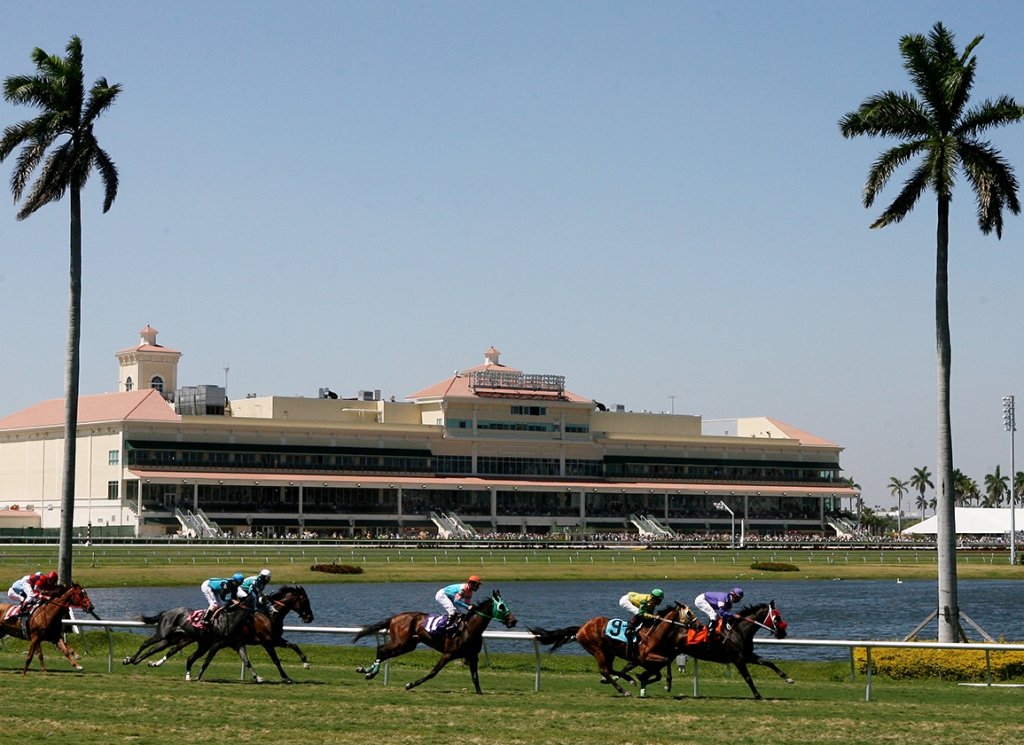
And the sample has to be RANDOM.  Horses that are selected to compete on synthetics are not randomly chosen. That is, the two populations: horses that run on dirt and horses that run on synthetic are not uniform. So the synthetic numbers for horse fatalities that are generally lower than for dirt fatalities may or may not be because of the surface. The fact that both are samples of thoroughbreds is not rigorous enough to make a valid comparison. The sample population has to be random. A random sample also compensates for genetic variation in a species. The best argument for synthetics in terms of the data comes from Gulfstream Park in 2022. At Gulfstream, there were about 7000 starts on synthetic with one fatality whereas there were about 6000 starts with 8 fatalities on dirt. At least the number of starts were comparable at the same track for each surface but again, horses were selected by trainers for various reasons to race on synthetic rather than dirt. Better comparison of the two surfaces–but still not a random sample of the horse population at Gulfstream and one year is not nearly enough to draw any serious conclusions.

Action at Gulfstream Park in Hallandale Beach, Florida | Bill Denver/EQUI-PHOTO

Any glance at aggregate statistics for analysis would have to consider figures after 2019 after the implementation of new safety protocol stemming from the racing deaths at Santa Anita that year. But even here, with a seemingly logical approach to the data on racing breakdowns, a comparison is problematic. There are inexplicably low dirt rates of fatalities (say below 1 per 1000) before 2019 with dirt racing at various tracks that, in other years, had higher rates of about 2 per 1000. Such variability calls into question any definitive conclusion about track by track breakdowns relating to surface only.

What we do know is that Del Mar, Santa Anita and Keeneland have had remarkably low rates of fatality on dirt the last 2-3 years. For example, Keeneland had 3 deaths from 2020 to 2022 in almost 5000 starts or about 0.6 per 1000. Del Mar had none from 2021 to 2022 with almost 4000 starts. Such figures compare favorably with the lowest synthetic figures. Given these Keeneland and Del Mar figures it is a stretch to say that dirt racing is inherently or significantly more dangerous than synthetic racing. The question does remain: are these rates extendable over time? If the safety reforms in horse racing continue and are enhanced, the chances are they can be.

What we can say with some assurance is that all horse racing death rates are going down from year to year. The average rate of horse death for 2022, in an industry where safety reforms have not been sufficiently generalized, was 1.25 deaths per thousand. Still, it is too early to draw conclusions about horse racing deaths (especially in the wake of the recent spate of breakdowns at Churchill) until the new protocol is agreed to and generalized throughout the industry and a number of years with such protocol in place has passed. The hard work of putting in the safety measures is just beginning.

Horses run slower on synthetics than dirt. Is running fast then a problem? There are many misconceptions here. The issue is not speed but how often a horse is asked to race at high speed. Here the veterinarians can chime in to assist trainers with their training and racing schedules. A dialogue should ensue on best practices. A horse can race more often if it is running easily. A horse in a grade I race cannot race as often as winning at that level usually requires maximum effort. So comparisons by racing fans of one horse's schedule to another are not valid. Each horse is different both in terms of circumstance and genetic variation and trainers must be more in tune with their vets moving forward not just on a horse's ailments and therapeutic medication but on their racing schedule itself.

–Armen Antonian Ph.D

The post Letter to the Editor: Armen Antonian appeared first on TDN | Thoroughbred Daily News | Horse Racing News, Results and Video | Thoroughbred Breeding and Auctions.

Source of original post

Letter to the Editor: Fred Pope

There are a lot of opinions about the Triple Crown. Most of them center on the Preakness and the spacing of the three races. In my opinion, the Preakness is the victim of the Kentucky Derby's success, or as T.D. Thornton said so well in his article June 12:

“Underscoring how the Derby itself is devolving into a be-all/end-all, one-shot endeavor at the expense of the Triple Crown race that follows it, for the first time in 75 years, Mage was the only horse out of the Derby to enter the Preakness.”

The Preakness is a very popular event in Baltimore, it just isn't popular on national television because it hasn't been a good, competitive, highest-level race. Here's why that needs to change and how it can be improved for next year.

The 20-horse field for the Kentucky Derby offers bettors and fans Roman chariot race excitement. The horses get banged-up cut-up, and many put on the shelf for a while. Any extra betting handle coming from the cavalry charge of 20 horses to the first turn is not worth the risk to riders, horses and the sport, especially right now. Many in the industry hold their breath for two minutes.

For safety reasons, Churchill Downs (CD) needs to limit the Derby to a maximum 14 starters, like the Breeders' Cup. If they do that, good things will happen. The immediate result is CD is seen as making a positive safety move, but the magic for the Preakness, is that potentially six horses move to the second Classic with fresh horses and perhaps a full field for bettors and fans. NBC gets to promote a much better product and the Triple Crown improves.

CD may not like it, but the rest of the industry should. If CD does not make this change on its own, then there are two strategies to make it happen. First, the TOBA Graded Stakes Committee rules the maximum starters in a Grade 1 race is 14, same as the Breeders' Cup, which is a very common sense move. Second, HISA rules the same for safety reasons.

This idea is one way the industry can help the Preakness, the Triple Crown and the sport without controversy. But it's an incremental strategy that does not get to the core reason we have the Triple Crown.

Around the Thoroughbred world, breeders and owners each year seek to “prove the breed” through a series of 3-year-old Classic races for colts and fillies. All the other racing countries start in a common sense way with a shorter race first, usually at one mile, then move to 1 1/2 miles, then the final leg is somewhere longer. Not us. We start at 1 1/4 miles, then backslide to 1 3/16, then jump to 1 1/2 miles. It doesn't make sense, thus it doesn't work in an increasingly competitive sports world.

1/ST Racing, owners of the Preakness S., should do something in their own best interest to improve the Triple Crown. They should move the shorter distance Preakness to become the first Classic, perhaps two to three weeks prior to the Kentucky Derby, which is locked into the first Saturday in May. They do not need Churchill Downs permission.

1/ST Racing also owns two of the major Classic prep races, the Florida Derby and the Santa Anita Derby, both at 1 1/8 miles, which they can adjust dates and leverage toward the Preakness. What about all the other Classic prep races? They will need to adjust, which they have done from time to time. Remember, the objective is three Classic races to “prove the breed.”

With the shorter Preakness moved out of the way, the Derby horses would then have five weeks to rest up and prepare for the Belmont, which is what many trainers are doing now by skipping the Preakness. This extra time for all horses will make the Belmont a much better competition.

Moving the date of the Preakness would require the Maryland Racing Commission, City of Baltimore and 1/ST Racing to continue to collaborate on how to make Maryland racing a more successful venture with a future. To that end, the uncertainty of Pimlico and Laurel should lead to some bold thinking about how Baltimore can have a true racing success story. It's going to cost a lot of money to find any facility solution, even a bad one, why not go big on a proven racing model?

Baltimore Harbor has been the focus of major urban renewal to bring tourism downtown. It's been a struggle to find a dynamic focal point. There is great opportunity to bring Baltimore harbor a Hong Kong-style, urban race track. A sports and residential complex on the harbor, right downtown. It can be a multi-purpose facility without training stalls, where horses are shipped in on race days/nights from the training centers at Laurel and Fair Hill. Happy Valley is a multi-purpose sports complex on less than 100 acres in Hong Kong. This could be the most stunning racing facility in America, a true tourism draw for Baltimore.

It's a lot easier to address the minor problems of three races in the Triple Crown than it is to tackle the structural problems of the sport in America. TDN does a good job of allowing readers to offer ideas, maybe some of them will click.

The post Letter to the Editor: Fred Pope appeared first on TDN | Thoroughbred Daily News | Horse Racing News, Results and Video | Thoroughbred Breeding and Auctions.

Source of original post

Verified by MonsterInsights