Letter to the Editor: ‘We Should Act Together’

While I don't know Mike Repole, I do know about his business success and acumen. I also know about his repeated calls to improve and perhaps save the sport so many of us love.

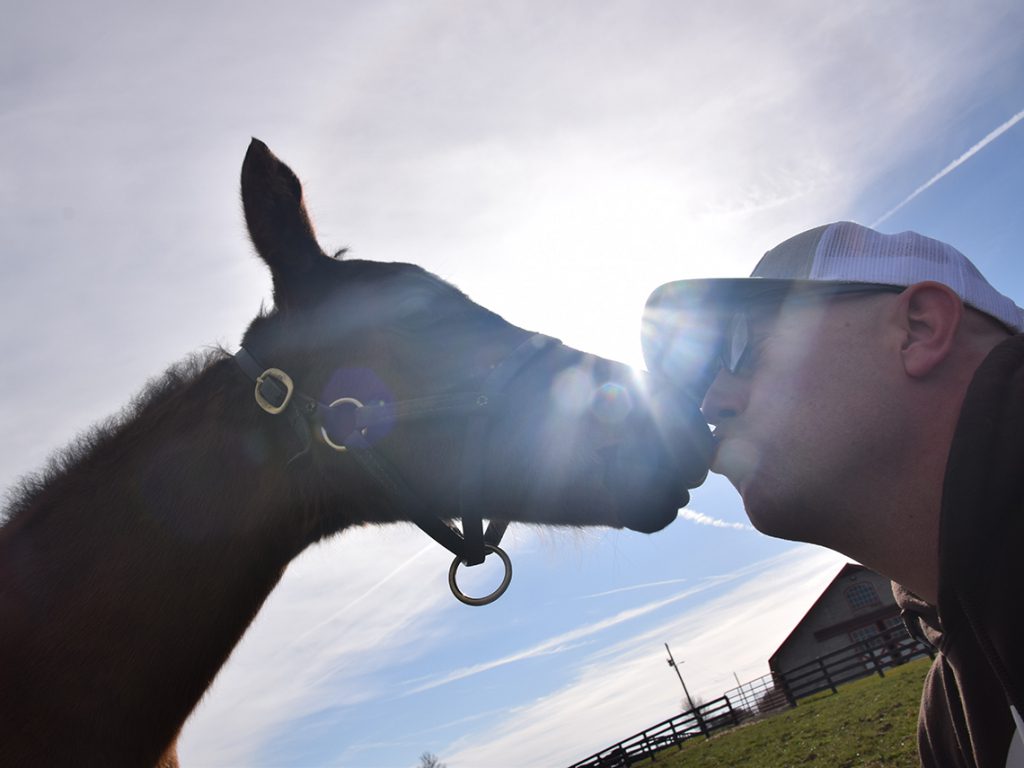
Let's be realistic, horse racing has been in a decline for 25 years.  I have personally considered giving up and moving on many times recently. Yet on a recent trip to Lexington to see my foals and horse friends I realized how much it still all means to me.

I don't get the push back and the “it can't be done” attitude of so many participants. I don't see anything in his “Call to Action” suggesting it's my way or the highway. Rather he offers sensible ideas to assign accountability, make improvements along the way and most importantly act together NOW.

When one of the biggest players with a major ability to think big and succeed offers a path forward we should do more than just listen. We should act together.

–Jeff Bowen, Gryphon Investments

The post Letter to the Editor: ‘We Should Act Together’ appeared first on TDN | Thoroughbred Daily News | Horse Racing News, Results and Video | Thoroughbred Breeding and Auctions.

Source of original post

Take Me Out to the Ballgame: Letter to the Editor

If there are two sports whose paths have mirrored each other historically, it would be baseball and horse racing in America.

Both are tradition-driven and both enjoyed prominence for decades. And both recently have dealt with challenges, scandals and declining interest.

One sport though has chosen to embrace innovation.

Baseball has developed multiple changes over several years as they fought to gain fan, media and sponsor revenue. To our credit, racing has innovated in several spaces, specifically health and safety, but not so much in product presentation.

The last major product innovation in racing happened four decades ago with the creation of the Breeders' Cup.

Major League Baseball announced this week that they enjoyed their biggest year-over-year attendance increase since 1993. Because they listened. And they changed.
The energy is back in baseball. Media attention is back. And the fans are back in the ballpark and watching games on a bevy of media options.

Can we say the same of racing? Unfortunately, no.

But fortunately, it is not too late. As long as racing will step up to the plate right now and embrace meaningful innovation.

Need one example? There is a 100% chance that realigning the Triple Crown on a better schedule would result in more media attention, more wagering and a stronger safety message.

Earlier this year, leaders within the sport–Churchill Downs, Stronach, top breeders and others cried out for increased cooperation and collaboration.

There is no question that much of this was due to our safety crisis, but clearly the safety issue is only one of many that should–and must be addressed by a broad coalition of our industry.
That is if we want to remain relevant and follow a proven path, like our friends in baseball just showed us.

It took bold thinking and a never-give-up attitude by John Gaines to create the Breeders' Cup. And equally as important, it took thinking of the greater good by breeders and racetracks.

The evolution of racetrack ownership should make innovation much, much more possible than ever. You can count on one hand the entities that control the sport.

Throw in the Breeders' Cup and The Jockey Club and representatives from those seven could fit around a small dining room table!

There are 30 club owners in MLB involved in the decision-making process. Not to mention the Players' Association and others.

Undoubtedly, a Commissioner-led model greatly facilitates changes to baseball, but with so few involved to create meaningful innovation in racing, we can still change without requiring a Commissioner.

Want to truly pay homage to the 40-year anniversary of the Breeders' Cup? Create a “Gaines Commission” to study and implement strategic changes within racing.
Outside professional support would moderate our “think tank” project, at first with only representatives from the racing entities mentioned above.

As the commission begins to develop and agree on potential action, others (deservedly so) will be brought into the process. But for now, one step at a time.

Just as baseball went to a pitch clock, the Gaines Commission would be on the clock as well, directed to finalize their recommendations long before Breeders' Cup 2024.

Baseball changed and has been rewarded. Racing can do the same. Our changes will be different. Our changes won't be as easy.

But we don't have another 40 years to wait.

Kip Cornett is a Thoroughbred owner, bettor and sports marketer.

The post Take Me Out to the Ballgame: Letter to the Editor appeared first on TDN | Thoroughbred Daily News | Horse Racing News, Results and Video | Thoroughbred Breeding and Auctions.

Source of original post
Letter To The Editor: A Blueprint for Industry Transformation and Resurrecting True Horsemanship

In a time when true horsemanship is increasingly considered a lost art, and our industry faces a barrage of criticism and skepticism, Frank Taylor's Stable Recovery initiative shines as a beacon of what can be accomplished. This program is not just a cutting-edge approach to addiction recovery; it is a call to arms for an industry that needs both positive PR and meaningful solutions to real-world challenges.

True Horsemanship: The Heart of Stable Recovery

What stands out about Stable Recovery is its focus on horsemanship as a cornerstone of recovery. Horsemanship is an invaluable skill that is slipping through the cracks in our industry. Frank Taylor's initiative serves as an antidote to this trend, emphasizing the healing power of horses and the importance of caring for them in a way that honors their role in our lives and our industry. 

The Power of the Horse in Healing

The industry has long understood the untapped potential for horses to heal the human spirit. Stable Recovery takes this one step further by incorporating addiction recovery into daily life on a Thoroughbred farm. Frank Taylor's insight into the “secret sauce” of combining horse care with a 12-step program exemplifies the symbiotic relationship between horsemanship and healing.


Stable Recovery | Stable Recovery

Two-Fold Impact: On People and Industry

Stable Recovery is not only a compassionate endeavor; it is a strategic workforce development for our industry. Participants become not just architects of their recovery, but valuable contributors to an industry that urgently needs passionate, skilled workers.

Our Responsibility to Scale

Programs like Stable Recovery should not be anomalies; they should be models for what our industry can achieve on a larger scale. Frank Taylor envisions a future where more Kentucky thoroughbred farms embrace similar initiatives. Here is where the rest of the industry can make a significant impact.

Actionable Steps:
  • Investment: Financial backing from within the industry can help expand the reach of programs like Stable Recovery.
  • Collaboration and Sponsorship: Involve other key industry players in partnerships to extend these programs' resources and scope.
  • Spread Awareness: Leverage media platforms to make these initiatives well known and well understood.
A Challenge to Fans and Stakeholders

To fans and stakeholders alike, your role is indispensable. Social media advocacy, financial support, and open dialogue about the importance of such programs can propel them into mainstream consciousness.

Conclusion

The Thoroughbred industry has a unique opportunity to not only change its social narrative, but also to lead in transformative programs that benefit both humans and horses. Frank Taylor's Stable Recovery is proof that we can simultaneously resurrect true horsemanship while healing lives.

Let us be part of this impactful change, one horse and one healed soul at a time. God Bless!

–Clark Shepherd is the principal of Shepherd Equine Advisers, Inc.

Editor's Note: To sign up for or sponsor an item in the John Hall Memorial Golf Scramble, click here. To make a donation to Stable Recovery, click here. To learn more, visit stablerecovery.net

The post Letter To The Editor: A Blueprint for Industry Transformation and Resurrecting True Horsemanship appeared first on TDN | Thoroughbred Daily News | Horse Racing News, Results and Video | Thoroughbred Breeding and Auctions.

Source of original post

Letter To The Editor: Breeding For More Durable Thoroughbreds

Recent discussions about racing fatalities are putting the sustainability of Thoroughbred racing to the test. Various solutions have been suggested to reduce fatalities and maintain public acceptance of our wonderful sport. We should pay more attention to the opportunities of breeding to improve sustainability.

Let us look at the history of dairy cattle breeding for inspiration to breed more sustainable Thoroughbreds. For a long time, farmers focused almost exclusively on maximizing milk yield until their attention shifted towards reducing involuntary culling and improving animal health and welfare. Breed associations supported breeders by providing genetic information on longevity, health traits, and functional conformation. Targeted bull selection is now a proven strategy for improving herd sustainability.

We can improve the sustainability of racehorses through genetic selection, too. To successfully do so, we need data on hereditary observations. It is promising that research using data from the UK and Hong Kong clearly shows that some disorders, such as musculoskeletal problems, have a genetic background. This is also true for more general traits that indirectly reflect sustainability, such as career length, number of starts, and lifetime earnings.

Fortunately, racehorse disorders are increasingly being recorded at a large scale, as can be seen in the Equine Injury Database. We can use observations of a sire and his relatives to estimate his breeding value for these traits.

In the short term, genetic selection for sustainability is not a silver bullet for drastically reducing the number of conditions. Because, for many traits, the genetic background explains only a small proportion of the variation. Genetic improvement tends to take longer than a non-genetic intervention, such as changing the surface of the racetrack.

But these concerns do not outweigh the benefits of breeding for the long term. Genetic progress is permanent: a one-off selection decision that has a lasting effect on future generations. On top of that, the selection effect is cumulative; with each new generation the population progresses. Genetic selection can also be very cost-effective, especially when using already available data.

So, while breeding might not be a quick fix, it is undoubtedly an attractive prospect for improving the sustainability of the next generations of Thoroughbreds. I look forward to hearing the views of leading breeders and breeding associations.

Dr. Erwin Koenen is a geneticist at Kyllaros.com. He has a PhD in Animal Breeding and Genetics.

The post Letter To The Editor: Breeding For More Durable Thoroughbreds appeared first on TDN | Thoroughbred Daily News | Horse Racing News, Results and Video | Thoroughbred Breeding and Auctions.

Source of original post

Verified by MonsterInsights