TIF: Tampa Stewards Acknowledge Missed Call, Revise Procedures

Stewards at Tampa Bay Downs have revised their procedures after acknowledging they missed an incident at the start of the third race there on November 25.

The doors of the starting gate for the race's second favorite, #6 Cash Call Kitten, did not open simultaneously with the others in the race, disadvantaging his chances, and that of his connections and the wagering public. More than $82,000 was staked on Cash Call Kitten in win, place, show, exacta and daily double bets. The full total was higher given other exotic bets.

Instead of launching an inquiry and concluding Cash Call Kitten did not get a fair start, an act which would lead to bettors receiving a refund on nearly all wagers using the horse, once the race was made official, those bets became losers.

In response to questions from the TIF Executive Director Patrick Cummings, Tampa's Board of Stewards explained they were mistaken in not launching an inquiry, and had not reviewed the start of the race as was past practice.

The stewards accepted responsibility for not doing so and vowed to revert to their previous procedure of reviewing the start of each race before making it official.

“Mistakes happen and we appreciate that the stewards at Tampa acknowledged the oversight and their commitment to improving outcomes going forward,” said Cummings.

Horseplayers took to social media in the minutes after the race complaining about the lack of action.

“The negative reactions from horseplayers were entirely justified and understandable. Horseplayers must be treated fairly and they expect that officials adjudicating the race will protect them in the case of such incidents. That did not happen on this occasion.”

“The stewards have the ultimate responsibility here, but the starter, assistant starters and the jockey – veteran Daniel Centeno – should have spoken-up too.”

Cash Call Kitten was the 3-1 second choice in the race and finished fourth, beaten 11 lengths, after trailing by as much as 21 lengths, according to Equibase's chart of the race.

“While this was incredibly unfortunate for the betting public, we hope this serves as a reminder to stewards across North America to remain vigilant in the execution of their duties.”

The post TIF: Tampa Stewards Acknowledge Missed Call, Revise Procedures appeared first on Horse Racing News | Paulick Report.

Source of original post

Solo And Stressed: Individual Housing May Encourage Infectious Diseases In Horses

Horses that transition from living in a herd to being stabled individually exhibit stress-related changes, according to researchers at the University of Hohenheim in Stuttgart, Germany. Dr. Sonja Schmucker and colleagues created a study using 12 geldings and followed them through a series of management changes, monitoring their immune response and behavior.  

The horses were all between 2 and 3 years old and had been living in a herd on pasture before the study began.  

The first phase of the study divided the horses in the two groups and placed them in paddocks where the groups could not see each other; the horses remained living outside 24/7. After eight days, the herds were again combined for eight weeks.

The second phase of the study moved the horses into stalls with bars where they were able to see and touch their neighbors. For the first week, the horses were allowed to exercise for 30 minutes in groups of six in an indoor arena. The horses were lunged for the remainder of the trial, with no group turnout ability.

The scientists collected blood samples from all horses on days 1 and 8 after each change in housing. Samples were also taken 7 and 6 days and immediately before the stabling phase began. The samples were analyzed for immune cell numbers and cortisol concentrations.

The team found that shifting the horses to individual housing brought on both acute and lasting stress-induced immune changes that dividing the larger herd did not. They report that these changes could make the horses more vulnerable to infectious diseases. 

Stereotypical behaviors also began when the horses were individually housed.

Read more at Equine Science Update

The post Solo And Stressed: Individual Housing May Encourage Infectious Diseases In Horses appeared first on Horse Racing News | Paulick Report.

Source of original post

University Of Surrey School Of Vet Med Receives $11.8 Million Donation

The University of Surrey's School of Veterinary Medicine received the largest single gift in the university's history from an anonymous donor: £10 million (US$11.8 million). Projects dedicated to animal welfare are a priority for the donor and one that falls directly in line with much of the research being done at the school.

Current research projects which line up with the donor's mission include one that focuses on reducing pain and suffering in dogs with unnatural head shapes caused by selective breeding. A future project that could benefit from the donation includes locating more accessible, accurate, and faster treatments for cancer in animals.

The gift will also be used to support student scholarships, which will allow the best veterinary students to study at Surrey regardless of their financial situation. 

The donation is part of The Future Says Surrey campaign, which focuses on the positive impact the school has on society by supporting students and researchers who focus on artificial intelligence, sustainability, and one health-one medicine. The latter recognizes the connectedness of humans, animals, plants, and the environment, and focuses on achieving positive health outcomes. 

Surrey's School of Veterinary Medicine was opened by Queen Elizabeth II in 2015; the school's Large Animal Clinical Facilities were opened in 2020 by Princess Anne.

 Read more at HorseTalk.

The post University Of Surrey School Of Vet Med Receives $11.8 Million Donation appeared first on Horse Racing News | Paulick Report.

Source of original post

Collaborative Care Saves 20-Year-Old Horse From Chronic Colic Condition

Oskie, a 20-year-old Arabian gelding, had numerous mild colic episodes over the past two years. Thankfully, his owner is a veterinarian, and she knew how to treat the increasingly chronic condition in Oskie. But when she treated him a dozen times in one month, it was time to have his condition more thoroughly examined by the equine specialists at the UC Davis veterinary hospital.

She suspected Oskie may have enteroliths, which are rock-like formations that form in the intestinal tract and cause blockage. Consisting of sand and other undigestible items that collect in the colon, enteroliths range in size from little pebbles to bowling balls if allowed to grow long enough.

At UC Davis' Large Animal Clinic, Oskie underwent a series of examinations with several departments, which began with a thorough work-up by faculty member Dr. Julie Dechant and resident Dr. Stefanie Arndt of the Equine Emergency Surgery Service.

Radiology specialists with the Diagnostic Imaging Service detected no enteroliths or sand in his system on x-rays, so he was referred for an abdominal ultrasound with the Large Animal Ultrasound Service. There, Dr. Betsy Vaughan observed a long segment of severely distended and fluid-filled small intestine that had poor motility. This appearance was highly suggestive of a small intestinal obstruction, though the cause of the obstruction could not be seen, so Dr. Vaughan recommended surgery to find the cause.

Surgeons performed an exploratory celiotomy, an opening of the abdominal cavity, and found a mass growth blocking Oskie's small intestine and removed a four-foot section of the intestinal tract. The appearance of the mass was consistent with cancer, but there was no visual evidence of it spreading to the adjacent intestine or lymph nodes.

A biopsy of the mass by the Anatomic Pathology Service confirmed it to be a jejunal adenocarcinoma, a rarely found cancer in horses. With large margins surrounding the tumor removed and no metastasis observed in his system, Oskie appeared free of the cancer following surgery.

Oskie was weak following surgery, but sling assistance allowed for a smooth recovery. He was hospitalized in the Equine Intensive Care Unit for 10 days while being treated with intravenous fluid therapy, antibiotics, non-steroidal anti-inflammatory drugs, and nutritional support.

Horses that undergo colic and other abdominal surgeries have long recoveries. For the first 30 days, Oskie was confined to stall rest with only two short hand walks per day. For the second month, he was allowed access to a small run along with his hand walks. The third month of Oskie's recovery gave him access to a large pasture by himself and continued hand walks.

At Oskie's three-month recheck appointment, a follow-up ultrasound showed his small intestine was back to normal compared to its dilated appearance previously. Now ten months post surgery, his owner reports that he has made a full recovery.

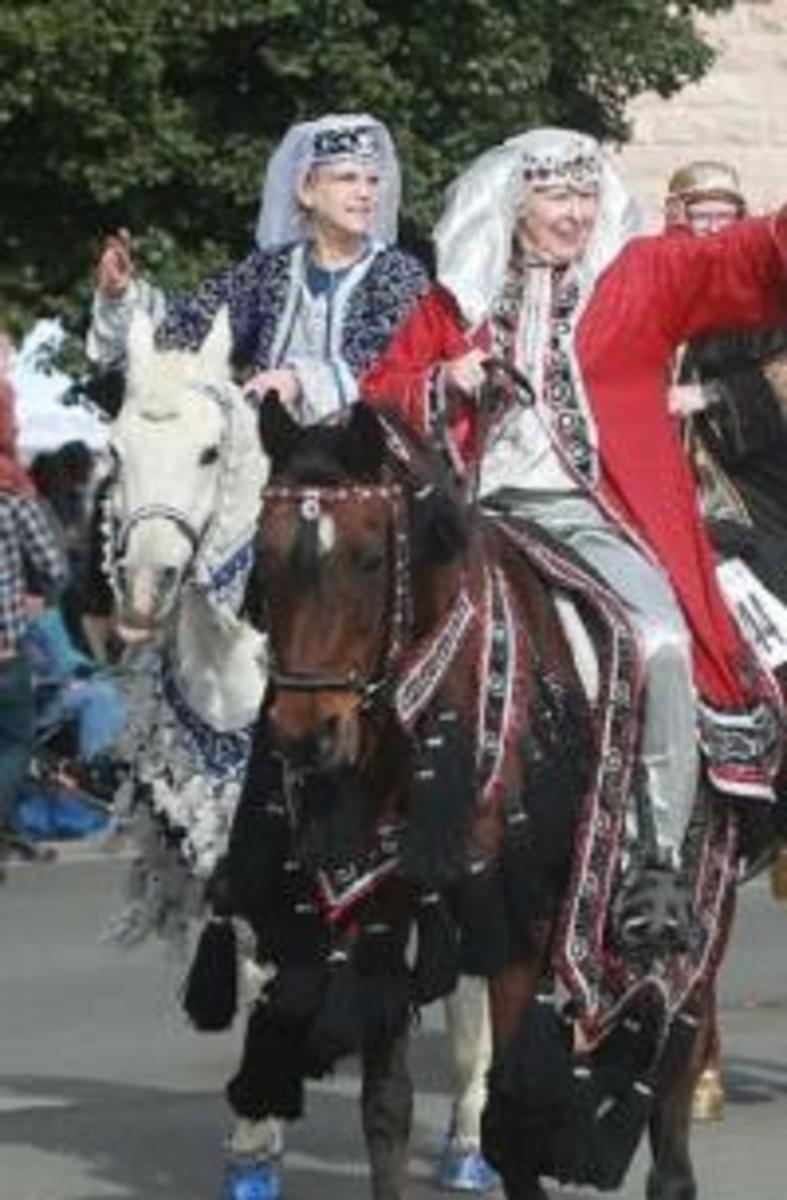
Oskie in the Nevada Day Parade after surgery.

The post Collaborative Care Saves 20-Year-Old Horse From Chronic Colic Condition appeared first on Horse Racing News | Paulick Report.

Source of original post

Verified by MonsterInsights