Mating Plans, Presented By Spendthrift Farm: Blue Diamond’s Stonereath Mares

As we approach the opening of the 2024 breeding season, the TDN staff is once again sitting down with leading breeders to find out what stallions they have chosen for their mares, and why. Today we caught up with Imad Al Sagar of Blue Diamond Stud, who added a Kentucky base, Stonereath Farm, in August.

   “The acquisition of Stonereath Farm in Kentucky last summer has allowed us great opportunity to diversify,” Al Sagar said. “A handful of Blue Diamond mares already resided in Kentucky but with the addition of Stonereath, which covers 252 acres near Paris, we have increased that number; several have been sourced specifically with an eye on breeding and racing in the US while others will continue to switch to and from our base in Newmarket in order to take advantage of the differing bloodlines available in Kentucky. We are lucky to have an excellent team of people overseeing Stonereath, including farm manager Jenn Laidlaw, office manager Erin Dilger and Walter Nathaniel Lobato.”


DAWN OF HOPE (IRE) (11, Mastercraftsman {Ire}–Sweet Firebird {Ire}, by Sadler's Wells), in foal to Lope De Vega (Ire) and visits Justify
Dawn Of Hope was a high-class filly for us, winning the Listed Prix Petite Etoile, and her first three foals are winners. Her first foal, Kind Gesture (GB) (Decorated Knight {GB}), came close to gaining black-type in Britain and is currently running well in Australia, and we are hopeful there is more to come from her 3-year-old Blown Away (GB) (Invincible Spirit {Ire}) with John and Thady Gosden. We have retained her 2-year-old Sea The Stars (Ire) filly Gaugamela (GB), who goes to Andre Fabre.

Like everyone else, we have been impressed with what Justify has achieved with his first two crops–we bred one of his early stakes winners, Wonderful Justice (GB). It is notable how well he has done with Danehill line mares, particularly in Australia–Storm Boy (Aus), Learning To Fly (Aus) and Legacies (Aus) spring to mind.

Dawn Of Hope's family goes back to Native Street via the Fire The Groom branch, so it has had its share of success in America as well. With so much currently going on in the family and her own talent to take into account, we took the decision to ship Dawn Of Hope over from Newmarket specifically to send to Justify.

Also going to Justify is Floret (Ire), a Galileo (Ire) half-sister to Moonlight Cloud (GB) (Invincible Spirit {Ire}) from the Doff The Derby family. She is in foal to Blame and by sending her to Justify, we are repeating the Galileo cross responsible for City Of Troy, Unless and Buchu among others.
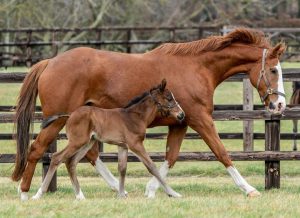
Dawn Of Hope and her '23 Pinatubo (Ire) colt | Equuis Images


FREE LOOK (4, Tapit–Wild Mint, by Medaglia d'Oro) to be bred to Gun Runner
Tapit is such a good broodmare sire and we were trying for some time to add a daughter to our broodmare band. Free Look was second in the GII Miss Grillo S. and fifth in the GI Breeders' Cup Juvenile Fillies' Turf as a 2-year-old, plus she's a very good-looking individual from the immediate family of Violence. So we were delighted to buy her at the Fasig-Tipton July Sale and she went on to win on her first start for us on dirt.

We were keen to start her off with a proven stallion at the highest level and Gun Runner fits the bill with his immense success with Tapit in mind–even allowing for the level of opportunity given the fact both are Winchell horses, it's very notable that Gun Runner already has six stakes winners out of Tapit mares.


I'M WONDERFUL (8, Giant's Causeway–Rebridled Dreams, by Unbridled's Song), had a colt by Blame and visits Tapit
I'm Wonderful is out of Coffee Pot Stable's excellent producer Rebridled Dreams and therefore a sister to Carpe Diem. One of our first mares to be based in Kentucky, her first foal, Wonderful Justice (Justify), won last year's Black Gold S. for us at Fair Grounds. She just had a colt by Blame as part of our strategy to tap into Roberto blood and now heads to Tapit. This mating produces inbreeding to Unbridled, similar to the pattern found in the backgrounds of Tapit's Grade I winners Unique Bella, Sweet Loretta, Valiance and Tapit Trice. However, the key here is to also make use of Tapit. He's become such an important influence, both through his sons and daughters, and we are keen to utilise him while we can.


MANASAROVA (11, More Than Ready–Manaahil, by Mr. Greeley), in foal to Not This Time and visits Blame
From the Ballade family, Manasarova was listed-placed as a 2-year-old and has already produced a really good filly in France called Sicilian Defense (GB) (Muhaarar {GB}), who won a pair of listed races and was Group 2-placed. We have retained her 3-year-old filly by Zoustar (Aus), Yusra, and she is with Andre Fabre. Manasarova is one of three mares we are sending to Blame this season. We hold the Roberto line, with its propensity for throwing sound and talented horses, in high regard. So one of the ideas behind using Blame is to tap into one of the remaining Kentucky-based representatives of that sire line and hopefully produce some fillies for the broodmare band down the line.

Also heading to Blame is Jousi (GB), a homebred Dubawi (Ire) granddaughter of Irish 1000 Guineas winner Classic Park (GB) who won an Ascot maiden as a 2-year-old for us, and Star Of Bristol, a Speightstown half-sister to Mastercraftsman (Ire). Star Of Bristol's first two foals have both won and we have retained her Wootton Bassett (GB) 2-year-old filly, who goes to Christopher Head. Given Blame's affinity with mares carrying Mr. Prospector, we hope that she will be a good fit.


OCEAN SAFARI (5, Temple City–Media Access, by Devil's Bag) to be bred to Not This Time
One of two stakes-winning Temple City mares we bought last November, Ocean Safari won the Honey Ryder S. Not This Time has been extremely impressive to date and his progeny seem versatile as well, which suits an operation like Blue Diamond that races on turf and dirt. We have two mares due to foal to him this year in Grade I winner Abscond, who is back in Newmarket ahead of a visit to Frankel (GB), and Manasarova.

In the case of this mare, Not This Time has already been effective with the Hail To Reason/Roberto line, to whom Ocean Safari is inbred; Cogburn, Simplification, Midnight Stroll, Howling Time being examples. The cross also produces inbreeding to Ballade, a pattern which we've seen behind several stakes winners by Giant's Causeway and his brother Freud. Not This Time is very much on the rise, with his versatility in the mould of his sire Giant's Causeway; all things considered, he should be a very good starting point for a young mare like Ocean Safari.


QUEEN OFTHE TEMPLE (6, Temple City–Queenameina, by Read The Footnotes) to be bred to Uncle Mo
Another hard-knocking daughter of Temple City who won the Santa Barbara S. and was multiple graded stakes-placed. Like Ocean Safari, we were keen to start her off with a proven sire. Uncle Mo is so reliable, he's a good option for starting off a young mare, and he's also versatile when it comes to dirt and turf. Although he's out of an Arch mare, he's had good results when bred back to the Hail To Reason/Roberto line–runners like Bast, Bye Bye Melvin, Mo Ready and Royal Mo for example.
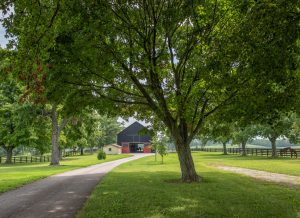
Stonereath Farm in Kentucky was acquired in August of last year and is now an American base for the operation | Blue Diamond Stud

ANGLE OF ATTACK (7, Maclean's Music–Bourbon Warfare, by Colonel John) to be bred to Bolt d'Oro
It's hard not be impressed by Bolt d'Oro's early results, especially his statistics. Angle Of Attack, a young stakes-winning mare who is owned in partnership with Kuwait Racing Syndicate, already has a yearling filly by him and we've decided to send her back; Bolt d'Oro's early success with the mares from the Distorted Humor line, highlighted by Major Dude, certainly adds weight on paper.

Joining Angle Of Attack on a return trip to Bolt d'Oro is New Jazz. She is a winning daughter of Scat Daddy and that particular cross has already produced Bobby O.


ARWA (IRE) (10, Holy Roman Emperor {Ire}–Another Storm, by Gone West) to be bred to Elite Power
Arwa is a winning half-sister to six stakes horses including Order Of St George (Ire) (Galileo {Ire}) and out of a daughter of Storm Song so it's a versatile family with championship form on dirt and turf under the first two dams. For us, Elite Power is an extremely appealing package; a brilliant sprinter who retired sound with the looks and pedigree to support his talent. We are looking forward to supporting him at Juddmonte.


DANCING KIKI (7, Blame–Justenufappeal, by Exchange Rate), in foal to Medaglia d'Oro and visits Violence
A tough stakes-winning daughter of Blame who was effective on dirt and turf. She is in foal to Medaglia d'Oro and we are staying on the same theme by sending her to Violence, who of course sired Forte out of a Blame mare.

Interested in sharing your own mating plans? Email garyking@thetdn.com.

The post Mating Plans, Presented By Spendthrift Farm: Blue Diamond’s Stonereath Mares appeared first on TDN | Thoroughbred Daily News | Horse Racing News, Results and Video | Thoroughbred Breeding and Auctions.

Source of original post

Richest Race Ever Run at Gowran Park Headlines New Spring Series

A new Spring Series of median sires races has been added to the Irish Flat racing calendar for 2024 and beyond in what is a significant boost to the three-year-old programme for middle-distance horses. In an announcement made by Horse Racing Ireland (HRI), the Irish European Breeders' Fund (Irish EBF) and Gowran Park Racecourse on Monday, the Spring Series will conclude with the €200,000 Irish Stallion Farms EBF Gowran Classic–the richest race ever held at Gowran Park–on Bank Holiday Monday, June 3.

Three-year-olds with a median price of no more than €75,000 will be able to take part in the Irish Stallion Farms EBF Gowran Classic, with entries for the race, run over nine and a half furlongs, set to close on Wednesday, March 13. The winner will receive an automatic free entry into the G1 Dubai Duty Free Irish Derby at the Curragh on Sunday, June 30. This applies to both colts and fillies.

Six races, each worth at least €25,000, make up the series which offers total prize-money of €330,000. The Curragh, Navan and Cork will host four maiden races between them–two for fillies only–and each of these races will be restricted to three-year-olds whose sires achieved a median price of not more than €50,000 in 2022.

A median price of €75,000 will apply to runners in the €30,000 Irish Stallions Farms EBF 3yo Spring Series Race held at Roscommon on Monday, May 13. The same median price restriction will apply to runners in the €200,000 series finale.

There will be free entry, sponsored by Irish Stallion Farms, for all racegoers at Gowran Park on Bank Holiday Monday, June 3 and the racecourse's manager, Eddie Scally, said, “Gowran Park are really excited to host the inaugural €200,000 Irish Stallion Farms EBF Gowran Classic, the region's richest Flat race.

“This race will form part of an action-packed day both on and off the track this June Bank Holiday Monday with live music and a massive family fun day. We hope the Gowran Classic will attract all the top trainers and riders from both Ireland and abroad and see for themselves the warm Kilkenny welcome.”

Joe Foley, chairman of the Irish EBF, added, “Irish Stallion Farms already sponsor two successful series for two-year-olds, the auction and median series with 27 races in each and a combined value of nearly €850,000.

“We felt it important to develop a similar series for later developing middle-distance three-year-olds; hence the Spring Series was initiated with the valuable €200,000 race at Gowran as its centrepiece. We look forward to seeing this three-year-old series grow and develop and are delighted to support Gowran Park racecourse in particular, who are investing heavily in their facilities.”

The post Richest Race Ever Run at Gowran Park Headlines New Spring Series appeared first on TDN | Thoroughbred Daily News | Horse Racing News, Results and Video | Thoroughbred Breeding and Auctions.

Source of original post

Letter to the Editor: Middle-Distance Focus is a Breeder’s Best Bet

Following from the excellent feature by Emma Berry in discussion with Harry Sweeney in Thursday's TDN, I felt compelled to write in. I, like many breeders and fans alike, was disappointed when the news of Adayar, Hukum and Westover's departures filtered through. Through various debates/heated discussions with my colleagues and fellow industry members, the usual argument was thrown back – would you use them yourself? Are they commercial?

Harry Sweeney's comments sparked a different debate in my mind. Theoretically we are all supposed to be breeding with the aim of producing top-class horses. By breeding for speed and the commercial market, are we really giving ourselves the best chance of achieving that goal? The Return of Mares suggests the majority believes it is, however the statistics suggest the opposite is true.

In 146 runnings of the Group 1 sprints in Europe over the past 30 years, 71% (103)  have been won by older horses with just 29% (43) won by three-year-olds and under.

Let me make it clear that this is not to blame the connections of Hukum, Adayar and Westover who have simply looked for the best opportunity for their middle-distance stars in Japan. Only a fool would argue that these horses would be given a better chance at stud in Europe than they are going to enjoy in Japan. We all seem to know it's wrong so the question is why does it keep happening? Harry Sweeney rightly pointed out that there are only two Group 1 races at sprint distances in Japan in the JRA. Are today's breeders aware that there is only one Group 1 sprint for three-year-olds only in Europe? There are 11 Group 1 races over 10f-plus restricted to three-year-olds. If that's not enough to encourage breeders to move away from cheap speed and precocity, add in races over a mile or further and the number of age-restricted Group 1s for your three-year-old is 17. And if that's still not enough, what about the following:

  • The only Group 1 sprint for three-year-olds only is over six furlongs so if your three-year-old sprinter is a 5f specialist, he/she will be taking on older horses from the day they turn three.
  • In 2023, Bradsell and Shaquille were the only three-year-olds to win one of 14 Group 1s over 5f-6f in Europe.
  • In the past 20 years, only three three-year-olds have won the King's Stand Stakes.
  • Four three-year-olds won the Queen Elizabeth II Jubilee Stakes in the 20 years prior to it becoming restricted to four-year-olds and older in 2015 following the formation of the Commonwealth Cup (the only G1 sprint for three year olds only).
  • Eight three-year-olds have won the July Cup in the past 20 years.
  • Five three-year-olds have won the Prix Maurice de Gheest in the past 20 years  .
  • Four three-year-olds and one two-year-old have won the Nunthorpe in the past 20 years.
  • Nine three-year-olds have won the Haydock Sprint Cup in the same period.
  • In six runnings as a Group 1, the Flying Five Stakes has been won twice by three-year-olds.
  • The Prix de l'Abbaye has been won six times by three-year-olds and once by a two-year-old in the past 20 years.

Granted it may not be quite as black and white as Japan's lone pair of Group 1 sprints. However, that's at JRA tracks only versus the entirety of the Pattern in Europe. If the perceived time and patience, and thus extra cost, is your deterrent from breeding middle-distance horses the evidence suggests a change of direction. The best chance of striking at the highest level is undoubtedly with middle-distance horses and if you're not trying to give yourself the best chance of being the best then what's the point? Harry's reasons behind Japan's key focus seem equally applicable here in theory but for some unfortunate reason, not in practice.

Sincerely,
Laura Joy, Ireland

The post Letter to the Editor: Middle-Distance Focus is a Breeder’s Best Bet appeared first on TDN | Thoroughbred Daily News | Horse Racing News, Results and Video | Thoroughbred Breeding and Auctions.

Source of original post

Dominance is What Elite Sport is All About

The growing supremacy of the Willie Mullins stable in National Hunt racing begs the question: is it damaging anybody or anything?

Dominance is the raison d'etre of elite sport. When Rafa Nadal was winning 14 French Open tennis titles it never entered his head that what he was doing might be harmful to the game. Manchester City won't be thinking that five Premier League title wins in six seasons is quite enough, thank you very much, and that to make it six in seven would be detrimental. If you're preaching against reigns and dynasties, you might as well chastise the tide for going in and out.

But the issue raised by the Mullins operation's brilliant scouting and training of jump racers isn't about his right to annex the sport. The small flares of disquiet relate more to the effect it might have on public enjoyment, other trainers and owners, betting turnover and the sport's profile at a time when National Hunt racing is bedevilled by small fields and worrying economic indicators.

Let's lay out the stats.

  • Mullins is even money to train more winners at this year's Cheltenham Festival than Great Britain (one trainer versus a whole country)
  • He has 14 ante-post favourites for the 28 races at next month's meeting.
  • At the recent Dublin Racing Festival he won all eight Grade 1 races and saddled 29 of the 48 Grade 1 runners
  • Ten of the last 13 Cheltenham Festival leading trainer's titles have made their way back to his base in County Carlow
  • Entries for this year's Supreme, Ballymore, Albert Bartlett and Triumph revealed a total of 80 names from the Mullins yard

Nobody disputes the skill (and wealth) required to spot, buy, train and deliver horses capable of overwhelming Henry de Bromhead, Nicky Henderson, Paul Nicholls and Gordon Elliott. Henderson, it should be said, has the best horse in National Hunt training – Constitution Hill. The Mullins numbers are powerless to negate that reality. The hard part is knowing when success becomes weaponised – and starts to do harm.

Dissenting voices are few. Richard Johnson, the former champion jockey, is an admirer of Mullins, but sounded an ominous note in a recent discussion with BoyleSports bookmakers. Johnson said: “It definitely is not good for racing. It is not good for competitive sport. When you are looking at the racing at Dublin last weekend people were saying Irish racing is so strong. It's not Irish racing. It's Willie Mullins who is so strong.”

Johnson's belief that Mullins is distorting the Anglo-Irish balance of power is contradicted by this year's Grand National entries. Astonishingly: 61 of the 94 are trained in Ireland (54 was the previous high).

Another part of Johnson's lament is the repetitive nature of the storyline, which you could also sometimes diagnose in Flat racing, with Aidan O'Brien and Coolmore. “Looking at more of the same isn't great and doesn't encourage new people into our sport,” Johnson said.

Is this true? Plenty on the other side point to Tiger Woods and Usain Bolt and ask whether interest dipped when golf and Olympics sprinting felt like pageants.

In his Daily Mail column at the weekend, ITV Racing's Ed Chamberlin wrote: “Of course, true sport relies on competition but does the might of Mullins threaten to ruin Cheltenham? Not for one second. The archetypal racegoer to Cheltenham, or ITV viewer, simply wants a good time and a bet, especially an each-way one.”

Evidence to prove an exodus by punters put-off by odds-on favourites constantly 'going in' for Mullins would be hard to find, given the other possible socio-economic explanations for betting turnover fluctuations. And so far rival trainers are understandably wary of graffitiing the Mullins legend with accusations of unfairness.

Mullins is only six short of a century of Cheltenham Festival winners and we can expect the 100 to be reached next month at a course where, in 2022, he won a record 10 of the 28 races. Having 29 of the 86 entries for the Baring Bingham Novices' Hurdle is only one illustration of his power to swarm the biggest targets.

In football and other team sports, when a trophy is being raised and the tickertape is falling, a journalistic reflex prompts us to ask: is this the start of a dynasty, should everyone else panic, is a new age of dominance upon us? With Liverpool in the 1970s and 80s – yes. With Manchester United subsequently – yes. With Manchester City now – yes.

Often dominance entrances us. Sometimes it suggests imbalance, repetition, staleness, even injustice, if money is the real dominating force. The shadow debate in jump racing around the Mullins numbers hasn't shed much light on the effect on other good yards of owners taking the easy option of sending horses to Closutton, or on the polarisation of wealth in National Hunt racing, or whether racegoers and punters care who saddled the winner.

One thing, we know: being too polite to even discuss those aspects is a quiet form of harm.


The post Dominance is What Elite Sport is All About appeared first on TDN | Thoroughbred Daily News | Horse Racing News, Results and Video | Thoroughbred Breeding and Auctions.

Source of original post

Verified by MonsterInsights