Churchill Partners with 2X Game Changers

Churchill Downs has partnered with 2X Game Changers and their Future Healers got Zoo Buddies and Planet Savers programs as part of the first 502'sDay celebration. Participants of 2X Game Changers programs, along with Executive Director Christopher 2X, will visit the Churchill Downs stable area Friday, Mar. 31 at 10:30 a.m. for tours followed by a meeting with Dr. Will Farmer, Churchill Downs Equine Medical Director.

502'sDay was created as a nod to Louisville's area code and to celebrate what makes Kentucky Derby Week special: the local community. 2X Game Changers is a nonprofit organization that promotes early childhood education, parental involvement, mentoring, and community involvement to positively transform the lives of children and young people, end violence long term, and make communities safer in the Louisville area.

The new Planet Savers program encourages youth and family development through animal and land conservation activities and waste and recycling advocacy efforts. The Future Healers got Zoo Buddies program engages kids in a curriculum focused on health and sciences by teaching them nutrition, animal care and behaviors, and how to improve their mental health.

Additionally, as part of the partnership, Churchill Downs is funding the opportunity for members of 2X Game Changers to visit Second Stride's Expansion at Chorleywood Farm in Prospect, Kentucky to interact with retired thoroughbreds.

Churchill Downs will also fund a trip to some of Lexington's most historic horse farms on Apr. 10. On 502'sDay, Churchill Downs will honor our 2x Game Changers throughout the day.

More information about the 2X Game Changers platforms can be found online at www.2XGameChangers.org.

The post Churchill Partners with 2X Game Changers appeared first on TDN | Thoroughbred Daily News | Horse Racing News, Results and Video | Thoroughbred Breeding and Auctions.

Source of original post

Japan Road to the Kentucky Derby Concludes at Nakayama

Sent off the 3-2 favorite, Mitono O (Jpn) (Logotype {Jpn}) led every step of the way en route to a 2 1/2-length victory in Saturday's nine-furlong Fukuryu S. (allowance) at rain-soaked Nakayama Racecourse. The win was worth 40 points on the Japan Road to the Kentucky Derby and secures connections a berth in the Run for the Roses should they choose to accept.

Soon in front for jockey Takuya Kowata, the blaze-faced chestnut went along comfortably on the lead, cruising through an opening 800-meter split of :49 flat and six furlongs in 1:13.1. Always traveling like a winner, Mitono O cut the corner into the stretch, pinched an unassailable advantage and proved easily best as Mokku Mokku (Jpn) (Danon Legend {Jpn}) closed off well down the center while no threat to the winner. Hero Call (Jpn) (Hokko Tarumae {Jpn}) was third (see below, SC 7).

A maiden winner at first asking going this distance at Chukyo in August, Mitono O was runner-up to future Listed Hyacinth S. hero and G2 UAE Derby entrant Perriere (Jpn) (Henny Hughes) in a seven-furlong allowance at Tokyo Nov. 12. He was a course-and-distance allowance winner when last seen Jan. 7.

A son of multiple Canadian Grade III winner Seductively (Thunder Gulch), who was purchased by Shadai Farm for $535,000 in foal to Bernardini at Keeneland November in 2008, Mitono O was an ¥18,700,000 graduate of the 2021 Hokkaido Selection Yearling Sale. His win Saturday took his earnings to north of ¥36 million.

Should the Derby invite not be accepted by the first-place finisher, the bid will be offered to the second-, third- and fourth-placegetters. Perriere currently sits on 30 points, while fellow UAE Derby entrant Derma Sotogake (Jpn) (Mind Your Biscuits) has 20 points courtesy of his victory in the Listed Zen-Nippon Nisai Yushun in December. The UAE Derby is a Derby qualifier separate and apart from the Japanese series and offers the winner 100 points.


The post Japan Road to the Kentucky Derby Concludes at Nakayama appeared first on TDN | Thoroughbred Daily News | Horse Racing News, Results and Video | Thoroughbred Breeding and Auctions.

Source of original post

This Side Up: Missing The Point

They used to say that all roads lead to Rome. Now they all seem to lead to Louisville, whether you're starting from the desert or up the road in Florence, Kentucky. Some of us, even so, still miss the forgotten turnpike long favored by horsemen of the old school. In fact, there are times when I fear that we might actually have found ourselves on the road that is notoriously paved with good intentions.

Saturday opens the third cycle of rehearsals offering starting points for the GI Kentucky Derby. The first offered some marginal reward for precocity, with no more than 20 points (10 to the winner) for the vast majority of juvenile and what might be termed “short juvenile” (Jerome/Sham-style) qualifiers. Conspicuously, even these preclude sprint speed. The next phase, offering between 40 and 100 points, virtually guarantees the bigger scorers a start on the first Saturday in May; and now we enter this closing series of trials, three of which immediately give even placed horses every prospect of prying open a gate with their share of a whopping 200 points.

Not everyone will agree that all three merit quite that kind of help, and cynics will doubtless perceive some political considerations at play. The Jeff Ruby is only a Grade III race, run on synthetics, but it is staged at a track owned by Churchill Downs. And then there's the UAE Derby, a Group 2 staged halfway round the world.

(Click below to listen to this story as a podcast.)


It's not hard to see why a flying carpet should be provided direct from Meydan to Louisville, when the most lavish benefactor in the sport's history was for a long time so animated by the idea of winning the Kentucky Derby from his own homeland. For one reason or another, however, his stable lately seems to be leaving this particular path pretty clear.

Last year both the first two, respectively trained in Japan and locally, took their chips to the counter for a trip to Kentucky and actually had a decisive impact on the day, tearing off at such reckless speed that they set up something that has become extremely rare since the sprinters were banished from the Derby: a success from way off the pace.

Rich Strike (Keen Ice) himself, of course, had only made the bench because of 20 points banked when third in the Jeff Ruby, though what ultimately got him into the race was the solitary point he had previously earned for running fourth in the John Battaglia. That's another race on the synthetic at Turfway, by the way, and one this year upgraded to 40 points (from 17).

Rich Strike wins the 148th Kentucky Derby | Coady Photography

Yet I think it's only fair to acknowledge an inherent and evolving legitimacy to the kind of competition stimulated both by the UAE Derby, and the “back road” to Churchill along Interstate 71.

Rich Strike at least made it necessary to be open-minded about what sometimes happens when a horse transitions out of the synthetic trials-something to remember when it comes to the revelatory performance of Raise Cain (Violence) in the GIII Gotham S. That said, I still cling fiercely to the conviction that fewer horses than we tend to assume have that kind of emphatic specialism. Indeed, switching the race we now know as the Jeff Ruby to a synthetic surface very soon produced a couple of poster boys, in that respect, in Hard Spun and Animal Kingdom.

The Meydan race, meanwhile, has over the last decade been won by several elite talents. One was later beaten a nose in the GI Breeders' Cup Classic; another won two G1 Dubai World Cups; another ran second in the GI Travers that summer; while 2021 winner Rebel's Romance (Ire) (Dubawi {Ire}) returns to this card for the GI Longines Dubai Sheema Classic as a Breeders' Cup champion.

The international landscape continues to shift under our feet, so that even Dubai must now adapt to the intrusion of an even richer program in Riyadh-albeit hardly facing the kind of identity crisis its own emergence created for storied races like the GI Santa Anita Handicap. But one particular trend just continues to consolidate, with the Japanese in Riyadh having continued to hammer their flag into the top of the global pyramid.

They have got here, at least in part, by embracing aspects of the Thoroughbred that the American and European industries have disparaged as uncommercial. The Japanese have prized stamina and soundness, and they have resisted narrow, prescriptive thinking about what kind of blood works on what kind of surface.

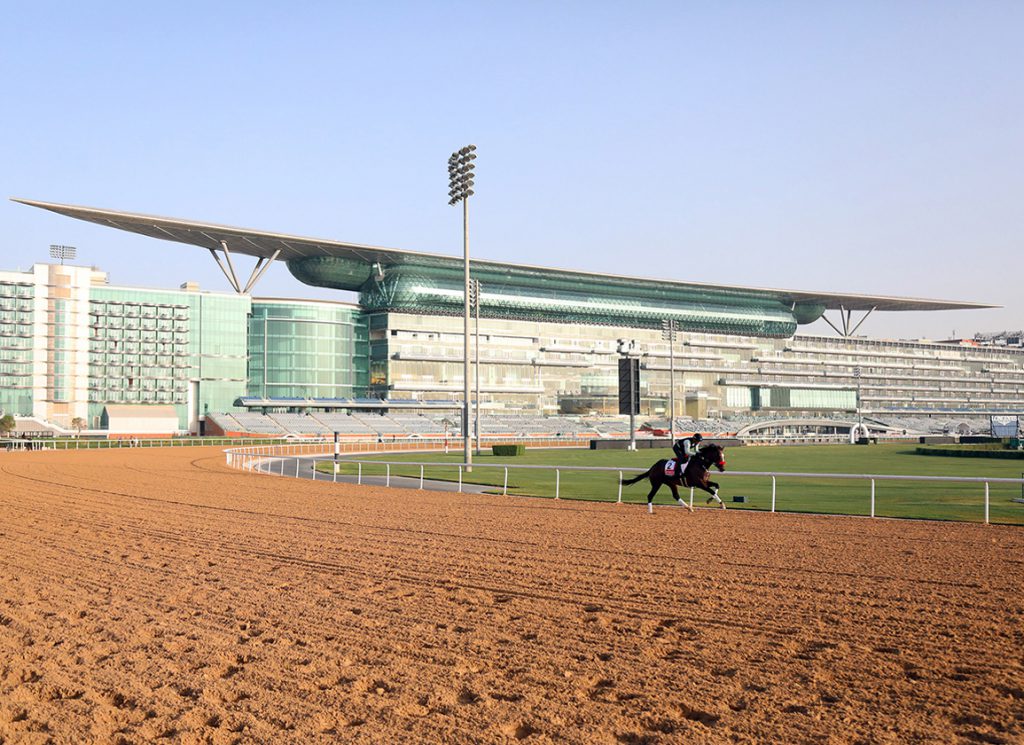
Meydan Racecourse, Dubai | Horsephotos

Apart from anything else, that should discourage any resentment of the way the synthetic route to the Derby is being promoted at Turfway. Far more profoundly, however, the Japanese example should prompt Americans and Europeans alike to retrieve the faith their predecessors showed in the transferability of genetic prowess, when they sent likes of Nasrullah (Ire) and various sons of Northern Dancer on reverse journeys over the ocean.

As I've said before, the final straw came in 2021 when no European or American farm was prepared to match Japan's interest in Poetic Flare (Ire) (Dawn Approach {Ire}) after he contested Classics in three different countries in 22 days (won the first, and was beaten a short head on heavy ground in the third having run in France six days earlier) before taking his form to a new level in the G1 St. James's Palace S. the following month.

In stupefying contrast, the most accomplished horse in the GI Twinspires.com Louisiana Derby has been given two months to soak up his success in the GIII Lecomte S. So, while this race, historically, would seem a far more congenial environment for the distribution of 200 starting points than Meydan or Turfway, arguably the points system is facilitating a deplorable contrast to the way Jim Bolger promoted the genetic wares of Poetic Flare.

I can't presume to say whether it's the trainers themselves, or the breeders who provide their raw materials, that bear most responsibility for the idea that a Derby colt should be deliberately confined to one start in January and another in March. (To be clear, this is a general complaint-we're not singling out this particular horse's trainer here. The juvenile champion has been handled in very similar fashion.) At least the Fair Grounds trials have all been extended in distance, giving these horses a little more conditioning on the rare occasions we get to see them, with striking recent dividends. But having often lamented how the exclusion of sprinters has diluted the Kentucky Derby, as the ultimate showcase for the ability to carry speed, I now fear that it is watering down the breed in other respects, too.

If they're going to stick with the points system-and clearly they are-then maybe it's time to consider some kind of weighting in favor of those who make the road to the Derby a more diverse and interesting place; and the Derby itself a more instructive test. Bonus points or tiebreak advantage, perhaps, to the horse that shows merit over a spectrum of distances and/or surfaces, or even just for each start made.

Crazy ideas, no doubt, in a world where people are more interested in making a fast buck than breeding a fast horse. So crazy, in fact, that they might even be quite sensible.

The post This Side Up: Missing The Point appeared first on TDN | Thoroughbred Daily News | Horse Racing News, Results and Video | Thoroughbred Breeding and Auctions.

Source of original post

Q & A With Breeders’ Cup President and CEO Drew Fleming

This past year was a good one for the Breeders' Cup. Returning to Keeneland for the first time since the pandemic year of 2020, the event generated a global wagering total of $189.1 million, which set a record, 3.4% higher than the previous mark. The Breeders' Cup also produced big numbers when it came to the total economic impact for Keeneland, Lexington and the surrounding community. It was announced Friday that a survey conducted by University of Louisville Economics Professor Thomas E. Lambert, Ph.D., showed that the Breeders' Cup was responsible for a total estimated economic impact of $81,846,897. It was the second-highest economic impact recorded in Breeders' Cup history, following the record set in 2017 at Del Mar. On the track, it was a spectacular two days of racing, highlighted by a memorable win by Flightline (Tapit) in the Breeders' Cup Classic.

How is it that the Breeders' Cup's momentum never seems to wane and what's ahead for racing's championship event? We posed those questions and more to Breeders' Cup President and CEO Drew Fleming.

TDN: The handle figures are particularly impressive as the Friday card yielded a record $66.1 million in handle and the Saturday card produced $122.9 million in handle, also a record. What has caused the growth in handle and what needs to be done to see that it continues to grow?

DF: We are very grateful to the horseplayers that have been supporting us and our Thoroughbred industry for a long time. At the Breeders' Cup, we take pride in the fact that we have the best horses in the world competing, which equates to really great betting races. Additionally, the Breeders' Cup, for many years, has been conducting its own global pool and we had 27 countries last year bet into the common pool. We had an additional six countries betting separately. One of the things that the company continues to invest in, not only in time but capital, is in the awareness of the Breeders' Cup as a whole. We felt we ran an effective awareness campaign last year, which caused an increased consumption of content as well as generating additional wagering dollars.

TDN: As they are proud of saying, Lexington is the horse capital of the world. There are racing fans all over the country, but it's just different in Lexington. How does that factor into the success of the 2022 Breeders' Cup?

DF: The moment you get off the plane in Lexington, Kentucky, horse racing is in the air. You go to a restaurant, a bar, a coffee shop, people are talking breeding, training, owning race horses. It's a way of life. The city was so welcoming. Unfortunately, in 2020 we weren't able to have fans due to the pandemic. We told the city we would be back as soon as we could. We were able to come two years later and deliver on that promise and they could not have been more thankful. The hospitality was everywhere. People were thrilled to have fans back and were also very thrilled to have the World Championships back in Lexington and to be able to showcase our industry.

TDN: The 2020 numbers aren't applicable because of the pandemic. Before that, the last Breeders' Cup at Keeneland was in 2015. The economic impact numbers from 2015 to 2022 increased by 27.8%. What was different about 2022 versus 2015 that the number increased the way that it did?

DF: A couple of things played a role. The brand and the demand for the Breeders' Cup continues to grow. Last year, we had people from all 50 states purchase tickets as well as 18 countries. Because the brand continues to grow we continue to see investment not only in the Breeders' Cup but in the surrounding areas when we are there.

TDN: It's not just Lexington. The entire state of Kentucky is horse-crazy and Louisville is also a great racing town. We haven't seen the Breeders' Cup at Churchill Downs since 2018 and it is not scheduled for there either this year or next. Is there any reason for that and what is the status of the event returning to Churchill Downs?

DF: Churchill is a great partner and we enjoy working with them and had a very successful Breeders' Cup there in 2018. Normally, we don't talk about future host sites until we have made a host site announcement. With the impact and the success of the past few times we have been in Kentucky, I anticipate that shortly in the future we will be back in Kentucky.

TDN: You had a superstar in the Breeders' Cup this year in Flightline. What impact did he have and can you address both the business aspects of the event and the excitement level that he brought to the event. Fifty years from now, people will still be talking about his win in the Classic.

DF: NBC compared Flightline's performance to Secretariat. Any time you have a horse like that there will be increased interest, not only for the Breeders' Cup but for the sport as a whole. It was amazing to see him deliver in the horse capital of the world. Being a hometown boy, seeing him come around the turn and the energy he generated was just amazing. It's something I will remember for the rest of my life. One thing about the Breeders' Cup that we are so proud of is that we know we're going to have the best horses in the world competing. In 2015, we had American Pharoah, who was the first 'grand slam' winner. That was also amazing. You feel humbled to be a part of that. As far as a monetary impact, that's hard to quantify. But we knew with him there would be increased interest and that was evident when he came into the paddock. It was like the Beatles were coming on stage.

TDN: Flightline aside, what were some of your favorite moments from this Breeders' Cup?

DF: There was not a dry eye in the house when Cody's Wish won. That was such a tremendous and compelling story. It's great when racing can tell feel-good stories like that. It was also great just having the fans come back after we couldn't have fans in 2020.
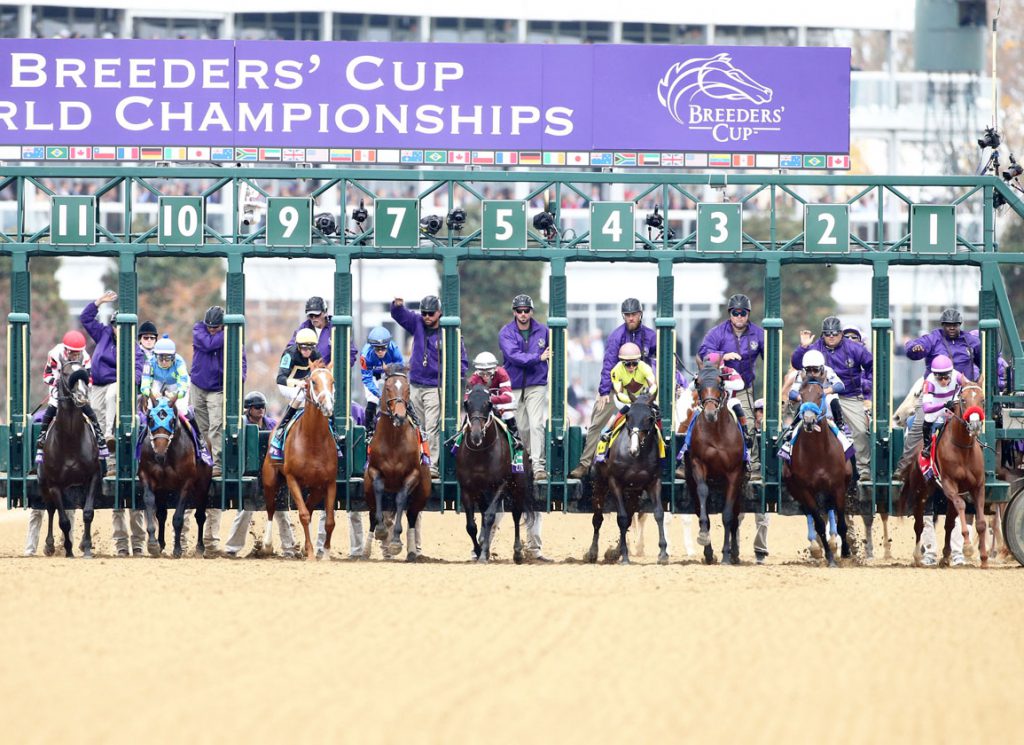
The horses break from the gate in the Dirt Mile | Coady

TDN: The Breeders' Cup Festival has become a big part of the whole experience. It's not just two days anymore. You have several events leading up to race day. Can you tell us a little bit of the history of this and how much has the Festival helped when it comes to things like economic impact?

DF: In addition to having the two best days of racing, the Breeders' Cup is a celebration of equestrian life. Like most major sporting events across the globe, it's important to have a festival component so that fans can come and see what a beautiful area the event is taking place in, be welcomed, have great hospitality and celebrate the equestrian lifestyle. We want them to walk away and say, 'Wow, not only was that two great days of racing, but it was a wonderful vacation, a wonderful experience and I want to come back.' In any of the cities that we are in, we work with the locals to develop that festival and to highlight key aspects of the region to our visiting guests.

TDN: NYRA is trying to get a loan from the state so that it can refurbish Belmont Park. You are on the record saying that if this gets done the Breeders' Cup would love to come back there. Your thoughts on a return to New York?

DF: We're incredibly supportive of NYRA and we will support any redevelopment at Belmont. We have a great relationship with the executive team at NYRA. I am having dinner Wednesday night in New York with (NYRA CEO) David O'Rourke. We wrote him a letter several months ago with the title, 'If you build it we will come.' The Breeders' Cup sticks to its word.

TDN: The Breeders' Cup has not been to Belmont since 2005, understandable because the current track is not a good fit when it comes to hosting an event like this. How much has the Breeders' Cup missed New York?

DF: We very much miss New York. There's so much energy up there and they are large investors in the game. We look forward to coming back. If they build it we will be there.

TDN: What can you tell us so far about what's in store for this year's Breeders' Cup at Santa Anita when it comes to new initiatives and things you can do to maintain the momentum?

DF: One of the challenging but also fun things when it comes to working for a company like the Breeders' Cup is that we are always innovating. We are continuing to move the ball forward on technological advancements in viewing and look forward to working with NBC, FanDuel and some other partners to continue to make sure that those who are watching have many different angles and experiences when it comes to watching the sport. Along with having great views of the San Gabriel mountains, we want to make sure that they have a world-class time when it comes to hospitality. We will continue to work to advance the culinary offerings and will have some exciting things to announce in the near future. We will also have some new ticket packages that we are putting the final touches on to make sure, again, that everyone has the best experience possible.

TDN: You brought up FanDuel. It's obvious that racing needs to find a way to attract the sports bettor and we need to have the FanDuels of the world offering betting on the Breeders' Cup and all racing on their sports betting platforms. Where do things stand when it comes to getting the sports bettors to follow and bet on the Breeders' Cup?

DF: Hats off to FanDuel for advancing the technology so there can be an aggregated wallet experience for the sports bettor. It's a tremendous marketing opportunity for our sport to be on the same bookshelf as the NFL, the NBA and MLB. Horse racing will be able to be cross-marketed from a wagering standpoint to those who are already wagering on other sports. This is one of the largest marketing opportunities we have had in a long time.

The post Q & A With Breeders’ Cup President and CEO Drew Fleming appeared first on TDN | Thoroughbred Daily News | Horse Racing News, Results and Video | Thoroughbred Breeding and Auctions.

Source of original post
Verified by MonsterInsights