Derby Prep Season is Upon Us; Get Tied On for Litigation

The Week in Review by T.D. Thornton

Oaklawn Park readjusted its series of prep races for the GI Kentucky Derby this year by moving back the date of its premier stakes, the GI Arkansas Derby, so it now sits five weeks out from the first Saturday in May instead of the traditional three. That changed the overall complexion of the prep-race picture so that the final three nine-furlong stakes that award 100 coveted Derby qualifying points to the winner will all take place Apr. 9.

This means that for the first time, there will now be a full four-week gap between the last significant prep races and the May 7 Derby.

The Apr. 16 GIII Lexington S. at Keeneland will technically be the final Derby qualifying race. But with only 20 points to the winner, that 1 1/16-mile stakes historically lures few A-list sophomores.

Taking the longer view, it's hard to believe we are only 40 years removed from when Churchill Downs used to card the Derby Trial S. on the Tuesday (four days!) before the Derby itself, and it served as a legitimate prep race.

Although the new four-week minimum spacing is in line with the current less-is-more approach to racing top-level contenders, the nearly full month without any meaningful (to the general public) events in the lead-up to America's most important horse race could prove problematic.

In theory, that gap should be filled with even more beauty shots of Thoroughbreds being bathed, and trainers will be increasingly challenged to come up with newly creative ways to say “I'm just trying to keep this colt happy and healthy” when repeatedly asked about the minutiae of their training methodologies.

But in all likelihood, there won't be any vacuum in the news cycle. That's because this spring, it's a solid bet that any expected void will be overtaken by litigation headlines related to whether or not Bob Baffert's trainees will truly end up excluded from the Derby.

Back in June, Churchill Downs, Inc. (CDI), barred the seven-time Derby-winning trainer from its portfolio of racetracks in the wake of now-deceased Medina Spirit testing positive for a betamethasone overage while winning the 2021 Derby.

Citing private property rights and Baffert's “repeated failures” regarding equine drug infractions (four other Baffert trainees also tested positive for medication overages roughly within the previous year of the ban, two of them in Grade I stakes), CDI said the Hall of Famer wouldn't be eligible to race in the 2022 or '23 Derbies; nor would his trainees be allowed to accrue qualifying points.

The purpose of this column isn't to debate whether or not Baffert's ban should be lifted or not. Rather, the intent is to provide a heads up about the barrage of non-horse-related court news that is odds-on to overshadow most pre-Derby talk about the equine athletes themselves.

Baffert currently trains 'TDN Rising Star' Corniche (Quality Road), the presumptive 2-year-old champion, plus his usual stacked stable includes a handful of other 'Rising Star' sophomores and graded stakes-winning colts. Had those horses been allowed to collect Derby points for their wins and placings so far, Baffert would be in his customary top-heavy position of dominance on the qualifying totem pole.

There appear to be three paths to Baffert-trained horses being allowed to run in the Derby: 1) CDI relents; 2) Owners of Derby aspirants currently conditioned by Baffert start sending those horses to other trainers, and 3) The issue winds up in court, taking the form of lawsuits in which obtaining a temporary restraining order (TRO) to allow participation in the Derby is more important than winning the overall case.

CDI relenting is the least likely outcome. Why would it? Its position seems legally defendable from the private property perspective, and the ban had to have been implemented only after the gaming corporation's layers of attorneys crafted, tweaked, and signed off on it.

The second option–essentially a high-stakes game of chicken–is a more likely outcome, but it too is not etched in stone. As the reality of a once-in-a-lifetime chance to own a Derby winner comes more clearly into focus and qualifying points grow more imperative, it remains to be seen how many of Baffert's clients reframe their reasoning from “we're loyal to Bob” to “circumstances have forced our hand.”

Litigation permeates all aspects of society and our sport is no different, so having Baffert's banishment hashed out in front of a judge seems like the most inevitable outcome.

In a separate case just last week, a federal court dismissed an anti-trust and anti-competition lawsuit filed by eight Standardbred owners who faced private-property exclusions from tracks in New Jersey and New York because of their ties with a banned trainer. But even though that case got tossed, the judge dismissed it “without prejudice,” signaling that those plaintiffs could initiate a subsequent suit with re-filed charges or take the matter to another court.

So along the same lines, just because CDI appears to have a strong case, that doesn't preclude anyone who perceives they're being harmed by that ruling from challenging it. Courts in our country are generally reluctant to stand by and do nothing when “my livelihood is being yanked away from me” types of arguments are presented, and when corporate entities try to assert broad control over individuals, judges are usually receptive to at least hearing out the so-called little guy.

Given that framework, you can understand why Baffert has yet to challenge CDI's banishment in court. Why try to litigate relatively early in the process when it would be to Baffert's advantage to wait until we're right on the cusp of the Derby, when he could claim that the alleged harm from the ban is at its most imminent? Again, he doesn't even have to argue well enough to win the overall case–just well enough to convince some judge somewhere to grant a TRO that puts CDI's exclusion on hold while the parties duke out a final verdict.

Conceivably, that application for a TRO could even include a request for the judge to order CDI to retroactively tally up the non-awarded qualifying points as if Baffert's horses had earned them all along. The argument could be made that such an order would cost CDI nothing in terms of money–they're just qualifying points after all. There's no hard-and-fast legal rule of what a petitioner can and cannot ask for in a TRO.

Then again, that angle might open yet another Pandora's Box. What if Baffert has three colts who suddenly get ruled eligible to run in the Derby based on a recalculation of points, but other owners whose horses get nudged out of the starting gate separately sue because they were deprived of Derby berths by the very same order? The waiting during that four-week period in April and May will be tough enough on the connections of Derby horses without a constantly simmering debate over which horses legally “deserve” to start.

Right now, most of the discussion on this topic tends to focus on whether Baffert takes the matter to court. But he might not have to. If the individual owners of Derby-worthy colts ask for TROs on their own instead of having their trainer do so, it leaves the door open for them to try an angle of persuasion along the lines of, “Hey, we're just collateral victims caught in the legal crossfire between Baffert and CDI, and we're being robbed of our one and only opportunity to run in the Derby with our otherwise-eligible horse.” That might end up being more of a convincing tactic than forcing a judge to side with either Baffert or CDI.

The looming wild card in this entire scenario has to do with the inaction so far by the Kentucky Horse Racing Commission (KHRC) in issuing any sort of ruling pertaining to the event that triggered CDI's ban.

Medina Spirit's betamethasone positive has long since been confirmed by two KHRC accredited labs, and we're now nearly 250 days out from the race date when the alleged infraction occurred. No hearing has taken place (at least none that has been publicly disclosed), and in the months-long interim, the KHRC has already tested for, held hearings, and ruled upon other drug positives that have subsequently occurred at other race meets in the state.

Remember back in 2019, when Maximum Security got disqualified from winning the Derby for in-race interference? At that time, KHRC representatives repeatedly underscored how they officiate the Derby just like any other race. Clearly, based on how long the process has been stalled and dragged out, that is not what's happening with Medina Spirit's in-limbo drug positive.

It's not out of the realm of possibility that the 2021 Derby won't get fully adjudicated before the 2022 Derby is run. And that lack of a KHRC ruling could factor in favor of Baffert or any ownership entity that decides to challenge CDI's Derby exclusion in court.

The post Derby Prep Season is Upon Us; Get Tied On for Litigation appeared first on TDN | Thoroughbred Daily News | Horse Racing News, Results and Video | Thoroughbred Breeding and Auctions.
Source of original post

Casey Ramage Named Vice President Of Marketing, Partnerships For Churchill Downs, Kentucky Derby

Churchill Downs announced today that Casey C. Ramage has been named Vice President of Marketing and Partnerships for the famous racetrack. In this role, Ramage will be responsible for establishing the brand strategy for the property and the Kentucky Derby while leading the marketing and partnerships teams. She will serve as the primary liaison with all external agencies to ensure consistency across the brand and to guarantee alignment with the overall goals of Churchill Downs. Ramage will report directly to Mike Anderson, President of Churchill Downs Racetrack.

Ramage returns to Churchill Downs having previously served as Vice President of Branding and Licensing (2009-2012) and Senior Director of Marketing (2007-2009). During that tenure, she launched enduring Kentucky Derby week assets like Taste of Derby and the KentuckyDerbyParty.com platform, chaired the re-launch of Kentucky Oaks to focus on women and charity and was on the charter team responsible for establishing “The Road to the Kentucky Derby.”

“I'm thrilled to return to Churchill Downs and contribute to our growth as we prepare for Derby 150,” Ramage said. “The Kentucky Derby is an incomparable experience and I'm eager to work with our partners, the community and the team to build impact around this incredibly special institution and iconic tradition.”

Prior to assuming her current leadership role at Churchill Downs, Ramage developed brand vision for Champion Gaming as their Chief Marketing Officer. Her 17 years of extensive experience in marketing and public relations include Vice President roles at EdjSports and Brown Jordan Company. Ramage holds a B.S. in Business from the University of Kentucky and has earned an Executive Education from Wharton Business School.

“Casey brings a deep understanding of the Kentucky Derby brand and we are thrilled to welcome her back to Churchill Downs to lead these critical marketing and partnerships functions,” Anderson said. “She brings the ideal combination of experience, passion and emotional connection to usher this timeless brand into its 150th year.”

The post Casey Ramage Named Vice President Of Marketing, Partnerships For Churchill Downs, Kentucky Derby appeared first on Horse Racing News | Paulick Report.

Source of original post

Smaller, But Still Super: Eddie Kenneally

The concept of the super trainer is by no means a new phenomenon in horse racing, but the huge stables run by super trainers have undoubtedly changed the landscape of the sport in many ways, from the backside to the racing entries. Are super trainers bad for the sport?  Are there any benefits for an owner in using a “smaller” trainer? We asked these questions and more to a few trainers who may not be considered super trainers in terms of their stall numbers, but they have made the most of the horses they're given to build competitive racing stable over their careers. 

Growing up in Ireland, Eddie Kenneally's favorite day of the week was when his father would take him to visit their local steeplechase track. Now a multiple Grade I-winning trainer, Kenneally looks back and pinpoints those days at the track as defining moments in his life when he developed his love for the horse at a young age. After nearly 30 years of running his own operation, the Kentucky-based trainer has developed two million-dollar earners–2007 G1 Dubai Golden Shaheen winner Kelly's Landing (Patton) and 2016 GI Stephen Foster H. victor Bradester (Lion Heart). This year, he earned his 1,000th career victory and was represented by GI Bruce D. S. winner Point Me By (Point of Entry).


KP: How did you first get involved in horse racing?

EK: I grew up in Waterford in Ireland and my dad was a big fan of steeplechase racing. He would take us to the local races at least once a week. That's when I first got a liking for horses and racing. We grew up on a dairy farm and we always had some horses there that my dad would break and train, so I grew up riding from a very young age.

I was fortunate enough to get my first real job in the industry working for one of the leading pinhookers in Europe with Tim Hyde at Camas Park Stud. He has a great reputation and I spent a few years doing yearling prep and breaking for him. He was connected with Pegasus Stud Farm in Lexington so I was able to come here for a work experience program in 1987. I loved the Lexington area and decided that I wanted to stay. I worked at Pegasus for a year and then galloped horses for Rusty Arnold at Keeneland.

After I spent a year with Rusty, I had an opportunity to become an assistant for Tom Skiffington, who was one of the leading trainers in New York at the time. It was a great education and I learned a lot from him. Through the exposure I got as an assistant, I decided to start training on my own in 1993.

For the first few years, we started out pretty small. It took a while to get established. I was spending my summers in Kentucky and winters in New Orleans and we were holding at about 12 to 15 horses for the first six or eight years. The business wasn't growing as big as I had hoped and the success hadn't really happened as much as I had hoped.

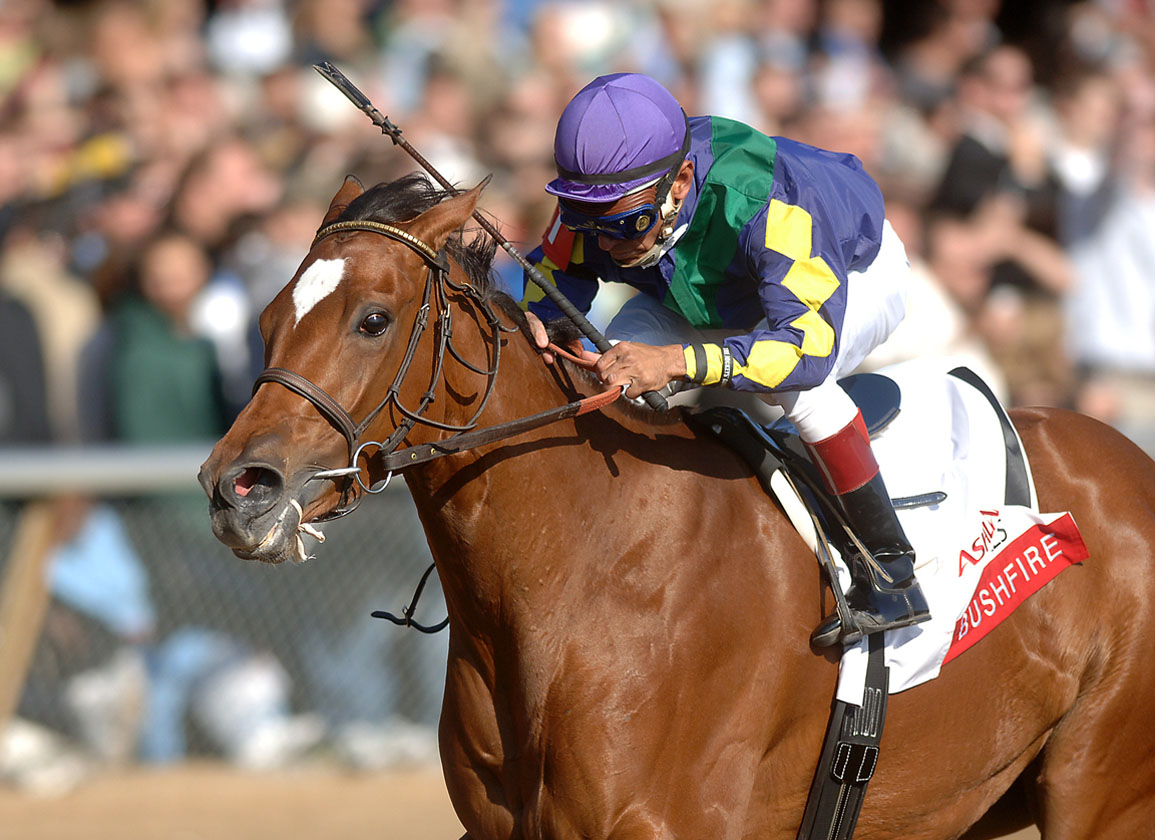
Eventually we had an opportunity to start working for Jack Lally of Summerplace Farm, who had a really nice horse named Kelly's Landing (Patton). That horse helped propel my business to the next level. At around the same time we started to train for Ron and Ricki Rashinski of Homewrecker Racing. They had a filly named Bushfire (Louis Quatorze) who won three Grade I races for us and was an Eclipse finalist as a 3-year-old. We still train for both of those clients today and they really helped get my career off the ground along with longtime client Joe Sutton, who had Grade I winner Bradester (Lion Heart) with us a few years ago.

KP: How many horses are normally in your stable?

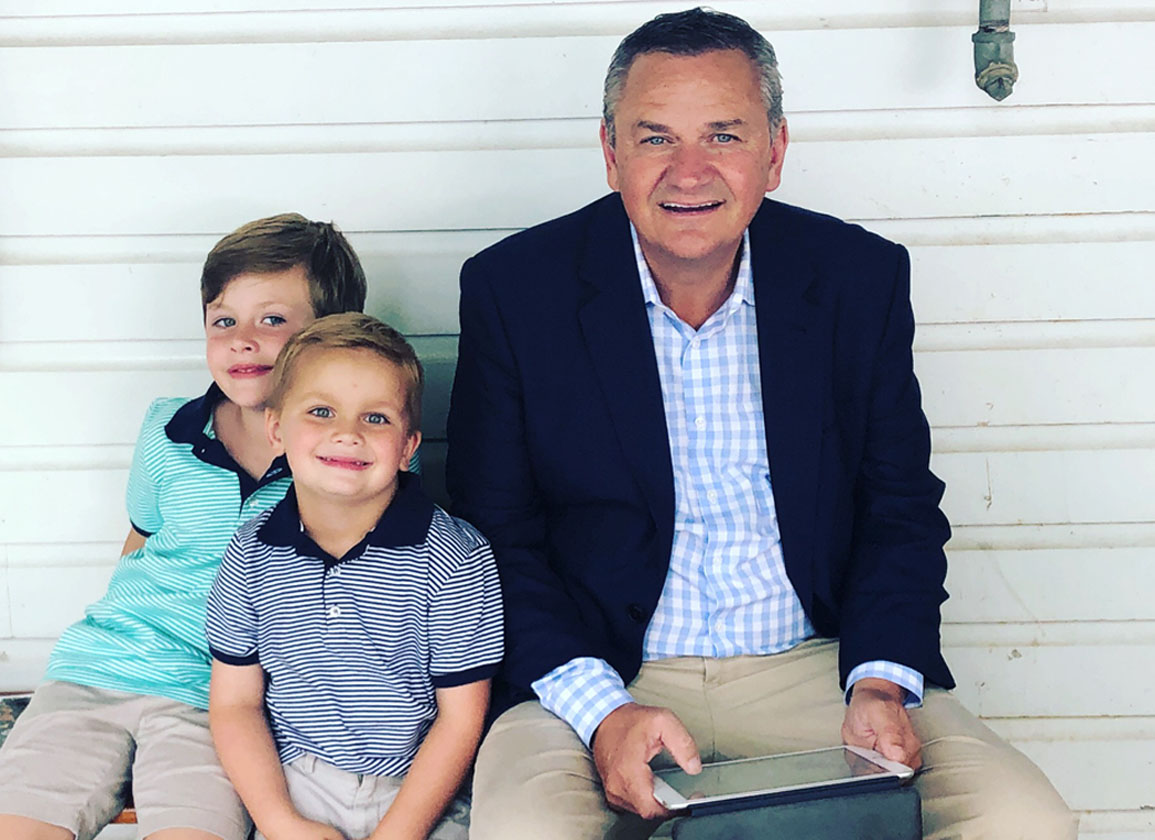
Eddie and Catherine Kenneally have two sons, Vincent and Liam | photo courtesy Eddie Kenneally

EK: We're at a comfortable number now because I am spending a lot of time with my two young kids. They play a lot of baseball so I have a lot going on with family. Our stable has been at about 50 head for the past few years. We have about 20 at Keeneland and 30 at Churchill Downs, so we have two divisions and two assistant trainers, Kelly Wheeler and Kevin Glodowski, who are a huge part of our operation.

Six or eight years ago, we would have had closer to 70 horses, but 50 is a good number for where I'm at right now. About five years ago, I decided to discontinue my New York division. I've scaled back a little bit and we don't spend nearly as much time in New York, partly because we decided to stay closer to home and also because the purses have increased dramatically in Kentucky. I probably could have more horses if I wanted to, but this number works for me.

KP: What do you believe makes your stable unique?

EK: I'm very hands on. I'm on the road a lot between Louisville and Lexington all year and I like to be at the barn every day. I look forward to going out every morning, but it's hard work and I think a person needs to stay on it. You can't get complacent and you need to be willing to put in the time to maintain it.

We've had some good people work for us in the past who have gone on to have their own success. Tom Morley is in New York now and Brendan Walsh spent a few years with us as well. I take pride in the fact that we've had some good people who have come through and go on to do very well.

KP: What do you believe are the benefits for an owner in using a “smaller” trainer?

EK: Obviously, the smaller trainers aren't going to win as many races because they don't run as many horses. So you aren't going to get as much exposure as with a guy who has 10 times more horses than I do. But I don't envy any of [the larger outfits].  I say good for them for having 300 or 400 horses. 50 works well for me and we have some great clients who appreciate what we do and we certainly appreciate them.

I think that the clients of super trainers might not get the same opportunities because for every condition, their trainer may have several horses and will probably only end up running one of them. For instance, if you have a turf maiden filly, the trainer might have 20 of those when the race comes up but they're only going to run one or two. The owners of the other horses will have to just wait for their turn. So it wouldn't work for me. I think we can give better customer service with a smaller operation like ours.

KP: Do you think super trainers are bad for the sport?

EK: A lot of the stuff that goes on in this game is out of our control. This is out of my control so it doesn't matter what my opinion is about it. If some guys have a lot of horses, then good for them.

KP: What do you enjoy most about your job?

EK: I enjoy waking up every morning and being hands-on with every horse in my barn, getting to know them and develop them. Being self-employed and having my own business allows me to have flexibility where I can spend time with my kids and my wife. Sure, I have to get up in the middle of the night to go to work, but I've been doing that a long time and I've adapted to it.

KP: What is the most frustrating aspect of your job?

One of the most frustrating things with the state of racing in this country at the moment is how penalties are not equal for violations of the same sort in different states. Violations and penalties are not implemented in the same way and the testing and rules are different in every state.

When we get under uniform rules, I'm hopeful that will take away some of the frustration and maybe establish a more level playing field because I do think it's not quite as fair as it could be. The penalties are not harsh enough for the people who can't abide by the rules and it's frustrating for someone like me who has never had a suspension to run against people who are multiple offenders and continue to bend the rules when there's no real incentive for them to stop.

Bushfire wins the 2006 GI Ashland S. and later goes on to claim the GI Acorn S. and GI Mother Goose S. | Horsephotos

KP: Do you think the Horseracing Integrity and Safety Act (HISA) would help achieve the uniformity you mentioned?

EK: I think uniformity would be great if it could be implemented, but I think it's going to be a tough process going from where we are right now to where that is up and running and achieving what it is set out to accomplish. In theory, it sounds good and hopefully we'll be able to get there, but it won't be easy.

KP: Earlier you talked about when you first set out on your own and your stable was very small. What advice would you have for younger trainers who are just getting started and hope to establish a stable like yours someday?

EK: The advice I would give to younger people who want to train is that the key is to try to get around someone who is successful that they look up to and admire. Spend the time working as an assistant for long enough that they can get enough contacts and experience before they begin to train. The game has changed a lot and I think communication is vital. For young people starting out, I would recommend to travel and go to another country to work in racing and see as much as you can before you start training on your own. Put in the time beforehand and it will benefit you down the road.

KP: What horse do you look back on as one you will always remember for having one of the biggest personalities? 

EK: The first horse that comes to mind is a filly called Girls Know Best (Caleb's Posse). I claimed her in partnership, which is something I do with a large portion of my stable, with Brian Chenvert. She won over half a million in purses after we claimed her, winning three stakes and placing in about seven others. She was just a filly who was rock solid and tried hard every time. She was around the barn for quite some time and was often on her toes. She was just a really fun filly to be around.

Another horse would definitely by Kelly's Landing. He was such a dude. He was very particular and definitely wasn't nice to everyone, but we go along great and he eventually became my stable pony when he retired from racing.

To nominate a trainer for this ongoing series, email katiepetrunyak@thetdn.com. General criteria: Multiple graded stakes-winning trainer, fewer than 300 starts this year, has trained for over 20 years and accumulated no more than approximately $50 million in career earnings. 

The post Smaller, But Still Super: Eddie Kenneally appeared first on TDN | Thoroughbred Daily News | Horse Racing News, Results and Video | Thoroughbred Breeding and Auctions.

Source of original post

TPA Installs New Officers for 2022-23

During the Turf Publicists of America award luncheon at the Global Symposium Tuesday, Dave Zenner and Tom LaMarra were re-elected as secretary-treasurer and vice-president, respectively, and Ryan Martin was elected as vice-president; his first time on the board.

Dave Zenner is a freelance publicist, a racing official at Hawthorne, and was the stakes coordinator at Arlington Park. Tom LaMarra holds a diverse set of positions including Communications Director for the Maryland Thoroughbred Horseman's Association, and Coordinator for the Mid-Atlantic Thoroughbred Championships. NYRA's Ryan Martin is a racing communications specialist. The new slate of officers was installed immediately and will serve a two-year term.

LaMarra, Zenner, and Martin join TPA President Wendy Davis and Vice-Presidents Najja Thompson, Kevin Kerstein, and Clare Crawford, each of whom was elected last year to serve for 2021-22.

The post TPA Installs New Officers for 2022-23 appeared first on TDN | Thoroughbred Daily News | Horse Racing News, Results and Video | Thoroughbred Breeding and Auctions.

Source of original post

Verified by MonsterInsights