Greg Ferraro Q&A, Part II: HISA Rollout “Inconsistent and Uneven”

After Sunday's announcement that The Stronach Group (TSG) will close at the end of the year its flagship Northern California racetrack, Golden Gate Fields, the company at the helm of the sale has gone silent, ignoring all of TDN's requests for comment this week.

To bring much-needed illumination on this seismic decision, the TDN spoke Thursday morning with Greg Ferraro, the California Horse Racing Board (CHRB) chairman.

Among several points raised, Ferraro shared his thoughts on the need for a fixed hub of racing in Northern California to secure the long-term viability of the state's racing industry, and for necessary renovations of Santa Anita's backstretch accommodation as a condition of licensure at the track.

Ferraro also expressed concern that TSG has not fully considered the potentially stark ramifications from Golden Gate's closure on the rest of the state's stakeholders, including the breeders, owners, trainers and other licensees.

“I have the feeling–I don't know–but I have the feeling since The Stronach Group hasn't put anything out there yet, that perhaps they don't have their plans fully developed,” Ferraro said.

Read part one of the interview here.

The CHRB chair, however, didn't just speak on Golden Gate Fields. Ferraro also shared his thoughts and concerns surrounding the ongoing rollout of the Horseracing Integrity and Safety Act (HISA)'s Anti-Doping and Medication Control (ADMC) program.

Part two of this interview has been lightly edited for brevity and clarity.

TDN: Let's shift gears and move on to the ongoing rollout of HISA's Anti-Doping and Medication Control program. Very broadly, how would you assess the job they've done so far?

GF: I would say it's inconsistent and uneven.

Their rules are somewhat complicated for people. Sometimes they haven't made things completely clear. But their application of the rules and their disciplinary actions have been uneven and inconsistent.

What the basic plan is, is to make a major cultural change in the way racing operates. And in order to do that, you have to have some trust within the industry. I don't think their initial steps have built any sense of trust. So going forward, the industry's a little reticent, let's put it that way.

TDN: What specifics can you point to when you say, 'inconsistent and uneven'?

GF: The incident with the joint injections where some trainers were fine and others weren't. Some horses were disqualified and others weren't. They withheld the names of violating trainers for a long time. Nineteen trainers.

Then there's the inconsistency in the enforcement of this provisional suspension [in the event of a positive for a banned substance]. That's been quite a concern to trainers because a trainer could be put out of business with basically no warning, the way they are going about it.

From a California point of view, we're always quite concerned about due process. [Trainer Ray] Handal is a perfect example. They suspended him. Then, once they looked into it, they found out it was contamination in the feed. It's happened before. The mill runs the cattle feed before they run the horse feed, and the horse feed is contaminated.

So here, this guy is knocked out of business for [nearly] a week, traumatized financially and emotionally, and then it's reversed.

[Note: Read more on the Handal situation here.]

Instead, if they had they just notified the trainer, investigated for a few days and had a hearing before [potentially] suspending somebody, it seems to me that's a fairer way to go. I think most of the trainers in California are used to that kind of system, and that's their feeling as well.

TDN: What you're saying is the current system of an automatic provisional suspension after a positive for a banned substance needs to be eliminated or modified?

GF: Yes. Given the American jurisprudence system of innocence until proven guilty and due process, I think it needs to be reorganized.

TDN: You mentioned joint injections. In California prior to HISA, the intra-articular corticosteroid fetlock injection rule mandated a 30-day stand down period prior to racing, and all intra-articular corticosteroid joint injections had a 10-day stand down before workouts. HISA's intra-articular joint injection rule requires a 14-day stand down before racing and a seven-day stand down before workouts. Do these weaker intra-articular joint injection rules concern you?

GF: Yes, that's a concern to us. It's a step backwards for California. We noticed once we put that rule in place in California, we dropped the musculoskeletal breakdowns dramatically. So, we think it's important.

We tried to get HISA to go along with [California's rules], but they wouldn't. We're still in discussions with them about it. We've cooperated a lot with HISA and we've been supportive of them. And I don't want to come across as being negative of HISA. But for California, you know, it's a bit of a step backward. It's a big expense. And we're not getting that much out of it because we've been ahead of the game nationally for quite some time now.

The corticosteroid issue is something they need to take another look at. Corticosteroids are not bad per se. But corticosteroids and high-speed works combined are not good at all.

Take any athlete that goes into training. Over time, their joint health degenerates. It's just part of what happens. You wear the surfaces down. You can't really slow that [process] down, but you can certainly speed it up. And one way to speed it up is to inject joints [with corticosteroids] in close proximity to high-speed works.

And so, what we've done in California–and what HISA needs to do–is impress upon the trainers that they need to discontinue this attitude of injecting to run or to work and look at corticosteroids as something that they use as a medical treatment combined with rest and other rehabilitative procedures.

Long-term, intra-articular corticosteroids should be eliminated completely from racing.
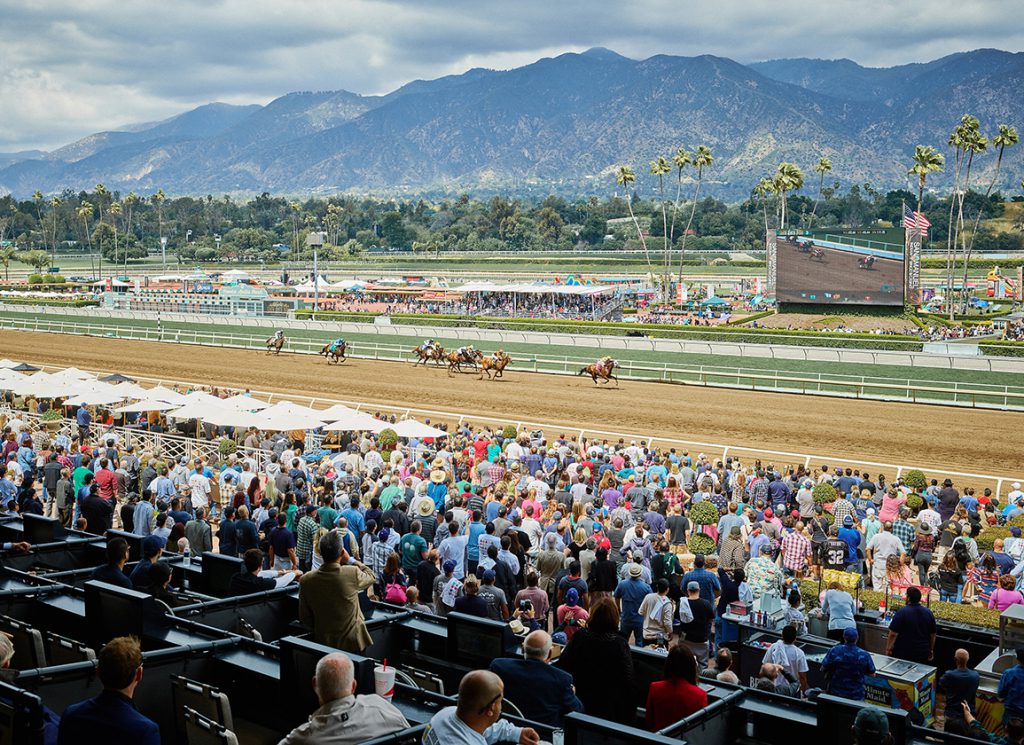
Santa Anita | Benoit

TDN: What argument does HISA give in pushing back against adopting California's stricter rules?

GF: You have to realize that much of the rest of the country had [weaker] rules [than California]. And so they say, 'we're getting so much pushback from the rest of the country that we can't do it.'

But what we've argued is to let California have its stricter rules and use us as a model. Then, at some point in time, you can go back to the rest of the country and say, 'well, California's had this rule in place and look what it's done. It's been beneficial. Why don't we adopt it nationwide?'

California is the point of the spear in terms of dealing with the public and the liability of horse racing. I think they should use us as a sort of leader in animal welfare and jockey welfare.

TDN: Do you think HISA's approach on this issue runs counter to their stated mandate of animal welfare and safety?

GF: Correct. What it takes is somebody with enough backbone to stand up to the pushback.

I mean, we got pushback in California, too. But we did what we thought was right and it's proven to be beneficial. Now, the horsemen look at us and say, 'well, we didn't like it in the beginning, but we realize it was worth the sacrifice.'

TDN: Are you worried California, after a sharp downward trend in equine fatalities in recent years, might now see an uptick in fatalities and injuries as a result?

GF: Absolutely. That's what our worry is.

TDN: Wow. Because of this, has the CHRB thought about the possibility of California opting out of HISA–at least until these fixes have been secured?

GF: No, we wouldn't do that. We're supportive of HISA overall. We think the concept of a standard rule nationwide is beneficial to the industry overall. These are growing pains. I think we're better off to work within [HISA]. Us pulling out is just not an option.

The post Greg Ferraro Q&A, Part II: HISA Rollout “Inconsistent and Uneven” appeared first on TDN | Thoroughbred Daily News | Horse Racing News, Results and Video | Thoroughbred Breeding and Auctions.

Source of original post

Greg Ferraro Q&A: Northern California Racing ‘Necessary’ For Racing’s Viability

Sunday's news that The Stronach Group (TSG) will close its flagship Northern California racetrack, Golden Gate Fields, at the end of the year has ripped through the state racing industry like a cannon shot.

It has left owners, breeders, trainers, grooms and a whole multitude of individuals whose livelihoods hinge around the sport scrambling for answers as they attempt to plot their futures in a vacuum of hard facts.

Instrumental in this confusion is the glaring dearth of public information coming out of TSG. Every day this week, the TDN has submitted a series of basic questions about the company's decision to sell Golden Gate Fields and its short- and long-term plans in California.

TSG has responded only once, on Monday, pointing to its Sunday statement–a statement scant on detail.

Seeking clarification therefore on the reasons behind, and ramifications from, Sunday's news, TDN spoke with Greg Ferraro, the California Horse Racing Board (CHRB) chairman.

Ferraro didn't just speak about Golden Gate Fields, but also shared his thoughts and concerns surrounding the ongoing rollout of the Horseracing and Integrity Act's anti-doping and medication control program (ADMC).

The HISA-related portion of this interview will be published in part two in Saturday's TDN.

The following has been lightly edited for brevity and clarity.

TDN: When did you first know that TSG was selling Golden Gate?

GF: The staff at CHRB heard about it last Friday. Somebody from the agency called with some questions about Golden Gate. [CHRB] staff said, 'well, why are you asking these questions?' And they said, 'Well, the state was in negotiations to make a deal on Golden Gate.'

Then we called The Stronach Group executives and said, 'Do you know what's going on?' They said, 'Yes, Golden Gate is going to be sold,' and asked us to keep it confidential until Monday when they intended to make an announcement. But obviously, it leaked and came out on Sunday.

TDN: Which state agency contacted the CHRB?

The California Business, Consumer Services and Housing Agency. [It presides] over several boards including Parks and Recreation and Natural Resources. We're one of them as well.

TDN: Is the end date for Golden Gate of December 2023 set in stone?

From what my sources told me yesterday, yes, that's set in stone. Any idea of extending dates beyond [Dec.] 18th is a no go.

TDN: Do you know what the motivating factors were in the decision?

No, I don't. Probably the ability to make a deal with the state. Developers have never been interested in the Golden Gate property because of the height limit [on developments]. You can't develop it to make any money.

TDN: Is that what it's going to be used for, a park?

It's not final yet, but I know that's what the negotiations are about.

TDN: Do you think that proposed Berkeley City Council ordinance had any sway in the decision?

I don't think so. Golden Gate has fought those battles before, and I think they would have fought it again.

TDN: What do you make of TSG's argument that this consolidation will reinvigorate racing at Santa Anita?

They claim that they're going to make capital investments in San Luis Rey and Santa Anita to improve racing and make up for the difference of the loss of training facilities in Northern California. I don't know how that's going to work. We'll have to wait and see what they propose.

TDN: Do you know what those capital improvements are?

No, I don't. They haven't detailed anything yet. I assume by our board meeting in August [16th] they'll have some kind of a proposal.

TDN: You haven't seen any detailed TSG proposal yet?

No, I haven't.

TDN: Does it concern you that they'd make such a momentous decision without simultaneously sharing with the public their vision for the future?

It could have been presented a little better, let's just say.

TDN: Are you worried that they don't have a detailed plan?

I'm worried that the proposal is not going to satisfy the needs of the Northern California horseman.

TDN: What do you make of CARF's proposal for Cal Expo to become a hub of racing in the north?

It's an interesting proposal. They're talking about Pleasanton, Santa Rosa and Cal Expo, with the idea that they could race maybe up to 10 months and have their headquarters at Cal Expo.

The problem is the harness [racing industry] has a 10-year contract for training at Cal Expo. So, I don't know where harness racing would go or how you would get around that. But I think it's worth looking at. It's something California horsemen and the breeders are certainly interested in.

TDN: How important is maintaining a substantial racing presence in Northern California for the future of California racing, in your opinion?

It's vitally important. If you just take a look at the foals bred in California, 35% of them race at Golden Gate Fields. That's a substantial number of horses. The thought of moving all these horses to southern California, there's only 20% of them that are suitable for down here. So, what are you going to do with the rest of the horses?

I think some sort of Northern California [circuit], or if it's not Northern California alternate track somewhere, would be necessary for the viability of racing.

TDN: If TSG's vision goes ahead and you see those horses from up north come down south to consolidate racing down there, could that facilitate the collapse of the breeding industry in California, which already isn't terribly healthy?

That's what the breeders are worried about. Yes.

TDN: Are you worried about it as well?

Fifty percent of the horses that race at Santa Anita are California-breds, and that's only 20% of the foal crop.

TDN: It sounds as though then you're leaning towards the CARF proposal.

I think it's interesting. I wouldn't say I'm leaning towards anything at this point. Myself and the rest of the board, we feel it's up to the industry to really solve this problem. We can't do it. The board can't do it. We can assist. We can approve any proposals that look interesting.

But I think at this point, the board would sit back and wait and see what the industry comes up with, what alternate plans they have, and then we can help guide or participate with the industry to solve the problem.

CARF's proposal is interesting. We haven't seen yet what The Stronach Group's proposal is. And maybe there are alternate proposals. Everything's happened so fast that we really haven't had time to dig into what the proper solution would be.

TDN: TSG has been quiet since the announcement, at least publicly. Could the CHRB hold an emergency meeting before Aug. 16 to force the company to divulge information that stakeholders need?

It's something we would consider, but there's no sense holding the emergency meeting if there's no information to come forward at that meeting. So, right now we're looking at different groups to see if they have their proposals consolidated enough to give us a chance to look at it.

I have the feeling–I don't know–but I have the feeling since The Stronach Group hasn't put anything out there yet, that perhaps they don't have their plans fully developed.

TDN: If indeed TSG doesn't have a solid plan, given how integral they are to the future of California racing, do you have concerns about their approach to conducting their business?

Of course. Yes.

The other issue is the money. Betting in Northern California, the money stays in Northern California. In Southern California, the betting stays in Southern California. But The Stronach Group is looking at these capital expenditures. They're going to request part of the Northern California money, and I'm sure that the other groups like CARF and perhaps the breeders are going be opposed to that. So, the real fight may be over where the funds go.

TDN:  Speaking of capital expenditures, I think a key thing for many trainers, and certainly the stable staff and the grooms, are the backstretch living conditions at Santa Anita. If indeed TSG succeeds in its plans, could a rehaul of the Santa Anita backstretch be a condition of their license?

Absolutely. It would be.

We're always concerned about the welfare of the backstretch workers given Santa Anita as it stands now. They couldn't absorb any more backstretch workers in those facilities. And so, something would have to be done.

The welfare of the backstretch workers is a primary concern for the board. As it is, where are those people going to go after Dec. 18th? I mean, the week before Christmas, they're out of work, you know? And, and so, that's quite a concern for us as to what's going to happen to those people.

TDN: What do you see when you plot California racing's future–especially a likely future without Los Alamitos. And what role could and should the CHRB play in shoring things up?

It's a concern to us. I mean, Los Alamitos is probably short-lived. If something happened to Doc. [Dr. Ed] Allred, I think that would be the end of Los Alamitos. That leads to Santa Anita and Del Mar. And given the value of Santa Anita's property and The Stronach Group's performance so far, you wonder how long Santa Anita could survive.

So yes, the CHRB is quite concerned about the continued viability of California racing. It's mostly in the hands of the industry. But we're certainly going to take any steps we can to help the industry survive and be healthy.

The post Greg Ferraro Q&A: Northern California Racing ‘Necessary’ For Racing’s Viability appeared first on TDN | Thoroughbred Daily News | Horse Racing News, Results and Video | Thoroughbred Breeding and Auctions.

Source of original post

CHRB Reports Safety Measures Continue To Protect Horses

California horse racing again experienced a significant decline in the number of horses that died from injuries suffered during racing and training at the state's facilities during the 2022-23 fiscal year that ended June 30, the California Horse Racing Board (CHRB) said in a press release on Saturday.

A total of 26 died last year as a result of musculoskeletal injuries that occurred while racing or training, compared with 39 the previous year. For context, approximately 30,000 race starts and far in excess of 100,000 workouts occur each year from 8,000 to 10,000 horses at CHRB regulated facilities.

“That's still too many fatalities, but it shows that all of the new regulations, policies and procedures that that we've introduced in cooperation with the industry have had a significant effect,” said CHRB Chairman Greg Ferraro. “Our efforts are focused primarily on preventable injuries, and that's what the numbers reflect. I don't know of any racing jurisdiction in the country that even comes close to matching this effort or result.”

In the interest of full transparency, the CHRB also tracks fatalities caused by any non-exercise-related catastrophic injury. The most common cause of death in this other group is gastro-intestinal diseases, such as colic, colitis, and enteritis, followed by respiratory disease. Unfortunately, the number of “other” deaths increased last year, and those 43 deaths, coupled with the 26 due to musculoskeletal injuries, brought the total to 69, or three more than the 66 from the previous year.

“I've considered several times the idea of not counting other deaths, the type that occur among horse populations anywhere in the world, including the popular riding stables and in the wild, but I've always decided that full transparency is the best way to go,” said CHRB Executive Director Scott Chaney.

Those 43 other deaths occurred despite care and treatment by on-site veterinarians and specialized equipment located in stable areas.

“Six of those horses were transported to the veterinary hospital at the University of California, Davis, as well as other local referral hospitals, where experts did their best to save them,” said Dr. Jeff Blea, the CHRB equine medical director. “Illnesses such as severe colic, advanced neurologic cases, and obscure medical conditions, sometimes just are not treatable, as animal and horse owners throughout the world know from personal experience.”

For further context, equine fatalities at CHRB-regulated facilities have declined by 54 percent since 2019, including the “other” category.


The post CHRB Reports Safety Measures Continue To Protect Horses appeared first on TDN | Thoroughbred Daily News | Horse Racing News, Results and Video | Thoroughbred Breeding and Auctions.

Source of original post

Ferndale Grandstand Deemed Unsafe For August Meet

The operators of the Humboldt County Fair in Ferndale, California, are scrambling for a solution after just finding out this week that an earthquake from six months ago so badly damaged the grandstand at the half-mile racetrack that county officials now won't permit the structure to be occupied for the six-day race meet Aug. 18-20 and 25-27.

Larry Swartzlander, who serves as both the executive director California Authority of Racing Fairs (CARF) and the director of racing for Ferndale, told the California Horse Racing Board (CHRB) during Thursday's meeting that plans are already underway to bring the grandstand up to code while also securing the use of tents as a backup so the races won't have to be scrapped.

“The county has said that the grandstand was not safe to conduct racing at the August meet,” Swartzlander said. “What has occurred since then? You  know, the position of Humboldt and CARF is very clear: We will race.

“The [fair's] board, I've talked to the president and the vice-chair [Thursday] morning,” Swartzlander said. “We've already identified a contractor that will do the work, and they're having a meeting later [Thursday] with the county to put the details together. And it will be completed by Aug. 1.

“I've already got my staff working on a contingency if it would happen that we couldn't use the grandstand, [and] everything could be moved to another location [on the property], so I don't see that as a concern.”

Swartzlander did not go into greater detail about the damage and the costs to repair it, and the CHRB did not press him on those issues prior to moving ahead and unanimously approving the track's license to conduct the meet. The board did, however, instruct Swartzlander to keep the CHRB informed on the status of the repair work.

Published reports this week in two publications that cover Humboldt County filled in some of the blanks that didn't get addressed at the June 29 CHRB meeting.

The Lost Coast Outpost reported June 28 that “an engineering firm surveyed the damage at the fairgrounds following the Dec. 20 earthquake, and found that though the stands can hold the weight of the people expected to sit upon it, it would likely crumble in the event of an earthquake.”

Quoting from a recently released county report on the damage, the Lost Coast Outpost stated, “the structural engineering inspection determined that the building currently appears adequate to support vertical loads, but not lateral (seismic) loads of the type that need to be taken into account for occupant safety. Even though there is a limited window of time where the structure might be occupied, the risk of doing nothing and allowing occupation is not acceptable.”

That story further estimated a $1-million cost for a short-term fix just to enable the fair to conduct its races with people in stands shored up by bracing, while a more permanent repair would take longer to complete and would cost in the neighborhood of $2.3 million.

The North Coast Journal reported June 27 that, “The announcement of the price tag was met with palpable dismay by the board. The association currently has $628,317 in its accounts [and that the] state Office of Emergency Services would only reimburse for either the temporary fix or the permanent one, but not for both.”

It's also an open question right now as to whether the association (which runs the fair) or the county (which owns the property) is responsible for making the call on the extent of the repairs and initially paying for them before applying for whatever emergency reimbursements might be available.

The county fair itself would be allowed to operate without fixing the stands, so long as they were cordoned off. But without the revenue from racing, the fair association is facing a losing financial proposition.

“Our structural engineer says that the risk of an earthquake during that period of time is very low, but if there were to be one during the fair, it would be catastrophic,” Tom Mattson, the Humboldt County director of public works, was quoted in the North Coast Journal as saying at a public meeting.

When asked at that meeting which entity would make the call on the extent of the repair work, Mattson said, “That's a political decision, not my decision.”

Asked to provide his recommendation, Mattson said, “My recommendation would be to do the long-term fix.”

Ferndale's survival as California's northernmost county fair racing outpost has faced multiple stressors over the past year.

Back on Nov. 15, 2022, police arrested the fair association's bookkeeper on charges of embezzlement, and the fair association's general manager and three long-time directors  also stepped down around the same time. The North Coast Journal reported in this week's story that the Federal Bureau of Investigation is now handling the case.

In March, the CHRB ruled that the 2023 Ferndale meet would once again have to run its second of two weeks of racing against overlapping competition from the commercial licensee Golden Gate Fields. Ferndale representatives have repeatedly told the CHRB in recent years that a second week of un-overlapped racing is required for any racing there to be viable. They have also noted that the fair plays an important role in supporting lower-level racing in the state, and have pointed out that Ferndale routinely outdraws Golden Gate in attendance.

Beyond this week's unexpected news about the grandstand being declared unfit for occupancy, the North Coast Journal additionally reported that the stands “have also been vandalized recently, with people breaking monitors and leaving broken glass behind.”

Just prior to the CHRB vote to green-light the August meet, CHRB vice chair Oscar Gonzales told Swartzlander, “I do know you guys can improvise so that if the grandstands are not able to be used, [there are] other areas of the premises [where] patrons can be at in a safe manner. But we have to really rely on the county's expertise, and we always put safety first…

“I remain a supporter of Humboldt racing, so we'll be looking forward to getting the 'all clear' sign if that's the case. And if not, the plans that will be made to ensure that people are safe,” Gonzales said.

The post Ferndale Grandstand Deemed Unsafe For August Meet appeared first on TDN | Thoroughbred Daily News | Horse Racing News, Results and Video | Thoroughbred Breeding and Auctions.

Source of original post

Verified by MonsterInsights