The Land of the Setting Sun?

It felt like a literal solstice, a moment marking our transition to a different phase in the alignment of the Thoroughbred firmament. Because the meteoric performance of Equinox (Jpn) in Dubai on Saturday night, as highlight of another momentous evening for Japan, left rival breeders everywhere speechless. Perhaps, they wondered next morning, this was what was meant by a Sunday silence.

There are so many lessons in Japan's accession as a dominant influence on the 21st Century Thoroughbred, a trend that even the most obtuse and parochial of us cannot fail to observe, that it's difficult to know where to start.

When, for instance, will those industries clinging to a historic presumption of superiority–either side of the Atlantic–acknowledge what's happening sufficiently to reverse the traffic and start importing Japanese racehorses to stand on their own farms? Not for a while yet, you suspect, given that you would need to be confident of commercial demand to make the necessary investment viable. And for now it seems an adequate challenge to get traction even for those few representatives of Japanese bloodlines to have at least showcased their wares before a domestic audience.

But it's not as though this latest tour de force–featuring winners of the biggest prize on both surfaces at Meydan, as well as the first four in the G2 UAE Derby–was founded simply in stallion trade. The Japanese have certainly embraced many sires renounced as uncommercial by breeders in Kentucky and Europe. But that investment has been consistent with a holistic strategy, embracing the right mares, the right land, the right horsemanship.

Obviously the Japanese have enjoyed advantages, in terms of colossal gambling and government engagement. But all these unmissable moments of vindication, as in Riyadh last month or at the 2021 Breeders' Cup, have completed patient years of groundwork, during which Japan was sometimes viewed as a convenient, nearly gullible receptacle for the cashing out of unwanted genetic goods.

As commercial breeding elsewhere has become ever more focused on the sales ring, the Japanese meanwhile persevered with a longer game. Selection was predicated on the kind of assets, like stamina and durability, that are treated with something between dread and derision in other markets. But now we see the results.

Certainly nobody can remain deceived that this has all happened because of a single, game-changing roll of the dice on Sunday Silence. And if Japan did not get here overnight, nor can those industries now being challenged expect to retrieve the situation other than by patient increments.

Let's take G1 Dubai World Cup winner Ushba Tesoro (Jpn) as a snapshot. He is, admittedly, by a grandson of Sunday Silence. But the dam of Orfevre (Jpn) is by a sire, Mejiro McQueen (Jpn), who not only represents the fourth generation of a sire-line transplanted by the arrival from Europe of Partholon (Ire) in 1963, but also extends an indigenous maternal line through eight generations of Japanese mares to one foaled as long ago as 1909.

Partholon, by the way, ended up as Japan's champion sire on three occasions, having won the Ebor H. at York, over 14 furlongs as a 3-year-old. The die was cast. Because if we're going to give due credit to the bottom line, then here's a question that I should like to ask any American breeder mating a mare this spring.

Say the resulting foal becomes champion sophomore or maybe, instead, he could win the second richest race on the planet. Either would sound pretty good, right? Well, what do the last two horses to reach this pinnacle of dirt racing, Epicenter (Not This Time) and Ushba Tesoro, have in common?

The answer is that the third dam of both is a daughter of Ela-Mana-Mou (Ire), one of the most redoubtable stamina influences in the recent history of European grass racing. Ela-Mana-Mou's two best-known sons were Double Trigger (Ire), who swept the Cup races in Britain including the G1 Ascot Gold Cup at 20 furlongs, and Snurge (Ire), whose Classic success came over 14 in the G1 St Leger.

Now, I'm not suggesting for a moment that this single, attenuating strand specifically accounts for the excellence of Epicenter and Ushba Tesoro over two turns of dirt. But what I do believe is that this forgotten horse–virtually unknown in Kentucky, presumably, beyond its substantial community of emigre horsemen of a certain age–is typical of the overall “branding” today enabling Japanese runners to carry their speed so unanswerably.

Look at Panthalassa (Jpn) (Lord Kanaloa {Jpn}), who switched from turf to win the world's richest prize in Riyadh last month. Hardly anything in his pedigree indicated a likely proficiency on dirt, but it is saturated (sprinting sire notwithstanding) with toughness and stamina. His first two dams are by Montjeu (Ire) and High Estate (Ire). One has had a record impact at Epsom, the other was by a Derby winner and sired one himself. The next dam was admittedly by a sprinter, but out of a mare by another undiluted source of staying power in dual Arc winner Alleged.

This kind of thing is not confined to the Japanese, of course. The World Cup runner-up Algiers (Ire) (Shamardal) admittedly represents a versatile sire-line, but there are deep wells of stamina in his pedigree. His dam is by Platini (Ger) (Sumuru {Ger}), a horse that once outstayed even Ela-Mana-Mou's son Snurge. (And Shamardal himself requires us to reflect how his dam's half-brother Street Cry {Ire} became a Classic influence on dirt, as they are out of an G1 Irish Oaks (12f) winner by the ardent stayer Troy {GB}).

Certainly Ushba Tesoro himself is laden with staying influences. His sire Orfevre is a Japanese St Leger winner (15f) by Stay Gold–another son of Sunday Silence who majored in soundness (still showing top-class form at seven) and stamina (stayed two miles). And his dam is by King Kamehameha (Jpn), whose fertility as a source of brilliance was hardly impaired by his Classic success over 12 furlongs. She was out of one of the more accomplished runners (couple of graded stakes wins on turf after export to Bobby Frankel) by Septieme Ciel, a generally disappointing stallion by Seattle Slew. Ela-Mana-Mou then enters the picture as a mate for a daughter of the imported Argentinian sire Pronto (Arg).

We should not be surprised, then, if the Ela-Mana-Mou mare who features as Epicenter's third dam should be out of a daughter of Busted (GB), whose two best sons Bustino (GB) and Mtoto (GB) both sired winners of the G1 Ascot Gold Cup over 2 1/2 miles. (Nor, if anyone is inclined to complacency in a commercial industry that can produce Flightline, should we neglect that the champion's second dam is by Roberto's son Dynaformer, while his sire's granddam is by Nijinsky).

More predictably, perhaps, similar motifs occur just as prominently behind Equinox, sensational winner of the G1 Dubai Sheema Classic. His sire Kitasan Black (Jpn), a grandson of Sunday Silence, twice won a Grade 1 over two miles; while his damsire King Halo (Jpn) (out of a mare by Sunday Silence's sire Halo) is by Dancing Brave, one of the all-time European greats yet soon written off to Japan as a stallion. Equinox's granddam is herself by a rejected Arc winner in Tony Bin (Ire), while the next dam is by a dual winner of the race in Alleged.

We just found Alleged, remember, lurking behind Panthalassa as well. And while his own background–by Hoist The Flag/inbred 3×4 to War Admiral–may take us into the mists of time, it also takes us right to the crux of the matter. Because dirt racing is about carrying speed, and that is itself a form of stamina.

Interestingly Tony Bin also provides the second dam of UAE Derby winner Derma Sotogake, who must be getting his stamina from the bottom side as a son of the imported American sprinter Mind Your Biscuits. Derma Sotogake's damsire is Sunday Silence's son Neo Universe, a Japanese Derby winner beaten a length in the 15-furlong St Leger. The way he destroyed his pursuers last Saturday permits no doubt that Derma Sotogake has the maternal wherewithal to carry his sire's speed and–setting aside last year's farcical tactics from the two UAE Derby graduates–nobody should be complacent that the GI Kentucky Derby itself can be secure from Japan's expanding hegemony.

Evidently there is no guarantee that Equinox will be given the chance to slake a rather longer thirst in the Arc, which is a pity given the Longchamp winners seeding his family, not to mention the fact that his own sire contributed two of Japan's serial near-misses in the race.

But just imagine what would happen if the Japanese suddenly felt sorry for the industries they compete with, and donated Equinox to Kentucky or Britain. Would the commercial breeders of the Bluegrass, anxious to catch the eye of an Ocala pinhooker, come flocking? With his background, I doubt it. What, equally, would Nathaniel (Ire) tell Equinox about the kind of harem a proven Classic influence can expect in Britain? (That's the same Nathaniel who added the latest Epsom Derby winner to a resume already including Enable (GB), yet is still only charging £15,000 and increasingly relying on jumps mares).

And there's your answer, really. If we want to recover the ground lost to Japan, then we need to understand just what these rampant Japanese racehorses are digging into: seam after seam of soundness and stamina. Of course they need brilliance too. That's where the whole skill of breeding comes in, maintaining that cutting edge of speed. Yet one after another of these horses have been sired, not by recent imports, but by horses that have been developed in the Japanese program, many of them holding their form year after year, generally on turf and over what many would consider appalling distances.

Yes, we must reiterate the shrewd selection of mare imports over the years. The $750,000 paid for Ushba Tesoro's granddam, for instance, doubtless owed little to her sire Septieme Ciel and rather more to the fact that had managed to add more black-type to the famous Claiborne clan of her fourth dam Bourtai.

But what kind of reception, honestly, would Deep Impact (Jpn) himself have had in Lexington, as a winner over two miles? American breeders didn't want his sire, but did they ever learn that lesson?

At least commercial breeding in Kentucky still aspires to a second turn on the first Saturday in May. But while I'm always recommending dirt sires as a way–and a proven way–to transfer a speed-carrying capacity to European Classic racing, the Japanese are meanwhile reminding us that the reverse also applies: that there's nothing like grass stamina to help keep up the gallop on dirt.

As I acknowledged at the outset, it would be commercially difficult to export an elite runner from Japan to stand in Europe or America. But now that they are taking their excellence onto a global stage, perhaps that kind of gamble may gradually start to inch a little closer.

In the meantime, only a few horses have had the chance to introduce Japanese blood to domestic racing theaters elsewhere. Unsurprisingly, the most promising experiment to date is the work of John Magnier and his partners in Coolmore, who outcrossed one of their many top-class daughters of Galileo (Ire) to Deep Impact (Jpn) and produced Classic winner Saxon Warrior (Ire)–whose debut crop includes GI Breeders' Cup Juvenile Turf scorer Victoria Road (Ire). Saxon Warrior's fee this spring is up to €35,000 from €20,000, and the same operation is now hoping to repeat the process with Auguste Rodin (Ire) (Deep Impact {Jpn}). The strong favorite for the Epsom Derby is similarly out of a high-class Galileo (Ire) mare, and actually won the same juvenile Group 1 as Saxon Warrior last fall.

Not many people, however, have either the resources or the imagination to emulate this kind of thing. As things stand, a Japanese sire-line entered the North American general sires' list in 2022 only at No. 92 through Silent Name (Jpn), who offers Ontario a direct conduit to Sunday Silence. And we do also have Yoshida (Jpn), a grandson of Sunday Silence, about to launch his first juveniles. His Grade I wins on both turf and dirt were due reward for the rare enterprise shown by WinStar in importing a Japanese yearling to race in the U.S.

Sunday Silence's son Hat Trick (Jpn) was a noble earlier experiment, and Gainesway bought into the project after he pulled Group 1-winning juvenile Dabirsim (Fr) out of his hat as a freshman. (The same farm, to its credit, evidently also liked the fact that Karakontie (Jpn) is out of a Sunday Silence mare.)

Unfortunately Hat Trick dwindled to 19 mares at $5,000 in his final spring in Kentucky, before ending his days in Brazil. Dabirsim did meanwhile produce Royal Ascot winner Different League (Fr), an €8,000 weanling who advanced her value two years later to 1,500,000gns. That sum, incidentally, was ventured by another far-sighted Coolmore partnership, co-signed by M.V. Magnier and White Birch Farm.

Obviously it was always unlikely that such rare samples of Japanese blood should happen to prove as potent as the best of their gene pool. But who knows? Perhaps we will gradually learn a little humility. Perhaps we can admit to ourselves that, where Japan has strengthened over the past couple of generations, is precisely where we have allowed things to slide.

As always, there's an ultimate consolation to the way this business functions. But eventually the people with the daring and the imagination to take a harder path, and heeding Japan's example, will be waiting for your horse on the racetrack.

We're all being taught a pretty deafening lesson here. That doesn't mean many people are necessarily going to pay attention, even if the Japanese now plunder the Kentucky Derby itself. But it'll be pretty obvious, in a few years' time, just who was listening, and taking notes, before going away to complete their homework.

The post The Land of the Setting Sun? appeared first on TDN | Thoroughbred Daily News | Horse Racing News, Results and Video | Thoroughbred Breeding and Auctions.

Source of original post

Fanduel Lands Breeders’ Cup Extension

The FanDuel Group, home of FanDuel Sportsbook, FanDuel Racing, FanDuel TV and TVG.com, and Breeders' Cup Limited have reached a multi-year agreement to extend the platform's status as the Official Wagering Partner of the World Championships.

FanDuel will retain its status as the Official ADW Partner, Official Sports Wagering Partner, Official Fantasy Sports Partner, and Official Mobile Casino Partner of the Breeders' Cup. With the 2023 renewal of the World Championships set for Nov. 3-4 at Santa Anita Park in Arcadia, California, FanDuel will continue to serve as title partner of the $2 million FanDuel GI Breeders' Cup Juvenile and the $2 million FanDuel GI Breeders' Cup Mile at Santa Anita Park. This agreement will continue for Del Mar 2024.

“FanDuel is one of the most innovative online wagering companies in the world,” said Drew Fleming, President and CEO of the Breeders' Cup. “We're delighted to be extending and strengthening our partnership with them and appreciate their continued investment in Thoroughbred racing in the United States. The exposure FanDuel has given to the Breeders' Cup has been critical to the growth of our organization and the Thoroughbred industry at large.”

FanDuel TV will continue to produce and broadcast The Breeders' Cup Players' Show, a live wagering-focused telecast of the World Championships, in addition to its coverage of Breeders' Cup Challenge races and other special programming in the run-up to the Championships.

Andrew Moore, General Manager of Racing for the FanDuel Group said, “The FanDuel Group is committed to investing in and growing the audience for horse racing and our partnership with the Breeders' Cup is a lynchpin of that commitment.”

The post Fanduel Lands Breeders’ Cup Extension appeared first on TDN | Thoroughbred Daily News | Horse Racing News, Results and Video | Thoroughbred Breeding and Auctions.

Source of original post

Q & A With Breeders’ Cup President and CEO Drew Fleming

This past year was a good one for the Breeders' Cup. Returning to Keeneland for the first time since the pandemic year of 2020, the event generated a global wagering total of $189.1 million, which set a record, 3.4% higher than the previous mark. The Breeders' Cup also produced big numbers when it came to the total economic impact for Keeneland, Lexington and the surrounding community. It was announced Friday that a survey conducted by University of Louisville Economics Professor Thomas E. Lambert, Ph.D., showed that the Breeders' Cup was responsible for a total estimated economic impact of $81,846,897. It was the second-highest economic impact recorded in Breeders' Cup history, following the record set in 2017 at Del Mar. On the track, it was a spectacular two days of racing, highlighted by a memorable win by Flightline (Tapit) in the Breeders' Cup Classic.

How is it that the Breeders' Cup's momentum never seems to wane and what's ahead for racing's championship event? We posed those questions and more to Breeders' Cup President and CEO Drew Fleming.

TDN: The handle figures are particularly impressive as the Friday card yielded a record $66.1 million in handle and the Saturday card produced $122.9 million in handle, also a record. What has caused the growth in handle and what needs to be done to see that it continues to grow?

DF: We are very grateful to the horseplayers that have been supporting us and our Thoroughbred industry for a long time. At the Breeders' Cup, we take pride in the fact that we have the best horses in the world competing, which equates to really great betting races. Additionally, the Breeders' Cup, for many years, has been conducting its own global pool and we had 27 countries last year bet into the common pool. We had an additional six countries betting separately. One of the things that the company continues to invest in, not only in time but capital, is in the awareness of the Breeders' Cup as a whole. We felt we ran an effective awareness campaign last year, which caused an increased consumption of content as well as generating additional wagering dollars.

TDN: As they are proud of saying, Lexington is the horse capital of the world. There are racing fans all over the country, but it's just different in Lexington. How does that factor into the success of the 2022 Breeders' Cup?

DF: The moment you get off the plane in Lexington, Kentucky, horse racing is in the air. You go to a restaurant, a bar, a coffee shop, people are talking breeding, training, owning race horses. It's a way of life. The city was so welcoming. Unfortunately, in 2020 we weren't able to have fans due to the pandemic. We told the city we would be back as soon as we could. We were able to come two years later and deliver on that promise and they could not have been more thankful. The hospitality was everywhere. People were thrilled to have fans back and were also very thrilled to have the World Championships back in Lexington and to be able to showcase our industry.

TDN: The 2020 numbers aren't applicable because of the pandemic. Before that, the last Breeders' Cup at Keeneland was in 2015. The economic impact numbers from 2015 to 2022 increased by 27.8%. What was different about 2022 versus 2015 that the number increased the way that it did?

DF: A couple of things played a role. The brand and the demand for the Breeders' Cup continues to grow. Last year, we had people from all 50 states purchase tickets as well as 18 countries. Because the brand continues to grow we continue to see investment not only in the Breeders' Cup but in the surrounding areas when we are there.

TDN: It's not just Lexington. The entire state of Kentucky is horse-crazy and Louisville is also a great racing town. We haven't seen the Breeders' Cup at Churchill Downs since 2018 and it is not scheduled for there either this year or next. Is there any reason for that and what is the status of the event returning to Churchill Downs?

DF: Churchill is a great partner and we enjoy working with them and had a very successful Breeders' Cup there in 2018. Normally, we don't talk about future host sites until we have made a host site announcement. With the impact and the success of the past few times we have been in Kentucky, I anticipate that shortly in the future we will be back in Kentucky.

TDN: You had a superstar in the Breeders' Cup this year in Flightline. What impact did he have and can you address both the business aspects of the event and the excitement level that he brought to the event. Fifty years from now, people will still be talking about his win in the Classic.

DF: NBC compared Flightline's performance to Secretariat. Any time you have a horse like that there will be increased interest, not only for the Breeders' Cup but for the sport as a whole. It was amazing to see him deliver in the horse capital of the world. Being a hometown boy, seeing him come around the turn and the energy he generated was just amazing. It's something I will remember for the rest of my life. One thing about the Breeders' Cup that we are so proud of is that we know we're going to have the best horses in the world competing. In 2015, we had American Pharoah, who was the first 'grand slam' winner. That was also amazing. You feel humbled to be a part of that. As far as a monetary impact, that's hard to quantify. But we knew with him there would be increased interest and that was evident when he came into the paddock. It was like the Beatles were coming on stage.

TDN: Flightline aside, what were some of your favorite moments from this Breeders' Cup?

DF: There was not a dry eye in the house when Cody's Wish won. That was such a tremendous and compelling story. It's great when racing can tell feel-good stories like that. It was also great just having the fans come back after we couldn't have fans in 2020.

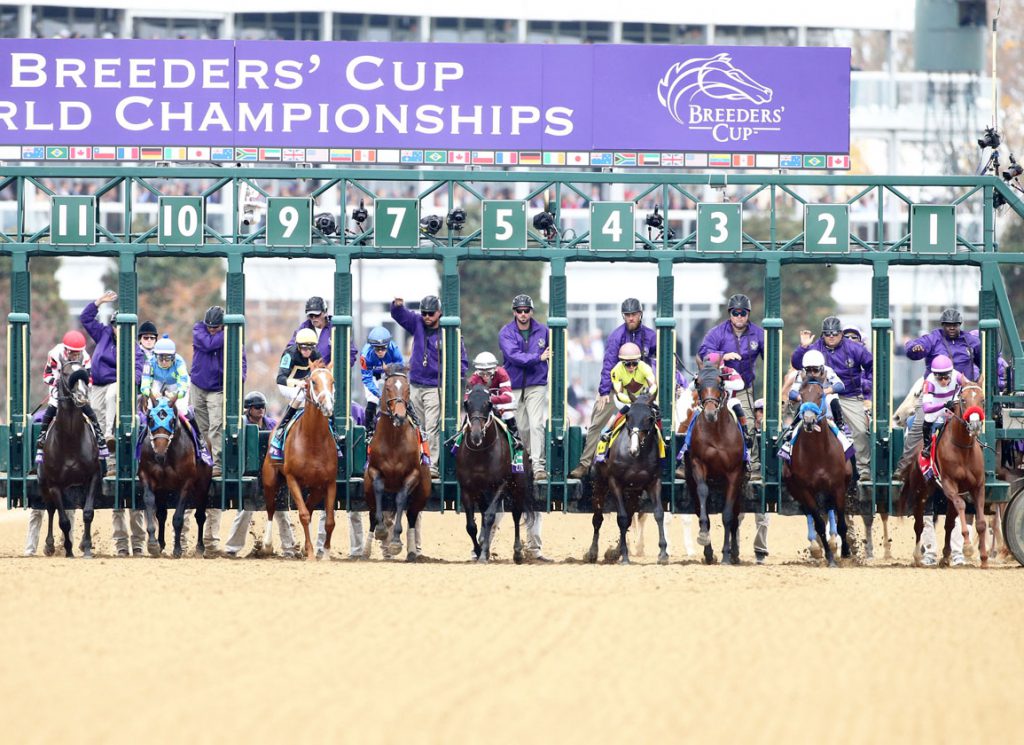
The horses break from the gate in the Dirt Mile | Coady

TDN: The Breeders' Cup Festival has become a big part of the whole experience. It's not just two days anymore. You have several events leading up to race day. Can you tell us a little bit of the history of this and how much has the Festival helped when it comes to things like economic impact?

DF: In addition to having the two best days of racing, the Breeders' Cup is a celebration of equestrian life. Like most major sporting events across the globe, it's important to have a festival component so that fans can come and see what a beautiful area the event is taking place in, be welcomed, have great hospitality and celebrate the equestrian lifestyle. We want them to walk away and say, 'Wow, not only was that two great days of racing, but it was a wonderful vacation, a wonderful experience and I want to come back.' In any of the cities that we are in, we work with the locals to develop that festival and to highlight key aspects of the region to our visiting guests.

TDN: NYRA is trying to get a loan from the state so that it can refurbish Belmont Park. You are on the record saying that if this gets done the Breeders' Cup would love to come back there. Your thoughts on a return to New York?

DF: We're incredibly supportive of NYRA and we will support any redevelopment at Belmont. We have a great relationship with the executive team at NYRA. I am having dinner Wednesday night in New York with (NYRA CEO) David O'Rourke. We wrote him a letter several months ago with the title, 'If you build it we will come.' The Breeders' Cup sticks to its word.

TDN: The Breeders' Cup has not been to Belmont since 2005, understandable because the current track is not a good fit when it comes to hosting an event like this. How much has the Breeders' Cup missed New York?

DF: We very much miss New York. There's so much energy up there and they are large investors in the game. We look forward to coming back. If they build it we will be there.

TDN: What can you tell us so far about what's in store for this year's Breeders' Cup at Santa Anita when it comes to new initiatives and things you can do to maintain the momentum?

DF: One of the challenging but also fun things when it comes to working for a company like the Breeders' Cup is that we are always innovating. We are continuing to move the ball forward on technological advancements in viewing and look forward to working with NBC, FanDuel and some other partners to continue to make sure that those who are watching have many different angles and experiences when it comes to watching the sport. Along with having great views of the San Gabriel mountains, we want to make sure that they have a world-class time when it comes to hospitality. We will continue to work to advance the culinary offerings and will have some exciting things to announce in the near future. We will also have some new ticket packages that we are putting the final touches on to make sure, again, that everyone has the best experience possible.

TDN: You brought up FanDuel. It's obvious that racing needs to find a way to attract the sports bettor and we need to have the FanDuels of the world offering betting on the Breeders' Cup and all racing on their sports betting platforms. Where do things stand when it comes to getting the sports bettors to follow and bet on the Breeders' Cup?

DF: Hats off to FanDuel for advancing the technology so there can be an aggregated wallet experience for the sports bettor. It's a tremendous marketing opportunity for our sport to be on the same bookshelf as the NFL, the NBA and MLB. Horse racing will be able to be cross-marketed from a wagering standpoint to those who are already wagering on other sports. This is one of the largest marketing opportunities we have had in a long time.

The post Q & A With Breeders’ Cup President and CEO Drew Fleming appeared first on TDN | Thoroughbred Daily News | Horse Racing News, Results and Video | Thoroughbred Breeding and Auctions.

Source of original post

$82m Economic Impact of Keeneland Breeders’ Cup Revealed

The 2022 Breeders' Cup World Championships at Keeneland Race Course generated a total estimated economic impact of $81,846,897 in Lexington, Kentucky and the surrounding areas. Determined by a recent study led by University of Louisville Economics Professor Thomas E. Lambert, Ph.D., the results represent the second-highest economic impact recorded in Breeders' Cup history, following the record set in 2017 at Del Mar.

The 2022 event also generated record global wagering of $189.1 million, the highest ever, which was 3.4 percent higher than the prior record of $182.9 million set in 2021. Records were also set for individual day wagering totals with Future Stars Friday registering $66.1 million and the Championship Saturday program amassing $122.9 million.

The economic benefits of the Breeders' Cup quantified in this study include:

• $30.5 million in on-track spending including wagering, concessions, parking, merchandise, and more
• $33.6 million in spending on hotels, retailers, food and drink, transportation, and off-track entertainment
• $10 million in track improvement investments for Keeneland Race Course, with $7.5 million in labor and material costs generated by the projects boosting the Lexington economy by an estimated $17.5 million overall
• $900,000 secured in state and local tax revenues and $5.3 million secured in federal tax revenues

“When the Breeders' Cup comes to town, Lexington has the opportunity to step into the international spotlight and demonstrate why we are known as the Horse Capital of the World–clearly, we're home to the best track in the world, Keeneland, and to the best Thoroughbreds,” Mayor Linda Gorton said. “However, the Breeders' Cup is about much more than bragging rights. The event has a significant economic impact that helps our hotels, our restaurants, and our entire community.”

“We are proud of the positive economic impact the 2022 World Championships had on the Lexington community, our hometown,” said Drew Fleming, President and CEO of the Breeders' Cup.

“After enduring a global pandemic, we held true to our word and returned to Keeneland just two years after the 2020 edition with an understanding of the needed boost the World Championships would give local businesses. Keeneland and Lexington are intimately connected to the history of our great sport, and it was wonderful to work with our highly engaged community to host an event that benefited everyone involved. I also enjoyed once again having the opportunity to work with Keeneland President and CEO Shannon Arvin, Festival Chairman Kip Cornett, the VisitLEX Tourism Board, and Mayor Linda Gorton to execute a successful weeklong event, welcome guests from around the world to the Horse Capital of the World, and collaborate with local businesses to foster economic growth opportunities for the region and community members.”

In tandem with the economic successes and community impact of the 2022 Breeders' Cup, the World Championships featured two days of best-in-class racing under the safest possible conditions to benefit horses, riders, participants, fans, and bettors. Ticket purchasers traveled to Lexington from all 50 states and from 18 different countries, contributing to a significant increase in traffic at Blue Grass Airport. Breeders' Cup also successfully promoted several charitable initiatives throughout the week.

“The results of this study show with certainty that Lexington fully embraces the Breeders' Cup,” Keeneland President and CEO Shannon Arvin said. “Breeders' Cup and Keeneland share a mission to conduct racing at the highest levels of quality, safety, and integrity, and to contribute to our community. It was a pleasure to work again with Drew Fleming and the team at Breeders' Cup, and we thank them, our industry partners, and Central Kentucky business and civic leaders who teamed with us to provide a warm welcome and outstanding hospitality to fans and racing connections from around the world.”

“Breeders' Cup 2022 was an outstanding weekend of racing, hospitality, and economic impact,” said Mary Quinn Ramer, president of VisitLEX. “We know there is no better place around the globe for championship racing than here in Lexington, the Horse Capital of the World, and we applaud Breeders' Cup's decision to bring the 2022 event to our city.”

Click here, for a copy of Dr. Lambert's study.

The post $82m Economic Impact of Keeneland Breeders’ Cup Revealed appeared first on TDN | Thoroughbred Daily News | Horse Racing News, Results and Video | Thoroughbred Breeding and Auctions.

Source of original post

Verified by MonsterInsights