Secretariat Just A Part Of Virginia’s Rich Thoroughbred History

This year marks the 50th anniversary of the great Secretariat's sweep of the Triple Crown with performances that made him the most recognized chestnut racehorse in popular culture. In lieu of a new Triple Crown champion, the racing media will spend much of this spring remembering the colt's rise to timeless fame.

In Virginia, the celebration will be especially enthusiastic. Secretariat is still a central part of the commonwealth's Thoroughbred identity. Meadow Event Park, which has built around the hallowed ground of Secretariat's birth in Doswell, Va., stands as a living tribute to his memory and the Chenery breeding program. In nearby Ashland, Va., birthday celebrations are planned for April 1 and will include a showing of the Secretariat movie, a meet and greet with a Secretariat descendant, and an unveiling of the largest Secretariat monument in the country.

These days, the story of the Thoroughbred in Virginia is largely two-pronged. There's Secretariat, the physical embodiment of past splendor, and there's the renaissance enjoyed by Virginia owners and trainers since the institution of the Virginia Certified program and revival of Colonial Downs.

Anyone who has spent time in Virginia can tell you it's a place that values its own history. It also values its place in national history. If you attended public school in the commonwealth (it's not a state, it's a commonwealth – a distinction that means practically little, but which Virginians will always correct you on) then you were likely coached to remember that Virginia was the cradle of eight presidents, more than any other state thus far. It's likely a statistic no one else was keeping particular track of, but which Virginia schoolchildren grew up thinking was an important record, as it made our home a central part of the country's beginnings.

Likewise, those of us who tend to center the place in any type of origin story will be thrilled to learn we can make similar claims about the National Museum of Racing and Hall of Fame. Although Kentucky has the most state-breds in the Hall with 145, Virginia is tied with Florida for second with 12, and they make it clear the commonwealth's Thoroughbred history started well before Secretariat's birth in 1970.

According to Julie A. Campbell's book The Horse in Virginia, horse racing was a part of the history and culture there from the beginning. George Washington was documented to have attended race meets across the colonies and was a breeder of racehorses. The sport in Virginia went back to the first generations of settlers at Jamestown, when it was popular with most people, though only white wealthy men could race their horses and bet using their own tobacco crop.

In the 1600s, horse racing in Virginia was a rough affair, according to Campbell.

“Under ideal conditions, the horses made a clean start, stayed on their own paths, ran without interference, and one clearly triumphed,” she wrote. “Ideal conditions were hard to come by, however. One jockey – the planter himself or one of his male slaves – would jump the gun; another might grab his opponent's arm or shove him off balance; a horse jostled the other or veered into another's path; a dog could wander, accidentally or not, onto the racetrack and spook both horses; the judge at the finish line was known to claim the losing horse the winner. Under such conditions, disgruntled owners sprinted for the nearest courthouse and filed lawsuits TO settle the question of the winner, the conditions, or the amounts of money or tobacco owed.”

By the early 1700s, things became a little more formal, with established tracks across Central and Eastern Virginia. Runners were often pulling double duty as occasional racehorses which also pulled plows and carriages or served as riding horses. At the very beginning, sprint races with the predecessors to Quarter Horses were the most popular form of the sport in Virginia, but by the 1730s, Thoroughbreds began to be imported to the colony and races stretched longer, as was the fashion in England. As the English Thoroughbred became an established, recognized breed whose bloodlines were valuable, wealthy Americans became interested in importing English Thoroughbreds to race and breed stateside.

Support our journalism

If you appreciate our work, you can support us by subscribing to our Patreon stream. Learn more.

One of the most influential was Sir Archy, a son of English import Diomed, who was the winner of the 1780 English Derby and one of the first influential British horses to be imported to the States. Sir Archy was slow to get rolling on the racetrack, not really finding his stride until age four. He excelled at four miles and gradually became so dominant at that distance that he ran out of rivals who would face him. In one case, he drew away from a four-horse field after two miles and extended his lead so far he pulled up and walked across the finish line.

Upon retirement, he proved a popular stallion and is believed to have sired nearly 100 colts who would become advertised as stallions and 160 daughters who became producers in the American Stud Book. He is the oldest of the Virginia-breds to be inducted into the Hall of Fame.

Sir Archy's influence is felt throughout the breed, but two of his more immediate descendants – Boston, sired by a son of Sir Archy, and Planet, son of a daughter of Boston – followed him into the Hall of Fame. Boston was known as a foul-tempered creature who was nonetheless successful, with a record of 40 wins from 45 races up and down the East Coast in the 1830s. Despite a recommendation from one of his early trainers that he be “either castrated or shot, preferably the latter” for his savagery towards horses and humans, he managed a successful stud career alongside his career as a racehorse. His time as a racehorse stretched on until he was 10, and in his final two years as a stud, he sired Lexington and Lecomte.
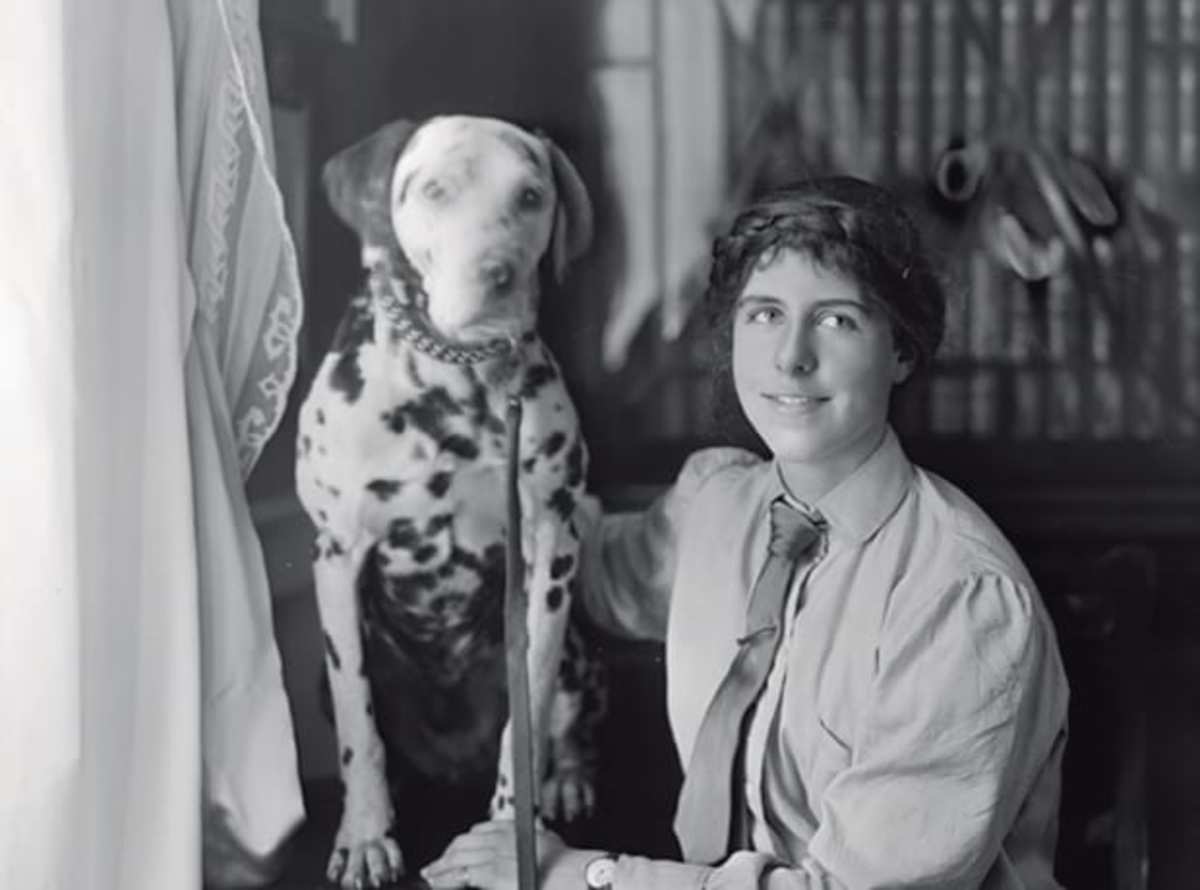
Marion du Pont Scott (Courtesy: University of Virginia Library)

Besides being a cradle for presidents, Virginia was also home to people who would become influential in the modern Thoroughbred breeding landscape. In 1925, Campbell writes that two-thirds of the top 155 Thoroughbred stallions in the country stood in Kentucky, but 36 of them were in Virginia. Isabel Dodge Sloane (owner/breeder of Hall of Famer Sword Dancer), Liz Whitney Tippett, William H. duPont and Marion duPont Scott all maintained farms there. The legendary Claiborne Farm actually has its roots in Virginia; before he established Claiborne in Paris, Ky., Arthur B. Hancock originally raised Thoroughbreds on his parents' Ellerslie Farm in Albemarle County. He married Nancy Clay, whose family owned farm property in Paris, and for a while kept both the Kentucky and Virginia farms going even after he moved to Kentucky in 1912.

Christopher Chenery is known to most people now as the father to Penny Chenery of Secretariat fame, but the Richmond native built The Meadow Farm in the 1930s. He had made his fortune in New York but settled in his home state and built an admirable broodmare band across the North Anna River from the land that had nurtured Planet.

He bred Hall of Famer Hill Prince out of Hildene, a mare he bought for less than $1,000. Hill Prince won the 1950 Preakness and would go on to be named the Horse of the Year and champion 3-year-old with wins in the Withers, American Derby, Jockey Club Gold Cup and others to his credit. Half-brother First Landing (named for the anniversary of the settlement at Jamestown) would eventually sire Riva Ridge.
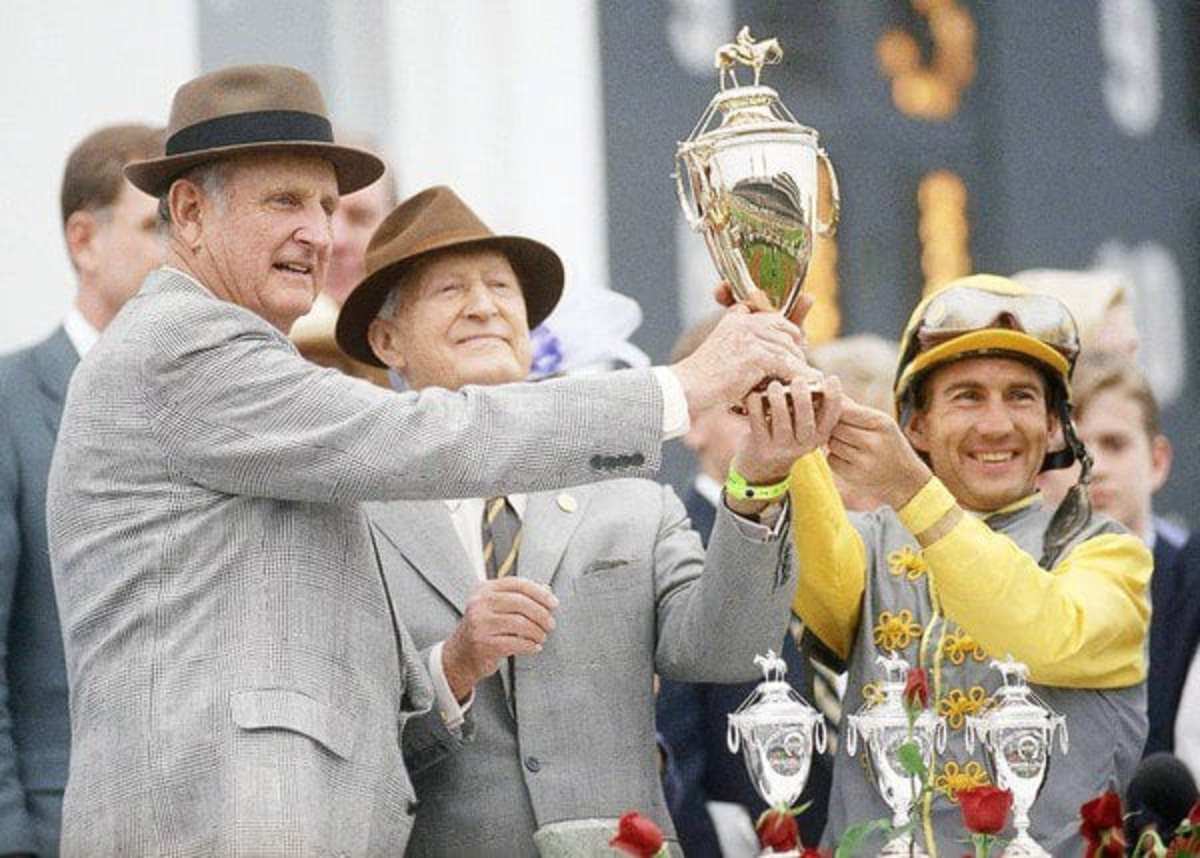
Mack Miller, Paul Mellon and Jerry Bailey celebrate the 1993 Kentucky Derby victory by Sea Hero.

Paul Mellon's name is familiar both to Hall of Fame enthusiasts and Virginia residents. Mellon was the heir to a tremendous fortune and rode from an early age. He grew up foxhunting and racing in point-to-points, sometimes shipping himself and his horses across the Atlantic to do so. He was equally enamored with endurance horses, steeplechasers, and flat racing horses. His Hall of Fame homebred Arts and Letters won the 1969 Belmont Stakes, Jim Dandy, and Jockey Club Gold Cup en route to being Horse of the Year. Fellow Hall of Famer Fort Marcy was a three-time turf champion and set three course records at 1 ½ miles in a six-year career.

Mellon's Rokeby Stable homebreds also included Belmont winner Quadrangle, Derby winner Sea Hero, and English Derby and Arc de Triomphe winner Mill Reef. Mellon was a trustee of the National Museum of Racing, which now houses the hall, as well as an investor in the Middleburg Training Center.

Additional Virginia-bred Hall of Famers include Derby- and Coronation Cup-winning Reigh Count, three-time handicap champion Sun Beau, Grand National-winning steeplechaser Bon Nouvel, and two-time champion older female Shuvee.

As Kentucky Derby season is in full swing, Virginia Thoroughbred enthusiasts are hopeful they may soon stake additional claims to fame. Forte, winner of the Grade 2 Fountain of Youth and early favorite for this weekend's G1 Florida Derby, was bred by Amy Moore South Gate Farm, located in Millwood, Va. Though he's a Kentucky-bred because of his foaling location, Forte grew up a few minutes from the Thoroughbred center of the commonwealth in Middleburg and Upperville. Those watching the Gulfstream feed from Virginia will be hoping Forte could be the next billboard for the commonwealth's brand as the cradle of great racehorses.

The post Secretariat Just A Part Of Virginia’s Rich Thoroughbred History appeared first on Horse Racing News | Paulick Report.

Source of original post

Nominees Revealed For New York’s 2022 Regional Championships

New York Thoroughbred Breeders, Inc. (NYTB) is pleased to announce the nominees for the New York-bred divisional champions of 2022. A panel of New York Turf writers, broadcasters, handicappers, racing analysts and photographers will vote on the winners of each division and the 2022 New York-bred Horse of the Year.

The 2022 New York-bred divisional champions and New York-bred Horse of the Year will be announced at the NYTB Awards Dinner sponsored by the New York Thoroughbred Breeding and Development Fund at 7 p.m. Monday, May 8 at Saratoga National Golf Club in Saratoga Springs.

New York riding legend and NYRA TV personality Richard Migliore will again host the Awards Dinner. Tickets are available – $150 for NYTB members and $175 for non-members – for purchase at nytbreeders.org/events or by calling the NYTB Office at (518) 587-0777.

Also, to be honored at the Awards Dinner with 2022 awards will be Broodmare of the Year, Champion Steeplechaser, Trainer, Champion Jockey and Outstanding Breeder.

A list of the 2022 New York-bred divisional championship nominees by category follows

Champion 2-Year-Old Male: Acoustic Ave, Andiamo a Firenze, Arctic Arrogance, Vacation Dance.

Champion 2-Year-Old Filly: Gambling Girl, Les Bon Temps, Stonewall Star, You're My Girl.

Champion 3-Year-Old Male: Barese, Rotknee, Un Ojo, Run Curtis Run.

Champion 3-Year-Old Filly: Fingal's Cave, Spendarella, Sterling Silver, Venti Valentine.

Champion Older Dirt Male: Americanrevolution, Bankit, Dr. Blute, Wudda U Think Now.

Champion Older Dirt Female: Bank Sting, Betsy Blue, Kept Waiting, Make Mischief.

Champion Turf Male: City Man, Dancing Buck, Red Knight, Somelikeithotbrown.

Champion Turf Female: Dream Central, Robin Sparkles, Runaway Rumour, Spendarella.

Champion Male Sprinter: Dancing Buck, My Boy Tate, Thin White Duke, Wudda U Think Now.

Champion Female Sprinter: Bank Sting, Betsy Blue, Robin Sparkles, Sterling Silver.

The post Nominees Revealed For New York’s 2022 Regional Championships appeared first on Horse Racing News | Paulick Report.

Source of original post

Texas 2-Year-Old Sale Proving Upward Trend In Texas Racing, Breeding

For evidence that HB 2463 is fulfilling its mission to boost the horse racing industry in the Lone Star State, the Texas Legislature need only look to the Texas Thoroughbred Association's 2-Year-Olds in Training sale at Lone Star Park on April 5.

Starting in 2020, through HB 2463, a portion of the sales tax on horse feed, tack and other equine products has been channeled into beefing up race purses for which owners compete and providing funds for other equine incentives and events. More money has meant more and better horses for the auction.

The 186 2-year-olds in the 2023 catalog are up from 144 in last year's catalog and the 122 in 2021, with the sale's Covid-forced cancelation in 2020. These 2-year-olds are the first to be born since HB 2463's passage. The sale's breeze show — during which most of the horses will have timed workouts for generally an eighth-mile — will be Monday, April 3 at Lone Star Park. The sale and breeze show are open to the public.

Landon Jordan said he attended his first horse sale at the TTA 2-year-old sale two years ago. While he bought a couple of fillies last year at Ocala, the 2022 TTA 2-year-old sale was Jordan's coming out party for launching his Mansfield Racing Stable.

He bought four horses, including sales-topper Free Drop Maddy for $200,000 and the top-priced colt Release McCraken for $125,000. All four are winners, three have won at least twice. Kentucky-bred Release McCraken made it three straight victories by taking the $100,000 Texas Thoroughbred Association Derby at Sam Houston Race Park last Saturday. Louisiana-bred El Deal Me Aces ($78,000 purchase) won a Fair Grounds allowance race, while Cajun Crazy, a Louisiana-bred son of 2017 Preakness winner Cloud Computing, is a Fair Grounds maiden winner bought for $65,000.

“We're excited about what we did over there,” Jordan said, speaking of horses he bought at last August's Texas Summer Yearling Sale, “We have a lot that we're really happy with. Obviously we'll be back at the 2-year-old sale. That was a heck of a sale for us…. I think if you're starting out, it's a lot easier to go regional, buy at a sale like the TTA because you're going to be running in Texas, in Louisiana, Oklahoma, maybe Arkansas. If you do buy a Kentucky-bred, you have the safeguard of being able to run them in these TTA sales races. You're kind of protecting yourself.”

From buying his first horses a year ago, Jordan now has 14 horses, half being 2-year-olds.

“It's been a great sale for everyone, consignors and buyers alike,” said Jordan's trainer, Bret Calhoun. “I think there's a horse for everybody, for every price range. The Texas-breds have been at a premium because obviously the foal crop has been less and the purse structure has come up. It's supply and demand – not enough of them to go around, and you'll pay a premium for a good one.

“You have other benefits for horses in that sale. You have the Sale Futurity that's been very popular, the Texas Stallion Stakes. There's a tremendous amount of Louisiana-breds, and there's a big market for those as well there. A lot of people shopping that sale race in Texas and Louisiana, so some of the Louisiana people have brought their better horses over, and they've sold extremely well. Then you filter in some 'open' horses, too, some Kentucky-breds who have fared very well. You can get some value out of that sale.”

Hall of Famer Steve Asmussen, North America's first trainer to top 10,000 victories, agreed.

“It's a sale that has made a nice little resurgence, a direct result, I believe, of the supplement to the Texas purses that the state has provided,” he said. “Some very solid racehorses came out of it last year, and it's a book of better pedigrees this year.”

While Asmussen will be at the sale to buy, his family will be there to sell.

Just under 20 percent of the horses in the catalog are being sold by Asmussen Horse Center for its clients, with a sales-leading 36 horses in the original catalog. That's about twice the number the Laredo operation had last year. It reflects progeny of Texas stalwarts such as Too Much Bling and also noteworthy Kentucky sires such as Uncle Mo, Frosted, Munnings and the late Bernardini, as well as the promising young stud City of Light. But even more important to Keith Asmussen, patriarch of the first family of thoroughbred racing and Steve's father, is the youngsters' conformation.

“We're going to have some nice horses with fast works,” he said. “We're not one to go to extremes, but we like to show their ability.”

Asmussen said he's seeing more of his clients opting to foal their mares in Texas to get Accredited Texas-breds. More also want to sell at the TTA auctions, and he sees future sales just getting better as those Texas foals reach racing age. Forty-four of the 316 registered Texas-bred foals of 2021 are in the 2023 sales catalog, not counting any that might be supplemental entries.

“Naturally, more money, more everything – and especially better-bred horses will come from this,” Keith Asmussen said.

The productive stallions Tapiture (a multiple graded-stakes winner standing in Kentucky), Grade 1 winner El Deal (Louisiana) and Grade 1-sire Custom for Carlos (Louisiana) lead the catalog with six entrants apiece. Other prominent racehorses and proven sires represented by their progeny include 2018 Triple Crown winner Justify, Bolt d'Oro, Classic Empire, Good Magic, Kantharos, Malibu Moon, Midshipman and Practical Joke. First-crop stallions are well-represented through champions Vino Rosso and Mitole, along with Grade 1 winners Catholic Boy and Yoshida. Also with progeny in the catalog: five-time Grade 2 winner Catalina Cruiser, major winners Copper Bullet and Maximus Mischief (a son of internationally prominent sire Into Mischief).

As always, Texas, Louisiana, and Oklahoma stallions are represented in the catalog, including leading Texas stallion Bradester. In his second season at stud in Texas at Forks of the Paluxy, the Grade 1-winning Mr Speaker, already the sire of two Grade 1 winners, has the accredited Texas-bred filly She Speaks in the sale as Hip No. 103, consigned by Asmussen Horse Center.

Mark Collinsworth, who with wife Lori bought and stands Mr Speaker, will be at the sale as both a buyer and seller. He expects to purchase several fillies that they ultimately can breed to Mr Speaker. He's also a minority partner in CJ Thoroughbreds' pinhooking venture that will be selling a handful of horses bought last summer as yearlings.

“These sales are great,” Collinsworth said. “There's so much enthusiasm now, just with the house bill they passed a few years ago that redirected $25 million to the Texas horse industry.… There's just a lot of positive indications for this sale, and there are some very nice-looking horses in there. The Texas Thoroughbred Association has done a great job. All the owners and breeders have stepped up.”

Last year, 88 horses sold at the auction for a total of $3,050,700, compared with 89 horses selling for $2.91 million in 2021, then a record for the sale under TTA leadership. The 2022 average price was $34,667 and the median $28,000, compared with $32,671 and $20,000 in 2021.

Accredited Texas-breds proved a hot commodity. Overall, the 31 Texas-bred 2-year-olds that sold at auction last year, most but not necessarily all at the TTA sale, averaged $47,506. That was up a whopping 60 percent over the then-record $29,674 for the 23 Texas-bred 2-year-olds sold at auction in 2021.

“This is the largest catalog we've had in a while,” said Al Pike, whose family's Opelousas, La.-based Pike Racing was last year's leading consignor by total sales at $664,000. “There seems to be a good market there for the right horses. I think we're bringing a really good group that will be well-received. We've got some really good Texas-breds for the first time in a while. We've got some good Louisiana-breds. We try to have something for everybody.”

The 2023 2-Year-Olds In Training Sale catalog can be downloaded at www.TTASales.com

The post Texas 2-Year-Old Sale Proving Upward Trend In Texas Racing, Breeding appeared first on Horse Racing News | Paulick Report.

Source of original post

California Stallion Touched By Autism Relocated To Easterbrook Ranch

Stakes-winning California stallion Touched by Autism has been relocated to Easterbrook Ranch in San Miguel, Calif., for the remainder of the 2023 breeding season, owner Johnny Toboada announced.

Touched by Autism, a graduate of the Northern California Yearling Sale, is a 10-year-old son of Sierra Sunset who won the 2018 Oakland Stakes at Golden Gate Fields, one of his eight career wins. He also finished third in the Grade 3 All American Stakes at Golden Gate.

Touched by Autism previously stood at Whitehouse Equine in Stockton, Calif. His first foals arrived this year.

Bred in California by George Schmitt and Mary Clare Schmitt, Touched by Autism is out of the winning Beau Genius mare Beau's Gem, who is the dam of six winners from seven foals to race. His extended family includes stakes winners Charming Scene and Miss Hester.

The post California Stallion Touched By Autism Relocated To Easterbrook Ranch appeared first on Horse Racing News | Paulick Report.

Source of original post

Verified by MonsterInsights