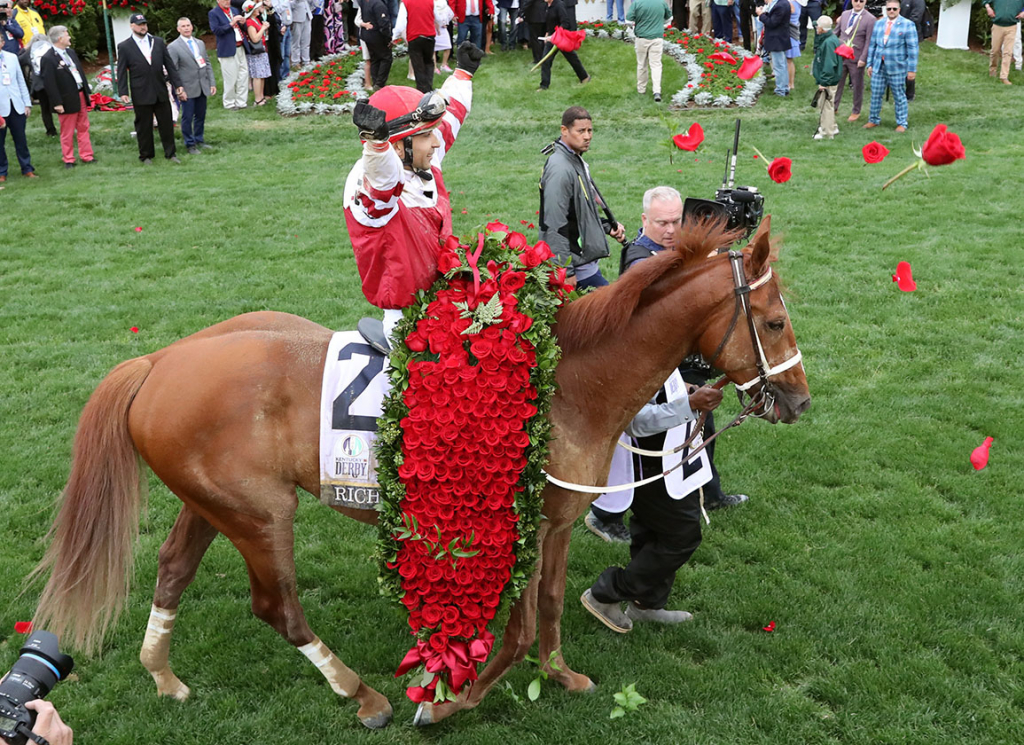
It was 12 years ago this week that a young bloodstock agent found a mare for one of his first clients, deep in the November Sale at Keeneland. Mesa Fresca (Sky Mesa) had won a Belmont maiden in a light career, and Larkin Armstrong knew her family inside out. In fact, her own bloodlines ran almost parallel to his own, his father being a cousin of her dam's breeder Emory Hamilton. Raised the way he was, Armstrong could not fail to recognize this mare as King Ranch royalty, and was duly gratified to buy Mesa Fresca on behalf of Jack Swain III for just $15,000.
“I think it was just timing,” he reflects. “She was in one of the later books and in foal to Badge of Silver, on a late cover, which wasn't too popular. Mayan Maiden (Lyphard) [her dam] had produced the dam of [turf millionaire] Al Khali (Medaglia d'Oro), but neither she nor had any of her offspring had black type. In fact Emory had sold Mayan Maiden as an older mare to Bobby Flay, carrying Mesa Fresca. And now here was her daughter, and I liked her, thought she looked like some of Emory's mares that I knew from Chic Shirine: that's really what attracted me, just having seen that family do so well for so many years.”
Chic Shirine, of course, was the daughter of Mr Prospector who established the premier branch of the dynasty centered on her dam Too Chic (Blushing Groom {Fr}). Three of Chic Shirine's daughters produced Grade I winners and a fourth has lately emerged as granddam of two more in Olympiad and Preservationist. Those young stallions are now seeking to establish a communal legacy for King Ranch, but for Armstrong the connection always felt highly personal. In his youth, he learned to recite King Ranch pedigrees long preceding his own lifetime–above all, those tracing to Monade (Fr), the imported 1962 Epsom Oaks winner and fifth dam of Mesa Fresca.
“I've been passionate about the horse business ever since I was a child, and have been coming to the sales for 30 years now,” he says. “My father's 'all in' on polo; he's head of the United States Polo Association, but he's interested in Thoroughbreds too and obviously my extended family has long been involved in the business–they raced Assault–and more recently through Emory and [her sister] Helen.
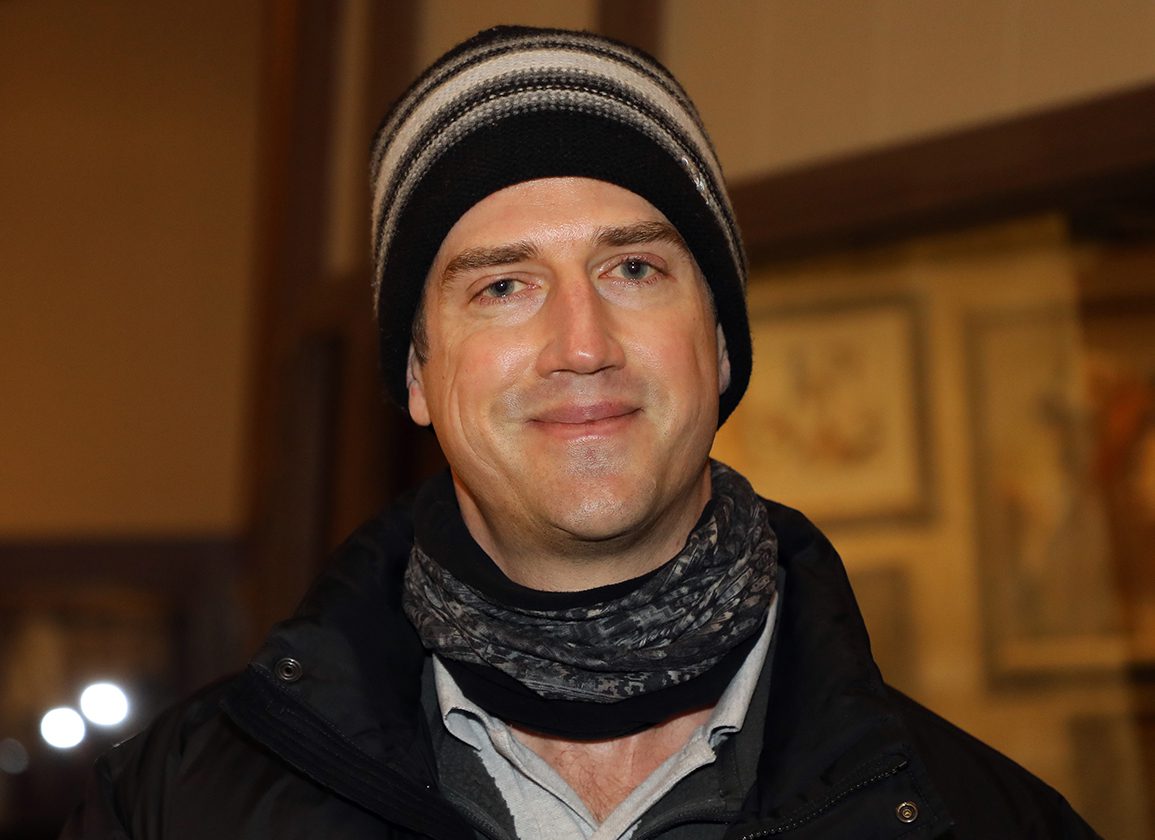
Larkin Armstrong | Keeneland
“So when I took an interest as well, I was able to learn all about it with them. It was more of an obsession than an interest, really: already at age 11 I was deep into catalogues, pedigrees, the Stallion Register. I grew up in Texas, but always came up and stayed with Helen for the sales, and got to look at horses with Emory as well. She bought Too Chic from the King Ranch consignment in the early '80s, and she became her foundation mare.”
Having secured Swain cut-price access to this genetic goldmine, Armstrong compounded the favor by urging the young Scat Daddy as her next cover.
“Jack makes all the final decisions,” Armstrong stresses. “But yes, Scat Daddy was the one I liked. He was just getting going, he'd had some of his Chilean success at that point, but was still only $17,500. So Mesa Fresca had a filly by him, and we always loved her. Jack's plan was to sell her, so when she came through the September Sale, I said that I'd bid on her. I was thinking how Emory keeps as many fillies as she can from that family. Yes, it was a couple generations back to Chic Shirine, but this filly looked a really nice physical athlete. I got her for $80,000, so Jack 'got out' on the mare, but I got a good price, too!”
Swain's real dividend was still to come. Armstrong named the Scat Daddy filly Harmonize, and watched in astonishment as she made her grandam the fifth daughter of Chic Shirine with a Grade I winner underneath.
“I did really, really like her as a foal, but then it just became an amazing ride,” he reflects. “I sent her to Bill Harrigan who used to work for King Ranch back in the day, and I've known forever. He was breaking her at Payson Park, and loved her. And then Bill Mott calls me out of the blue and says, 'I saw your filly go by on the track: would you let me train her?' My parents had horses with him, my uncle as well, and he'd been one of the first trainers I ever met as a child. And now this filly's such a beautiful mover that he wanted to recruit her. Of course I said yes. So she went into his program and next thing you know, she's running at Saratoga.”
Having been beaten a nose when green on debut, she broke her maiden by daylight in a stakes. That set her up for the GIII Jessamine, where she booked herself a spot at the Breeders' Cup. Though disappointing on rain-softened turf there, she matured to win the GI Del Mar Oaks as a sophomore and then missed the GI Queen Elizabeth II Challenge Cup only in a photo. She also won a Saratoga graded stakes at four, but came up with some bone bruising and had to be retired.
By that stage, her dam was in foal to War Front and Swain was able to sell her to Cheveley Park Stud at Fasig-Tipton that November for $2 million–a spectacular yield on the $15,000 he had paid for her just six years previously. Moreover Swain has two of her daughters (one retained, the other bought back when she came up for auction) in his own program.
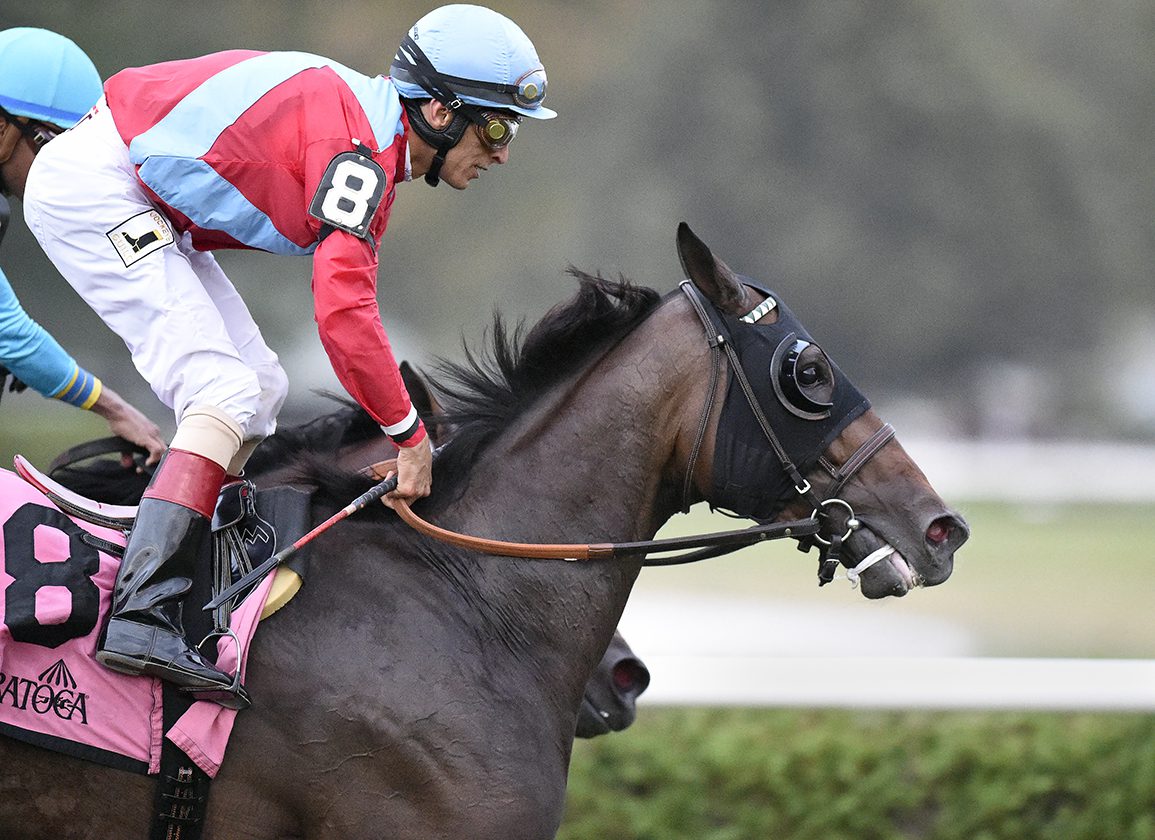
Harmonize | Sarah Andrew
Today Harmonize remains the one and only broodmare in Armstrong's ownership. (“I had a lot of offers along the way,” he acknowledges. “But there was always too much emotional attachment with the family to sell.”) As a graded stakes winner three years running, she clearly channels soundness as well as class from her aristocratic genes. Showing the length of perspective one would expect of his clan, Armstrong astutely started her with proven stallions. Her first foal, by the set-your-watch More Than Ready, admittedly produced only a claiming gelding. But then Armstrong sent her to Quality Road, and was rewarded with a colt that made $700,000 from West Point & Woodford Racing as a Saratoga Select yearling in 2021.
This colt required his purchasers to show a bit of patience, but he was in the right barn for that with Shug McGaughey. In August, he romped on debut in a Colonial Downs maiden. Fast-tracked to the GIII Virginia Derby, he overcame his rawness to cut down a strong field with a flamboyant turn of foot, claiming both the unbeaten streak of GI Saratoga Derby winner Program Trading (GB) (Lope De Vega {Ire}) and a new course record. For this, of course, is Integration–whose credentials, as potentially one of the premier talents of his crop, will be tested Saturday in the GII Hill Prince S. at Aqueduct.
“Harmonize's first foal hadn't really been a sales prospect so I raced him, just to start her off,” Armstrong recalls. “He has some ability, and tries hard, but it was Integration that always really looked the part: super athletic, super balanced, perfectly correct, medium-sized, great temperament. The mare is not exactly high-strung, but a little more energetic. He's always been just very calm and kind. Brookdale always loved him and so he ended up going to the Saratoga sale, where he was really able to shine. He has an incredible walk, which is I think what really sold him. And now fortunately that's translated to his racing.
“The Virginia Derby seemed like a bold move, but I thought, 'Well, they must really like him!' I thought he caught up with them easily enough, but then there was just a touch of greenness before he really kicked into gear. So I hope he can still improve.”
The one thing Armstrong knows for sure is that Integration had the perfect springboard in being raised and prepped by the Seitz family at Brookdale.
“It's where Jack Swain boards his horses, so Mesa Fresca went there,” he explains. “They did such a great job for him and, as they'd raised Harmonize too, it made perfect sense for her to go back to them when it was time to breed her. It's just been a really positive experience with them, all round. It's great land, and they're great people.”
Given the way Integration has worked out, Armstrong is glad that he has doubled down on the mare. Her next foal, a Curlin colt, brought $400,000 at Keeneland last year; Armstrong has retained her Nyquist yearling filly to race; and she has a weanling colt by Gun Runner.
“I just haven't wanted to shortchange her in any way, and have tried to breed her to really good stallions,” Armstrong says. “She's such an excellent physical, very correct, a beautiful mover, tons of quality. When I do a mating, I really like to have an idea of what I'm trying to produce with it. Obviously it's always a guess. But what are you trying to improve in the mare? What does she have that's going to complement the stallion? So mostly you start with the physical. And then look at pedigree after that. Those unproven sires, you just don't know yet what they're going to throw: both whether they'll be a good stallion overall, but also what traits. They do tend to sell, of course, so sometimes you have to do it–and I did breed her to Flightline this time. But I was just in such awe of him as a racehorse that I jumped at the chance.”
Of course, even if you do everything right, it confounds all the odds to be so lucky with your one and only mare. But his education in the game, and then his own professional experience, together mean that nobody knows that better than Armstrong himself.
“It's been kind of weird,” he admits. “I mean, working with clients, I know how hard it all is. I love the breeding side, love consulting with clients on their whole operation, especially matings, and seeing and evaluating the offspring. I saw Helen develop the Courtly Dee family, and all those horses; and Emory developing hers; and Jack Swain has bred some really good horses too. He bred Exaulted (Twirling Candy) [who won the GI Shoemaker Mile in May], he bred Marley's Freedom (Blame) and Noble Bird (Birdstone), who were also Grade I winners. So I've gotten to see those horses, as well. And it just teaches you that it's a very difficult business.
“Clients have different goals. Sometimes they're wanting to do something shorter-term. But mostly I try to focus on finding quality, and value; and matings to bring out the quality, hopefully to produce a beautiful athlete that can sell well and run. It doesn't have to be either/or. I don't think there's as huge of a disconnect as some people say, between a sales horse and a racehorse. Integration was bred to be a racehorse. He's not huge, not a super-muscular, bulky horse. He's just an athlete with a great mind, a great walk, and really well put together. But people appreciated that, and he sold very well. Chic Shirine has been incredible, of course, has shown how blood can continue on. But it's obviously a super difficult game and, no matter what, you need a whole lot of luck. It's an amazing game and an amazing challenge.”

The post Integration Taking Larkin Armstrong Back to the Future appeared first on TDN | Thoroughbred Daily News | Horse Racing News, Results and Video | Thoroughbred Breeding and Auctions.
Source of original post