Gagliano: National HBPA ‘Scorched-Earth’ Campaign Against HISA Hurting Their Own Constituency

It has been increasingly difficult to watch as the opponents of the Horseracing Integrity and Safety Act of 2020 (HISA) continue to ramp up their campaign to see it derailed. Much like throwing spaghetti against the wall to see what sticks, they continue to pitch mistruths and diversions and file myriad lawsuits across the nation in an attempt to get something to stick in the minds of lawmakers, judges, and policymakers.

I would like to set the record straight about HISA and to comment on its opponents' most recent actions.

Over the past months these opponents, principally the National Horsemen's Benevolent and Protective Association (NHBPA) and a handful of state racing commissions have trafficked in a series of mistruths and fabrications to try to hoodwink members of the racing industry and the public to oppose HISA. All this is underwritten by a couple of unrelated, agenda driven, special interest activist groups, which have zero involvement in our sport and have no interest in its long-term viability.

They have argued that HISA was passed in the “middle of the night” in 2020. It wasn't. It's first form of a bill was introduced in 2015 and re-introduced in 2017 and 2019, it received hearings in Congress, was carried forward by a House Committee in 2020, and was, in September that year, passed unanimously by the House of Representatives as a stand-alone piece of legislation. A month later it was passed by the Senate as part of a larger bill, due to the expiring legislative session.

Opponents also claim to not have had input into HISA. Nonsense. As someone fully involved in the development of HISA, I can attest to the countless times horsemen's groups and racing commissioners, specifically, met with backers of the bill and its original sponsors. In fact, I recall flying leadership of the NHBPA to Colorado Springs to meet and discuss the bill. I'll foreshadow the rest of this essay by sharing that at that time counsel for the NHPBA said their most significant concern was including anything in a bill that would open the Interstate Horseracing Act of 1978 (IHA) to any form of amendment or tampering. We've spoken with them in closed rooms and debated them in public for years – but somehow, they were “never included.”

Against this background of spin and untruths, the opponents have become serial litigators: they have filed six federal lawsuits across the nation – making redundant claims in each – in an effort to find the “right” federal appeals court to find HISA unconstitutional.

Thus far, the opponents have failed in the U.S. Sixth Circuit, which in a comprehensive and well-reasoned opinion found HISA to be constitutional. Last week, they failed again when a federal district court in Texas issued another extensive opinion finding HISA constitutional. The opponents are going to take another shot at it with the U.S. Fifth Circuit Court now that the court's earlier decision on HISA has been made moot by way of a legislative amendment in December. Not being content with these bites at the apple, opponents have recently filed additional nearly identical lawsuits within two other federal circuit court jurisdictions.

While helping plaintiff's lawyers live their dreams, the HISA opponents expend great energy complaining about how much HISA might cost. While assessments will continue to be fine-tuned – one thing is for sure, they are driving up the industry's expenses by continuing to sue with no end in sight.

All this brings us to this past week. Once again, the challenges facing our athletes and our industry have come to the forefront – directly to a national audience at the time of our sport's biggest event. Following the unfortunate equine fatalities at Churchill Downs, and the massive national media attention it garnered, opponents of HISA have chosen not to get behind a collective effort to solve these issues but, instead, to break down the industry's best hope for ensuring horse safety and industry integrity. Early this week, they continued their scorched earth efforts to derail HISA in favor of maintaining the status quo by immediately seeking an injunction against the rollout of the HISA anti-doping and medication control program on May 22. This, despite the fact that the very same court they are asking for the injunction just found HISA to be constitutional.

These injunctions take a toll. One judge delayed HISA's implementation of its medication program by a month, making it impossible to begin before Derby week. HISA will not be fully implemented until later this month now, due to the NHBPA.  Would a unified, independent medication and track safety program have made a difference? Thanks to the NHBPA, we will never know.

Most organizations would have kept a low profile after such an embarrassment. Not the NHBPA, they doubled down. They got their few supporters in Congress to prepare legislation that would immediately repeal HISA and offer the illusion of a state compact-based regulatory model. The draft legislation would enable states to choose to keep the current state-by-state regulatory approach or create a regulator whose board of directors would be hand-picked by state commissions – under rules that specifically allow the directors to have conflicts of interests. The medication regulation by compact regulatory model is a recycled version of an idea first trotted out by the Association of Racing Commissioners International in 2010 and which has continued to be touted by opponents to HISA since. Obviously, it hasn't worked yet, and it will not work in the future.

Further, this trojan horse of a bill takes a carrot and stick approach that would put simulcast wagering across the U.S. at risk of an immediate and summary cessation. Under this bill, if two states enter into a compact to create the conflicted new regulatory body ALL other states would be forbidden from simulcasting until they enter into the compact as well. As I foreshadowed earlier, NHBPA's lawyer told us years ago that anything touching the IHA was an absolute no-go for them – now that they are blinded by their hate for HISA, they seemingly no longer care. This “we have to destroy the industry to (possibly) save it” approach is an absolute affront to everyone in our industry – those who support HISA and those who do not.

The horses that perished last week have recent racing histories within numerous states for which there is no single regulator that has the ability to conduct complete cross-border investigations. HISA changes this dynamic. Under the HISA opponents' preferred approach, each state is an investigatory island, limited to inquiries within their own borders. One would think that the NHBPA would want the fullest possible investigations in support of their members who lost horses – and to avoid the same things happening to other horses in the future. They focus instead on hobbling HISA while leaving their constituents and our equine and human athletes at continued risk

I've spent every living moment of my professional life working in this industry, in many roles, including at some of the smallest tracks and the largest. It's a sport I have loved since I was a child, and it remains with deep roots among my friends and family. Racing safety and integrity are matters concerning everyone at all levels of the game – and to so many outside of it. Who among us in the sport didn't hear over the last few days: “What's going on with horse racing?” and “What can be done to fix it?” The answer is clear: HISA.

Unlike what the opponents of HISA are peddling, the industry should embrace the opportunity to safeguard our horses and our game by moving forward with HISA, not taking a trip backward to the tired and worn-out programs of the past.

James L. Gagliano is president and chief operating officer of The Jockey Club.

The post Gagliano: National HBPA ‘Scorched-Earth’ Campaign Against HISA Hurting Their Own Constituency appeared first on Horse Racing News | Paulick Report.
Source of original post

‘We Almost Shocked The World’

They know perfectly well, by this stage, that the apostrophe shouldn't be there. They've been asked, and told, about it often enough. But you know what? They're fine with that. They have come round to the view that it fits the horse, that quirky outlying touch; fits their whole story. Because really there's no way they should be here, either.

“Every year, 20,000 foals are born,” reflects Anthony Sagan. “And only 20 make it to the Derby. But not only did we make it, we were a length off winning it. We almost pulled it off, almost shocked the world.”

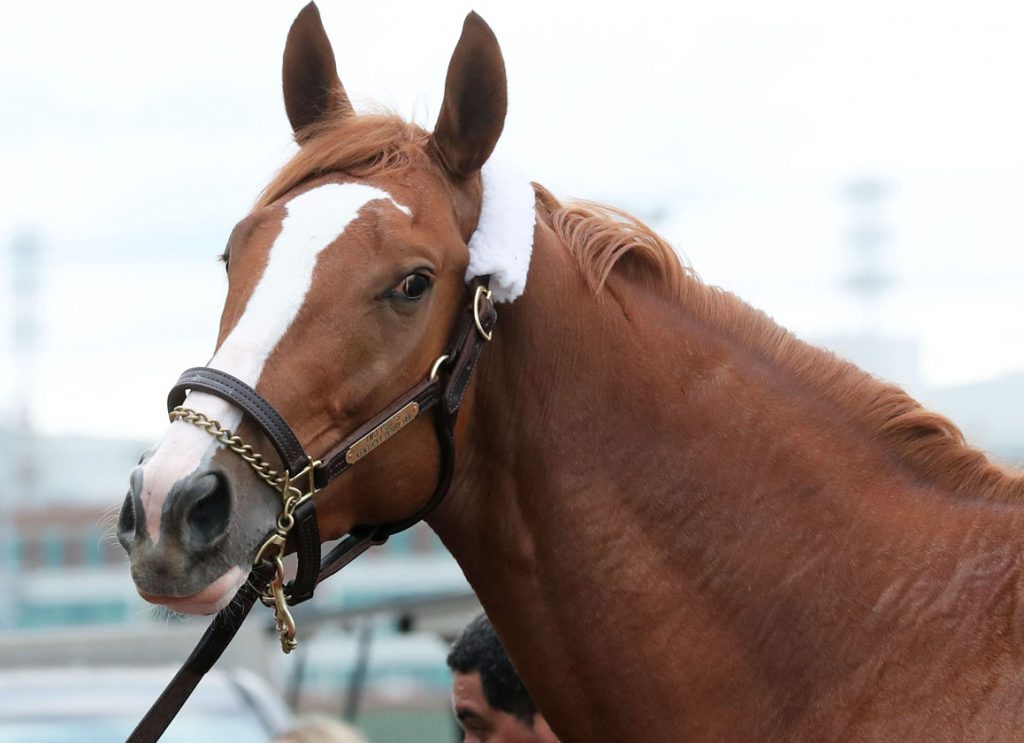
Sagan's father Phillip is one of the two octogenarian namesakes in the entourage who prompted the naming of Two Phil's (Hard Spun), that consoling sunbeam through the black clouds that had gathered over our sport last Saturday.

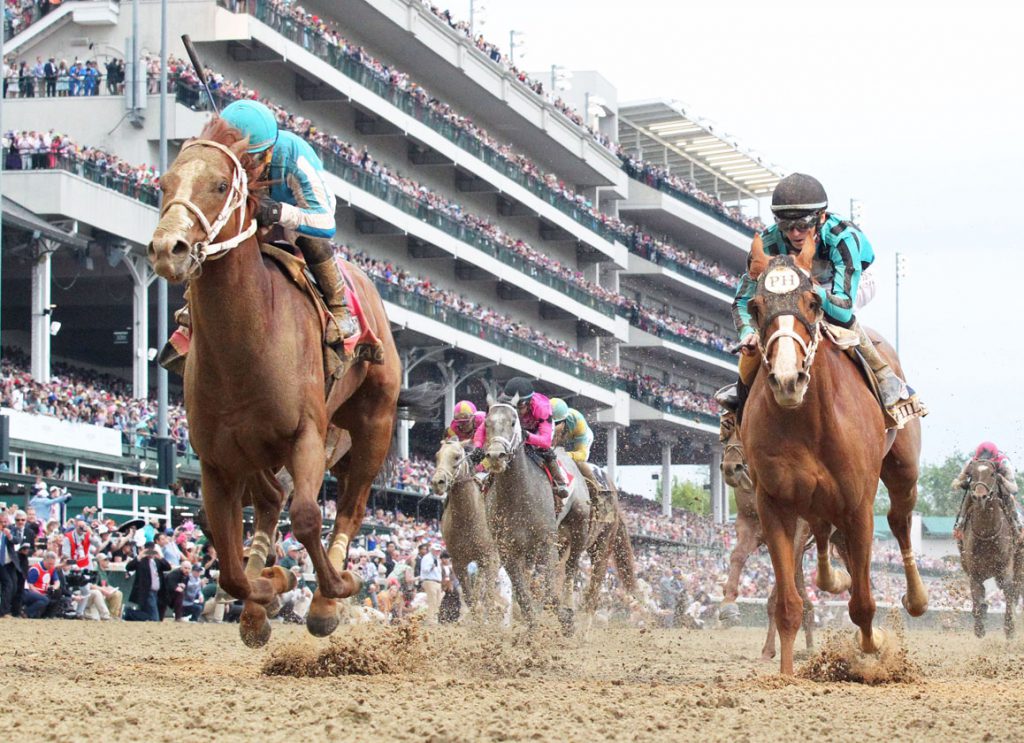
Even the 20 who drew a gate for the GI Kentucky Derby had not yet finally confounded the odds. No fewer than five were withdrawn between declaration and post time, three substitutes completing a field of 18. But Two Phil's, bred from the only Thoroughbred the Sagan family ever bought and ignored by every expert in the first session of the Keeneland September Sale, not only showed that he belonged. He actually took command turning into the stretch, and saw off every challenger bar Mage (Good Magic).

Second place, so near and yet so far, notoriously invites mixed feelings. But the Two Phil's team are still buzzing from an unforgettable day, even if it's only human to dwell on the bittersweet sense that Two Phil's touched, but could not quite grasp, the hem of turf history.

“Yes, we were happy and sad all in the same moment,” Sagan admits. “We were so proud of the horse and what he's accomplished. And we were sad because we just almost did it-and the odds of us getting ever back to there are… Well, it's like winning the lottery, will be in the billions. So many people try to get to the Derby every year, so many big-time owners and sheikhs and billionaires. And a little guy like us, we almost pulled it off.”

Mage and Two Phil's | Coady Photography

There had been corresponding support for the team all week, on the backside, and above all during the coveted “walkover” with Two Phil's, and the 17 others elected by fate, from the barns to the paddock. Being relative novices–the Sagans had previously only dabbled in a few Standardbreds–they were taken aback by the emotional intensity of that ritual.

“We didn't even realize that it was such a big deal, and what it entailed,” Sagan acknowledges. “It was an incredible experience; I can't even describe it. People along the rail, yelling and cheering and high-fiving us, screaming for Two Phil's: 'Let's go!' I'd never seen anything like this in my life. We didn't know how many fans the horse had out there. I think he'd kind of become a fan favorite, kind of the hard-working, blue-collar horse.”

He was also a Chicago horse, in spirit at least. His trainer Larry Rivelli won every Arlington training title from 2014 until the track's heartbreaking closure in 2021 by the same corporation that now provided the stage for this fairytale. Co-owner Vince Foglia of Patricia's Hope LLC, meanwhile, had been leading owner there since 2015. And Jareth Loveberry, who started out round a “five-eighths bull-ring” at Great Lakes Downs 18 years ago, had won its last two riding titles. Cast adrift from Arlington, here they were coming ashore with a horse that asked no favors and gave no quarter.

Poignantly, the Sagan family had spent their harness days at another doomed Illinois circuit, Maywood Park. In dipping their toe into the Thoroughbred world, however, they gave $40,000 for an unraced 3-year-old filly by a failed stallion, General Quarters. She had been recommended by two seasoned horsemen, Jerry La Sala and Gene Lotti, and their judgement was vindicated when Mia Torri became a dual stakes winner and twice finished second in graded stakes.

At this point they reached the first of many junctions, many roads not taken, on the winding road that ultimately led to last Saturday.

“The smart move would have been to sell her,” Sagan concedes. “At one point, we were being offered $300,000–plus for Mia Torri as a broodmare prospect. But she always had a special meaning to us. We'd named her after my grandma. And I always had a gut instinct, even when she got hurt and had to retire, that she could be something more. Horses like this don't come around very often. If you take the money, and then go out and buy some others, what are the chances you'll find one as good as this? The odds are way against you.”

It didn't look as though the gamble would pay off after Mia Torri lost her first foal, but she went back to Hard Spun for her second cover. This priceless conduit to the great Danzig had been picked out for the Thoroughbred rookies by Steve Leving, another stalwart of the Chicago racing scene. (Indeed, he would eventually re-enter the saga as Loveberry's agent.) Hard Spun was tough, classy, versatile, and fairly priced-and he also complemented the mare physically.

“Fortunately, the foal got the father's body and frame,” Sagan recalls. “Mia Torri's well put together, but she's not a really big, powerful-looking mare. But right from when he was born, he also got his mom's head: her demeanor, her attitude, her mental fortitude.”

The colt was foaled, raised and broken by Elise Handler at Spruceton Farm, Kentucky: yet another instance, in this story, of someone seizing a rare opportunity and reaching the highest standards. Handler got him through some of the usual baby issues and by the time the Keeneland inspectors came, they wanted to put him into Book I of the September Sale. But here was another twist in the road.

“Because with his pedigree he probably didn't probably belong in that first book,” Sagan says. “These people were experts, they knew what they were doing, and obviously saw something they liked in him. But placing him where they did probably kept us involved in the horse. Because if he'd been in Book III, we would probably have sold for $100,000.”

As it was, Hip 62 didn't meet his reserve at $150,000. They tried again, at OBS the following spring, and Jimmy Gladwell has since told Sagan that the colt had outworked all his other charges that winter. But he didn't sparkle in his breeze and it was clear that he would fall through the market cracks.

“You know what?” Gladwell said. “He's better than this. Take him home.”

With the fathers of Sagan and La Sala both sharing the same name, the colt was registered as Two Phil's and entered training with Rivelli, whose main patron Foglia also bought into the horse.  (Latterly, the horse having put himself in the Derby picture, Madaket Stables came in for a piece too.) And the rest is history: Two Phil's emulated Hard Spun by winning the race now known as the GIII Jeff Ruby S., before finishing second in the big one.

Two Phil's | Coady Photography

The Turfway race also produced Rich Strike (Keen Ice) to stun everyone in the Derby last year, but Two Phil's arrived with far wider belief behind him–not least after taking to the track so well in the GIII Street Sense S. last fall. So, while the whole team was cognizant of their privilege simply in securing a Derby gate, they weren't just in town for the ride.

“Just qualifying for the race, yes, that was a major accomplishment for this horse,” Sagan says. “But we believed that we had a real chance to win. I got there on Monday, because I knew that this was a once-in-a-lifetime shot and wanted to take it all in. And every morning on the backstretch people came up, wanted to take pictures and talk.”

A big Chicago crew assembled on raceday: Sagan's sisters, his nieces and nephews, a bunch of cousins and friends. And of course, Foglia had a lot of people with him, too, as did Rivelli. It felt like they had a long afternoon ahead, hanging out, walking around, soaking it up. The two Phils, characters both, did a spot on NBC. And before they knew it, it was time for the walkover.

Then a media group not only trained a camera on Sagan but hooked him up with a microphone and even a heart monitor.

“They said they wanted to share the experience of an owner watching the Derby,” Sagan recalls. “I said, 'Guys, I might swear a little bit!' They said not to worry, they'd get rid of that. But if we won, this would be all over the world news. My dad was down on the rail, but he couldn't even pick his head up. He was so nervous, he wouldn't watch it. He wanted to win for my mom. She just passed in December, she loved the horse, and would have been so proud to be a part of this. So, it was emotional for all of us.”

That heart monitor must have melted when Loveberry pounced from his stalking position.

“When he took the lead in the stretch, it really felt like we were going to win the Derby,” Sagan says. “I knew this horse has a huge heart, how hard he tries every time. Every other horse that had been near the front, they all finished 14, 25, 50 lengths back. But Two Phil's kicked on and got beat a length. The race he ran wins the Derby, like, nine out of 10 years. He ran a phenomenal race but hats off to Mage, we just came up short.”

Though Rivelli has decided to sit out the GI Preakness S., Two Phil's has put himself firmly in the elite of the crop and promises all kinds of excitement in the second half of the campaign. Meanwhile he has also brightened the future for his dam, who was bred back to Omaha Beach this spring. The Spendthrift stallion is already sire of her 2-year-old colt, apparently very handsome but just held up by a minor issue as a $32,000 RNA at Fasig-Tipton's Kentucky October Sale. He is in pre-training with Gladwell, while a yearling colt by McKinzie is being prepared for a likely appearance at the September Sale.

Sagan pays warm tribute to the way everyone involved, from farm to racetrack, has contributed to the development of Two Phil's.

“We're family-oriented people,” he says. “We try to stay with family businesses, and we're loyal. Everyone did a great job and we're happy that they got on the radar with Two Phil's. These horses don't come around too often, so it's pretty special for all of us. Jareth gave him a great ride. He saw the hole, he went for it, and almost pulled off an amazing upset. And with Larry, the horse always comes first. He gets them the best treatments, the best vitamins, the best feed. And he's got a great team.”

Team Two Phil's at Derby Draw | Coady Photography

After a fairly harrowing week for our community, this horse can help to keep the faith in the game's redemptive potential-if only we can do our bit right.

“Listen, I know there's a lot of black eyes around Thoroughbred racing right now,” Sagan accepts. “And these big tracks like Churchill make so much money, they should be doing everything they can to make conditions as safe as possible.

“But yes, horse racing needs these stories to keep the game going. How about Cody's Wish? That's another feel-good story. Some of these horses have a lot of meaning to people. We need to put that out there, make people realize that this game is not just about money and fame. Guys like us are a perfect example. This was sport, a hobby, something we love. Sure, it's awesome to succeed. But it wasn't our goal to make money. That's almost impossible to do. We managed to pull it off, but the horse did it, not us. He does all the work, and he deserves all the credit.”

Sagan is little too modest here. He's a poker player, after all, and has always been a gambler. And it took a risk-taker's instinct to keep his family aboard for this thrilling adventure. It would have been a more prudent option, no doubt, to take the money for Mia Torri; and not to persevere with her son when repeatedly rejected at market.

“But if you've got a good product, you stick with it, and that's what we did,” Sagan says. “We did feel this mare was going to be special. But yes, it's like a fairy story. You have one horse, you breed her, and you almost win the Derby. I remember the day he was born. Elise sent me a picture. It was an awesome thing, like, wow. But never in our wildest dreams could we imagine that any of this could happen.”

Hence the connection people demonstrated with the horse, making that Derby walkover: here was living, breathing, hard-running proof that everybody has some kind of chance.

“In the betting line, he was not a longshot,” Sagan notes. “He was 9-1, actually the fourth choice. But the story of this horse is what makes him a longshot. How he was bred, where he came from, and all the things that happened to him along the way. He was the underdog.

“Everyone on the backside was saying how good it was to see a new face get to this spot in the game. Mostly it's Pletcher, Cox, Baffert, the same guys with three or four horses every year, and the same ownership groups. Nothing against any of them. They put a lot of money into the game, and deserve any success they get. But it's good that a small-time guy with one horse can get to the Derby. It gives hope to other people that play this game. It shows that anything's possible.”

The post ‘We Almost Shocked The World’ appeared first on TDN | Thoroughbred Daily News | Horse Racing News, Results and Video | Thoroughbred Breeding and Auctions.

Source of original post

Champion South African Jockey Munger Makes A Great First Impression At Woodbine

Ryan Munger couldn't have scripted the moment any better.

As he walked out of the Woodbine jockeys' room for the first race on May 6 at Woodbine, the champion jockey who had already made a name for himself competing in his native South Africa and in Singapore, imagined what it would be like to make that first start a winning one.

The thought crossed his mind again when he got a leg up over the 3-year-old dark bay gelding Silent Miracle in the paddock ahead of the sixth race on an overcast afternoon at the Toronto oval. It was no different as the field made its way through the tunnel and onto the racetrack, in the moments heading to the starting gate, and when starter Ian Ross sent the nine horses on their way in the seven-furlong race over the Tapeta.

Silent Miracle's 10-1 odds suggested Munger, given the mount after Kazushi Kimura was handed the reins of Mandarin Hero (JPN) in the Kentucky Derby, had an outside shot of seeing that dream realized, but it would require a combination of racing luck, a solid trip, and a strong finish.

Sitting a half-length back of the frontrunner and a head in front of another contender at the stretch call, the duo was carried out late by a drifting rival before striking front and then holding on for a neck score.

Mission accomplished.

“Strangely enough, I was very calm that day and in the moment,” recalled Munger. “I was actually so calm that I surprised myself. The horse, he did seem a head better than the field, so I just had to put him in the right spot. He broke out of the gate very well and I was able to put him in the spit I wanted to. He is a pretty simple horse to ride. I thought we had won quite comfortably, but when I saw the photo-finish it was a bit tighter than I had thought. But I did think I had it.”

Munger, who has his Canadian citizenship, was still beaming the day after his milestone moment.

“It's the usual feeling whenever you win… joy,” he said. “Every winner I've had has brought me joy. What is different about this one is that it came at Woodbine. So, it was just a very happy moment.”

Born September 15, 1995, in Durban, and raised in Johannesburg, Munger attended the South African Jockey Academy and completed his five-year apprenticeship there from 2011-15.

His first mount came aboard Vladimir (SAF) on October 23, 2012, at Scottsville in South Africa. Just over two months later, he guided Nordic Lass (SAF) to victory at Clairwood, also in his homeland.

Since then, Munger, whose uncle, Stuart Randolph, was a jockey, has amassed nearly 800 career wins, and has been a Top 10 staple in South Africa and Singapore. He was the leading rider in Zimbabwe in 2017 and 2018.

Now, some 13,800-plus kilometres from where he grew up, Munger, who once described himself in an interview as a “very placid and a generally positive person,” will chase his goal of becoming a top rider in one of North America's most competitive jockey colonies.

“You always have to be an edge better than the other rider,” he said. “It is a very competitive jockey colony. It is challenging, but I've got confidence in myself. I'm going to work, be myself, be nice, and hopefully everything falls into place.”

So far, it has, both at the racetrack and on the home front.

Munger, along with his wife, Kelsey, are currently living with jockey agent Mike Luider and his wife in Milton, about a 30-minute drive west of Woodbine.

“I can't complain,” hes aid. “The first week, I thought, 'It's very cold here.' But the weather is great, and the people are unbelievable. I was very surprised to see how many nice and polite people are here, and how helpful they are. Everyone always says what nice people Canadians are, but they have really taken it up a notch. Everyone is so accommodating and helpful.”

Munger has been making the rounds on the Woodbine backstretch, introducing himself to trainers and other horse people.

Those visits, daily ones, are as much about gaining familiarity with trainers as they are about the possibility of earning future mounts. ​

“Even if there isn't an opportunity to ride for them now, I want to be courteous, have a smile on my face, and say hello,” said Munger. “You hope that somewhere down the road someone will say, 'Let's give this guy a chance.'”

If his first win is any indication of his abilities in the irons, those opportunities should come his way.

As for riding style, Munger prefers to let his horses call the shots.

“I ride each horse as to what their strength is,” Munger said. “I don't overcomplicate things. When those gates open, it's a completely different ballgame than what you have mapped out in your mind. Some horses might not break the way you expected, some are quicker than you anticipated. I concentrate on my horse and try to get them to peak at the right time during the race. That's my philosophy, to get the best out of my horse on that particular day.”

Munger is eager to test out his skills on Woodbine's two turf courses. He already has rave reviews for the main track.

“The inside turf course looks like a very technical track from watching the replays,”  he said. “The E.P. Taylor looks like one I will really enjoy riding because I can judge the pace well, bide my time and hopefully make that winning move.

“The Tapeta, it's like a duck taking to water. We had that type of course in Singapore and it was exactly as I remember it. You put the horse where they have the best chance to be comfortable. What's crucial about the Tapeta is where you get your horse going. When you are able to find that right moment, you can really increase your chances of winning. That's what happened when we won that race, where we found that opening and had the momentum to go on from that moment.”

When he isn't chasing his next victory, Munger, an accomplished cricketer in his youth, as well as a fan of Premier League football side Arsenal, enjoys hitting the links for a round of golf.

He's looking to test out Canadian fairways and greens in the coming weeks. ​

“Hopefully, the golf will come soon,” he said. “Watching Arsenal has been tricky so far. I'm still trying to find a channel that shows the Premier League games. I found a channel that shows all the IPL (India Premier League) games, so that's good. One of these days, hopefully soon, I can get out on that golf course.”

Munger's main focus will continue to be on establishing himself as an in-demand rider at Canada's Showplace of Racing.

He might not be the only Munger making a name for themselves at Woodbine.

“Kelsey has settled in quite well,” he said. “She's happy. We're just trying to get her paperwork in order. Once that is sorted out, she can start working here. She's looking forward to that, but we just have to be patient with the process. She has a lot of qualifications. She can be an assistant trainer, she can gallop, she can breeze. She rode in amateur races back in South Africa, so she's very competent at a lot of things. Whatever the right job is, she'll work to find it.”

The move to Canada has already felt like a winning one for Munger.

“I enjoy the competition and I certainly enjoy crossing the wire first. Hopefully, there are plenty more of those to come.”

The post Champion South African Jockey Munger Makes A Great First Impression At Woodbine appeared first on Horse Racing News | Paulick Report.

Source of original post

Verified by MonsterInsights