When Dr. Emma Adam took on the role of equine outreach veterinarian in 2018, the University of Kentucky's Department of Veterinary Science hoped that the renewed position could continue to bridge the gap between their research and diagnostic laboratories and the industry that they serve.
With five years now under her belt in the role, Adam is pleased with the strides that have been made in fostering relationships with the equine community–particularly within the Thoroughbred business in Central Kentucky–and she is optimistic that those connections will lead to further advancements in the coming years.
While Adam's role encompasses outreach for both UK's Maxwell H. Gluck Equine Research Center and the Veterinary Diagnostic Laboratory, she said the Diagnostic Lab has always been more outward facing by nature so her initial goal was to bring more external emphasis to the research center.
“Our entire community wants to be better connected with our industry stakeholders, but bandwidths can limit that reality,” Adam explained. “I think everyone recognized the need for someone who had practice and industry experience and could bring that to the Gluck Center to connect it with what we do within the building. Researchers are so busy trying to fund their projects and write papers that the time available to get out there and interact with our industry was getting less and less. We needed to take a step back and say, 'What do we need to do to remain connecting what is happening in our industry with what is happening in our academic community and vice versa, so that we can help each other?'”
Adam's background in racing has served her well in her position, which was spearheaded by Nancy Cox, UK's Vice President for land-grant engagement and Dean of Martin-Gatton College of Agriculture, Food and Environment. A native of Newmarket, England, Adam was immersed in the racing and breeding industry from a young age as she grew up on a commercial farm and was first familiarized with the racing side of the business when she worked for champion trainer Sir Michael Stoute. As a practicing veterinarian, she worked in various racing and breeding-related positions around the globe before deciding to return to academia and earn her PhD at UK's Department of Veterinary Science. From there, she stepped into her current role.
Making connections with farm managers and veterinarians has proven to be invaluable as Adam has worked to get the word out on the Gluck Center's mission and increase awareness among owners and breeders on the resources that the research center has to offer.
“Our research community is brilliant, but reaching them is sometimes difficult,” Adam admitted. “We have a fantastic network here through the Consignors and Commercial Breeders Association, the Kentucky Thoroughbred Farm Managers Club and our veterinary community. While we'd always love for it to be bigger, we're developing a stronger network of people that know we're here to help.”
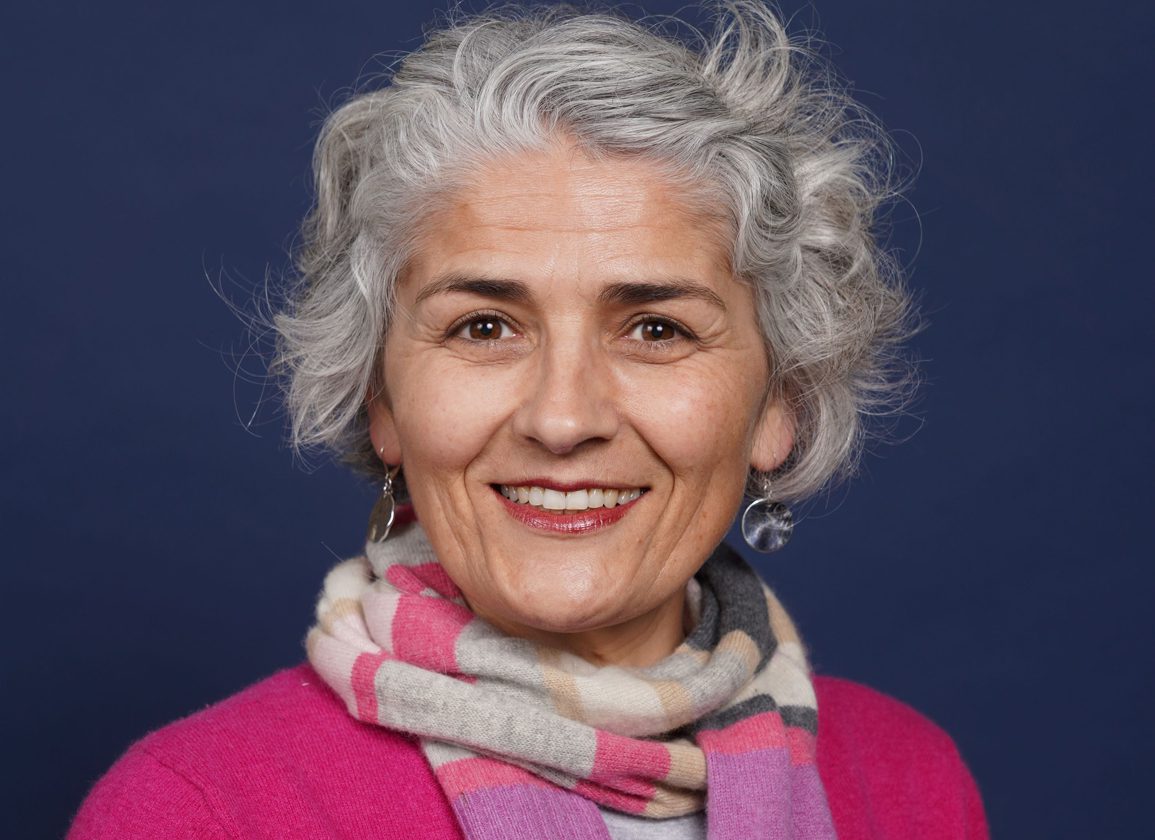
Dr. Emma Adam | photo courtesy Emma Adam
When breeders have issues arise, such as pregnancy loss, the Gluck Center's team coordinates with the Diagnostic Lab, veterinarians and farm managers to investigate those problems.
“We will go through lots of different parameters with the veterinarian and the farm manager and take some colleagues that might help with such things as examining the pastures,” Adam explained. “We'll do hay, soil and water analysis, and examine records for each mare. We'll work closely with our colleagues in the Diagnostic Lab so we can connect any dots that might be available to look at from the perspective of those unfortunate pregnancy losses.”
“We may not always arrive at an answer, but along the way we'll have often found out some other things that we can be more vigilant for,” she continued. “Those things might include checking to make sure that we're testing our pastures for things like tall fescue or trying to avoid stress when moving mares to different pastures. Everybody brings something to the table and we chew it all over and see if we currently have what we think is the best possible plan for that farm and then offer help to implement it if we can.”
Adam stressed that confidentiality and trust are important aspects of the work they do with commercial breeding farms.
“We have very strict confidentiality obligations and we take them very seriously,” she said. “All samples and veterinary and farm interactions are completely confidential. We recognize that it is vital that people can trust everything we do, not only with the quality of our science but in how we handle those interactions. We're very fortunate that people are generous with their information and we respect that they have entrusted us with it.”
Building relationships with more breeding farms throughout Central Kentucky has been an ongoing goal that Adam said she believes will lead to mutually beneficial results for both the research center and breeders.
One example of how this reciprocity has led to research findings is in the Gluck's studies on nocardioform placentitis, a cause of late-term abortions and perinatal deaths. Recent studies on this disease have been made possible in large part by the samples researchers have received from local farms. Efforts are ongoing with the goal of developing an early-warning diagnostic test for the condition and better understanding how and when mares are exposed.
The breeding industry supports the Gluck not only in supplying samples, but on occasion, in providing much-needed financial support. When a rash of neonatal foal diarrhea broke out in the spring of 2021, the general consensus was that the cases behaved like Equine Rotavirus A, however diagnostic tests were coming back negative. Upon closer examination, UK virologists Drs. Feng Li and Dan Wang were able to perform genomic sequencing on samples to determine that a new strain of Rotavirus had emerged.
The Kentucky Thoroughbred Association, Kentucky Thoroughbred Owners and Breeders Foundation, The Grayson-Jockey Club Research Foundation, Coolmore America, Consignors and Commercial Breeders Association and the William S. Farish Fund provided gifts to develop a research plan to develop a vaccine. This summer, work is being done to test new vaccine candidates that are hoped will provide protection to foals against Equine Rotavirus B.
“That is a perfect example of how our industry is really trying to help itself by helping us,” said Adam. “We're very fortunate to have a relationship where they recognize that we're here and trying to help and where they support us in that effort because there is so little money for equine research. When it comes to things that are a bit more niche like foaling mares, it is even harder to get funds to do the kind of work that is relevant to our industry.”
Adam explained that the concentration of mares bred and foaled in Central Kentucky can oftentimes lead people to falsely believe that the area has more problems than other places. Instead, she described how the community's outstanding veterinarians and farm managers endow the region with a culture of constant vigilance and a drive to understand every problem encountered.
“Everything is so close here,” she shared. “You don't have to drive more than an hour from any of these farms to get to our world-class Veterinary Diagnostic Lab that sees probably more horses and horse samples than any lab globally. What that means is we're able to, as best as we possibly can, explore and understand what happened and how can we might prevent it in future. That is not something that a lot of other places can access so easily.”
Moving forward as a growing number of local farms have started utilizing the Gluck's resources, Adam's next goal is to develop ways to gather data each year from surveys and surveillance sampling. These findings will be used to build profiles of how data is changing over time. The Veterinary Diagnostic Laboratory website collates some of these data, but Adam said she wishes to extend the survey to the farm level.
“We can take that data gathering further in asking our stakeholders to help us generate information on the things we deal with on a farm level–for example, pregnancy losses, red bag deliveries, foal diarrhea cases, yearling respiratory disease and so the list goes on,” she explained. “These data are absolutely essential to inform and direct our research not just at the local level here in the department, but from the perspective of being able to go out there and fight for the funding from the grant agencies to get that research done.”
Embarking on such a project is only possible with the collaboration of the entire Thoroughbred breeding industry in Central Kentucky, but Adam said she is counting on both the relationships that are newly formed and in others that have flourished over the years.
“The Department's footprint in our community continues to grow and that is a culture all of us in the University are keen to expand,” she said. “Taken together we have extraordinary natural and human resources here in Kentucky to serve and support our industry locally and worldwide.”

The post Symbiosis of Breeders, Gluck Equine Research Center Reaches New Heights appeared first on TDN | Thoroughbred Daily News | Horse Racing News, Results and Video | Thoroughbred Breeding and Auctions.
Source of original post
