Last June, Pat Cummings, executive director of the National Thoroughbred Alliance and former executive director of the Thoroughbred Idea Foundation, issued a stark warning about the encroaching impacts from Computer Assisted Wagering (CAW) to the men and women trying to forge a living through horse racing in the Golden State.
CAW players constitute a small group of mostly anonymous, high-volume gamblers with an outsized impact on the betting markets–including in California–due to their use of sophisticated wagering technologies and the inducements offered to them in the form of attractive rates and rebates not available to the average punter.
At the time, CAW play was the main source of handle growth in California, which by extension “is contributing the lowest percentage for purses” and thereby presenting “a serious, long-term concern for California and its horsemen,” wrote Cummings.
Cummings's detailed study appears prescient. Since then, several reports have illustrated the extent of California's purse account woes.
To explain the recent 25% purse cuts at Golden Gate Fields, the Thoroughbred Owners of California (TOC) said the track's purse account was over $3 million in the red. Purse cuts at Santa Anita stem from a near $4-million purse account overpayment. During the January California Horse Racing Board (CHRB) meeting, it was explained that Del Mar's purse account was overpaid by $2.1 million.

Pat Cummings | The Jockey Club
A complicated set of factors determine purse revenues. Field sizes, for example, are arguably the biggest architects of how much is wagered on an individual race. But CAW play has grown exponentially as a percentage of overall handle in recent years, giving it a key role in the sport's future in California. Why?
Unlike other states where purses are supplemented from alternative gaming like slot machines and casinos, California is reliant solely on betting to generate purse revenues. In other words, California more than any other major jurisdiction needs to thoughtfully manage its betting revenues–including from CAW–if it's to remain a healthy enterprise long into the future.
The problem with CAW–like so many aspects of the sport–is that it has long been shrouded in ambiguity.
To help peel back this opaque curtain, the TDN sought answers to some basic questions about how leaders in the Golden State manage such an influential part of the industry:
What CAW-related information is shared between whom? What oversight mechanisms are in place? If the state's horsemen and women feel they aren't getting a fair deal, can they leverage what they see as a better one? And where do state regulators fit into the scheme?
What is CAW?
In short, CAW players–frequently registered in offshore tax havens–use sophisticated digital tools and teams of staff to spot exploitable deficiencies in the betting pools, and to scour reams of betting and past performance data to identify winning opportunities at high rates of success.
Even individually, they can bet huge. Indeed, last year the Financial Times estimated that just two individual CAW players each wager “on the order of $1bn a year” on State-side racing alone.
In the U.S., CAW players largely wager through a handful of CAW agents' betting platforms, which in many ways act as glorified ADWs.
The biggest in terms of handle is the Elite Turf Club, majority owned by The Stronach Group (TSG), which also owns the Santa Anita and Golden Gate Fields racetracks in California. The New York Racing Association (NYRA) also owns a portion of Elite Turf Club.
Other key CAW platforms include Racing and Gaming Services (RGS), and Velocity, owned by Churchill Downs.
The bettors who aren't privy to the same rates and rebates as these deep-pocketed gamblers (more on this in a bit) argue that CAW players are driving the average gamblers away from the sport in droves, to the point where it's killing the betting markets and hurting purse revenues. Indeed, if CAW players become too big a percentage of the pools, their impacts become magnified and they essentially “cannibalize” the markets.
TOC president Bill Nader has pinned this tipping point at about 25% of the betting pools. Cummings's June 2023 report found that back then, CAW play in California often surpassed that benchmark.
CAW proponents counter that these well-capitalized gamblers provide vital liquidity and efficiency to the betting pools. Without them, these proponents argue, the sport would be significantly poorer, and that by sheer volume of play, they help prop-up purse accounts.
Indeed, the loss of just one major CAW player could hit a track's handle hard. This also means, however, that the biggest individual CAW players have historically been able to wield no inconsiderable leverage to negotiate their terms of play.
What Portion of CAW Play Goes to Purses?
To understand what part of the betting dollar goes to purses, there are two terms of note: Host fees and Takeout rates.
“Takeout” is the percentage sliced out of every dollar wagered. This pie is divvied up various ways, including a portion funneled into the purse account. Bets wagered on-track direct the largest slice back into the purse account. Bets wagered through ADW and CAW platforms direct the smallest amounts.
Takeout varies on several things like the host track state and bet type. But takeout is determined by track management and regulators and is non-negotiable. A general rule of thumb is an average 20% blended takeout rate across the different pools.
For CAW play, when the term “rates” are mentioned, what is meant are host fees, and these are negotiable.
Host fees are what any wagering outlet pays to track operators for the contractual right to import a simulcast signal. A wagering outlet could be another racetrack, an ADW platform (like FanDuel) or a CAW platform (like Elite Turf Club).
TDN spoke with several track and industry executives about the state of CAW play today. These experts said that CAW host fees for the premium tracks typically vary between 6% and 8%.
After breeders' premiums and other minor deductions have been removed, host fees are roughly split 50/50 between the track and the purse account in California.
Therefore, if Santa Anita beamed its signal to a location at a host fee rate of 6%, roughly 3% of the total amount handled on that signal at that location will flow back into Santa Anita's purse account.
Primary Oversight of Agreements
Before the beginning of each meet in California, the tracks present the TOC with a list of individual host fees charged to each location that receives its simulcast signal. For that track's meet to go ahead, the TOC must first sign this document, said Scott Daruty, president of both TSG's Monarch Content Management and of the Elite Turf Club.
“Before the Santa Anita meet opens, we give them a list of every location and price that Santa Anita is sold for,” said Daruty. “They [the TOC] either approve it or they don't.”
The list includes host fees the track charges CAW betting platforms. If the host fee of an individual CAW player deviates from that afforded an overall CAW platform, that too would have to be divulged, said Daruty.
“If there was an individual deal [between a single CAW player and the track], that would have to be disclosed to the TOC,” said Daruty.

Scott Daruty | Horsephotos
TOC president Bill Nader said that he has signed all such agreements since joining the organization in October of 2022.
Nader said he was unable to disclose what the host fees that CAW players receive. All host fees are private (not just for CAW players). But Nader described the negotiation of these fees as a “moving target as to how you get this right and how you get it right across all customer segments.”
Where Do Rebates Come From?
The way Nader and other experts explain it, the amount CAW players are “rebated” can be broadly calculated with this simple equation:
Rebate = Takeout minus Host Fee (plus any other associated minor fees). The smaller the host fee, typically the bigger the rebate.
Let's use the 20% blended takeout rate among the pools. And let's say the host fee (plus other associated fees) that the CAW player pays comes to 5%. The rebated discount for the CAW players, therefore, could be a maximum 15% on every dollar wagered (though more on this in the next section).
It's also important to note that bets with higher takeout rates leave the door open to potentially higher rebates. The seemingly counter-intuitive goal is that this leads to higher overall handle.
Several experts said the most successful CAW players can consistently win at an average rate of around 92%. At that rate, for example, a 15% rebate would see the player enjoy a 7% profit margin. According to Daruty, a 92% win-rate isn't typical.
“That's someone really hitting it out the park,” he said.
The bigger the rebate CAW players receive, therefore, the greater their overall profit. And the greater their overall profit, the more they're likely to wager. As one expert put it, “it's like a high-yield investment account.”
Indeed, former Australian bookmaker Tom Waterhouse recently said he was considering investing venture capital funds into horseracing-focused professional betting syndicates that receive these huge rebates.
“[Gambling] is a three trillion-dollar industry, and most people lose. The edge is against you,” said Waterhouse. “But there are a few groups globally that are able to find an edge.”
These rebates are usually returned daily–typically the following morning, said Scott Finley, former NYRA director of simulcasting with a long career in the pari-mutuel betting industry.
“In some cases, they might be done weekly,” Finley added. “But the general idea is, the quicker you front that money back to the CAW players, they're just going to churn that money and bet more. Remember, there's no credit betting allowed anywhere in the U.S. These are all true advanced deposit wagering accounts.”
The TOC, said Daruty, is not privy to the rebate rates that CAW players receive.
“I'm not sure the TOC has ever made that request,” said Daruty, when asked why this information isn't shared with the organization. “But if they were to make that request, I think our response would be to politely deny it.”
When asked why the TOC hasn't asked Elite for rebate data, Nader said that he can get a “very good idea of what the gross rebate would be” by looking at the takeout on the different bet types. “I can work that out,” he said.
What's in it for Elite?

All of which begs the question: What's in it for a CAW platform like the Elite Turf Club?
According to Finley, CAW platforms typically retain between 0.5% and 1.25% as a commission from the amount their players wager.
“It's all based on individual contracts between the [CAW platform] and their player teams,” Finley explained, about how these commissions are negotiated.
As an idea of what kind of number this commission might generate, Elite Turf Club handled over $180 million on Santa Anita's races during 2022, according to the CHRB's statistical opersion reports. At Del Mar during 2022, Elite handled just over $146 million.
Daruty said he was not at liberty to comment on the Elite Turf Club's commission rate.
When asked how, between the host fee and the CAW commission, it appeared that TSG was essentially double-dipping, Daruty said the company's tracks and Elite Turf Club performed two separate functions.
“It's only double-dipping if you're getting paid twice for doing the same thing. This isn't double-dipping because it's two completely different services. In fact, I think it's to the horsemen's benefit that we're operating Elite because they're getting more visibility and more knowledge,” said Daruty.
“If it was a third-party operator, they might not be getting that, but they'd still be paying the same fee,” Daruty added.
Individual Deals with the Tracks
At last year's Global Symposium on Racing in Arizona, Cummings raised the issue of individual players and their representatives negotiating directly with the tracks to receive favorable host fee rates. Some of these deals were negotiated years ago.
“There is undoubtedly a concern when one or two of the biggest players in the sport go door to door across this country and ask a track operator for a discount. Not a rebate–a discount on the host fee,” said Cummings.
John Woodford, chief executive of GWG Group, a Las Vegas-based LLC that provides domestic and international services to CAW players, said that while GWG does not have any such “bespoke” deals for its individual players, such agreements are unsurprising given the amounts sometimes wagered.
“It's the same for other industries,” explained Woodford, “if you're a significant contributor or participant.”
Last year, the Financial Times reported that just two individual CAW players that wager through the Elite Turf Club–Elite 17 and Elite 2–had significantly increased their wagering on California horse racing over the past 15 years.
Since that story came out, the CHRB stopped publishing wagering data showing individual CAW accounts–which it had done since 2008–and now pools these numbers together under the CAW platform. In fairness to the CHRB, however, no other jurisdiction publicly discloses this individual information either.
In this vacuum of individual player data, however, it begs the question: Are any CAW players still privy to favorable deals directly negotiated with California racetracks? Several sources consulted for this story said that at least one player still enjoys such a deal.
Nader declined to answer the question directly, but said that discussions with the tracks are ongoing, and that over the past year, the TOC had successfully negotiated better rates for its constituents. “Everything is a work in progress,” he said.
TOC Leverage?
If the TOC believes the horsemen and women don't receive a fair deal in these negotiations, it can refuse to sign the document authorizing tracks to send out their signals, essentially causing a simulcasting blackout. Nader calls this threat the “nuclear option.”
When asked if during his time the TOC has considered using this option during CAW negotiations, Nader responded that it should be used only as a “last resort.”
“You never really want to do that. If there's a complete breakdown, perhaps. But it should never come to that,” said Nader.
The TOC has deployed this “nuclear option” before in contentious simulcasting disputes. Back in 2008, the TOC withheld Hollywood Park's signal over multiple weeks to increase the amount ADWs were contributing to the purse account.
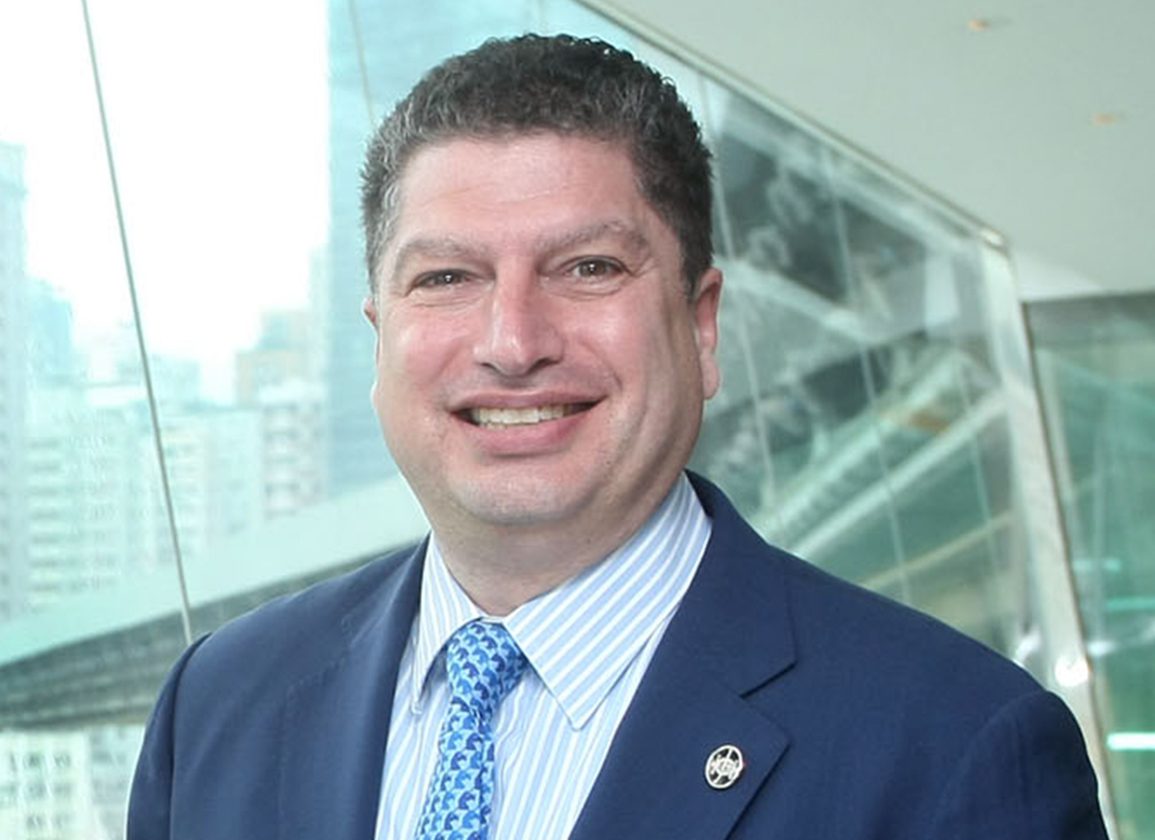
Bill Nader | HKIR
The move–which reportedly cost Hollywood Park some $500,000 a day in lost revenues–was deeply unpopular with both the ADW platforms and the tracks.
“It didn't make me the most popular guy in racing to the effect I got death threats against me and my family,” said then TOC president Drew Couto, who explained that during the simulcasting blackout, TVG repeatedly shared on-air his personal and home telephone numbers.
“They encouraged their disgruntled viewers to call and let their disappointment be known,” said Couto. “It also led to several death threats being called into the offices. The TOC had to close down for a few days while we addressed the security issues.”
But the TOC's hard-line stance in 2008 ultimately led to a better rate for the state's horsemen and women.
“They came around because we cut off the signal,” said Couto. “You have to have a strong board that says, 'we will weather the storm. But at the end of that, we will come out with better rates.' And those better rates will help us put on a better product. And that better product will hopefully appeal to players who want to bet eight-horse fields rather than four-horse fields.”
Couto said the Interstate Horseracing Act of 1978 gives the TOC the authority to dictate rates and fees.
“The TOC has used that structure in the past to set the rates, to set access, to determine who has access, and to control the use of our product,” said Couto. “It's not the racetrack's product.”
When asked about this authority apparently afforded the TOC through the Act, Nader stressed the ecosystem nature of the industry.
“I would see it more as a 50-50 partnership between the tracks and the horsemen, especially in a state where there's no other purse-enhancing supplements. That's how the tracks get paid as well,” Nader said.
“I think what makes this sport so uniquely spectacular is the competition on the track and the competition on the Tote,” Nader added. “For us, it's more finding the right balance across all segments.”
CHRB'S Role
The TOC isn't the only guardrail to ensure that CAW fee agreements are drafted with horse racing's long-term interests front and center.
While the CHRB does not routinely see those documents, “The CHRB has full legal authority to review any agreement if that were to become warranted,” wrote CHRB spokesperson Mike Marten in written responses to several questions.
The CHRB, wrote Marten, has not yet exercised that legal authority.
In response to questions concerning betting integrity, Marten wrote that, “We understand that Monarch pays special attention to CAW companies (i.e. Elite and RGS) whereby each of the CAW players undergoes repeated, extensive background checks every six months.”
Marten added that the Thoroughbred Racing and Protective Bureau–a subsidiary of the Thoroughbred Racing Associations of North America–has “performed a thorough investigation of many wagering sites, including Elite and RGS, as part of its service to the racing associations.”
The CHRB, Marten wrote, “also has access to those reports if warranted.” And he added how, “sparked by concerns about the individual locations/operators,” the CHRB “some years ago” obtained an unspecified number of these TRPB reports from its client racetracks.
The review resolved any concerns, “so no was action taken,” he added.
Conflicts of Interest?
Eagle-eyed observers of California's racing product and betting markets might have noticed the ownership makeup of recent GII San Pasqual S. winner, Newgrange.
Since at least September of 2022, Newgrange has been owned by a group that includes Little Red Feather, Rockingham Ranch and David Bernsen.
Bernsen is the founder of GWG Group. One part of Bernsen's role at the GWG Group has been to represent individual CAW players in their negotiations with the tracks, but Woodford said that Bernsen hasn't run or managed the company for the past couple of years, and is now focused on industry initiatives “outside of the CAW sector,” including racehorse ownership. Little Red Feather's managing partner is TOC chairman, Gary Fenton. Bernsen and Fenton, therefore, appear to sit on opposite sides of the CAW table. Does their ownership connection in Newgrange rise to a conflict of interest on the part of the TOC chairman?
Both Nader and Fenton said it doesn't. Nevertheless, Fenton said that he has recused himself from all CAW-related matters before the TOC since April of 2023 to avoid the appearance of any conflict of interest.
“Incidental co-ownership of a horse isn't considered a conflict by the TOC, but I made sure Bill and members of the board were aware. Still, due to the sensitive nature of simulcast rates, and out of an abundance of caution, when a matter connected with David [Bernsen] came up for the first time, I recused myself. Virtually all owners who serve on industry boards face similar instances,” wrote Fenton, in a statement.
Several experts interviewed for this story described TSG's ownership of both Elite Turf Club and two of the state's racetracks as a dynamic that does indeed rise to that level.
Daruty, however, refuted any conflict-of-interest accusations, and pointed to the historical ownership relationship between tracks and wagering outlets.
Though the nature of these “betting platforms” has evolved over the years–from on-track Tote windows to off-track-betting hubs to ADWs–the racetracks have always been part of the ownership mix, he said.
Daruty added, “This is just one more example of that.”

The post Computer Assisted Wagering: 101 for California Stakeholders appeared first on TDN | Thoroughbred Daily News | Horse Racing News, Results and Video | Thoroughbred Breeding and Auctions.
Source of original post
