Crimson Light Rolls Into ‘TDN Rising Star’ Station After Debut At Aqueduct

Achieving the mark of 'TDN Rising Star' means that you have done something out of the ordinary. Though he may have been green at the start of Aqueduct's fourth race on a slop-filled Sunday afternoon, by the time it was over, Crimson Light (c, 3, City of Light–Crimson Frost, by Stormy Atlantic) proved he earned the title. The colt definitely fit the mold when he came back from a seemingly insurmountable distance to graduate.

The Todd Pletcher trainee debuted with Lasix as the even-money choice here, but he hopped so badly at the start that he spotted the field at least 15 lengths. With Kendrick Carmouche aboard, the bay steadily began to pick up steam into the far turn even though the cameras were focused on the leaders. Rolling from the back of the pack, the bay moved to the center of the course down the lane, briefly was bumped by Shore Time (Not This Time), but was able to get up in the shadow of the wire. A claim of foul by Shore Time's rider was dismissed by the stewards and the result stood.

Crimson Light is his dam's first offspring, but he does have a 2-year-old unraced half-brother named Guns and Ships (Gun Runner), who was purchased for $310,000 by Greg Tramontin at Keeneland September. Crimson Frost initially went to S.F. Henderson for $10,000 at '15 Keeneland September before selling to Amy Moore for $250,000 at the '20 Keeneland November Sale while the winner was in-utero.

This is the fourth 'Rising Star' for sire City of Light, with the last being GISW Fierceness, who is a Eclipse Award finalist for the 2-Year-Old Colt category.

4th-Aqueduct, $70,000, (S), Msw, 1-7, 3yo, 6 1/2f, 1:22.04, sy, head.
CRIMSON LIGHT, c, 3, by City of Light
1st Dam: Crimson Frost (MSW & GSP, $476,278), by Stormy Atlantic
2nd Dam: Rock Jasmine, by Horse Chestnut (SAf)
3rd Dam: Ski Racer (Fr), by Ski Chief
Sales History: $280,000 Ylg '22 SARAUG. Lifetime Record: 1-1-0-0, $38,500.
Click for the Equibase.com chart or VIDEO, sponsored by FanDuel TV. Click for the free Equineline.com catalogue-style pedigree.
O-Whisper Hill Farm, LLC; B-South Gate Farm (NY); T-Todd A. Pletcher.

The post Crimson Light Rolls Into ‘TDN Rising Star’ Station After Debut At Aqueduct appeared first on TDN | Thoroughbred Daily News | Horse Racing News, Results and Video | Thoroughbred Breeding and Auctions.

Source of original post

Paul Thorman Q&A: Trickledown Boss On Ambitions In Retirement And More

The Tattersalls December Mares Sale marked the end of an era with Paul and Sara Thorman bringing the curtain down on their Trickledown Stud. 

Trickledown made its first public offering back in 1990 and has seen a kaleidoscope of change in the industry ever since. 

The Thormans will forever be associated for having back-to-back 2,000 Guineas winners–George Washington (Ire) and Cockney Rebel (Ire)–through their hands in the early noughties

George Washington was sold by Trickledown on behalf of his breeder at Tattersalls in 2004, where he topped Book 1 when selling to Demi O'Byrne on behalf of Coolmore for 1,150,000gns. 

Meanwhile, Cockney Rebel, who was bought as a foal by Trickledown for 15,000gns, turned a pinhooking profit when selling to Bobby O'Ryan for £30,000 as a yearling. George Washington won the 2,000 Guineas in 2006 while Cockney Rebel followed up the following year.

Amazingly, Thorman's association with back-to-back Guineas winners does not rank as his greatest day in the sport. Instead, it was the pinhooking of Dutch Art's dam–12,000gns into 710,000gns in less than a year–which towers above everything else. 

In this week's Q&A, Thorman reflects on some of those great days as well as his concerns for the sport and future ambitions. 

You brought the curtain down on the Trickledown consignment at Tattersalls in December. Was the much emotion involved in that process?

It wasn't so much emotion but more relief. Sara got hurt at Book 3 and when I went to see her in hospital that night I said, 'right, that's it, we'll finish now.' I'd been pushing out the retirement and I know Sara was ready for it as well. You know, when there is a yearling or a foal misbehaving, you are the one who has to grab a hold of it. There comes a time where that is no longer the sensible thing to do and we were ready to retire. We have been the luckiest people in this industry and had the most amazing staff. Some of the staff have been with us since they were 15 or 16 and came back to us after they've had a family. We've also had some brilliant owners, the likes of Chris Mills and Ray Townsend, who have been with us for 30-odd years. No outfit can operate and survive without good owners and staff and we have been blessed with both.

The consignment business has changed a lot since you and Sara started. Trickledown would have been one of the first major consignors in Britain back in 1990. What have been the biggest changes that you have seen since you started?

Since we have started, we have seen the likes of Castlebridge, Barton and similar outfits become huge. We've had our loyal bunch of supporters but, as they have gotten older, some have dropped away. Young people like to work with young people and that's why maybe Castlebridge and Barton consign major numbers. I mean, when we started, we used to consign 80-odd foals and we had the best owners that anyone could ask for. We consigned over 1.5m gns worth of foals three years running at one point. This year, the same group of owners were down to just 30 foals to consign. We haven't have a new client for five years. Certainly not a major client. But things evolve and we certainly hadn't been looking for that same volume of work as we were. It has dwindled down without us doing anything and things move on. It was time.

I know you've had a lot of good horses through your hands but, in many ways, you have been the champion of the smaller breeder. With that in mind, how tough was it to watch on at the breeding stock sales last year?

Oh, for sure. We gave, and I mean gave, two mares and two foals away. These are animals that, five years ago, they would have made five or six grand to Italy or wherever. I had to work hard to give those horses away and, I promise you, they weren't wrecks. You can very quickly work out if a foal is a wreck and if it is never going to be worth anything but these were not wrecks. The two mares we gave away would certainly have been viable three or four years ago. These mares and foals belonged to smaller breeders who have been great clients of ours and it was bloody hard turning to them to explain what was going to happen. Now, we did telegraph it a long way out because the horse were all by stallions who had fallen off a cliff. But, even when you put no reserve on the horse and you don't even get a bid in the ring, that takes a shine off things. Fashion has never been stronger. We used to be able to sell yearlings by unpopular stallions. If they were good-looking horses out of reasonable mares, they'd find a level and sometimes that level was quite good. Sir Mark Prescott, Peter Makin, the likes of those people would always buy a good-looking horse by an unfashionable sire. Now, if you have picked the wrong sire, there is nobody for it. Stallions are never as good or bad as fashion says they are.
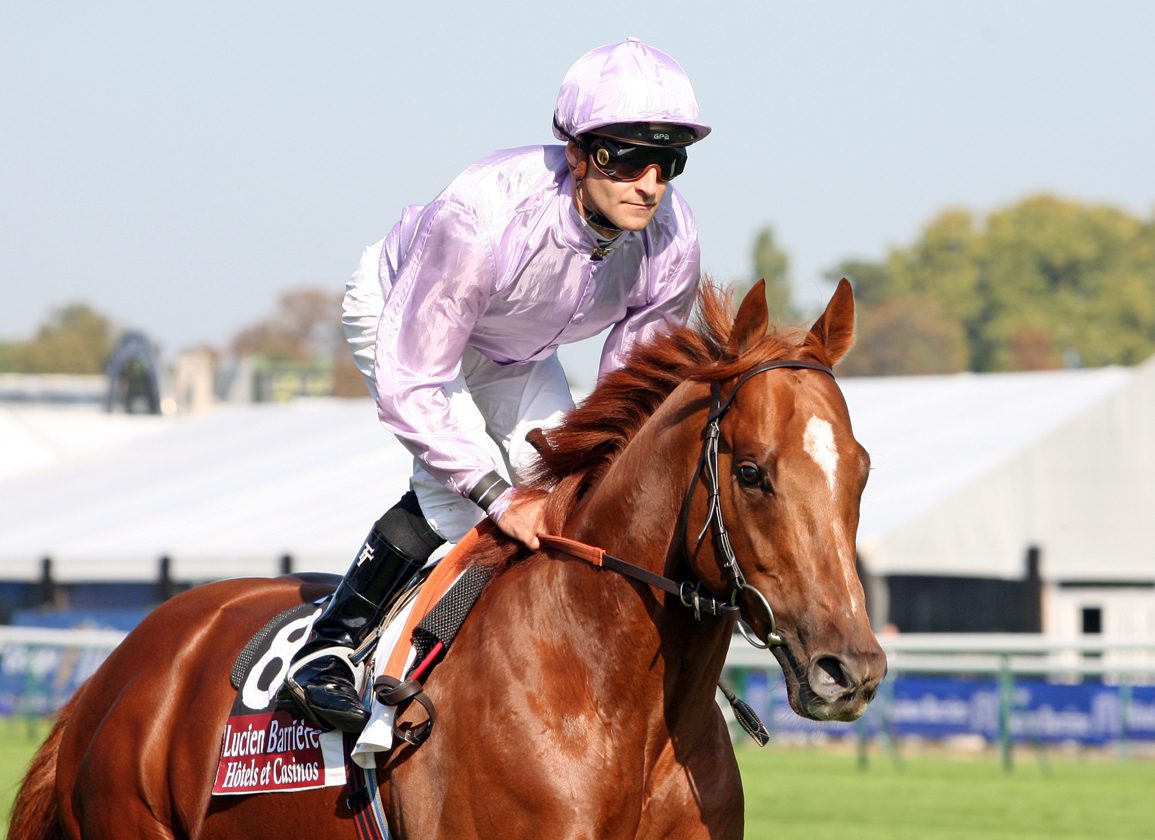
Dutch Art: Thorman pinhooked the horse's dam for major profit | Racingfotos.com

Will fashion play much of a role in your pinhooking? I suppose it will have to. 

The only thing about fashion when pinhooking is that you have a year for things to change. You couldn't buy a Havana Grey (GB) at Tattersalls in December unless you had a big budget but there were some stallions out there that you felt still had mileage in them so you were happy to buy a foal out of those horses. The most expensive foal we bought was an Ardad (Ire). He had 108 foals two years ago so he has plenty of runners to represent him this year. He was also one of the leading first-crop sires two years ago so he must still have a chance, mustn't he? This foal was a dinger. Now, if Ardad doesn't come off, we might be lucky to get thirty grand for him. But if Ardad comes back into fashion, this could easily be a one-hundred grand yearling. It's buying a lottery ticket, isn't it? There are several horses you could have said would have had the makings of being a decent first-crop sire last year. There are probably four of those stallions who have absolutely been canned already. I mean, you cannot get a bid if you are by any of those stallions. But they are not that bad. Fashion has multiplied their disappointment. 

Getting back to the foal sales, have you any other thoughts as to why things were so bad for your clients?

There weren't any foreign buyers at Tattersalls. I got talking to one of the transport men and, I don't know if he was spinning a yarn or not, but he told me that between Brexit and the English paperwork, it costs the foreign buyers on average one thousand pounds more to get a foal home from England compared to Ireland. That has certainly made a difference. There was more of a market at the lower end at the foal sales at Goffs in Ireland. But at the other end of the spectrum, we had a decent order to go and buy a foal. We were prepared to spend fifty, sixty or seventy grand but, everything we liked, we just kept on getting blown out of the water. We weren't even finishing second or third on these nicer foals. 

Your broodmare band is down to four. How hard has it become to breed commercially? It's obviously a lot more expensive to produce the horses and perhaps now more so than ever you have to be very careful about what stallions you choose. 

Our philosophy to breeding has changed a lot but that is due to circumstances. We don't have the farm anymore. When you have a farm, whether you've six mares in a field or eight mares in a field, it doesn't make a fat lot of difference. You can kid yourself that you are keeping them for nothing so, that chancy mare, you might sit with her an extra year or two. When we gave up the tenancy of the farm, we looked at our mares very critically and decided that, if they had two runners that were no good, we shifted them on. Again, I wanted to buy a decent mare in December but didn't because my want list was bigger than my budget. The mares I have are getting a bit older and I could do with some new blood in there. But it's funny, all the good mares I have bought down through the years, I've almost bought them by mistake. The cliche is that the good mare finds you and that you don't find the good mare.

You've had your fair share of good touches. Is there one result that towers above another?

It would have to be Halland Park Lass (Ire) (Spectrum {Ire}), the dam of Dutch Art (GB), because, again, I bought her by mistake. I had no intention of buying her. I had a bunch of friends who told me that, if I saw a cheap mare, they'd like to come in on one with me. They were two veterinary surgeons from Newmarket and an auctioneer [Ollie Fowlsten]. Every mare I tried to buy for us, I got blown out of the water. A friend came up to me to tell me about Halland Park Lass and said 'she won't do you any harm.' I couldn't find a reason not to buy her so I bought her. I had seen Dutch Art at Doncaster and, although he wasn't the best-looking yearling, I remember being taken by how athletic he was. That was a great story because the two vets bought houses on the proceeds of her sale, as did the auctioneer. I sold a foal out of the mare to my daughter when Dutch Art won his maiden and that ended up helping her to buy a house. For me and Sara, the biggest thrill of all was the fact we did it for relatively small people. When we sold George [Washington], yes it was great and he was the only yearling that year to make over a million, but the owner was already a millionaire and had a big reserve on the horse. So, it was almost a relief when he sold rather than a slap on the back moment. Anybody could have sold George. Well, maybe not anybody, as he wasn't the simplest fella to deal with. The bulk of the fun we had at Trickledown was when people got a touch and it really mattered to them. 

Given everything you achieved–being associated with back-to-back Guineas winners and that massive profit with Halland Park Lass–is there more left to tick off?

I'd love to own a very good racehorse. We've had plenty of fun with the horses we've raced but never had a real one. But then again, we tend to race what we're left with rather than what we really like. There might be an opportunity to keep one that we really like going forward. Sara and I are very much into our point-to-pointing and we've got two pointers in training with Chris Barber, one of which we know is only going to be a fun horse. We went to 17 or 18 points last year and had so much fun. If I was to ever win one of the big races, the Foxhunters at Cheltenham or Aintree would be top of my list. Could you imagine the buzz? That would be a dream. 

And who will consign your horses going forward?

David Hegarty, who has just set up on his own, and Robbie Mills, who is actually the son of Chris Mills, who we have sold horses for for over 30 years. He's trading as RMM Bloodstock. You watch them over the next year or two. Both are exceptional talents. They'll find it easy following us!

The post Paul Thorman Q&A: Trickledown Boss On Ambitions In Retirement And More appeared first on TDN | Thoroughbred Daily News | Horse Racing News, Results and Video | Thoroughbred Breeding and Auctions.

Source of original post

‘Pimlico Plus’ Concerns: Roving Preakness, Future Of Turf Racing, Synthetic Readiness

'The Week in Review', by T.D. Thornton

A few items that stand out after sifting through Friday's “Pimlico Plus” report issued by the Maryland Thoroughbred Racetrack Operating Authority (MTROA). The ambitious $400-million plan, which is subject to legislative approval, re-imagines the state's racing consolidated at one publicly funded track in Baltimore, the closure of Laurel Park, the construction of a new training facility in the state, and 1/ST Racing and Gaming ceding control of day-to-day Maryland racing to a non-profit entity.

Triple Crown traditionalists who are already in a tizzy about the GI Belmont S. needing to relocate to Saratoga Race Course and change its distance for 2024 because of the complete overhaul of Belmont Park had better brace for a radically nomadic renewal the sport's signature series in 2025.

If the proposed re-imagining of Pimlico Race Course gets green-lighted by the Maryland legislature as per the MTROA's desired timetable, and if the New York Racing Association (NYRA) confirms the expected Belmont-at-Saratoga festival again for next year, the 2025 series of spring Classics could feature the GI Kentucky Derby run per usual at Churchill Downs, followed by the GI Preakness S. at Laurel Park (the placeholder host during Pimlico's reconstruction), and the Belmont S. at Saratoga for the second season in a row (at the truncated distance of 10 furlongs because NYRA doesn't want to start what is traditionally a 12-furlong race on the Spa's far turn).

Even assuming that a modernized Belmont Park is ready to take back its namesake stakes in 2026, the Maryland time frame still has Pimlico's construction ongoing through at least that year, meaning the earliest return to Triple Crown normalcy, in terms of host tracks and race distances, could be 2027.

In addition, the 150th running of the Preakness will occur in 2025, but the festivities will likely be muted because of the temporary move. The anniversary will certainly be recognized, but don't expect a Preakness-at-Laurel celebration to have the same cachet Churchill will enjoy this year when it unveils long-planned facility upgrades and partners with the city of Louisville for an extended Derby 150 bash. It will be tough for whoever controls the rights to the Preakness to take advantage of the historical hoopla associated with its big anniversary if the race gets moved to temporary digs 28 miles south of Baltimore.

The Preakness is only one day, but the turf racing season in Maryland usually lasts for more than six months. Consolidating racing at Pimlico will mean limiting grass racing to one smaller course that won't get much of a break during the sweltering summer months.

    When Laurel's expanded turf course opened in 2005, it was billed as a game-changer for Maryland racing, and it has proven to be an investment that paid off handsomely in terms of delivering more grass opportunities, boosting field sizes and generating handle.

While Pimlico's existing (and proposed new) turf course is seven furlongs in circumference, roughly the same as Laurel's (seven furlongs and 254 feet), the key difference is width–Pimlico's existing/proposed width will remain at 70 feet according to the MTROA report, while Laurel's is a generous 142 feet wide, allowing for the ability to move portable rails out 17, 35, 53, 70 and 87 feet to provide six different running lanes.

Just last month, the Maryland Thoroughbred Horsemen's Association (MTHA) issued a press release that underscored how the “Laurel turf is integral not only to the Maryland racing product but the overall mid-Atlantic racing product.”

According to the MTHA's count, in 2023 Laurel ran 273 turf races, the most since 2019 and the highest number among all racetracks in the mid-Atlantic region. Average field size for the course was 9.2 horses per race over six-plus months of usage, while the average field size for dirt races at Laurel between Jan. 1 and Nov. 30 was only 6.8.

Pimlico, which conducted short meets in May/June and September 2023, ran 72 grass races, giving Maryland access to 345 in-state turf events. But the actual number of turf races at Pimlico isn't as important as the break its meets afford Laurel's course, which had shown signs of strain in previous years when Pimlico didn't run during the summer.

Pimlico's ability to carry on Maryland's reputation as a strong grass-racing state is dubious given the course's size and a calendar that will give it a summer break only when the Timonium fair is in session at the end of August and early September.

The turf course at Colonial Downs is 180 feet wide and 180 miles south of Pimlico. Over the course of a 27-date 2023 summer meet, the Virginia track ran 213 turf races, the second-highest in the region, according to the MTHA's numbers.

To Maryland, Colonial looms as a horse-siphoning threat in both the short term (for the several years Laurel will race almost non-stop while Pimlico gets rebuilt) and over the long term, when Pimlico takes over with a turf course that isn't as expansive or versatile as the one it's replacing.

Whether Pimlico's main track and turf course remain in their existing locations or get rotated to better fit within the redesigned property's footprint (both options are outlined by the MTROA), one of the report's “Guiding Principles” states that “The dirt track shall be engineered to be 'synthetic-ready' allowing the quick and economical transition from dirt cushion to a synthetic cushion.” The proposed new training facility is also supposed to have this “synthetic ready” infrastructure in place.

Wanting both Pimlico and Maryland's new training center to have the option of switching over from dirt to a synthetic surface in the future seems to be a good idea from a planning perspective, because it's unknown at this point if a federal mandate requiring synthetics might be in the pipeline from the Horseracing Integrity and Safety Act Authority. But claiming that having such infrastructure is going to position Maryland to be able to “quickly and economically” pivot from one surface to the other understates the difficulty of taking on this sort of after-the-fact conversion.

More than two decades of synthetic-surface history in North America has shown that making a switch is, by its very nature, neither fast nor cheap.

When Woodbine Racetrack changed from Polytrack to Tapeta during the winter of 2015-16, the work took three months, was purposely scheduled for the offseason, and had to include a settling-in period before horses were allowed on it. Turfway Park made the same surface switch in 2020, but had the luxury of an April-to-November time window between race meets to get the project done properly. To a certain degree, both those tracks were “synthetic ready” because they were switching from Polytrack to Tapeta. The cost for each project was measured in seven digits.

Can you imagine if “Pimlico Plus” reopened in 2027 with a dirt surface, and at some point soon after that the entity running the operation decided Maryland's only racing venue needed to cease racing for a while in order to switch over to synthetic?

By all means, build the base and its infrastructure to the best possible standards with a focus on safety. But if a synthetic surface is in Pimlico's future, decide on that right from the outset without making it seem like a subsequent change from dirt could realistically be “quickly and economically” accomplished.

When Laurel closed for five months in 2021 to replace its main dirt track with an entirely new dirt surface, Maryland racing had Pimlico to fall back on so racing on the circuit wouldn't go dark. If Pimlico becomes the state's sole Thoroughbred track, there will be no Plan B for Maryland racing if it needs to repair or switch surfaces.

The post ‘Pimlico Plus’ Concerns: Roving Preakness, Future Of Turf Racing, Synthetic Readiness appeared first on TDN | Thoroughbred Daily News | Horse Racing News, Results and Video | Thoroughbred Breeding and Auctions.

Source of original post

Bidding Back in 2024: Keeneland January Sale Starts Monday

The Keeneland January Horses of All Ages Sale begins Monday in Lexington and continues through Thursday with sessions beginning daily at 10 a.m. Following on the heels of an apparently softening market at the Keeneland November Breeding Stock Sale two months ago, consignors expect to see that all-too familiar polarization continue at the first auction of 2024.

“If you take a nice physical over there–the same as in November–it will stand out and should bring plenty of money,” said Hunter Simms of Warrendale Sales. “I think last year was a good year overall and I don't see any reason why that shouldn't lead to good demand in January.”

Reflecting on the November market, Simms said, “Judging from what we had and looking at the prices of what sold, the higher quality stuff brought very, very good money. The horses that people could fault, whether it was in produce records or older mares with a late cover date, maybe she has had four or five foals and there was no black-type, or if you had a foal and there were maybe some conformational faults or the sire didn't hit with 2-year-olds right off the bat necessarily, those were more of an uphill battle to get sold. It seemed like buyers were a little bit more reluctant to spend big money on those kinds of horses.”

Simms continued, “All of last year, the upper end of the market was very strong, but it was that middle to lower end where it was tough to get a lot of movement on horses, to get multiple buyers. I think that trend will continue. We've seen that trend for a few years now. It all reverts back to, if you have the physical, the right sire, and all of the pieces, your outcome should be good.”

The overall economy may offer a bright spot heading into the four-day January sale, according to Simms.

“I know interest rates are starting to creep down off that seven or eight percent,” he said. “Hopefully that will get some new people into the game that might want to start buying.”

Zach Madden of Buckland Sales agreed the January sale will continue the trend of polarized strength at the top and a weakening in lower strata of the market.

“I think it's going to be the same song and dance,” Madden said. “The stuff that is of quality is going to be very well received and I think foals that vet and walk well and have the pedigree and all of that will be hopefully strong. I think that we are just going to continue to see the same polarization of stuff that people really, really want and they go after and they pay top dollar for and then the sort older or “exposed” mares that just don't have much going for them or are in foal to a stallion that isn't making a lot of noise right now–man, that was really tough there in November and, candidly, I expect that to be worse next week. But I still think the top quality is going to bring a bunch of money and the stuff that is perceived to not be that will be a little softer.”

The 2023 November sale ended with figures down from the auction's strong 2022 renewal causing some jitters from consignors, but Madden saw reasons for optimism, particularly in the foal market.

“I know a lot of people were kind of doom and gloom over the market in general, but stepping out of the middle to top-end type of foal, they were bringing really good money,” Madden said. “I think there was an over saturation of buyers and not enough quality offerings. Why that is? I have no idea. But as people got their sea legs into books three and four, buyers who were looking at that $100,000 and down foal, I felt like that was really competitive. And I think a lot of people didn't fill their orders, so I do think that will be strong.”

Madden continued, “I sort of think that 'sky is falling' mentality overshadowed the, 'Hey, the foal market is pretty good.' It's obviously one sector of the whole market, but everybody wants to talk about how bad stuff is, and at the end of the day, I still feel like that quality and the foal market are going to be two strong things, hopefully, leading into next week.”

In all, 962 head grossed $45,408,300 through the ring last year for an average of $47,202 and a median of $19,000.

Ancient Peace (War Front), a supplement after breaking her maiden just weeks before, brought the 2023 January auction's top price when selling for $650,000.

The most recent supplements to this year's January catalogue include Sophia Mia (Pioneerof the Nile), whose first foal Speed Boat Beach (Bayern) captured the Dec. 26 GI Malibu S., and who sells in foal to Not This Time; and the 5-year-old mare Angel Nadeshiko (Carpe Diem), who won the Dec. 30 GIII Robert J Frankel S.

The final 10 supplements announced last week bring the total January catalogue to 1,477 horses.

The post Bidding Back in 2024: Keeneland January Sale Starts Monday appeared first on TDN | Thoroughbred Daily News | Horse Racing News, Results and Video | Thoroughbred Breeding and Auctions.

Source of original post

Verified by MonsterInsights
