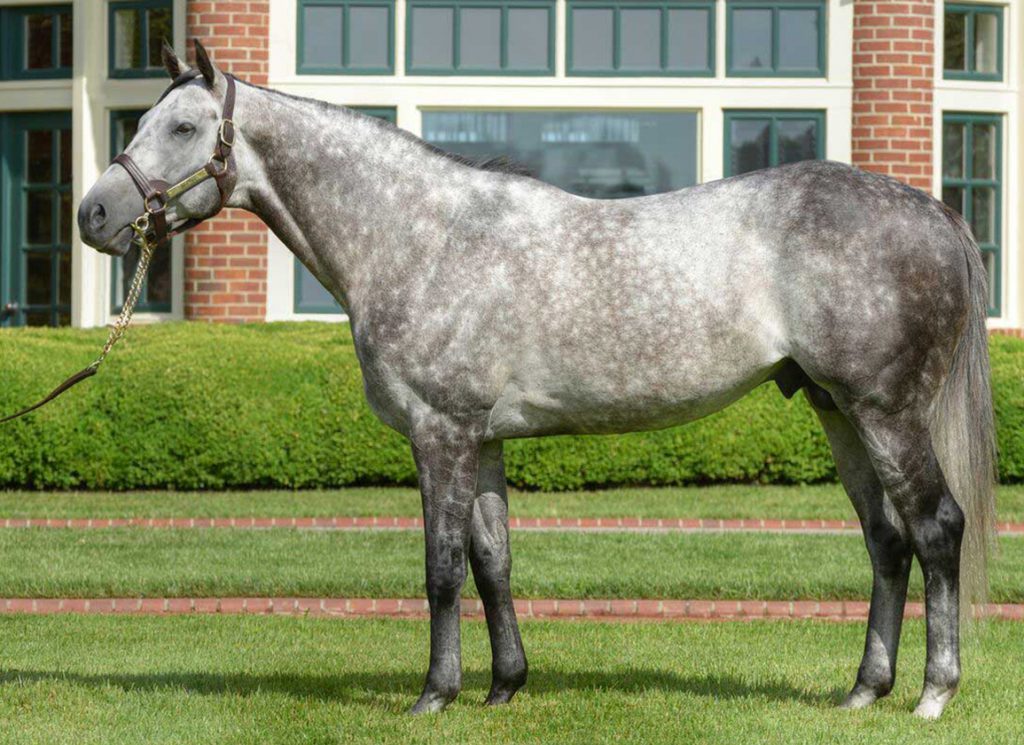
‘Lucent Zone’ May Be Useful In Diagnosing Acute Laminitis 

Though horses can develop laminitis from a myriad of factors, the most common form of the dangerous disease is hyperinsulinemia-associated laminitis (HAL). High circulating insulin levels cause laminitis, a painful hoof condition affecting the laminae of the hoof, which supports the coffin bone. 

Read more about laminitis here.

Unlike other forms of laminitis, HAL-induced laminitis may be partially reversible – but intervention must take place as quickly as possible, reports The Horse.

 Dr. Andrew van Eps, speaking at the 2023 Saratoga Vet & Farrier Conference, has found that using the “lucent zone,” seen on radiographs, can help determine the extent of acute laminitis damage. This zone is parallel to the coffin bone and represents the lamellae. In healthy hooves, this zone should measure less than 7.5 millimeters. Any increase in this zone, no matter how slight, is significant, he said. 

The lucent zone also changes shape and angle, particularly when the coffin bone begins sinking. Van Eps looks at the ratio of the lucent zone and total wall thickness to measure the separation, which is less affected by X-ray technique.

Though the lucent zone may increase within hours, improvement, as indicated by the shrinking of the zone, may take multiple months and aggressive treatment. Treatment of acute HLA often involves cooling the hooves, restricting the diet and administration of drugs that lower blood insulin as rapidly as possible. 

Van Eps recommends pulling the horse from pasture grass, offering hay that has been soaked (at 1.5 percent of the horse's body weight per day) and administering drugs like metformin or a sodium-glucose co-transporter 2 inhibitor (SGLT2i). In some cases, early reduction of blood insulin concentrations has been shown to offer more rapid improvement of HAL. 

Read more laminitis updates at The Horse

The post ‘Lucent Zone’ May Be Useful In Diagnosing Acute Laminitis  appeared first on Horse Racing News | Paulick Report.

Source of original post

Ed Harper Q&A: “What Excites Me Most Is Our Horses Winning On The Track”

It has been a big year for Whitsbury Manor Stud. From a landmark result with homebred Chaldean going on to win the 2,000 Guineas for Juddmonte, his half-sister Get Ahead selling for 2.5m gns at public auction and the continued rise of superstar stallion Havana Grey, 2023 has been the gift that keeps on giving for Ed Harper and his team.

There is plenty, still, to look forward to next year, with fellow Whitsbury-based stallion Sergei Prokofiev set to be represented by his first crop of runners and Dragon Symbol taking up his position on the roster. 

From all things Whitsbury to reflecting on the breeding stock sales, the ever-engaging Harper makes for required reading in this week's Q&A.

You must look back on 2023 pretty fondly with Whitsbury Manor Stud homebred Chaldean winning the 2,000 Guineas for Juddmonte?

We wouldn't have a lot of runners in Classic races because of the types of stallions we stand but, obviously, we use a few outside stallions every year. When you use the best stallion around [Frankel], you hope to provide yourself with a chance to step up on quality. It couldn't have worked out any better with Chaldean winning the 2,000 Guineas. 

Where would that rank?

A great milestone. It ranked very highly but I don't feel as though it was a whole heap of hard work that produced the result. For example, producing a stallion like Showcasing or Havana Grey, that takes five or six years of hard work from every team member pulling in the same direction. A result like Chaldean is a piece of good judgement in the sales ring to buy the mare by Dad, which isn't to be underestimated, but even he would admit that there is a lot of luck involved. So, you get yourself a diamond mare in Suelita, what are you going to do with her? You're going to send her to a diamond stallion. It's brilliant, and it's fantastic, but it's not comparable to the whole Whitsbury machine working together for years to make a stallion. I see the two things very differently. 

You must have got a lot of pleasure at seeing Chaldean's half-sister Get Ahead, a talented mare in her own right, selling for 2.5m gns to Ian MacAleavy's First Bloodstock? 

I'd have rathered if we didn't have to sell her! We have to remind ourselves that the function of Whitsbury is not to have a small, uber broodmare band sending mares to the best stallions on the planet. Our job is to keep small breeders alive in England because, without them, there is no breeding industry in this country. If we can sell Get Ahead and support the business in areas that help, such as the grassroots by making stallions, then that's our job. Effectively, weighing up the sale of Get Ahead, we can't be everything to everyone. You can't be brilliant at everything. It doesn't work like that for anybody. So weighing it up, we ask ourselves what our priority is. Is it looking out into the paddock and seeing the occasional super mare going to the super stallion or is it making the next stallion? We effectively prioritised the buying of Dragon Symbol over keeping Get Ahead. That's the choice we made. 

I'll go on to Dragon Symbol in a second but, when you mentioned Whitsbury supporting the grassroots players in England, I just wonder how you would look back on the breeding stock sales on a personal level taking into consideration how many smaller breeders took a kicking?

The most satisfying thing for us this year was the 20 to 30 smaller breeders who really benefited from Havana Grey. That means that some of those breeders can reinvest and possibly step up the next rung up the ladder, which is great, or, on a slightly scarier level, it means some will survive another two or three years. Without stallions like Havana Grey, that doesn't happen. I'm not pretending to have the answers as to why this is but, culturally, when smaller breeders in England stop, they stop for good. They don't come back. When small breeders in Ireland stop because, say there's a dip in the market or maybe there's overproduction, for whatever reason, they seem to have the ability to come back when times get better. I feel like we have to be the lifeboat throwing the vests out to keep some of the smaller breeders alive and, when you get it right and you help a load of people, it's very satisfying. Obviously, we're trying to run a profitable business as well, we're not a charity, but we need a thriving industry and we have to provide our clients with a chance to make money. It's very satisfying when it happens. 

Did you listen to this month's Jamie Railton podcast where Roger O'Callaghan was the guest? Roger singled out Whistbury for high praise. A lot of people would say there are similarities between how Whitsbury and Tally-Ho Stud is run. What would those similarities be?

I listened to it, yes. There's lots of other places in England who had good years, so we don't have a monopoly on that. But what do we do similar? For starters, we don't really worry what other people are doing and Tally-Ho certainly don't worry either. The one thing that we would agree on is that we need to see success scattered around the business from time to time. It can't be for one outfit all the time because that's not how a sport works. I've a few friends and connections who have never been involved in the breeding industry who have started to ask me questions about getting involved for the first time. I've known some of these people for 20 years and they've never asked me that so it's nice to think we have just pricked the interests of a few new players because we can't just have people going out of the market. We need new people as well. 

For me, one of the stories from the mares sale was your neighbour Katrina Yarrow getting 52,000gns for Havana Grey foal with the first mare she ever bought.

Exactly. And that was someone who was brave enough to listen to us when we recommended the mare. Fair play to Katrina for giving it a go. You're only ever going to find out by giving it ago and, if you don't risk too much and keep top of what you are prepared to invest, it can be a lot of fun.

Getting back to the Railton podcast, when Roger said that some breeders need to look themselves in the mirror over some of the poor results in the ring, rather than blaming the game, did you think that was fair comment?

Yea, I would agree with Roger completely. We're all good at seeing the difficulties in our game but the skill is figuring out how to combat it. Sending back the same mares, who are a year older, year after year, and then saying, 'oh, it hasn't happened for me,' is not the approach. If you asked that same person what they have done to give themselves a chance, what have they actively gone and done, they often don't have any answer for you. Some will say, 'oh, well I can't go out and buy a new mare, I had to play it safe because the foal sales didn't go well or the yearling sales didn't go well.' Well, the answer to that is no, when the foal or yearling sales don't go well, that's when you have to go out and buy a new mare! You almost have to be more active when things aren't going well. People tend to almost go back into the shell when things aren't working for them. Everyone should be trying to improve all the time. I mean, I read Emma Berry's piece with Peter Kavanagh in the TDN on Tuesday, and he made some excellent points. The bit I would completely agree with is that, part of the puzzle, and the piece of the game that we rarely talk about, is horse husbandry. It's arguably the most important part of the puzzle. From choosing stallions, to buying mares or even sending horses into training, it's all completely irrelevant if the horse husbandry hasn't been good enough. That is the area that is slipping in Britain; the horse husbandry is going the wrong way a lot of the time. Obviously there are plenty of people doing a good job but, in general, the slide is in the quality of husbandry, and that's difficult to get around. When husbandry slides, the rest of it becomes irrelevant. 

What are we talking about here? Just poorly presented foals at the sales with regards to lack of bone, poor feet etc?

Everything. The quality of the land, management of the pasture, the attention to detail on the stock, general care of the stock; it's everyday stuff. Thinking that you can just turn out horses and forget about them, be it mares, foals, whatever, horse husbandry is an everyday job. If you are not on it every day, it slips. 

I was at the pinhookers panel at Tattersalls on the evening before the foal sales where you came out with a great line when referencing a conversation you had with your accountant. I think he was questioning one of your decisions and you said something along the lines of, 'you don't get to have a say, you just keep the score!' With that in mind, and I know you won't mind me saying this, but I would say there were a few people questioning the decision to stand Dragon Symbol at Whitsbury. Lucky you don't care what other people think!

We had the same reaction with Showcasing and Havana Grey. When we bought Showcasing, I was told that the Gimcrack wasn't a stallion-making race. You had to go back to Mill Reef when a Gimcrack winner became a good stallion. What a load of rubbish that was. With Havana Grey, people were saying, why are we getting excited about a son of a stallion who was standing for eight or 10 grand, or whatever it was at the time. That made no sense to me either because, first of all, Havana Gold had already proved himself as a bloody good stallion and, also, you could give 10 examples in about three seconds of horses who were more successful than their sires. In terms of Dragon Symbol, he's very easy to defend. He was five pounds a better racehorse than Havana Grey ever was and it's about standing a quality racehorse at the end of the day. To be first past the post in a Commonwealth Cup, with himself and Campanelle six lengths clear of the rest, and to then go and be beaten just a neck behind Starman in a July Cup as a three-year-old, those are serious performances. I happened to think Cable Bay was a bloody good stallion as well. He just didn't have the rub of the green in terms of fertility and soundness, in that he had one or two issues that held him back, which was nobody's fault. He got eight black-type two-year-olds in his first crop which is better than ninety per cent of stallions and that allowed them to double his fee to 15 grand, which nobody batted an eye over. He absolutely deserved it. 

Dragon Symbol (right) | Racingfotos.com

Is it extra special bringing Dragon Symbol back to where he was bred or does it even matter?

The answer to that is I couldn't give a monkeys who bred him! It's a nice thing to talk about but it had zero influence on the decision. In fact, I think it could have the opposite effect as people might get the wrong end of the stick in thinking Dragon Symbol was a vanity project when the reality is that it couldn't be further from the truth. We're far too business-minded and commercial to worry about that sort of thing. 

And what's the vibe ahead of Sergei Prokofiev's first runners next year?

I don't even want to hear things from trainers in February, let alone December, but all I would say is that the Sergeis are very easy customers to deal with. They are relaxed and compliant. As we were saying earlier, sadly with the staffing in the industry, we don't have the time to deal with difficult horses compared to back in the day, so having a stallion who produces even-tempered and nice horses is a step in the right direction. 

We almost got to the end of the conversation without waxing lyrical about Havana Grey. I know you find it boring to continue to heap praise on him but even you must have been punching yourself over the continued support behind him at the foal sales?

It's fantastic but my pulse doesn't raise much at the sales. When we're selling our own stock for good money, we need to do that to keep the cogs turning in the right direction and to reinvest in the industry, but it's not something I get excited about. What excites me most is watching our horses win on the track. I do get nervous watching a two-year-old we thought a lot of make its debut. Even if it's a Class 5 at Wolverhampton, I'll be far more nervous about that than a horse going through the ring. The other thing that makes us happy is trying our best to help and advise people and, when it works out even better than what we'd hoped it would, that is very satisfying. Celebrating the result of our clients is more satisfying. 


The post Ed Harper Q&A: “What Excites Me Most Is Our Horses Winning On The Track” appeared first on TDN | Thoroughbred Daily News | Horse Racing News, Results and Video | Thoroughbred Breeding and Auctions.

Source of original post

Value Sires For 2024, Part 3: The $10k Club

Somehow this is a real sweet spot in the market. For a stallion farm, the $10,000 cover is a particular pitch: you're a cent away from offering a horse at four figures, but you feel that dropping him into a low-rent neighborhood might be beneath his dignity. You're offering a very accessible fee, but you're not going to let him look cheap.

That makes this a surprisingly congested zone, ample for separate assessment. And since clinging to a five-figure fee somewhat represents a show of faith, some of these sires tend to have a fair case in their favor. At a time when fees are widely perceived to be challenging, this is a nook that harbors some decent value.

It is broadly populated by three types. First are the veterans who have achieved an honorable viability over the years (and we know how difficult that is) but are now suffering the commercial prejudice in favor of fresher blood. On the other hand, we have a bunch of younger guns, typically riding out the bumps between the vogue of novelty and distrust of racetrack exposure. And then there are a few in between, horses in their prime who have settled into a workable niche that keeps them competitive with the next tier up.

The senior group is headed by a remarkable pair, both about to enter their 20th year at stud, with a body of work behind them that will forever embarrass the vast majority of this lot. And there's plenty of life left in MINESHAFT, judging from seven stakes scorers this year (one for each of his lifetime Grade I winners) at a ratio that Uncle Mo, Medaglia d'Oro and Tapit have barely matched. A 1-2 in the GII Cigar Mile showcased his continued prowess, both Hoist the Gold and Senor Buscador already owning wins at that level earlier in the year. The former is now in the millionaires' club, and will soon be joined there by the latter assuming he perseveres in 2024.

SKY MESA is still more neglected, yet similarly remains in the top 15 active sires by lifetime earnings, with ratios of black-type and graded stakes action that measure up respectably against all but the elite names. Remember that these old boys can draw some venerable influences close: Sky Mesa's first three dams are by Storm Cat, Affirmed and Round Table, yet the continued vigor of his family has been lately evinced by his half-sister's son Maxfield (Street Sense). Mineshaft's first three dams, meanwhile, are by Mr. Prospector, Hoist the Flag and Herbager (Fr)! Both Mineshaft and Sky Mesa have superb families and to be able to access their blood, relatively undiluted by the huge books nowadays flooding the gene pool, is a diminishing opportunity too obvious to any enlightened breeder to require the formal gilding of a place on the Value Podium.

Really I should have them both up there, but they covered 40 mares between them last year and that tide is hardly going to turn at this stage. Happily, we know them to be in good hands and they will remain long cherished once their service is finally over.

Ditto another veteran, MIDNIGHT LUTE, who had a few more mares than that pair last spring but again hardly the numbers commensurate with his five elite winners–including not just Midnight Bisou but more recently Smooth Like Strait, himself now launching a stud career at a bargain fee–and the solid ratios that also keep him inside the top 20 active sires.

At the other end of the spectrum, meanwhile, most of the younger sires are awaiting the emergence of their first runners. (By the way, don't forget that we gave the absolute beginners a separate assessment, at the outset of this series, highlighting the claims of one standing at this fee in COUNTRY GRAMMER.)

One of the younger guns that has already tested the water on the racetrack, however, has done so with quite promising results. For while COLLECTED found himself in a very competitive intake, his first sophomores this year included winners of the GII Del Mar Derby, GII Pennine Ridge S. and GII Black-Eyed Susan S.

Drain the Clock | Sara Gordon

Among several only just embarked on their new careers, INDEPENDENCE HALL and especially DRAIN THE CLOCK have some big numbers behind them–unsurprisingly, in view of the 101 Beyer clocked by the former in his record-margin romp in the GIII Nashua S., or the similar precocity displayed by the latter as prelude to his GI Woody Stephens success. TACITUS, HAPPY SAVER and IDOL were contrasting brands, on the margin of the elite around a second turn but amply demonstrating the functionality of their aristocratic genes. Happy Saver, in fact, has none other than Weekend Surprise replicated top and bottom: she's his third dam, while her son A.P. Indy is the damsire of Super Saver.

The latter has another son trading in this bracket in RUNHAPPY, whose fee slips despite producing a GI Hopeful winner in the $12,000 yearling Nutella Fella. We saw another glimpse of the real Smile Happy in the GII Alysheba S., meanwhile, and the stakes are now pretty minimal for those keeping the faith with Runhappy.

A couple of nuggets at this level are the Lane's End pair, THE FACTOR and TONALIST. The former had a quiet year by his very consistent standards, and needed to come down in line with his yearling yield, but there's no knocking a stellar lifetime ratio of two winners to three named foals. As for Tonalist, a single horse has blatantly distorted his earning power but what Country Grammer has represented much more fairly is all the toughness one would hope to inherit from Tapit over Pleasant Colony. It's heartening to see that this was recognized by as many as 115 mare owners last spring, twice as many as Tonalist entertained in 2021.

Another farm that demands a visit for those working to this kind of budget is Spendthrift. Admittedly its $10k trio have all long shed the novelty value prized by its more commercial clients, as was clear when their latest yearlings entered the ring. Continued demand in the breeding shed, however, suggests that people can glimpse a different type of value here.

Sure enough, on the track JIMMY CREED produced another three graded stakes winners including the evergreen Casa Creed, whose Fourstardave H. win was his fourth at the top level. Jimmy Creed is carving out a very viable place at this level, with his book back up into three figures last spring, and only narrowly misses joining one of his neighbors on the podium.

VALUE PODIUM

Bronze: HONOR A.P.
Honor Code–Hollywood Story (Wild Rush)
Lane's End $10,000

Honor A.P. | Sarah Andrew

This is our clear pick among the many young stallions whose farms are hoping that this kind of fee will prove only a foundation, once some actual runners can attest to their genetic prowess.

That, of course, is the reverse of the usual scenario. As a rule, the commercial market backs away faster and faster, the closer a stallion gets to the unsparing exposure of the racetrack. Everyone knows that most young sires will fail, and tries to ride their fleeting commercial momentum. If you truly believe in a horse, however, this is the time to double down.

Only where could you hope to find a combination of top-class pedigree, physique and performance for just 10 grand? Well, right here at Lane's End–that's where.

Honor A.P. beat the subsequent Horse of the Year at Santa Anita, and did so fair and square. He would surely have gone close to doing so again, but for his nightmare trip in the September “Derby”. The matter was left unresolved by his further misfortune, but nobody could deny that he had ticked the performance box in the little opportunity he had.

Physique? How does $850,000 Saratoga yearling sound?

And as for the genetic package, he's out of a Grade I winner (at both two and five) by a sire from one of the great modern families. True, Honor Code himself has proved a rather disappointing sire, to the extent that he recently became another far-sighted “rescue” by a Japanese industry prepared to play a longer game. Honor Code promptly came up with Honor Marie's GII Kentucky Jockey Club S. as something to remember him by, but his departure is probably good news for his son. It must have been difficult to launch Honor A.P. alongside his own sire, when the latter had failed to pull away into a higher tier of the market.

Honor A.P. now gets a clear run even as he prepares to launch his first runners. He made a perfectly solid sales debut, his 48 yearlings processed at $55,145 highlighted by a $375,000 colt. Just because Honor Code did not prove consistently potent, that doesn't alter the fact that Honor A.P. converted a stellar genetic legacy into something luminously functional on the track. Unsurprisingly he struggled for numbers in his third book, but we've been given every incentive to hang in there with a fee cut from $15,000. With luck, his quality will start to now take his mares past those floundering against the dull tides of quantity.

Silver: FROSTED
Tapit–Fast Cookie (Deputy Minister)
Darley $10,000

Frosted | Darley

Could it be that Frosted has finally reached a point where he becomes a value proposition?

There's no denying that he has been a letdown to this point. The fastest GI Met Mile winner in history retired with his 123 Beyer as the most expensive option of the 2017 intake, at $50,000, and averaged around $225,000 with his first yearlings. And here he is, after 344 starters, still waiting for that breakout Grade I winner.

In the meantime, his fee has slumped consecutively until settling at $10,000 last year. But if we reset our bearings accordingly, we'd have to concede that he has had a quietly productive campaign, his 18 black-type performers including three graded stakes winners (plus one in Australia). True, he's still benefiting from some of the classy mares he received early on: Keeneland Grade III winner Frost Point, for instance, is out of a Grade I-winning millionaire. So we'll have to see whether he can maintain this kind of output with rather lesser raw materials, but it's very striking that last spring Frosted moved his book up from 108 to 154.

Evidently the kind of commercial breeders who could not initially afford him have by no means given up on the gray, and it may be that a different kind of cocktail will shake some fresh flavors–as a sprint influence, for instance, and even as a turf one, as in the case of globetrotting Jasper Krone–out of a horse that once seemed to have the world at his feet. After all, he traded 66 of his latest crop of yearlings at $65,475, which would do very nicely indeed off this kind of fee; while one sold for $50,000 in the previous crop soared to $900,000 at OBS in April.

Frosted is still only on his fourth crop and that leaves ample scope for a market thaw.

Gold: CROSS TRAFFIC
Unbridled's Song–Stop Traffic (Cure The Blues)
Spendthrift $10,000

Cross Traffic | Spendthrift

This horse has endured some dazing fluctuations since being crowned champion freshman by multiple indices in 2018. His reward in 2019 was the attention of 188 mares at $25,000, up from just 60 at $7,500 the previous year. The resulting crop were juveniles of 2022, when 33 individual winners from 79 starters put him second in the all-comers' 2-year-old table, with no fewer than 13 of them earning black-type. And how did they follow through this year? Well, 63 of his 105 sophomore starters won, notably GI Ashland S. winner Defining Purpose. And another 3-year-old filly was on track for a stunning Grade I debut when taking her unbeaten spree of five (Saratoga maiden and stakes at two, another stakes and two graded stakes at three) into the Test S. Her name, you will scarcely need reminding, was Maple Leaf Mel.

From his older stock, Cross Traffic also produced homebred Here Mi Song to win the GIII Commonwealth S for a three-horse program that also includes her dam, an apt measure of the type of service he can perform for the smaller breeder.

Ludicrously, however, his 2020 book plunged by two-thirds and he ended up with only 28 live foals, of which a bare dozen started this year, leaving him submerged in the general sires' table despite 14 black-type performers. He must continue to ride out this slump after another couple of quiet years, but his book last spring responded to his 2022 deeds with a rally to 84.

The hope now must be that Cross Traffic can consolidate the second chance he has earned from those fickle breeders. It will assist his cause that the familiar precocity of his stock tends to be fortified with maturity, after the fashion of near-millionaire Ny Traffic who soaked up four campaigns. Cross Traffic himself, remember, raced only as a 4-year-old, when making up for lost time with a GI Met Mile second and GI Whitney success on just his fourth and fifth starts.

His family has some fairly exotic seeding, albeit no more so than the big horse on this farm. And it is full of runners, not least his dual Grade I-winning dam. She has additionally given Unbridled's Song the mother of Gulfport (Uncle Mo), who won the Bashford Manor by a dozen lengths last year before his promotion to replace Forte (Violence) in the GI Hopeful S. There's some real genetic vigor here, then, and Cross Traffic has now shown twice over-with his juveniles of 2018 and 2022-the kind of crop he can produce if only he's given the chance. And, at this kind of money, a proper, sustained chance is just what he deserves.

Sires At $10,000: Breeders Selections
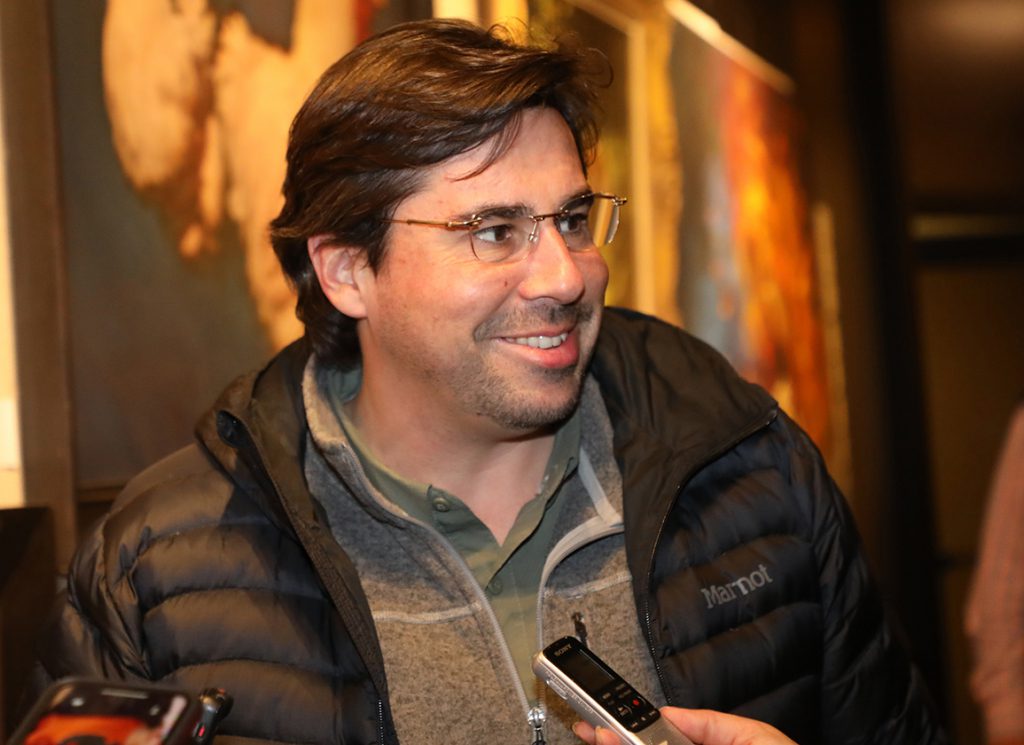
Fabricio Buffolo | Keeneland

Fabricio Buffolo, Buffalo Bloodstock
Gold Medal: Happy Saver
I think he is a nice example of what a true American dirt horse looks like, especially with such an impressive and powerful shoulder. I think it's hard to not think about his name and not associate it with such a solid and sturdy front end. He was a very good racehorse who showed grit and resilience throughout his races against all the best in the country. He is an interesting young stallion.

Silver Medal: Midnight Lute
When considering the group of stallions with runners standing at $10,000, I think that he stands out with a solid percentage of black-type horses and black-type winners to runners, including five Grade I winners which is not usual at this price bracket.
He's quite versatile with his progeny having good performers on different surfaces and distances, and the key lies in finding a mare that can suit him physically.

Bronze Medal: Jimmy Creed
He is another horse that has done fairly well at this stud fee bracket getting a good percentage of black-type horses compared to others, including some with higher price tags. It's evident that the market can be quite tough on horses like him that have had a decent number of crops, but he has received continued support in the last few years attesting to the confidence that breeders have found in him.

The Factor | Lee Thomas

Elgin Hamner, Prime Bloodstock
Gold Medal: The Factor
If The Factor had not left for a couple of years, I believe he would be a constant top 25 sire. He's great value to have a shot at a good runner.

Silver Medal: Frosted
I was really high on him coming out, he's a strong horse with a strong race record. Love the Tapit over Deputy Minister. Now, he has established himself as a racehorse producer.
He's always top two or three of his crop and gets a bigger, stronger horse than The Factor. They seem to run anywhere and are selling ok. He just needed a couple of big horses earlier.

Bronze Medal: Goldencents
It's hard to make it as a sire, but they run early and often. They don't sell as well as they should (can lack size), but each one born could be a runner.

Honorable Mention: Honor A.P.
No runners yet, but the physical when he stamps them is pretty strong. We have to keep that A.P. blood going, it's the best two turn blood of the last 20 years, and he is one of the last of that line with a shot.

The post Value Sires For 2024, Part 3: The $10k Club appeared first on TDN | Thoroughbred Daily News | Horse Racing News, Results and Video | Thoroughbred Breeding and Auctions.

Source of original post
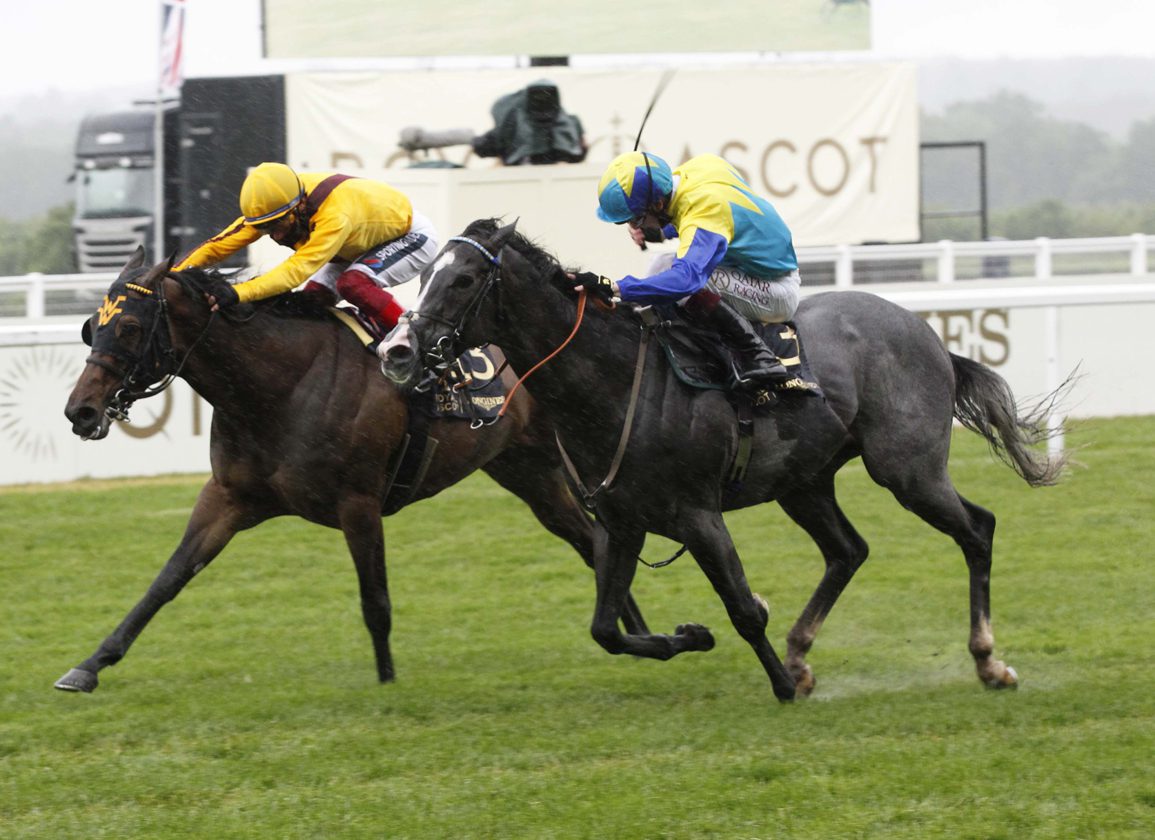
CARMA Renames Grant Program In Honor Of ‘Howie’ Zucker, Awards $451,000 To Aftercare Partners

The California Retirement Management Account (CARMA) proudly announces the renaming of its grant program to the Howard “Howie” Zucker Grant Program, in honor of Howard Zucker, our late past president and long-serving board member. Accompanying this significant renaming, CARMA is awarding $451,000 to 23 aftercare charity partners this December, continuing our commitment to the welfare of retiring racehorses.

While the primary focus of these grants is to support retiring racehorses, it is noteworthy that many of our grant recipients are also vital community pillars. Beyond their core mission, many offer horsemanship skills, equine therapy, volunteer opportunities, and more, significantly contributing to their local communities.

Rigorous Selection Process for Enhanced Care

Each organization has undergone a stringent grant application process, ensuring they meet high standards of care and reporting. A critical part of this process includes annual site visits by CARMA representatives to confirm compliance with our standards and to ensure that each recipient, a registered 501(c)(3) nonprofit, maintains their good standing.

A Legacy for Retiring Racehorses

The renaming of the grant program honors Howard Zucker's lasting impact on the racehorse retirement community. “Howard's dedication and commitment to CARMA, and more importantly, the horses, was unparalleled. He was a true horseman, always putting the care of these amazing athletes first. He brought that care and commitment with him when he joined our board in 2009,” said CARMA Founder Madeline Auerbach, “There are so many things Howard loved about CARMA, but the grants we award each year were what he believed in most. He was a constant champion for all the organizations we supported each and every year.”

2023 Grant Recipients

We are proud to congratulate the following organizations for their commitment and dedication:

  • After The Homestretch AZ
  • CANTER – CA
  • Canter Haven Farm
  • Champions Retreat, Inc.
  • Dale and Patti Shirley Equine Encore Foundation
  • Desert Oasis Rescue
  • Down The Stretch Ranch
  • Eclipse Thoroughbred Aftercare
  • Fresh Start Sport Horses Inc.
  • GEVA
  • Harmony & Hope Horse Haven
  • Healing Arenas Inc.
  • Hope For Horses, Inc.
  • Old Friends, Inc.
  • Neigh Savers Inc.
  • Redwings Horse Sanctuary
  • Remember Me Rescue Foundation
  • Sandia Creek Ranch Auxiliary Foundation
  • Square Peg Foundation
  • Tranquility Farm
  • United Pegasus Foundation
  • Whispering Meadows Ranch Equine Rescue
  • Win Place Home, Inc.

Our grant recipients are key to building a strong safety net for retiring racehorses, both in California and nationwide, ensuring their well-being when their racing careers are over. We invite everyone to join us in celebrating the achievements of these organizations and their invaluable contribution to the well-being of retiring racehorses and our communities.

Donations to CARMA are tax deductible and may be sent to: CARMA, 285 West Huntington Drive, Arcadia CA, 91007 (Tax ID #80-0146395).

For more information about CARMA and our grant programs, please visit carma4horses.org.

The post CARMA Renames Grant Program In Honor Of ‘Howie’ Zucker, Awards $451,000 To Aftercare Partners appeared first on Horse Racing News | Paulick Report.

Source of original post

Verified by MonsterInsights