Bodemeister to Pleasant Acres in Florida for 2024

Grade I winner Bodexpress (Bodemeister–Pied a Terre, by City Zip) will stand the 2024 breeding season at Pleasant Acres Stallions in Morriston, FL, the farm announced on Tuesday. The 7-year-old stallion, who spent his first two years at stud at Barton Thoroughbreds in Santa Ynez, CA, will stand for a fee of $3,500.

“We are excited about the arrival of Bodexpress to our stallion barn,” Pleasant Acres Director of Stallion Services Christine Jones said. “It's always impressive when we can bring a [Grade I winner] into the Florida breeding program.”

Bodexpress, who won the 2020 GI Clark S. at Churchill Downs, joins Amira's Prince (Teofilo), Chess Chief (Into Mischief) Curlin's Honor (Curlin), Gone Astray (Dixie Union), Gunnevera (Dialed In), Leinster (Majestic Warrior), Magic On Tap (Tapit), Neolithic (Harlan's Holiday), No Never No More (Scat Daddy), and Sweetontheladies (Twirling Candy) at Pleasant Acres Stallions.

The post Bodemeister to Pleasant Acres in Florida for 2024 appeared first on TDN | Thoroughbred Daily News | Horse Racing News, Results and Video | Thoroughbred Breeding and Auctions.

Source of original post

This Week In History: An American In Newmarket, Extremely Light Jockeys, And 1860 Match Races

 While the first edition of This Week In History took us to 1973, this week's edition goes back to asomewhat more distant past.

A flip through an old copy of the Spirit of the Times is a rabbit hole into another world. The publication was launched in 1831 and was originally designed to appeal to upper-class gentlemen of leisure and sport. As such, it covered early American sports with a sprinkle of satire and theater reviews.

(Subsequent publications that are typically thought of as racing pubs took a similar tactic for some time, with old copies of The Morning Telegraph charting both the finer details of racing stables and Broadway reviews/Hollywood gossip. If you're someone who, like me, grew up watching Turner Classic Movies alongside a love of horses, those are quite fascinating.)

The Spirit had dedicated sections at various times to horse racing, rowing, boxing, cricket, cockfighting, angling, and early precursors to track and field, as well as the earliest days of football. At one point, speed skating was even included.

The Spirit covered racing not only in the States, but also in England, which at the time set the tone for the sport.

In November 1860, the paper printed an account of the Newmarket Houghton meeting, which ran its first edition in 1770. For Americans, there was a familiar name in the results list – Richard Ten Broeck. You may know him as the owner of the racehorse Lexington, who was one of the first superstars of the sport in America.

As detailed by Kim Wickens, author of a new book on Lexington, Ten Broeck was also one of the early originators of bringing American-bred horses to compete in England. His first “invasion” as many reporters called it, did not go well – he brought Lecomte, Pryor, and Prioress over in 1855. Lecomte and Pryor died soon after and Prioress had difficulty with the English racing style. Though it must seem counter-intuitive to modern racing fans, Wickens writes that British racing was then more speed-favoring than American distance contests, and were more commonly one or two miles instead of the four miles Ten Broeck's horses were accustomed to.

After his horses were beaten consistently for a couple of years, Ten Broeck had a breakthrough in 1857 when he put Prioress in the Cesarewitch Stakes at Newmarket. The race was run in two heats, and Ten Broeck kept the filly fresh and warm in between. She won the race and he collected on a 1000-to-10 bet he made on his horse.

Three years later, Ten Broeck was still there and sent two horses to the post at Newmarket. One was Pedlar, who seems to have been British-born and of little distinction. He cross-entered a plate race and a selling handicap and started in the selling handicap, where he finished off the board.

The terms for the selling handicap dictated that the horses would win $75 and the winner would be sold for $1,000 afterwards “if demanded” – adding a dimension of risk/reward beyond what we see in modern American claimers.

The plate saw horses from ages three to six run against each other, with weight assignments ranging from 99 pounds to 122. In Pedlar's race, two horses carried a scant 92 pounds.

Ten Broeck's other runner at the Houghton meet was Umpire, who faced off with Tom Bowline in a match race worth $5,000. The match was at a very modern seven furlongs, with Umpire (the 5-2 favorite) making quick work of Tom Bowline.

Umpire, then three years old, was more distinguished than his British-born stablemate. He was born in the States and was a son from one of the last crops of Lecomte. Though he may have initially been a great hope for Ten Broeck to finally conquer the British classics, he hadn't managed it at the time of his Newmarket Houghton start. He ran a disappointing seventh in the Derby at Epsom, and weakened in the 1860 St. Leger at Doncaster.

The Derby proved an embarrassment to Ten Broeck in more than one way. A report from the Daily Racing Form recalls “eccentric nobleman” Lord Glasgow, who was “fond of making freak bets,” approaching Ten Broeck before the race and, knowing the contest would be tantalizing for Ten Broeck, bet him 500 guineas he could not whistle God Save the Queen as horses passed the post. Ten Broeck managed to keep the tune (presumably with a shaky chord or two) en route to another defeat in one of his most esteemed stakes.

Umpire continued on however. He won the 1863 Queen's Stand Stakes (now known as the Group 1 King's Stand) three years after his November appearance against Tom Bowline. Ten Broeck had sold Umpire by then, but in later Daily Racing Form features the horse's success was credited mostly to him. Umpire raced until the age of seven in England before retiring to a stud career in which he sired both racehorses and hunter/jumpers.

Ten Broeck's efforts paved the way for other American owners to try their horses in England, including Pierre Lorillard, who was the first American owner to win a British classic with Iroquois in the Epsom Derby in 1881, and James R. Keene, whose Foxhall became the first American horse to win the Grand Prix de Paris and the Ascot Gold Cup.

The Paulick Report thanks the Keeneland Library staff for their assistance in the research process for this and many of our other features.

The post This Week In History: An American In Newmarket, Extremely Light Jockeys, And 1860 Match Races appeared first on Horse Racing News | Paulick Report.

Source of original post
Alex Foley Named Executive Director For Kentucky Horsemen’s Benevolent & Protective Association

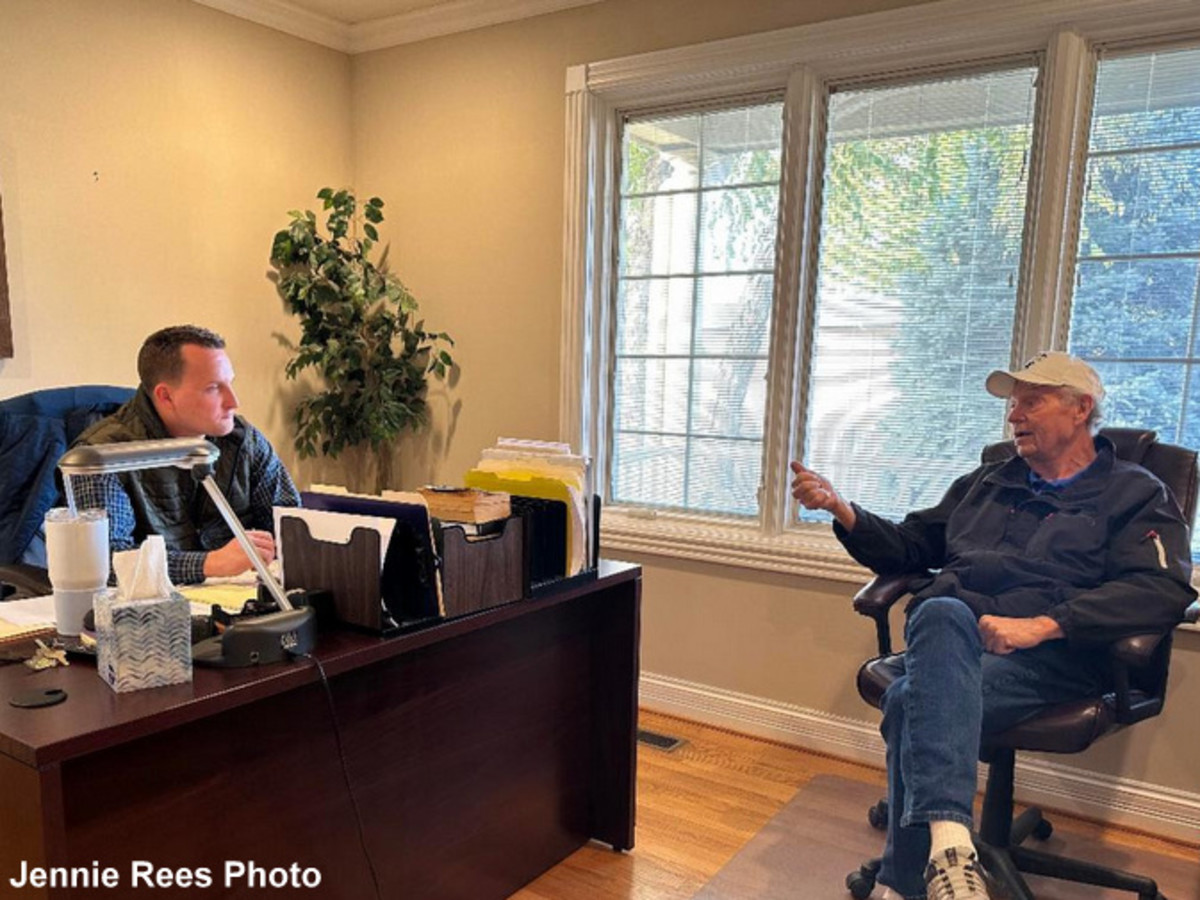
The Kentucky Horsemen's Benevolent & Protective Association has hired Alex Foley as its new executive director. The life-long Louisvillian takes over the permanent position filled by Marty Maline for almost 47 years until his retirement at the end of 2022.

The 32-year-old Foley, who started on the job Monday, is the younger son of veteran trainer Greg Foley and the grandson of the late owner-trainer-breeder Dravo Foley. Alex Foley graduated from Bellarmine University with a degree in business management (and four years on the golf team) and from the University of Louisville's Brandeis School of Law with his Juris Doctor.

“He was interviewed by our search committee, and they were impressed by him and his credentials,” said Kentucky HBPA President Rick Hiles. “He's a young man, he's got a history in racing from his dad and grandpa. He knows everybody on the backside. He has a law degree. We thought he could get in that position and have some longevity.”

Foley had been serving as an assistant trainer to his dad, including overseeing the stable's Ellis Park division throughout the spring, summer and into the fall. His brother, Travis, is also an assistant trainer to their father and their aunt Vickie Foley is a trainer.

Foley said the combination of being part of a racing family and his law degree made the Kentucky HBPA executive directorship appealing.

“The horse-racing industry and my legal background, I've always wanted to do both but didn't have the avenue,” he said. “This job provides that. The connections I have on the backside — whether it's horse trainers, gallop boys, assistants — I've known so many people that it was a perfect fit and something I'm passionate about.”

Asked if he thought he'd make 47 years like Maline, Foley laughed and said, “I know I have some pretty big shoes to fill.

“Marty said he'd mentor me. Rick Hiles has been great in the transition. I think we make a good team. I think being younger brings a different light to everything.”

Foley graduated from North Oldham High School, where he played basketball and golf.

Alex Foley and Kentucky HBPA President Rick Hiles

The post Alex Foley Named Executive Director For Kentucky Horsemen’s Benevolent & Protective Association appeared first on Horse Racing News | Paulick Report.

Source of original post

Applications Open For The Jockey Club’s Internship Program, Academic Scholarships

Applications for The Jockey Club's paid internship program for college students and recent college graduates and its five academic scholarships opened Tuesday.

The internship program will accommodate up to three interns and is now available in the summer or fall based on the intern's preference. Interns will gain exposure to all companies and departments within the organization, and they will have the opportunity to spend additional time in areas that they find to be of particular interest. The program will last eight weeks.

The internships will take place in The Jockey Club's offices located in Lexington, Ky. For more information and to view the application, interested candidates should visit bit.ly/tjcinternships. Applications are being accepted through January 5, 2024. Selected interns will be notified in February 2024.

The Jockey Club scholarships will apply to the 2024-2025 academic year and are as follows:

  • The Jockey Club Scholarship ($15,000; $7,500 per semester) is for those enrolled full time as an undergraduate or graduate student at a college or university in academic pursuit of majors for future employment in the equine industry. Open to any equine breed or discipline; preference will be given to candidates with the expressed desire to secure employment in the Thoroughbred industry.
  • The Jockey Club Advancement of Women in Racing Scholarship ($20,000; $10,000 per semester) is open to women pursuing a career in the equine industry who are enrolled full time as an undergraduate student at a college or university. Open to any equine breed or discipline; preference will be given to candidates with the expressed desire to secure employment in the Thoroughbred industry.
  • The Jockey Club Vision Scholarship ($20,000; $10,000 per semester) is open to students from a minority racial or ethnic group who are pursuing a career in the equine industry. Applicants must be enrolled full time as an undergraduate student at a college or university. Open to any equine breed or discipline; preference will be given to candidates with the expressed desire to secure employment in the Thoroughbred industry.
  • The Jockey Club Benevolence Scholarship ($15,000; $7,500 per semester) is a need-based award to enable a student to attend a full-time program at a college, university, or trade program. Preference will be given to backstretch and horse farm employees and their family members. Applicants are not required to be pursuing a career in the equine or Thoroughbred industries.
  • The Jockey Club Jack Goodman Scholarship ($6,000; $3,000 per semester) is open to students enrolled in the University of Arizona's Race Track Industry Program (RTIP). Goodman was a resident of Tucson, a longtime member of The Jockey Club, and one of three founders of the RTIP.

Applications for all five scholarships are open through January 5, 2024. More information and links to applications for the scholarships can be found here: bit.ly/tjcscholarships24. The recipients of each scholarship will be announced in the spring of 2024 in advance of the initial distribution of funds for the fall 2024 semester.

The Jockey Club, founded in 1894 and dedicated to the improvement of Thoroughbred breeding and racing, is the breed registry for North American Thoroughbreds. In fulfillment of its mission, The Jockey Club, directly or through subsidiaries, provides support and leadership on a wide range of important industry initiatives, and it serves the information and technology needs of owners, breeders, media, fans and farms. It founded America's Best Racing (americasbestracing.net), the broad-based fan development initiative for Thoroughbred racing, and in partnership with the Thoroughbred Owners and Breeders Association, operates OwnerView (ownerview.com), the ownership resource. Additional information is available at jockeyclub.com.

The post Applications Open For The Jockey Club’s Internship Program, Academic Scholarships appeared first on Horse Racing News | Paulick Report.

Source of original post

Verified by MonsterInsights