Like the wildfires fanned by this summer's hot winds, doomsday predictions of horse racing's demise have raged through the mainstream and trade press this year, fueled by a sickening spate of high-profile equine fatalities on the sport's highest-profile stages–tracks armed with some of the most stringent safety guardrails.
This means these horses passed before the eyes of a slew of experts–from the riders to the trainers to the veterinarians and the regulators–deemed among the best in the business. If they can't single out these horses before catastrophe happens, who can?
As the science around racehorse injury has evolved, the notion of a random “bad step” as the cause of catastrophic breakdowns has been largely debunked. Much cited since, a California Horse Racing Board (CHRB) led study from between 2011 and 2013 found that roughly 90% of Thoroughbreds that suffered catastrophic musculoskeletal injuries had pre-existing bone lesions near or at the site of the fracture.
The problem is, these lesions–abnormalities of the bone as it undergoes remodelling leaving that part of the skeleton vulnerable to fracture–can be a clinical nightmare to detect through the usual means. Think X-rays, nuclear scintigraphy, or just jogging the horse up and down a flat path. So, what to do?
Catastrophic injuries don't just happen overnight. The pathology underlying these events can occur over weeks, if not months, leading up to the fracture. Perversely, this is good news. There's a window for intervention, opening the door to a new breed of screening tools.
Much focus these past couple of years has been placed on a biometric sensor called StrideSAFE, which appears able to identify that small percentage of at-risk horses who are sound to the human eye. The New York State Gaming Commission equine medical director has called it “probably one of the most important contributions to the Thoroughbred horse industry that has ever been made.”
What's more, a new wave of imaging technologies are proving capable of diagnosing the underlying cause of these problems much earlier than ever before. Some of the industry's brightest minds say the trick to substantially reducing equine fatalities will be to standardize the combined use of these screening and diagnostic tools, bringing much needed objectivity to what–in identifying lameness–is all too often an exercise in subjectivity.
Easier said than done.
Logistical hurdles, significant costs and legitimate concerns about exactly how all this new information will be used present no small set of obstacles. But the imperative is clear, warn various industry leaders: If the sport doesn't act on these tools that it has at its disposal–and act quickly–racing could all too soon become an anachronism.
“This is the new frontier of racehorse safety,” said Jeff Blea, CHRB equine medical director. As an example, he highlighted Sleip, a smartphone app that has potential to work as a lameness diagnostic tool.
“StrideSAFE is the best screening tool we've ever had–clearly it's a lot more effective than the human eye,” said Warwick Bayly, professor of equine medicine in the department of Veterinary Clinical Sciences at Washington State University.
When it comes to integrating such screening tools into the daily furniture of the industry, Bayly was adamant. “We've got to do this.”
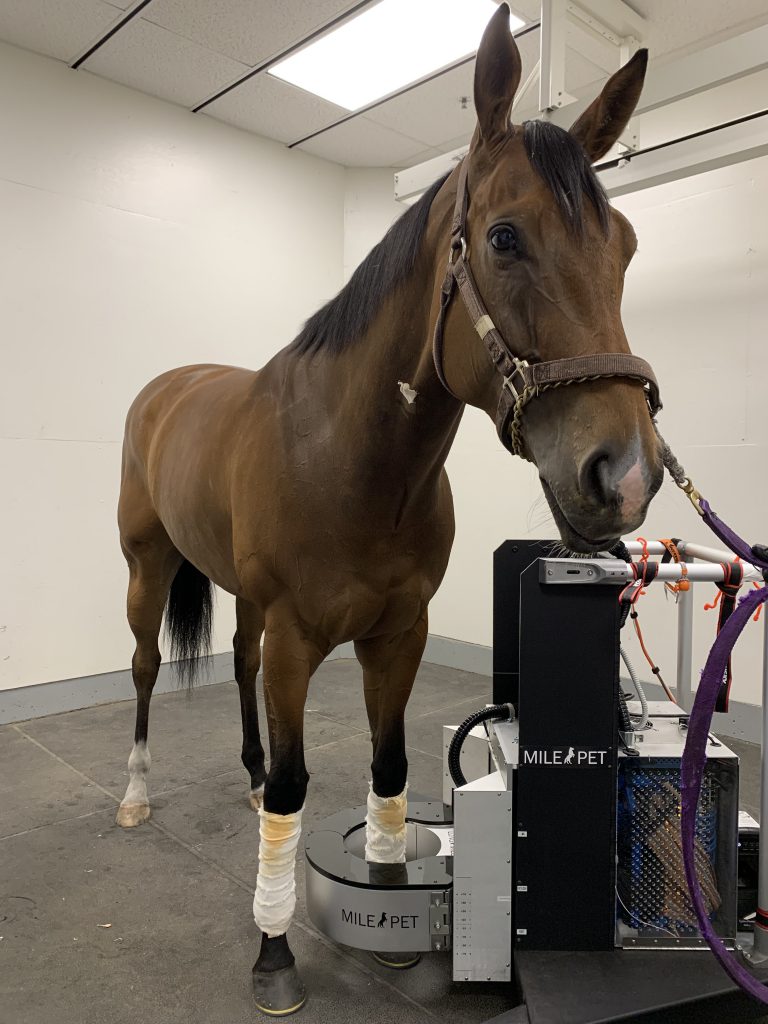
Positron Emission Tomography (MILE-PET) unit | courtesy Mathieu Spriet
“We cannot scan all horses to identify those four percent”
“It's got to the point where now it's more than a diagnostic tool,” said Mathieu Spriet, of the Positron Emission Tomography (MILE-PET) unit. “It is helpful as a clearance to race. It can help the regulatory vet by not scratching unnecessary horses. And it can help individual horses.”
The portable PET unit is the brainchild of Spriet, and has been a part of the diagnostic scene at Santa Anita since the end of 2019. Since then, nine other PET units have been distributed to Florida, Kentucky and Pennsylvania. In about one month, the University of Melbourne is scheduled to join the list.
In its relatively short life-span, evidence strongly suggests that the PET unit is especially useful in diagnosing the sorts of fetlock injuries–those actively brewing in the sesamoid bones, and the distal region of the cannon bone immediately above the fetlock–earlier and with greater accuracy than has been the case with more established imaging technologies.
Why is this important? The fetlock has long been the Thoroughbred racehorse's Achilles heel. Fetlock failures constituted in California nearly 60% of all musculoskeletal injuries that proved fatal during the 2018-2019 fiscal year.
In this study, a team of experts examined the results of 33 horses imaged using both PET and nuclear scintigraphy. The researchers agreed on the results for the PET more frequently than for nuclear scintigraphy. Indeed, they detected potential sesamoid bone problems in 22.2% of limbs imaged with PET, but only 6.9% of limbs imaged with scintigraphy.
In another study of 25 racehorses, 88% of the PET scans performed six weeks apart identified the same problem areas in the fetlock, demonstrating the technology's reliability. In all, 65% of the fetlocks examined demonstrated improvement during a 12-week rest period from racing.
But when it comes to the bête noire of horse racing–those at-risk runners who show no clinical signs of lameness–the study with perhaps the most significance concerns the 72 “normal” horses chosen to undergo PET scans of all four fetlocks at Golden Gate Fields, Santa Anita and Fair Hill.
Three of the 72 horses were laid up as a result of what showed up on the scans, while about 20% of the horses examined saw their training schedules modified to manage small underlying issues.
“We had one horse that potentially needed surgery,” said Spriet, of one of the three ostensibly “normal” horses found to have major underlying issues. “We know that there are some horses out there, clinically they are fine, but unfortunately they do break down.”
As Ryan Carpenter, a private SoCal-based veterinarian and a habitual user of PET, puts it, “I don't think there's any modality that's superior to PET when it comes to identifying problems in the sesamoid bones early.”
But what about other vulnerable parts of the racehorse's skeleton?
The same year Santa Anita welcomed the bespoke PET unit, it opened its doors to a standing magnetic resonance imaging (MRI) unit–a large, enclosed cell with dimensions of 10′ x 10′ x 30′.
MRI units, explained Carpenter, are especially adept at identifying issues in the lower ends (the condyles) of the cannon bone, including palmer osteochondral disease (POD), an all-too common degenerative bone problem in racehorses. “There's nothing better for POD than MRI,” he said.
For other notoriously vulnerable regions of the racehorse skeleton–like the shoulder region and the pelvis–Carpenter said that nuclear scintigraphy remains the go-to imaging modality.
There are drawbacks to MRI and PET. One is cost. A new PET unit will set you back some $600,000. Standing MRIs are typically leased from the manufacturer. According to Carpenter, the cost of scanning both front ankles with either PET or MRI is about $1,200.
Another is logistical. It takes between 45 minutes to an hour to scan both fetlocks with MRI.
“The knock on PET is that it requires a horse to go into an isolation period while it eliminates the radioactive isotope,” said Carpenter. The isolation time is about eight hours. “Here, they usually go over to the hospital for a PET at about five o'clock in the morning and they usually go back to the barn around two in the afternoon.”
Which leads to another imaging tool, computerized tomography (CT). Indeed, Racing Victoria requires all international horses that race there, including Melbourne Cup nominees, to undergo CT scans.
“The biggest benefit of the CT is what? It's fast. You can CT an ankle in 17 seconds. And there is no holding period,” said Carpenter.
But CT also has its drawbacks. It has yet to prove itself accurate at pinpointing the more worrying active bone remodeling as early as PET and MRI, said Carpenter. That said, CT offers promise for a diagnostic learning curve, he added.
“I'm hopeful that with CT we can eventually pick up the change in pixels in the location of the bone change before fracturing,” said Carpenter. “If you can make that true, you can scan all four fetlocks, use radiomics to look for changes in pixel density, and do what we're doing now with PET but in a fraction of the time.”
Given his experiences over the past few years, is Carpenter surprised by the results of the PET study that found 4% of 72 clinically sound horses had injuries that required them to be rested for an extended period?
“I'm not surprised at all,” said Carpenter. “We know those horses exist. Our hardest struggle as clinicians is determining which horses they are.”
Given the costs and logistical difficulties associated with PET and MRI, however, “we cannot scan all horses to identify those four percent,” admitted Spriet. “It's just not practical.”
But what if there was another way to objectively sift through the population to identify that small percentage of at-risk horses? Dave Lambert, founder of StrideSAFE, believes he's got the answer.
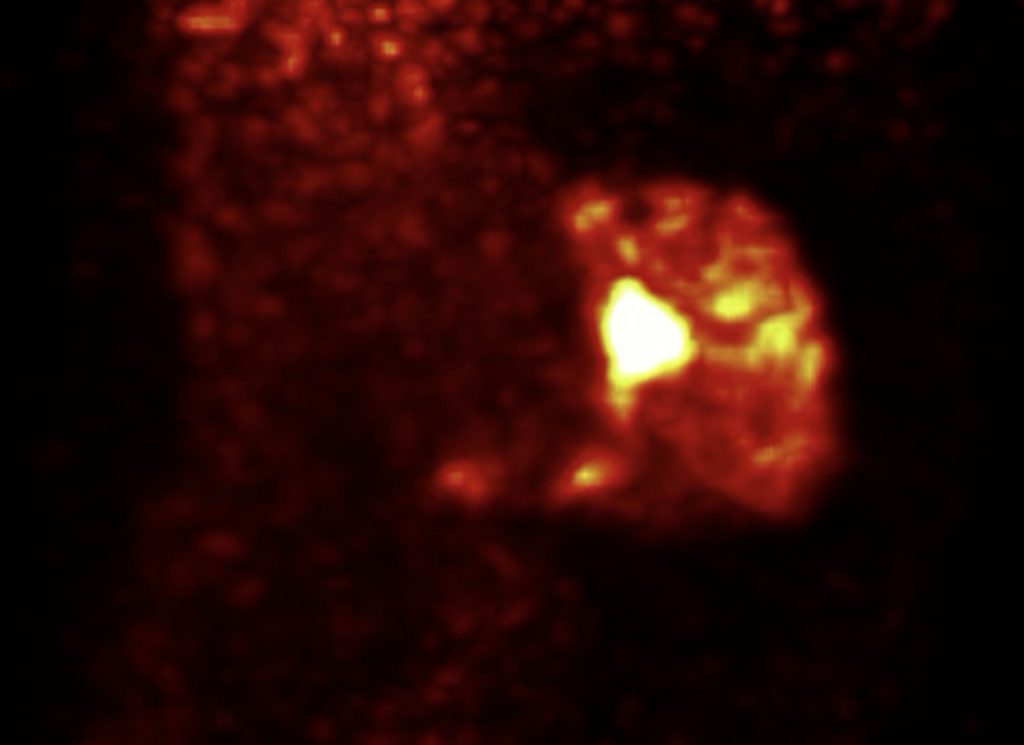
This scan image is from a fetlock with a severe sesamoid injury. 3D MIP is “maximal intensity projection,” which is a true 3D rendering.
“This is exactly how the system was designed to work”
StrideSAFE is a discreet bio-metric sensor used on horses working or racing to capture a variety of measurements related to the horse's acceleration and deceleration, its up and down concussive movement, and its medial-lateral motion. In other words, the horse's movement from side to side.
In short, StrideSAFE has proven capable of detecting the sorts of subtle abnormalities in gait even the most seasoned trainers, veterinarians and exercise riders miss when watching horses jog up and down a path, or when taking them through their paces.
StrideSAFE originally worked on a traffic light system, with a green for all-clear, a yellow for caution, and a red for possible danger.
In a long-term study conducted on horses racing at New York Racing Association (NYRA) tracks, of the 20 horses that suffered fatal musculoskeletal injuries during the period of the trial, 18 of them had received a red rating in a race before suffering a catastrophic breakdown, said Lambert. One of the 20 had received a prior dark amber rating.
These red and dark amber ratings were issued in either the race immediately prior to the breakdown or else two or three races back, said Lambert, meaning StrideSAFE detected 90% of those horses that suffered a catastrophic injury sometimes weeks or even months in advance.
In total, about 15% of the horses involved in the study were red-flagged, said Lambert. Given how at that time there was still much to learn about StrideSAFE's efficacy, there was no coordinated system to funnel those red-flagged horses for follow-up diagnostics.
Since then, Lambert and his team have refined the system to what he calls a “risk factor calculation” from one to five. Five is the category in which a horse is most at risk of a fatal or career ending injury–nearly 300 times more likely than horses that fall within risk category one. In all, 73% of the horses fell within category one, the safest group.
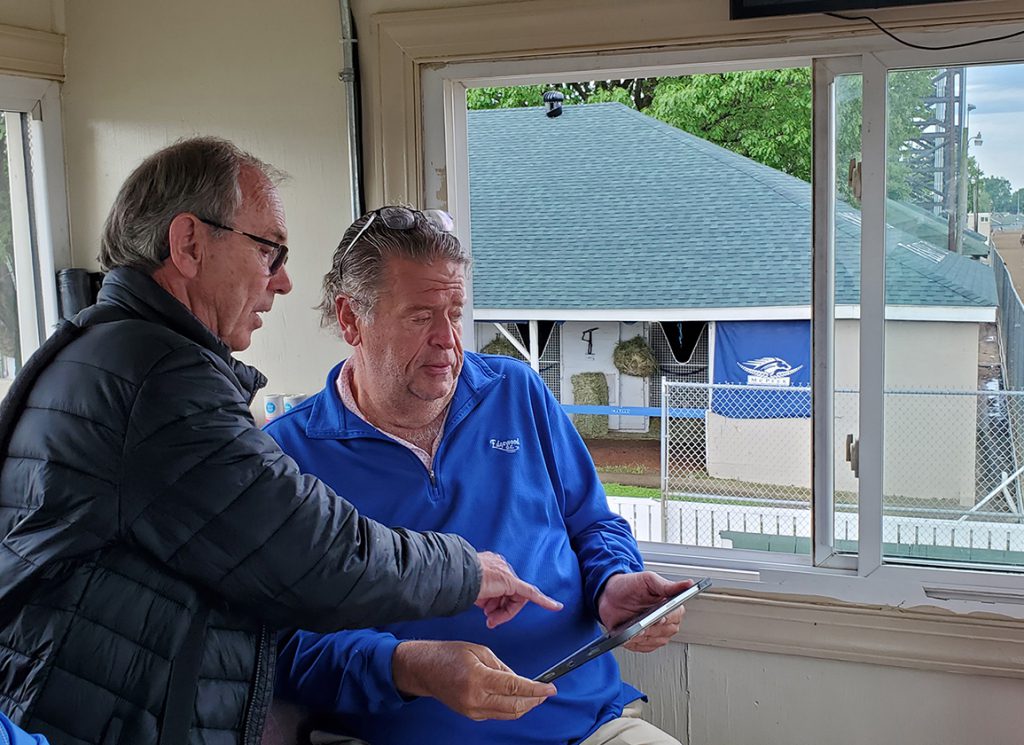
David Lambert & trainer Dale Romans | StrideSAFE
Using data from the same 6,616 individual starts in the NYRA study, Lambert determined that about 5% of the horses studied–a number totaling 363 horses–fell within the risk category of five. That includes the same 20 horses that suffered catastrophic injuries, 18 of which were red-flagged in prior races.
If the other two fatally injured horses had worn StrideSAFE in high-speed workouts between races, would the sensor have picked up a problem? “We don't know for sure,” said Lambert. “But there's a good chance it would have.”
Interestingly, Lambert said that in general, the red-flagged horses raced back quicker than horses in safer categories. “These horses are sound and they're ready to race,” he said, “but they're sitting on a fracture.”
Earlier this year, StrideSAFE was used on horses racing at Churchill Downs's short Spring meet. All eight horses that suffered a fatal race-day musculoskeletal injury were carrying the technology.
Seven of the eight musculoskeletal cases showed abnormal sensor readings as soon as they left the starting gate, prompting Lambert to subsequently remark that “had the sensors been on the horses in prior races, they could have pointed to an issue the horse was having weeks or even months earlier.”
Unlike the NYRA study, at Churchill Downs there was a more coordinated system for following up with the trainers of flagged horses. StrideSAFE flagged two visibly sound horses that were subsequently sent for PET scans, revealing the beginnings of condylar fractures.
“This is exactly how the system was designed to work,” explained Lambert. “Screen every horse in a race, detect those at high risk, diagnose using modern technology and bring about a cure rather than suffer a fatality.”
But not every horse that's categorized as being at highest risk of injury harbors an underlying issue. And so, to refine the system even further–iron out the kinks–what would be the best application of StrideSAFE?
“If every horse in training wears it,” said Will Farmer, equine medical director for Churchill Downs.
“If every horse had this for every high-speed work and in every race, I think that would be the ultimate goal,” Farmer added. “Anytime that a horse reaches a high speed, and they have a sensor on their back, we would have such a complete picture, there would be multiple opportunities for veterinary intervention.”
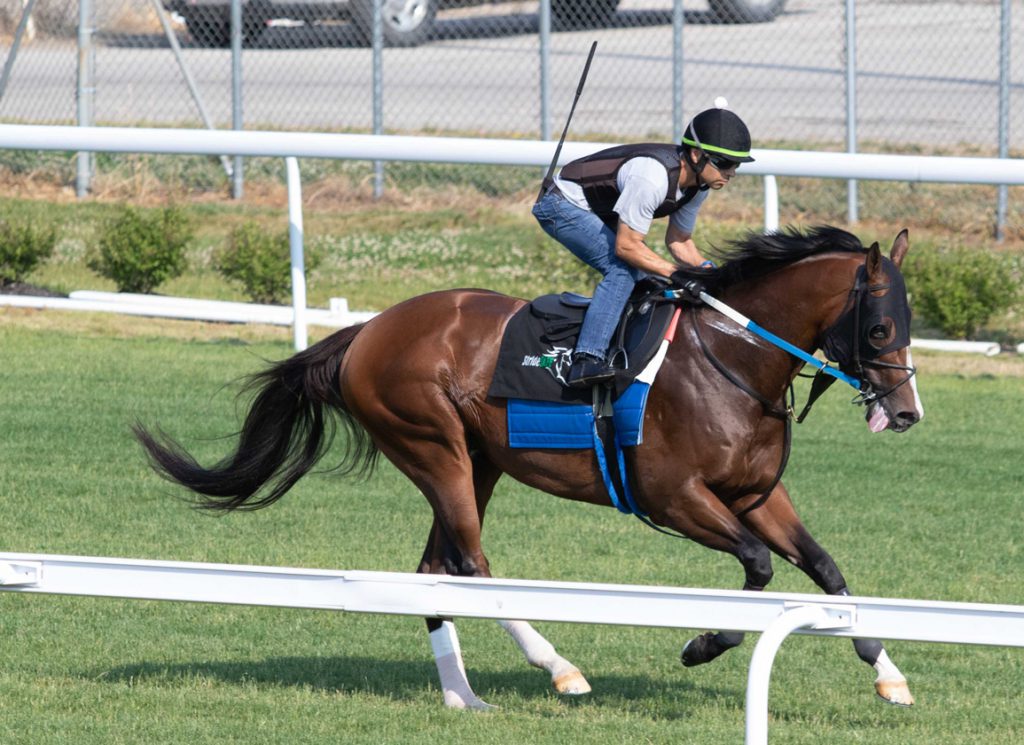
A Steve Asmussen-trained worker equipped with StrideSafe | Holly Smith
The results from StrideSAFE present an interesting parallel with a recent study out of Tasmania, which found that horses will decrease their stride length in the weeks leading up to an injury.
Back in 2010, Tasracing partnered with Stridemaster, which had developed a biometric sensor technology, to provide a race-day timing system using GPS and motion sensor data. The original purpose was to provide information to share with the betting public.
“We said, 'hey, that looks like great data. Can we get a hold of it?'” said Chris Whitton, professor of equine medicine and surgery and head of the Equine Centre at the University of Melbourne.
Whitton and his fellow researchers reviewed the data from 584 different horses who made 5660 individual starts. They found a “marked rate of decline” in speed and stride length roughly six races prior to injury.
Going into the study, “I would have thought it was one or two races that they would start showing effects,” said Whitton. “Such a long period I thought was fascinating.”
The researchers also found that horses are especially vulnerable to injury early in their racing career. “The first and second race of a horse's career is actually quite a high risk,” said Whitton.
The Heart of the Problem
Fractured bones don't constitute the only cause of lost equine life on the track.
Though fairly rare, sudden cardiac deaths occur at a rate of one for every 8,789 starts racing, and one death for every 158,000 Thoroughbred training days, according to this CHRB report. But what exactly causes these events largely remains a matter of debate.
This well-considered study looked at post-mortem findings from 268 Thoroughbred racehorses that suffered exercise-related sudden deaths. Pathologists made a definite diagnosis in only 53% of cases, a presumptive diagnosis in 25% cases, while 22% of cases were left unexplained.
Which leads to another biometric sensor technology finding its niche in the sport from a company called Arioneo.
“In total, we are working globally with about 600 trainers and vets,” said Valentin Rapin, Arioneo's managing director. “In the U.S. it's really the beginning for us. We're working with about 40 trainers at the moment.”
Like StrideSAFE, Arionoe's Equimetre fits onto the horse's tack during exercise, sending information back to the user, who can view it on a user-friendly computer dashboard. Part of that data concerns the horse's stride length and stride frequency at all gaits, from walk to trot to gallop and workout.
But Arioneo's Equimetre–which costs about $190 a month per device–also monitors heart-rate, providing data that can be used to assess both performance and overall health, including whether the horse is experiencing physical pain or discomfort, said Rapin.
“We can also look at the level of effort the horse is reaching during exercise. Sometimes you will see some abnormally high level of heart rate during exercise, depending on the speed the horse is going. And you can also see some abnormal recovery data,” said Rapin.
If the heart-rate monitor sends out what amounts to red flags about the horse's heart health, an ECG electrocardiogram (ECG) monitor can be used to map a more sophisticated picture of the horse's heart rate and heart rhythm, to identify any possible underlying problems like arrhythmias.
Rapin highlighted a horse in Australia routinely equipped with the monitor until one day in a workout, its heart rate spiked unusually high. A subsequent ECG analysis of the horse prompted its retirement.
Cristobal Navas De Solis, assistant professor of cardiology/ultrasound and internal medicine at the University of Pennsylvania School of Veterinary Medicine, is one of the researchers involved in an ongoing study using Equimetre on three-day-eventers during exercise.
The goal is to find out “which variables are more associated with injury or performance,” said Navas De Solis.
From a recent preliminary analysis of the first two years of data–involving 53 horses and 1,467 individual workouts–the researchers have identified several variables that appear to have some relevance on performance and injury: Heart rate and stride rate during the warm-up period, stride length at certain speeds, symmetry at trot, and heart rate recovery after a workout.
Navas De Solis sees early markers of injury as the “sport's holy grail,” and the standardization of screening tools like Arioneo and StrideSAFE in horse racing as “a big step forward in this direction.” He highlighted an Italian pre-screening program for human athletes that decreased sudden deaths by nearly 90% after implementation.
But he's also a pragmatist. To get to that stage, racing's leaders would need to agree upon a set of well-designed but probably expensive studies involving thousands of horses.
The ultimate program would be one that weeds out the most at-risk horses, and similarly ensures that perfectly healthy horses aren't excluded from competing via false positives.
“Having an arrhythmia during exercise doesn't necessarily mean that the horse or the athlete has a problem. From an arrhythmia standpoint, it's not an all or nothing. Some arrhythmias are okay during exercise and are not going to cause a problem to a horse,” Navas De Solis said.
A key question therefore, said Navas De Solis, is “how do we find the right balance between decreasing injury and not causing unjustified alarm?”
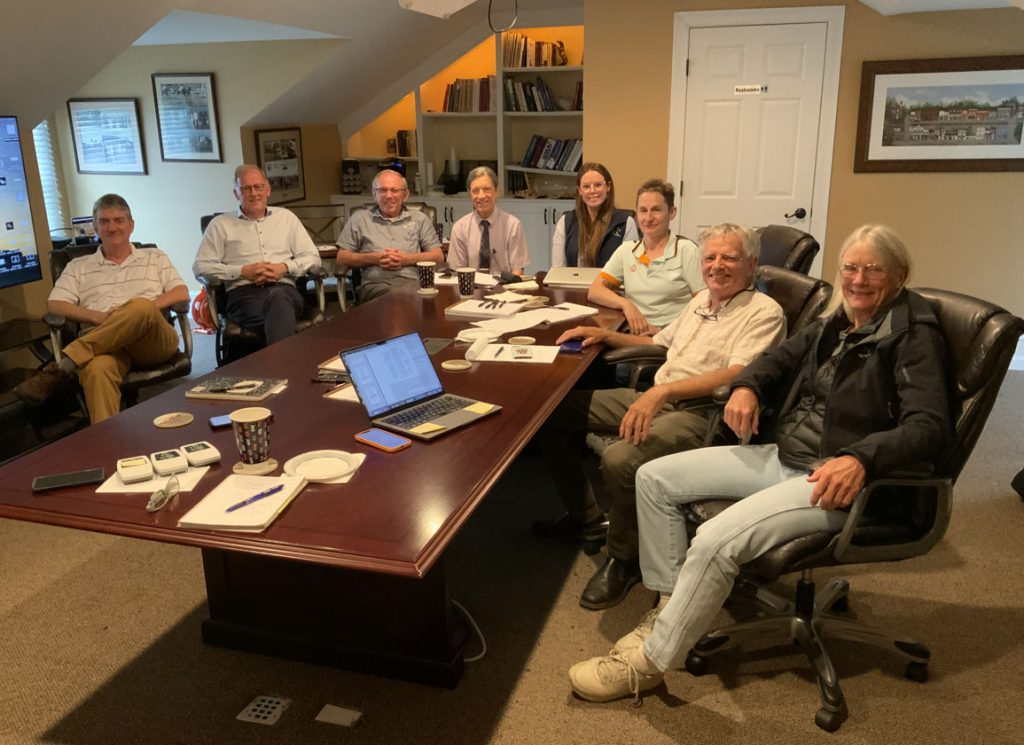
The Research Team at StrideSafe | StrideSafe
“Nothing that can't be solved”
For Farmer's vision of StrideSAFE being used on every horse that works to materialize, a key obstacle is one of logistics.
“Race days are very structured,” said Farmer, of its main use to date at Churchill Downs. “We know times. We know distance. We know horse names. We know everything we need to know days in advance.”
The organized chaos of a busy training morning–with hundreds of horses working, many simultaneously, from dozens of different barns–makes the practicalities of using StrideSAFE infinitely harder in comparison, said Farmer.
“Right now, the logistics of training are very challenging,” said Farmer. “When you collect that data, you then need to identify which horse that refers to. In the sensor design as of today, it's not geared for you to just put it on their back and go. But it's nothing that can't be solved.”
Lambert acknowledged these logistical hurdles but called it “simply a matter of money” to get fixed–at the same time, noting significant contributions already to StrideSAFE from Jim “Mattress Mack” McIngvale.
“The technology is all there, we even have the idea envisioned, we have planned it out in readiness,” Lambert said, adding that incorporating AI technologies to the mix could help reduce the current costs of $35 a day per horse.
These screening tools also raise other questions to grapple with. For one, who should have access to the data generated? Another is cultural–a sense among those in the industry forged on tradition and custom that these devices could unnecessarily handcuff a trainer.
“Regulations are not going to eliminate risk,” Eric Hamelback, CEO of the National Horsemen's Benevolent and Protective Association (HBPA), at a town hall about StrideSAFE earlier this year. “And quite frankly, we don't want regulations to eliminate horsemanship.”
Proponents of StrideSAFE and Arioneo stress the ability of these technologies to complement the art of training, not to replace it.
“It's a tool that provides objective data, and the goal at the end is to combine the expertise of the trainer–who has all the knowledge and the feeling and the expertise about the horse–with the data to make it successful,” Rapin said.
That idea taps into what Mathieu Spriet means when he talks about “voluntary longitudinal follow up” with imaging devices like PET to make doubly-sure a horse is up to the rigors of training and racing. In other words, the more horses are scanned periodically, “I think the better that is for managing the career of a specific horse,” said Spriet.
“Connections can be like, 'well, this horse is doing well. But we have a big campaign ahead of him, so let's scan and see how it goes,'” Spriet added. “To me, this is the most exciting part of it because we can see things [you ordinarily couldn't] to better manage horses throughout their careers.”
Trainer Dan Blacker is representative of the new generation of conditioner who has embraced the imaging tools in Southern California. He said he's interested in the idea of using StrideSAFE on his horses. “For sure it's got a place,” he added. “If they bring it to California, I'm very willing to support it.”
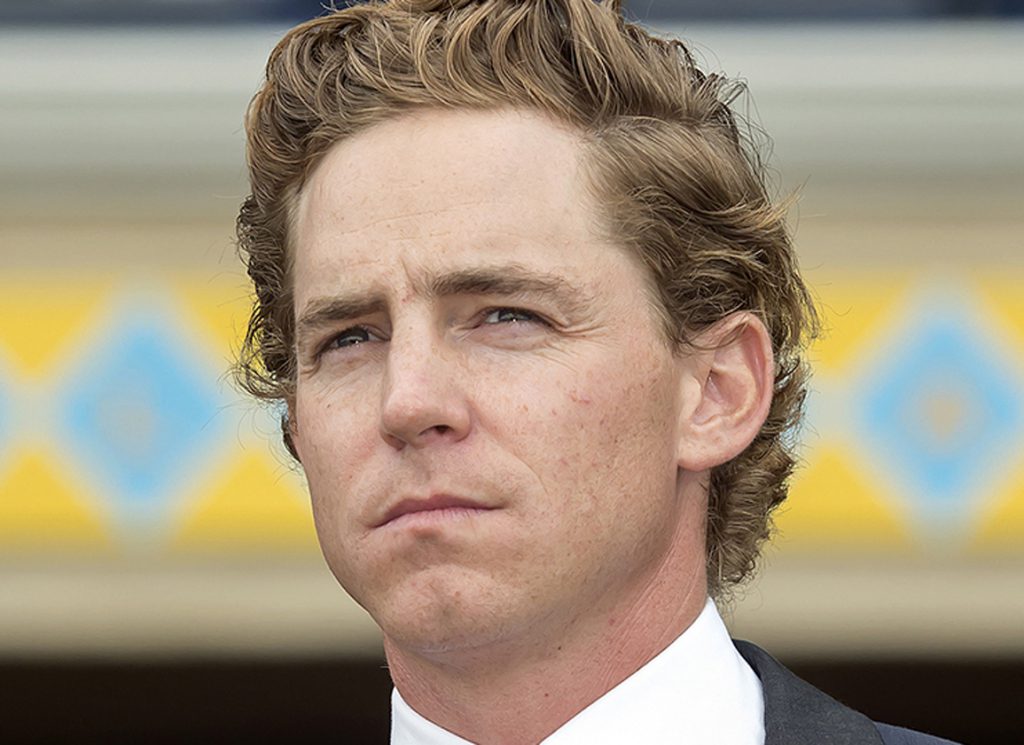
Dan Blacker | Benoit
Interestingly, The Stronach Group is working on its own screening system which uses high-definition cameras to create detailed skeletal movement maps of horses.
But in the short-term, said Blacker, PET holds the potential to be a major “gamechanger” in the fight to reduce equine fatalities due to its accuracy and simplicity of understanding.
“The thing with the PET scan, it takes away the guess work. That's the one thing I want to get across to people in racing,” Blacker said. “It gives you a clear-cut answer to the question of whether you can keep racing or not. Once trainers nationally get to see that, you're going to see a lot of improvement.”

The post Screen, Scan, Save: Is This Racing’s Big Fix? appeared first on TDN | Thoroughbred Daily News | Horse Racing News, Results and Video | Thoroughbred Breeding and Auctions.
Source of original post
