Frankel’s Mostahdaf Makes All For International Glory And A Record Sixth Success For Dettori

Just 35 minutes after Ryan Moore had given a copybook off-the-pace ride in the G2 Great Voltigeur, Frankie Dettori provided a masterclass of his own with a pillar-to-post exhibition aboard Shadwell's Mostahdaf (GB) (Frankel {GB}–Handassa {GB}, by Dubawi {Ire}) in a stellar renewal of York's G1 Juddmonte International as the Knavesmire crowd was treated to high-end examples of elite horsemanship on the opening day of the Ebor Festival.

The G1 Prince Of Wales's S. victor was sharply into stride and soon held a three-length buffer, with Paddington (GB) (Siyouni {Fr}) his closest pursuer through halfway. Dettori offered his rivals an opportunity to close when checking on their proximity and allowing his mount to fill his lungs approaching the half-mile pole. Shaken up in front with a quarter-mile remaining, the 3-1 second favourite was not for catching when push came to shove and he kept on strongly under a late urging to provide the rider with an outright record sixth triumph in the extended 10-furlong contest. Mostahdaf hit the line with one-length advantage as stablemate Nashwa (GB) (Frankel {GB}) rallied late and usurped the valiant Paddington for second in the dying strides.

Last term's G3 Gordon Richards S. and G3 September S. victor was undone by ground conditions when last of 20 in the G1 Prix de l'Arc de Triomphe and embellished his earnings column with a wide-margin tally in Riyadh's G3 Neom Turf Cup on seasonal return. Mostahdaf was no match for Equinox (Jpn) (Kitasan Black {Jpn}), finishing fourth in Meydan's Mar. 25 G1 Dubai Sheema Classic, before bouncing back in style with a four-length triumph at Royal Ascot last time. His winning time of 2:06.40 here was the quickest since Sea The Stars (Ire) (Cape Cross {Ire}) outgunned three rivals in 2009.

“I've always thought he was a very good horse and he was electric when he won the Neom Cup,” said John Gosden of his charge, who punched his ticket for the GI Breeders' Cup Classic in November. “We then stupidly tried him over a mile-and-a-half again, against the Japanese world champion [Equinox], and got put in our box. I think it will be 10 furlongs all the way now. You could probably get away with a mile-and-a-half at the Breeders' Cup, round a few bends and down a hill, but I don't think we'll see that. I'll see what the owner wants to do. She's done wonderfully well and her father would be so proud of her. The Irish Champion has to be a possibility, but I always like to get home and make a decision after 10 days. Some are trying to persuade me to run him in the Breeders' Cup Classic on the dirt, but I don't know about that. I don't think he has to have a big gap between his races, it was just that he'd raced in the winter and then took on the great Equinox over a mile-and-a-half. You then need a holiday and he did well for it.”

Analysing Dettori's pitch-perfect ride and the effort of runner-up Nashwa, the trainer continued, “I think Frankie is like many of us, he's getting better with age. It was the plan to make it a real test today as there was no point letting Ryan [Moore] do his own thing. It was like Roberto and Brigadier Gerard all over again, but the filly finished second and the other boy [Paddington] has been very busy. Nashwa showed her class today, having got stuck in the mud in the Nassau, and it was brave of the owner to run her.”

Shadwell's racing manager Angus Gold added: “To win the races we've done this year has been incredible; the Prince of Wales's, the King George, the Nassau and now this. It's been an amazing year. We have to enjoy it and be grateful. This was a proper race, but I was sad for York and the crowd there were only four runners. It was a quality race on paper and it lived up to its billing. We knew if we stood any chance of beating Paddington, we had to do something different rather than let him have his own way out in front again. Frankie proved a good substitute [for the suspended Jim Crowley] to have on the day. We weren't too worried changing tack as long as Frankie got the pace right.”

Aidan O'Brien admitted it may have been too much of a stretch to bring 'TDN Rising Star' Paddington back so soon after Goodwood's G1 Sussex S. and explained, “He ran a great race, but maybe I just pulled the elastic band too long and that's the reality. He had a tough race in Goodwood on soft ground and it just told today. He was just a little bit down in himself and maybe I should have waited and gone to Leopardstown [for the G1 Irish Champion] to give him a bit more time. He's only a baby 3-year-old and Ryan felt he was just a little bit flat. He was in good form and obviously we were happy to come here, but you don't really know until the speedometer goes to red. Frankie went evenly strong all the way and Ryan said he didn't travel with his usual fluency, but he still ran very well.” Looking to the future, O'Brien added, “We'll see how he is and everything's a possibility, but he definitely won't go to the Irish Champion. It will depend on what the lads want to do. We have fairly given it to him, we backed him up fairly tough and he did have a tough one the last day. I would have to say maybe I shouldn't have ran him, but that's the way it is.”

Pedigree Notes

Mostahdaf, the fifth of nine foals, is one of four scorers out of Listed Garnet S. victrix Handassa (GB) (Dubawi {Ire}), herself kin to GII San Gabriel S.-winning GI Frank E Kilroe Mile placegetter Desert Stone (Ire) (Fastnet Rock {Aus}) and G3 Earl of Sefton S. third Euginio (Ire) (Fastnet Rock {Aus}). The March-foaled homebred is full to the unraced 2-year-old colt Mutaawid (GB) and a weanling filly. He is also a half-brother to G1 Falmouth S. and G1 Sun Chariot S. heroine Nazeef (GB) (Invincible Spirit {Ire}) and a yearling colt by Kingman (GB). His second dam Starstone (GB) (Diktat {GB}) is an unraced half-sister to Group 1-winning sires Pastoral Pursuits (GB) (Bahamian Bounty {GB}) and Goodricke (GB) (Bahamian Bounty {GB}).

Wednesday, York, Britain
JUDDMONTE INTERNATIONAL S.-G1, £1,000,000, York, 8-23, 3yo/up, 10f 56yT, 2:06.40, g/f.
1–MOSTAHDAF (IRE), 134, h, 5, by Frankel (GB)
1st Dam: Handassa (GB) (SW-Ire), by Dubawi (Ire)
2nd Dam: Starstone (GB), by Diktat (GB)
3rd Dam: Star (GB), by Most Welcome (GB)
O/B-Shadwell Estate Company Ltd (IRE); T-John & Thady Gosden; J-Lanfranco Dettori. £567,100. Lifetime Record: GSW-KSA, 16-10-2-0, $3,000,193. *1/2 to Nazeef (GB) (Invincible Spirit {Ire}), MG1SW-Eng, $409,959. Werk Nick Rating: A+++ *Triple Plus*. Click for the eNicks report & 5-cross pedigree, or the free Equineline.com catalogue-style pedigree.
2–Nashwa (GB), 131, f, 4, Frankel (GB)–Princess Loulou (Ire), by Pivotal (GB). O-Imad Al Sagar; B-Blue Diamond Stud Farm (UK) Ltd (GB); T-John & Thady Gosden. £215,000.
3–Paddington (GB), 127, c, 3, Siyouni (Fr)–Modern Eagle (Ger), by Montjeu (Ire). (€420,000 Ylg '21 ARQDOY). O-Tabor, Smith, Magnier, Westerberg & Brant; B-Dayton Investments Ltd (GB); T-Aidan O'Brien. £107,600.
Margins: 1, NK, 6. Odds: 3.00, 6.50, 0.67.
Also Ran: The Foxes (Ire).


The post Frankel’s Mostahdaf Makes All For International Glory And A Record Sixth Success For Dettori appeared first on TDN | Thoroughbred Daily News | Horse Racing News, Results and Video | Thoroughbred Breeding and Auctions.
Source of original post

Tammy O’Brien Appointed to Tattersalls Ireland Board

Tattersalls Ireland has appointed Tammy O'Brien to the Board with immediate effect. She joined Tattersalls in March 2017 as International Client Relations & Strategic Development Manager, will continue with her existing role.

A native of Cork, O'Brien, from a well-known equestrian and racing family, was a former international showjumper at pony and junior level and subsequently worked for 20 years as racing manager with Coolmore in Tipperary.

“We are delighted to welcome Tammy to the Board of Tattersalls Ireland. Tammy has played a pivotal role in Tattersalls' growth and has become an invaluable member of the group,” said Tattersalls Ireland CEO Simon Kerins. “Having known Tammy for nearly 40 years, I can attest to her extraordinary work ethic, and I believe she is ideally placed to drive the ongoing development of Tattersalls Ireland. Her deep industry knowledge, strategic acumen and professionalism will undoubtedly be a great asset to us and our clients over the coming years.”

O'Brien added, “I am delighted to accept this appointment to the Board of Tattersalls Ireland, while also maintaining my current role with Tattersalls in Newmarket. Tattersalls Ireland has achieved sustained growth in recent years and I am looking forward to contributing to its continued success alongside Simon Kerins, my fellow Board members and the whole team at Tattersalls Ireland, all of whom share a commitment to the very highest standards which have always been the hallmark of the Tattersalls group.”

The post Tammy O’Brien Appointed to Tattersalls Ireland Board appeared first on TDN | Thoroughbred Daily News | Horse Racing News, Results and Video | Thoroughbred Breeding and Auctions.
Source of original post

Golden Gate Closure: The Breeders’ Takes

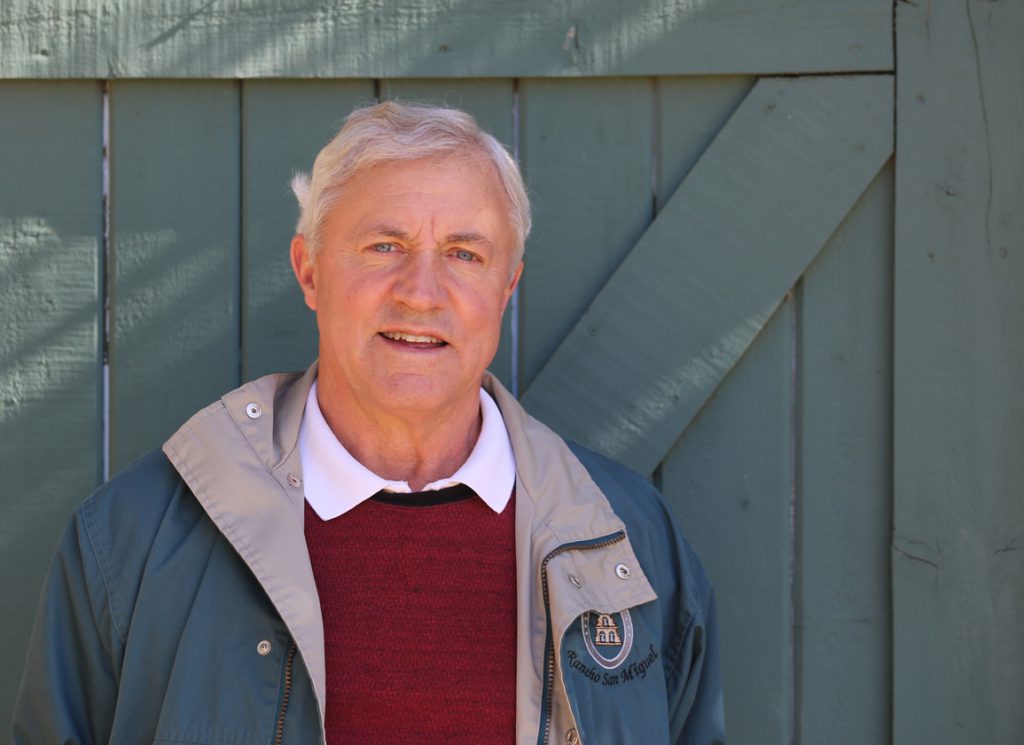
Tom Clark is the owner and manager of Rancho San Miguel, where more than 400 horses currently roam a sprawling 250-acres in California's San Luis Obispo County. He owns and manages the farm with his wife, Nancy. They have run it since 2000.

The farm is a lynchpin of the state's breeding industry, housing as it does such workhorses of the California breeding shed as Sir Prancealot (Ire) (Tamayuz {GB}), Danzing Candy (Twirling Candy) and Mo Forza (Uncle Mo).

But Clark harbors a grim prediction for the future of the state breeding industry if racing in Northern California is reduced to just the short summer fair meets.

“I think the foal crop could easily be halved from where we are now if there is no [sustained] racing in Northern California,” said Clark, estimating that such a precipitous drop could happen as quickly as within two years. “There would be nowhere to go with these horses,” he said.

The number of California-born foals fell from 3664 in 2005 to 1309 in 2021–a drop of some 65%. The number of mares bred in the state between 2005 and last year fell by a comparable percentage.

“Our farm breeds about one in every six mares in the state of California,” Clark said. “We had 137 foals born there this year. And when you look at where these horses end up, about half of them end up in Northern California.”

Tom Clark | Jill Williams

Many of Clark's clients, he said, are from the north of the state. “Conversations I've had with them, most of them don't see an opportunity to move south like The Stronach Group thinks could happen.”

Part of the reason why, said Clark, is that some prefer the ease of seeing their horses routinely train and race. In other words, Los Angeles County would be a step too far for those closer to the Oregon border. But by far the primary reason, he added, is one of economics.

“The cost of moving the horses and the day-to-day cost to maintain those cheaper style horses, the economics just don't work,” he said. “It's not just the day money. It's the significant increase they'll see in vet bills and so on. The numbers just don't pencil out.”

At the moment, breeding plans at Rancho San Miguel remain pretty stable for next year. But in Clark's mind, he is already sifting through the economic rubble of a state racing circuit heavily slanted to the south, leading to a devastating economic “ripple effect” across the entire state.

“We have over 50 people who live on our farm, employees and their families. Many of those have been with us for over 20 years. They're totally dedicated to taking care of horses. And they will just have no place to go. But it's not just our farm–there are many other farms that take just as good of care of their horses as we do,” Clark said.

“Then you've got to take into consideration farriers, veterinarians, feed companies, hay providers, the transportation guys,” he said. “All of them will be impacted by this massive shrinkage of the breeding business.”

The California horse racing industry is estimated to directly contribute over $4.5 billion to the state's economy, and over 77,700 jobs.

Adding fuel to the urgency of maintaining a racing circuit in Northern California far beyond the summer fair meets, said Clark, are the glaring question marks hanging over the future of Arizona's Turf Paradise racetrack–which typically operates a meet from November to May–along with a shrinking racing calendar in Washington State.

These are venues that have historically provided an outlet for the sorts of horses ill-suited to the conditions of California racing. With Golden Gate closing, breeders more than ever need a year-round circuit in the north, said Clark. Even if The Stronach Group (TSG)'s proposed four-day race-week at Santa Anita materializes, that still wouldn't be enough to sustain the breed in California, he said.

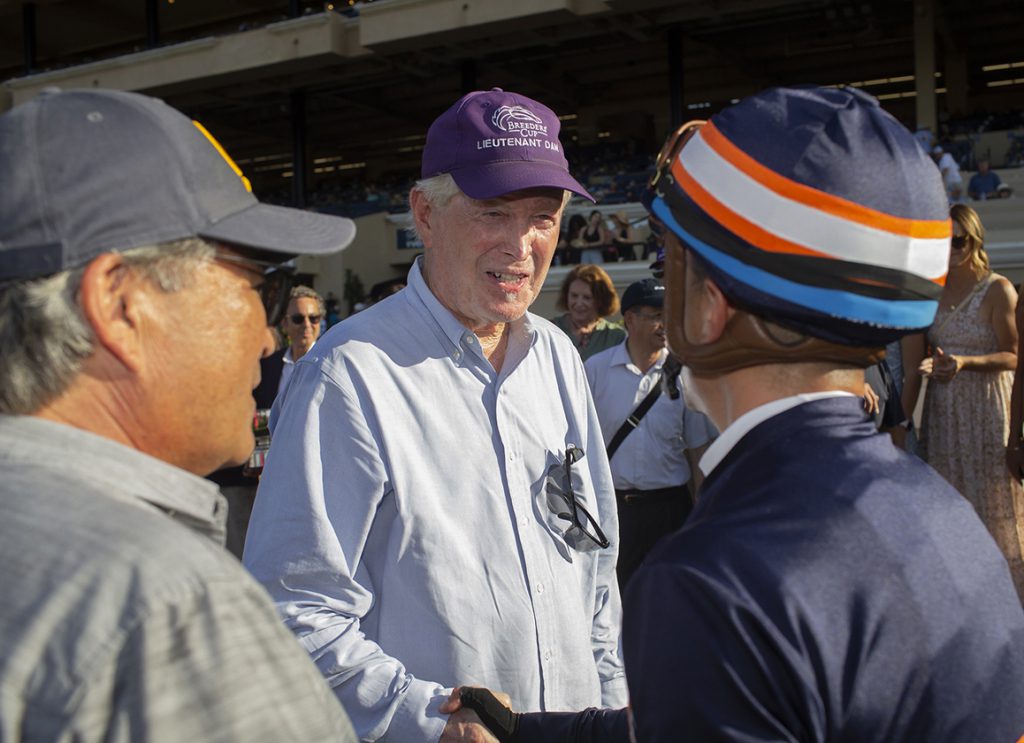
Long-time owner-breeder Nick Alexander agrees. He has a broodmare band of about 35, he said, including the dam of Cal-bred Horse of the Year, Lieutenant Dan (Grazen).

“Out of that same mare, most of the horses she's produced are Golden Gate horses,” said Alexander. “You have to have an outlet for all ranges of horses. You cannot run horses at Santa Anita that should be running for $5,000, and the trainer can't be charging $120 day-money for them. It doesn't compute.”

Alexander, who has raced at the Bay Area facility for roughly 40 years, lamented the track's imminent closure for a likely exodus of talent from the state. “The people in the north are terrified, and once they're dispersed, they're not returning,” he said. “Once the toothpaste's out the tube, you can't put it back.”

More broadly, Alexander described his sense of frustration about the manner in which the closure has been handled, and a feeling that the facility so integral to the state industry has been sacrificed for purely “commercial” reasons. “They just don't deserve to own a facility that is so important to our industry, important to fans, important to everybody,” he said. “It just breaks my heart.”

California Thoroughbred Breeding Association

“If Northern California can provide a calendar that can protect our breeders and continue to create the current demand that we have for Cal-breds, that's what we want,” said California Thoroughbred Breeding Association (CTBA) president Doug Burge.

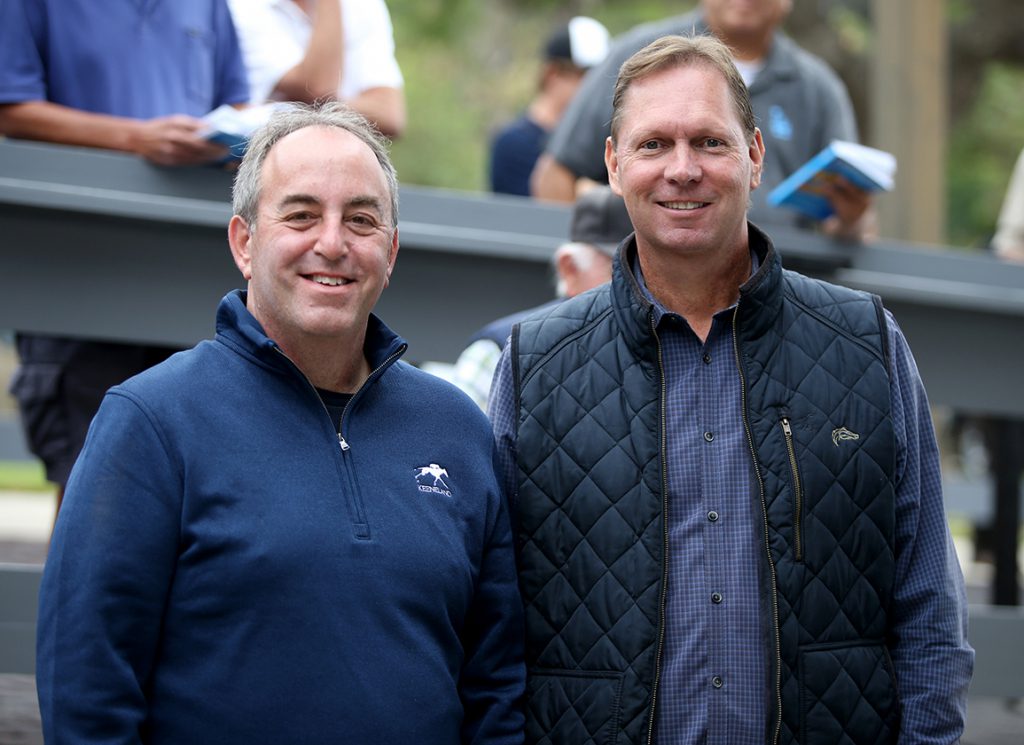
Doug Burge (right) with Harris Auerbach | Fasig-Tipton

Burge added, however, that the CTBA had not yet taken a firm position on any of the matters currently facing the breeding industry from Golden Gate's closure, and might refrain from doing so, even when the board meets later this week.

“We have constituents in the north and the south, and there are too many moving pieces right now. You have to look at the economics, see what's best for the breeders, what's best for the owners, what's best for racing,” said Burge.

At the same time, Burge emphasized the pivotal role of Cal-breds to field sizes. “When I started in the mid-'90s, Cal-breds were a nice compliment to racing,” he said. “Now they're a necessity.”

This is borne out by the data. During Santa Anita's recently concluded six-month meet, Cal-breds made up about 37% of all individual starts, according to DRF chart data, and Cal-bred races constituted more than 20% of the overall races.

According to California Horse Racing Board (CHRB) chairman Greg Ferraro, about 35% of the foals bred in California race at Golden Gate.

“If we did anything at all to discourage or reduce the number of foals born, everyone understands it would be a major issue,” said Burge.

When asked, Burge said that he had not crunched the numbers to identify how much further the foal crop in the state could shrink before breeding becomes an unsustainable economic model.

Last month, TSG announced a planned $500,000 investment into the state breeding industry to help compensate for the closure of Golden Gate Fields.

“With these renovations and the commitment to California-bred racing, I see the opportunities for Cal-breds greatly increasing and providing more value for those horses because of it. I'm going to breed more mares to take advantage of it. This is going to benefit the entire industry in the state,” prominent California breeder Terry Lovingier is quoted as saying in a TSG press release at that time.

Lovingier is also the CTBA chairperson.

According to Burge, the CTBA board is “looking at some creative uses of the funds to support the breeders,” though he added that he was unable to publicly share any details while they're still being ironed out.

Burge said TSG's breeder investment is currently a “one-time” offer, though added the idea of making it a repeat investment was “under discussion.”

When asked the same question, a TSG spokesperson wrote in a statement that the company is currently meeting with all industry stakeholders “as we work to shore up and improve California racing through our consolidation of operations” in the south.

“From timing, to financial considerations, to real conversations about the state of our sport, we appreciate the California Horse Racing Board's comments last week about open and transparent dialogue and plan to continue along that path though this transition,” the spokesperson added.

TSG representatives have repeatedly suggested that the $30 million-plus suite of investments earmarked for Santa Anita and San Luis Rey Downs are couched upon proceeds from simulcasting wagering conducted in the north being funneled to the southern racing circuit-what would appear facilitated through legislative change.

What is the CTB's position on those potential legislative efforts? “We haven't seen that legislation. We hear about it. We talk about it. We understand it. But we haven't taken any position whatsoever,” responded Burge.

As a glimmer of encouragement, Burge pointed to last week's CTBA Northern California Yearling Sale, which boasted year-over-year result increases, for an average of $9,260 and median price of $5,500. The average sales price for yearlings this year was 11.6 percent higher than last year.

“Everybody going into it thought it would be all doom and gloom,” said Burge. “And it turned out to be one of the best sales we've had in ten years.”

Adrian Gonzalez | Fasig-Tipton

Key California breeder Adrian Gonzalez–a ubiquitous presence on the California sales scene–is a self-described “glass-half-full” kind of guy. But he admits that news of Golden Gate's closure has knocked his confidence in the California breeding industry's long-term future.

“This is the first time that I have felt that this is not going the way we're used to,” said Gonzalez. He explained how the announced closure of the Bay Area facility has much wider ramifications for the industry than had been the case when the likes of Bay Meadows and Hollywood Park were shuttered.

Gonzalez's Checkmate Farm–a 66-acre ranch in Parkfield, California–houses between 50 and 60 mares right now, about half of them for his clients, the other half his own. And Gonzalez said that breeding plans for next year remain “pretty consistent.”

But with many of his clients stemming from the north, Gonzalez said he fears for a scenario where racing in the north is restricted to just the short summer fair meets.

For one, many of Gonzalez's clients either cannot compete on the Southern California circuit, or simply do not want to, he said.

But he also worries that TSG's plans to expand racing at Santa Anita to a four-day race-week won't provide enough opportunity to prevent the breeding industry contracting even further. And with shrinkage comes consolidation, he said.

“We need all of these farms [in California] supported. We just can't consolidate down to three or farms in the state,” Gonzales said, adding that the problem is compounded by a shortage of horse owners.

“I just don't believe that you're going to be able to keep all of the same owners and expect them to race in a different [location down south],” he said. “While they're still on the same circuit, they're 300 miles away.”

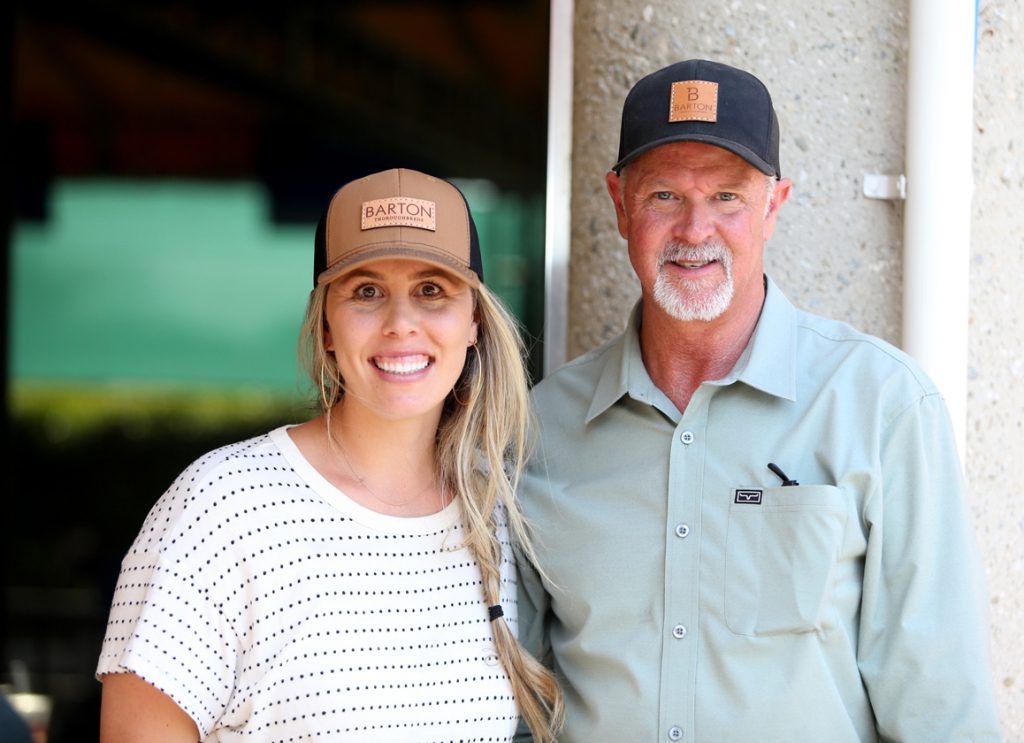
Kevin Dickson is farm manager for Barton Thoroughbreds, the 200-acre family-owned breeding behemoth in California's Santa Ynez Valley.

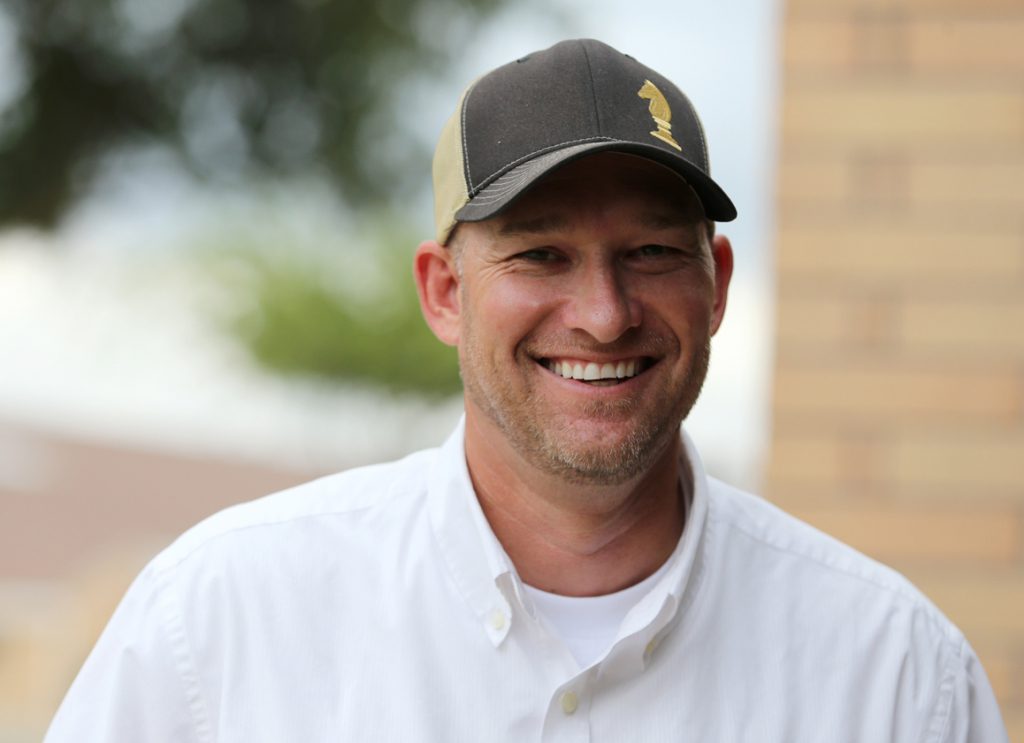
Kevin Dickson with Kate Penner | Fasig-Tipton

Dickson's sentiments ranged from concerns about the financial realities of the sport in California to recognition that the Barton operation is perhaps better insulated than others from these economic headwinds.

“California used to be such a strong market. We're just hanging on by a thread. And losing another track is devastating to not just breeders but all players,” said Dickson. “We can't afford it.”

Could the Barton operation continue in its current approach if Northern California racing shrunk to just the summer fair meets? “The short answer is yes, we can. The long answer is, I don't know,” said Dickson, emphasizing the difference in the north-south markets.

“Despite some of the rumors and things that are being said about things like blended meets down south, anybody I've spoken to–and that's having just completed a sale in the northern market–the people up north, they're not buying it,” he said.

Indeed, Dickson described a “lesser presence” at the recent CTBA Northern Sale than is typically the case. “My big buyer over the last three years was an absentee,” he said. “That hurt a little.”

At the same time, Dickson emphasized the Barton family's ongoing commitment to the state breeding industry, including a recent addition to the stallion ranks, Shaaz (Uncle Mo), a $1.1 million 2-year-old sale purchase. “He's a stunning individual and we're going to put a lot of mares to him,” said Dickson.

“They are fully committed to California. And they are going to continue to feed this West Coast industry with product,” said Dickson, of the Barton family. “We're breeding almost 200 of our own mares annually. And they're fully committed to breeding mares, putting out babies.”

When it comes to firm commitments into the future, Clark raised concerns about TSG's recent financial pledges. He singled out a submission by the California Thoroughbred Trainers (CTT) before last week's CHRB race dates committee meeting which details the company's multiple promises since 2005 to upgrade the Santa Anita backstretch.

“The fact is nearly 20 years ago, The Stronach Group promised a $20 million [plus] investment in the backside, and they never followed through,” said Clark. “So, what's to make them follow-through on the promises this time?”

But Clark also concedes that the problems facing the state's racing industry are much deeper rooted than the current tumult over Golden Gate's closure, calling the development “just a symptom of a much bigger issue” of overall affordability.

Nick Alexander (center) | Benoit

“We're not even keeping up with inflation,” Clark said, in reference to the state's purse offerings outside of Del Mar. At the same time, he estimated that the cost of breeding a foal in California and getting it to the yearling sales has grown to approximately $25,000.

As the consequences from Golden Gate's closure continue to be grappled with, Alexander stressed the importance of keeping Golden Gate open for as long as possible to provide horsemen the time needed to make seismic decisions that will impact their personal and professional futures. Indeed, at last week's race dates committee meeting, TSG floated the idea of pushing back the closure by six months.

At the same time, Alexander urged industry stakeholders to push back against any legislation that would funnel simulcasting proceeds from north to south. Such legislation, he added, could prove a death knell to any viable year-round circuit in the north. If such legislation is passed, said Alexander, “then the politicians ought to be thrown out of office.”

The post Golden Gate Closure: The Breeders’ Takes appeared first on TDN | Thoroughbred Daily News | Horse Racing News, Results and Video | Thoroughbred Breeding and Auctions.
Source of original post

Verified by MonsterInsights