SARATOGA SPRINGS, N.Y. – A panel on computer-assisted wagering (CAW) and its pros and cons, and another on trainers' reactions to the new Horseracing Integrity and Safety Authority (HISA) regulations, took center stage at the 2023 Jockey Club Round Table Conference on Matters Pertaining to Racing held in Saratoga Springs, New York on Thursday.
Patrick Cummings, the moderator of the panel on CAWs, is the Executive Director of the Thoroughbred Idea Foundation, a racing-industry think tank. Cummings took the panel through a brief history of parimutuel wagering and the changes the industry has seen before landing at the crux of the subject matter: CAWs.
“The CAWs are individuals with well-resourced staffs, developing couture models assessing vast amounts of data,” said Cummings. “They deploy finely-honed algorithms to efficiently place bets, often at the last possible second, all while receiving significant rebates for their play.”
The rebates, he said, while sizeable, were only one of the challenges that CAWs present to racing. The other is their ability to bet large amounts of money at the last possible second before the race, which gives them an advantage over regular players.
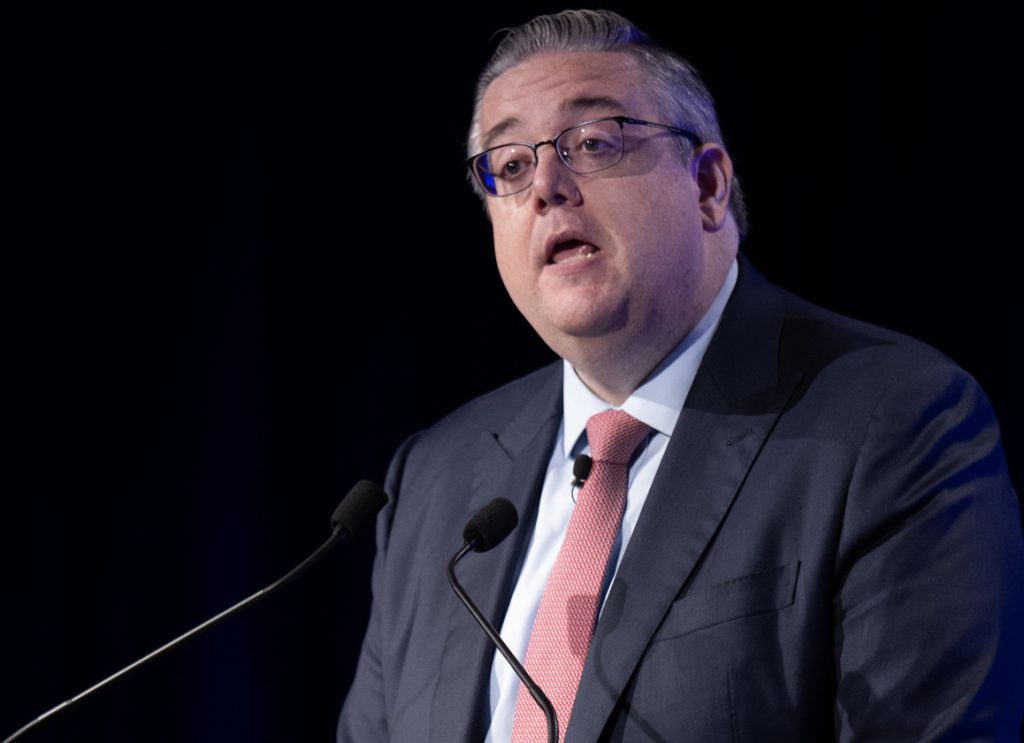
Pat Cummings | Skip Dickstein
“In pari-mutuel wagering, betting late has always been beneficial,” Cummings said. “But, when all betting was done on-track, betting late came with the risk you might not get your bet down at all.
“That's not a concern now, especially for the CAWs, who've been given the ability to place batch bets, dumping vast amounts in the final cycle of betting. The impact of that is witnessed every day, in nearly every race and across almost every pool.”
That impact, he said, has led us to where we are now: CAWs have grown from 8% of total handle in 2003 to around 33% of handle today. At the same time, when adjusted for inflation, non-CAW wagering is down by nearly two-thirds over the same time period. That's a concern because the money returned to racing in the form of purses is much greater from normal bettors than from those receiving huge rebates. So while handle may be up, “the greatest source of growth has been a handful of high-frequency bettors,” who pay less back into the system.
“How the evolution of CAWs is managed and how we support the existing customers we still have might be key to the future of wagering on racing in today's tech-forward world–one with unfathomable processing power, machine-learning, AI and more,” Cummings said.
Cummings led a Q-and-A session with Joe Longo, the General Manager of Content Managing Solutions for NYRA, which owns an ownership stake in the Elite Turf Club, one of the largest computer syndicate operations; and Dr. Marshall Gramm, a horse owner and professor at Rhodes College.
Gramm said he had written models with partners based on statistical probabilities. He started receiving rebates in 2011, and said that doing so not only allowed him to turn a profit, but to increase his handle enormously, from $49,000 in 2010 to $25 million in 2015. He has gone on to be a major racehorse owner, with 116 horses he now owns alone or in partnerships.
Gramm said that some in the industry have come to believe that rebates are all negative, but that his churn had increased exponentially because of it.
Love it or hate it, though, CAWs are here to stay, said Gramm.
“There's no walking back from it,” he said. “The computers aren't going away. You can't step back in time.”
Neither panelist addressed the issue that Cummings talked about in his introduction and that was covered in Jerry Brown's TDN op/ed, Existential Crisis, that because in parimutuel markets, players are playing against one another, regular people are effectively paying more, and leaving the game.
Longo discussed how NYRA has become the only racing organization to ban CAW bettors in the win pool within two minutes to post in order to negate the late odds fluctuations which have become so frustrating to horseplayers. Longo said that while no other organization had followed that lead, he felt that others eventually would.
HISA Panel Discusses Adjustments to New Rules
Trainers Jena Antonucci and Ron Moquett served as panelists, along with Ben Mosier, Executive Director of the Horseracing Integrity and Welfare Unit (HIWU), and HISA's Lisa Lazarus on a Q-and-A panel moderated by Jim Gagliano, the President and COO of The Jockey Club, on how trainers were adjusting to the new HISA regulations.
Gagliano asked the two trainers how their life had changed under HISA.

Trainer Jena Antonucci | Skip Dickstein
Antonucci said that she was already running her business along the lines that HISA requires in terms of record-keeping, but acknowledged that that part of the business had been a learning curve for other horsemen. Moquett said that, “as a Thoroughbred trainer, there's a new set of rules to follow and we're going to adapt to those rules, but primarily, we keep the priority on the horse.”
Antonucci acknowledged that there were concerns and bumps in the road as the program has gotten underway, but urged people to come forward with those problems so that the solutions could be found. But the benefits, she said, were dramatic.
“I may be a minority in this thought,” she said, “but I find it has been the great equalizer. It isn't a secret that there is availability of different levels of pharmaceuticals on different levels. Really smart chemists, and people looking to gain an edge. So I feel the biggest benefit has been to probably the hardest hit of this industry, which is the middle and the smaller side, where it has allowed a level playing field and where that guy or gal who busts their butt 24/7 can walk into a race and not feel like they're going to watch another horse re-break at the top of the stretch. That their plied trade and their skill set will have an opportunity to shine, where that eight-percent trainer historically, where it looks like I can't train a racehorse? All of a sudden, he's winning more, or she's winning more, and it's not because we've done anything different in our practice. And you know what? What I do, I do darned well, and my horse–whether it's in the Grade I Belmont Stakes or a $12,500 maiden–is going to have the chance to march down that stretch and compete eye-to-eye with the horses next to them, and there's not a pharmaceutical in our way.”
The crowd gave her an ovation after the comment.
“There are a few parts of it that have been very challenging,” said Moquett. “You're dealing with a large group of people who are now just getting introduced to technology. I'm helping people who are sometimes my competitors try to understand and navigate the system.
“I wear a number of hats,” he said. “I train horses. I own horses. I'm a member of the HBPA, and I'm on the HISA Advisory Committee. I'm constantly a sounding board. People come to me and say this is unfair, and I come to [HISA]. It's new. There are going to be problems, and they're going to have to listen to horsemen. It doesn't matter how good [Lisa Lazarus] is at her job, we need the Bill Motts and the Steve Asmussens. My job is to say, `look, I understand what you're trying to do, but we need to do a better job of explaining to people what the differences are between accidental contamination, an overage of an allowed medication and someone trying to gain an edge.' I'm basically representing 4,500 people that have to go through every regulation that HISA believes is okay. So [Lazarus] and I will get together, we'll battle, and we'll come to a solution. I will say we don't always get along that great, but she has been very good about hearing me out.”
Lisa Lazarus said, “One of the things we heard a lot was that if the public hears that a trainer has a medication overage, they think that they're a cheater. That they don't understand the difference between true doping substances, and medications that are allowed, but just not on race day. And so, one of the things that the [AMDC] does is distinguish very clearly between allowed substances and banned substances.” Violations for each were very different, she explained. “We're there to protect the 99% of trainers who are competing cleanly, so that they get a fair race.”
Safety, and The Traceability of Thoroughbreds
Tracing what happens to a Thoroughbred when it leaves racing or breeding has long been a problem for the industry, an issue that Kristin Werner, the Senior Counsel for The Jockey Club, addressed in her report on Thoroughbred Safety.
“I am pleased to announce that the `Transferred as Retired from Racing' process has gone digital,” said Werner. “The permanent removal of a horse's eligibility to race is beneficial to the retiring racehorse, but the process requires thoughtfulness and transparency on the part of the seller and buyer to avoid contractual disputes or other disagreements. To that end, the previous process required a notarized signature and hard-copy form to retire a Thoroughbred from racing. With the assistance of digital signature verification, we are now able to confidently collect the required signatures through the Interactive Registration website, which will make the process easier for everyone involved.”
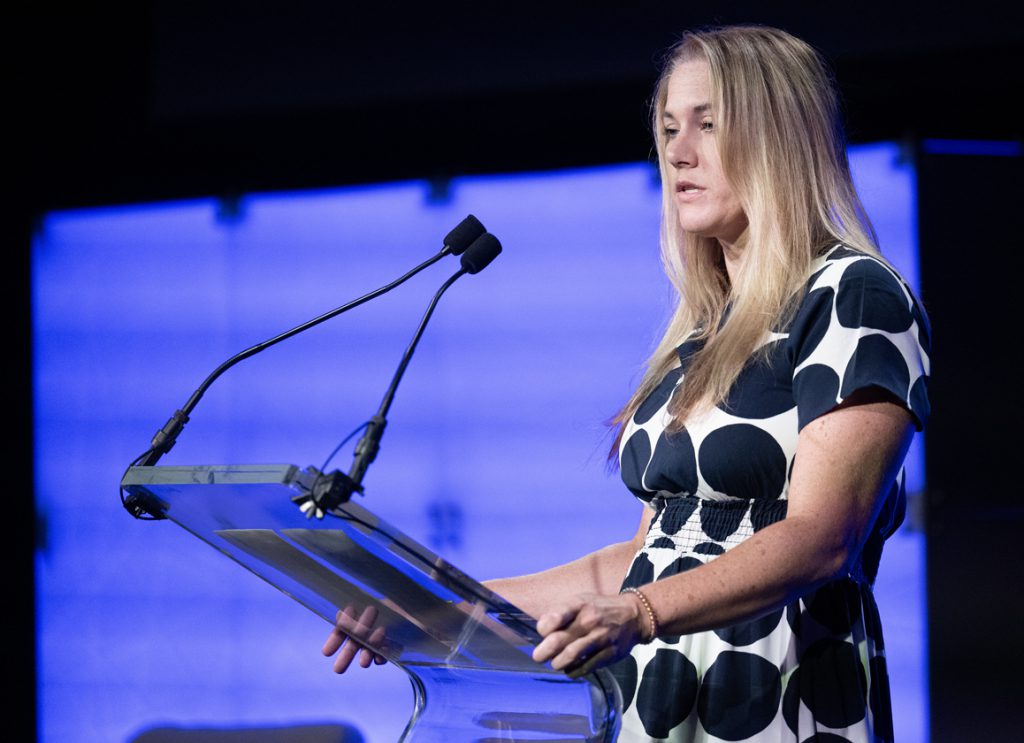
Kristin Werner | Skip Dickstein
Werner also reported that the ease of traceability is increasing due to the replacement of hard-copy certificates with digital ones starting with the foal crop of 2018. This, she said, “will allow The Jockey Club to follow up with the certificate manager to try to trace a Thoroughbred that has exited the racing or breeding population with an unknown outcome. When this system is in place in 2024, an automated prompt will be triggered when a horse has not been reported dead and has no racing activity, no breeding activity, and no Thoroughbred Incentive Program number for a specified time period. The communication will explain why the prompt was triggered and will ask the manager to indicate the horse's current status.”
For foals born in 2017 and prior that had made a start in the past 10 years, she said, The Jockey Club would be reaching out to the last connections to try to determine their status.
Werner also addressed racing's safety issues.
“In 2022, data analysis from the 14th year of reporting to the Equine Injury Database (EID) showed a decrease in the rate of fatal injury in 2022 to 1.25 fatalities per 1,000 starts,” said Werner. “This is the lowest cumulative fatality rate since the EID was launched in 2009, and is the fourth consecutive year that the rate has decreased. While 99.88% of Thoroughbred races were completed without a fatality last year, clusters like those that occurred in April and May of 2023, unfortunately, cast a shadow over the good news and bring equine fatalities back into the headlines of national media,” she said, referring to the fatalities during the week leading up to the Kentucky Derby.
Werner said that the advent of the EID had allowed them to identify 35% of the risk factors which put horses at increased risk for breakdown during the running of a race. Those factors include a horse's vet list history, the race distance, and the time a horse has spent with a trainer. Long races, and longer time with a horse's trainer make that horse statistically safer.
The Safety Committee is also calling for the dissemination of information regarding the consistency and maintenance of track surfaces. “The Thoroughbred Safety Committee today calls for that information to be frequently measured at periodic distances and made available to the public,” said Werner. “Working with other key industry stakeholders, especially the Horseracing Integrity and Safety Authority and the Racing Surfaces Testing Laboratory, The Jockey Club recommends exploring the best methods for providing the racing surface data to the horsemen and public, including through an app, website, or other electronic feed. As with all of its recommendations, The Jockey Club will help provide resources to ensure this recommendation is met.”
Analytics in Sport
Michael Lopez, the Director of Football Data and Analytics for the National Football League, is a Saratoga resident who used to teach at Skidmore College in town, and a long-time horse racing fan. He talked about how the NFL uses data to drive decision-making, and ways in which he felt horse racing could do the same.
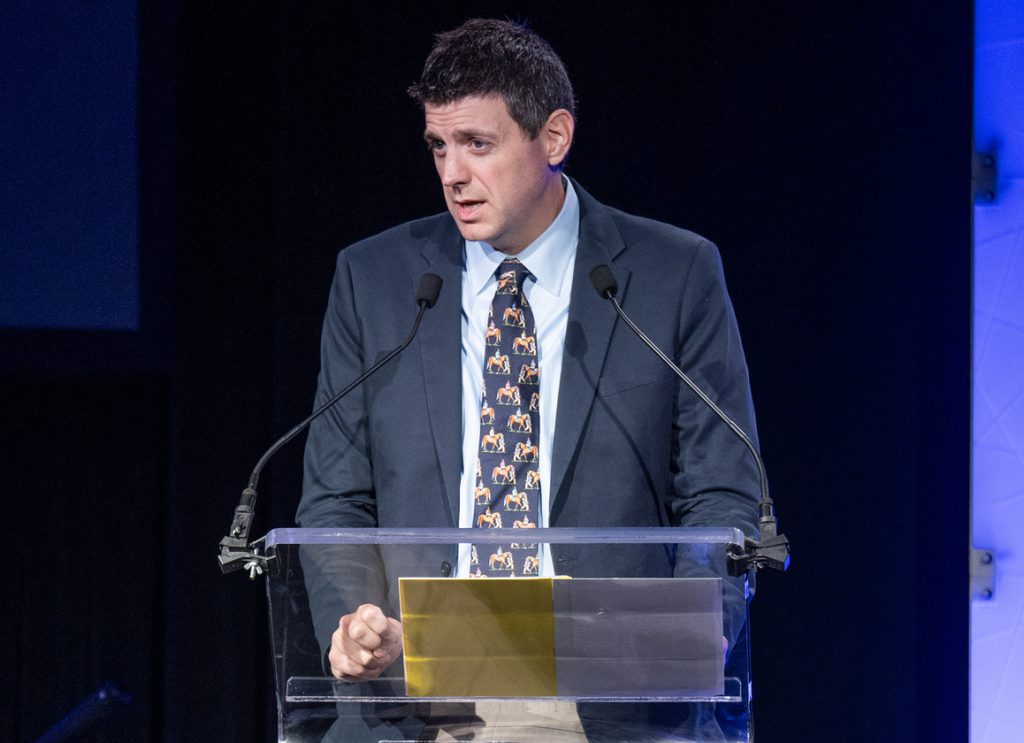
Michael Lopez | Skip Dickstein
And while the sports are completely different, there were several interesting parallels.
Wearable technology has been an interesting new potential safety tool for horses, designed to measure things like their regular stride to detect any changes that might indicate a problem. The NFL is doing the same.
“Recently,” said Lopez, “all NFL players are now wearing RFID chips in their helmets, shoulder pads, and cleats, small enough so that the players don't feel them, but enough so that a signal is emitted each time they step onto the practice or game field. The burden is heavy–this data is messy and the tracking cumbersome–but the idea of a cleat specific to a running back on turf, or a helmet specific to a quarterback who likes to scramble–gives the league plenty to work on. And each practice, each club is required to wear tracking devices that give insight into a player's load, distance traveled, speed, etc., which enables sports scientists to evaluate performance, if players need to tone down, or injury recovery.”
Moreover, the NFL is timing the replay review process to ensure that a coach's challenge in a more prominent game is treated the same way that it would be in a less-prominent one. After the non-disqualification of Forte (Violence) in the July 29 GII Jim Dandy S. prompted much discussion over whether a less well-publicized event would have merited a DQ, the topic struck home. “The horse racing corollary is obvious,” said Lopez. “When, why, and how stewards decide for or against a disqualification, because a possible DQ at Del Mar should have the identical decision-making process to one at Saratoga.”
Engagement With Racing
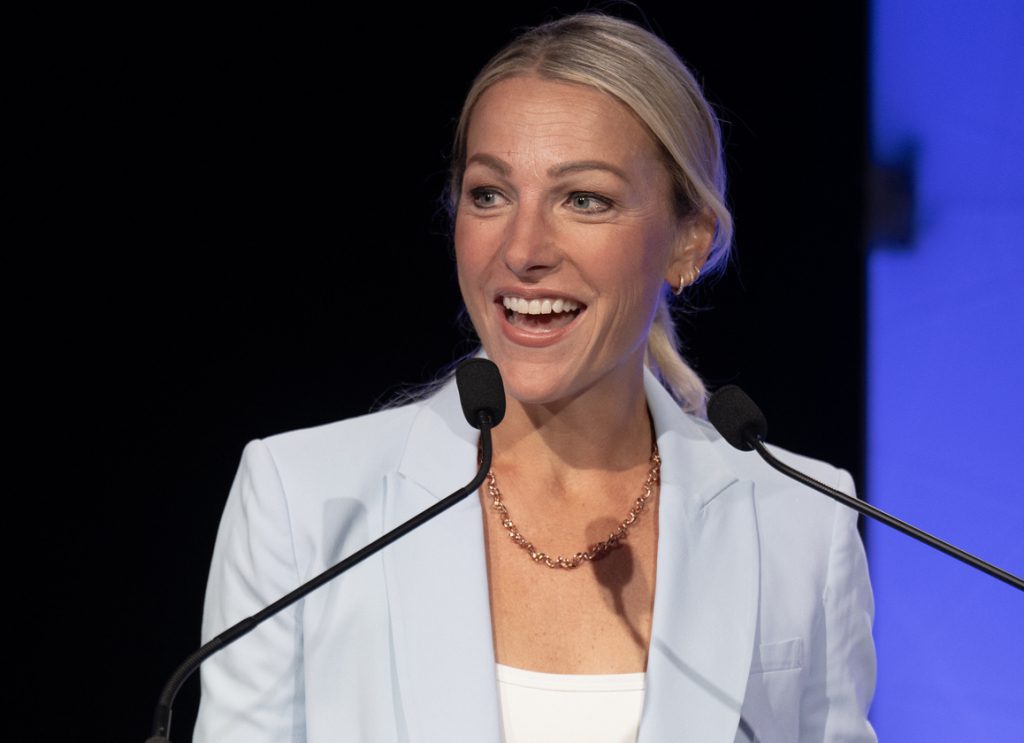
Lindsay Czarniak | Skip Dickstein
Lindsay Czarniak was just a baby when her father Chet took the job as the first-ever horse racing reporter for USA Today in 1982. Today, she is a sports broadcaster who anchored SportsCenter for six years and who works as a Fox Sports sideline reporter. She is a studio host for NBC's summer and winter Olympics. She is also an influencer with America's Best Racing and a West Point Thoroughbreds partner who was one of the co-owners of Jace's Road (Quality Road) in this year's Kentucky Derby. “My goal was to give folks that pay attention to my content the VIP access,” said Czarniak. “I had so many people pulling for Jace's Road because they knew we were in the big race.”
Her advice for racing? Lean into storytelling and access; just because it feels normal to people within the industry doesn't mean that it is to fans. “There is a family aspect, a necessary aspect, a high-stakes aspect to this sport that your average sports fan would consume.”
She also advised racing to place itself where young people consume content, i.e., streaming platforms, digital and social media, etc., and to communicate the safety steps that have been taken.
Racing and Data
Kyle McDoniel was named the President and COO of Equibase on June 1, 2023, and comes from a sports and data background, having most recently served as vice president of U.S. Strategic Partnerships for SportRadar, a sports technology company.
McDoniel talked about the challenges inherent in GPS tracking of horse racing, and said that Equibase is now producing tracking at 28 tracks across the U.S. and Canada, representing over 75% of North American handle. In addition, he said the company was continuing to invest in graphical representations of past performances, including those that illustrate stride frequency and length averages, among other things.
Janney's Closing Remarks

Stuart S. Janney III | Skip Dickstein
In his closing remarks, Jockey Club Chairman Stuart Janney said that the advent of HISA had done a lot to secure racing's future.
“Four years ago, at this program, a great Australian breeder-owner, John Messara, speaking about the proposed federal legislation, said, `You've got everything to unleash your monster of economic rewards if you were to join the rest of the world in this harmonization in terms of the drug rules.' John was right and we are here today and it's now time to capture that future.”
To do so, said Janney, “I have two suggestions. First, we have to embrace the international aspect of the sport. Racing is global and thankfully, in many parts of the world, the sport is thriving.”
His second suggestion, he said, involved marketing. “We need to get past the concerns that we are constantly in turmoil, rocking from one crisis to the next. Another Round Table speaker from the past, David Fuscus, [who] discussed crisis management, said, `If we come together as an industry, negative perception can be turned. There is hope we can come through these dark days, but to do so, the public needs to understand what we're doing and believe we are on a path to success.'”
Entire Conference Available Online
To watch the entire Round Table conference, click here.
The post Technology, Engagement, and the Future the Focus of Annual Round Table Conference appeared first on TDN | Thoroughbred Daily News | Horse Racing News, Results and Video | Thoroughbred Breeding and Auctions.