Legal Expert: If Fifth Circuit Finds HISA Constitutional, Texas “Absolutely” Can Implement Law

Like rival boxers primped and posturing, proponents of the Horseracing Integrity and Safety Act (HISA) and the Texas Racing Commission (TXRC) have taken to their respective corners during the unfolding legal fight over the law and have remained un-budged.

At stake is the lucrative business of nationally beaming Texas's simulcast wagering signal.

The TXRC initially took the stance that it is legally prohibited from permitting Texan tracks to export their signals. Then at the start of February, the Fifth Circuit Court of Appeals sent the congressionally amended version of HISA down to the district courts for further review.

The Texas commission interpreted this action as meaning that HISA is “facially unconstitutional and therefore has no effect on the State of Texas,” seemingly opening the door to Texas tracks once again engaging in interstate simulcasting.

As of writing, no Texas-based track has adopted that policy, and the simulcasting signal remains flatlined. Furthermore, just this May, the federal court judge out of the Northern District of Texas, Lubbock Division, found this version of HISA as constitutional. The case has now been appealed back up to the Fifth Circuit Court of Appeals.

In the meantime, though purses in the state remain fairly stable, the tracks are taking a huge financial knock, and horsemen there are raising concerns about other ancillary impacts on their businesses. Some of the horsemen are now asking: Can HISA be implemented in the state in order to facilitate the interstate simulcasting signal?

The TXRC has taken the stance that state law bars HISA from being implemented in the state unless it is replaced or altered to become a cooperative agreement grant program–an alternative financial and regulatory model for the federal government to cooperate with individual states.

Amy Cook | Courtesy of Amy Cook

Even then, “our statute doesn't even allow us to take grants,” TXRC executive director, Amy Cook, told the TDN last week.

“We've actually made a request to have our statute conform, so, if HISA did become a cooperative agreement grant program, and the [Federal Trade Commission] FTC became a grantor, we could actually take that money and work with HISA. That's the only pathway I see,” Cook added.

In a follow-up email, Phil Fountain, the TXRC's chief of staff, pointed to a previously released commission “fact-sheet” broadly outlining its legal argument. The fact-sheet cites the Texas Racing Act, which directs the commission to “regulate and supervise each racing meeting in this state” that involves wagering.

“There is no provision for the Texas Racing Commission to cede this authority to another party. This means there is no preemption of Texas law under HISA's opt-in structure because HISA does not regulate pari-mutuel horseracing activities,” wrote Fountain.

A legal analysis put together for HISA by the law firm Akin Gump takes the opposite stance. It finds that HISA indeed preempts the Texas law that the commission says confers it exclusive authority to regulate all matters relating to horseracing.

Furthermore, under HISA and state law, the TXRC can implement HISA and still continue to regulate matters outside the reach of HISA's jurisdictions, the Akin Gump analysis finds.

“There is no legal impediment to reversal of the Texas Racing Commission's self-destructive policy decision of restricting interstate wagering on horse racing. Under State and federal law, the Commission may continue to regulate horse racing in Texas to the extent not preempted by HISA rules,” the analysis for HISA finds.

Which side stands on the sturdiest legal legs?

For an independent take on the dispute, the TDN spoke with Daniel Rodriguez, former dean of the Northwestern University Pritzker School of Law and former Minerva House Drysdale Regents Chair in Law at the University of Texas, Austin.

Prior to being asked to sort through the legal bones of the matter, Rodriguez said that he was unaware both of the HISA legislation passed into law at the end of 2020 and of the legal conflict that has arisen in Texas.

His answers hinge on the looming decision in the Fifth Circuit Court of Appeals, which is set to rule on the constitutionality of the congressionally amended version of HISA. That ruling, however, could still take a number of months.

“What the Fifth Circuit is being asked to do is rule on a matter of federal constitutional law, just as they were asked to do on the ruling back in 2022, when the Fifth Circuit struck down the statute as violating what they call the private non-delegation doctrine,” he said.

If the court rules in tandem with the Sixth Circuit Court of Appeals–which recently found the revised HISA statute constitutional–there is “absolutely nothing” in Texas statute that bars HISA from being implemented in the state, he said. “That we can all agree on–even the lawyers for the Texas racing commission.”

When asked about the Texas commission's stance–that state law bars HISA's implementation in Texas, irrespective of any court ruling in its constitutionality–Rodriguez called it “foolishness” as well as “head-scratching.”

In other words, what the commission is saying in that scenario is that “I can't comply with the law,” he said, before describing the stance as a policy posture rather than a solid legal argument.

“I lived in Texas for five years so I get to say that this is typical Texan intransigence,” Rodriguez said.

At the same time, Texas could indeed enter into a cooperative agreement grant program with the federal government, if HISA were structured that way, said Rodriguez. “You certainly could implement [HISA] through a regional compact. But Congress has chosen a different mechanism,” he added.
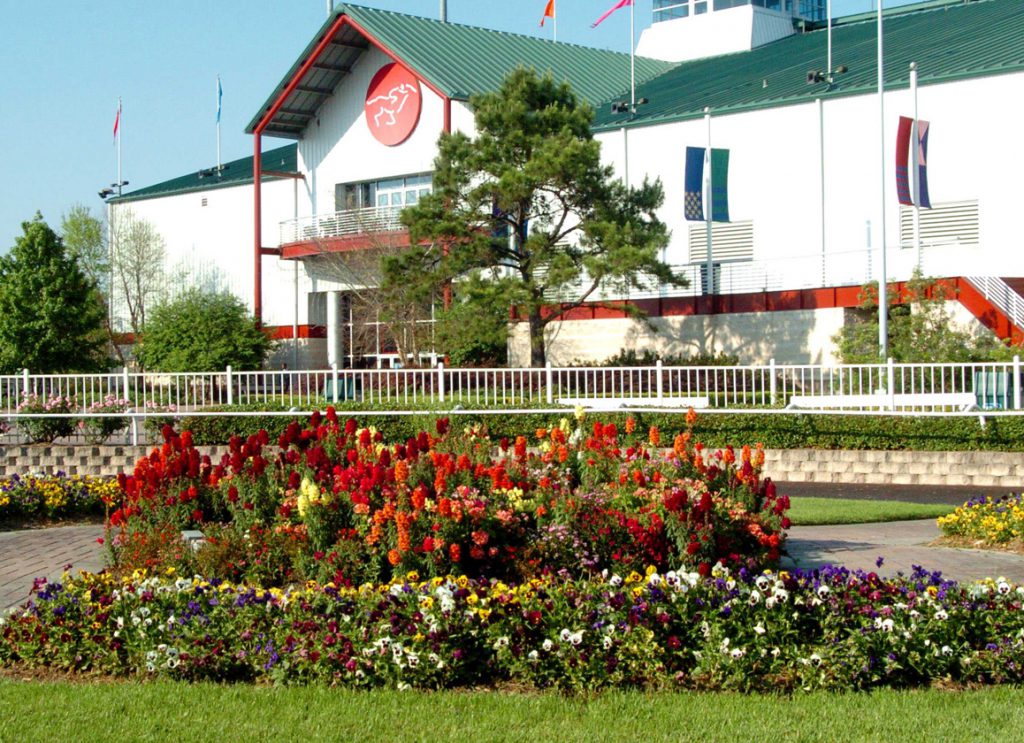
Sam Houston Race Park | Coady Photography

On the flip side, however, if the Fifth Circuit rules that the amended version of HISA remains unconstitutional–just as it ruled on the prior version of HISA–then the TXRC would be correct in barring HISA implementation in the state, said Rodriguez.

Rodriguez declined to weigh in on whether HISA could be implemented in Texas currently–that is, before the Fifth Circuit ruling drops–explaining that he had not researched the legal landscape of the question enough to opine on the matter.

More within Rodriguez's wheelhouse are the ideological whims and fancies of the various Courts of Appeals–including the Fifth Circuit.

“The Fifth Circuit has a reputation for being an eccentric court of appeals–they've reached judgments in the past that leave us law professors to scratch our heads and wonder exactly why their views are so outside the mainstream of other circuit courts. They do what they do,” he said.

When asked which way he thought the Fifth Circuit would rule on the constitutionality of the congressionally amended version of HISA, Rodriguez sided with the federal government. “I really don't anticipate the Fifth Circuit striking it down as unconstitutional,” he said.

In that scenario, said Rodriguez, the plaintiffs would likely file a petition of certiorari with the Supreme Court–a request that the Supreme Court orders a lower court to send the case up to them for review.

But in that instance, there would be no obvious “circuit split” between the Fifth and Sixth Circuit Courts of Appeals for the Supreme Court to weigh in on and consider, meaning it's unlikely the highest court of the land would take the case, he said.

“It's always important for those of us to check our biases, no matter how much expertise we have as law professors,” said Rodriguez.

“But in a nutshell, the issue is, 'can Congress, consistent with their authority, delegate authority to an administrative agency whose constitutionality has never been questioned–I'm talking the FTC–to establish rules for Thoroughbred horse racing?' And the answer to that now is clearly, 'yes,'” he said.

The post Legal Expert: If Fifth Circuit Finds HISA Constitutional, Texas “Absolutely” Can Implement Law appeared first on TDN | Thoroughbred Daily News | Horse Racing News, Results and Video | Thoroughbred Breeding and Auctions.

Source of original post

John Velazquez Joins TDN Writers’ Room Podcast

The credit for the win in the GI Preakness S. goes to National Treasure (Quality Road), but the assist goes to Hall of Fame jockey John Velazquez. Able to get to the lead and then slow the pace down to a crawl, Velazquez put in a perfect ride on his way to his first ever win in the Preakness. Fresh off his victory, Velazquez joined this week's TDN Writers' Room podcast presented by Keeneland. He was this week's Green Group Guest of the Week.

“It was just one of those things that worked out perfect,” Velazquez said of his Preakness trip. “You plan it but you never dream that you'll have the trip we had.  The only thing that I was worried about…I saw Irad Ortiz (the rider of Blazing Sevens (Good Magic) warming up his horse in the post parade and I thought he was going try to get closer to the pace. If he wanted to get close to that pace, he was going to have to go fast enough to go across from me. So when I broke, I started drifting my horse out. So then when I pushed him out he started grabbing his horse back and he went backwards. I thought, 'Okay, he's out of there'. And I went right back to the inside. And that kind of slowed the pace really well.”

The race came down to National Treasure and Blazing Sevens in the stretch and National Treasure gamely held off his rival to win by a head. Velazquez and Ortiz were in close quarters the whole way and the two bumped. It sometimes seems that every time Ortiz is in a stretch battle something happens. Velazquez's thoughts on Ortiz and whether or not he too often crosses a line?

“I don't think he's a dirty rider,” Velazquez said. “I think he definitely crosses the line and does it a lot. I have talked to him many times. I try to teach him that we can be aggressive, but we have a line that we have to put in there. For him, it's hard to control. For me, I've been riding for a long time, so I always try to take the edge as much as I can, but try not to cross those lines. We all make mistakes. But I try to make as few mistakes as possible so I don't cross the line.”

Velazquez also revealed that he was almost taken off of National Treasure before the Preakness.

“I had to plead my case,” he said. “I made a few phone calls and I pleaded my case. I had to explain what happened in the Derby (where he rode Reincarnate (Good Magic), who was surprisingly close to the early pace), and I'm going to leave it at that.”

Should National Treasure start in the GI Belmont S., Velazquez thinks the mile-and-a-half will not be an issue.

“His gallop-outs are really strong every time,” he said. “He's always given me the feeling that he can do more and, obviously, he put it together in the Preakness. He put in a really good effort and his gallop out was really, really good. So I think the mile-and-a-half shouldn't be a problem. The way he gallops out, he's always giving more and more.”

Elsewhere on the podcast, which is also sponsored by Coolmore,https://lanesend.com/  the Pennsylvania Horse Breeders Association, Kentucky Thoroughbred Owners and Breeders1/st Racing, WinStar Farm, XBTV, Lane's End and https://www.threechimneys.com/ West Point Thoroughbreds, Bill Finley and Randy Moss reviewed the Preakness and the incredible highs and lows Bob Baffert experienced during the day. The breakdown of Havnameltdown (Uncaptured) and the way it was covered by the mainstream media was a major topic of discussion. Finley said that it is time for the sport to take another look at synthetic surfaces, noting that horses are 3 1/2 times more likely to die in a dirt race than they are in a synthetic surface race. With the Belmont next, Moss and Finley took a look at the story of Forte (Violence) re-emerging in the Triple Crown and wondered if he will be ready for his best after what would be a 10-week layoff and some missed training time due to the bruised hoof that led to his being scratched from the Derby.

Click for the video of the latest podcast or the audio-only version.

The post John Velazquez Joins TDN Writers’ Room Podcast appeared first on TDN | Thoroughbred Daily News | Horse Racing News, Results and Video | Thoroughbred Breeding and Auctions.

Source of original post

Irad Ortiz Fined $1,000 Over Unapproved Advertising On Derby Day

Jockey Irad Ortiz, Jr. has been fined $1,000 by the Kentucky Horse Racing Commission for “failure to comply with the regulation that governs advertising by wearing promotional materials [in the Grade 1 Turf Classic] without written approval.” The KHRC issued the ruling on May 18, 2023.

In the Turf Classic, the 11th race at Churchill Downs on May 6, 2023, Ortiz wore riding pants emblazoned with the Jeff Ruby's Steakhouse logo aboard victorious Up to the Mark. Up to the Mark is owned by St. Elias Stable and Repole Stable and trained by Todd Pletcher.

According to KHRC regulations, written approval to wear advertising materials must be filed with the commission from four entities: the owner, jockey, licensed racing association, and the stewards. That approval must be filed no later than 5:00 p.m. two days prior to the race in question.

The KHRC ruling, available here, does not indicate which entity's written approval was lacking for the Turf Classic.

Advertising materials are also subject to regulations regarding size and placement, and in relation to existing sponsorship agreements. The full rules are listed here, in Section 16.

The post Irad Ortiz Fined $1,000 Over Unapproved Advertising On Derby Day appeared first on Horse Racing News | Paulick Report.

Source of original post

TIF Says Triple Crown Pre-Race Inspection Reports Should Be Public

While veterinary scrutiny has increased, communication has not, as U.S. racing has fallen short in the transparency space both this year and many years in the past, the Thoroughbred Idea Foundation (TIF) said on their website on Wednesday.

According to the TIF report, there were more than 33,000 races for Thoroughbreds in the U.S. in 2022, but if you asked the public to name just three of them, chances are they would be the GI Kentucky Derby, the GI Preakness S. and the GI Belmont S.

The report takes the position that the Triple Crown races, despite massive coverage across multiple platforms, still relies on potential hearsay and not regulatory bodies with the specific expertise to offer “formal updates regarding the health and soundness of horses entered in the races which attract the most public attention.”

TIF piece goes on to argue that, “Actual details which media, horseplayers and fans alike can consume, eliminates speculation and repetitive inaccuracies that take hold, particularly across social media, while proving to a wider audience what many inside the sport already know–veterinary scrutiny has never been stronger!”

As with Forte's (Violence) leg injury or Mage's (Good Magic) cut above his eye leading up to this year's Kentucky Derby, the majority of the time the public hears from a veterinarian only after an injury has occurred. Though safety and welfare initiatives are welcomed without question, TIF advocates regulators going further to communicate with the public about the horses and their fitness to compete in the most important U.S. races.

“Communication” will occur regardless–first as whispers amongst some insiders, then tweets and texts that spiral endlessly–all while, as TIF wrote, “the truth is likely sitting in regulatory silence.”

As for international examples, they abound TIF offers. The protocols surrounding the G1 Melbourne Cup in Australia and the pre-race screening administered by the likes of the Hong Kong Jockey Club are models that the U.S. can emulate, which will lead to progress and transparency for the sport.

Click here to access the full report on the TIF website.

The post TIF Says Triple Crown Pre-Race Inspection Reports Should Be Public appeared first on TDN | Thoroughbred Daily News | Horse Racing News, Results and Video | Thoroughbred Breeding and Auctions.

Source of original post

Verified by MonsterInsights