Last year, we conducted a popular Q and A series called 'Smaller But Still Super,' where we featured veteran trainers who have built a competitive racing stable with relatively small numbers (click here to view the archive). This year, we will highlight trainers who have already cut their teeth as novice trainers, but now have a few years of experience under their belt and are looking to make a name for themselves as they grow their stable. We'll talk about the challenges that come with hanging out your single, advice for trainers setting out on their own, how the incoming class of young trainers differs from previous generations and more.
Arlington Park was one of Chris Davis' first loves and the 34-year-old conditioner is still quick to say that the now-closed historic track will always be his favorite place to watch racing. Davis developed a passion for the sport by following his parents, conditioner Liane Davis and assistant starter Hershell Davis, around the Chicago racing circuit. He worked for local trainers as a teenager and eventually ventured to other tracks across the country to serve as assistant for Wayne Catalano, Michael Stidham and Philip d'Amato.
Davis said that d'Amato was the one who gave him the push to go out on his own in the fall of 2016. It didn't take long for him to saddle his 100th winner in 2021.
With around 30 horses in his stable and several graded stakes wins to his credit, Davis travels the Kentucky circuit throughout the majority of the year and races out of Gulfstream Park in the winter. Already this year, he has had two promising maiden winners on the Gulfstream turf in Dare To Dream Stable's Moon Cat (Malibu Moon) and Gary Broad's Royal Mende (Mendelssohn).
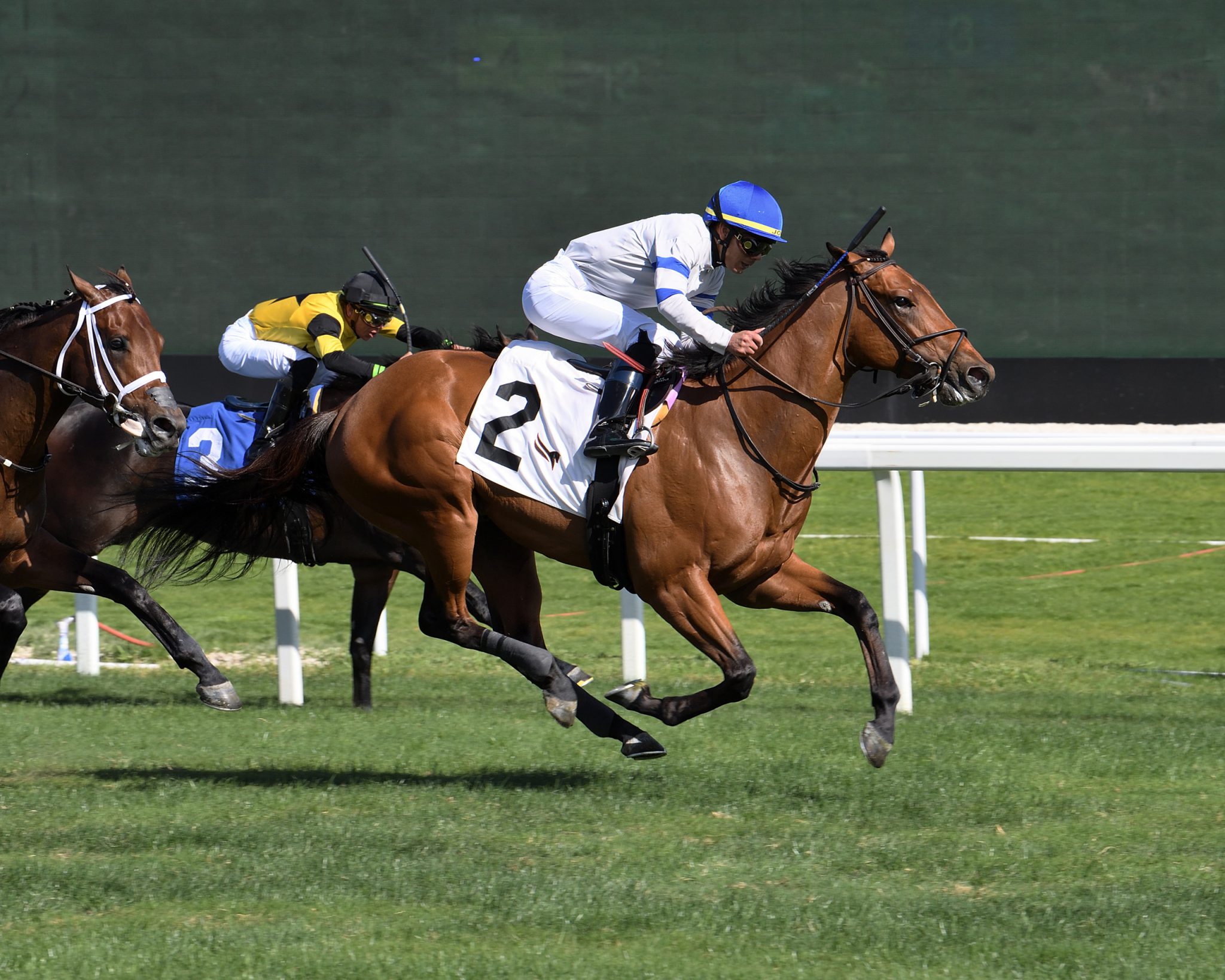
Royal Mende breaks his maiden in January at Gulfstream | Lauren King
What has been the key to your stable's growth since you first opened?
I started with two horses. Town and Country Farms gave me my first two and they've obviously had a lot of success over the years. Shannon Potter and Kiki Courtelis really jump started my career and I owe a lot to them. They gave me a lot of good quality horses from fairly early on, including my first stakes winner Moonlit Garden (Malibu Moon). She had been with Todd Pletcher in New York and they felt like she needed a bit more individual attention. I was riding basically all of my own horses and doing a lot of it myself. Her form was not very good when I got her. We individualized her and she ended up going back to New York a year and a half later and winning the Summer Colony S. She was also second in a stake at Monmouth and was beat by a nose in the GIII Houston Ladies Classic S. to none other than Midnight Bisou (Midnight Lute).
It has kind of been a grind since starting out. It's hard to break through as a trainer without the really big connections or the support of a big bloodstock agent or syndicate. Being 34 and with this being our sixth full year now, we've had a fair amount of success in finding stakes horses. We do well at the 2-year-old sales. We stay within our budget and still seem to come out with maiden winners, or maybe a group or listed winner.
What do you believe makes your stable unique?
I think the fact that I've been around to a lot of places from coast to coast and the Midwest. I've worked with a wide variety of horses on the track throughout my career, from the time with my parents to with Mike, Phil and Wayne. Being around good horses, you get a good sense of a good horse and certain horses will remind you of others.
It's about individual attention and trying to fine tune what you have. Obviously you can't train on some horses in a smaller stable like some of the bigger stables because they have more waiting to come in to you. When you're a smaller trainer, you have to be able to get the most out of what you have and still be conservative and keep them sound. I think being able to individualize and keep a horse healthy so it can campaign for longer is a big benefit that we have.
What has been the biggest thing you have learned since going out on your own?
Probably client management. The horses are easy for the most part. They do make fools out of all of us, there's no question about that, but client management is the biggest thing. Richard Mandella told me years ago that people are going to try to tell you what to do. Being able to work with clients is the toughest transition from going to an assistant to being on your own. It's about dealing with the clients on a daily basis, not just the horses.
I do try to work with everyone's needs on a very personal level. We're pretty respectful of what the client wants. Obviously I won't run one for a tag if an owner doesn't want to run for a tag. If we were able to place every horse where they needed to belong, we would all win a lot more races and you would see a lot more 25-30% trainers out there–not just a certain five guys.
If you could give one piece of advice to someone going out on their own this year, what would it be?
Be patient. It's going to test you physically and mentally. The stress level of a Thoroughbred trainer, especially one starting out, is no joke.
Mike told me when I was struggling with two to four horses that you have to keep showing up and keep grinding. I took a lot of weight from his interview that he gave after winning the Dubai World Cup when he said, “It was finally my time.” He had been training horses for 40 years.
People will say, “That trainer came from out of nowhere,” when in all actuality he has been training for 20 years. Or people will say, “This guy is untouchable,” when maybe he wasn't five years ago, but now all of a sudden people are flocking to him. That's what happens because numbers breed success. You have more options, more liberty and you have a different clientele.
What is something that you think this incoming generation of trainers does better than the generations before them?
That's hard to say. Every generation has had to overcome certain things. You think back to when D. Wayne Lukas and Jack Van Berg really started the era of super trainers. Now it's just kind of keeping up with the Joneses as far as when you don't have that many horses coming in like the bigger stables, you have to be able to individualize.
I think the trainers just coming in like myself are facing a lot more medication overhaul than what was previously imposed. There is a lot more veterinary regulations.
Also the expense of owning a racehorse has gone up tremendously, which has caused some of the little owners who would potentially give a startup guy a horse or two to kind of just fizzle out. We're kind of seeing it go back to the “Sport of Kings” in that it's the super wealthy or the big syndicates that are really taking over. That's good and bad. If you're churning for those guys, it's great. If you're not, you're on the outside looking in. When you go to a sale, you know the guys you're going to go up against and you know the money behind them, so you're hoping you can get lucky.
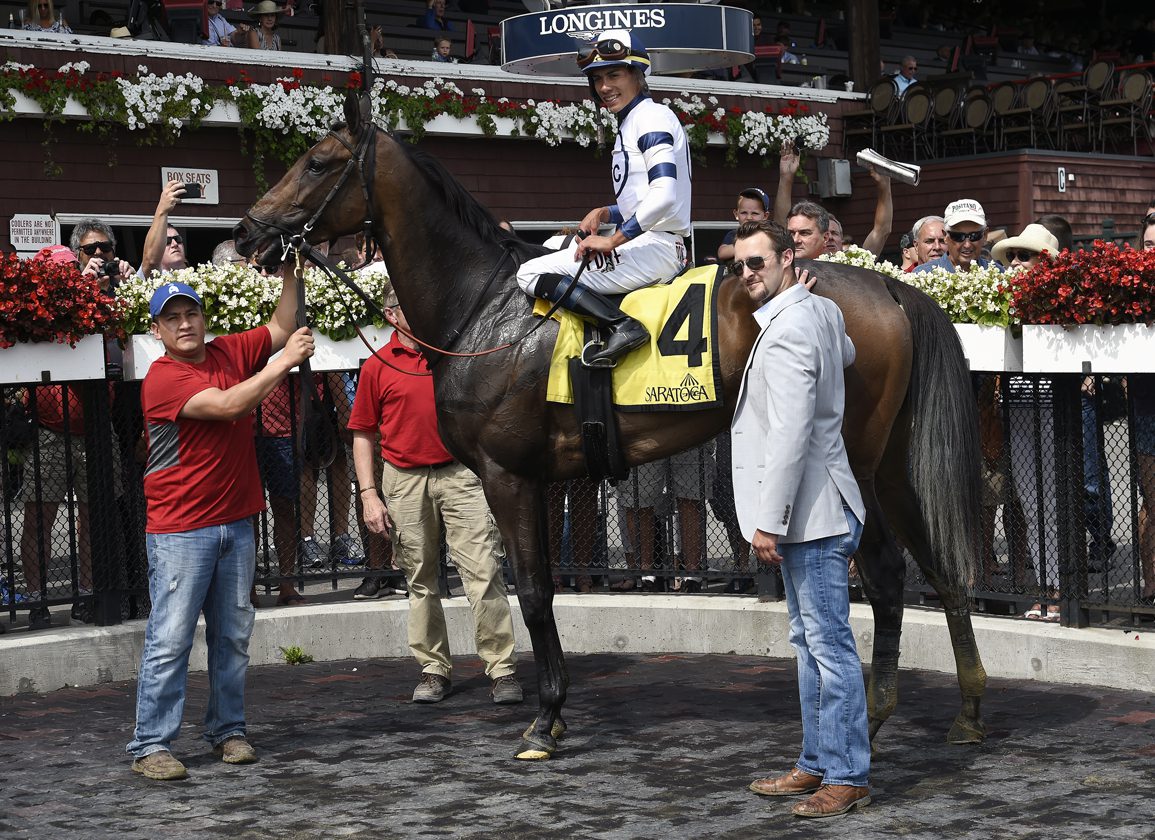
Moonlit Garden wins the 2018 Summer Colony S. | Sarah Andrew
Who is your favorite horse that you've ever had in your stable?
I have a horse named City Drifter (Temple City) who is one of my all-time favorites. He's a barn favorite. He's a very honest horse. I've won six allowance races with him. He's won eight out of 26 starts. He seems like he always shows up and gives us what we have. He's a beautiful, stocky horse and is very easy to be around.
I also just retired a horse named Jimmy D (Haynesfield) who was the definition of a war horse. I got him when he was running for $5,000 in California. Subsequently as a 7-year-old after almost 70 starts, he won his first allowance race. He ended up winning 11 in his lifetime. I just retired him sound because he was at the end of his career and we hope to make him a stable pony.
If you could spend one afternoon at the track enjoying the day (i.e. not working), which track would you go to?
Well they closed it. Arlington Park. That's home and it was one of the best facilities to watch racing. I've been to most places in the country at some point or another and Arlington was probably the premier spot to go watch racing.
Del Mar, Santa Anita and Keeneland are up there with Arlington in terms of aesthetics, but as a patron, the accessability and layout of Arlington was probably the best.
If you aren't at the track, what can you be found doing?
Playing golf and taking care of a six-month-old baby.
If one change was made to racing that would make your life easier, what would it be?
There are a lot of things. In terms of medication reform, higher surveillance in the barns would be key to level the playing field. We had the Servis and Navarro scandal, but that stuff is still very prevalent today in my opinion. I would never be opposed to them putting cameras in every stall at every racetrack throughout the country.
What is your biggest hot take? It can be racing-related or completely random.
Time is only relevant in prison. A horse may work fast or maybe run a race slow, but you might have caught a fast track or a slow track or your horse might have just preferred the surface that day. There might have been a speed bias or a closing bias. I think people overestimate times.
Click here for more from our 'Earning Their Stripes' series.

The post Earning Their Stripes: Chris Davis appeared first on TDN | Thoroughbred Daily News | Horse Racing News, Results and Video | Thoroughbred Breeding and Auctions.
Source of original post
